A customer brought me a tubular rim from an SES (Smart Envy System)
called the "4.5".
From the model name you'd think it means 40mm and 50mm depth,
but it's actually 48mm and 56mm depth as a front-and-rear pair.
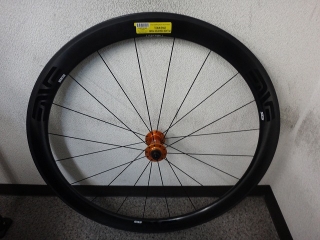
Today I just built up the front wheel.
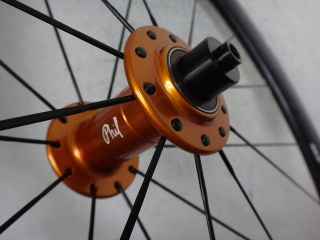
Filwood Road Hub Front 20H
Black CX-RAY outpoke radial laced.
The bearings visible on the inside of the dropouts
are 6902s (28mm OD / 15mm ID / 7mm thick),
and with contact-type seals, the rotation is smooth but has a slightly sluggish feel.
This design might actually have better dust and water resistance
compared to what a lot of manufacturers do—putting non-contact seals inside a dustcap
with a tiny gap.
There's probably an intention to position the bearings as far outboard as possible too.
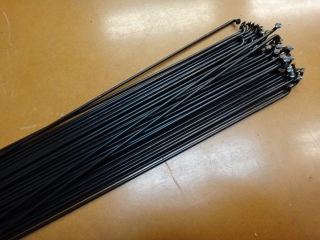
The customer said "use them if you can," so I've got some black Filwood spokes on hand,
but since they're round spokes, I'll use them only on the freewheel side of the rear wheel
and go with a semi-competition build.
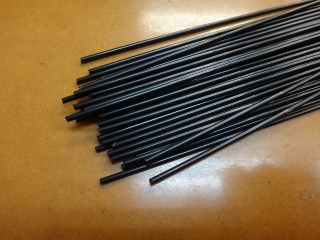
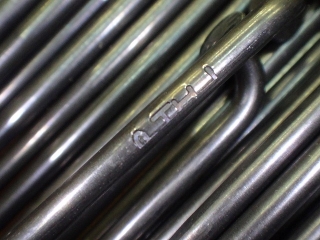
They're a no-threads design, and it looks like the rim-side plain section is kept long
to allow for a wider cutting margin.

You can cut all the way out to where the rim tape sits.
called the "4.5".
From the model name you'd think it means 40mm and 50mm depth,
but it's actually 48mm and 56mm depth as a front-and-rear pair.

Today I just built up the front wheel.
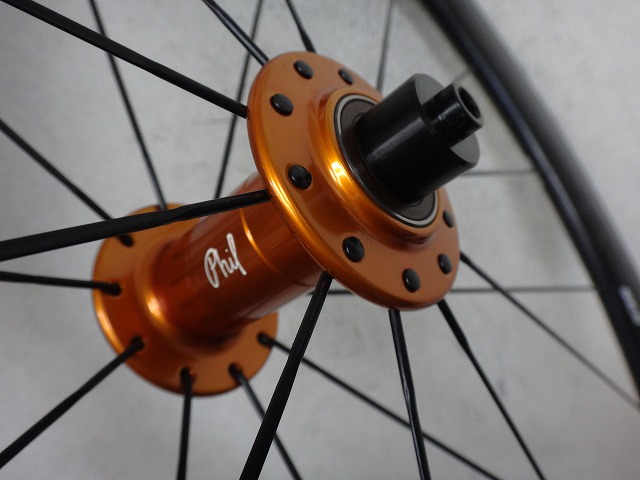
Filwood Road Hub Front 20H
Black CX-RAY outpoke radial laced.
The bearings visible on the inside of the dropouts
are 6902s (28mm OD / 15mm ID / 7mm thick),
and with contact-type seals, the rotation is smooth but has a slightly sluggish feel.
This design might actually have better dust and water resistance
compared to what a lot of manufacturers do—putting non-contact seals inside a dustcap
with a tiny gap.
There's probably an intention to position the bearings as far outboard as possible too.

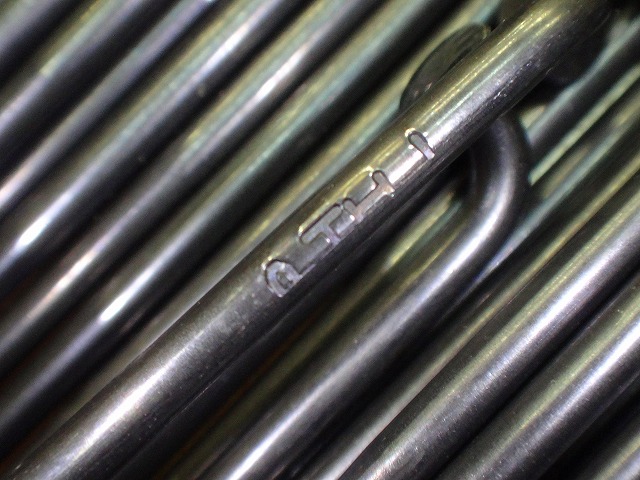
The customer said "use them if you can," so I've got some black Filwood spokes on hand,
but since they're round spokes, I'll use them only on the freewheel side of the rear wheel
and go with a semi-competition build.
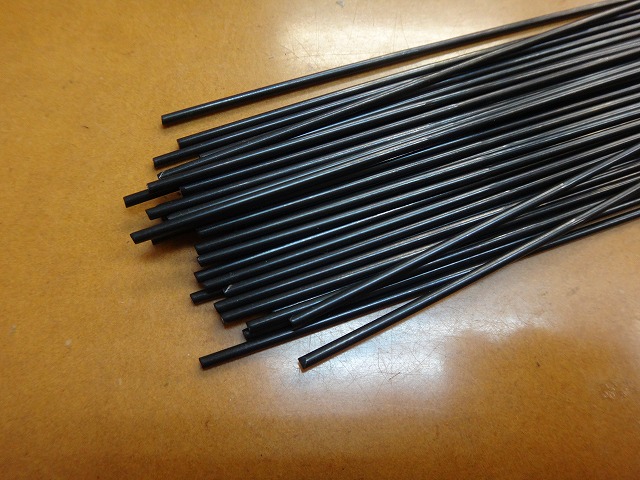
They're a no-threads design, and it looks like the rim-side plain section is kept long
to allow for a wider cutting margin.

You can cut all the way out to where the rim tape sits.