A customer brought in a WH-9000-C35-CL rear wheel for service.
The rotation was heavy and something seemed off,
but when I spun the rear wheel and let the freewheel body idle,
I could feel and hear that the grease was depleted.
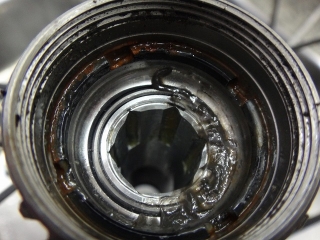
The grease on the freewheel side had emulsified and become contaminated,
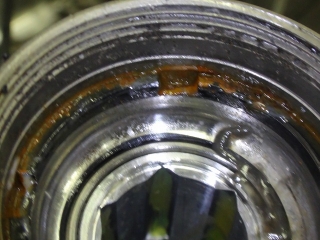
and the grease inside the freewheel body had been stripped away, with rust seepage continuing to come out.
I asked the customer if they'd done any high-pressure washing,
and it turned out they'd used a high-temperature steam cleaner to wash the sprocket.
Unless you do something like that, the inside of a Shimano freewheel body
shouldn't become completely empty of grease.
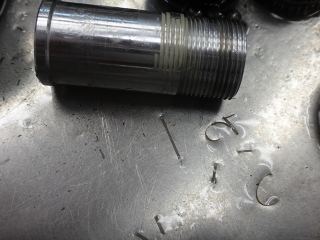
I removed the fixed hollow bolt of the freewheel body with a 12mm Allen key.
This large-diameter aluminum hollow bolt has been used only once.
In other words, it's not supposed to be reused if removed—you're supposed to replace it with a new one,
but I can't say that out loudbut you can't hear it if I whisper itso I reused it.
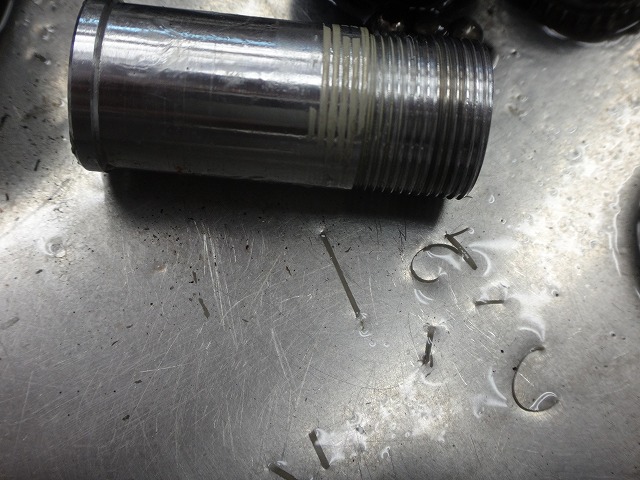
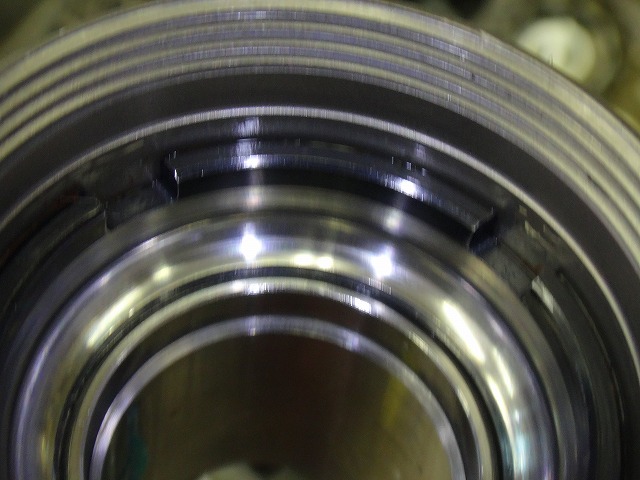
Aluminum shavings that had broken off from the threads had accumulated inside the splines,
and that metal particle is what you see in the image above.
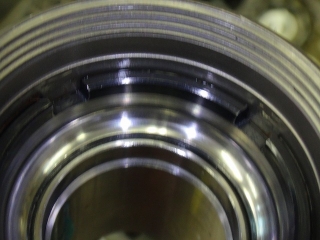
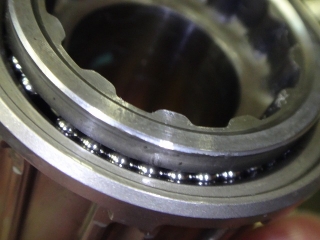
I peeled back the inner seal,
and after using parts cleaner and rust-preventative penetrating oils to flush out all the rust seepage,
I packed in fresh grease. However, it didn't seem to penetrate properly all the way to the internal pawls
(→see the second half here), so while it improved considerably,
it didn't come back to like-new condition.
The Shimano freewheel body cannot be disassembled.
When something like this happens, it has to be replaced as a whole unit,
and since this freewheel body is titanium, it's expensive—the list price is ¥18,508 before tax.
The rotation was heavy and something seemed off,
but when I spun the rear wheel and let the freewheel body idle,
I could feel and hear that the grease was depleted.
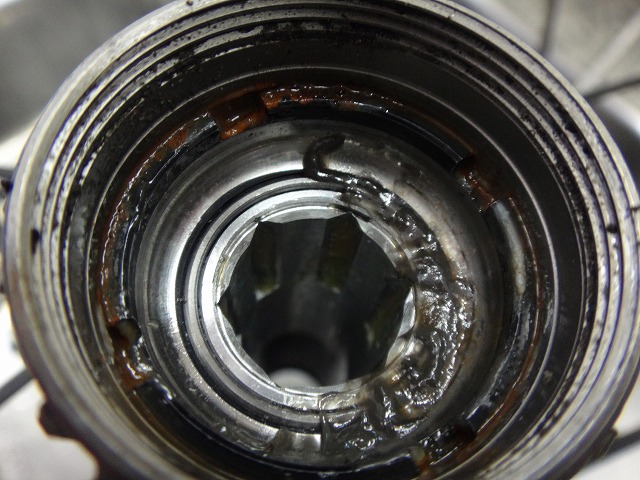
The grease on the freewheel side had emulsified and become contaminated,
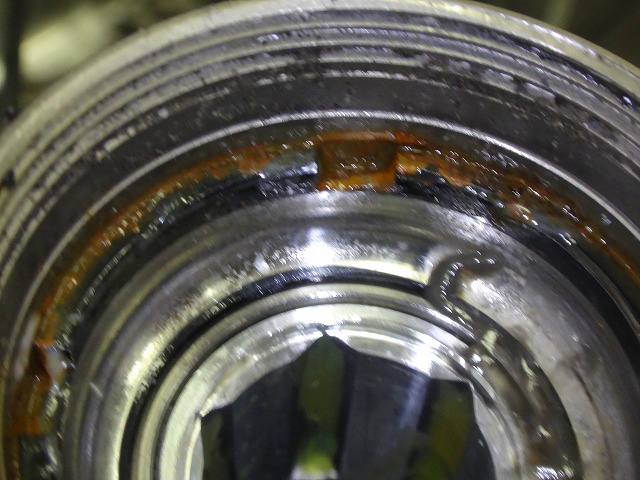
and the grease inside the freewheel body had been stripped away, with rust seepage continuing to come out.
I asked the customer if they'd done any high-pressure washing,
and it turned out they'd used a high-temperature steam cleaner to wash the sprocket.
Unless you do something like that, the inside of a Shimano freewheel body
shouldn't become completely empty of grease.
I removed the fixed hollow bolt of the freewheel body with a 12mm Allen key.
This large-diameter aluminum hollow bolt has been used only once.
In other words, it's not supposed to be reused if removed—you're supposed to replace it with a new one,
but I can't say that out loud
Aluminum shavings that had broken off from the threads had accumulated inside the splines,
and that metal particle is what you see in the image above.

I peeled back the inner seal,
and after using parts cleaner and rust-preventative penetrating oils to flush out all the rust seepage,
I packed in fresh grease. However, it didn't seem to penetrate properly all the way to the internal pawls
(→see the second half here), so while it improved considerably,
it didn't come back to like-new condition.
The Shimano freewheel body cannot be disassembled.
When something like this happens, it has to be replaced as a whole unit,
and since this freewheel body is titanium, it's expensive—the list price is ¥18,508 before tax.