There's not really enough to warrant a full article on this,
but since I promised to post before and after photos of work that wasn't done in front of a customer,
I'm writing it up anyway.
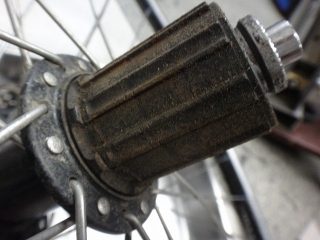
This is a rear wheel I built back when a customer ordered it for cyclocross,
and the hub is an FH-5800.
There's surface rust on the outside of the steel freewheel body.
I don't do it myself, but with steel splines
you can prevent rust progression by applying a thin coat of grease.
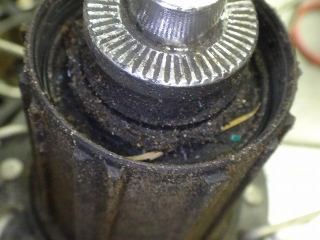
While there's no roughness in the hub rotation, the grease feels depleted,
and separately, there's a clicking sound when you shake the wheel.
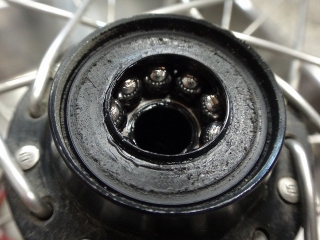
The ball bearings showed no damage.
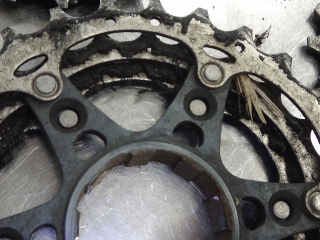
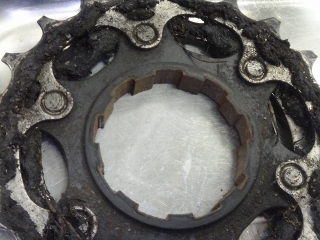
The sprocket was pretty filthy.
Thick, oily sludge compressed by the chain was packed between the teeth.
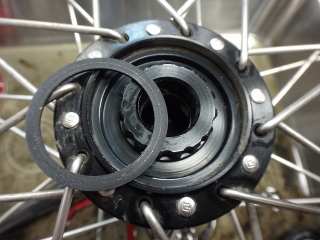
Removed the freewheel body.
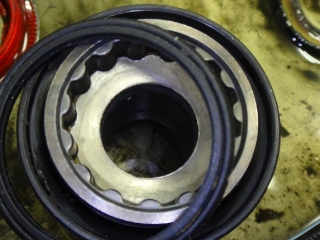
Peeled back the rubber seal attached to the inside of the freewheel body.

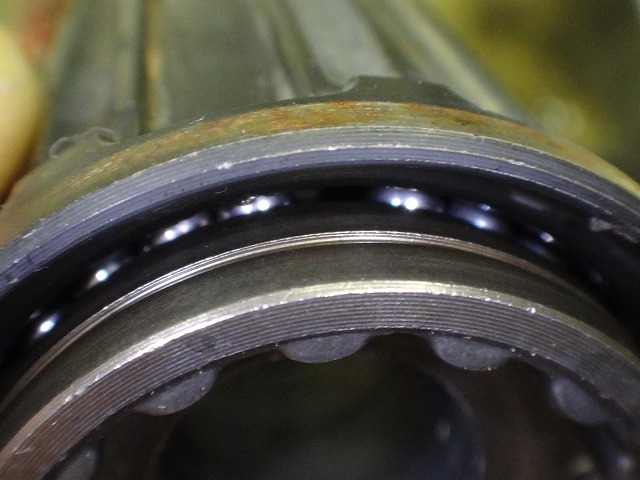
Small ball bearings sit in a loose row,
but there's one spot where another ball would almost fit but doesn't (see the image),
and when grease runs dry here and you shake the rear hub (or wheel)
it makes a clicking sound. This is not abnormal or a defect.
Historically speaking, this type of Shimano-style freewheel body
is basically a "boss freewheel without gears,"
and you attach a cassette sprocket—a part with only the teeth—to it.
Like the boss freewheel, you can suppress noise and rust
by applying an appropriately thick oil.
Shimano makes something called freewheel grease,
but that's not for the Shimano-style freewheel body—
it's for ratchet & pawl style rear hubs where the pawls engage the ratchet teeth,
like the 7800-series Dura-Ace and M800-series Saint rear hubs.
In a recent comment someone mentioned that
the WH-6600 (complete wheelset) rear hub is also the same format as the 7800.
But the FH-6600 (component rear hub)
uses a Shimano-style freewheel body.
Saint's current M820-series also uses a Shimano-style freewheel body, so
right now the freewheel grease is barely used,
but just as DT makes a pink paste-type dedicated grease for their Star Ratchet,
there are almost no examples of hub makers producing grease for ratchet & pawl systems
(※), so using Shimano's freewheel grease
on non-Shimano hubs might be worth trying.
※Just Mavic's freewheel body-specific oil, really
Shimano's freewheel grease,while the principle differs from liquid helium's superfluidity,
in old-style grease containers where the threads on the cap presumably had large gaps,
the grease had a property of traveling along the surface and thinly coating the outside of the container,
but the current containers seem improved.

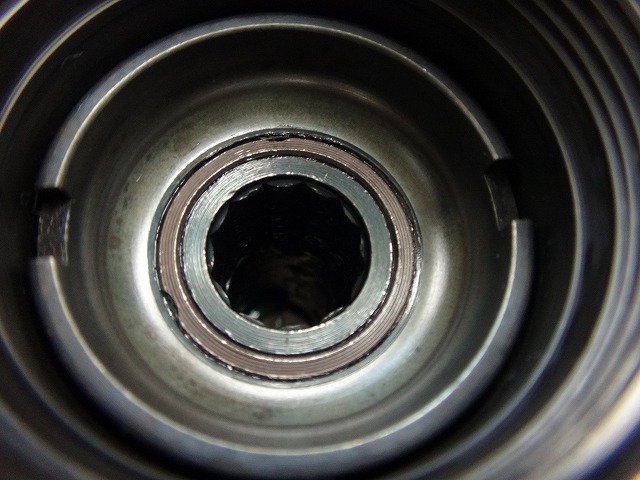
↑This is the freewheel-side cone. The ball races show no damage.
The two notches on the cone
are presumably necessary for the manufacturer's assembly of the freewheel body,
and when you spin the freewheel body freely,
it doesn't rotate all the way to the notches—only the outer part rotates.
The gap between them connects to where the small loose ball bearings sit earlier,
so if you oil it without removing the freewheel body, you apply oil through this gap on this side.
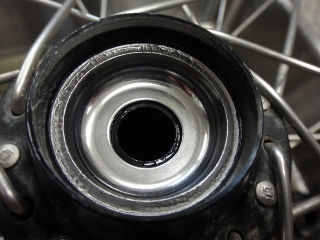
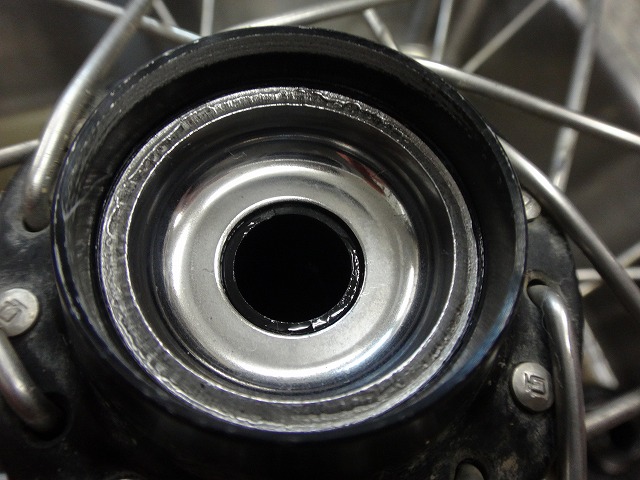
The non-freewheel-side cone. No damage here either.
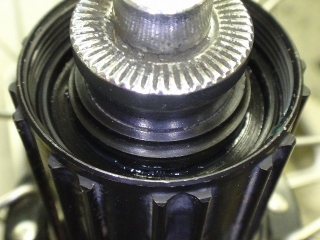
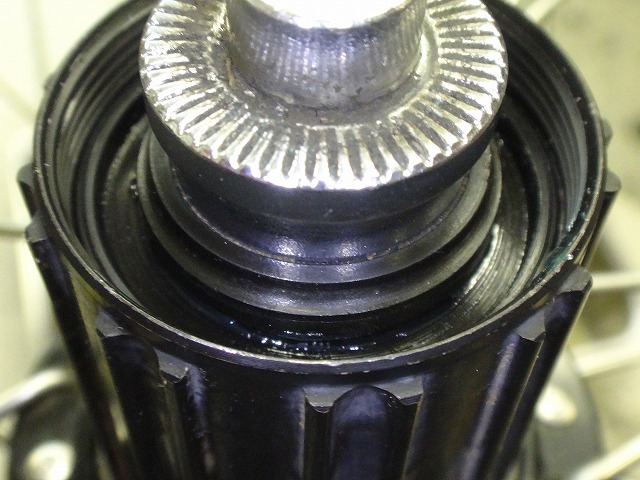
Cleaned it and re-greased it, then reassembled.
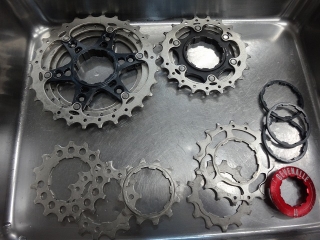
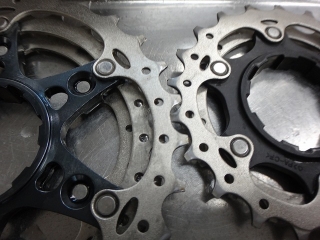
Cleaned the sprocket too.
Bonus

This is another Shimano-style freewheel body case,
from an XT complete wheelset.
It suddenly became fixed like a fixed-gear during riding,
so when the customer got home and removed the sprocket,
the splines had fractured,
but Shimano wouldn't replace it,
so we repaired it at the customer's expense. This is a removed part from that repair.
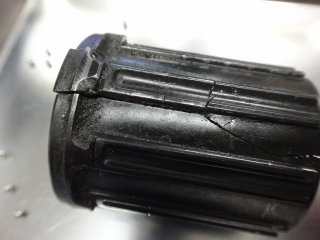
This part
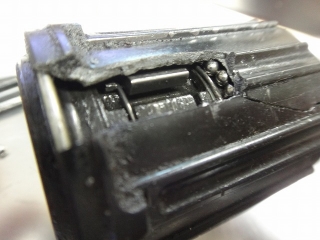
comes off.
Ball bearings got stuck in the gap opened by the crack and locked it into a fixed state.


Pawls were built inside here.
Once we removed the ball bearings that were stuck, it clicks back and forth when pressed.
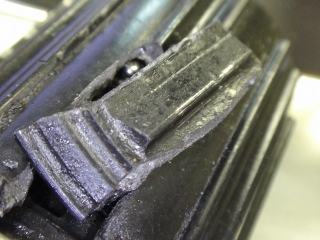
From inside the freewheel body. These are the ratchet teeth the pawl engages with.
So there you have it—an article with limited value to which
I've crammed in stuff I've been meaning to write about for a while
and forced it together into a post.
but since I promised to post before and after photos of work that wasn't done in front of a customer,
I'm writing it up anyway.
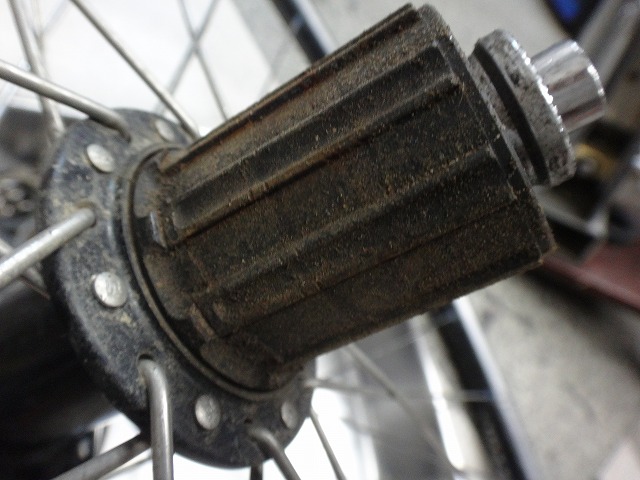
This is a rear wheel I built back when a customer ordered it for cyclocross,
and the hub is an FH-5800.
There's surface rust on the outside of the steel freewheel body.
I don't do it myself, but with steel splines
you can prevent rust progression by applying a thin coat of grease.
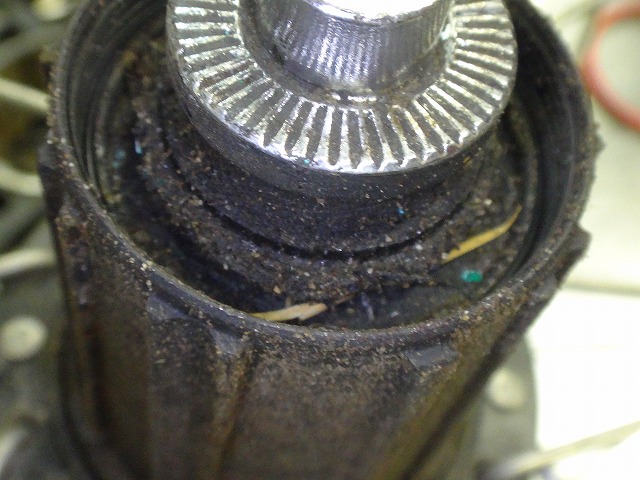
While there's no roughness in the hub rotation, the grease feels depleted,
and separately, there's a clicking sound when you shake the wheel.
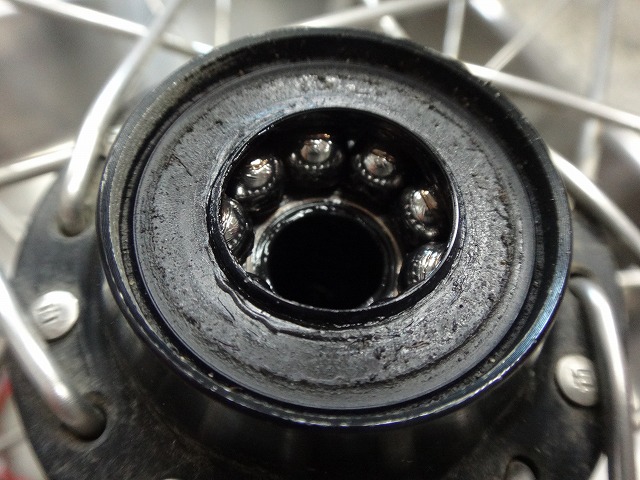
The ball bearings showed no damage.

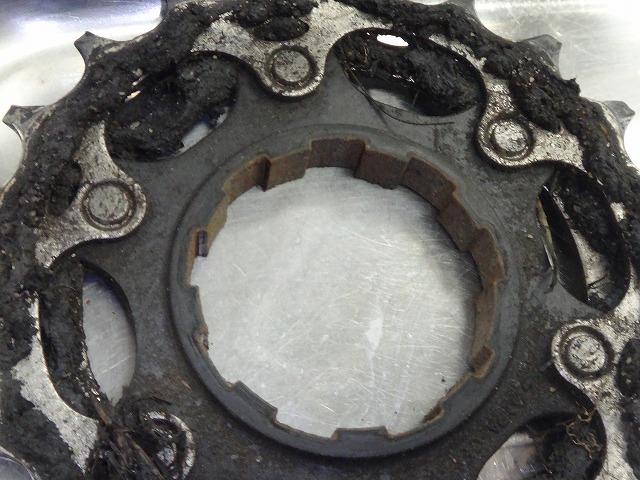
The sprocket was pretty filthy.
Thick, oily sludge compressed by the chain was packed between the teeth.
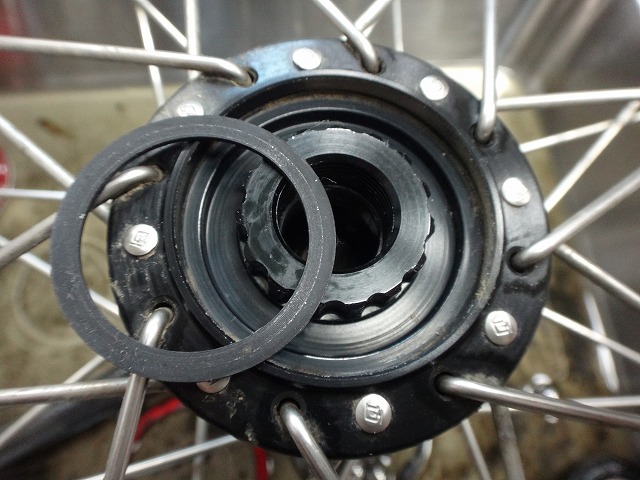
Removed the freewheel body.
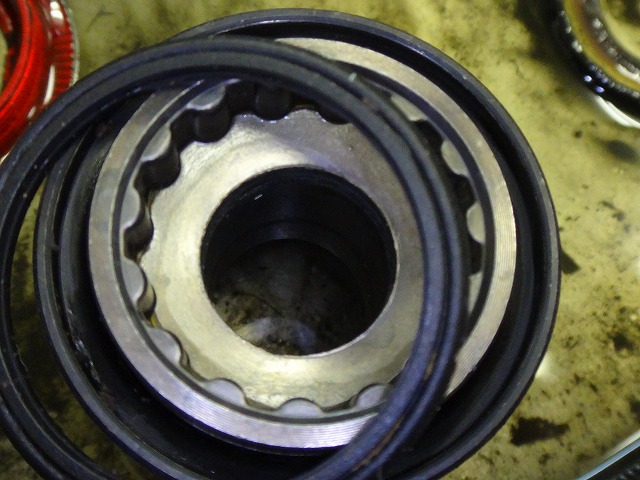
Peeled back the rubber seal attached to the inside of the freewheel body.
Small ball bearings sit in a loose row,
but there's one spot where another ball would almost fit but doesn't (see the image),
and when grease runs dry here and you shake the rear hub (or wheel)
it makes a clicking sound. This is not abnormal or a defect.
Historically speaking, this type of Shimano-style freewheel body
is basically a "boss freewheel without gears,"
and you attach a cassette sprocket—a part with only the teeth—to it.
Like the boss freewheel, you can suppress noise and rust
by applying an appropriately thick oil.
Shimano makes something called freewheel grease,
but that's not for the Shimano-style freewheel body—
it's for ratchet & pawl style rear hubs where the pawls engage the ratchet teeth,
like the 7800-series Dura-Ace and M800-series Saint rear hubs.
In a recent comment someone mentioned that
the WH-6600 (complete wheelset) rear hub is also the same format as the 7800.
But the FH-6600 (component rear hub)
uses a Shimano-style freewheel body.
Saint's current M820-series also uses a Shimano-style freewheel body, so
right now the freewheel grease is barely used,
but just as DT makes a pink paste-type dedicated grease for their Star Ratchet,
there are almost no examples of hub makers producing grease for ratchet & pawl systems
(※), so using Shimano's freewheel grease
on non-Shimano hubs might be worth trying.
※Just Mavic's freewheel body-specific oil, really
Shimano's freewheel grease,
in old-style grease containers where the threads on the cap presumably had large gaps,
the grease had a property of traveling along the surface and thinly coating the outside of the container,
but the current containers seem improved.
↑This is the freewheel-side cone. The ball races show no damage.
The two notches on the cone
are presumably necessary for the manufacturer's assembly of the freewheel body,
and when you spin the freewheel body freely,
it doesn't rotate all the way to the notches—only the outer part rotates.
The gap between them connects to where the small loose ball bearings sit earlier,
so if you oil it without removing the freewheel body, you apply oil through this gap on this side.
The non-freewheel-side cone. No damage here either.
Cleaned it and re-greased it, then reassembled.

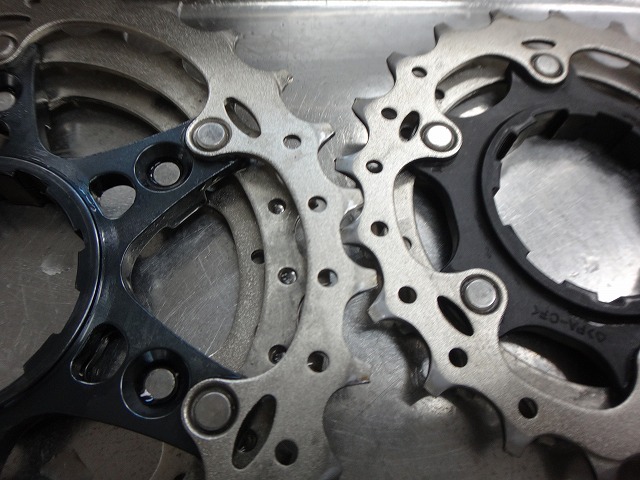
Cleaned the sprocket too.
Bonus
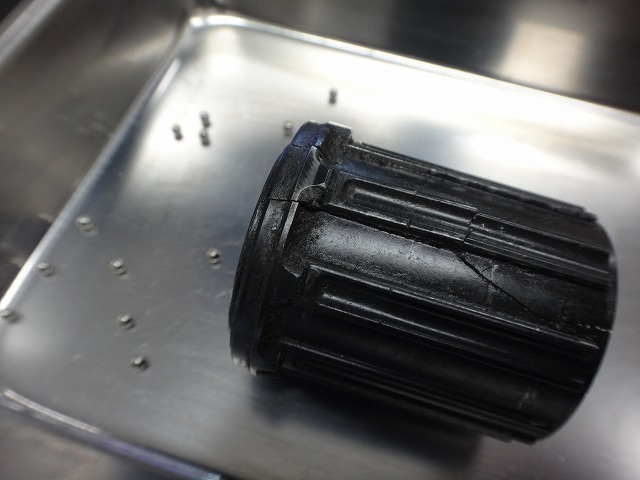
This is another Shimano-style freewheel body case,
from an XT complete wheelset.
It suddenly became fixed like a fixed-gear during riding,
so when the customer got home and removed the sprocket,
the splines had fractured,
but Shimano wouldn't replace it,
so we repaired it at the customer's expense. This is a removed part from that repair.
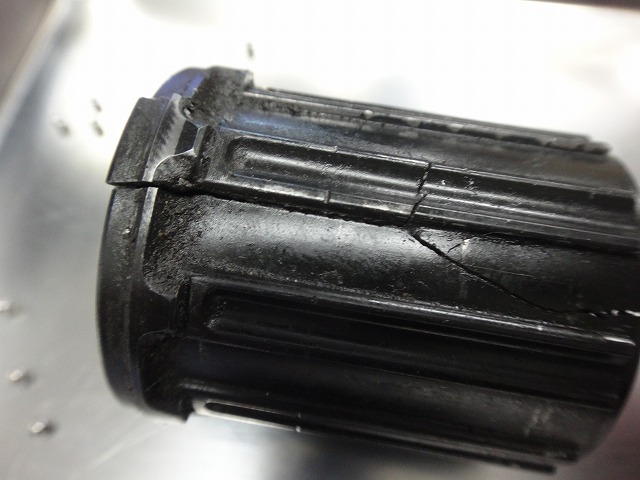
This part

comes off.
Ball bearings got stuck in the gap opened by the crack and locked it into a fixed state.
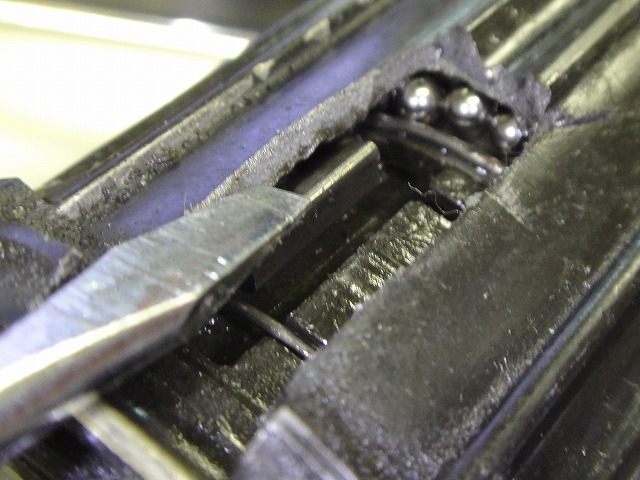
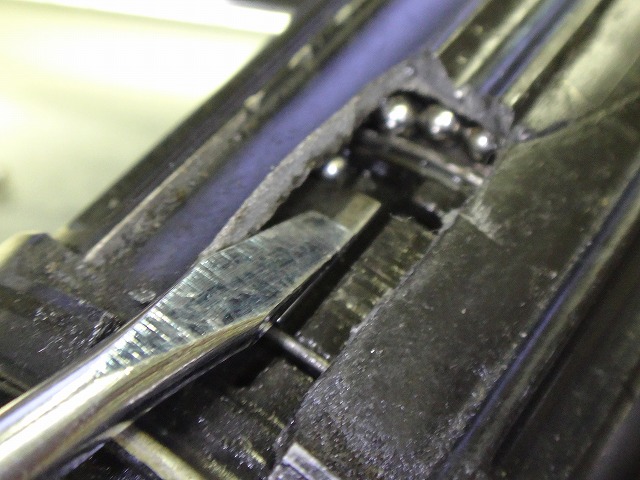
Pawls were built inside here.
Once we removed the ball bearings that were stuck, it clicks back and forth when pressed.

From inside the freewheel body. These are the ratchet teeth the pawl engages with.
So there you have it—an article with limited value to which
I've crammed in stuff I've been meaning to write about for a while
and forced it together into a post.