I've expanded the follow-up section into a separate article.
(→here)
I mentioned that with R8000 sprockets, useful non-OEM combinations would be around 14–32T.
Campagnolo's 10-speed Veloce sprockets, with individual gears available separately,
came in a 14–23T configuration.
14–15–16–17–18–19–20–21–22–23T,
that is, a remarkably rare gear ratio with absolutely no skipped teeth.
It proved invaluable for winter long rides or trainer sessions.
Beyond that, the only sprockets without skipped teeth are
the Gipiemme 9-speed 11–19T or so.
So with Shimano 11-speed, something like 13–23T would be ideal
(personally speaking), but since there's no 13T top gear or 23T low gear
available in the gear combinations, it can't be made.
The second-highest cog set also doesn't end in 23T,
so that can't be used as the low gear either.
Which means, within ranges where no tooth count overlap or reverse progression occurs,
the only useful combination I found was around 14–32T.
Anyway, shifting gears here—
about "phase alignment," which gradually and uniformly staggers the shift points of tooth tips
by the same amount per gear.
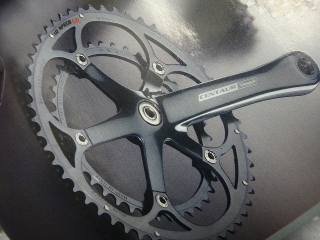
The 2004–06 Centaur came in a Century Grey color variation.
This has nothing to do with the phase alignment discussion.

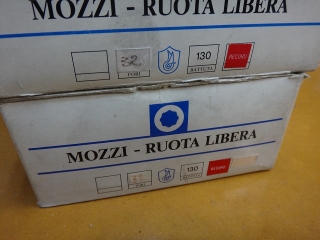
↑This is a Record 8-speed freehub.
Shimano's freehub body was initially 7-speed,
then extended splines made 8-speed, which consequently fit 9-speed and 10-speed as well,
and further extending that spline made 11-speed.
With Campagnolo, 8-speed came first, and unlike Shimano,
the spline shape itself differs from subsequent freehub bodies.
9-speed consequently fits 10-speed and 11-speed as well, continuing to the present day.

↑This one here.
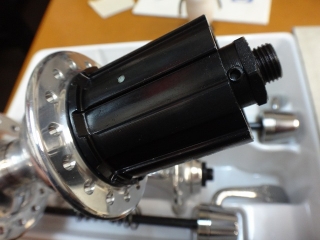
The freehub body's splines are
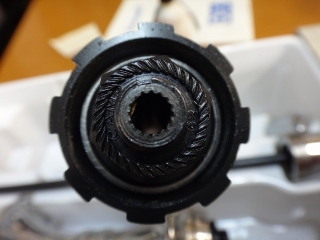
8 splines with no notches or cutouts to uniformly define sprocket phase,
and this "undefined at just one location" is the key point.
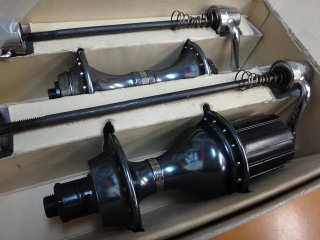
This is a Record from the same era in the "Century" color variation,
and the Centaur Century Grey is an homage to this.
The Record Century brakes were delta brakes at the time,
so a Century-colored delta brake exists.
This stuff has nothing to do with the phase discussion.

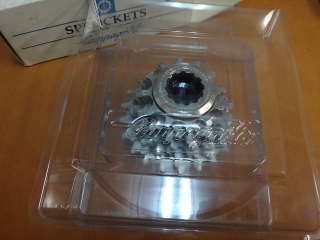
So, the 8-speed sprocket from back then is 11–21T.
Just as Shimano's 11-speed individual gears have 16A and 16B variants,
this 8-speed sprocket also comes in different types.
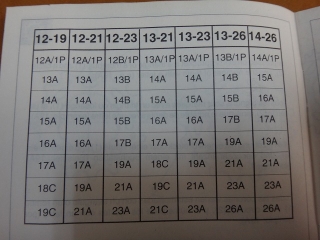
↑Here it is.
Each gear has A, B, or C appended at the end.
The MTB component Record OR (Oro) from that era has an 11T,
but road gears didn't yet.
The "OR" in Record OR means off-road, but
it becomes OR on-road too—a common complaint.
Aside from A, B, C, looking carefully at the tooth count composition,
it's an 8-gear selection from 11 available gears:
12, 13, 14, 15, 16, 17, 18, 19, 21, 23, 26T.
With current components being 11-speed, it's theoretically possible to create
a 12–26T 11-speed sprocket encompassing all these combinations.
What a convenient world we live in.
But neither Campagnolo nor Shimano makes a 12–26T 11-speed sprocket.
This table is confusing from the start, so
I'll write out identical ones in sequence.
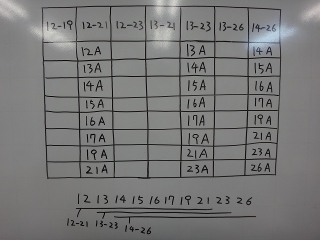
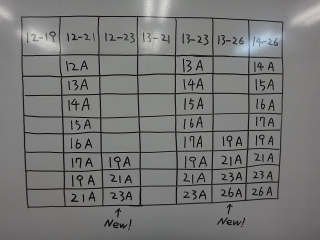
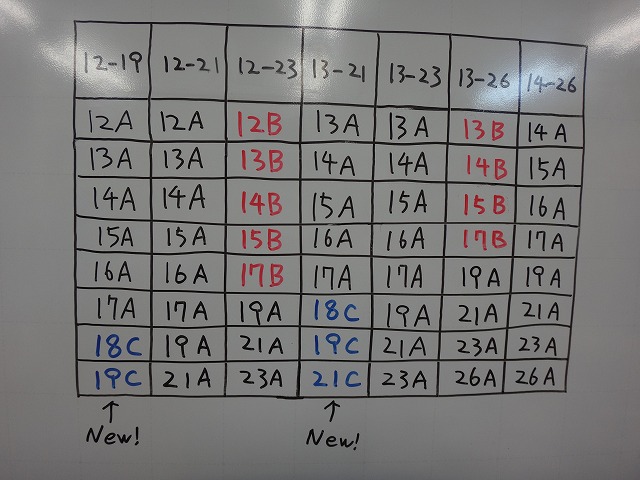
I've listed in a table three combinations composed only of A-suffix gears.
These gears are drawn from 8-gear ranges of the 10 consecutive gears
from the earlier 11 with 18T removed
(shown at table bottom).
So the phase offset between these gears is identical.
Next, among combinations including B-suffix gears,
I first listed only the consecutive A-gear portion.
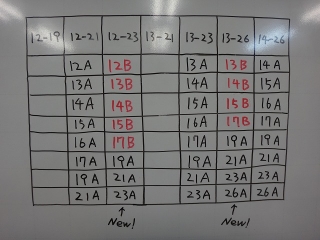
Then I added the B gear.
The difference from A gears is that 16T was removed for a wider ratio,
requiring the phase offset between 15T and 17T to be brought closer,
and this ripples through all gears on the top side from 17T,
resulting in this.
Next, among combinations including C-suffix gears,
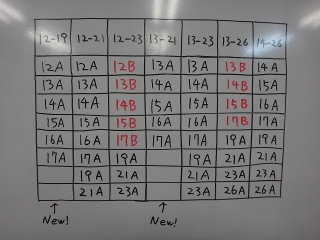
I first listed only the consecutive A-gear portion.

Then I added the C gear.
Because 17T is followed not by 19T but 18T, becoming a close ratio,
the phase offset on the low side from 17T changes,
resulting in this.

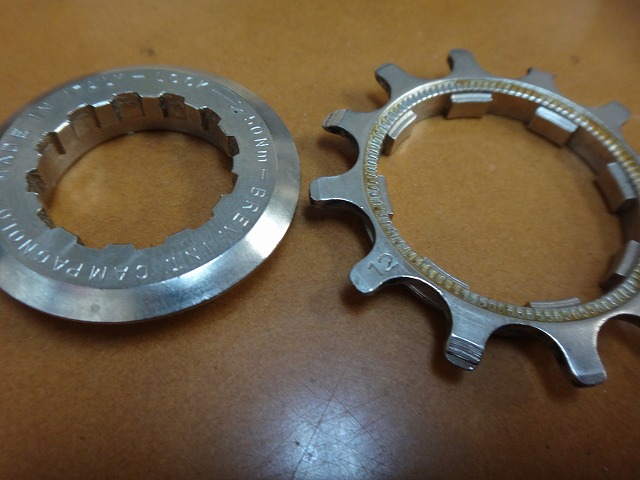
The top gear can go through any phase of the spline.
With 8 spline ridges and a 12T top gear,
there are only 2 possible phases of the gear relative to the spline,
but with a 13T or 14T top gear, things change.
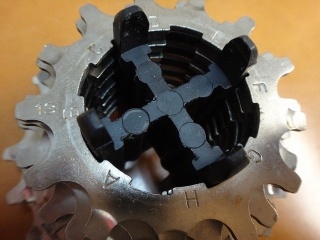
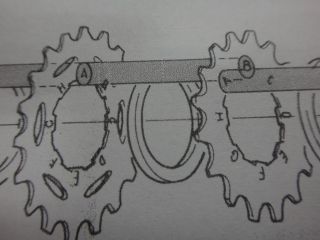
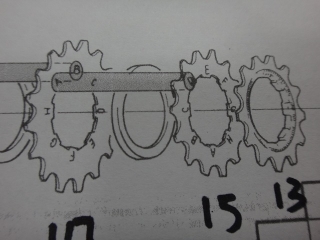
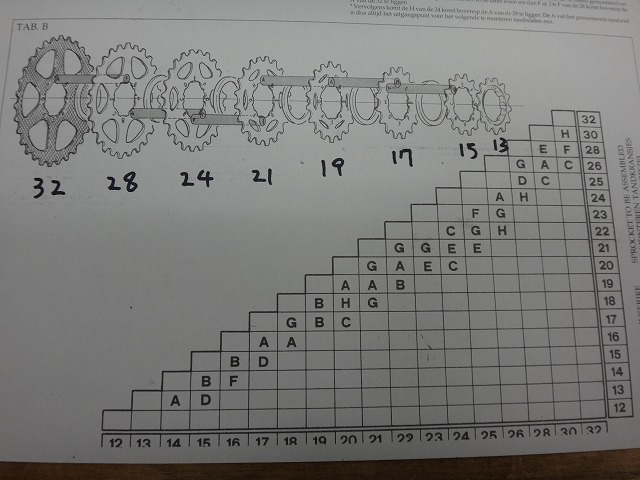
And for the 7 gears following the top gear,
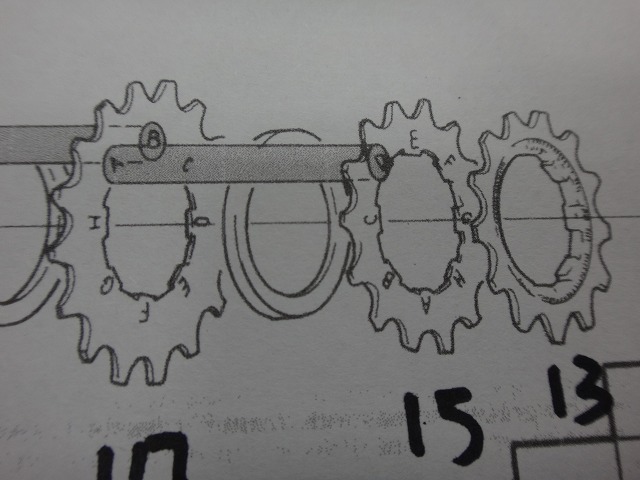
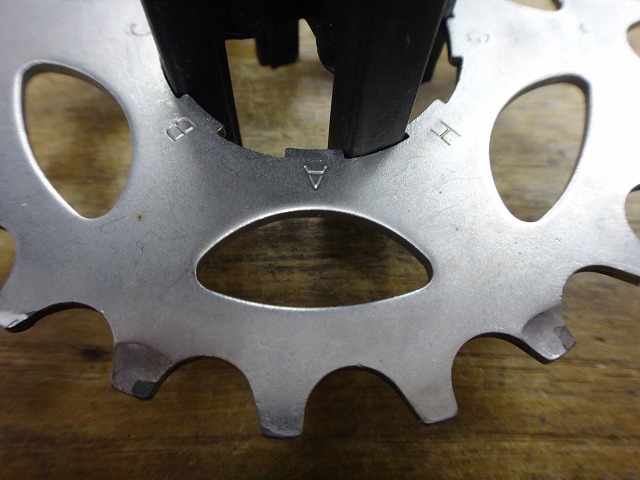
letters A through H are marked.
The letter side is the outside.
Because reverse installation is possible due to spline design.
These letters are unrelated to the earlier gear types A, B, C.
Confusing stuff.
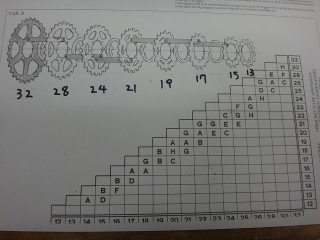
About sprocket installation.
The manual includes a practical example for Record OR 13–32T,
reading from low gear: 32–28–24–21–19–17–15–13T,
so let's start with that.
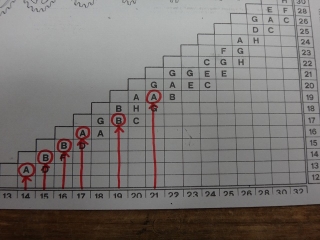
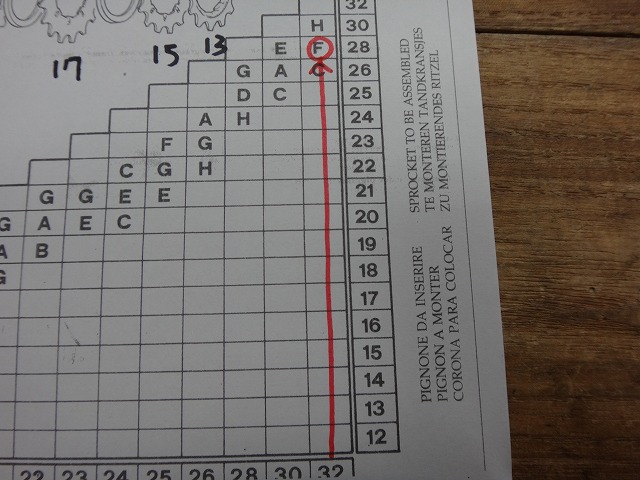
The A on the horizontal gear axis and the alphabet on the vertical next gear
are to be matched.
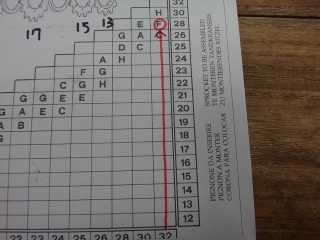
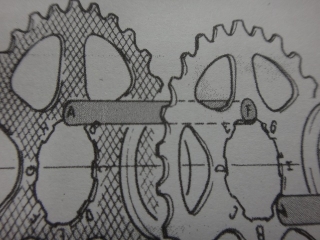
32A with 28F,
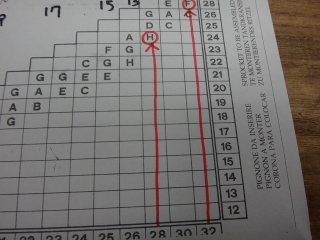
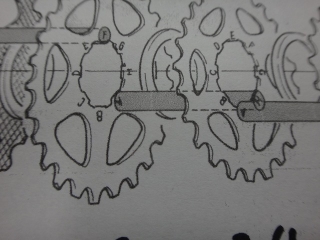
28A with 24H,
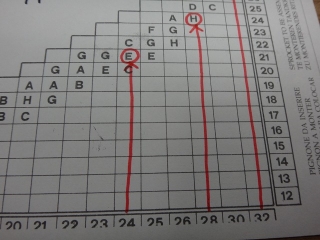
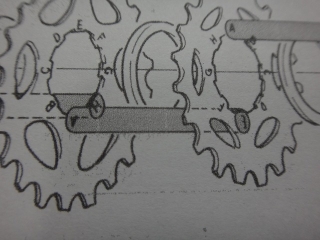
24A with 21E,
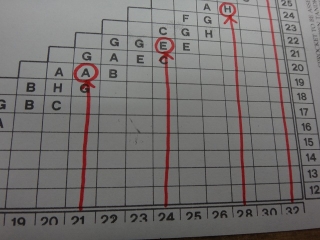

21A with 19A,
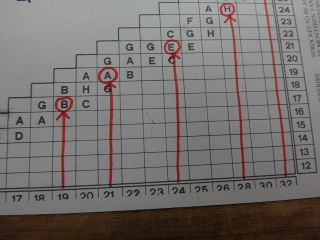
19A with 17B,
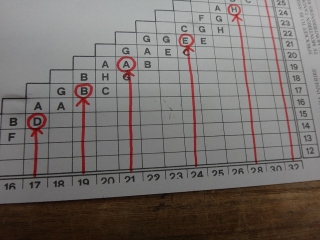
17A with 15D,
and the top gear 13 goes anywhere—that's how you set it.
What a hassle.
For 12–21T it goes like this.
Let me write it out first.
21A with 19A,
19A with 17B,
17A with 16A,
16A with 15B,
15A with 14B,
14A with 13A,
and 12 goes anywhere.
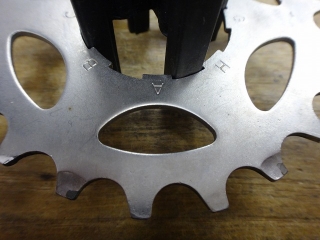
I laid 21A down with
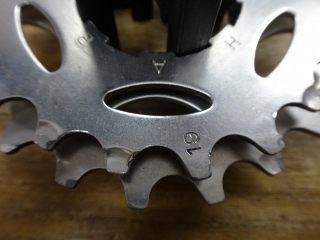
19A stacked on it.
On this 19A I
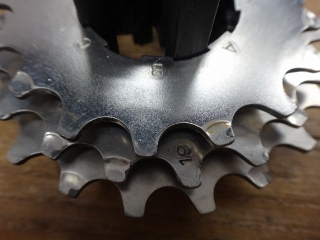
stacked 17B.
The spacer hides the alphabet, making me worry
whether I'm really getting it right. Plus it's tedious.
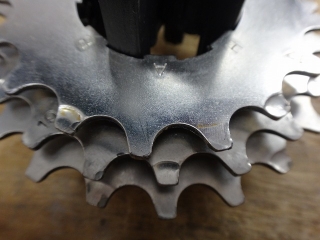
I rotated the 17 to bring A to the front, then
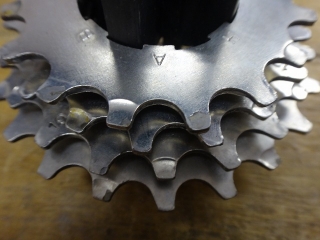
stacked 16A.
On this 16A I
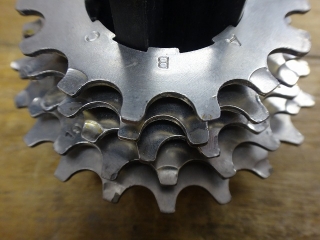
stacked 15B.
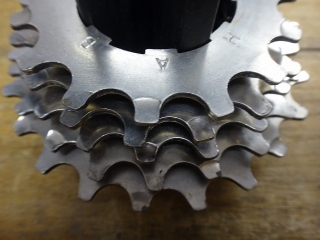
I rotated the 15 to bring A to the front, then

stacked 14B.
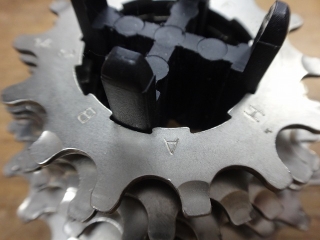
I rotated the 14 to bring A to the front, then
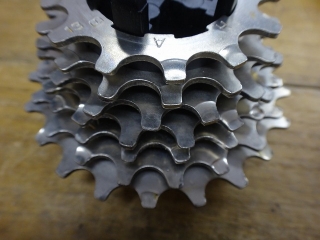
stacked 13A.
All 7 gears other than top are now installed per instructions.
From here, I'll look for spots where the tooth tips that are thinned at shift points
(crude compared to current manufacturing)
seem to say "ah, so this is what they wanted to align".
The phases of all other shift points are all over the place.
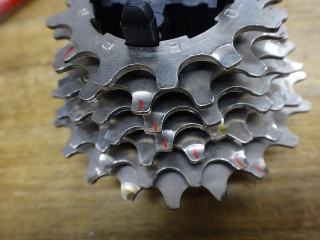
The phase around the D, E, F of the 13T—here it is.
It's hard to see, so I marked it with a red pen.
I'm following instructions, but only the 13T shift point stands apart.
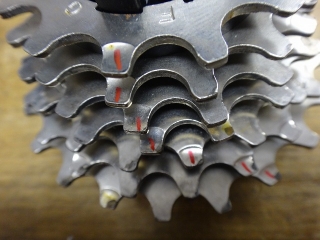
I tried ignoring the instructions and shifted it one position counterclockwise.
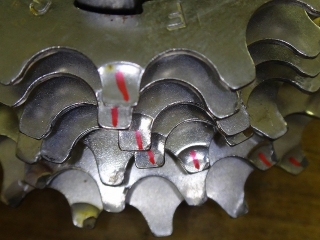
But doing that does bring it closer, for sure,
except the point alignment becomes reversed.
Phase changes are only possible in 360° / number of spline ridges increments.
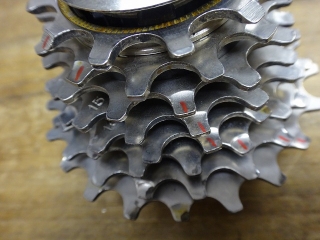
The 12T top gear can go anywhere,
but I chose what seemed the optimal phase within the options.
I see. The flip side of being able to manually adjust phases is
you can never arrive at the perfectly calculated optimum,
plus the setup takes abnormally tedious work
(you understand after doing it).
Such is the freehub body. In that case,
a freehub with uniform sprocket mounting is better.
Actually, there does exist a freehub where Shimano sprockets
can be installed at arbitrary phase.
It wasn't necessarily designed with that intent
(→here).
(→here)
I mentioned that with R8000 sprockets, useful non-OEM combinations would be around 14–32T.
Campagnolo's 10-speed Veloce sprockets, with individual gears available separately,
came in a 14–23T configuration.
14–15–16–17–18–19–20–21–22–23T,
that is, a remarkably rare gear ratio with absolutely no skipped teeth.
It proved invaluable for winter long rides or trainer sessions.
Beyond that, the only sprockets without skipped teeth are
the Gipiemme 9-speed 11–19T or so.
So with Shimano 11-speed, something like 13–23T would be ideal
(personally speaking), but since there's no 13T top gear or 23T low gear
available in the gear combinations, it can't be made.
The second-highest cog set also doesn't end in 23T,
so that can't be used as the low gear either.
Which means, within ranges where no tooth count overlap or reverse progression occurs,
the only useful combination I found was around 14–32T.
Anyway, shifting gears here—
about "phase alignment," which gradually and uniformly staggers the shift points of tooth tips
by the same amount per gear.
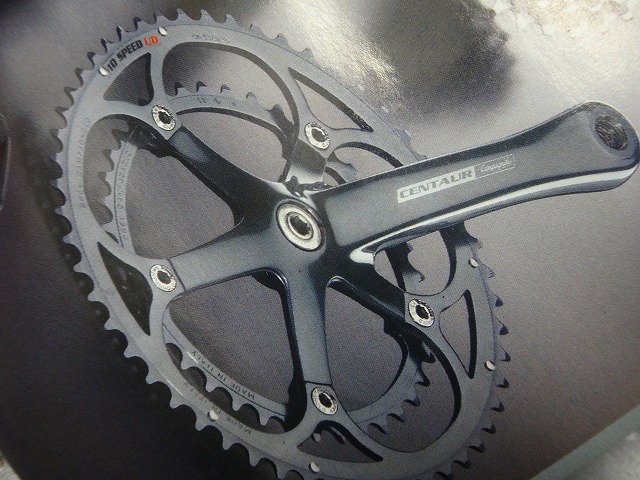
The 2004–06 Centaur came in a Century Grey color variation.
This has nothing to do with the phase alignment discussion.


↑This is a Record 8-speed freehub.
Shimano's freehub body was initially 7-speed,
then extended splines made 8-speed, which consequently fit 9-speed and 10-speed as well,
and further extending that spline made 11-speed.
With Campagnolo, 8-speed came first, and unlike Shimano,
the spline shape itself differs from subsequent freehub bodies.
9-speed consequently fits 10-speed and 11-speed as well, continuing to the present day.

↑This one here.

The freehub body's splines are
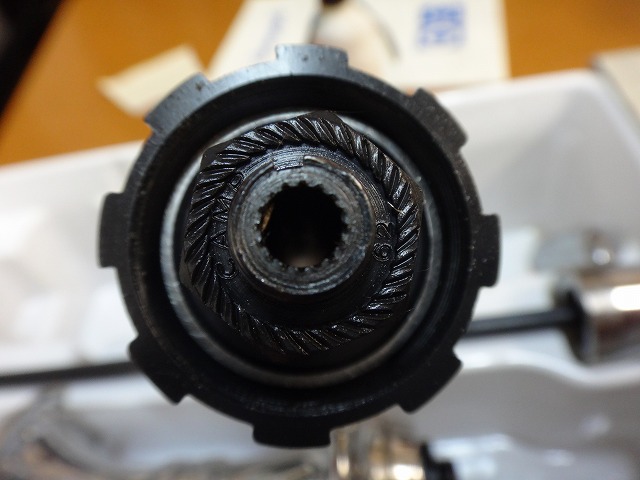
8 splines with no notches or cutouts to uniformly define sprocket phase,
and this "undefined at just one location" is the key point.
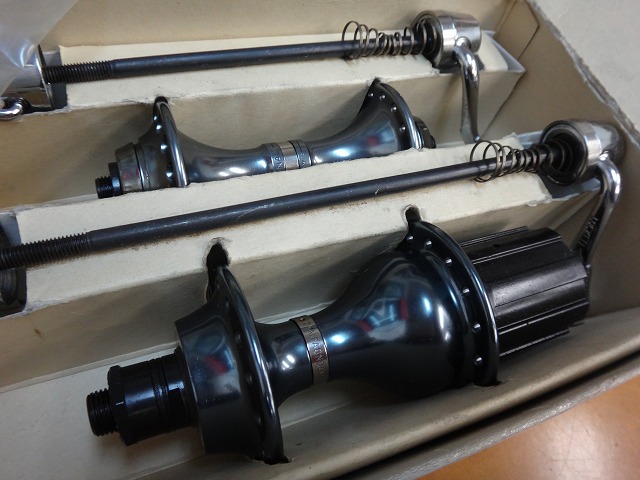
This is a Record from the same era in the "Century" color variation,
and the Centaur Century Grey is an homage to this.
The Record Century brakes were delta brakes at the time,
so a Century-colored delta brake exists.
This stuff has nothing to do with the phase discussion.


So, the 8-speed sprocket from back then is 11–21T.
Just as Shimano's 11-speed individual gears have 16A and 16B variants,
this 8-speed sprocket also comes in different types.
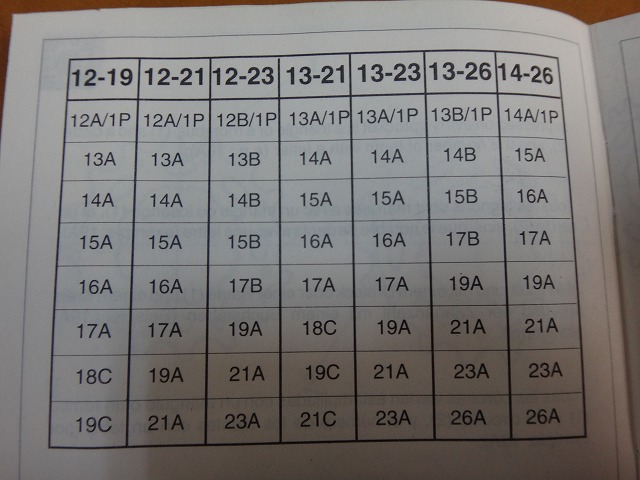
↑Here it is.
Each gear has A, B, or C appended at the end.
The MTB component Record OR (Oro) from that era has an 11T,
but road gears didn't yet.
The "OR" in Record OR means off-road, but
it becomes OR on-road too—a common complaint.
Aside from A, B, C, looking carefully at the tooth count composition,
it's an 8-gear selection from 11 available gears:
12, 13, 14, 15, 16, 17, 18, 19, 21, 23, 26T.
With current components being 11-speed, it's theoretically possible to create
a 12–26T 11-speed sprocket encompassing all these combinations.
But neither Campagnolo nor Shimano makes a 12–26T 11-speed sprocket.
This table is confusing from the start, so
I'll write out identical ones in sequence.

I've listed in a table three combinations composed only of A-suffix gears.
These gears are drawn from 8-gear ranges of the 10 consecutive gears
from the earlier 11 with 18T removed
(shown at table bottom).
So the phase offset between these gears is identical.
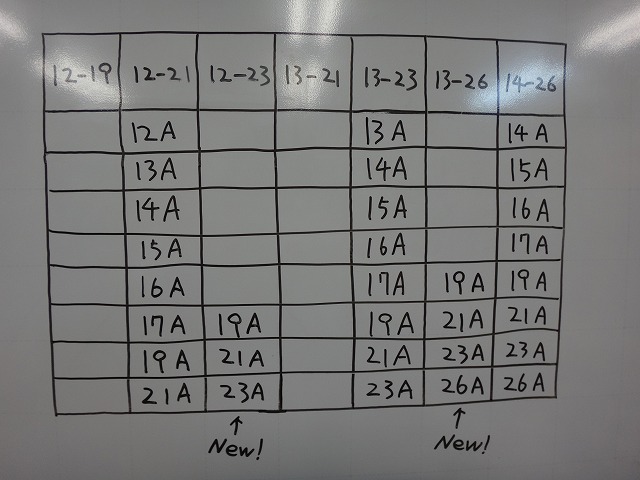
Next, among combinations including B-suffix gears,
I first listed only the consecutive A-gear portion.
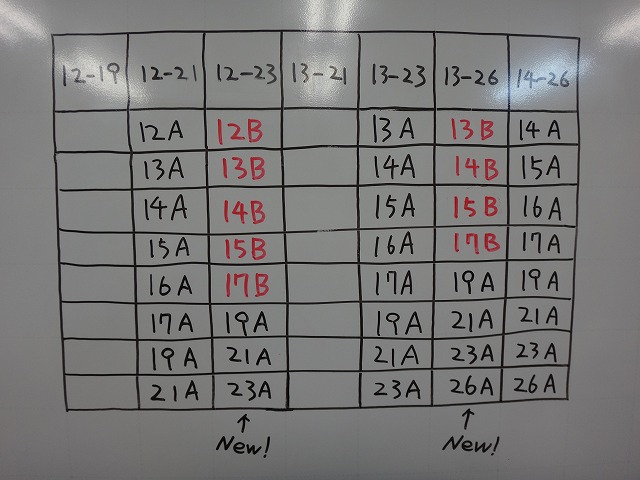
Then I added the B gear.
The difference from A gears is that 16T was removed for a wider ratio,
requiring the phase offset between 15T and 17T to be brought closer,
and this ripples through all gears on the top side from 17T,
resulting in this.

Next, among combinations including C-suffix gears,
I first listed only the consecutive A-gear portion.
Then I added the C gear.
Because 17T is followed not by 19T but 18T, becoming a close ratio,
the phase offset on the low side from 17T changes,
resulting in this.
The top gear can go through any phase of the spline.
With 8 spline ridges and a 12T top gear,
there are only 2 possible phases of the gear relative to the spline,
but with a 13T or 14T top gear, things change.

And for the 7 gears following the top gear,
letters A through H are marked.
The letter side is the outside.
Because reverse installation is possible due to spline design.
These letters are unrelated to the earlier gear types A, B, C.
Confusing stuff.
About sprocket installation.
The manual includes a practical example for Record OR 13–32T,
reading from low gear: 32–28–24–21–19–17–15–13T,
so let's start with that.
The A on the horizontal gear axis and the alphabet on the vertical next gear
are to be matched.
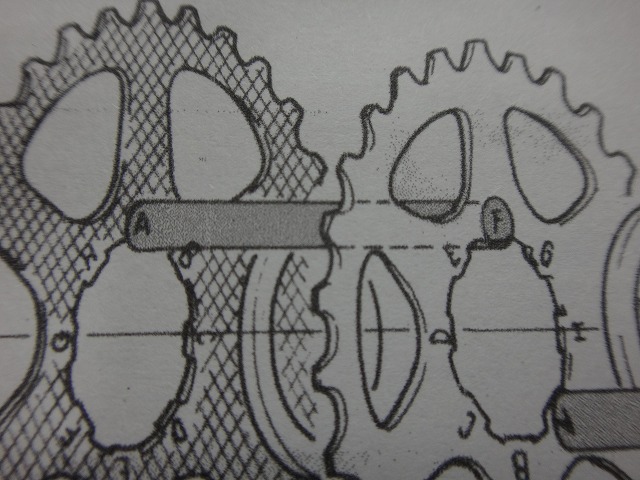
32A with 28F,
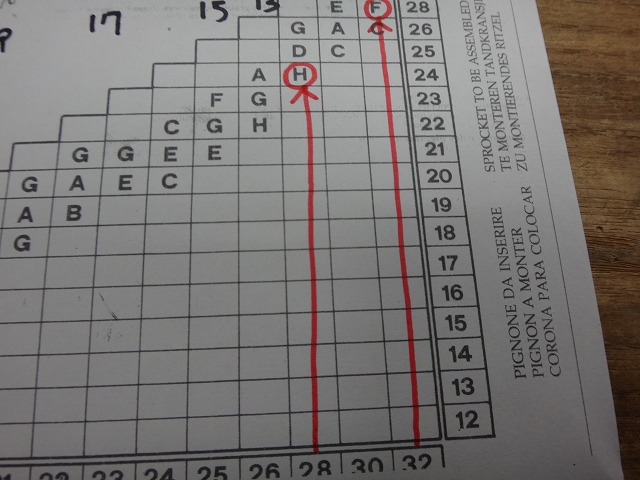
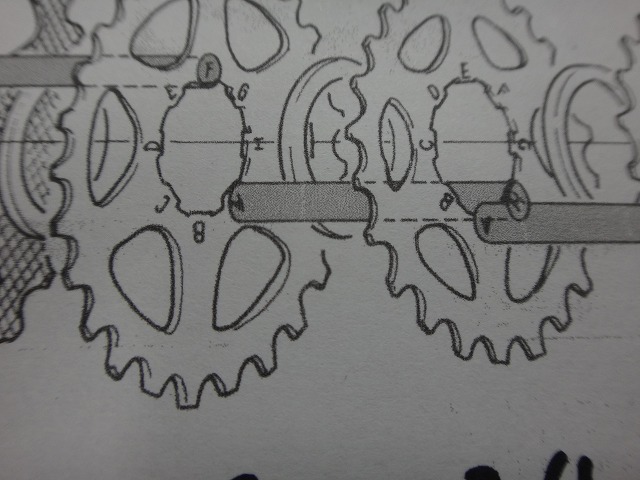
28A with 24H,
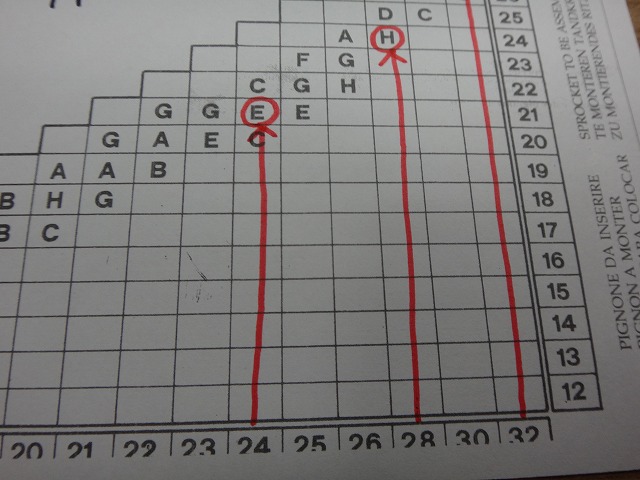
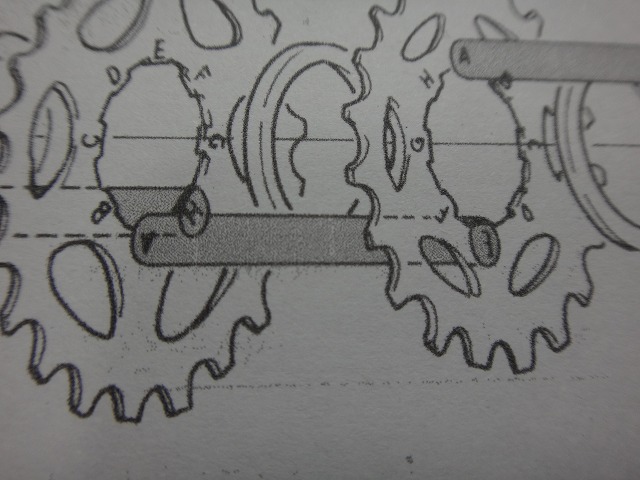
24A with 21E,

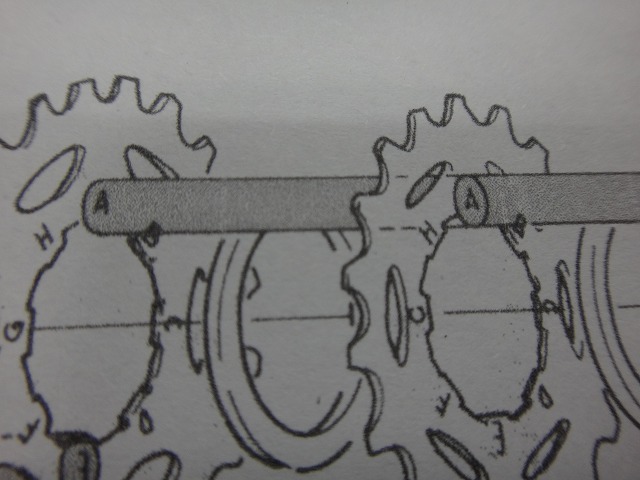
21A with 19A,
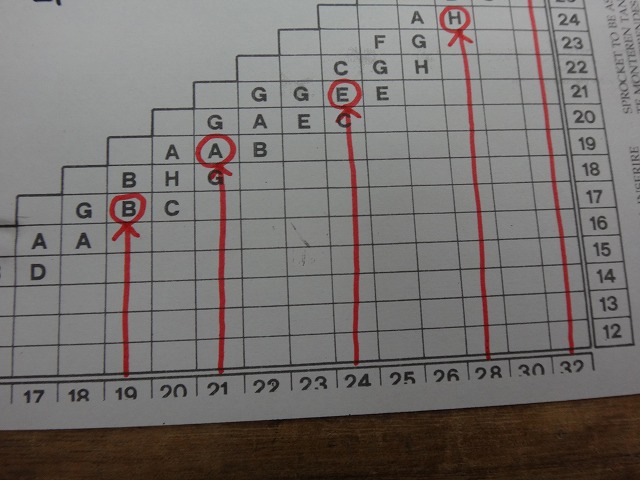
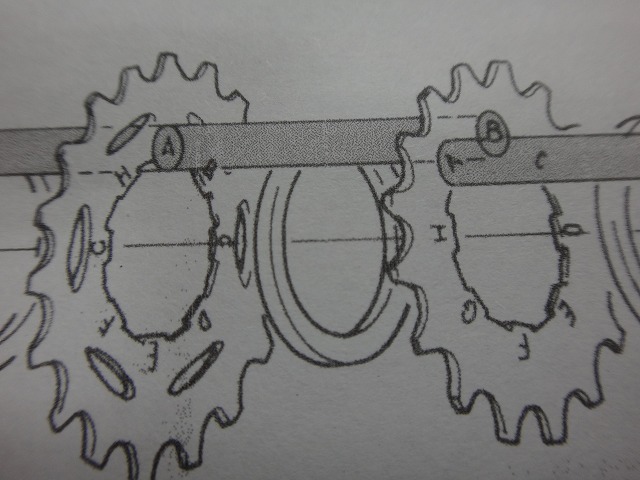
19A with 17B,
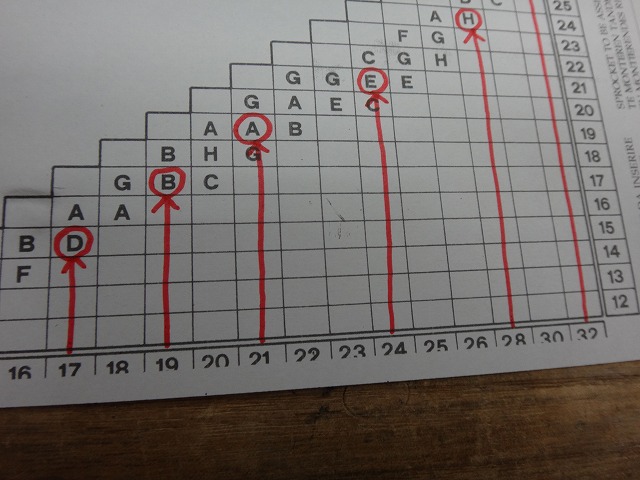
17A with 15D,
and the top gear 13 goes anywhere—that's how you set it.
What a hassle.
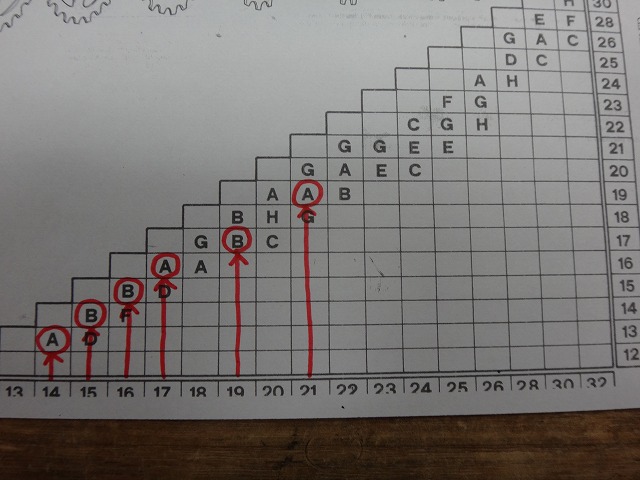
For 12–21T it goes like this.
Let me write it out first.
21A with 19A,
19A with 17B,
17A with 16A,
16A with 15B,
15A with 14B,
14A with 13A,
and 12 goes anywhere.
I laid 21A down with
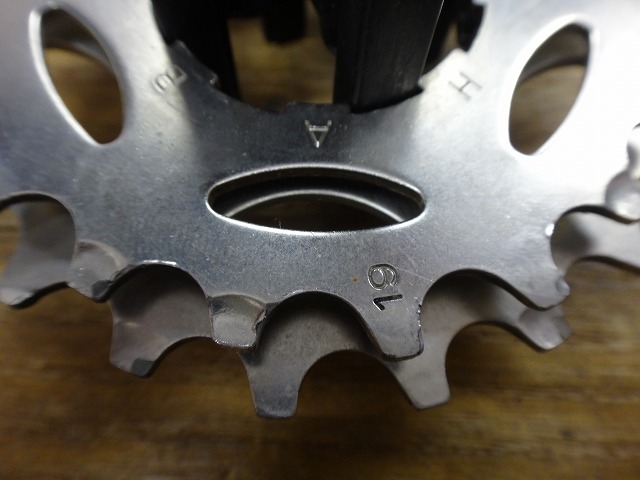
19A stacked on it.
On this 19A I
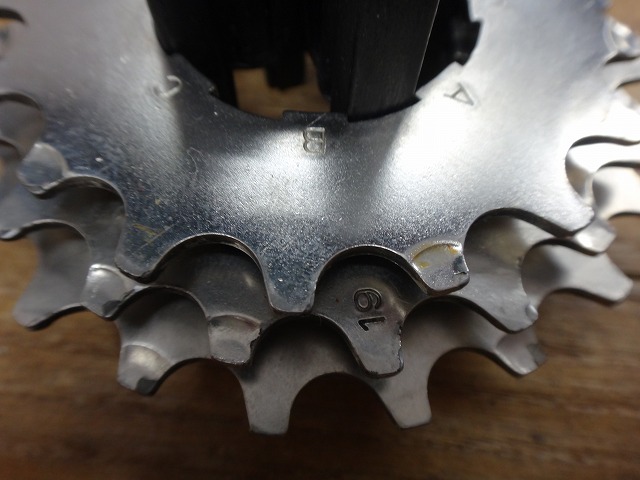
stacked 17B.
The spacer hides the alphabet, making me worry
whether I'm really getting it right. Plus it's tedious.

I rotated the 17 to bring A to the front, then
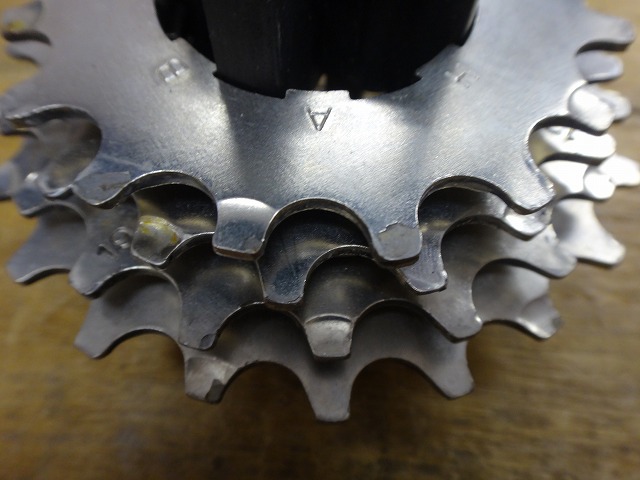
stacked 16A.
On this 16A I
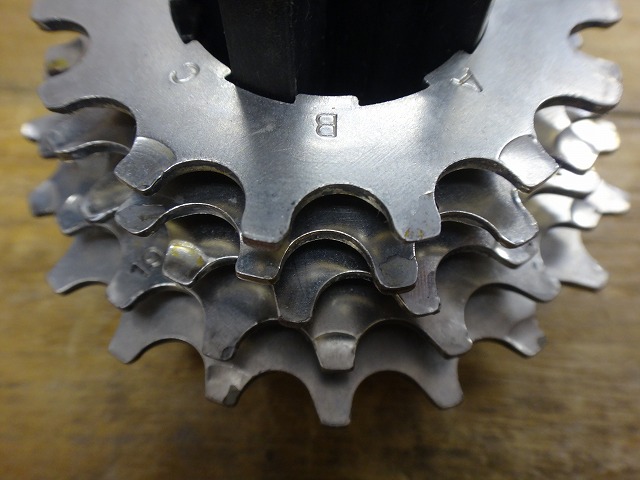
stacked 15B.

I rotated the 15 to bring A to the front, then
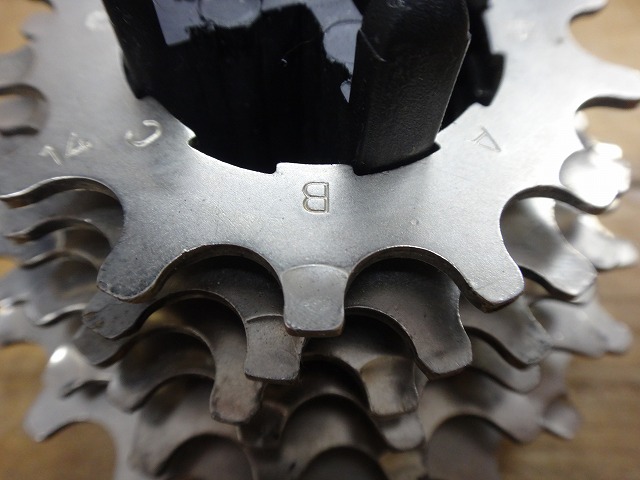
stacked 14B.

I rotated the 14 to bring A to the front, then
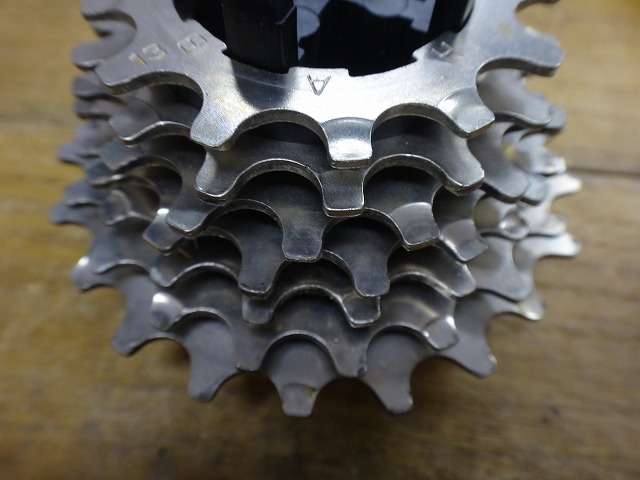
stacked 13A.
All 7 gears other than top are now installed per instructions.
From here, I'll look for spots where the tooth tips that are thinned at shift points
(crude compared to current manufacturing)
seem to say "ah, so this is what they wanted to align".
The phases of all other shift points are all over the place.
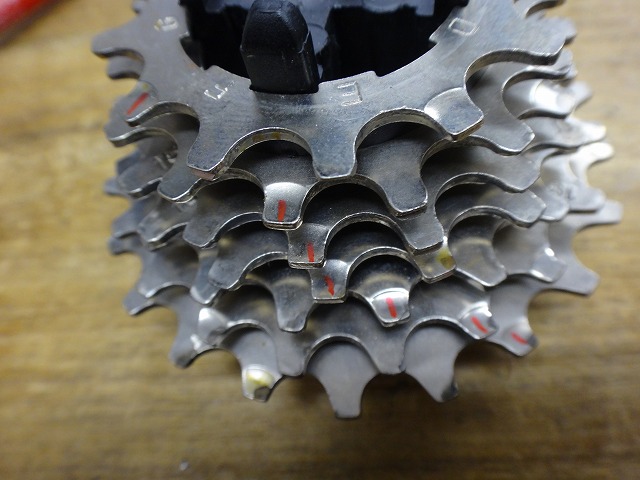
The phase around the D, E, F of the 13T—here it is.
It's hard to see, so I marked it with a red pen.
I'm following instructions, but only the 13T shift point stands apart.

I tried ignoring the instructions and shifted it one position counterclockwise.
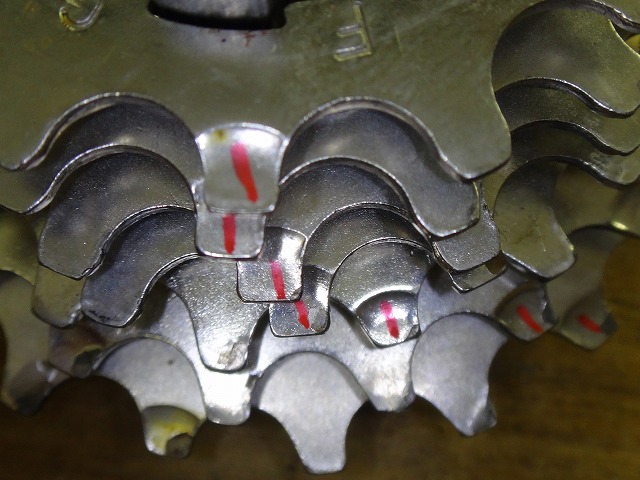
But doing that does bring it closer, for sure,
except the point alignment becomes reversed.
Phase changes are only possible in 360° / number of spline ridges increments.
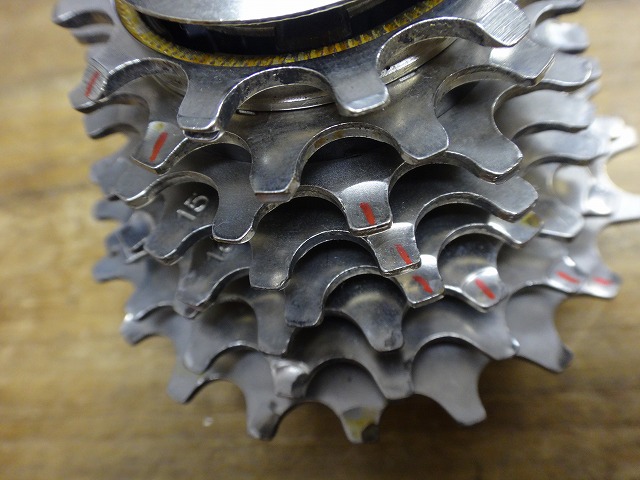
The 12T top gear can go anywhere,
but I chose what seemed the optimal phase within the options.
I see. The flip side of being able to manually adjust phases is
you can never arrive at the perfectly calculated optimum,
plus the setup takes abnormally tedious work
(you understand after doing it).
Such is the freehub body. In that case,
a freehub with uniform sprocket mounting is better.
Actually, there does exist a freehub where Shimano sprockets
can be installed at arbitrary phase.
It wasn't necessarily designed with that intent
(→here).