Time to call it quits.


I've swapped out the Wishbone ceramic pulley (→here)

and switched back to the OEM pulley.
Campagnolo's 11-speed pulleys come in two types:
RD-SR500 for Super Record/Record (SR = Super Record) and
RD-CH500 for Chorus/Potenza 11/Athena (CH = Chorus).
In this case, I've got an SR500 on an Athena derailleur, so strictly speaking it's not a factory-matched pairing.
It'd be more accurate to say I switched back to a Campagnolo pulley.
As I've written in the linked posts and their links before,
I don't think parts like this improve shifting performance.
At best they're the same, and most of the time they get worse.
Switching back to the Campagnolo pulley made it crystal clear:
the shifting performance didn't improve—it went back to normal.
Plus, the drivetrain noise from the chain is now virtually silent.
The Wishbone pulley has distinctions not just between top and bottom
but also left and right (front and back), so if you install it following those rules
you can study the wear patterns even after removing it.
I pulled images from the linked article and compared them.

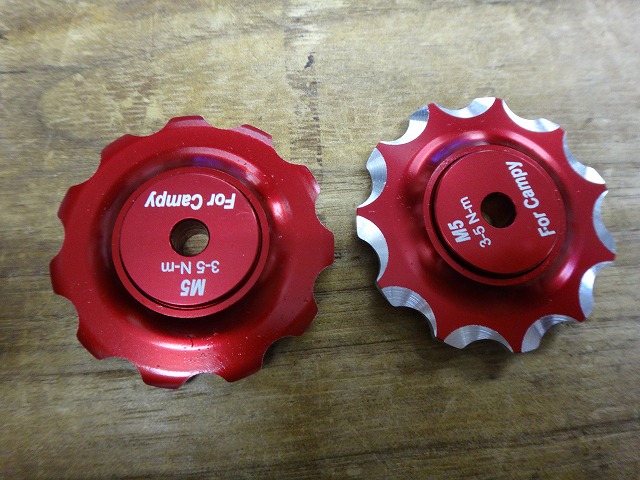
↑Brand new.
Left is the upper pulley, right is the lower pulley,
both shown from the right side (outside) view.

After use.

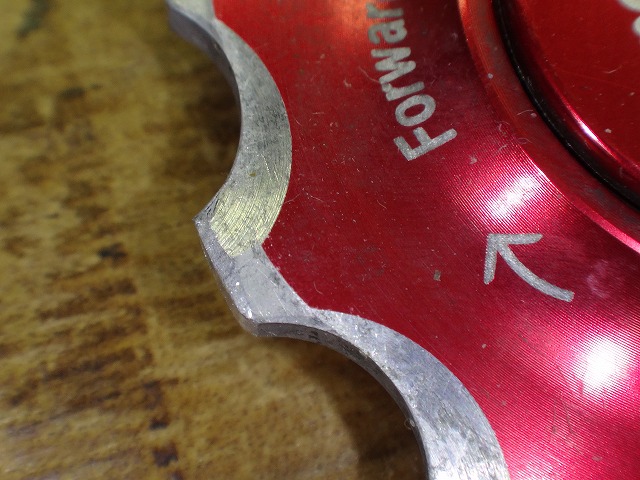
Starting with the upper pulley—
it was originally all red anodized,
but got ground down by contact with the chain's inner plates,
leaving red only on the tooth tips.

The lower pulley shows gaps in the red anodizing that used to reach the tooth tips,
so you can clearly see where it's worn.

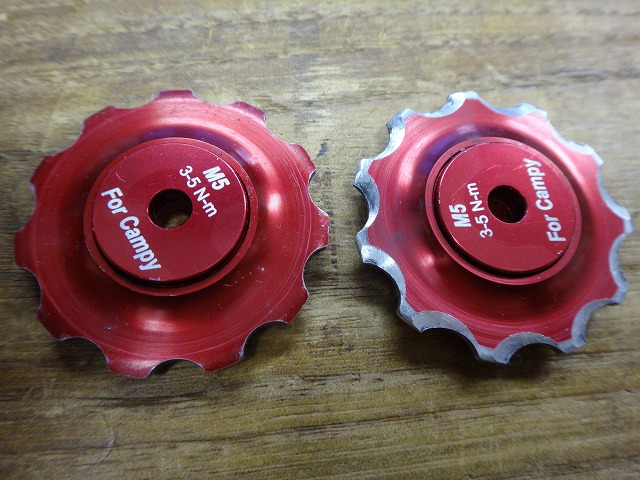
Next, the new ones from the left side (inside) view—
again, left is the upper pulley and right is the lower pulley.

After use.

Both show less wear than the right side,
and the upper pulley especially is barely worn down at all.

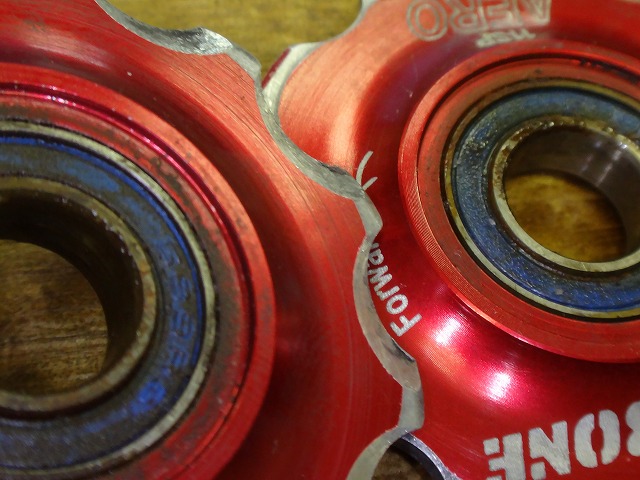
The bearing was dead.
One last thing. This isn't directly related to today's topic,
but a customer asked me to feature it,
so here are some nice clean shots of the Campagnolo pulley.

↑Right side. Upper pulley is upper right of the image, lower pulley is lower left.

Flipped it over.

What the heck.
The dirt gets pounded and compacted against the pulley by the chain,
and stuff jammed in the pulley holes especially

wasn't breaking down with just a soak in parts cleaner, so

I cleaned it another way.
One thing I really liked about the Wishbone pulley was
the lack of lightening holes, and honestly,
a pulley without weight-reduction cutouts is genuinely easier to clean.
By the way, this pulley's customer
seems to really like the "Metal Stag Beetle" from a recent post (→here),
and I was surprised that this "Metal Stag Beetle" nomuralab jargon
has become a generic term(?). Plus, when I just Googled it, "Metal Stag Beetle Yodogawa" shows up in the suggestions...
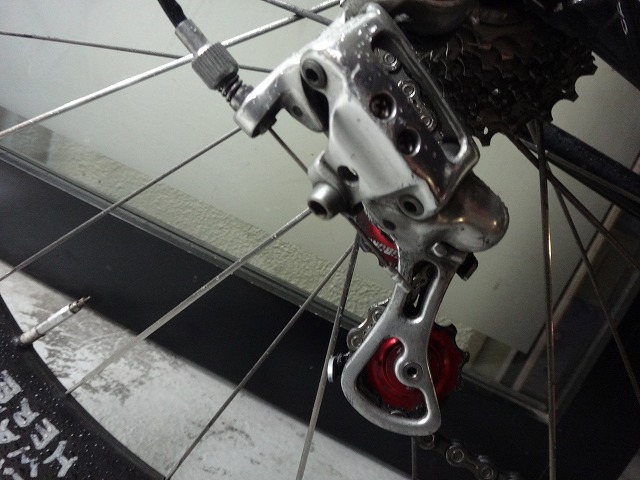

I've swapped out the Wishbone ceramic pulley (→here)
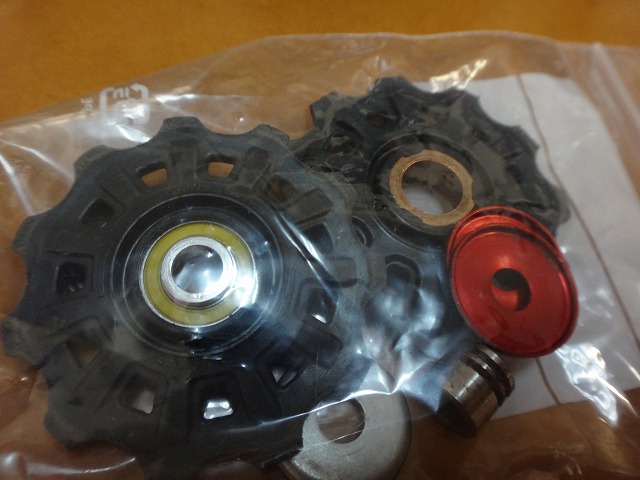
and switched back to the OEM pulley.
Campagnolo's 11-speed pulleys come in two types:
RD-SR500 for Super Record/Record (SR = Super Record) and
RD-CH500 for Chorus/Potenza 11/Athena (CH = Chorus).
In this case, I've got an SR500 on an Athena derailleur, so strictly speaking it's not a factory-matched pairing.
It'd be more accurate to say I switched back to a Campagnolo pulley.
As I've written in the linked posts and their links before,
I don't think parts like this improve shifting performance.
At best they're the same, and most of the time they get worse.
Switching back to the Campagnolo pulley made it crystal clear:
the shifting performance didn't improve—it went back to normal.
Plus, the drivetrain noise from the chain is now virtually silent.
The Wishbone pulley has distinctions not just between top and bottom
but also left and right (front and back), so if you install it following those rules
you can study the wear patterns even after removing it.
I pulled images from the linked article and compared them.
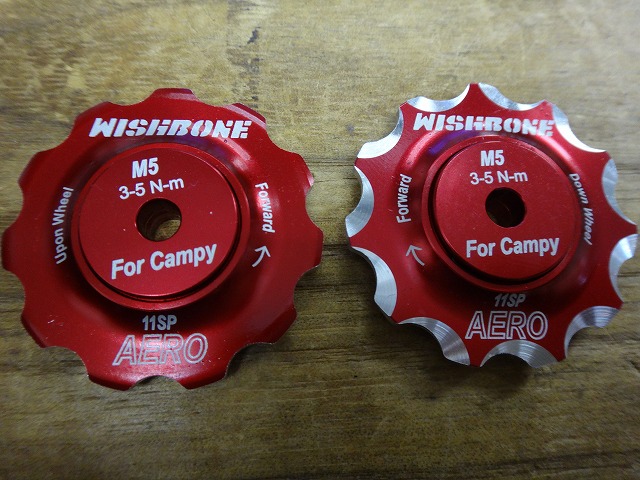
↑Brand new.
Left is the upper pulley, right is the lower pulley,
both shown from the right side (outside) view.

After use.
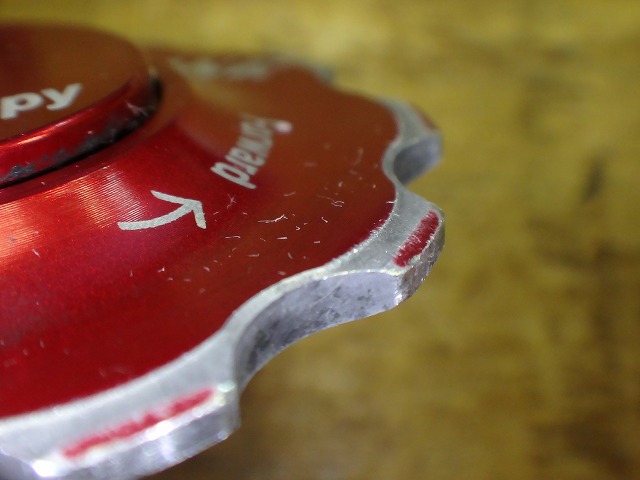
Starting with the upper pulley—
it was originally all red anodized,
but got ground down by contact with the chain's inner plates,
leaving red only on the tooth tips.
The lower pulley shows gaps in the red anodizing that used to reach the tooth tips,
so you can clearly see where it's worn.
Next, the new ones from the left side (inside) view—
again, left is the upper pulley and right is the lower pulley.
After use.

Both show less wear than the right side,
and the upper pulley especially is barely worn down at all.
The bearing was dead.
One last thing. This isn't directly related to today's topic,
but a customer asked me to feature it,
so here are some nice clean shots of the Campagnolo pulley.

↑Right side. Upper pulley is upper right of the image, lower pulley is lower left.
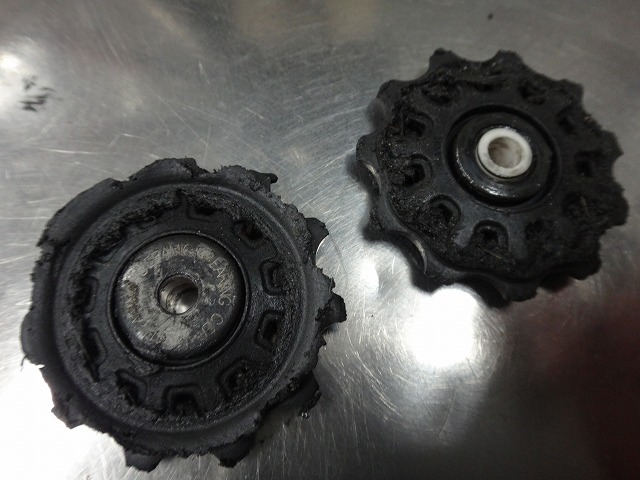
Flipped it over.
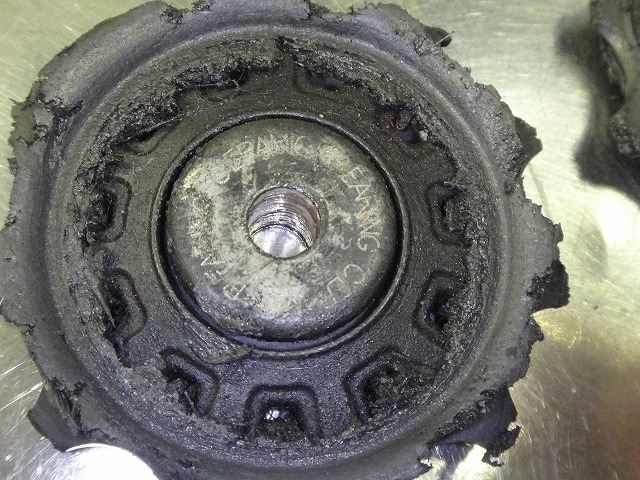
What the heck.
The dirt gets pounded and compacted against the pulley by the chain,
and stuff jammed in the pulley holes especially
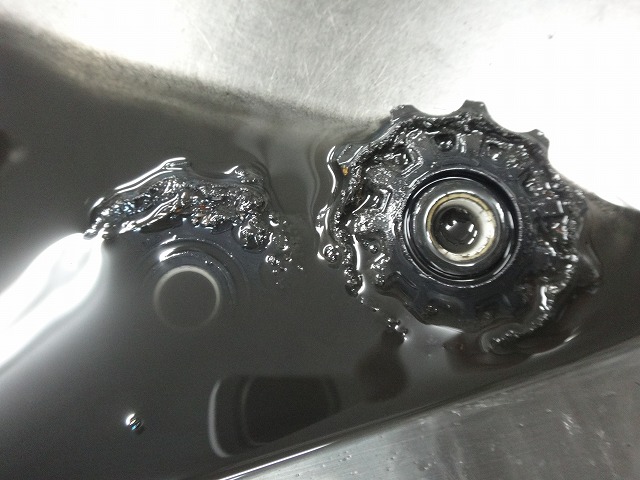
wasn't breaking down with just a soak in parts cleaner, so

I cleaned it another way.
One thing I really liked about the Wishbone pulley was
the lack of lightening holes, and honestly,
a pulley without weight-reduction cutouts is genuinely easier to clean.
By the way, this pulley's customer
seems to really like the "Metal Stag Beetle" from a recent post (→here),
and I was surprised that this "Metal Stag Beetle" nomuralab jargon
has become a generic term(?). Plus, when I just Googled it, "Metal Stag Beetle Yodogawa" shows up in the suggestions...