The other day I briefly wrote something like "there's some merit to reverse Italian lacing on the freewheel side," and someone asked me "why?" in the comments, so today I'm writing about that.
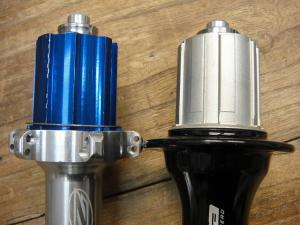
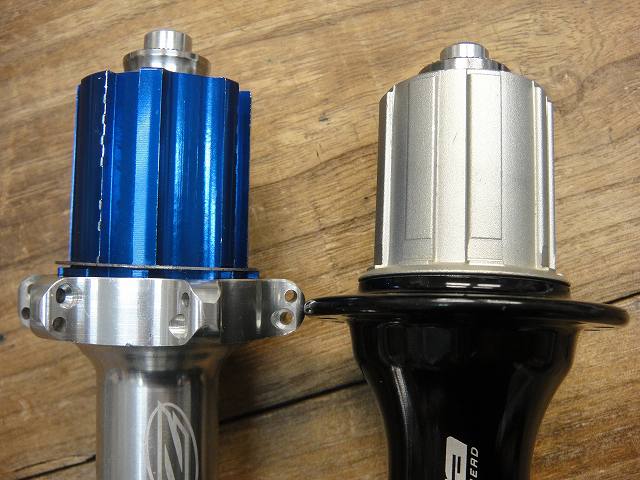
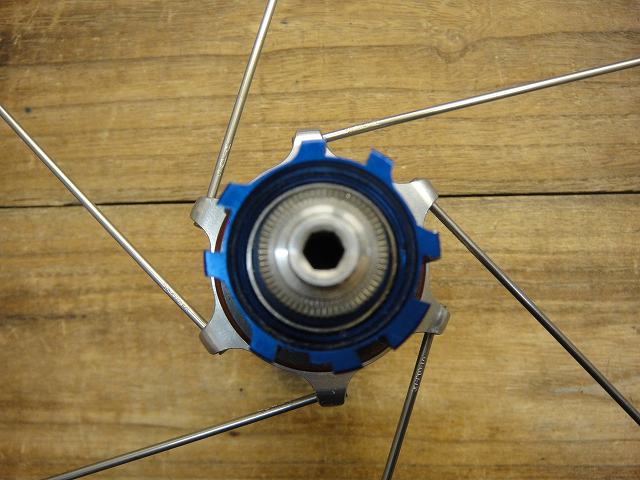
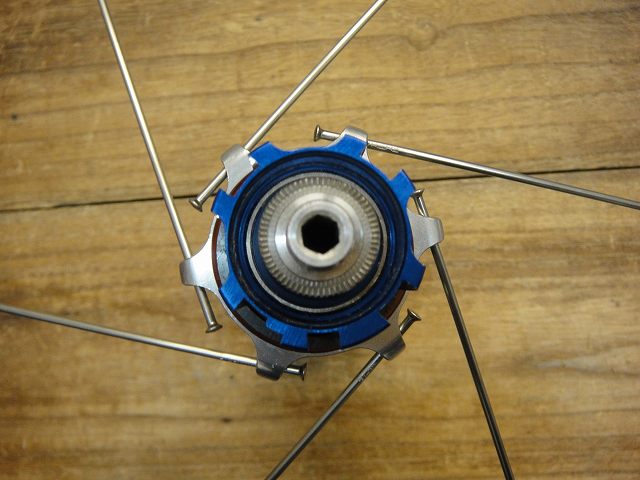
↑The image on the left is my ZIPP from a while back, and on the right is an FSA hub.
The FSA hub is a normal flange hub.
In the case of tangential lacing, from the same flange
we get spokes going in both the porcupine direction and the reverse porcupine direction.
I'm going to call this type of normal hub flange a "coaxial flange" from now on.
By contrast, with the ZIPP hub,
the porcupine direction and reverse porcupine direction spokes
clearly exit from different positions. There's a left-right offset in their positions.
I'm going to call this type of hub a "biaxial flange" from now on.
A little tangent here.
Not directly related to today's discussion, but while I'm at it.
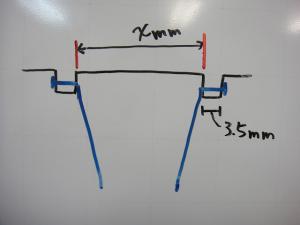
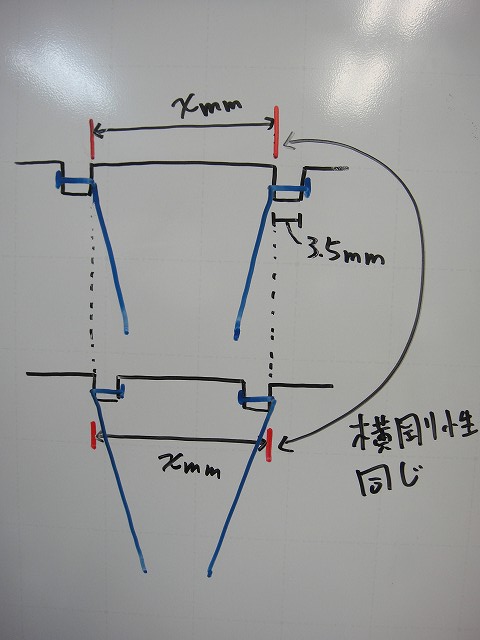
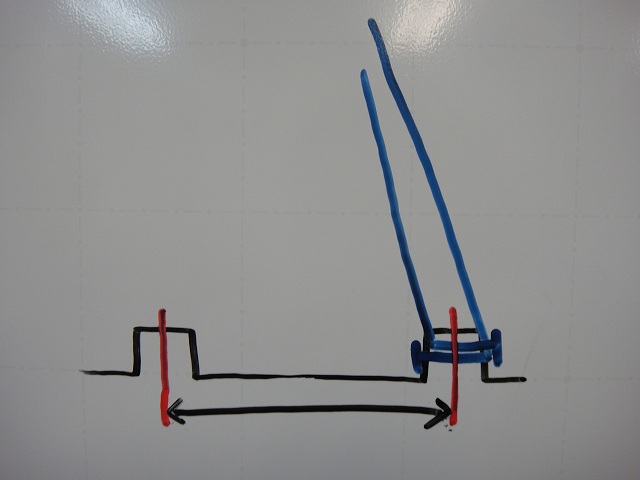
The flange width I use as the basis for calculating lateral stiffness
is, strictly speaking, the width between "spoke exit positions."
That's the Xmm (the width between the red lines) in the diagram above.
Normal hub flanges are usually about just under 3.5mm thick, but
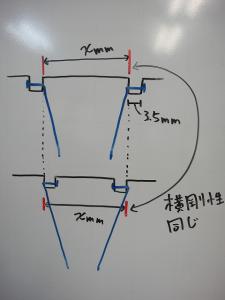
suppose you had a front wheel with all outpoke radial lacing,
and you built it on a front hub with biaxial flanges 7mm narrower—
you could make the argument that despite different flange widths, the lateral stiffness is the same.
This is also the basis for why I build almost all of my personal wheels with all inpoke lacing,
but because most radial lacing in the world uses all outpoke,
I don't push this point strongly myself.
It's also why it's not basically adopted on Nmu Lab wheels.
However, if someone asks me to "build it with inpoke radial," I'd normally say yes.

With tangential lacing, we're alternating between inpoke and outpoke,
and in this case I use the flange center as the basis for lateral stiffness calculation.
As a side note, spoke length is calculated from the flange outside-to-outside width,
so the calculated spoke length is the inpoke length.
Since there's not much difference, I just build the outpoke at that length too.
End of tangent
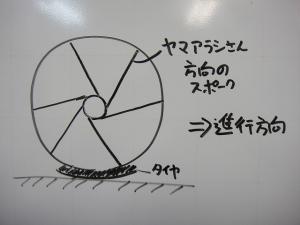
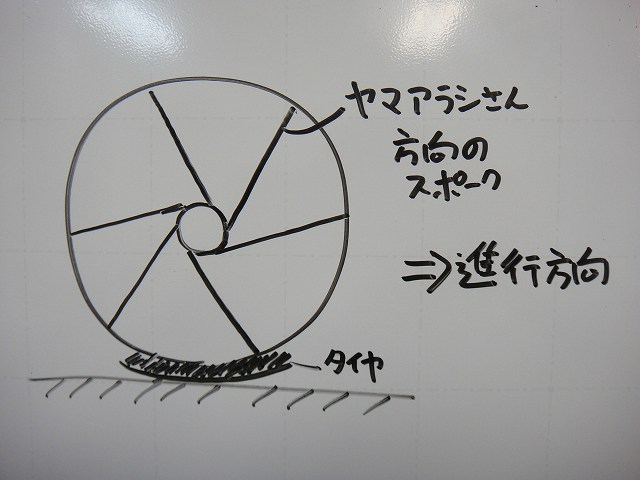
When you stomp on the pedal and the rear wheel tire pushes off the ground,
the spokes' job is to transmit the hub's forward twisting power to the rim.
The spokes mainly doing work at that moment are the porcupine direction spokes.

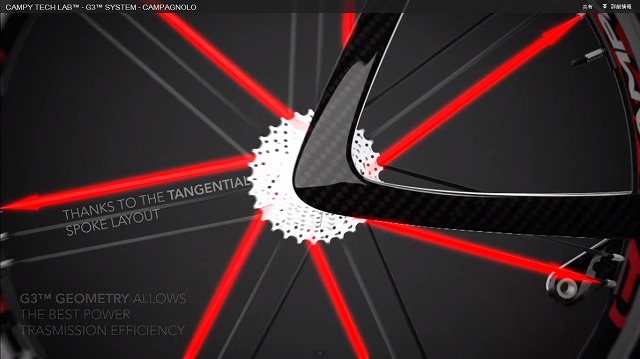
This is a frame grab from a Campagnolo video,
and regarding power transmission they only evaluate
the porcupine direction spokes.
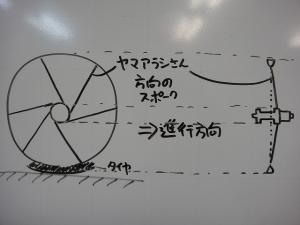
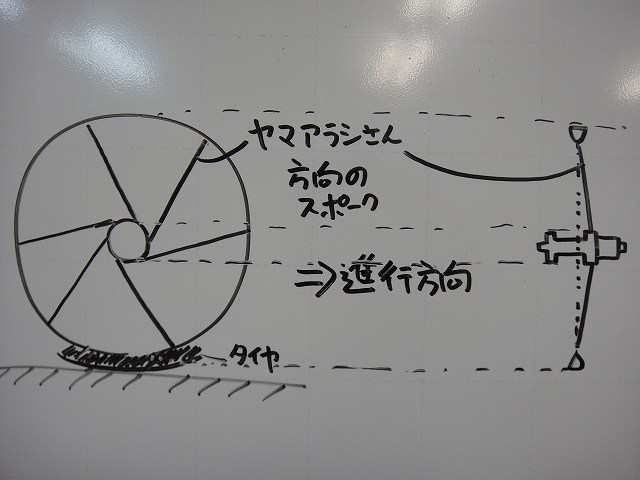
And so the porcupine direction spokes hold the key to drive efficiency,
but if you focus only on drive efficiency, the porcupine direction spokes
should ideally be closer to the hub center (directly below the rim).
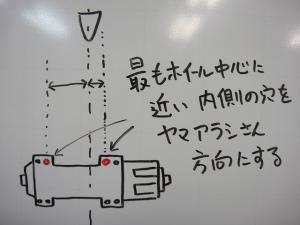
Applying this to a biaxial flange hub,
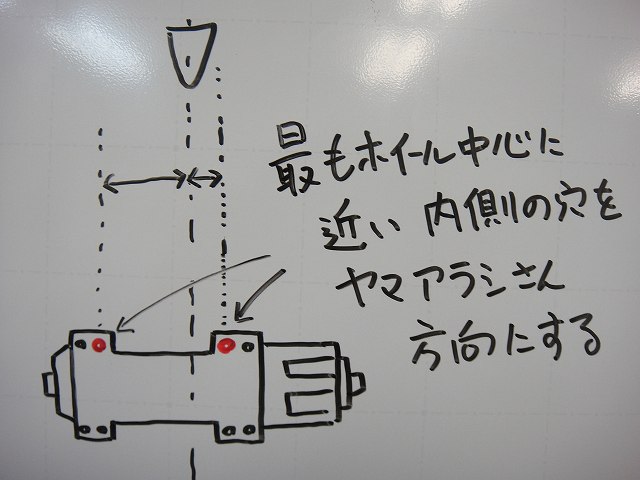
you'd route the porcupine direction spokes through the red hole in the diagram above.
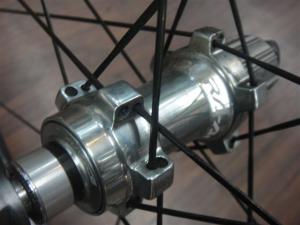
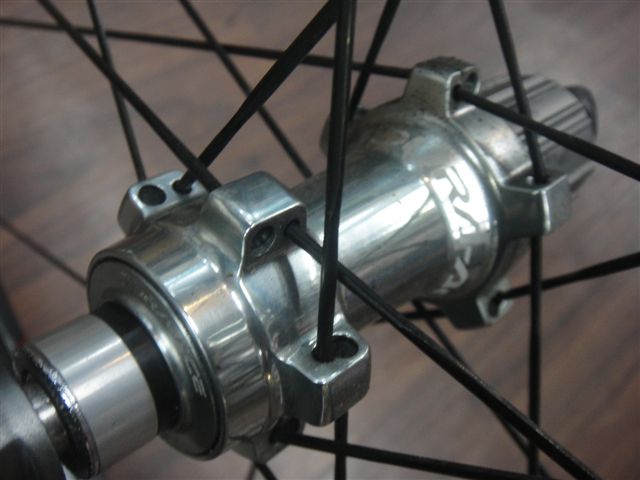
↑That's this configuration.
On the biaxial flange, the porcupine direction spokes
are positioned toward the side closer to directly below the rim.
However, you'll notice the rightmost spoke here
is reverse porcupine direction. Depending on your perspective, that's reverse Italian lacing.
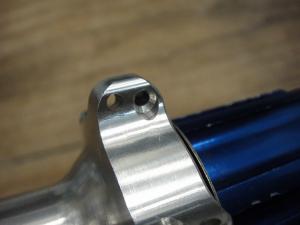
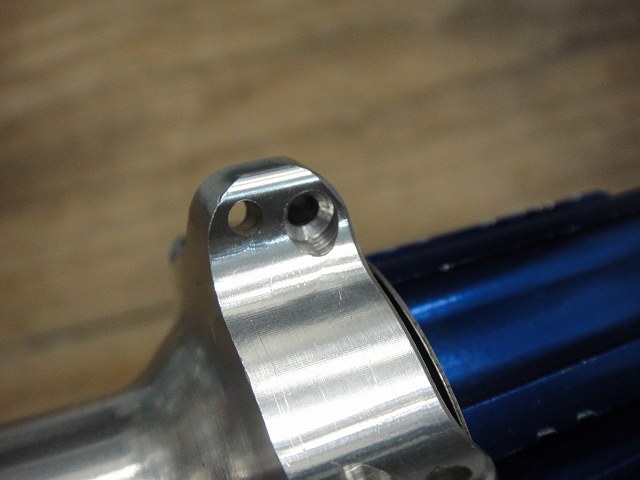
Actually, the old ZIPP is the same way.
The hole's machined geometry specifies which direction the spoke goes through.
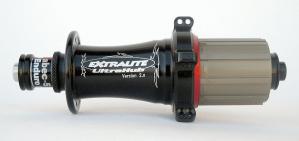
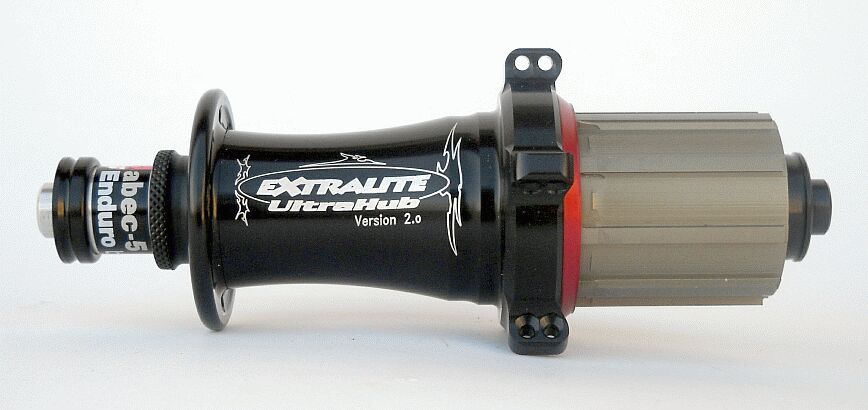
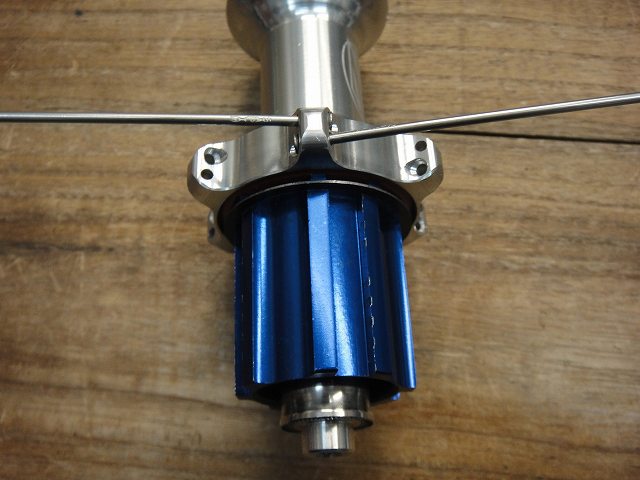
This is an ExtraLite hub, and despite being biaxial flange,
it's designed so you can thread spokes either way. Clever.
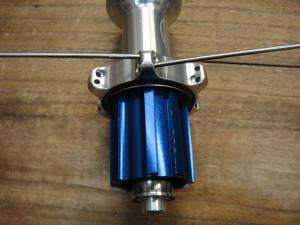
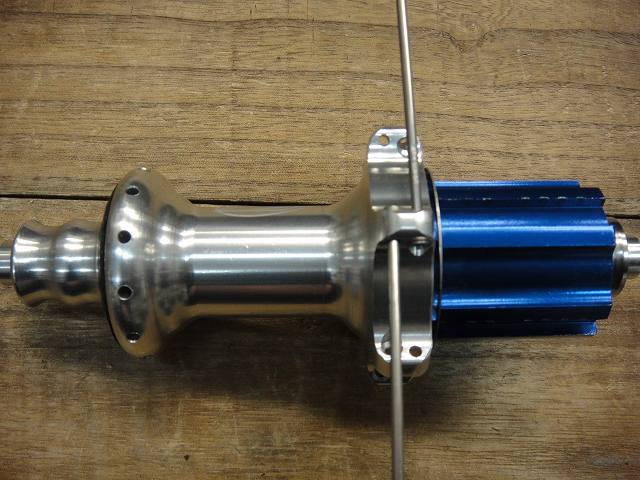
With the old ZIPP, you have to thread the spokes this way.
If you look at it from a coaxial flange perspective, it's definitely reverse Italian lacing.
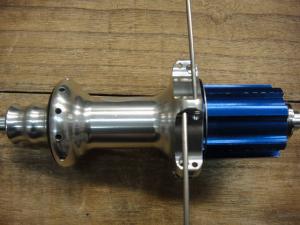
But looking at it this way, I can sense the intention to position
the porcupine direction spokes toward the side closer to directly below the rim.
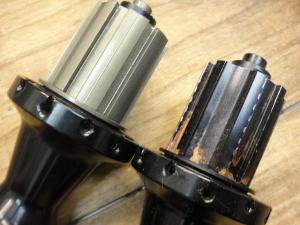
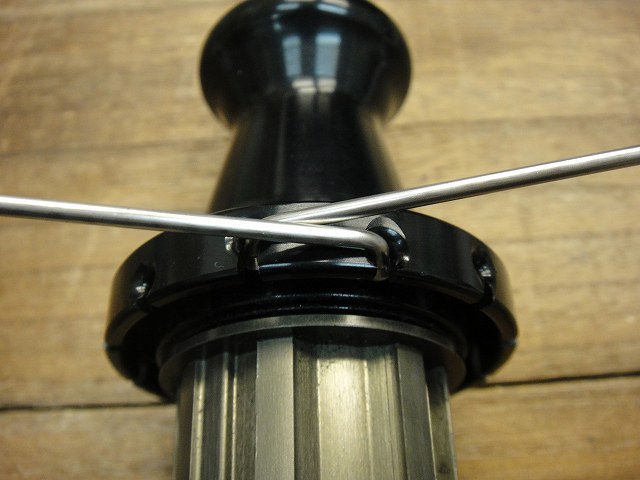
With Colima, the hole position is only barely biaxial flange enough,
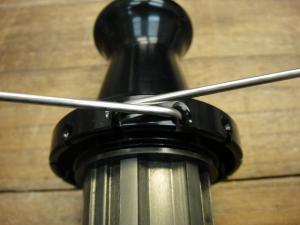
and the wheel is built in the direction interpretable as Italian lacing (the orientation in the image above).
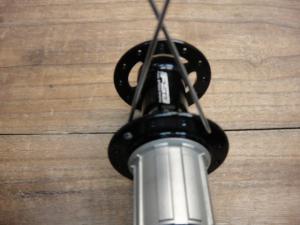
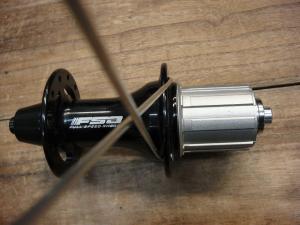
↑Regular hub (coaxial flange) Italian lacing looks like this.

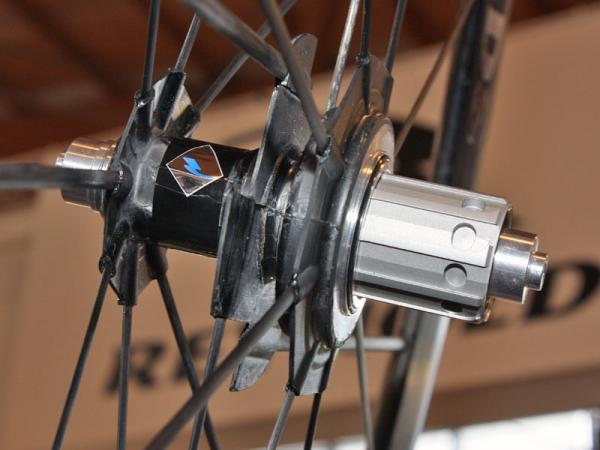
Back in the day, FSA and Reynolds RZR had three-flange hubs.
The image above is an RZR, and the rear wheel has left-right radial lacing.
Since the spoke and hub flange are locked down tight in carbon,
this works.
Looking at the middle flange's position carefully, it's at the hub center.
Directly below the rim.
Since it's responsible for driving torque transmission,
it only has porcupine direction spokes.
Like in the Campagnolo video image earlier,
reverse porcupine direction spokes are ignored
in terms of drive transmission efficiency.
The following is my personal opinion, but
if you go as far as installing a third flange at the hub center,
then having porcupine direction spokes directly below the rim makes sense.

However, with the biaxial flange design of Shimano or ZIPP,
the freewheel-side center-ish hole isn't dramatically more centered.
Plus, the rightmost spoke is reverse porcupine direction
and runs nearly tangentially, so during pedaling with forward twisting power
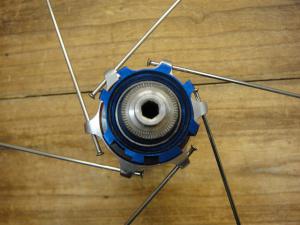
I can't shake the image that the spoke might slip out
under that kind of stress.
In reality it won't happen because there's spoke tension,
but I don't like the thought that it "might."
The RZR has no reverse porcupine direction spokes—
that's a thoughtfully engineered design.
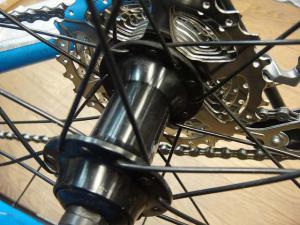
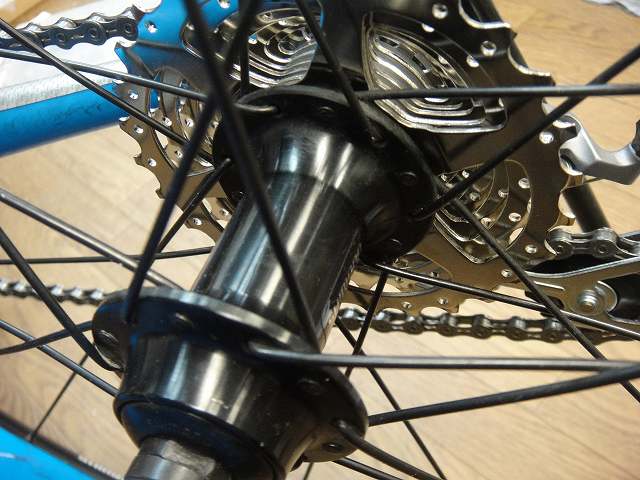
With Shimano, the biaxial flange hub ends up being laced reverse Italian style.
The same goes for the freewheel side of the current Optaval (ORIGINAL PATENT BY ROVAL?).
Way back during the 7850 era, I asked about this reverse Italian lacing equivalent
at a Shimano seminar, and the answer was basically "we think that's best for us." Fine, you think that.
If they were going to copy 2:1 lacing for Optaval anyway,
they should've just gone with high-low flanges.
Though that would've made it look like "we're just offering Fulcrum Racing Speed in different rim heights."
The image above is a WH-R500 (coaxial flange hub),
and this is built Italian lacing style.
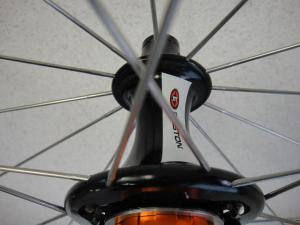
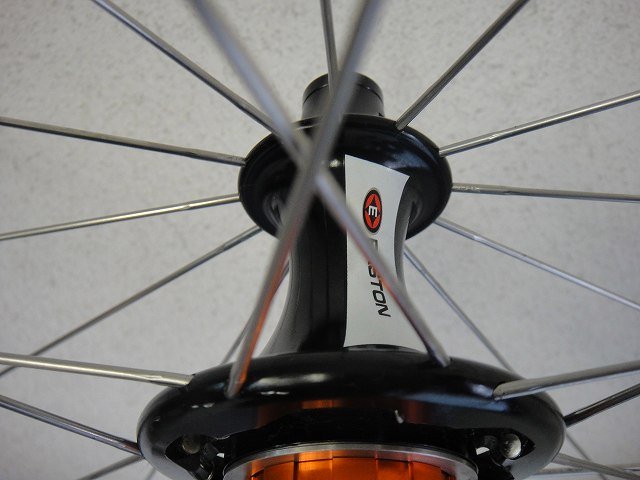
With Easton, the biaxial flange is about the same degree as coaxial flange,
but they use what can be interpreted as reverse Italian lacing.
Since the spokes stand much more upright than tangential angle,
it looks better against "spoke root pull-out stress."
At Easton, even their butted spoke model (coaxial flange hub) is
reverse Italian laced.
Like the PowerTap in-house wheel I mentioned the other day, there seems to be
a philosophy in hand-building that favors reverse Italian lacing too.
This is what I meant at the start by "there's some merit to reverse Italian lacing,"
but I don't think it's right, so for rear wheels (if rim-brake-side)
I do Italian lacing exclusively.
Actually, I've been asked in comments before: "Isn't reverse Italian lacing more drive efficient?"
In this article I'm calling the regular hub "coaxial flange," but
even then, there's still about 3.5mm of flange thickness that makes it biaxial.
With reverse Italian lacing, the porcupine direction spoke gets about 3.5mm
closer to directly below the rim.
If you only look at that, reverse Italian seems better, but
when you factor in behavior during hard braking and
wanting the spoke that gets pulled during pedaling to be in the position
closest to the sprocket, I think Italian lacing is better overall.
Many manufacturers build straight spokes with reverse Italian equivalent lacing,
but besides small ones, only Shimano and Easton do this.
Mavic, Campagnolo, and Fulcrum use Italian lacing equivalent.
(Which means they don't have as much biaxial flange design, but)
My conclusion is that even accounting for the merit in reverse Italian lacing,
it's not good practice.
↑Here's that opening image again.
Even though it's called biaxial flange, the dimensions are actually barely different from coaxial flange.
↑The image on the left is my ZIPP from a while back, and on the right is an FSA hub.
The FSA hub is a normal flange hub.
In the case of tangential lacing, from the same flange
we get spokes going in both the porcupine direction and the reverse porcupine direction.
I'm going to call this type of normal hub flange a "coaxial flange" from now on.
By contrast, with the ZIPP hub,
the porcupine direction and reverse porcupine direction spokes
clearly exit from different positions. There's a left-right offset in their positions.
I'm going to call this type of hub a "biaxial flange" from now on.

A little tangent here.
Not directly related to today's discussion, but while I'm at it.
The flange width I use as the basis for calculating lateral stiffness
is, strictly speaking, the width between "spoke exit positions."
That's the Xmm (the width between the red lines) in the diagram above.
Normal hub flanges are usually about just under 3.5mm thick, but
suppose you had a front wheel with all outpoke radial lacing,
and you built it on a front hub with biaxial flanges 7mm narrower—
you could make the argument that despite different flange widths, the lateral stiffness is the same.
This is also the basis for why I build almost all of my personal wheels with all inpoke lacing,
but because most radial lacing in the world uses all outpoke,
I don't push this point strongly myself.
It's also why it's not basically adopted on Nmu Lab wheels.
However, if someone asks me to "build it with inpoke radial," I'd normally say yes.
With tangential lacing, we're alternating between inpoke and outpoke,
and in this case I use the flange center as the basis for lateral stiffness calculation.
As a side note, spoke length is calculated from the flange outside-to-outside width,
so the calculated spoke length is the inpoke length.
Since there's not much difference, I just build the outpoke at that length too.
End of tangent
When you stomp on the pedal and the rear wheel tire pushes off the ground,
the spokes' job is to transmit the hub's forward twisting power to the rim.
The spokes mainly doing work at that moment are the porcupine direction spokes.
This is a frame grab from a Campagnolo video,
and regarding power transmission they only evaluate
the porcupine direction spokes.
And so the porcupine direction spokes hold the key to drive efficiency,
but if you focus only on drive efficiency, the porcupine direction spokes
should ideally be closer to the hub center (directly below the rim).
Applying this to a biaxial flange hub,
you'd route the porcupine direction spokes through the red hole in the diagram above.
↑That's this configuration.
On the biaxial flange, the porcupine direction spokes
are positioned toward the side closer to directly below the rim.
However, you'll notice the rightmost spoke here
is reverse porcupine direction. Depending on your perspective, that's reverse Italian lacing.
Actually, the old ZIPP is the same way.
The hole's machined geometry specifies which direction the spoke goes through.
This is an ExtraLite hub, and despite being biaxial flange,
it's designed so you can thread spokes either way. Clever.
With the old ZIPP, you have to thread the spokes this way.
If you look at it from a coaxial flange perspective, it's definitely reverse Italian lacing.
But looking at it this way, I can sense the intention to position
the porcupine direction spokes toward the side closer to directly below the rim.

With Colima, the hole position is only barely biaxial flange enough,
and the wheel is built in the direction interpretable as Italian lacing (the orientation in the image above).


↑Regular hub (coaxial flange) Italian lacing looks like this.
Back in the day, FSA and Reynolds RZR had three-flange hubs.
The image above is an RZR, and the rear wheel has left-right radial lacing.
Since the spoke and hub flange are locked down tight in carbon,
this works.
Looking at the middle flange's position carefully, it's at the hub center.
Directly below the rim.
Since it's responsible for driving torque transmission,
it only has porcupine direction spokes.
Like in the Campagnolo video image earlier,
reverse porcupine direction spokes are ignored
in terms of drive transmission efficiency.
The following is my personal opinion, but
if you go as far as installing a third flange at the hub center,
then having porcupine direction spokes directly below the rim makes sense.
However, with the biaxial flange design of Shimano or ZIPP,
the freewheel-side center-ish hole isn't dramatically more centered.
Plus, the rightmost spoke is reverse porcupine direction
and runs nearly tangentially, so during pedaling with forward twisting power
I can't shake the image that the spoke might slip out
under that kind of stress.
In reality it won't happen because there's spoke tension,
but I don't like the thought that it "might."
The RZR has no reverse porcupine direction spokes—
that's a thoughtfully engineered design.
With Shimano, the biaxial flange hub ends up being laced reverse Italian style.
The same goes for the freewheel side of the current Optaval (ORIGINAL PATENT BY ROVAL?).
Way back during the 7850 era, I asked about this reverse Italian lacing equivalent
at a Shimano seminar, and the answer was basically "we think that's best for us." Fine, you think that.
If they were going to copy 2:1 lacing for Optaval anyway,
they should've just gone with high-low flanges.
Though that would've made it look like "we're just offering Fulcrum Racing Speed in different rim heights."
The image above is a WH-R500 (coaxial flange hub),
and this is built Italian lacing style.
With Easton, the biaxial flange is about the same degree as coaxial flange,
but they use what can be interpreted as reverse Italian lacing.
Since the spokes stand much more upright than tangential angle,
it looks better against "spoke root pull-out stress."
At Easton, even their butted spoke model (coaxial flange hub) is
reverse Italian laced.
Like the PowerTap in-house wheel I mentioned the other day, there seems to be
a philosophy in hand-building that favors reverse Italian lacing too.
This is what I meant at the start by "there's some merit to reverse Italian lacing,"
but I don't think it's right, so for rear wheels (if rim-brake-side)
I do Italian lacing exclusively.
Actually, I've been asked in comments before: "Isn't reverse Italian lacing more drive efficient?"
In this article I'm calling the regular hub "coaxial flange," but
even then, there's still about 3.5mm of flange thickness that makes it biaxial.
With reverse Italian lacing, the porcupine direction spoke gets about 3.5mm
closer to directly below the rim.
If you only look at that, reverse Italian seems better, but
when you factor in behavior during hard braking and
wanting the spoke that gets pulled during pedaling to be in the position
closest to the sprocket, I think Italian lacing is better overall.
Many manufacturers build straight spokes with reverse Italian equivalent lacing,
but besides small ones, only Shimano and Easton do this.
Mavic, Campagnolo, and Fulcrum use Italian lacing equivalent.
(Which means they don't have as much biaxial flange design, but)
My conclusion is that even accounting for the merit in reverse Italian lacing,
it's not good practice.
↑Here's that opening image again.
Even though it's called biaxial flange, the dimensions are actually barely different from coaxial flange.