This is a continuation of yesterday's post.
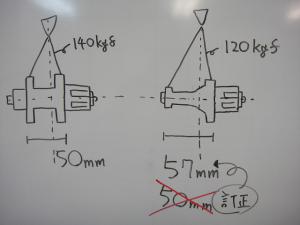
I should have written that a 57mm-wide hub with 120kgf spoke tension has better lateral stiffness than a 50mm-wide hub with 140kgf on the freewheel side,
but the 57mm width somehow got written as 50mm.
Thank you for pointing that out.
Sorry for always leaving comments like this.
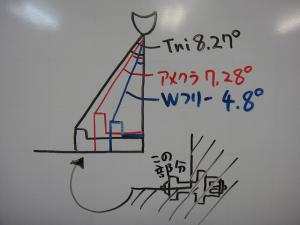
In yesterday's post I wrote that "Ambrosio hubs are somewhere in between W freehubs and Tni Dura-Ace in terms of flange width,"
but I received a comment that regarding the angle formed between the wheel center and the spokes, things are as I described above.
It seems that Ambrosio's angle leaning toward Tni is partly thanks to the large flange.
And I received a point that using a 4.8° hub to call Ambrosio weak might be a bit forced.
Also, regarding the freewheel side, since it has a similar width of around 20mm
and is a large flange, I received a comment that it has an advantage over Tni.
And I received a comment asking whether Ambrosio hubs are really bad hubs that get swapped out for Tni and such only by spending extra money?
In building better hand-built wheels, I first keep in mind
"that's what theory says," but
Securing lateral stiffness with Ambrosio hubs is truly difficult.
While building (that is, before riding), you can feel the lateral weakness.
When actually using them on descents and corners, you notice it.
When I know I can build something better with the same spoke tension and building method using other hubs,
there's no reason to deliberately build with Ambrosio.
When asked whether an already-built Ambrosio wheel is worth rebuilding,
that's a matter of personal values, but at our shop we've
received a considerable number of "Ambrosio to Dura-Ace or Tni hub rebuild" requests, but never the reverse,
so maybe many people think it's "worth the trouble of rebuilding."
Regarding W freehubs, I've managed to build them without spoke rub even when I'm struggling.
Ambrosio has even better conditions as a hub, so of course I can build a wheel that doesn't have spoke rub.
I was just talking with a customer, and
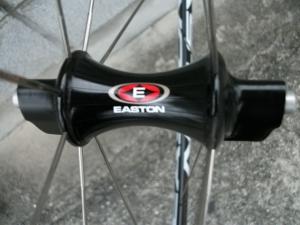
apparently the front wheel of an Easton TT wheel,
the EC90TT front wheel has extremely low lateral stiffness and rubs the brake shoe.
It's not a setup where the gap between the shoe and rim is squeezed tight.
It may be partly due to the 12H spoke count, but my Shamal 12 doesn't have spoke rub
(and I've actually never heard of spoke rub on a front wheel before),
so it really seems the narrow flange width is the culprit.
At first he thought the FRM quick-release might be the problem, so
he switched to a Mavic quick-release and tightened it all the way, but
that didn't help.
The high rim height increases the angle between the wheel center and the spokes,
but the narrow flange width couldn't be helped.
In reality, it's meant to be mounted on a TT bike that barely does any standing climbs
and has some aerodynamic benefit, so depending on how it's used, there are situations where it outperforms a normal wheel—
it's a situation-specific wheel, and to achieve that it's sacrificing lateral stiffness.
As a manufacturer, I think they know what they're doing, so there's no blame.
The owner of this wheel also said Ambrosio hubs are weak.
Because of these two instances, they have a harsh view of narrow flange hubs.
Their body weight is around 60kg, and they don't have any particular power.
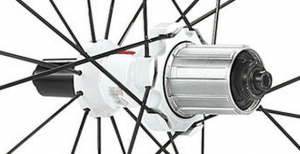
Similarly, Vision's (FSA's TT brand)
Trimax Carbon 50 hub is the same.
As I mentioned before, according to users, they flex uncomfortably on descents, so they've switched them to cyclocross wheels for situations without high-speed cornering.
A 50mm rim height is a kind of compromise similar to going with a large flange,
but even that couldn't cover the lateral weakness.
I'll give this a fair shake too, but this is also originally TT-oriented equipment, so
it's a wheel specialized for the competition style of hunching over aero bars in a forward lean and just hammering away.
In those situations there's a place where it outperforms a normal wheel—
it's a situation-specific wheel, and to achieve that it's sacrificing lateral stiffness.
As a manufacturer, I think they know what they're doing, so there's no blame (second time).
These stories relate to what I wrote earlier, "doing what seems good based on experience,"
in other words, "avoiding what seems bad based on experience."
Not just my own personal experience, but other people's lived opinions are valuable.
The person with the Easton wheel doesn't race, so
it's valuable feedback like "even someone like that (apologies) can feel the weakness,"
and the person with the Vision wheel is an extremely strong rider, so
it's valuable feedback like "so someone with this kind of leg power can really tell."
The Ambrosio hub might work okay as an aero wheel
if you pay attention to the limited protrusion on the non-freewheel side and use it with a reasonably tall rim
(with the caveat that you won't be standing or riding descents with few climbs).
Or thinking about it for small-wheel bikes from the perspective that spoke angles aren't too shallow . . .
but wait, it's a large flange, so that won't work.
The wheel becomes difficult to build.
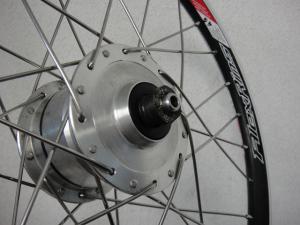
↑That one from the other day was a hassle too.
I don't particularly hate Ambrosio hubs.
I just want to reduce the number of people who buy a narrow flange hub wheel and think "lateral feels weak,"
and I've decided not to use them in the wheels I build.
If a customer brings one in and asks me to build with an Ambrosio hub, I'll aim to build as strong a wheel as I can within the limits,
and there are examples of that.
(But there's never been a case of rebuilding a non-Ambrosio hub wheel into Ambrosio.)
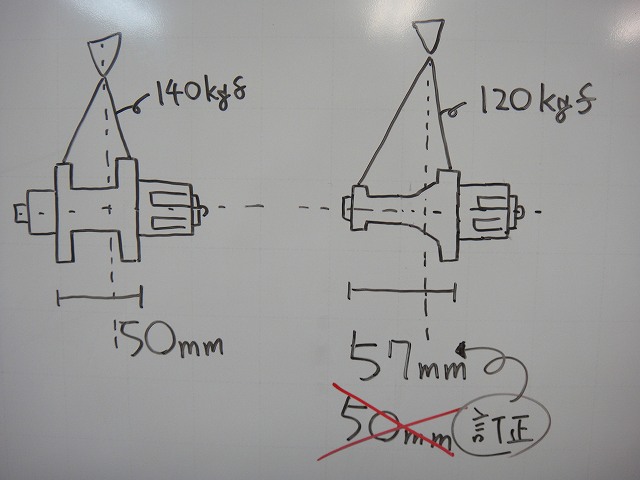
I should have written that a 57mm-wide hub with 120kgf spoke tension has better lateral stiffness than a 50mm-wide hub with 140kgf on the freewheel side,
but the 57mm width somehow got written as 50mm.
Thank you for pointing that out.
Sorry for always leaving comments like this.
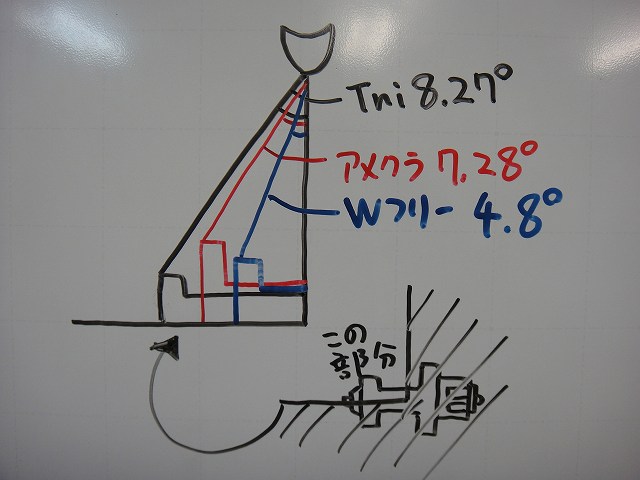
In yesterday's post I wrote that "Ambrosio hubs are somewhere in between W freehubs and Tni Dura-Ace in terms of flange width,"
but I received a comment that regarding the angle formed between the wheel center and the spokes, things are as I described above.
It seems that Ambrosio's angle leaning toward Tni is partly thanks to the large flange.
And I received a point that using a 4.8° hub to call Ambrosio weak might be a bit forced.
Also, regarding the freewheel side, since it has a similar width of around 20mm
and is a large flange, I received a comment that it has an advantage over Tni.
And I received a comment asking whether Ambrosio hubs are really bad hubs that get swapped out for Tni and such only by spending extra money?
In building better hand-built wheels, I first keep in mind
"that's what theory says," but
Securing lateral stiffness with Ambrosio hubs is truly difficult.
While building (that is, before riding), you can feel the lateral weakness.
When actually using them on descents and corners, you notice it.
When I know I can build something better with the same spoke tension and building method using other hubs,
there's no reason to deliberately build with Ambrosio.
When asked whether an already-built Ambrosio wheel is worth rebuilding,
that's a matter of personal values, but at our shop we've
received a considerable number of "Ambrosio to Dura-Ace or Tni hub rebuild" requests, but never the reverse,
so maybe many people think it's "worth the trouble of rebuilding."
Regarding W freehubs, I've managed to build them without spoke rub even when I'm struggling.
Ambrosio has even better conditions as a hub, so of course I can build a wheel that doesn't have spoke rub.
I was just talking with a customer, and
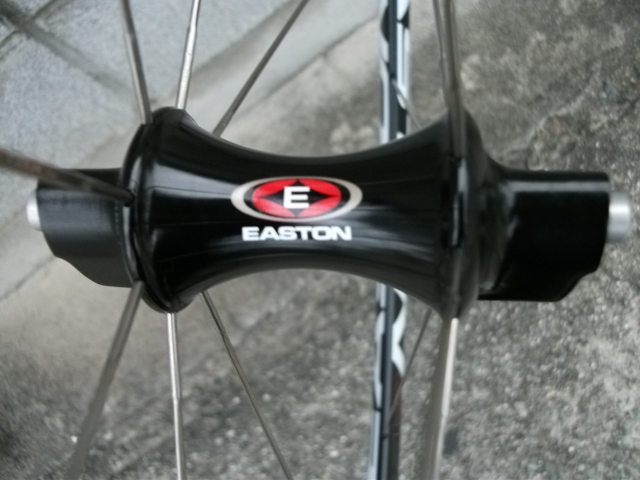
apparently the front wheel of an Easton TT wheel,
the EC90TT front wheel has extremely low lateral stiffness and rubs the brake shoe.
It's not a setup where the gap between the shoe and rim is squeezed tight.
It may be partly due to the 12H spoke count, but my Shamal 12 doesn't have spoke rub
(and I've actually never heard of spoke rub on a front wheel before),
so it really seems the narrow flange width is the culprit.
At first he thought the FRM quick-release might be the problem, so
he switched to a Mavic quick-release and tightened it all the way, but
that didn't help.
The high rim height increases the angle between the wheel center and the spokes,
but the narrow flange width couldn't be helped.
In reality, it's meant to be mounted on a TT bike that barely does any standing climbs
and has some aerodynamic benefit, so depending on how it's used, there are situations where it outperforms a normal wheel—
it's a situation-specific wheel, and to achieve that it's sacrificing lateral stiffness.
As a manufacturer, I think they know what they're doing, so there's no blame.
The owner of this wheel also said Ambrosio hubs are weak.
Because of these two instances, they have a harsh view of narrow flange hubs.
Their body weight is around 60kg, and they don't have any particular power.
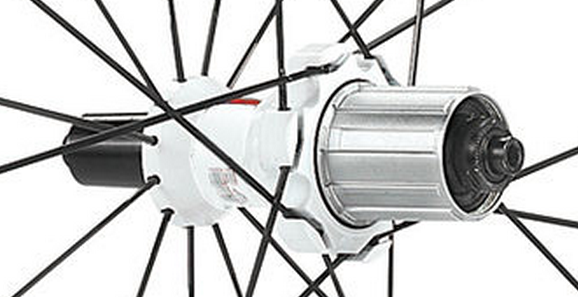
Similarly, Vision's (FSA's TT brand)
Trimax Carbon 50 hub is the same.
As I mentioned before, according to users, they flex uncomfortably on descents, so they've switched them to cyclocross wheels for situations without high-speed cornering.
A 50mm rim height is a kind of compromise similar to going with a large flange,
but even that couldn't cover the lateral weakness.
I'll give this a fair shake too, but this is also originally TT-oriented equipment, so
it's a wheel specialized for the competition style of hunching over aero bars in a forward lean and just hammering away.
In those situations there's a place where it outperforms a normal wheel—
it's a situation-specific wheel, and to achieve that it's sacrificing lateral stiffness.
As a manufacturer, I think they know what they're doing, so there's no blame (second time).
These stories relate to what I wrote earlier, "doing what seems good based on experience,"
in other words, "avoiding what seems bad based on experience."
Not just my own personal experience, but other people's lived opinions are valuable.
The person with the Easton wheel doesn't race, so
it's valuable feedback like "even someone like that (apologies) can feel the weakness,"
and the person with the Vision wheel is an extremely strong rider, so
it's valuable feedback like "so someone with this kind of leg power can really tell."
The Ambrosio hub might work okay as an aero wheel
if you pay attention to the limited protrusion on the non-freewheel side and use it with a reasonably tall rim
(with the caveat that you won't be standing or riding descents with few climbs).
Or thinking about it for small-wheel bikes from the perspective that spoke angles aren't too shallow . . .
but wait, it's a large flange, so that won't work.
The wheel becomes difficult to build.
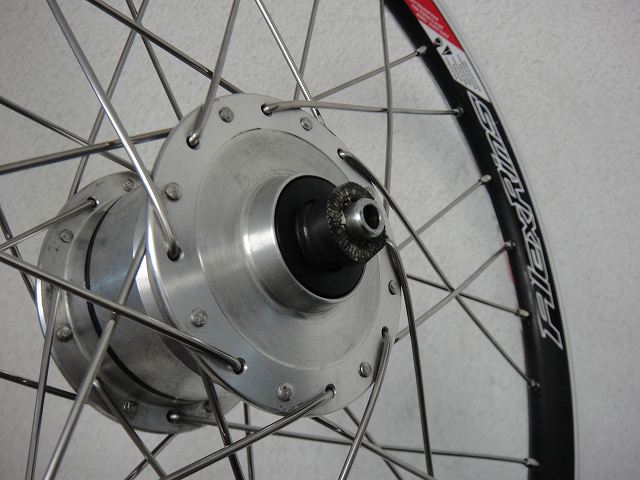
↑That one from the other day was a hassle too.
I don't particularly hate Ambrosio hubs.
I just want to reduce the number of people who buy a narrow flange hub wheel and think "lateral feels weak,"
and I've decided not to use them in the wheels I build.
If a customer brings one in and asks me to build with an Ambrosio hub, I'll aim to build as strong a wheel as I can within the limits,
and there are examples of that.
(But there's never been a case of rebuilding a non-Ambrosio hub wheel into Ambrosio.)