I received an R-SYS SLR (Mavic wheel) from a customer to work on.
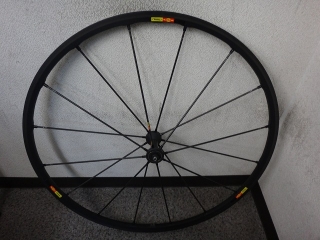
Starting with the front wheel.
The spoke tension feels loose,
and apparently they've replaced the spoke nipple cone (truing tool cone) once before.
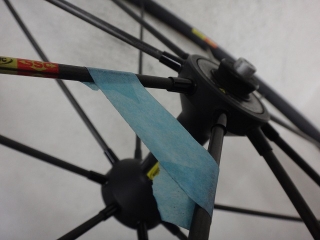

Yeah, it's definitely loose.
When I squeeze the spokes, the tight tape sags.
I found out later that even this was actually the high-tension side.

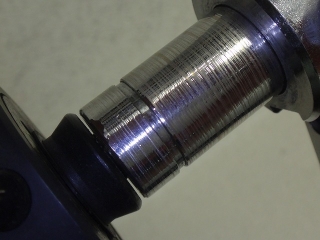
There's wheel centering drift.
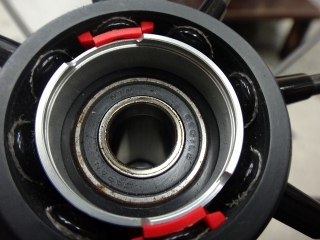
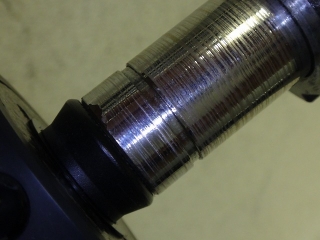
Removing the spoke nipple cone.
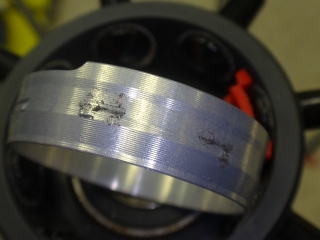
↑High-tension side
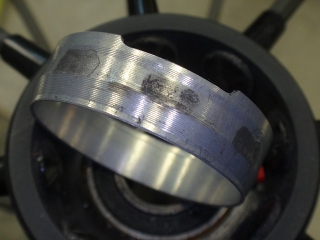
↑Low-tension side
With R-SYS carbon spokes, if properly tensioned,
contact with the spoke nipple cone is maintained only at a point.
As tension decreases, the load during use
seems to apply a force pulling the spoke head out of the hub,
causing the spoke nipple cone to slip over the spoke head
and accelerating spoke head wear.
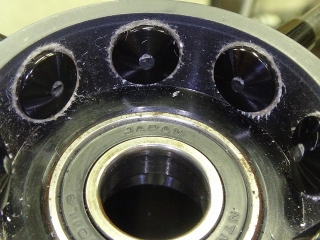
↑High-tension side
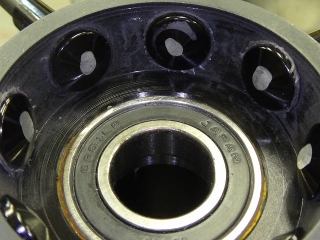
↑Low-tension side
Using the word "tension" for R-SYS carbon spokes isn't entirely accurate,
but I'll use it to describe the degree of pulling force.
Even on this "high-tension side," it's quite loose,
but spoke head wear hasn't progressed too severely.
The spokes on the low-tension side show considerable wear,
but since the spoke nipple cone wouldn't go in without a press tool,
I judged the spoke head wear wasn't severe enough to warrant replacement.
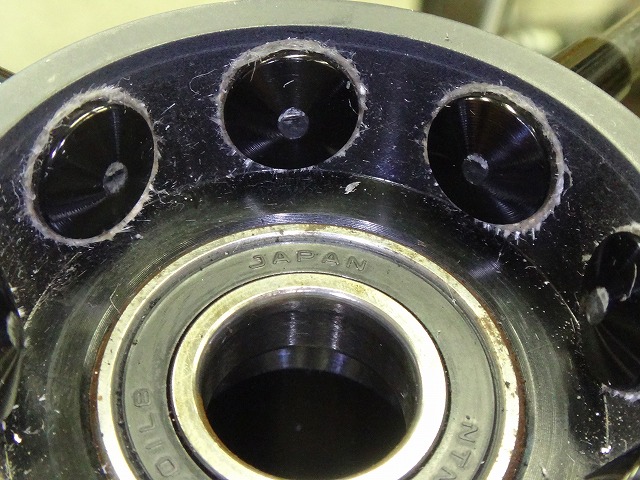
The bearings have been replaced with non-contact seal-type bearings,
but R-SYS wheels (and Mavic wheels in general) have dust caps with large gaps—basically decorative—
so the design relies on contact-type bearing seals for dust and water protection.
Swapping to non-contact bearings just because rotation feels heavy
means drastically increasing bearing replacement frequency.
Whether steel ball non-contact types or ceramic bearings (100% non-contact),
many incompetent shops swap them without explaining these risks.
The bearing in the image has rust blooming on the outer race,
but since rotation had no grinding, I didn't replace it.
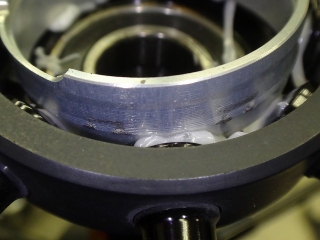
↑Former high-tension side
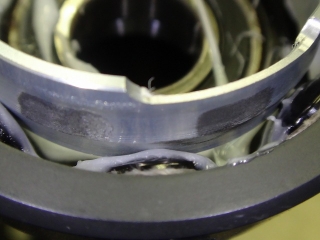
↑Former low-tension side
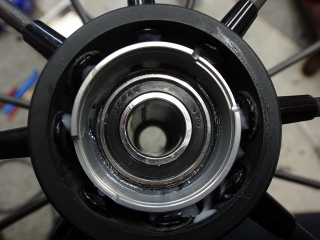
After tensioning the spokes, I deliberately avoided using anti-rotation parts
and pressed the spoke nipple cone into the non-contact area.
At least the former high-tension side shouldn't slip sideways.
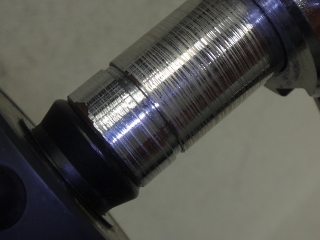
Perfectly centered after tensioning.
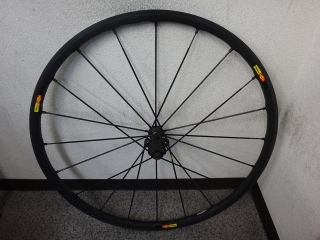
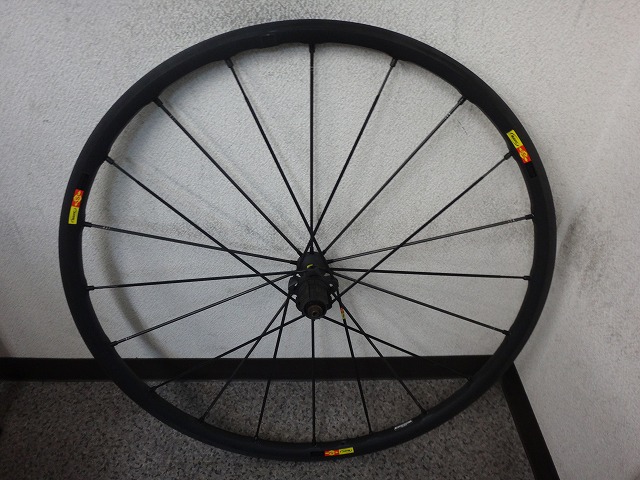
Now for the rear wheel.
The freewheel-side spokes were completely replaced once,
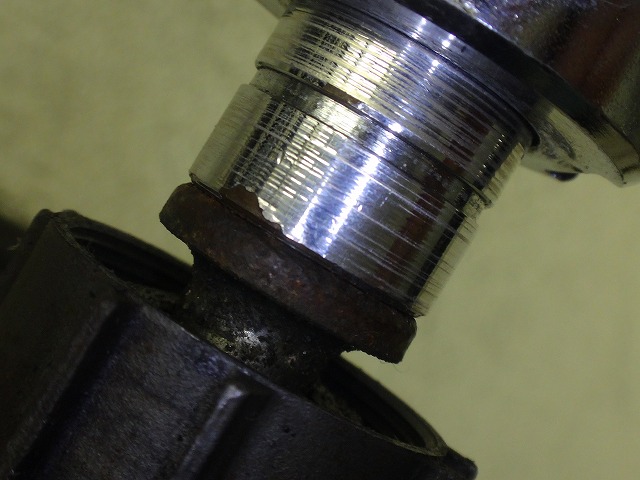
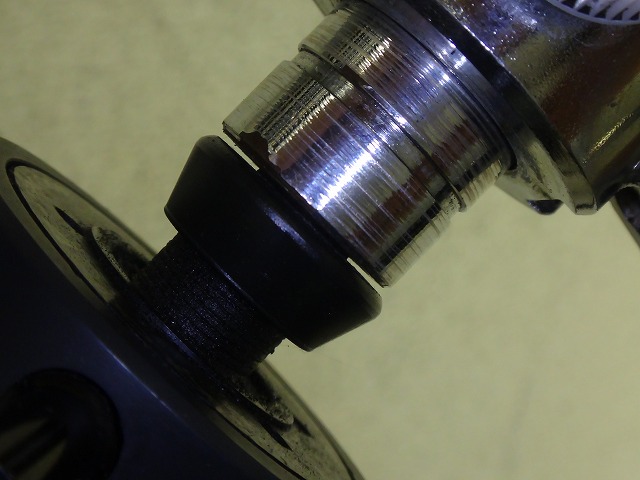
and the left-side spoke nipple cone has been replaced three times! Three times!
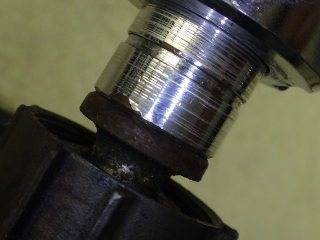
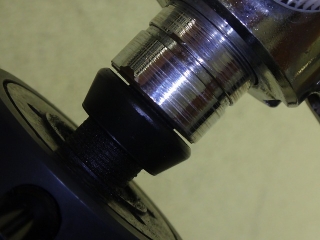
There's centering drift.
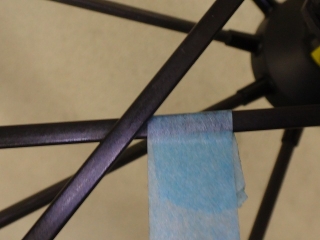
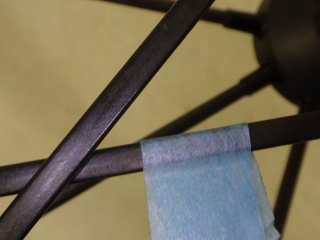
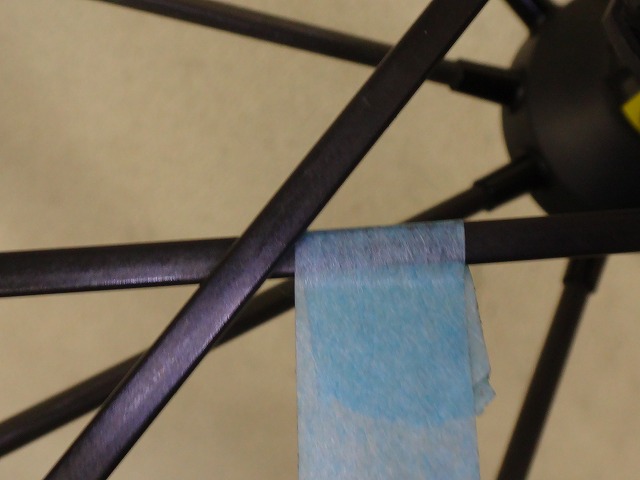
The freewheel-side spoke tension is abnormally low—
basically the wheel is built with just barely enough tension to hold shape,
as if fluffed together. It won't loosen this much from proper initial tension through normal aging use.
Squeeze it and it clicks 100% of the time, 100% reproducible.
If you want it to click, it always will—it's like an instrument in that sense.
As for why the freewheel-side spokes were completely replaced,
it should've been just one bent spoke to repair,
but they could only source a different-profile spoke,
so they replaced the whole set with those.

The spokes currently in this rear wheel
are what's shown as Type 2 in the diagram above,
but the original spokes were probably Type 4.
From the customer's comments, it sounded like Type 4 was "discontinued,"
but Type 4 spokes from this R-SYS generation shouldn't be unobtainable.
If Type 4 was "not immediately available"
so they repaired it with Type 2, that makes sense,
but my suspicious guess is they sourced
a different-era R-SYS spoke and just sold the whole set to the customer.
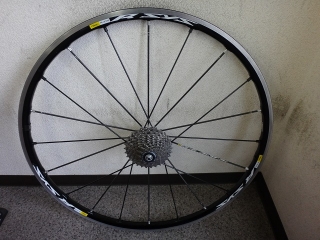
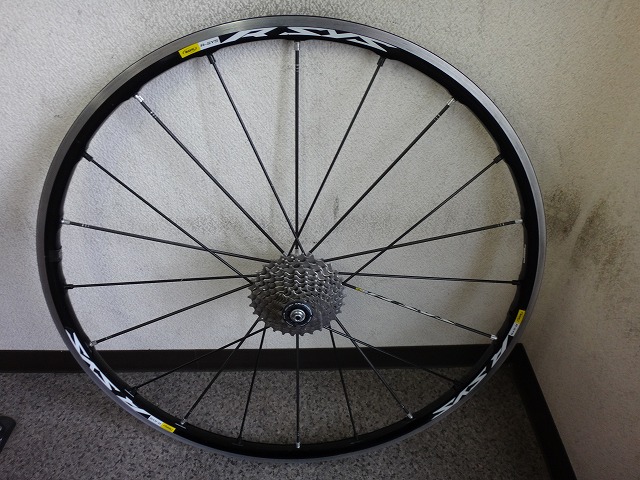
This is a different R-SYS rear wheel that came in
between when I photographed the original and writing this article—
I took reference photos with the customer's permission.
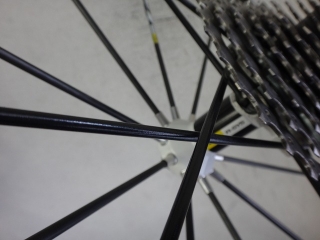
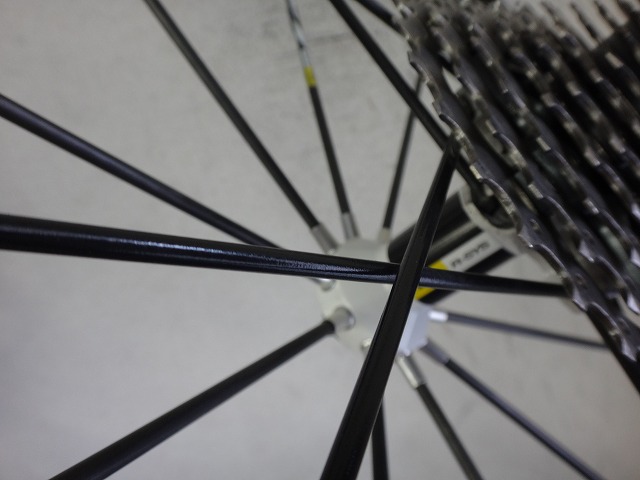
↑Type 3 spokes (round section).
For R-SYS wheels with identical hub and rim dimensions, spoke length is the same.
So you could, for example, fit these spokes to this R-SYS SLR.
With Ksyrium 125 and later models with rounder rim shapes,
the rim dimensions might differ slightly, so that might not work.
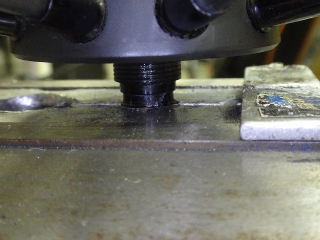
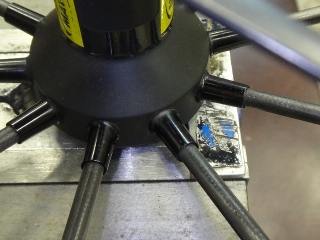
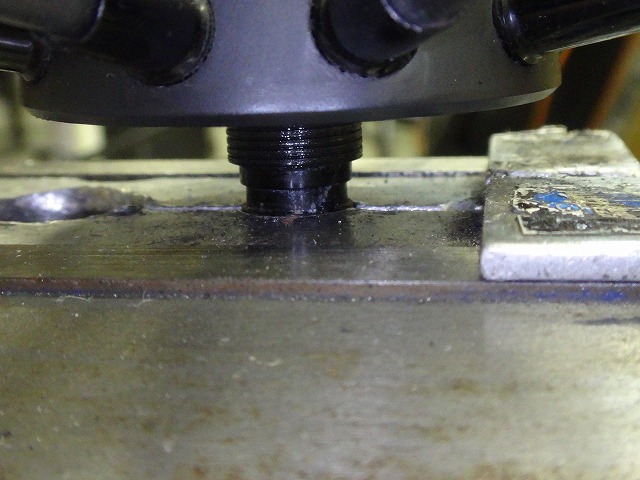
This rear hub requires a 5mm Allen key on both the left hub shaft end and the right axle end
to remove the axle end from the hub shaft,
but the left shaft end has a crack that distorts the 5mm hex hole,
so I used a hub cone wrench to hold the shaft and applied the 5mm key to the right end to remove it.
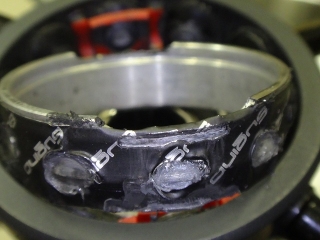
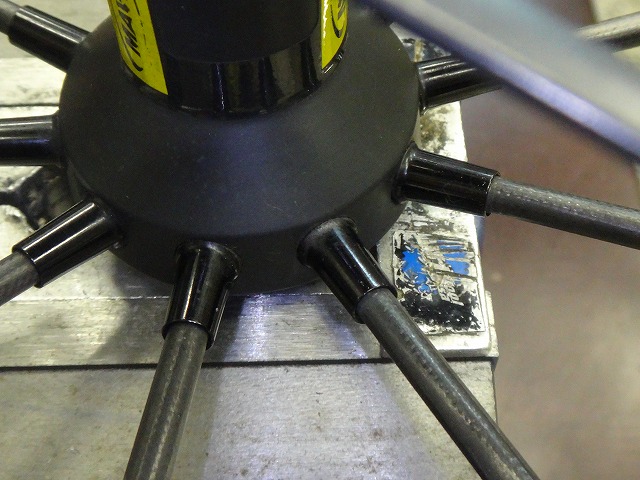
There was Sugino aluminum tape for gap elimination on press-fit bottom brackets
wrapped around the spoke nipple cone.
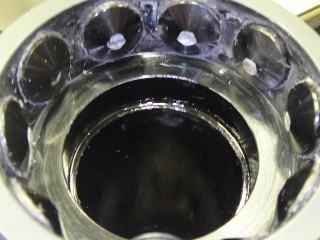
Spoke head wear is worse than the front hub.
In the image, I've already removed the bearings
because I judged the gritty rotation needed replacement.
Of course, they were non-contact bearings.
They mention spoke nipple cone replacement three times,
but if spokes were built properly, the wheel wouldn't reach that condition.
The customer's letter says "spoke head wear caused the spoke nipple cone issue,"
but it's actually the crappy shop's crappy work (wheel-building pretense) that's the "cause"—
spoke head wear has just progressed to abnormal levels as a result.
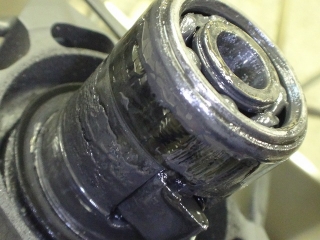
Removed the freewheel body.
I'll do cleaning and lubrication with specialist oil, but... wait?
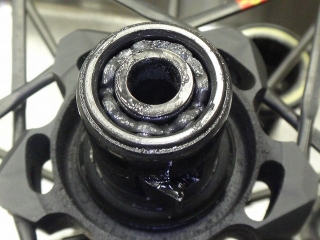
The bearing seals on the hub body right side and
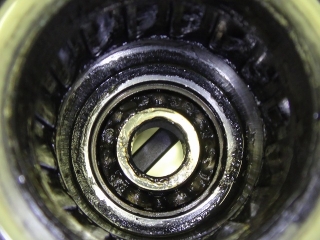
the freewheel body bearings are missing.
They wouldn't come off naturally, so they've clearly been pried out.
When I asked the customer about this,
it was done by a different shop than the one that replaced the spokes,
who told him "this way the rotation will be lighter—it's better"
Ahhhhhhh die die die. You shitty shops. Wherever you are.
The bearing seals I'd already removed from the left hub body side and freewheel body
were one-side-only sealed,
while the right hub body bearing had both seals removed.
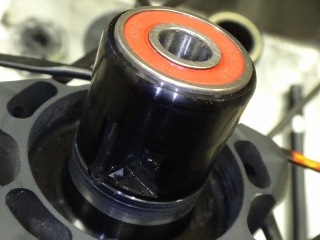

With the customer's permission, I replaced them with contact-type bearings.
I also went with contact-type for the freewheel body bearing.
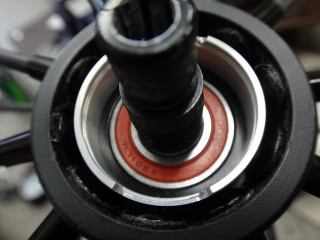
This is a serious problem: the spoke head wear is so severe
that the spoke nipple cone goes in smoothly without pressing.
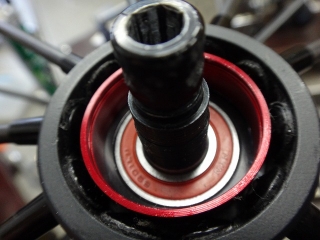
The same was true for the original spoke nipple cone.
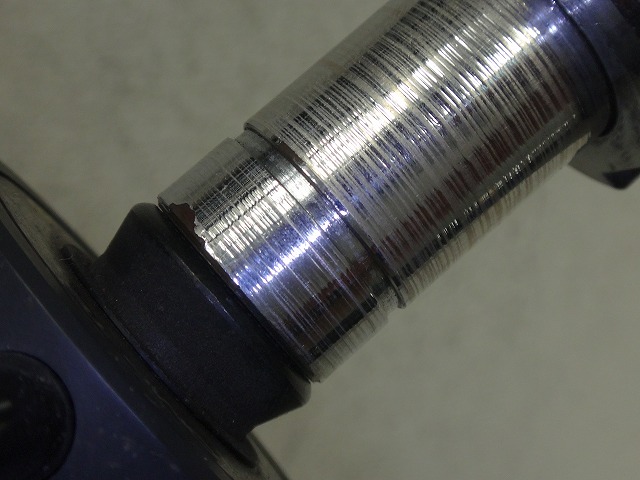
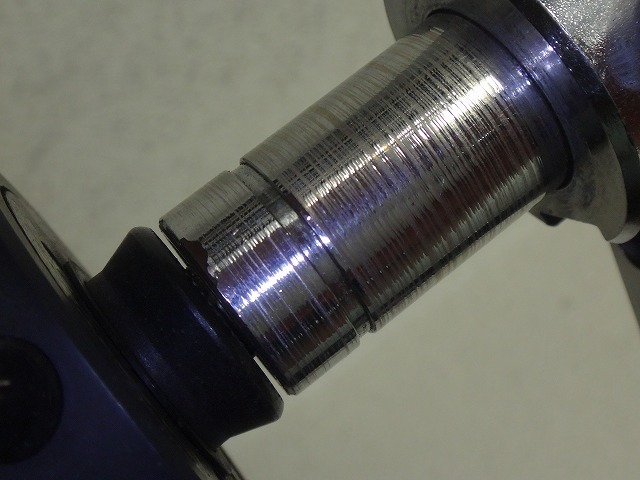
In the image above, at the 9 o'clock position on the hub shaft end
is the crack I mentioned earlier.
It should be fine for wheel use,
but if concerned, the hub shaft should be replaced.
This rear hub seems to need complete freewheel-side spoke replacement,
but this time I addressed it with silicone grease
applied with a new current-model spoke nipple cone plus anti-rotation parts.
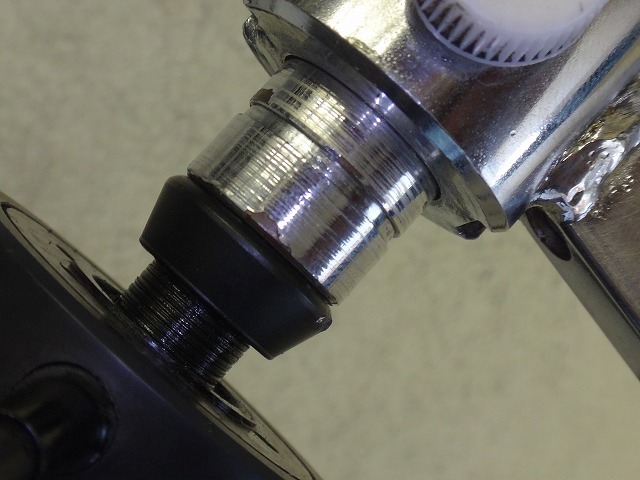
I should mention I also used silicone grease when pressing in
the front hub spoke nipple cone.
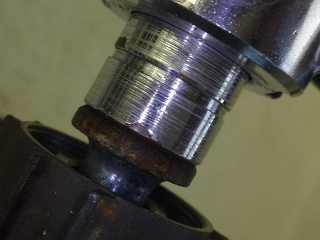
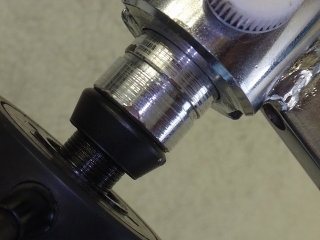
From the loose wheel state, I tensioned it to near the upper limit
that's viable when hanging, and it's perfectly centered.
I think if the right-side aluminum spoke complete replacement had been done properly,
the symptoms wouldn't have progressed this far.
With three spoke nipple cone replacements,
if they'd noticed the tension was loose during replacement,
it wouldn't have gotten this bad.
I started writing this article at 22:18 and saved it at 23:38.
I know long articles take even longer than wheel building,
so today I didn't (couldn't) start on the Nomu Lab wheel #5
with black spokes and silver nipples front wheel.
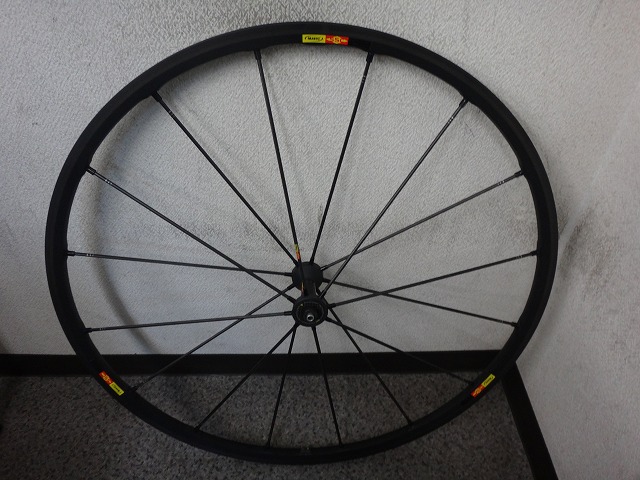
Starting with the front wheel.
The spoke tension feels loose,
and apparently they've replaced the spoke nipple cone (truing tool cone) once before.
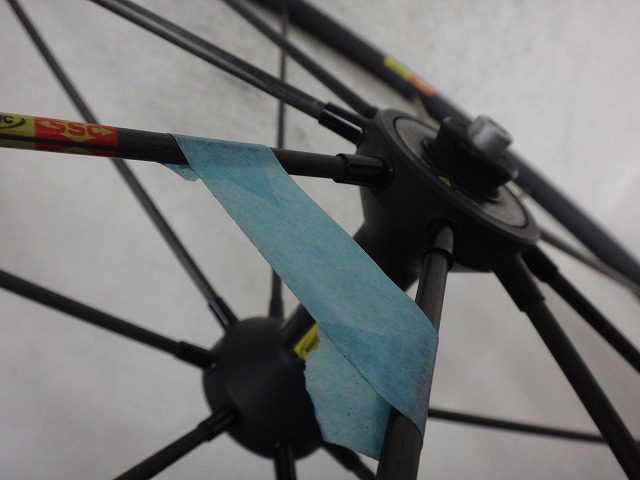

Yeah, it's definitely loose.
When I squeeze the spokes, the tight tape sags.
I found out later that even this was actually the high-tension side.
There's wheel centering drift.
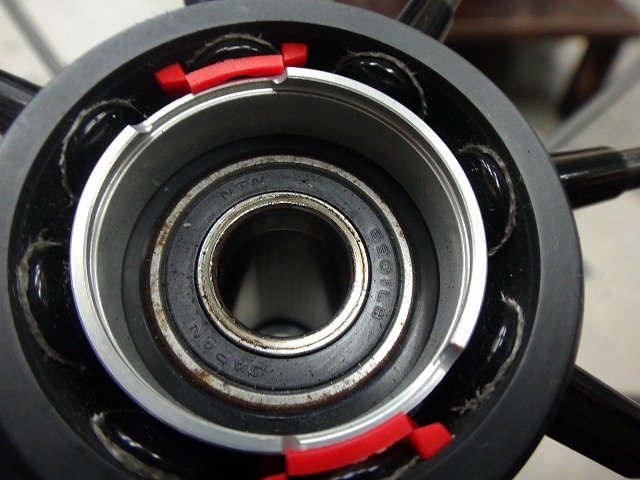
Removing the spoke nipple cone.
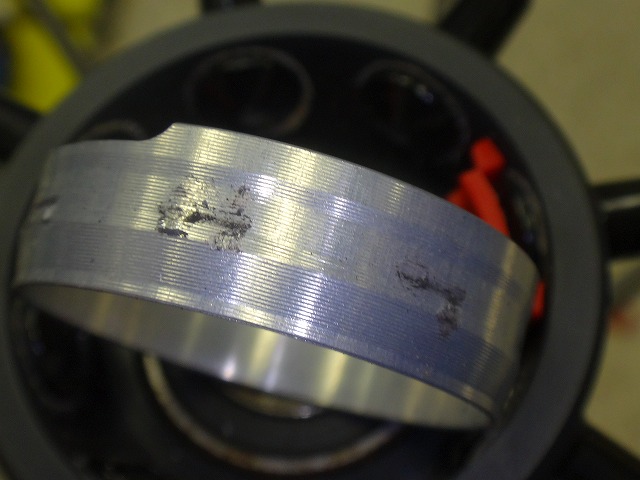
↑High-tension side
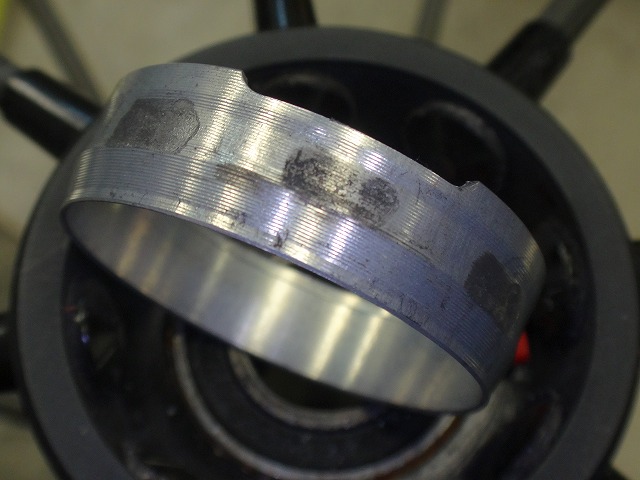
↑Low-tension side
With R-SYS carbon spokes, if properly tensioned,
contact with the spoke nipple cone is maintained only at a point.
As tension decreases, the load during use
seems to apply a force pulling the spoke head out of the hub,
causing the spoke nipple cone to slip over the spoke head
and accelerating spoke head wear.
↑High-tension side

↑Low-tension side
Using the word "tension" for R-SYS carbon spokes isn't entirely accurate,
but I'll use it to describe the degree of pulling force.
Even on this "high-tension side," it's quite loose,
but spoke head wear hasn't progressed too severely.
The spokes on the low-tension side show considerable wear,
but since the spoke nipple cone wouldn't go in without a press tool,
I judged the spoke head wear wasn't severe enough to warrant replacement.
The bearings have been replaced with non-contact seal-type bearings,
but R-SYS wheels (and Mavic wheels in general) have dust caps with large gaps—basically decorative—
so the design relies on contact-type bearing seals for dust and water protection.
Swapping to non-contact bearings just because rotation feels heavy
means drastically increasing bearing replacement frequency.
Whether steel ball non-contact types or ceramic bearings (100% non-contact),
many incompetent shops swap them without explaining these risks.
The bearing in the image has rust blooming on the outer race,
but since rotation had no grinding, I didn't replace it.
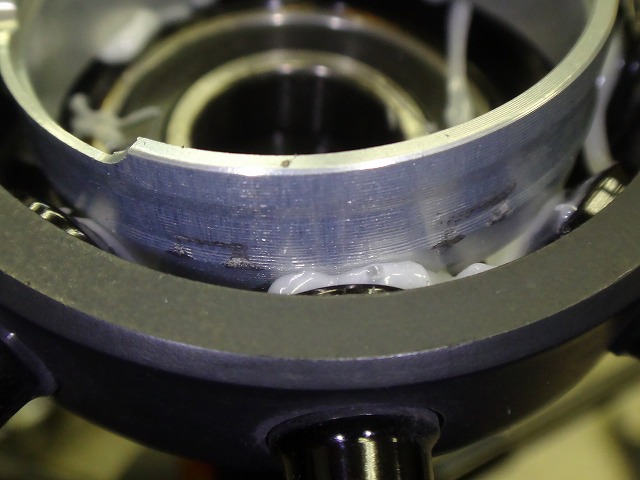
↑Former high-tension side
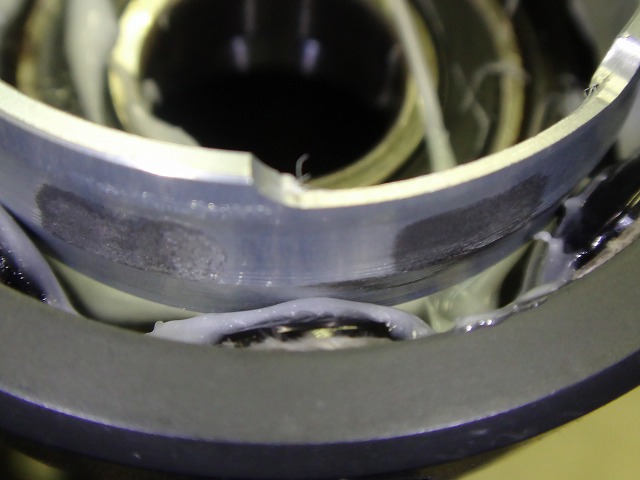
↑Former low-tension side

After tensioning the spokes, I deliberately avoided using anti-rotation parts
and pressed the spoke nipple cone into the non-contact area.
At least the former high-tension side shouldn't slip sideways.
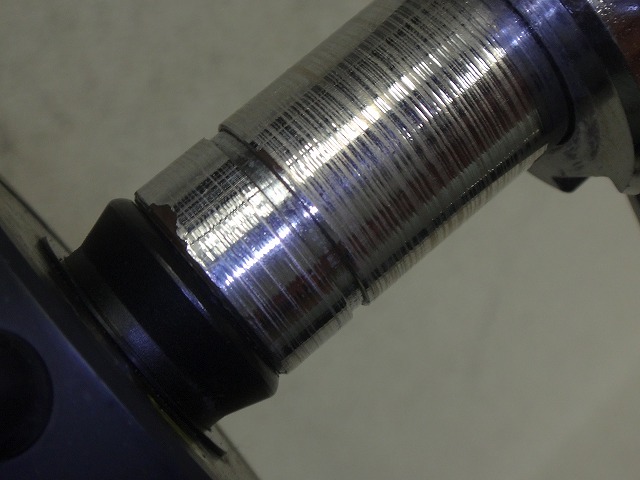
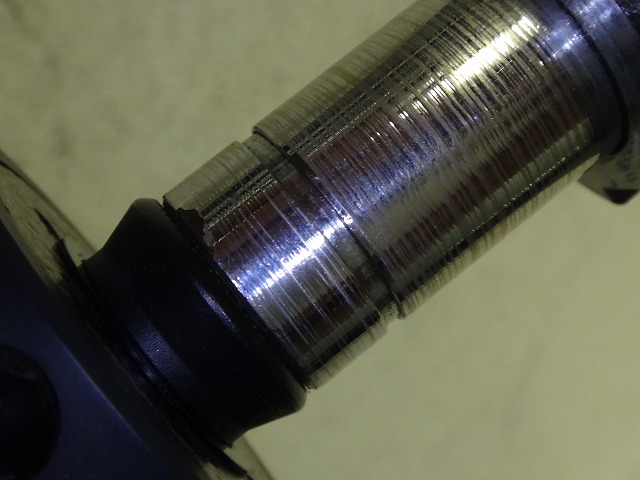
Perfectly centered after tensioning.
Now for the rear wheel.
The freewheel-side spokes were completely replaced once,
and the left-side spoke nipple cone has been replaced three times! Three times!
There's centering drift.

The freewheel-side spoke tension is abnormally low—
basically the wheel is built with just barely enough tension to hold shape,
as if fluffed together. It won't loosen this much from proper initial tension through normal aging use.
Squeeze it and it clicks 100% of the time, 100% reproducible.
If you want it to click, it always will—it's like an instrument in that sense.
As for why the freewheel-side spokes were completely replaced,
it should've been just one bent spoke to repair,
but they could only source a different-profile spoke,
so they replaced the whole set with those.

The spokes currently in this rear wheel
are what's shown as Type 2 in the diagram above,
but the original spokes were probably Type 4.
From the customer's comments, it sounded like Type 4 was "discontinued,"
but Type 4 spokes from this R-SYS generation shouldn't be unobtainable.
If Type 4 was "not immediately available"
so they repaired it with Type 2, that makes sense,
but my suspicious guess is they sourced
a different-era R-SYS spoke and just sold the whole set to the customer.
This is a different R-SYS rear wheel that came in
between when I photographed the original and writing this article—
I took reference photos with the customer's permission.
↑Type 3 spokes (round section).
For R-SYS wheels with identical hub and rim dimensions, spoke length is the same.
So you could, for example, fit these spokes to this R-SYS SLR.
With Ksyrium 125 and later models with rounder rim shapes,
the rim dimensions might differ slightly, so that might not work.
This rear hub requires a 5mm Allen key on both the left hub shaft end and the right axle end
to remove the axle end from the hub shaft,
but the left shaft end has a crack that distorts the 5mm hex hole,
so I used a hub cone wrench to hold the shaft and applied the 5mm key to the right end to remove it.
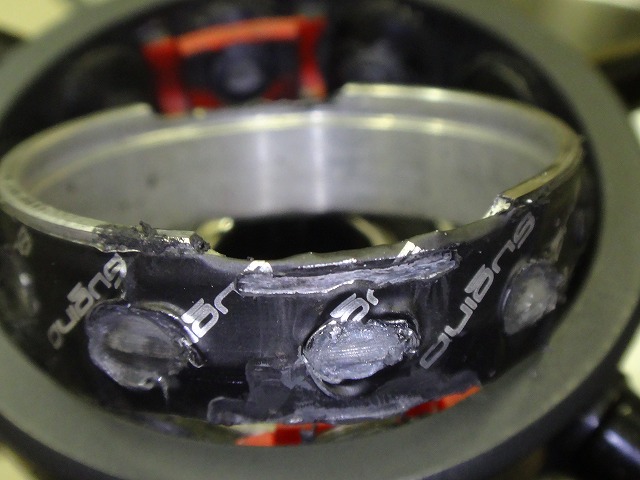
There was Sugino aluminum tape for gap elimination on press-fit bottom brackets
wrapped around the spoke nipple cone.

Spoke head wear is worse than the front hub.
In the image, I've already removed the bearings
because I judged the gritty rotation needed replacement.
Of course, they were non-contact bearings.
They mention spoke nipple cone replacement three times,
but if spokes were built properly, the wheel wouldn't reach that condition.
The customer's letter says "spoke head wear caused the spoke nipple cone issue,"
but it's actually the crappy shop's crappy work (wheel-building pretense) that's the "cause"—
spoke head wear has just progressed to abnormal levels as a result.

Removed the freewheel body.
I'll do cleaning and lubrication with specialist oil, but... wait?
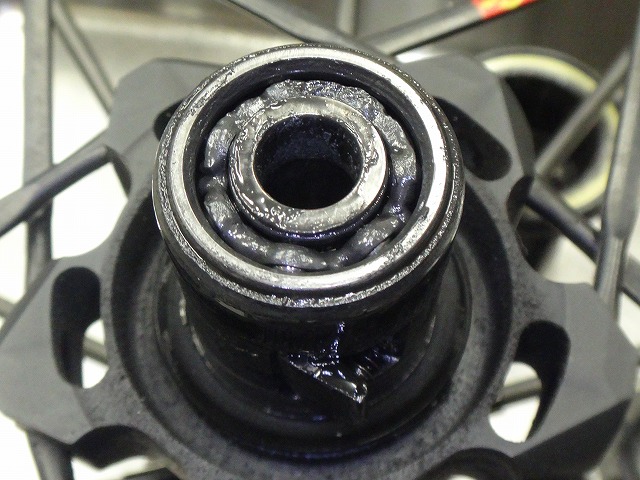
The bearing seals on the hub body right side and
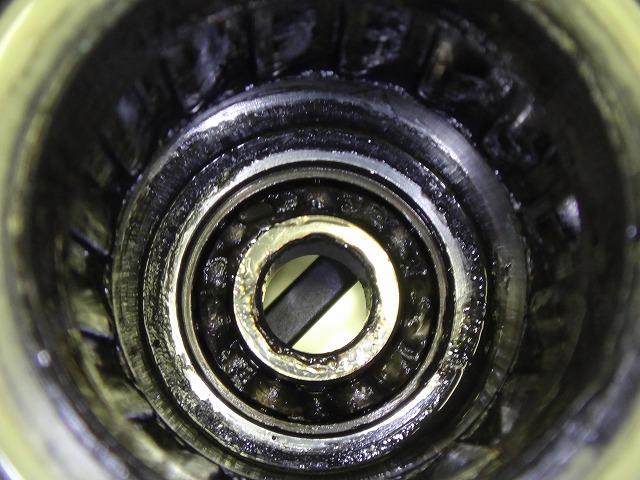
the freewheel body bearings are missing.
They wouldn't come off naturally, so they've clearly been pried out.
When I asked the customer about this,
it was done by a different shop than the one that replaced the spokes,
who told him "this way the rotation will be lighter—it's better"
The bearing seals I'd already removed from the left hub body side and freewheel body
were one-side-only sealed,
while the right hub body bearing had both seals removed.
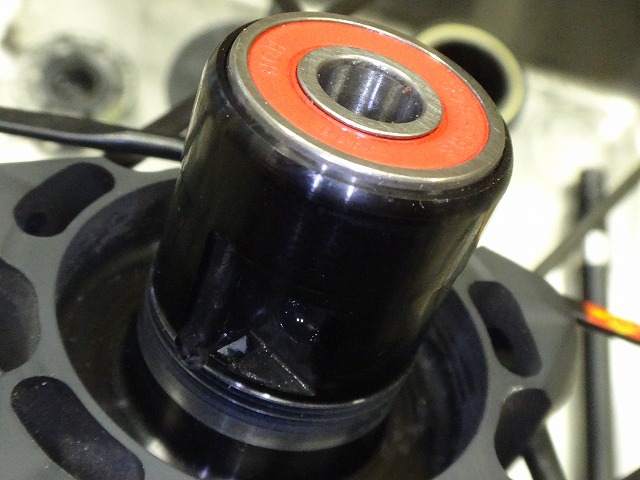
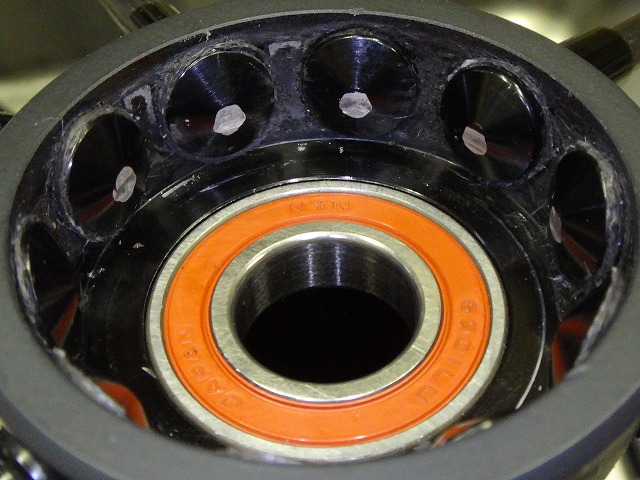
With the customer's permission, I replaced them with contact-type bearings.
I also went with contact-type for the freewheel body bearing.
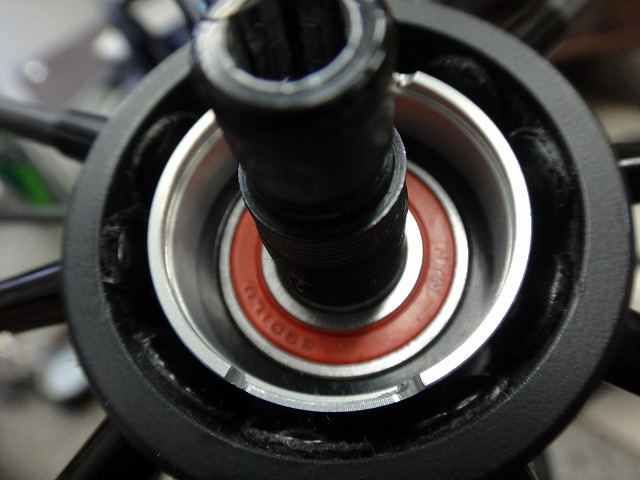
This is a serious problem: the spoke head wear is so severe
that the spoke nipple cone goes in smoothly without pressing.
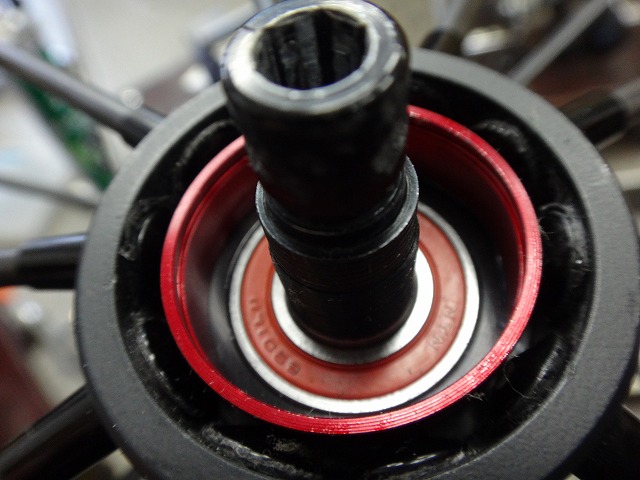
The same was true for the original spoke nipple cone.
In the image above, at the 9 o'clock position on the hub shaft end
is the crack I mentioned earlier.
It should be fine for wheel use,
but if concerned, the hub shaft should be replaced.
This rear hub seems to need complete freewheel-side spoke replacement,
but this time I addressed it with silicone grease
applied with a new current-model spoke nipple cone plus anti-rotation parts.
I should mention I also used silicone grease when pressing in
the front hub spoke nipple cone.
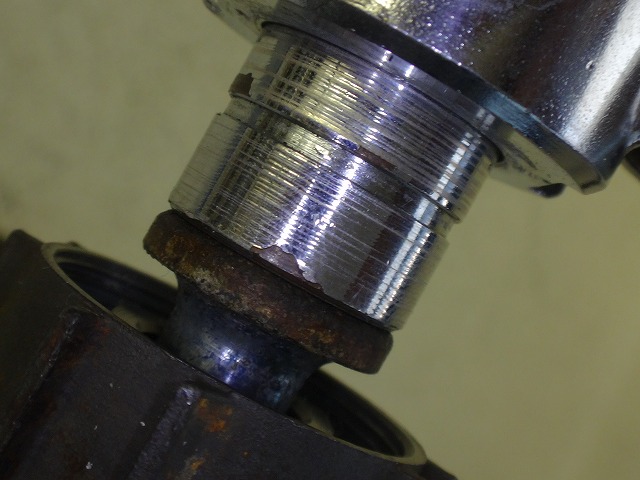
From the loose wheel state, I tensioned it to near the upper limit
that's viable when hanging, and it's perfectly centered.
I think if the right-side aluminum spoke complete replacement had been done properly,
the symptoms wouldn't have progressed this far.
With three spoke nipple cone replacements,
if they'd noticed the tension was loose during replacement,
it wouldn't have gotten this bad.
I started writing this article at 22:18 and saved it at 23:38.
I know long articles take even longer than wheel building,
so today I didn't (couldn't) start on the Nomu Lab wheel #5
with black spokes and silver nipples front wheel.