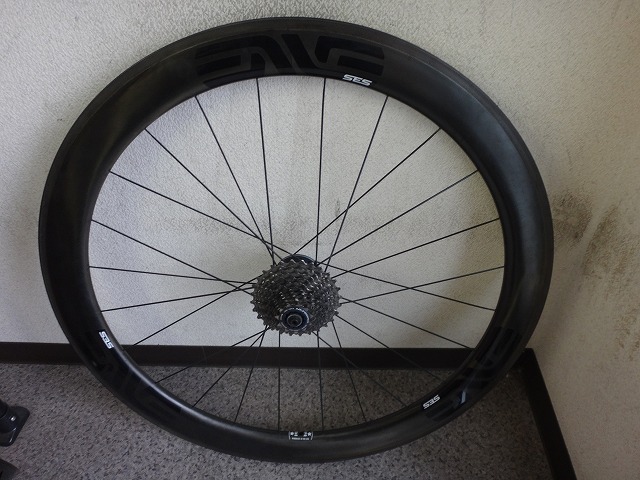
A customer dropped off a wheel with an ENVE rim manufactured in-house by Chris King.
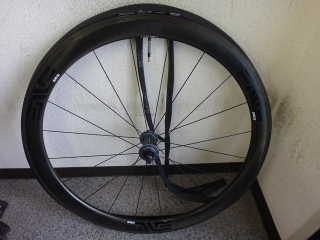
I wasn't planning to write about it,
but there were things I wanted to mention, so I took some photos.
The front wheel has a slight centering offset and faint lateral runout.
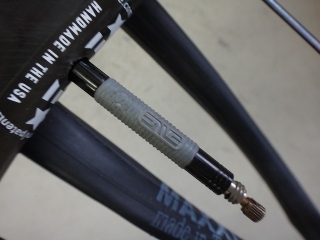
The valve extender that came with the wheel
is made of silica by an air pump brand,
and it prevents valve rattle by positioning
a gray rubber section at the contact point with the rim.
With the silica brand, an "S in a circle" logo appears
twice on the rubber section, but with ENVE it's a W name instead
(if you look closely at the photo above, you can see the silica S logo).
Anyway, this valve extender comes in three lengths:
34mm, 45mm, and jumping way up to 75mm—this one is 45mm.
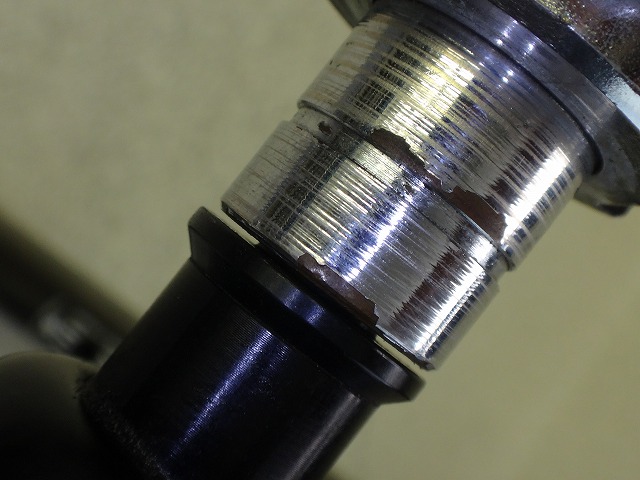
And as you can see, the rubber section isn't engaging with the hole on the inner rim edge,
so it's not doing its job of preventing valve rattle.
This rim is clincher type, and it has a lightweight Maxxis tube in it.
Maxxis does make 36mm valve tubes for MTB and small wheel bikes,
but for 700C tubes they only offer two types: 48mm and 60mm (this one is 48mm).
And if you want this rim to work with the silica 45mm extender
to actually prevent valve rattle,
the tube's valve length would need to be 32mm or 36mm.
Short valve 700C tubes in lightweight or ultralight weight variants
are pretty hard to come by.
R'–AIR has a 34mm option, but the valve core can't be removed.
However, recently R'–AIR came out with a type where you can remove the valve core,
and that comes in 34mm spec. Actually, 34mm spec only.
With Bridgestone's Extenza,
like Maxxis, there are two lengths: 48mm and 60mm,
and the thickness of both the lightweight and ultralight tubes is
0.6mm and 0.45mm respectively—same as Maxxis.
The reason being (I sense the thought police nearby, so I'll refrain from the rest).
Michelin latex tubes come in 36mm,
but you probably shouldn't use them on carbon rims.
Also, in terms of pure weight alone, ultra-thin butyl is lighter than latex.
If the extender that came with the rim had been the 34mm version,
it might have just barely worked with the 48mm valve tube.
The SMART ENVE rim has different rim heights front to back,
which complicates this issue even more.
By the way, the sticker on the valve hole in the photo above
says "Handmade in USA" (the other side has a serial number),
and looking at the rear wheel, the freewheel side (right side) also says "Handmade in USA," so
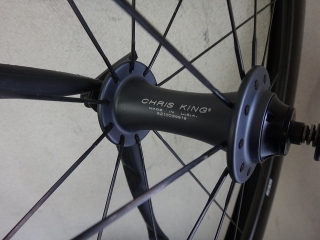
according to Chris King's official stance, when the R45 front hub logo is facing up,
the lettering is meant to be readable in the forward direction—this is now confirmed!
I'd like to say, but these guys are pretty careless,
so I shouldn't make a definitive call based on just this one instance.

Moving on to the rear wheel.
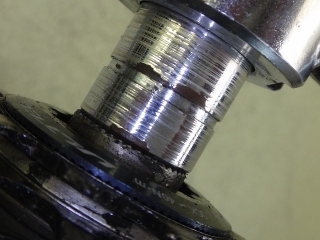
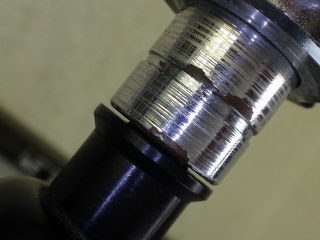
It was off-center. I need more practice!
Actually, if this wheel is going through a Japanese distributor, they should inspect it before selling.
It's not like cheap wheels get a pass on this,
but for a wheel at this price point, the added value should include
getting the centering spot-on.
I had the customer confirm the front and rear wheels were perfectly centered,
so I'll skip the post-work photos.
For reference, the front wheel's centering offset was about half of what the rear was.
The rear wheel's offset isn't in the direction it would drift with age, so it was like that from the start.
The rear had more runout,
but this ENVE rim has a filed brake zone,
so even slight runout shows up as brake drag noise—
it's a design that makes runout feel more noticeable.
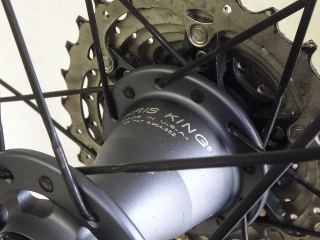
Since it's US-made in-house, sure enough it was built reverse Italian style.
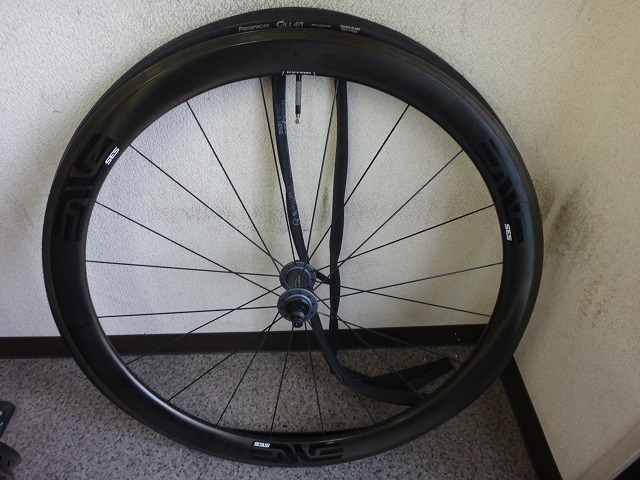
I wasn't planning to write about it,
but there were things I wanted to mention, so I took some photos.
The front wheel has a slight centering offset and faint lateral runout.
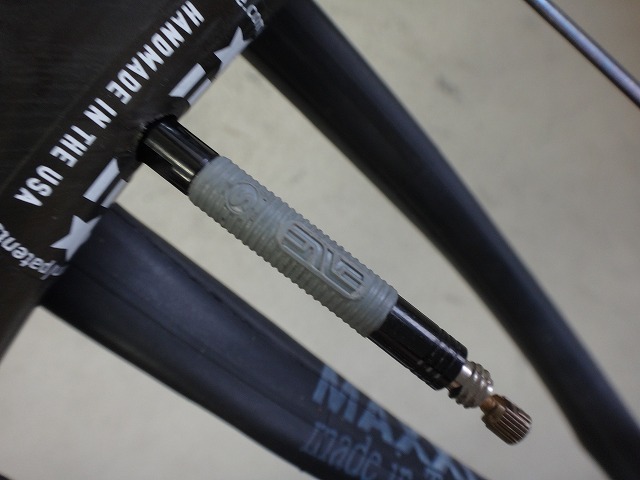
The valve extender that came with the wheel
is made of silica by an air pump brand,
and it prevents valve rattle by positioning
a gray rubber section at the contact point with the rim.
With the silica brand, an "S in a circle" logo appears
twice on the rubber section, but with ENVE it's a W name instead
(if you look closely at the photo above, you can see the silica S logo).
Anyway, this valve extender comes in three lengths:
34mm, 45mm, and jumping way up to 75mm—this one is 45mm.
And as you can see, the rubber section isn't engaging with the hole on the inner rim edge,
so it's not doing its job of preventing valve rattle.
This rim is clincher type, and it has a lightweight Maxxis tube in it.
Maxxis does make 36mm valve tubes for MTB and small wheel bikes,
but for 700C tubes they only offer two types: 48mm and 60mm (this one is 48mm).
And if you want this rim to work with the silica 45mm extender
to actually prevent valve rattle,
the tube's valve length would need to be 32mm or 36mm.
Short valve 700C tubes in lightweight or ultralight weight variants
are pretty hard to come by.
R'–AIR has a 34mm option, but the valve core can't be removed.
However, recently R'–AIR came out with a type where you can remove the valve core,
and that comes in 34mm spec. Actually, 34mm spec only.
With Bridgestone's Extenza,
like Maxxis, there are two lengths: 48mm and 60mm,
and the thickness of both the lightweight and ultralight tubes is
0.6mm and 0.45mm respectively—same as Maxxis.
The reason being (I sense the thought police nearby, so I'll refrain from the rest).
Michelin latex tubes come in 36mm,
but you probably shouldn't use them on carbon rims.
Also, in terms of pure weight alone, ultra-thin butyl is lighter than latex.
If the extender that came with the rim had been the 34mm version,
it might have just barely worked with the 48mm valve tube.
The SMART ENVE rim has different rim heights front to back,
which complicates this issue even more.
By the way, the sticker on the valve hole in the photo above
says "Handmade in USA" (the other side has a serial number),
and looking at the rear wheel, the freewheel side (right side) also says "Handmade in USA," so

according to Chris King's official stance, when the R45 front hub logo is facing up,
the lettering is meant to be readable in the forward direction—this is now confirmed!
I'd like to say, but these guys are pretty careless,
so I shouldn't make a definitive call based on just this one instance.
Moving on to the rear wheel.

It was off-center. I need more practice!
Actually, if this wheel is going through a Japanese distributor, they should inspect it before selling.
It's not like cheap wheels get a pass on this,
but for a wheel at this price point, the added value should include
getting the centering spot-on.
I had the customer confirm the front and rear wheels were perfectly centered,
so I'll skip the post-work photos.
For reference, the front wheel's centering offset was about half of what the rear was.
The rear wheel's offset isn't in the direction it would drift with age, so it was like that from the start.
The rear had more runout,
but this ENVE rim has a filed brake zone,
so even slight runout shows up as brake drag noise—
it's a design that makes runout feel more noticeable.
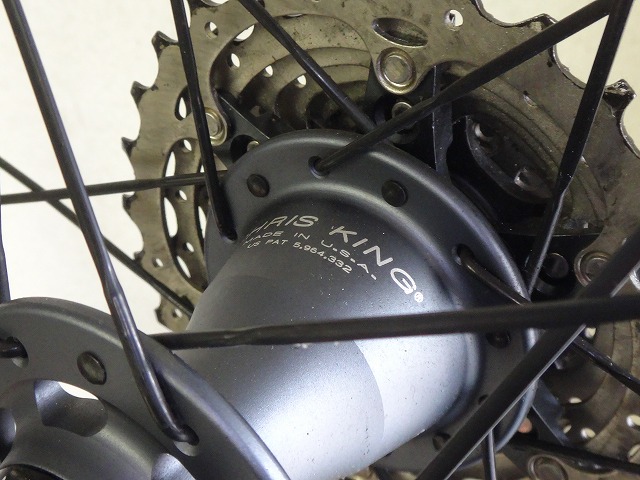
Since it's US-made in-house, sure enough it was built reverse Italian style.