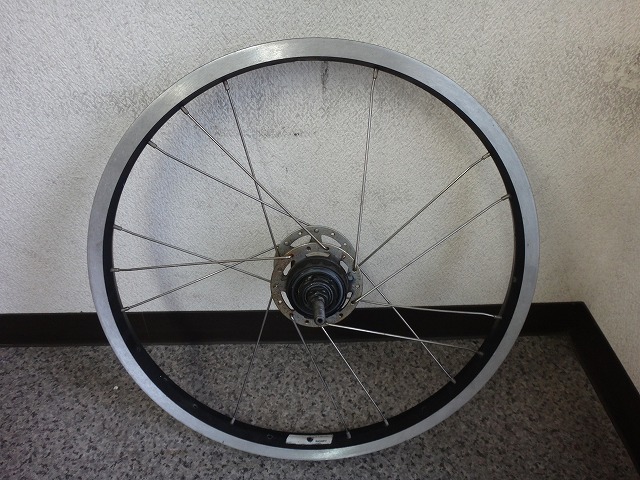
A customer brought in the rear wheel of a utility bike with a child seat.
Mostly spokes in the porcupine direction were breaking at the neck, and I removed most of them to get to the state shown in the image above.
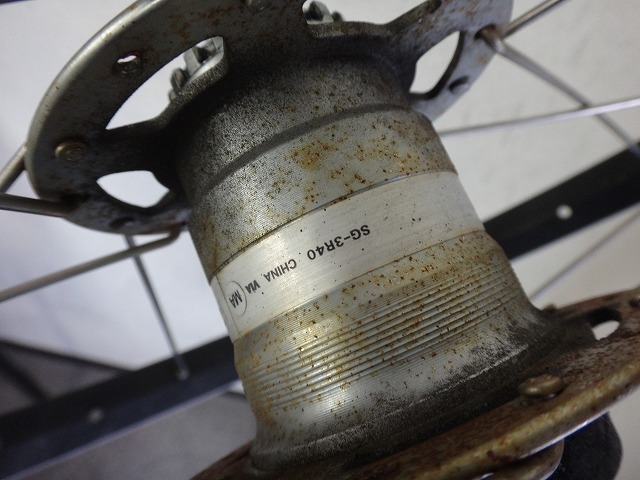
The hub is a Shimano SG-3R40 with round holes and 28H. Shimano's utility bike hubs mostly come in 36H only, or just 36H and 32H specifications, so 28H is a rare spec.
I specifically noted "round holes" because the SG-3R40 hub comes in a version with slot-type flange holes (butterfly slots).
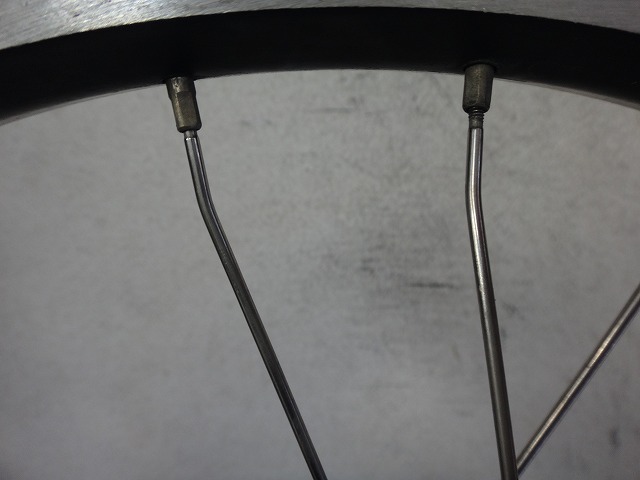
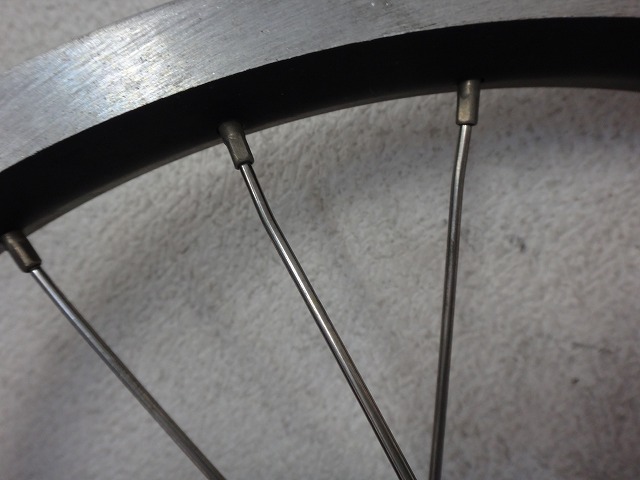

The surviving spokes were mostly deformed near the nipple area, and since there weren't any spokes left in good condition, I ended up replacing all the spokes.
At first, I thought the spoke deformation might have been caused by something getting caught, but that wasn't the case. It's more likely that the deformation occurred from buckling impact caused by riding the rear wheel with only spokes in the porcupine direction intact.
Update: I received a comment that spoke deformation is often caused by the rear wheel lock (U-lock), and that makes sense! The location does seem to match. Thanks for the comment.
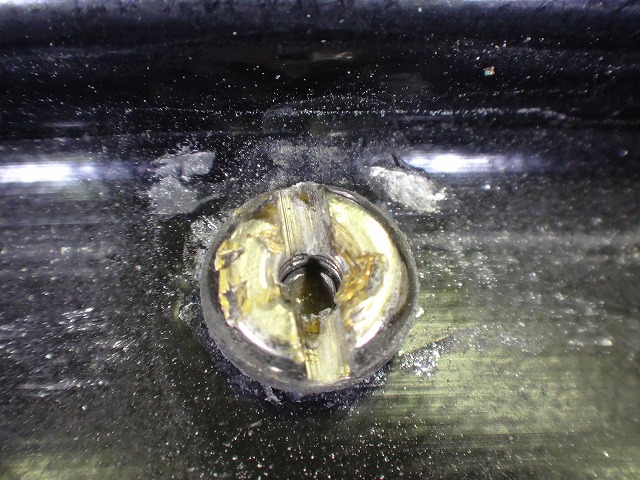
The spoke length is less than a double-butted profile, but since this is a single-wall rim, the spoke must never protrude from the nipple. So this is the correct choice, but ideally I'd like to see a bit more threading engagement.
When rebuilding, I decided to use the same length. My assumption is that once I build it, the tension will be slightly higher than before, so the threading should advance a bit more.
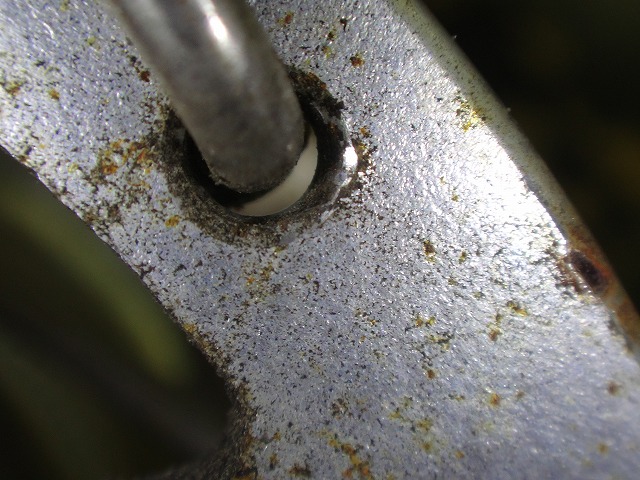
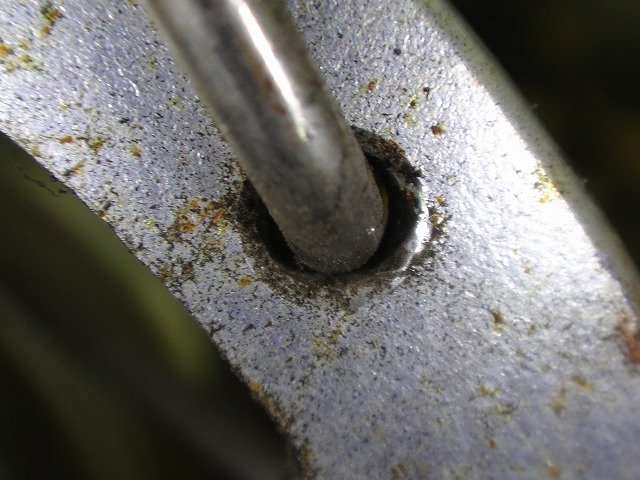
↑The image above shows the same flange hole. When I jiggled the spoke I threaded, there was considerable play in the flange hole. The amount of slack here is related to how easily the spoke neck can break. This hub is compatible with #13 spokes (2.34mm or 2.35mm) and #14 spokes (2.0mm), but the original was #14 plain spokes.

Got it built, more or less.
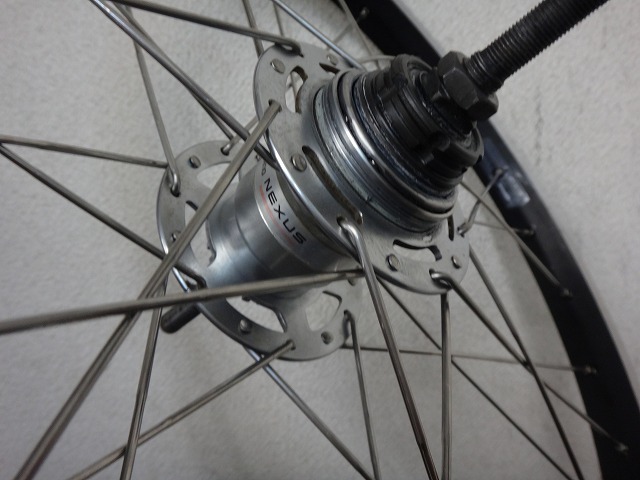
The lacing pattern is the same as the original, 28H four-cross...
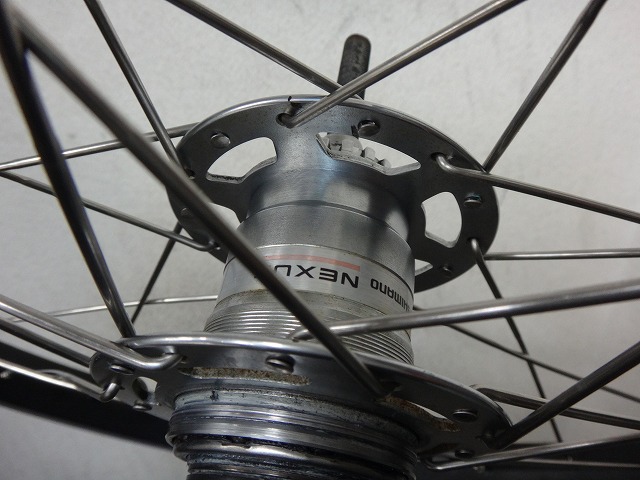
Italian lacing.
The hub looks unusually clean because rust removal was easy, so I cleaned it while I was at it (though it'll rust again soon enough).
The reason I didn't use JIS lacing even though it has a hub-side brake, or why I didn't use the standard JIS lacing that utility bikes typically have, is
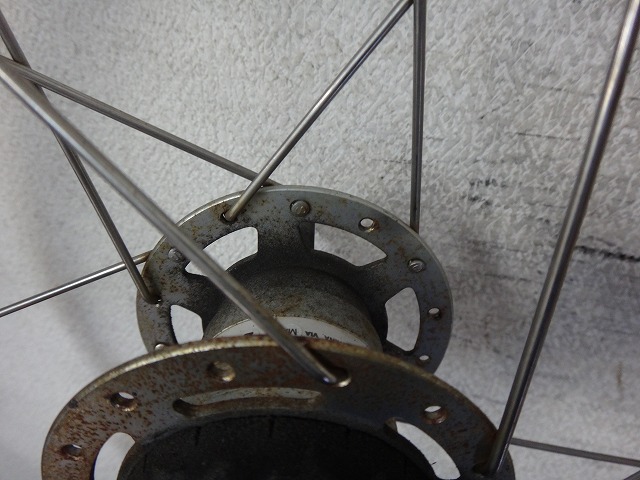
the original was already laced Italian style, so I just followed that.

The spoke length looks good. I'll make a few more adjustments later.
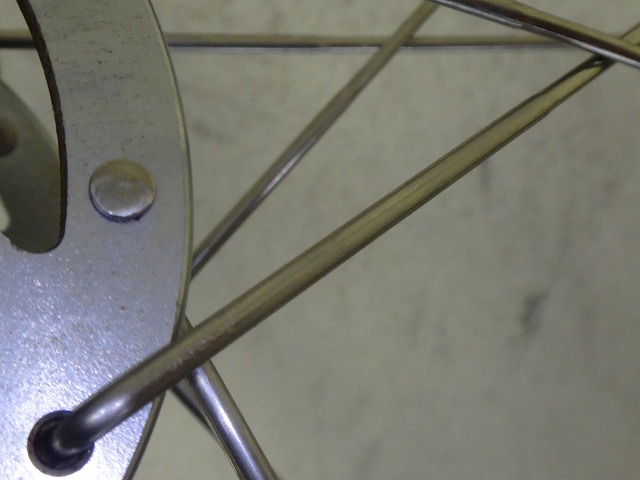
I chose Sapim Strong spokes. This was to keep the flange hole diameter and the neck diameter as close as possible. Since the dimensions and material properties are now much better, the wheel should be very resistant to spoke breakage at the neck.
Sapim Strong is a single-butted spoke with a diameter of 2.3mm below the butted section, and 2.0mm thereafter. While 2.3mm isn't technically #13, it's close enough to consider it so.
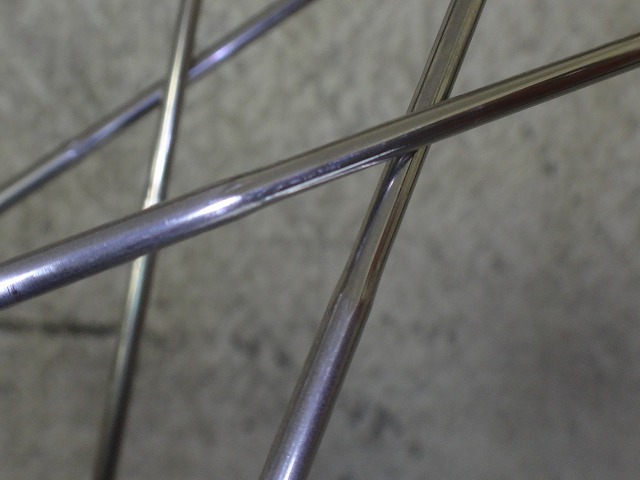
↑Butted section
As a similar approach, DT has the "Alpine III," a spoke developed for downhill bikes, with dimensions of 2.34–1.85–2.0mm—below the neck at #13, middle section around #15, and threading side at #14—quite elaborate.
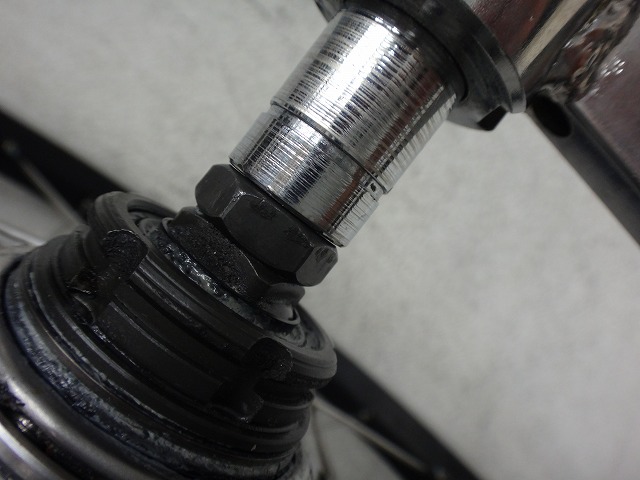

When the customer brought in this rear wheel, they thoughtfully removed the roller brake beforehand, but since the left end of the rear hub overlock nut dimension is where the 17mm hex nut securing the roller brake sits, I can't center the wheel in this state. Taking this into account, I stopped the wheel building there. There's no radial or lateral runout.
Since I haven't completed the wheel building, this doesn't meet the criteria for "another day of wheel building" (abbreviation omitted).