Another day, another wheel (and so on).
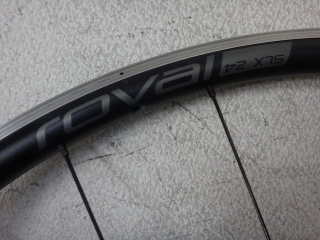
A customer brought in a Rovale SLX24 wheel for me to work on.
Totally inconsequential observation, but it's probably rare to see the manufacturer name and model name oriented in opposite directions on a single label.
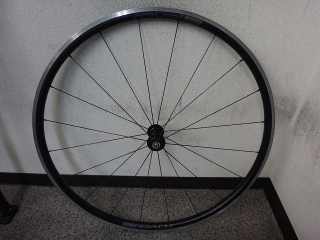
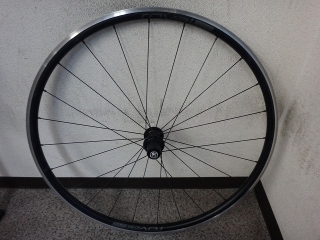
It's a Rovale-branded wheel, but spec-wise it's built from generic materials—a basic budget-tier rim and stock equipment.
In terms of being a mass-market product without any signature brand engineering,
it's similar to how Fulcrum makes the Racing 5 LG without their 2:1 lacing,
or Mavic makes the Aksium without the Isopulse pattern.
Rovale was once an actual French wheel brand, but these days it's a name-onlyzombie brand owned by Specialized.
I know the distributor's official Japanese spelling is "Rovaal," but since the original Rovale name came first, that's what I call it.
For the original Rovale story, check here.
Anyway, this customer said the wheel felt like it was sucking the power out of his pedal stroke.
So I'm rebuilding it using my method.
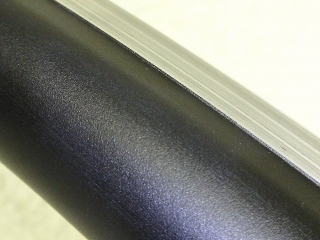
While running my hand along the rim side, I noticed something:
This rim has a brake zone machined to protrude thickly,
but the section in the image above is thicker than the rest,
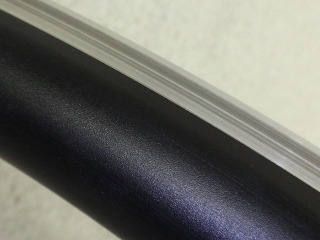
and on the opposite side at the same phase, it's basically flush.
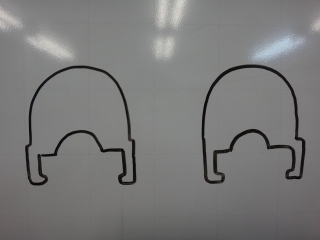
↑ If I exaggerate it in a drawing, it looks like this.
The rim width doesn't actually change based on phase, so it doesn't affect wheel building.
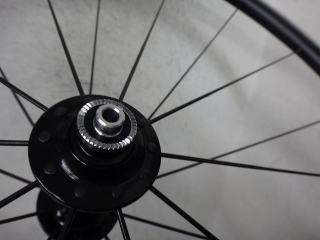
The original front wheel was 20H hub, all-black Campagnolo outpoke radial lacing
with black brass nipples.
The tension was reasonably tight.

Built.
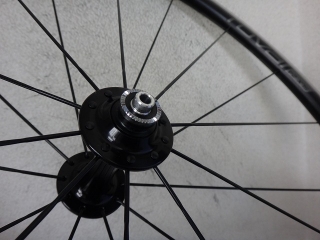
New front wheel: same 20H hub, black CX-RAY outpoke radial lacing
with black aluminum nipples.
I aimed for it to feel snappier than the original,
though the weight savings in spokes and nipples might be the bigger factor.
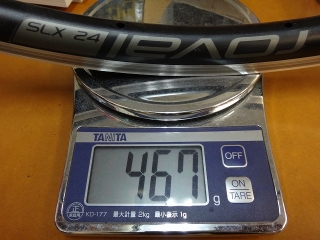
The rim weight—I thought it'd be around 500g,
but for a stock complete bike wheel, it's actually on the light side.
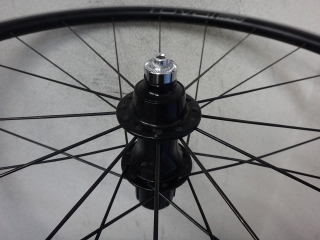
The original rear wheel was 24H hub, all-black Campagnolo 4/0 lacing
with black brass nipples.
If I were doing a half-Campagnolo 4/6 lacing, I'd tear it down and swap to aluminum nipples,
reusing the freewheel-side spokes, but given the customer's weight and preferences,
I decided to go with 14-gauge plain spokes instead.
The spokes from yesterday's thoughtless Crisking wheel are 14-gauge plain (2.0mm),
and this wheel's spokes are 2.0–1.8–2.0mm butted,
but this rear wheel feels significantly stiffer.
It's not that it's under more tension—yesterday's wheel is just built incredibly soft.
For a rear wheel laced with anti-freewheel-side radial lacing using a non-offset rim and equal-flange hub,
the anti-freewheel side seemed unusually tight, so I suspected the rim was shifted left.
I checked and sure enough,


it was, but the rim shift wasn't as dramatic as "built with the anti-freewheel side pinched super tight from center."
What I perceived as less flex on the anti-freewheel side was simply because
the freewheel side was built nice and firm.
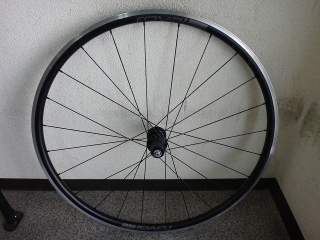
Built.
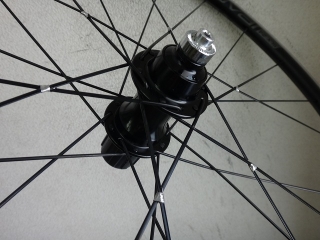
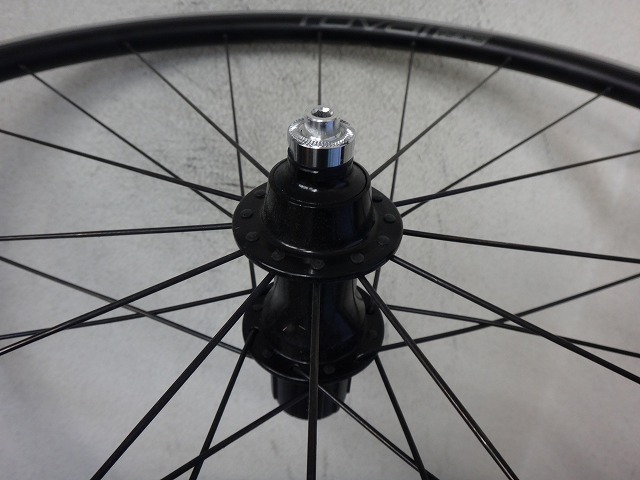
New rear wheel: same 24H hub, black half-Leader 4/6 lacing with spoke-to-rim bonds
and black aluminum nipples. Built it nice and tight. Hehehehe.

A customer brought in a Rovale SLX24 wheel for me to work on.
Totally inconsequential observation, but it's probably rare to see the manufacturer name and model name oriented in opposite directions on a single label.

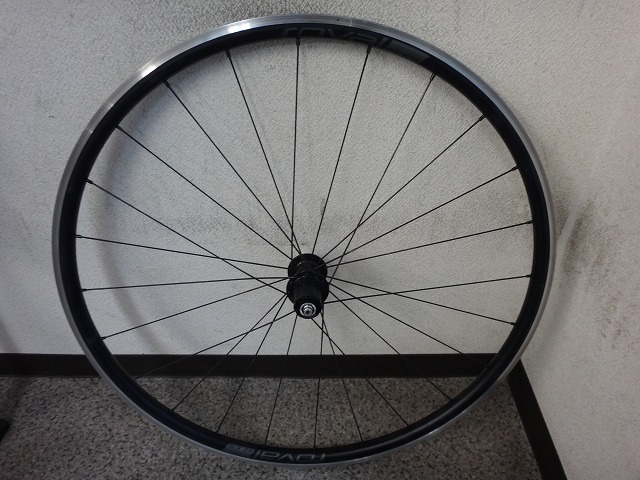
It's a Rovale-branded wheel, but spec-wise it's built from generic materials—a basic budget-tier rim and stock equipment.
In terms of being a mass-market product without any signature brand engineering,
it's similar to how Fulcrum makes the Racing 5 LG without their 2:1 lacing,
or Mavic makes the Aksium without the Isopulse pattern.
Rovale was once an actual French wheel brand, but these days it's a name-only
I know the distributor's official Japanese spelling is "Rovaal," but since the original Rovale name came first, that's what I call it.
For the original Rovale story, check here.
Anyway, this customer said the wheel felt like it was sucking the power out of his pedal stroke.
So I'm rebuilding it using my method.
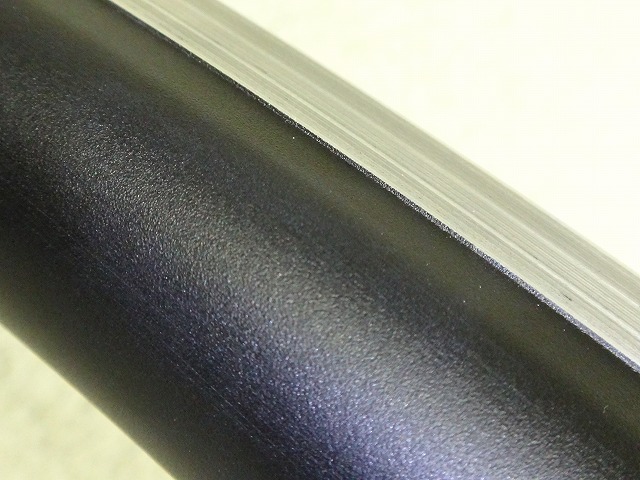
While running my hand along the rim side, I noticed something:
This rim has a brake zone machined to protrude thickly,
but the section in the image above is thicker than the rest,
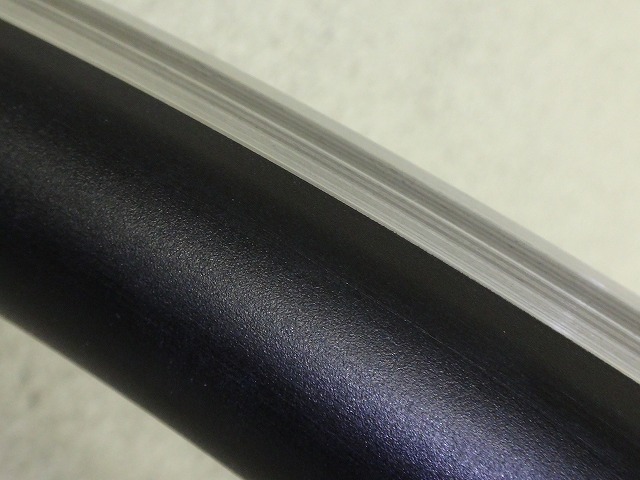
and on the opposite side at the same phase, it's basically flush.

↑ If I exaggerate it in a drawing, it looks like this.
The rim width doesn't actually change based on phase, so it doesn't affect wheel building.
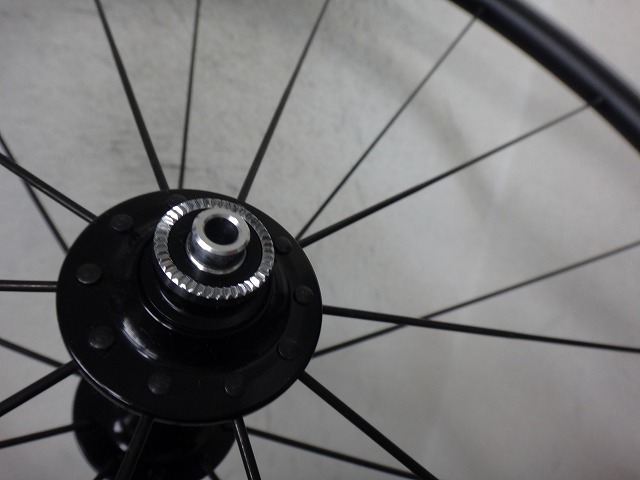
The original front wheel was 20H hub, all-black Campagnolo outpoke radial lacing
with black brass nipples.
The tension was reasonably tight.
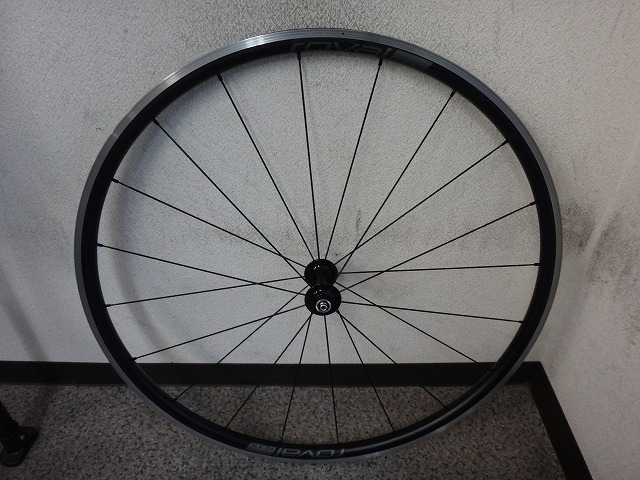
Built.
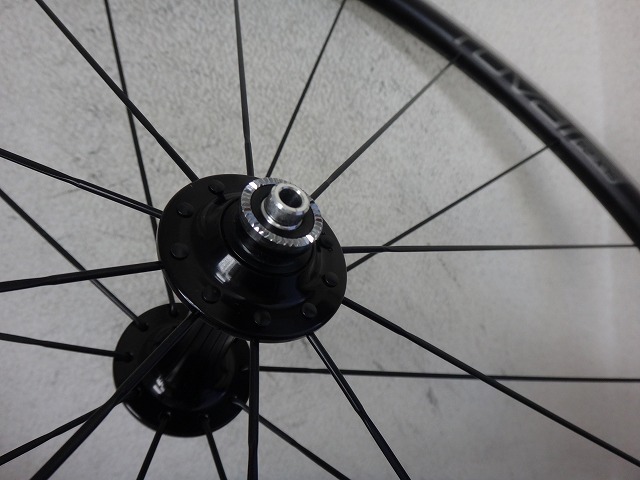
New front wheel: same 20H hub, black CX-RAY outpoke radial lacing
with black aluminum nipples.
I aimed for it to feel snappier than the original,
though the weight savings in spokes and nipples might be the bigger factor.
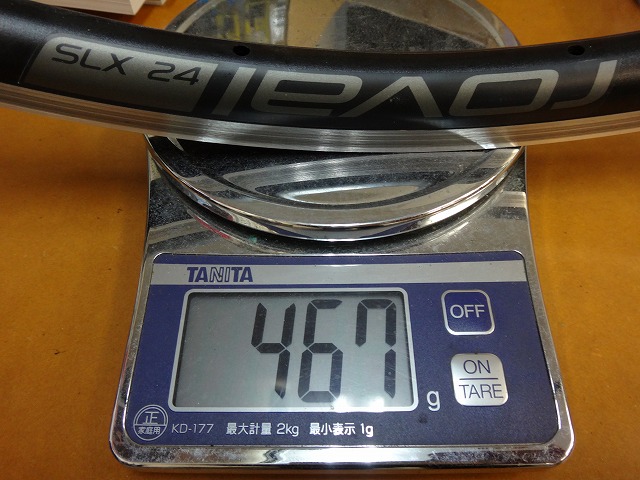
The rim weight—I thought it'd be around 500g,
but for a stock complete bike wheel, it's actually on the light side.
The original rear wheel was 24H hub, all-black Campagnolo 4/0 lacing
with black brass nipples.
If I were doing a half-Campagnolo 4/6 lacing, I'd tear it down and swap to aluminum nipples,
reusing the freewheel-side spokes, but given the customer's weight and preferences,
I decided to go with 14-gauge plain spokes instead.
The spokes from yesterday's thoughtless Crisking wheel are 14-gauge plain (2.0mm),
and this wheel's spokes are 2.0–1.8–2.0mm butted,
but this rear wheel feels significantly stiffer.
It's not that it's under more tension—yesterday's wheel is just built incredibly soft.
For a rear wheel laced with anti-freewheel-side radial lacing using a non-offset rim and equal-flange hub,
the anti-freewheel side seemed unusually tight, so I suspected the rim was shifted left.
I checked and sure enough,


it was, but the rim shift wasn't as dramatic as "built with the anti-freewheel side pinched super tight from center."
What I perceived as less flex on the anti-freewheel side was simply because
the freewheel side was built nice and firm.

Built.
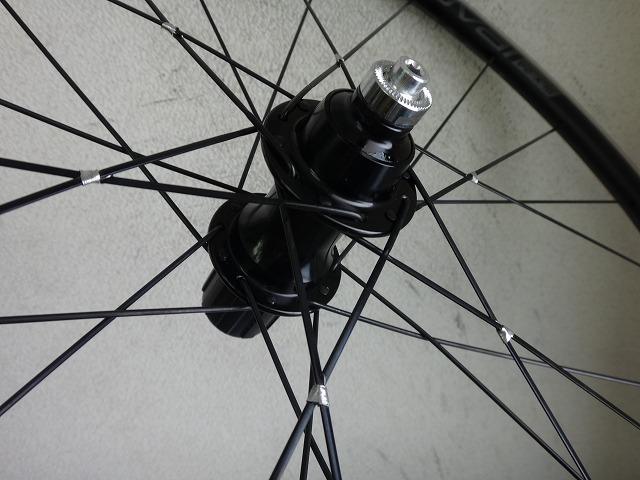
New rear wheel: same 24H hub, black half-Leader 4/6 lacing with spoke-to-rim bonds
and black aluminum nipples. Built it nice and tight. Hehehehe.