So I said I'd be taking September 20th (Thursday) off... that was a lie.
So the day before yesterday I was also doing wheels (and so on...).
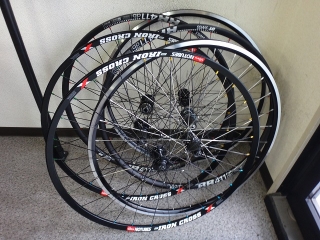
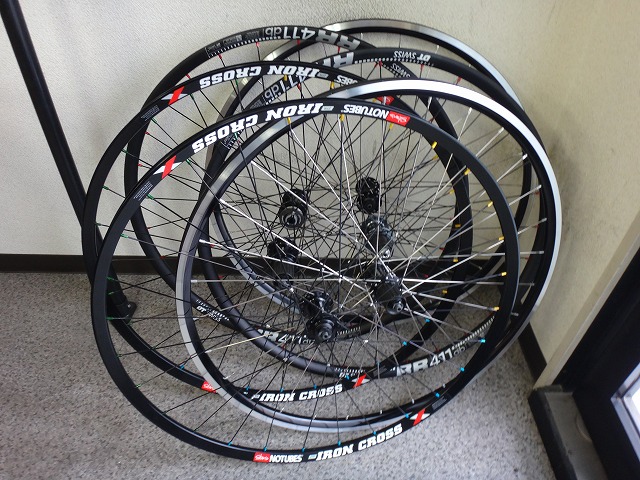
I holed up in the shop and dedicated myself to wheel building, putting together wheels for cyclocross.
These aren't all the cyclocross backorders,
but I'm hoping to get the rest finished by the end of September.
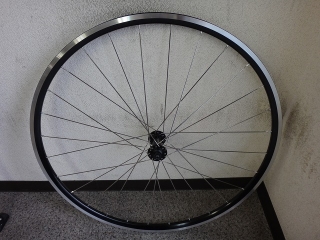
First pair. I built wheels using Tni's CX22 rims.
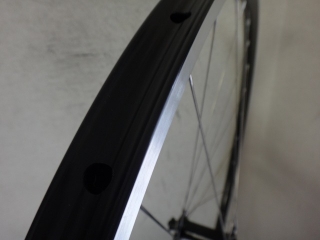
True to the CX name, it's a wide rim designed for cyclocross,
with the CX22 at 22mm rim height being a tubular rim,
and the CX22 with a bead hook that consequently
results in a rim height of 28mm, making it the WO rim CX28.
To be precise, the CX22 has a rim width of 23.2mm and the CX28 is 23mm,
so apart from the ears they're not completely identical rims.
The CX28 is rated at 490g, which is slightly heavy for its rim height,
but the CX22 comes in at 415g, which is reasonably light.
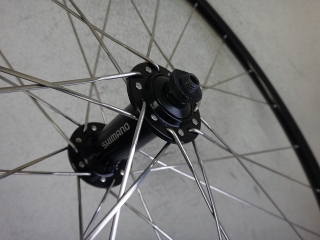
HB-RS400 28H CX-RAY 4-4 Italian lacing.
The hub is Shimano's off-tier RS400,
and as I've mentioned before, it comes in a 28H specification that doesn't exist on hubs below Altegra.
Altegra did have both 24H and 28H up through the 6600 series, but...
Unlike cartridge-bearing hubs, cup-and-cone hubs
have larger ball bearings and can be regreased,
making them more resistant to the kind of damage specific to cyclocross.
For even higher sealing performance,
28H would require Dura-Ace, but the price difference is huge.
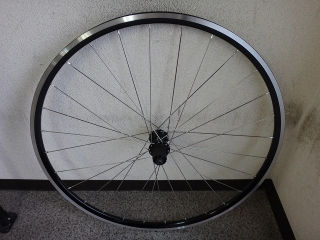
I also built the rear wheel.

FH-RS400 28H semi-comp 4-6 lacing with radial tie.
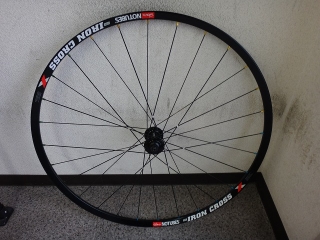
Next, second pair.
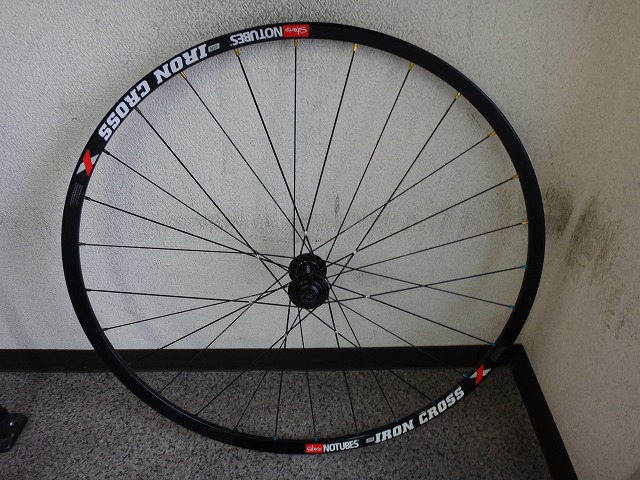
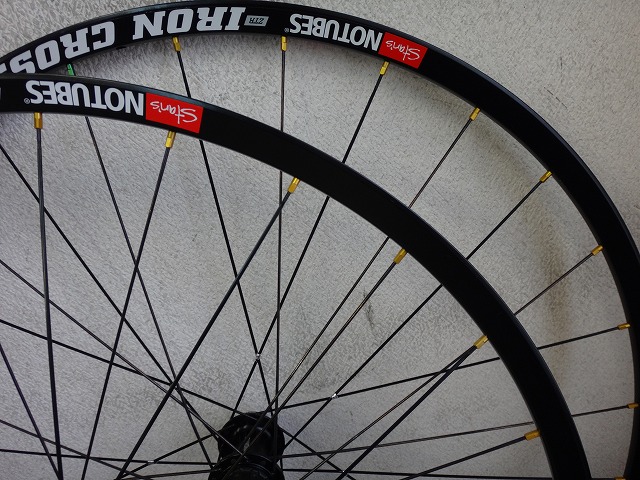
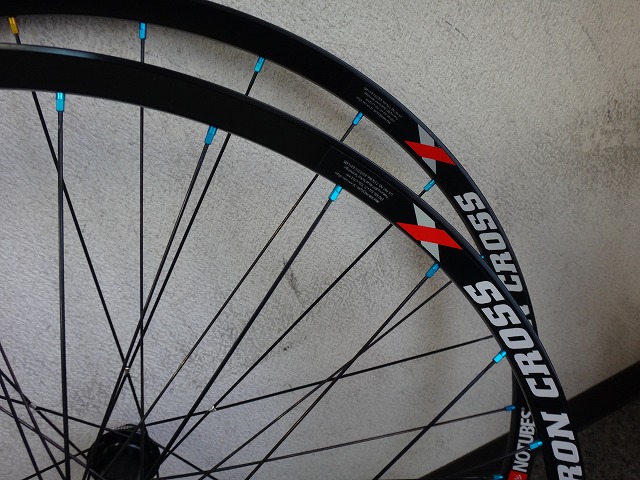
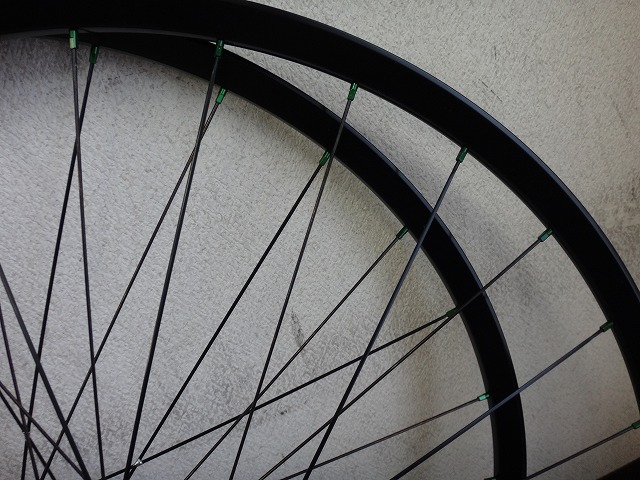
I built wheels using Stan's NoTubes Iron Cross rims and Shimano RS505 hubs.
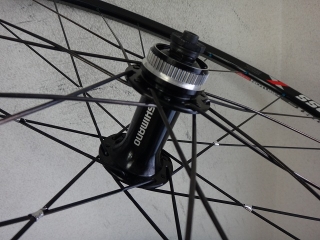
HB-RS505 28H black semi-comp 6-4 reverse Italian lacing with radial tie.
The Iron Cross rim is from our shop's inventory,
rims we bought up—I mean, sourced—at the end of last season
that a customer had reserved.
As for the RS505 hub, this is also an off-tier model
and can be thought of as the disc hub version of the RS400.
There is the CX75 as a higher-end quick-release disc hub model,
but for some reason the CX75 hub is already discontinued,
and while we managed to buy up—I mean, source—enough to cover our customers' pre-orders,
there won't be any future stock.
And honestly, discontinuing a higher-end model of quick-release disc hubs so soon
is a terrible decision.
Even doing this won't make Shimano's complete wheels sell any better.
The CX75 hub came only in 28H,
but the RS505 hub is available in 28H, 32H, and 36H.
As for me, 28H is all I need.
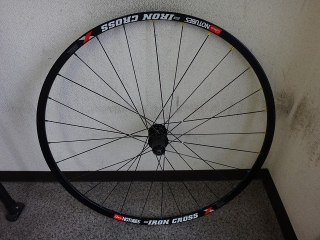
I also built the rear wheel.
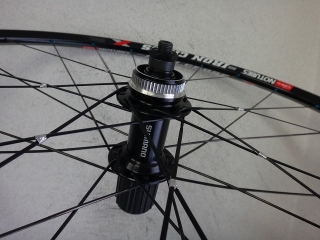
FH-RS505 28H black semi-comp 4-6 JIS lacing with radial tie.
With cyclocross frames, in the case of quick-release,
some hubs have an over-locknut dimension of 130mm,
and I've confirmed that the customer's frame is not 130mm.
Edit: The hub is 135mm and the frame is also 135mm.
I made a mistake writing that the frame was 130mm.
Thank you for the comment.
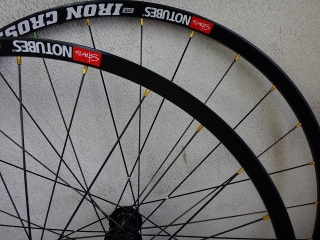
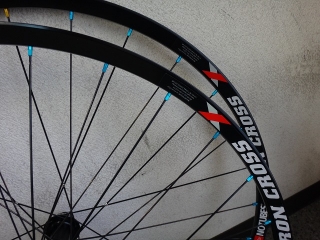

Per the customer's request, viewing from the right side starting at the valve hole and going clockwise,
the nipples are divided into three sections by color: gold, turquoise, and green.
Since 28 doesn't divide evenly by 3, we're using 9 gold, 9 turquoise, and 10 green nipples.
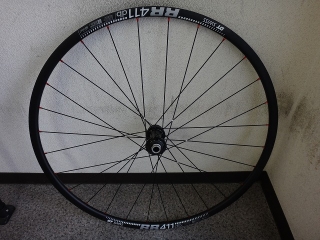
Finally, third pair.
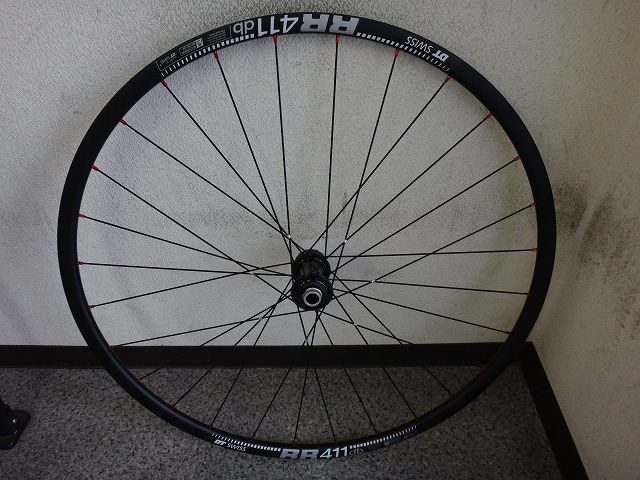
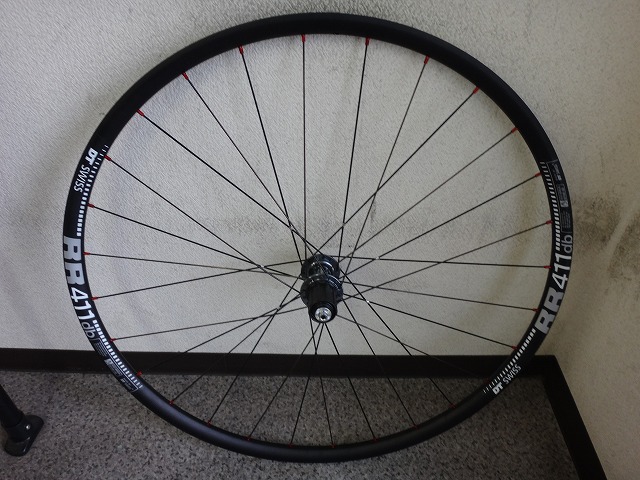
I built wheels using DT's RR411db rims.
With disc hubs, the front wheel also has an offset, so offset rims are effective.
Unlike the RR411 for rim brakes, the RR411db only comes in offset rim specifications.
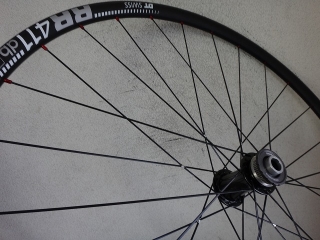
HB-9010 28H black CX-RAY 6-4 reverse Italian lacing with radial tie.
The Iron Cross we just did uses a non-offset rim with asymmetrical lacing,
while this one uses an offset rim with symmetrical lacing.
But with a disc hub's level of offset (not as much as a freehub),
the correction of spoke tension between sides seems more effective with the former approach.
That's because in my rough sense of whether radial tie seems necessary,
Iron Cross with semi-comp looks like it might not need it (but I do it anyway)
RR411db with full CX-RAY looks like it should have it (so I do it)
and that's how it goes.
With RR411db in semi-comp, radial tie probably isn't necessary (by my thinking).
Not that there's anything wrong with doing it anyway.
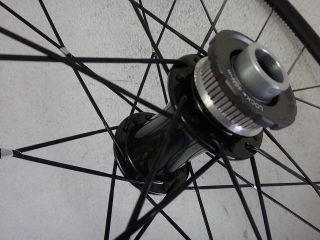
With Shimano hubs, quick-release hubs come with quick-releases installed.
Through-axle hubs don't come with through-axles.
This is probably because shaft length, lever design (taper or flat),
and whether it's a simple twist mechanism or a flip-lever type all vary widely
depending on the frame or fork.
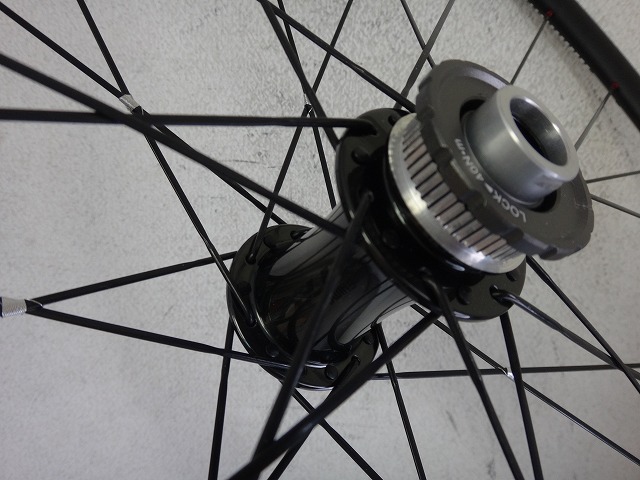
With 12mm through-axles, the rotor lock ring
uses the same wrench tool as the cassette lock ring,
which comes with the rotor, so the hub doesn't include a lock ring.
But with front 15mm through-axles only,
the lock ring must be the Hollowtech BB tool type,
so a lock ring is included.
Perhaps from the idea that "it's better to use the same rotor-fixing tool front and rear,"
wheels that come with MTB complete bikes often use
BB tool-type lock rings on the front 15mm even though the rear is 12mm.
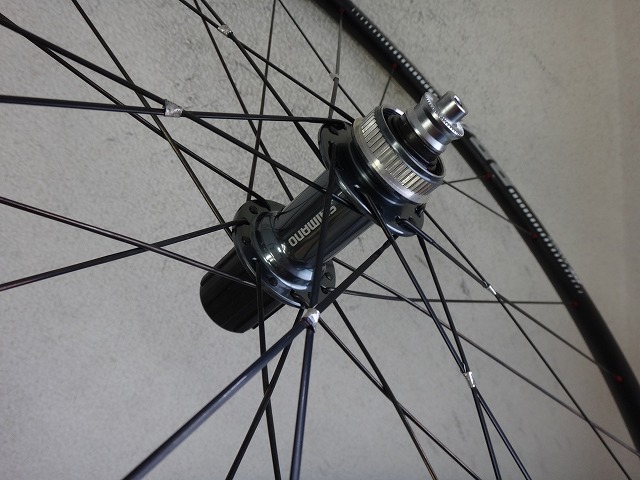
About why we used XT/R hubs:
The customer's cyclocross frame set is from a transitional period in through-axle adoption.
The front is 15mm through-axle like MTB standards,
and the rear is quick-release at 135mm width.
We wanted to build the front wheel with a 28H rim,
but cyclocross hubs only come in 12mm through-axle specifications,
so we had to use an MTB front hub with 15mm through-axles.
The only one available with 28H is XT/R.
If XT came in 28H, I'd probably use that instead.
The M9000-series XT/R 28H hub was added later as a specification—
it didn't exist at the original launch.
If we went with Tni disc hubs instead, the rotor attachment method
would be 6-bolt instead of center-lock, so that's out.
And Chris King or DT hubs are pricier than XT/R... etc.
(though DT's 350 hub in 15/100mm is cheaper than XT/R)
When you factor in all these considerations, XT/R makes sense.
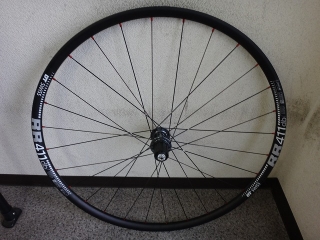
I also built the rear wheel.
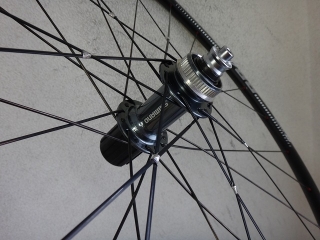
Our shop's final stock FH-CX75 28H black semi-comp 4-6 JIS lacing with radial tie.

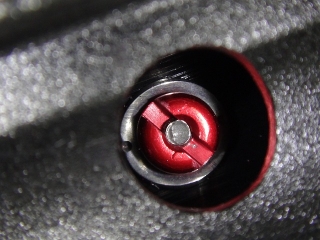
Per the customer's request, I used red aluminum nipples.
The rim's sticker says to "use PHR washers,"
so I'm following that, but technically DT's PHR washer rims
must be built with Squorx nipples.
With DT's red nipples, they seem to have shifted to "dark red,"
so I wrote before that I'd be treating the light red as worth preserving.
But the three boxes I sourced most recently were all "light red."
Which is it?
For now I'm using dark red,
but I won't mix light and dark on the same wheel.
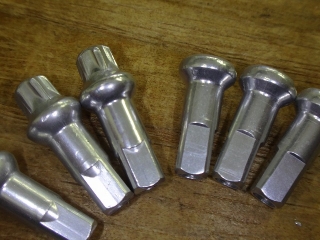
Squorx nipples are 15mm long, but the Torx-shaped protrusion you turn from the outside
is only 3mm longer, so the effective length protruding from the rim
is the same as 12mm nipples (right side in the image above).
But apart from that, they're not identical to 12mm nipples—
the curvature of the contact surface between nipple and rim (washer) differs from conventional nipples.
It's possible to build with Squorx nipples on other manufacturers' rims that don't need washers,
but they're designed especially for use with PHR washers.
Squorx nipples come in silver and black,
so when building in either of those colors I use Squorx,
but for any other color nipples, I check with the customer
and build with 12mm length color nipples.
As I've written before (→here), the PHR washer and nipple neck curve actually mate more smoothly
with standard nipples.
By the way, the article I linked uses the term "spherical nipple" from the manufacturer's name.
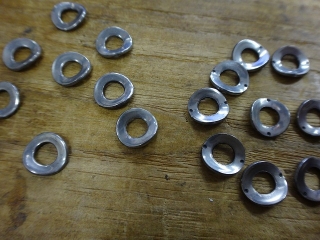
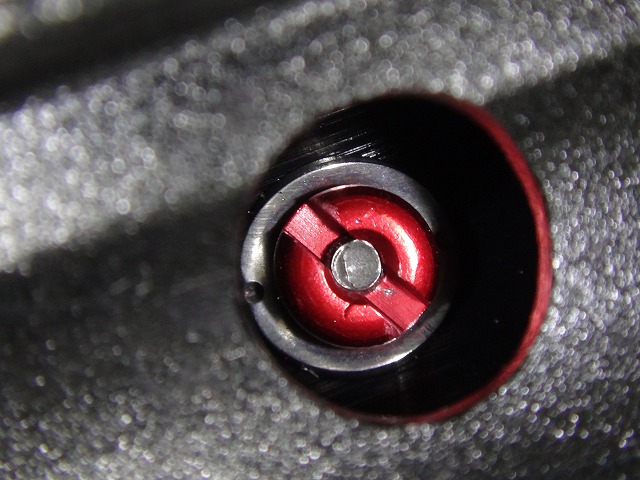
About PHR washers—recently a new specification has appeared:
ones with a black dot as a guide to align with the rim's front-to-back direction.
The image of red nipples inside the rim from a bit earlier shows one with the dot version.
The washers that come with rims now are a mix of old and new.
During wheel prep, the washer gets guided around by the rim's internal curve,
so unless you intentionally build with the washer's front-to-back direction rotated 90 degrees,
it won't go in the wrong way. That said, it will rotate slightly with nipple rotation.
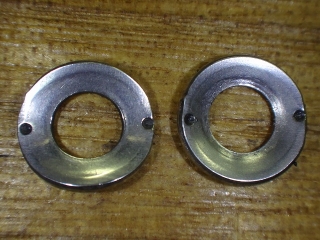
↑ Left image is initial state, right is after proper orientation and nipple pressure is applied.
It's hard to tell from directly above, but
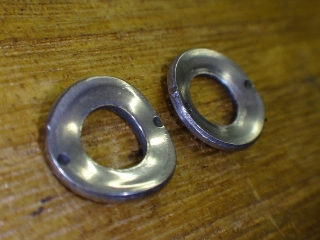
ultimately it deforms into a bowl shape. So while I do follow the orientation instruction,
there's no need to obsess over getting it perfectly aligned front-to-back.
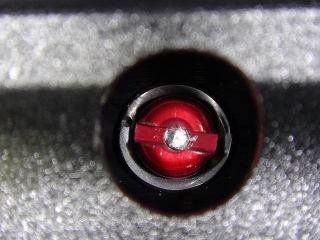
↑ Once deformed into a bowl shape, it shifts slightly with the nipple's rotation direction.
Incidentally, this tendency seems more pronounced with Squorx nipples.
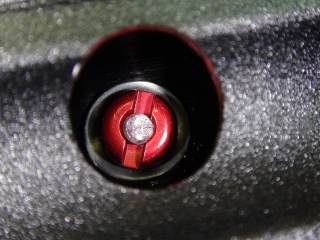
↑ The PHR washer that came with the front rim was the version without the dot.
So the day before yesterday I was also doing wheels (and so on...).
I holed up in the shop and dedicated myself to wheel building, putting together wheels for cyclocross.
These aren't all the cyclocross backorders,
but I'm hoping to get the rest finished by the end of September.
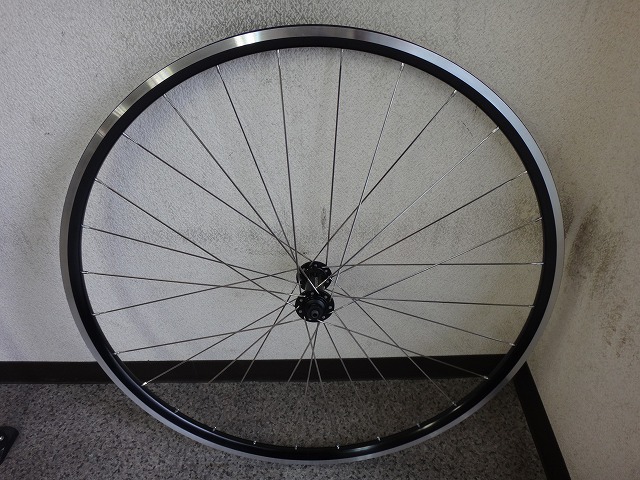
First pair. I built wheels using Tni's CX22 rims.

True to the CX name, it's a wide rim designed for cyclocross,
with the CX22 at 22mm rim height being a tubular rim,
and the CX22 with a bead hook that consequently
results in a rim height of 28mm, making it the WO rim CX28.
To be precise, the CX22 has a rim width of 23.2mm and the CX28 is 23mm,
so apart from the ears they're not completely identical rims.
The CX28 is rated at 490g, which is slightly heavy for its rim height,
but the CX22 comes in at 415g, which is reasonably light.
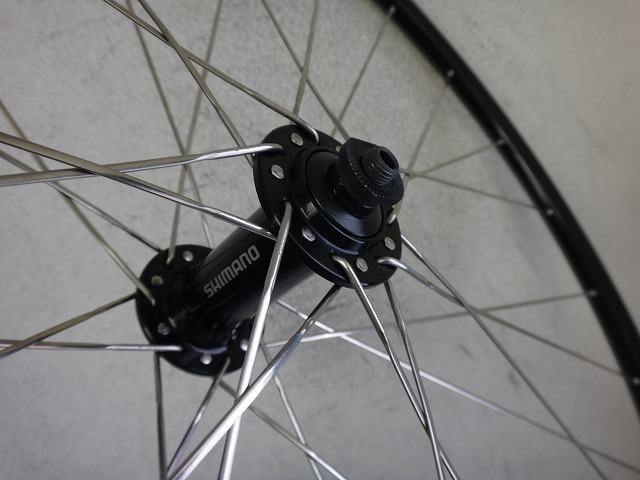
HB-RS400 28H CX-RAY 4-4 Italian lacing.
The hub is Shimano's off-tier RS400,
and as I've mentioned before, it comes in a 28H specification that doesn't exist on hubs below Altegra.
Altegra did have both 24H and 28H up through the 6600 series, but...
Unlike cartridge-bearing hubs, cup-and-cone hubs
have larger ball bearings and can be regreased,
making them more resistant to the kind of damage specific to cyclocross.
For even higher sealing performance,
28H would require Dura-Ace, but the price difference is huge.
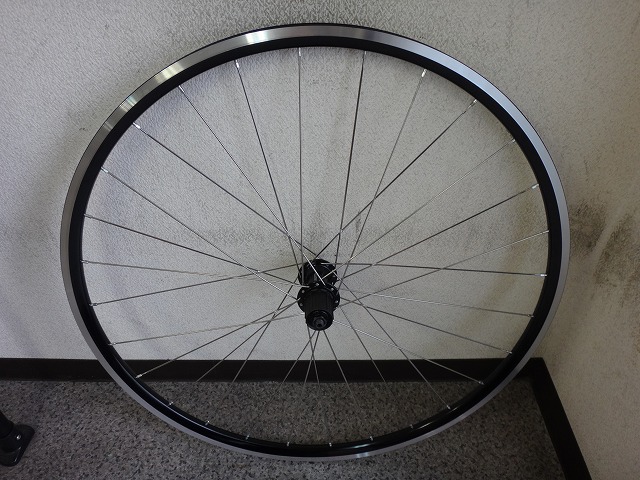
I also built the rear wheel.
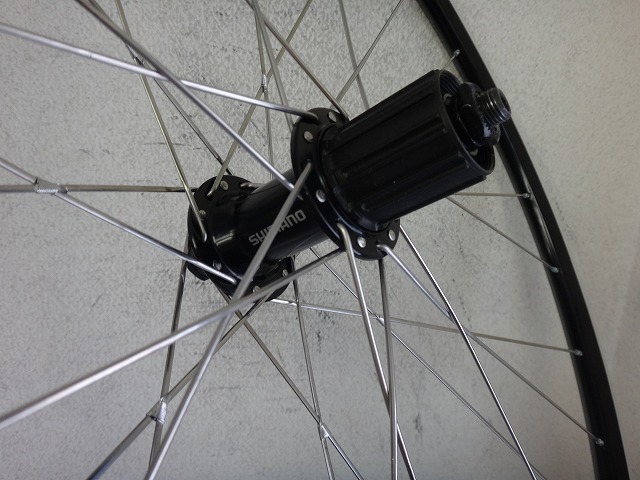
FH-RS400 28H semi-comp 4-6 lacing with radial tie.
Next, second pair.
I built wheels using Stan's NoTubes Iron Cross rims and Shimano RS505 hubs.
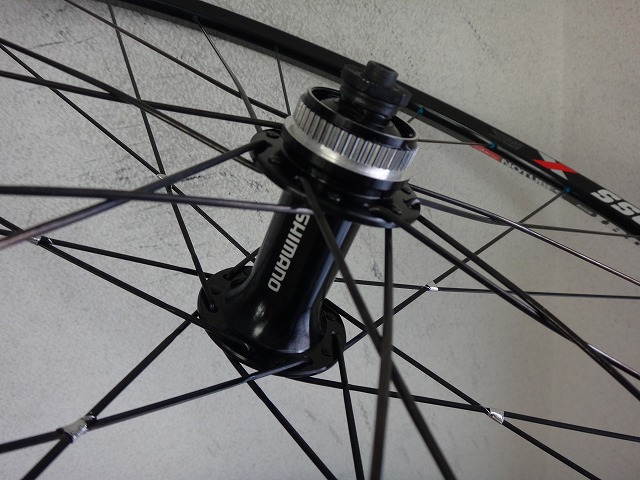
HB-RS505 28H black semi-comp 6-4 reverse Italian lacing with radial tie.
The Iron Cross rim is from our shop's inventory,
rims we bought up—I mean, sourced—at the end of last season
that a customer had reserved.
As for the RS505 hub, this is also an off-tier model
and can be thought of as the disc hub version of the RS400.
There is the CX75 as a higher-end quick-release disc hub model,
but for some reason the CX75 hub is already discontinued,
and while we managed to buy up—I mean, source—enough to cover our customers' pre-orders,
there won't be any future stock.
And honestly, discontinuing a higher-end model of quick-release disc hubs so soon
is a terrible decision.
The CX75 hub came only in 28H,
but the RS505 hub is available in 28H, 32H, and 36H.
As for me, 28H is all I need.
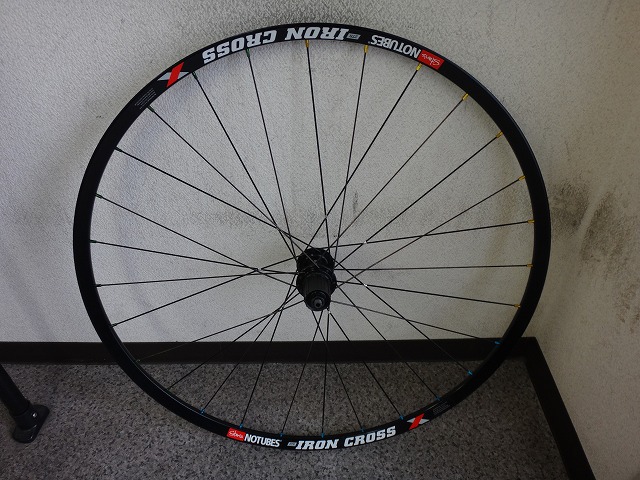
I also built the rear wheel.
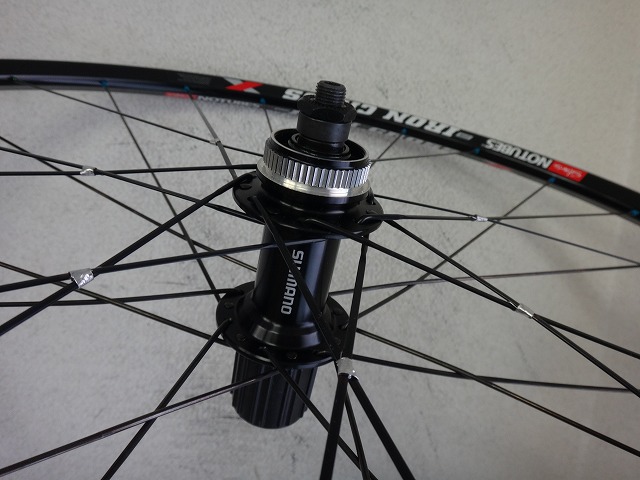
FH-RS505 28H black semi-comp 4-6 JIS lacing with radial tie.
With cyclocross frames, in the case of quick-release,
some hubs have an over-locknut dimension of 130mm,
and I've confirmed that the customer's frame is not 130mm.
Edit: The hub is 135mm and the frame is also 135mm.
I made a mistake writing that the frame was 130mm.
Thank you for the comment.
Per the customer's request, viewing from the right side starting at the valve hole and going clockwise,
the nipples are divided into three sections by color: gold, turquoise, and green.
Since 28 doesn't divide evenly by 3, we're using 9 gold, 9 turquoise, and 10 green nipples.
Finally, third pair.
I built wheels using DT's RR411db rims.
With disc hubs, the front wheel also has an offset, so offset rims are effective.
Unlike the RR411 for rim brakes, the RR411db only comes in offset rim specifications.

HB-9010 28H black CX-RAY 6-4 reverse Italian lacing with radial tie.
The Iron Cross we just did uses a non-offset rim with asymmetrical lacing,
while this one uses an offset rim with symmetrical lacing.
But with a disc hub's level of offset (not as much as a freehub),
the correction of spoke tension between sides seems more effective with the former approach.
That's because in my rough sense of whether radial tie seems necessary,
Iron Cross with semi-comp looks like it might not need it (but I do it anyway)
RR411db with full CX-RAY looks like it should have it (so I do it)
and that's how it goes.
With RR411db in semi-comp, radial tie probably isn't necessary (by my thinking).
Not that there's anything wrong with doing it anyway.
With Shimano hubs, quick-release hubs come with quick-releases installed.
Through-axle hubs don't come with through-axles.
This is probably because shaft length, lever design (taper or flat),
and whether it's a simple twist mechanism or a flip-lever type all vary widely
depending on the frame or fork.
With 12mm through-axles, the rotor lock ring
uses the same wrench tool as the cassette lock ring,
which comes with the rotor, so the hub doesn't include a lock ring.
But with front 15mm through-axles only,
the lock ring must be the Hollowtech BB tool type,
so a lock ring is included.
Perhaps from the idea that "it's better to use the same rotor-fixing tool front and rear,"
wheels that come with MTB complete bikes often use
BB tool-type lock rings on the front 15mm even though the rear is 12mm.
About why we used XT/R hubs:
The customer's cyclocross frame set is from a transitional period in through-axle adoption.
The front is 15mm through-axle like MTB standards,
and the rear is quick-release at 135mm width.
We wanted to build the front wheel with a 28H rim,
but cyclocross hubs only come in 12mm through-axle specifications,
so we had to use an MTB front hub with 15mm through-axles.
The only one available with 28H is XT/R.
If XT came in 28H, I'd probably use that instead.
The M9000-series XT/R 28H hub was added later as a specification—
it didn't exist at the original launch.
If we went with Tni disc hubs instead, the rotor attachment method
would be 6-bolt instead of center-lock, so that's out.
And Chris King or DT hubs are pricier than XT/R... etc.
(though DT's 350 hub in 15/100mm is cheaper than XT/R)
When you factor in all these considerations, XT/R makes sense.
I also built the rear wheel.
Our shop's final stock FH-CX75 28H black semi-comp 4-6 JIS lacing with radial tie.

Per the customer's request, I used red aluminum nipples.
The rim's sticker says to "use PHR washers,"
so I'm following that, but technically DT's PHR washer rims
must be built with Squorx nipples.
With DT's red nipples, they seem to have shifted to "dark red,"
so I wrote before that I'd be treating the light red as worth preserving.
But the three boxes I sourced most recently were all "light red."
Which is it?
For now I'm using dark red,
but I won't mix light and dark on the same wheel.
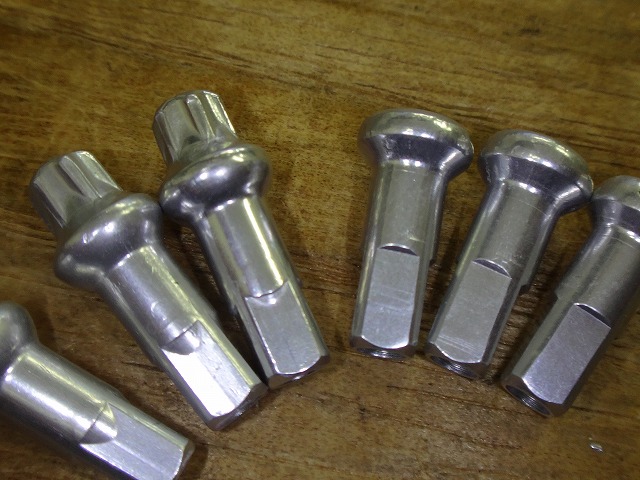
Squorx nipples are 15mm long, but the Torx-shaped protrusion you turn from the outside
is only 3mm longer, so the effective length protruding from the rim
is the same as 12mm nipples (right side in the image above).
But apart from that, they're not identical to 12mm nipples—
the curvature of the contact surface between nipple and rim (washer) differs from conventional nipples.
It's possible to build with Squorx nipples on other manufacturers' rims that don't need washers,
but they're designed especially for use with PHR washers.
Squorx nipples come in silver and black,
so when building in either of those colors I use Squorx,
but for any other color nipples, I check with the customer
and build with 12mm length color nipples.
As I've written before (→here), the PHR washer and nipple neck curve actually mate more smoothly
with standard nipples.
By the way, the article I linked uses the term "spherical nipple" from the manufacturer's name.
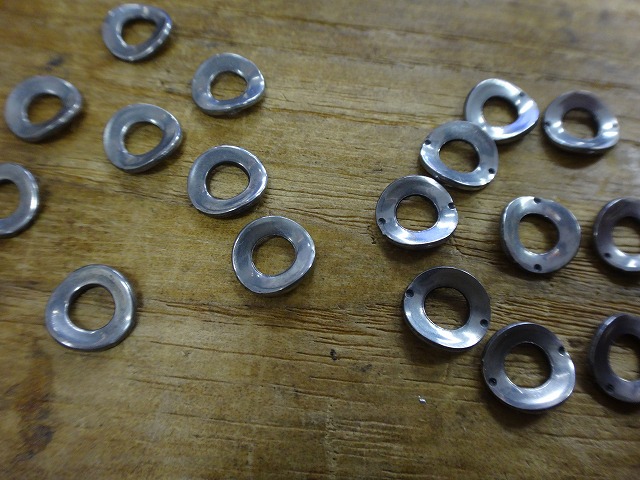
About PHR washers—recently a new specification has appeared:
ones with a black dot as a guide to align with the rim's front-to-back direction.
The image of red nipples inside the rim from a bit earlier shows one with the dot version.
The washers that come with rims now are a mix of old and new.
During wheel prep, the washer gets guided around by the rim's internal curve,
so unless you intentionally build with the washer's front-to-back direction rotated 90 degrees,
it won't go in the wrong way. That said, it will rotate slightly with nipple rotation.
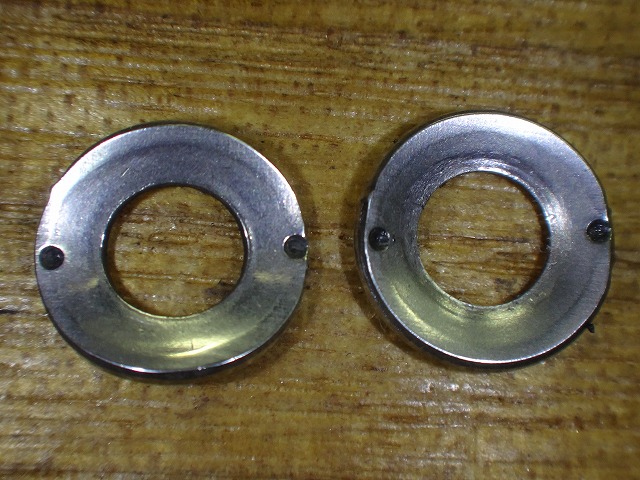
↑ Left image is initial state, right is after proper orientation and nipple pressure is applied.
It's hard to tell from directly above, but
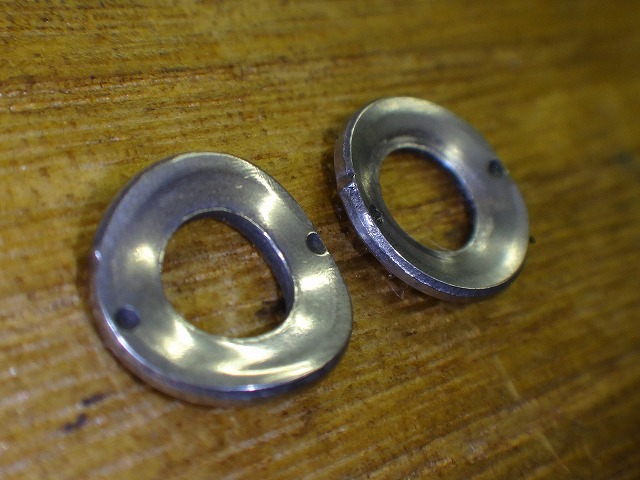
ultimately it deforms into a bowl shape. So while I do follow the orientation instruction,
there's no need to obsess over getting it perfectly aligned front-to-back.
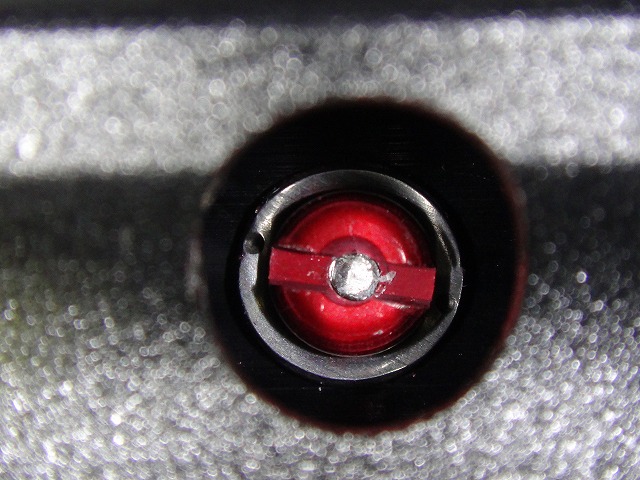
↑ Once deformed into a bowl shape, it shifts slightly with the nipple's rotation direction.
Incidentally, this tendency seems more pronounced with Squorx nipples.
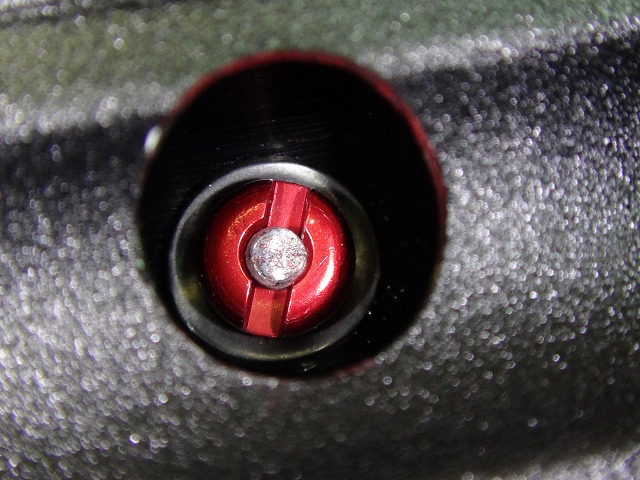
↑ The PHR washer that came with the front rim was the version without the dot.