Another day, another wheel (and so on).
Today I built a Nom Lab Wheel No. 1 SL.
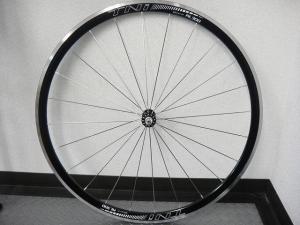
↑Front wheel
Lately I've been getting almost daily inquiries and reservation requests about Nom Lab wheels in the comments,
but the biggest reason I can't build Nom Lab wheels right now is that hubs are out of stock.
As for rims, Models 1 and 3 are in inventory,
so I could build them if I just had the hubs.
This time, the customer was able to find a hub, so we could complete the build.
There's a lot I could write about hub and rim lead times,
so I'll write a separate post about that.
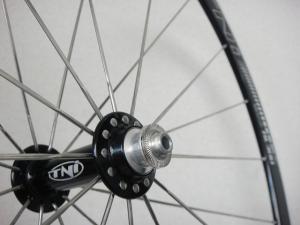
24-hole hubs arrived for both front and rear.
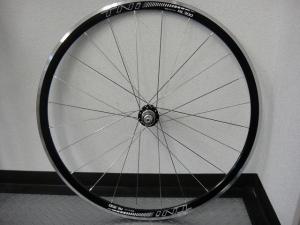
↑Rear wheel (←you can tell by looking)
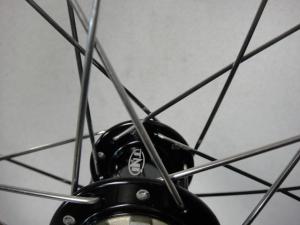
The request was for the freewheel side with Campagnolo on the freewheel side and CX-RAY on the non-freewheel side with different diameters left and right,
and a 46/36 spoke pattern with the most tangential lacing on the non-freewheel side with 24 holes.
They didn't want any bracing, so we didn't do any.
I've been thinking lately that if this blog didn't exist, customers probably wouldn't make the kinds of detailed orders like I described above.
Normally, when you ask a shop to hand-build a wheel, you might specify materials like rims or hubs at most.
But this blog has gone beyond that—
it's become an opportunity for customers to make more detailed requests, like wanting different spoke diameters and lacing patterns on each side.
I think this relates to what a customer taught me before,
that I've become able to "read" wheels by looking at them.
But being able to read them by looking
means you can already tell at a glance whether a mass-produced wheel is good or not so good
when you see one.
You've progressed from a level where you're browsing catalogs and don't know how to interpret specs beyond weight,
to a level where you can scrutinize wheel construction.
The same applies to hand-built wheels.
Because customers have learned this kind of wheel philosophy that I write about here,
shops that build wheels—including mine—find it harder to fool customers who can "read" wheels.
Whether this is hanging myself or functioning as a check to prevent sloppy work,
it should obviously be the latter, but whether we're actually managing that
can only be shown through our daily work.
Actually, the reason I'm writing this is that a colleague in the industry
complained to me (in summary): "Don't educate your customers—because of you, now I'm getting pestered with complicated demands too."
Not my problem.
Today I built a Nom Lab Wheel No. 1 SL.
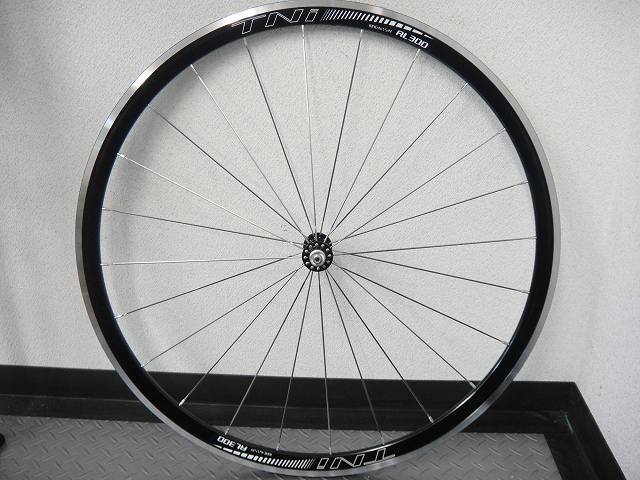
↑Front wheel
Lately I've been getting almost daily inquiries and reservation requests about Nom Lab wheels in the comments,
but the biggest reason I can't build Nom Lab wheels right now is that hubs are out of stock.
As for rims, Models 1 and 3 are in inventory,
so I could build them if I just had the hubs.
This time, the customer was able to find a hub, so we could complete the build.
There's a lot I could write about hub and rim lead times,
so I'll write a separate post about that.
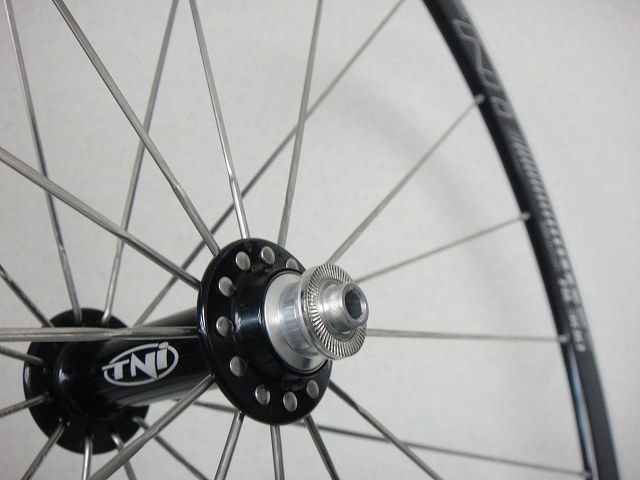
24-hole hubs arrived for both front and rear.
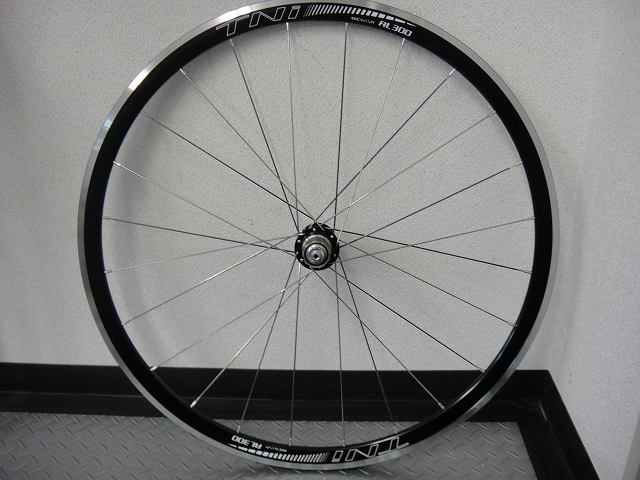
↑Rear wheel (←you can tell by looking)
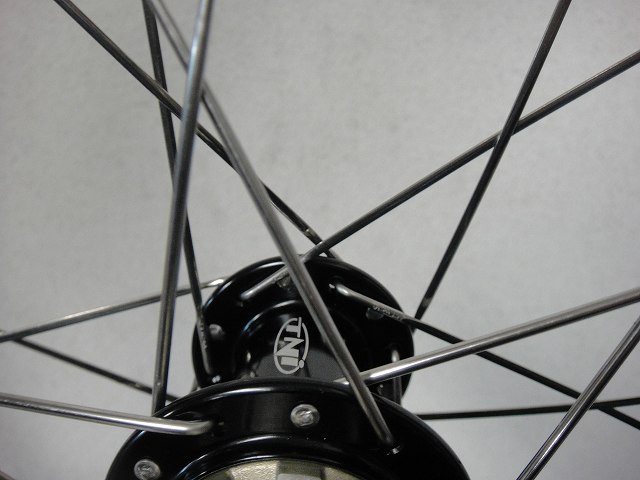
The request was for the freewheel side with Campagnolo on the freewheel side and CX-RAY on the non-freewheel side with different diameters left and right,
and a 46/36 spoke pattern with the most tangential lacing on the non-freewheel side with 24 holes.
They didn't want any bracing, so we didn't do any.
I've been thinking lately that if this blog didn't exist, customers probably wouldn't make the kinds of detailed orders like I described above.
Normally, when you ask a shop to hand-build a wheel, you might specify materials like rims or hubs at most.
But this blog has gone beyond that—
it's become an opportunity for customers to make more detailed requests, like wanting different spoke diameters and lacing patterns on each side.
I think this relates to what a customer taught me before,
that I've become able to "read" wheels by looking at them.
But being able to read them by looking
means you can already tell at a glance whether a mass-produced wheel is good or not so good
when you see one.
You've progressed from a level where you're browsing catalogs and don't know how to interpret specs beyond weight,
to a level where you can scrutinize wheel construction.
The same applies to hand-built wheels.
Because customers have learned this kind of wheel philosophy that I write about here,
shops that build wheels—including mine—find it harder to fool customers who can "read" wheels.
Whether this is hanging myself or functioning as a check to prevent sloppy work,
it should obviously be the latter, but whether we're actually managing that
can only be shown through our daily work.
Actually, the reason I'm writing this is that a colleague in the industry
complained to me (in summary): "Don't educate your customers—because of you, now I'm getting pestered with complicated demands too."
Not my problem.