Another wheel day (and so on).
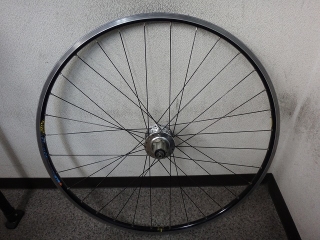
I received a rear wheel built with a PowerTap hub from a customer.
The rim is currently a Mavic Open Pro,
but they'd like me to rebuild it with a slightly wider rim.
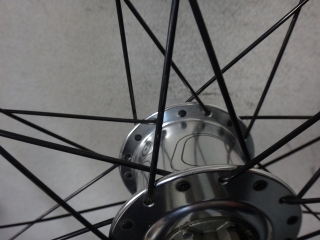
32 hole, all-black competition four-cross reverse Italian weave.
The centering is off, but that's not a problem since I'm rebuilding it anyway.
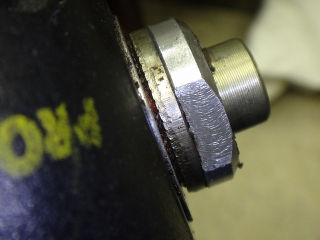
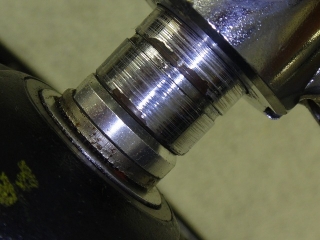
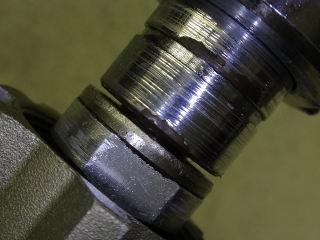
The serrations on the left end are facing inward,
so it's oriented backwards.
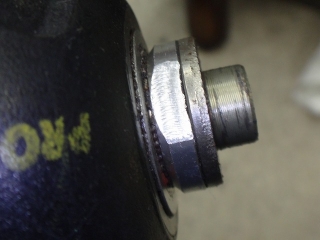
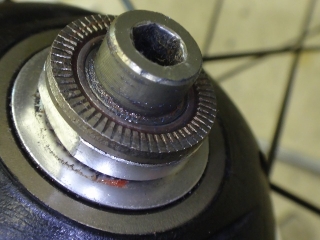
I thought I fixed it, but this is still wrong.
There's a gap on the inside of the left end,
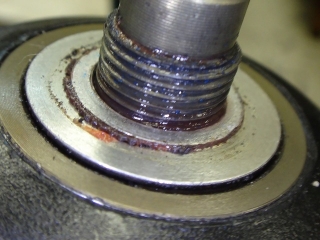
and the spacer orientation was also backwards.
The stepped section on the spacer is designed to
contact only the inner race of the bearing.
For 15mm hub axles from later generations,
they use non-threaded solid end cups,
but these 12mm hub axles (which come in aluminum or steel; this one is aluminum)
use locknut ends.
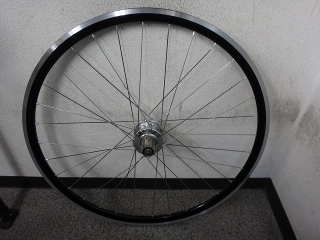
All built.
I used a Tni CX28 rim.
If I've built a particular rim and hub combination before,
I don't need to measure the rim dimensions again
(with exceptions like ENVE and ZIPP, which have individual variation too significant to ignore, so I measure those separately).
I have built with the CX28 rim before, but
I had doubts about the calculated numbers,
and I had a bad feeling this length couldn't be right.
In cases like this, the culprit is usually something like
accidentally entering 24 instead of 32 in the spoke count cell,
but that wasn't the case here.
It turned out the problem wasn't the Tni CX28,
but that I'd copy-pasted data from an ALEXRIMS CX28 rim instead.
That was a close call—I almost cut spokes and wasted them.
Anyway, I did have the Tni CX28 data in my past records.
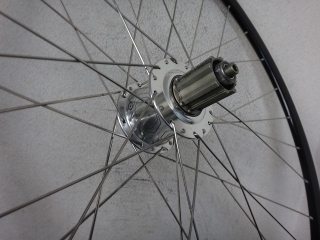
PRO+ hub, 32 hole, semi-competition four-six weave.
I'll solder the connections later.
The original had black spokes, but after the rebuild the customer wants silver spokes.
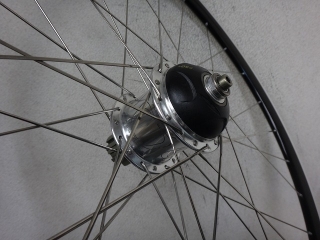
The battery case cover wouldn't come off easily,
and since I was struggling to loosen it without damaging it,
it suggests the customer might not be able to change the battery themselves.
I finally managed to loosen it without stripping the grip.
There wasn't any threadlocker compound deliberately applied.

I received a rear wheel built with a PowerTap hub from a customer.
The rim is currently a Mavic Open Pro,
but they'd like me to rebuild it with a slightly wider rim.
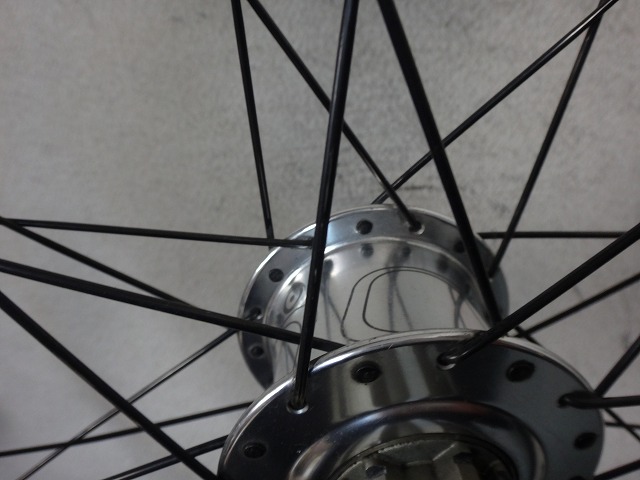
32 hole, all-black competition four-cross reverse Italian weave.
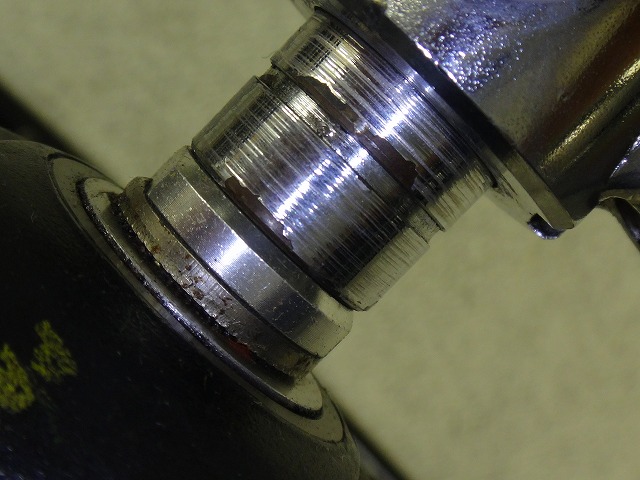
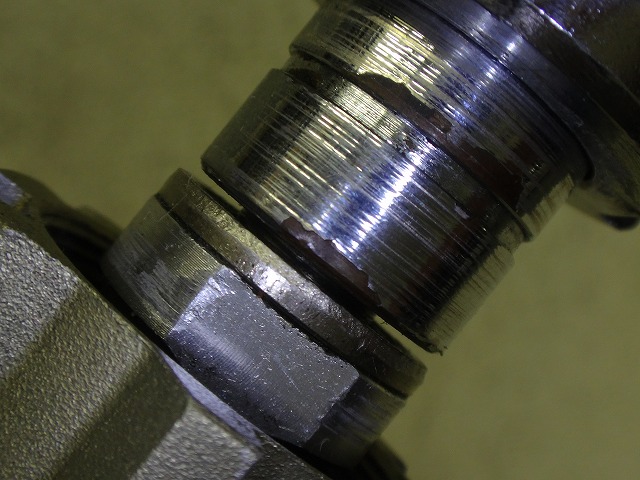
The centering is off, but that's not a problem since I'm rebuilding it anyway.
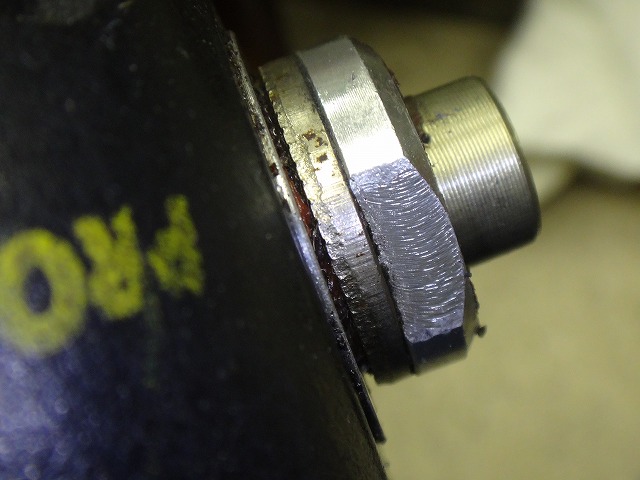
The serrations on the left end are facing inward,
so it's oriented backwards.
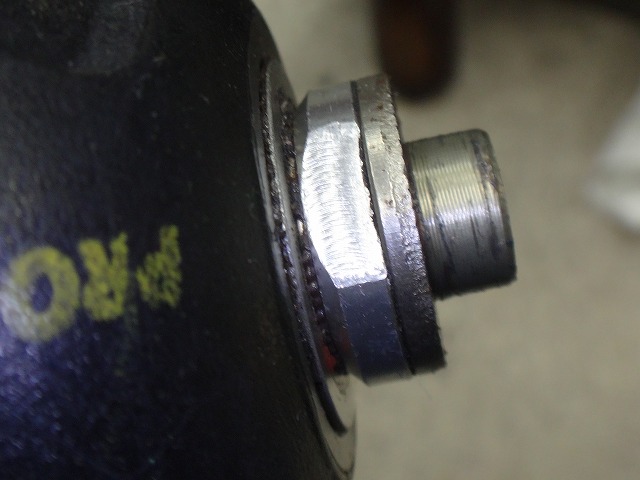
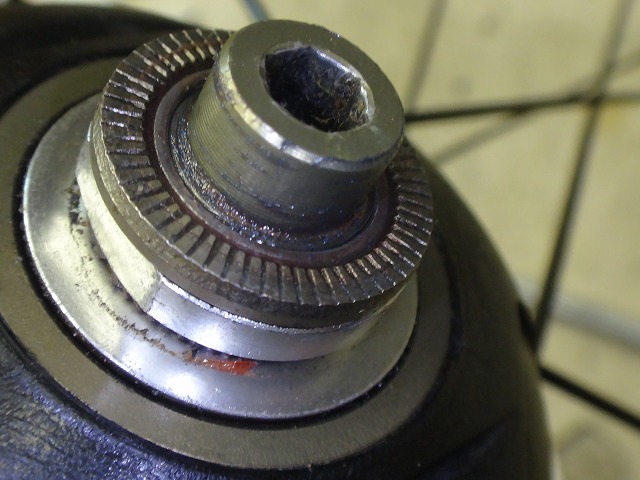
I thought I fixed it, but this is still wrong.
There's a gap on the inside of the left end,

and the spacer orientation was also backwards.
The stepped section on the spacer is designed to
contact only the inner race of the bearing.
For 15mm hub axles from later generations,
they use non-threaded solid end cups,
but these 12mm hub axles (which come in aluminum or steel; this one is aluminum)
use locknut ends.
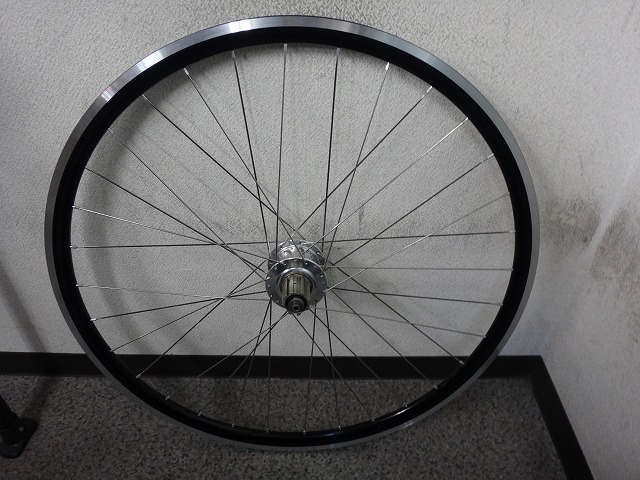
All built.
I used a Tni CX28 rim.
If I've built a particular rim and hub combination before,
I don't need to measure the rim dimensions again
(with exceptions like ENVE and ZIPP, which have individual variation too significant to ignore, so I measure those separately).
I have built with the CX28 rim before, but
I had doubts about the calculated numbers,
and I had a bad feeling this length couldn't be right.
In cases like this, the culprit is usually something like
accidentally entering 24 instead of 32 in the spoke count cell,
but that wasn't the case here.
It turned out the problem wasn't the Tni CX28,
but that I'd copy-pasted data from an ALEXRIMS CX28 rim instead.
That was a close call—I almost cut spokes and wasted them.
Anyway, I did have the Tni CX28 data in my past records.
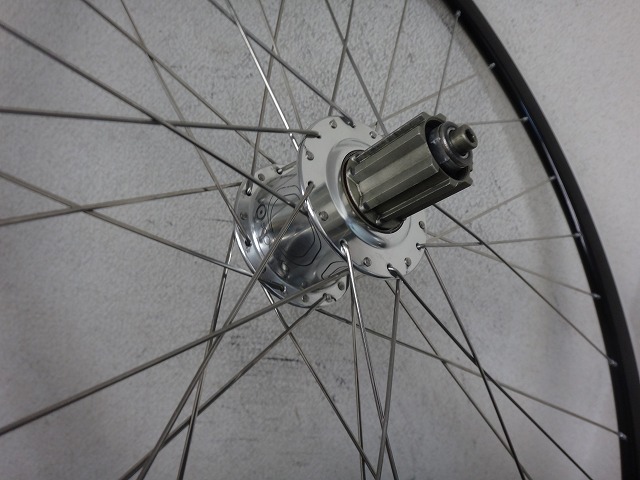
PRO+ hub, 32 hole, semi-competition four-six weave.
I'll solder the connections later.
The original had black spokes, but after the rebuild the customer wants silver spokes.
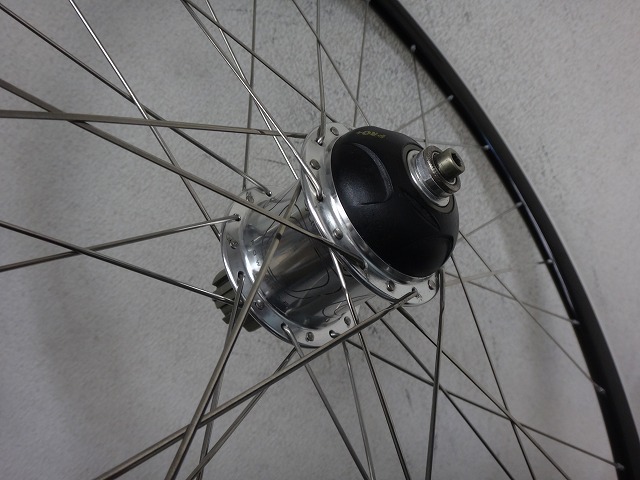
The battery case cover wouldn't come off easily,
and since I was struggling to loosen it without damaging it,
it suggests the customer might not be able to change the battery themselves.
I finally managed to loosen it without stripping the grip.
There wasn't any threadlocker compound deliberately applied.