Back to wheels again today (and so on...).
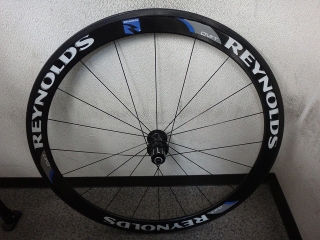
A customer brought in a Reynolds DV46T rear wheel.
It's not at the point of needing truing, but
the tension is loose, so they asked me to rebuild it.
It's a 20H all-black Comp quad lacing,
but with radial lacing on the freewheel-side outpokes—so the looseness isn't just that,
(though that's part of it of course)—it's clearly sagging compared to how it comes from the box.
Of course, even if I tension this lacing pattern up, there's only so much I can do.
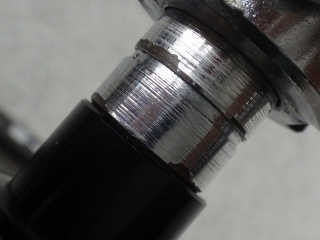
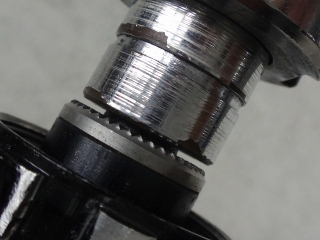
There was a noticeable center offset.
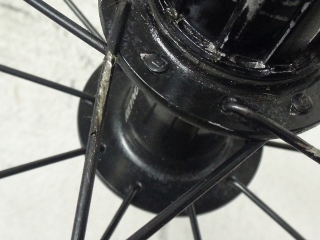
All the inpokes on the freewheel side had chain rub marks,
so I loosened nipples over about half the wheel thoroughly,
released the tension, then cut and disassembled the spokes.
But when I got to it, some nipples wouldn't grip with the wrench...
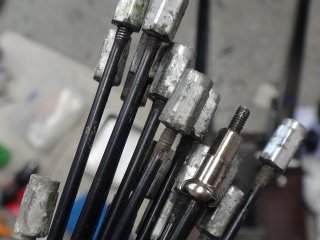
Just one nipple had been flipped around and used as a makeshift repair with a generic nipple.
Since the wrench couldn't grip it, this one had never been loosened at all,
and apart from needing a different tool just for that one,
the spoke length on it is way too long.
What occurred to me then was that,
setting aside the quad lacing itself,
both the low tension and the center offset
seem to stem from sloppy truing attempts during that repair.
Even accounting for sagging from the box, this seemed way too loose.
The internal-nipple hubs in the photos above are also in stock at our shop,
so I'll replace that one nipple during the rebuild.
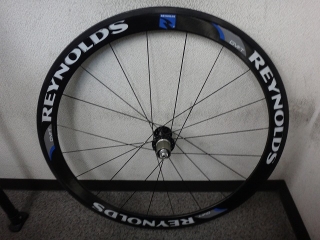
Built up.
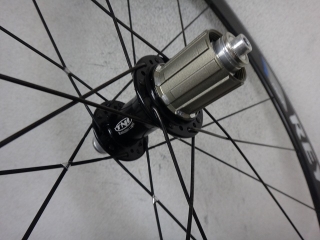
Evolite 20H hub, black semi-Champion quad lacing with crossing.
The original rear hub was a DT-made hub under the Reynolds brand,
and I let the customer know that reusing it wouldn't be a problem,
but they wanted to upgrade to an Evolite hub, so that's what we did.
The front wheel is also in for service and they want an inspection,
but it wasn't in a condition that truing alone could handle,
so I couldn't get to that today.
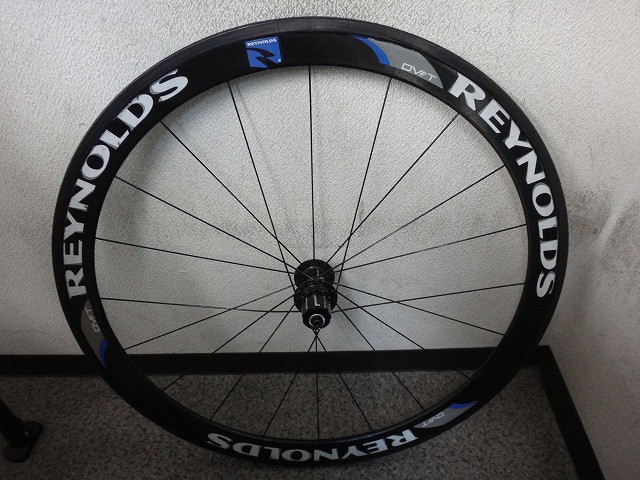
A customer brought in a Reynolds DV46T rear wheel.
It's not at the point of needing truing, but
the tension is loose, so they asked me to rebuild it.
It's a 20H all-black Comp quad lacing,
but with radial lacing on the freewheel-side outpokes—so the looseness isn't just that,
(though that's part of it of course)—it's clearly sagging compared to how it comes from the box.
Of course, even if I tension this lacing pattern up, there's only so much I can do.

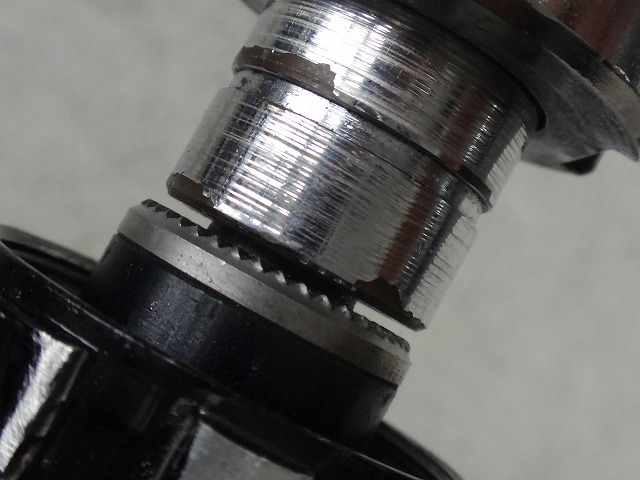
There was a noticeable center offset.

All the inpokes on the freewheel side had chain rub marks,
so I loosened nipples over about half the wheel thoroughly,
released the tension, then cut and disassembled the spokes.
But when I got to it, some nipples wouldn't grip with the wrench...

Just one nipple had been flipped around and used as a makeshift repair with a generic nipple.
Since the wrench couldn't grip it, this one had never been loosened at all,
and apart from needing a different tool just for that one,
the spoke length on it is way too long.
What occurred to me then was that,
setting aside the quad lacing itself,
both the low tension and the center offset
seem to stem from sloppy truing attempts during that repair.
Even accounting for sagging from the box, this seemed way too loose.
The internal-nipple hubs in the photos above are also in stock at our shop,
so I'll replace that one nipple during the rebuild.
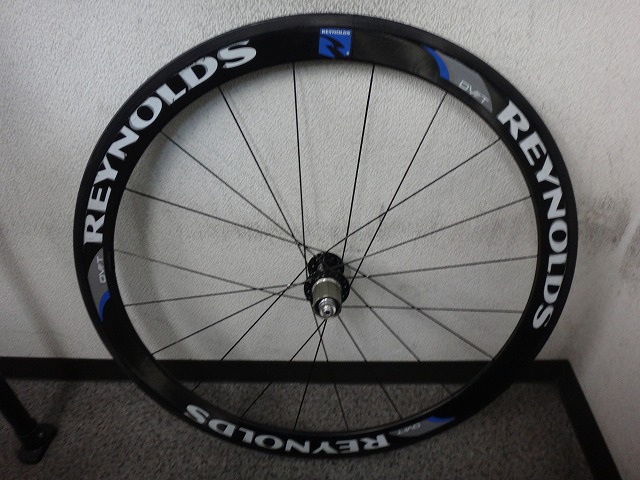
Built up.

Evolite 20H hub, black semi-Champion quad lacing with crossing.
The original rear hub was a DT-made hub under the Reynolds brand,
and I let the customer know that reusing it wouldn't be a problem,
but they wanted to upgrade to an Evolite hub, so that's what we did.
The front wheel is also in for service and they want an inspection,
but it wasn't in a condition that truing alone could handle,
so I couldn't get to that today.