The other day I rebuilt a Reynolds DV46UL, and
during the work I said to the customer,
"About that lateral flex you mentioned on the phone that looked like it might touch the seatstay..."
and they said "That wasn't me."
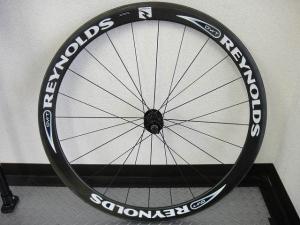
It was a different case. How embarrassing (on my part).
I never expected to have a DV46UL rebuild come in
at almost exactly the same time.
Since this customer also came from another prefecture,
I took some time and managed to do an impromptu rebuild.

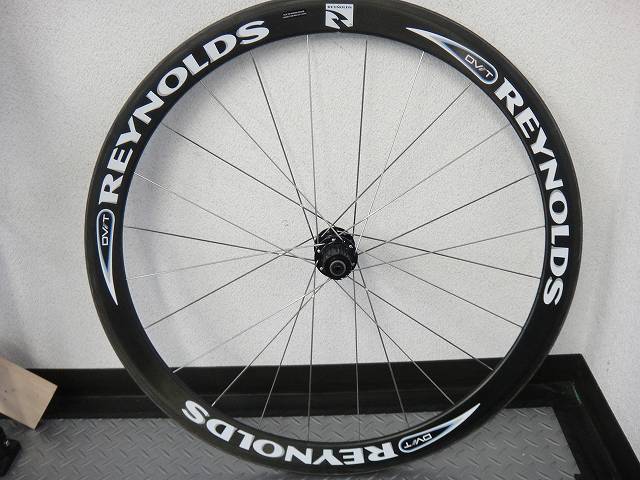
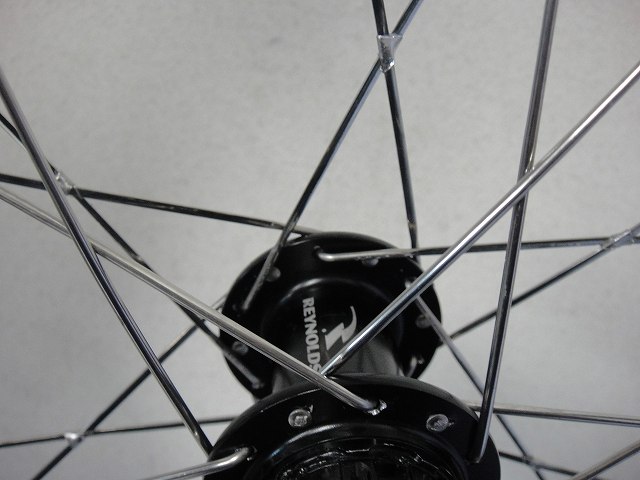
Before the rebuild, the freewheel side was built in reverse Italian 4/0 pattern.
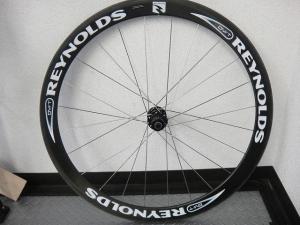
Rebuilt it.
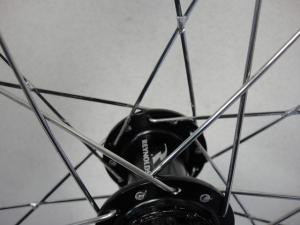
Italian 4/6 pattern with lacing.
Regarding the Reynolds from two posts ago, the person who had their MV32UL rebuilt left a comment saying,
"I was thinking it would feel crisper and snappier,
but the change wasn't as dramatic as I imagined.
However, my legs seem to fatigue much more quickly now."
Since I kept the freewheel side spokes at the same gauge as before the rebuild
and kept the spoke tension at about the same or slightly higher than before,
the wheel shouldn't have gotten weaker,
but it seems the dramatic stiffness didn't materialize after all.
Very helpful feedback.
And in the follow-up comment, they mentioned that the rebuild from 4/0 to 4/6 added 10g,
and they wondered if the non-driveside
might not be better with tangent lacing instead.
Furthermore,
"That said, I find it strange that the big manufacturers
seem to use radial lacing so much.
I don't know if there's some secret or not,
but it's very puzzling."
And I agree—it's puzzling to me too.
In the case of 2:1 spoke count with high-flange hubs (←Fulcrum, that is),
building the non-driveside in tangent lacing can cause spoke tension reversal
(non-driveside at higher tension).
If you do R-SYS like Kシリウム (Ksilium) with freewheel-side radial lacing,
you'd be placing carbon spokes on the freewheel side,
and in the event of chain drop, there's a risk of complete spoke damage,
so carbon spokes are used only on the non-driveside in radial lacing.
(Carbon spokes have spoke heads too thick for tangent lacing)
Aside from these two points, I can't find
a legitimate reason for non-driveside radial lacing.
If I had to pick one, it'd be "aero."
Digression aside.
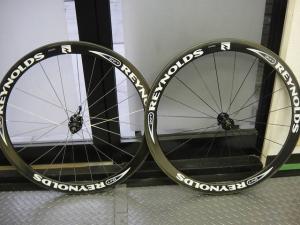
I also trued the front wheel and did some retensioning while I was at it.
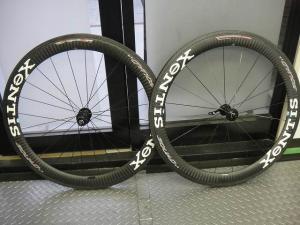
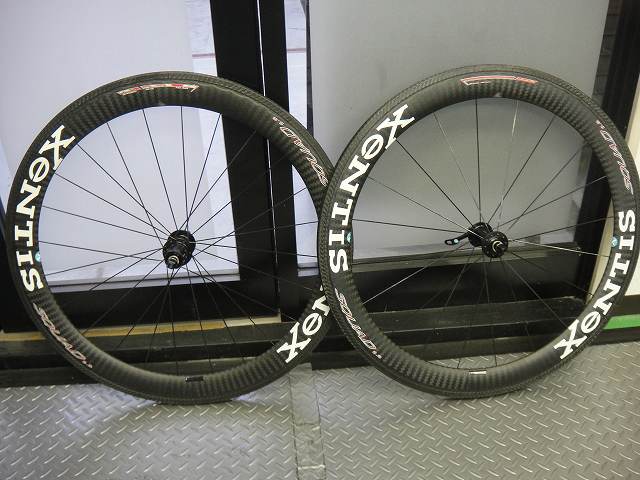
At the same time I also trued the Xentis wheel
and did just a bit of retensioning.
Both the Reynolds and Xentis wheels I looked at today had perfect center alignment.
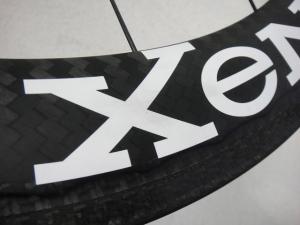
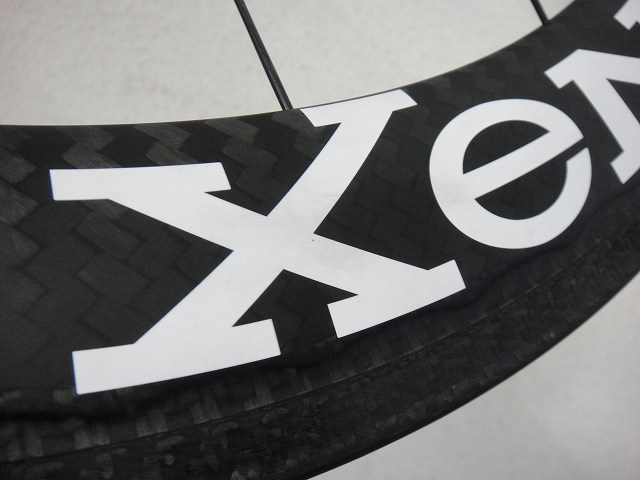
The Xentis rim is noticeably stiff when you're building it!
There are wavy ribs running inside from about the brake zone area.
This isn't for vegetable-cutting blade release, but for rigidity.
Whether the wave pattern has aerodynamic significance or is just design, I can't say.
Xentis also has the same DT hub as Reynolds (ah, I just said it), but
even in the same 4/0 pattern, the stiffness was completely different.
Maybe it's a difference in the rim's spoke tension limit.
From what I felt adjusting it, it was just plain stiff. It gave the impression of an aluminum rim.
Apparently this translates to a stiff feel when you ride it too.
They also mentioned having a Shimano C50 tubular,
which apparently has a softer ride feel,
but if you think of those wheels as long-distance-oriented,
then it's all about right tool for the job, pros and cons, supply and demand, horses for courses.
during the work I said to the customer,
"About that lateral flex you mentioned on the phone that looked like it might touch the seatstay..."
and they said "That wasn't me."
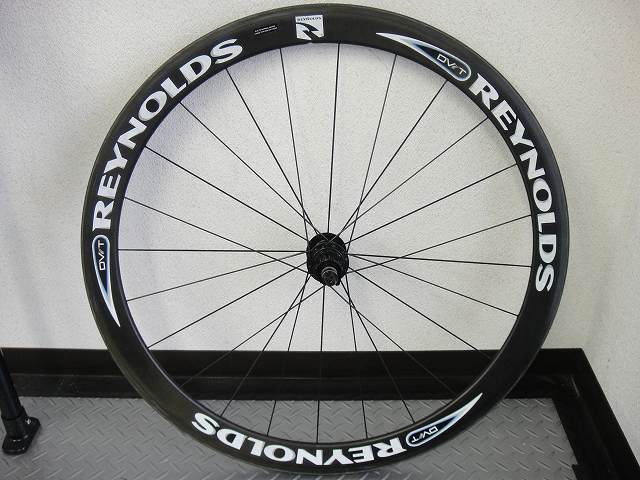
It was a different case. How embarrassing (on my part).
I never expected to have a DV46UL rebuild come in
at almost exactly the same time.
Since this customer also came from another prefecture,
I took some time and managed to do an impromptu rebuild.
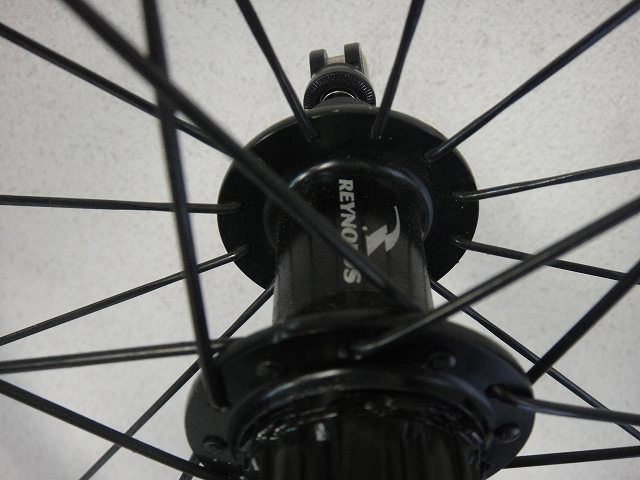
Before the rebuild, the freewheel side was built in reverse Italian 4/0 pattern.
Rebuilt it.
Italian 4/6 pattern with lacing.
Regarding the Reynolds from two posts ago, the person who had their MV32UL rebuilt left a comment saying,
"I was thinking it would feel crisper and snappier,
but the change wasn't as dramatic as I imagined.
However, my legs seem to fatigue much more quickly now."
Since I kept the freewheel side spokes at the same gauge as before the rebuild
and kept the spoke tension at about the same or slightly higher than before,
the wheel shouldn't have gotten weaker,
but it seems the dramatic stiffness didn't materialize after all.
Very helpful feedback.
And in the follow-up comment, they mentioned that the rebuild from 4/0 to 4/6 added 10g,
and they wondered if the non-driveside
might not be better with tangent lacing instead.
Furthermore,
"That said, I find it strange that the big manufacturers
seem to use radial lacing so much.
I don't know if there's some secret or not,
but it's very puzzling."
And I agree—it's puzzling to me too.
In the case of 2:1 spoke count with high-flange hubs (←Fulcrum, that is),
building the non-driveside in tangent lacing can cause spoke tension reversal
(non-driveside at higher tension).
If you do R-SYS like Kシリウム (Ksilium) with freewheel-side radial lacing,
you'd be placing carbon spokes on the freewheel side,
and in the event of chain drop, there's a risk of complete spoke damage,
so carbon spokes are used only on the non-driveside in radial lacing.
(Carbon spokes have spoke heads too thick for tangent lacing)
Aside from these two points, I can't find
a legitimate reason for non-driveside radial lacing.
If I had to pick one, it'd be "aero."

Digression aside.
I also trued the front wheel and did some retensioning while I was at it.
At the same time I also trued the Xentis wheel
and did just a bit of retensioning.
Both the Reynolds and Xentis wheels I looked at today had perfect center alignment.
The Xentis rim is noticeably stiff when you're building it!
There are wavy ribs running inside from about the brake zone area.
This isn't for vegetable-cutting blade release, but for rigidity.
Whether the wave pattern has aerodynamic significance or is just design, I can't say.
Xentis also has the same DT hub as Reynolds (ah, I just said it), but
even in the same 4/0 pattern, the stiffness was completely different.
Maybe it's a difference in the rim's spoke tension limit.
From what I felt adjusting it, it was just plain stiff. It gave the impression of an aluminum rim.
Apparently this translates to a stiff feel when you ride it too.
They also mentioned having a Shimano C50 tubular,
which apparently has a softer ride feel,
but if you think of those wheels as long-distance-oriented,
then it's all about right tool for the job, pros and cons, supply and demand, horses for courses.