Another day, another wheel build (and so on).

A customer dropped off the rear wheel from a Smart Envision System 7.8.
In the customer's words, it "seems to flex quite a bit during standing climbing,"
but basically they're saying the wheel is loose and wants it rebuilt.
It's pretty much the latest spec, so it has a file-pattern braking surface,
but carbon rims with file-pattern brake zones squeak when the brake shoes touch,
which makes it even more noticeable.
Rims like that are almost always wide rims, so you can't
set wider clearance between the brake shoes and rim
(especially with direct-mount brakes),
which is another condition that makes squeaking more likely.
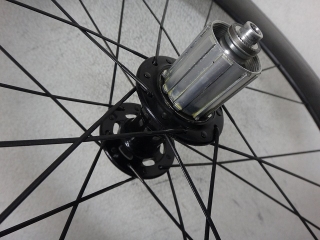
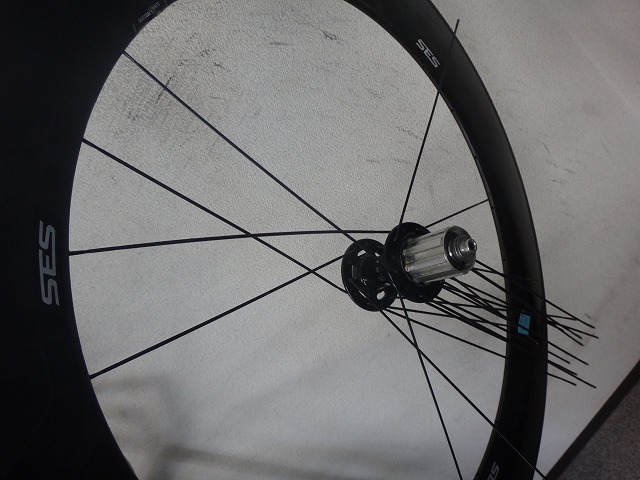
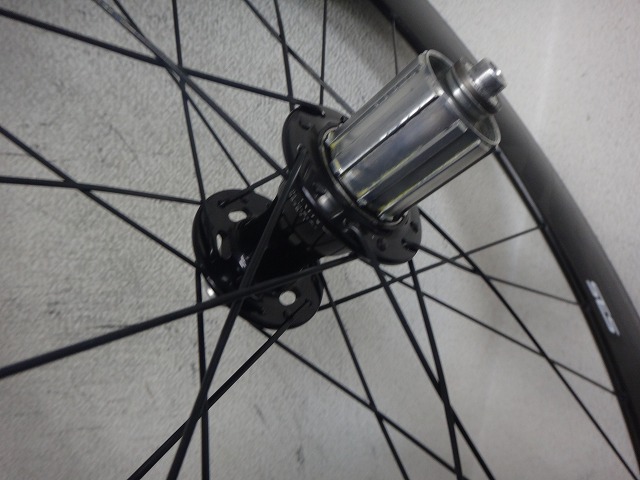
Probably manufacturer in-house, but it's a Chris King R45 hub, 24H,
all-black CX-RAY, reverse Italian laced.
The non-drive side was loose, but...
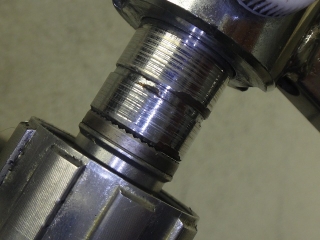
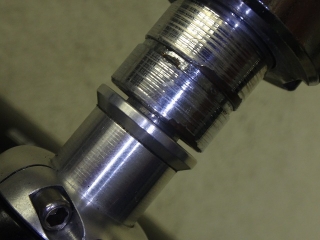
The rim was seriously offset toward the non-drive side.
Pure speculation on my part, but I think because the non-drive side was loose,
someone re-tightened it after the fact.
I didn't shoot photos for an article and didn't write one up, but
just the other day I inspected a manufacturer in-house SES 2.2 complete wheel (DT 240S hub)
and the rear wheel had absolutely terrible radial runout—
it took a while to get it straight.
That happens sometimes, but
I've never seen an off-the-shelf SES wheel with its center this far off before.
I wrote "pretty much" the latest spec earlier, but...
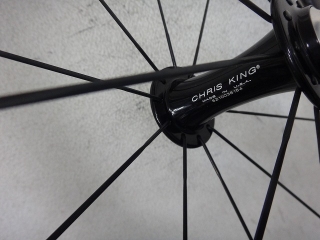
Actually, I also have the front wheel.
For inspection and a separate job request that's incredibly tedious.
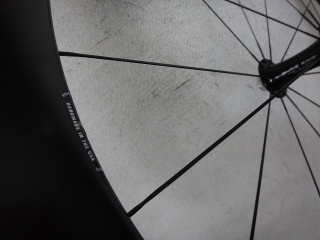
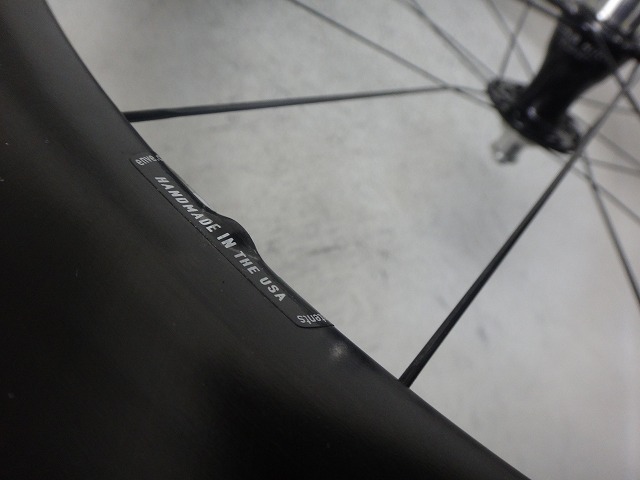
On this front wheel, looking from the right side, the valve hole sticker says
"Handmade in USA,"
but the opposite side has a serial number.
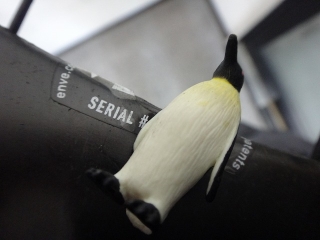
On the rear wheel, the right side had the serial number.
So when rebuilding, I'm flipping the rim left-to-right.
The latest spec has stopped printing serial numbers on the valve hole sticker.
Since the rim itself is the same, it's "pretty much" the latest spec.
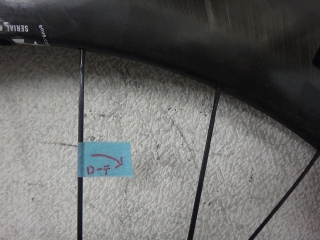
I put a marker tape on for a specific purpose,
but it turned out to be my mistake, so it's meaningless now.
SES rims are basically front 20H only and rear 24H only,
but until recently, the high-profile models
had a 18/20H spec front and rear.
Now, including this SES 7.8 and the SES 8.9 (not officially sold in Japan),
all rim brake road wheels are 20/24H front and rear.
I thought this rear wheel was 20H, so when changing
from an all-CX-RAY four-cross to a half-champion four-cross lacing,
I planned to reuse the non-drive side spokes and
to distinguish between inpokes and outpokes,
I decided not to pull the spokes from the flanges in the first place,
and because I'm changing from reverse Italian to Italian lacing,
I wanted to show where and how the outpoke next to the valve hole
on the non-drive side would end up after the rebuild.
In reality it's 24H, so the drive side has a gauge change and the non-drive side has a length change,
so both sides get all new spokes.
This CX-RAY is a custom product with the plain section on the rim side square-machined—
at one point a Japanese distributor accidentally got a shipment of
black 280mm standard spokes instead of this custom version.
The thing is, you can't trim these with a spoke cutter.

I carefully disassembled it, keeping only the 4 spokes next to the valve hole.
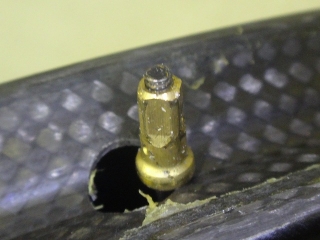
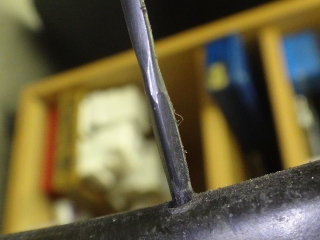
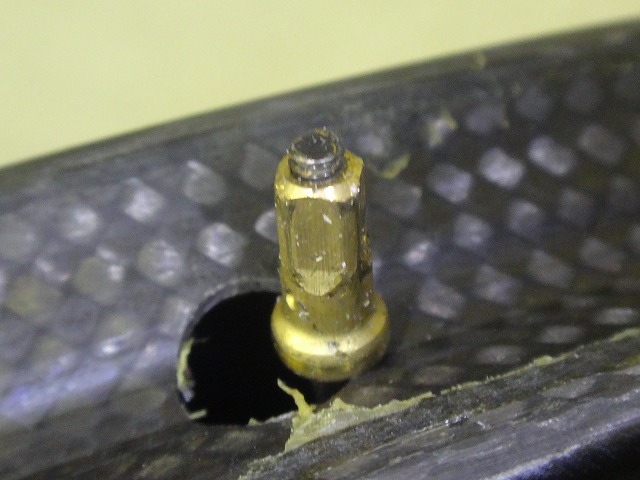
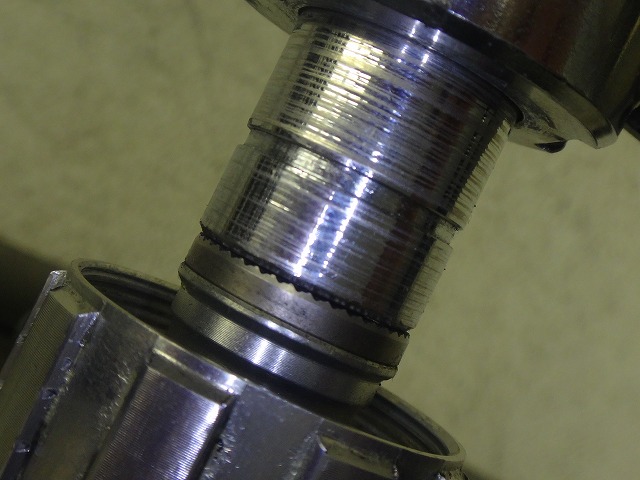
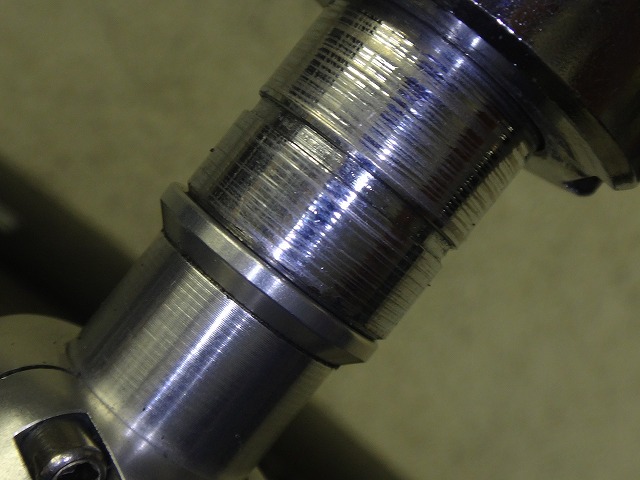
The drive side spoke ends were flush with the nipple end face,
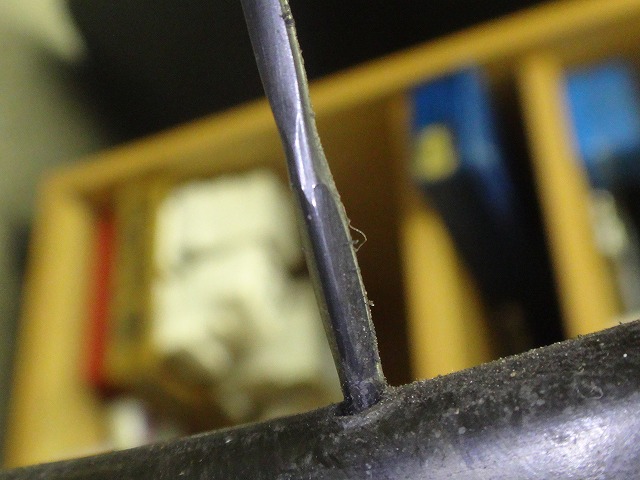
while the non-drive side protruded by about 2 threads (image above).
If this rear wheel were 20H and half-champion laced,
we'd be tightening more than that, but since modification isn't possible,
it was going to get rebuilt with standard black CX-RAY.
Either way, these spokes needed replacing.

Built.
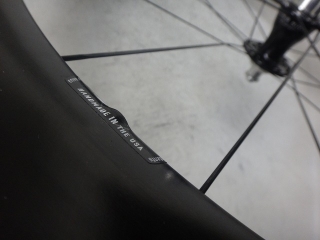
"Handmade in USA" side is on the right, and
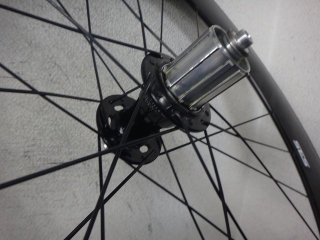
24H, black half-Compé four-six Italian laced.
I'll do the truing later.
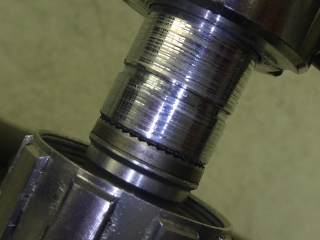
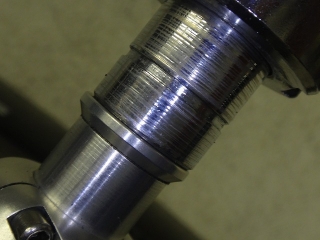
The hub and the gauge of the non-drive side spokes are the same as before rebuilding,
and even though the previous build was offsetting center (ha!) just to
keep tension on the non-drive side,
the non-drive side tension after this rebuild with proper center
is clearly higher.
Mind you, I haven't trued it yet, so this is spoke tension only.
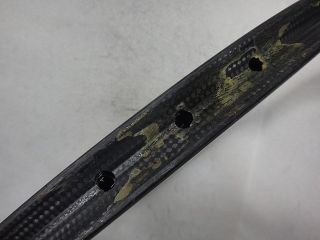
Near the valve hole
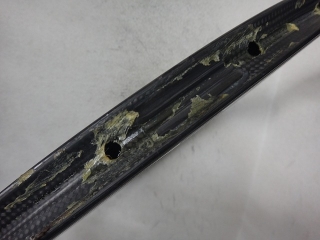
Opposite side of valve hole
About that "incredibly tedious job request" I mentioned—
the customer wants to switch to rim tape and needs the rim cement removed.
M... my fingers are going to die.
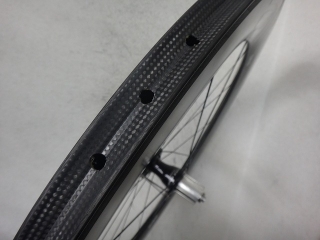
Near the valve hole
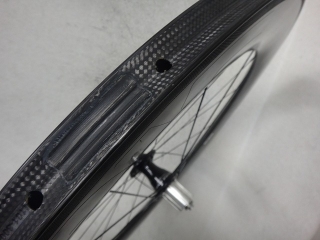
Opposite side of valve hole (marks where the bleed hole was plugged)
I did the rear wheel while the rim was disassembled.
I haven't done the front wheel yet. M... my fingers are going to die.
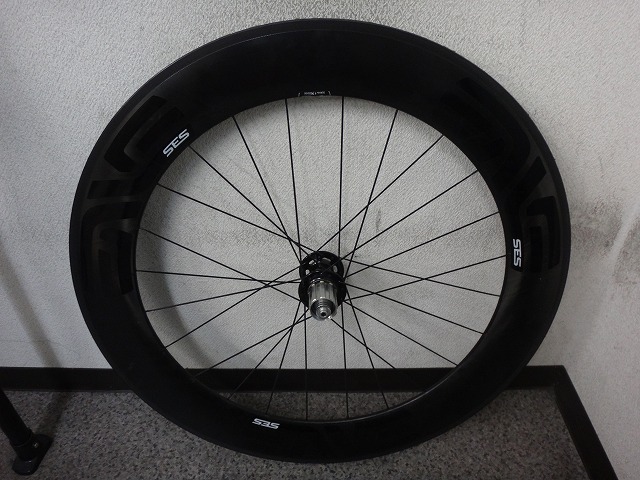
A customer dropped off the rear wheel from a Smart Envision System 7.8.
In the customer's words, it "seems to flex quite a bit during standing climbing,"
but basically they're saying the wheel is loose and wants it rebuilt.
It's pretty much the latest spec, so it has a file-pattern braking surface,
but carbon rims with file-pattern brake zones squeak when the brake shoes touch,
which makes it even more noticeable.
Rims like that are almost always wide rims, so you can't
set wider clearance between the brake shoes and rim
(especially with direct-mount brakes),
which is another condition that makes squeaking more likely.
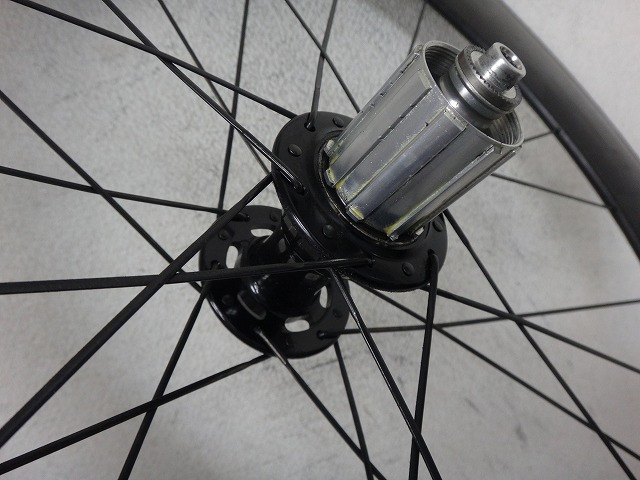
Probably manufacturer in-house, but it's a Chris King R45 hub, 24H,
all-black CX-RAY, reverse Italian laced.
The non-drive side was loose, but...
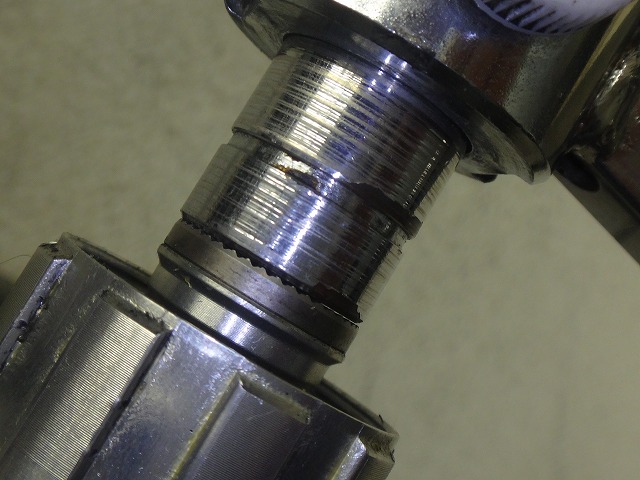
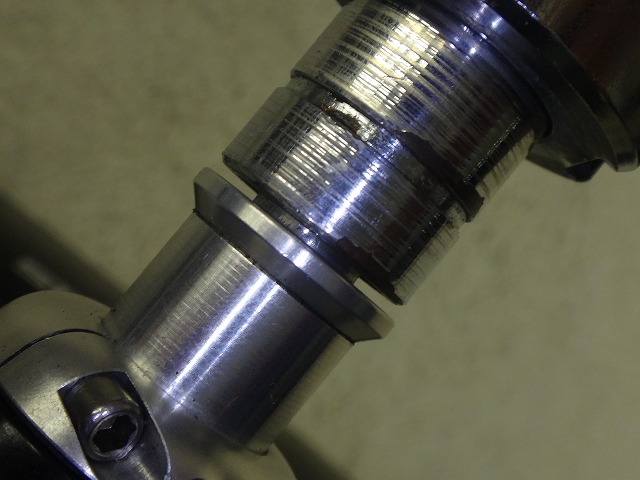
The rim was seriously offset toward the non-drive side.
Pure speculation on my part, but I think because the non-drive side was loose,
someone re-tightened it after the fact.
I didn't shoot photos for an article and didn't write one up, but
just the other day I inspected a manufacturer in-house SES 2.2 complete wheel (DT 240S hub)
and the rear wheel had absolutely terrible radial runout—
it took a while to get it straight.
That happens sometimes, but
I've never seen an off-the-shelf SES wheel with its center this far off before.
I wrote "pretty much" the latest spec earlier, but...

Actually, I also have the front wheel.
For inspection and a separate job request that's incredibly tedious.

On this front wheel, looking from the right side, the valve hole sticker says
"Handmade in USA,"
but the opposite side has a serial number.
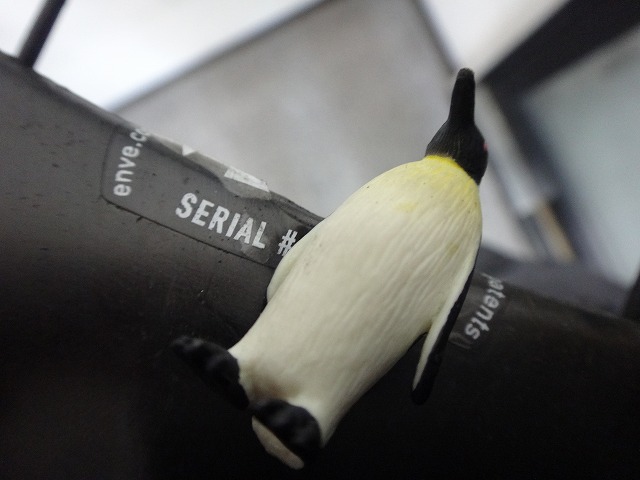
On the rear wheel, the right side had the serial number.
So when rebuilding, I'm flipping the rim left-to-right.
The latest spec has stopped printing serial numbers on the valve hole sticker.
Since the rim itself is the same, it's "pretty much" the latest spec.
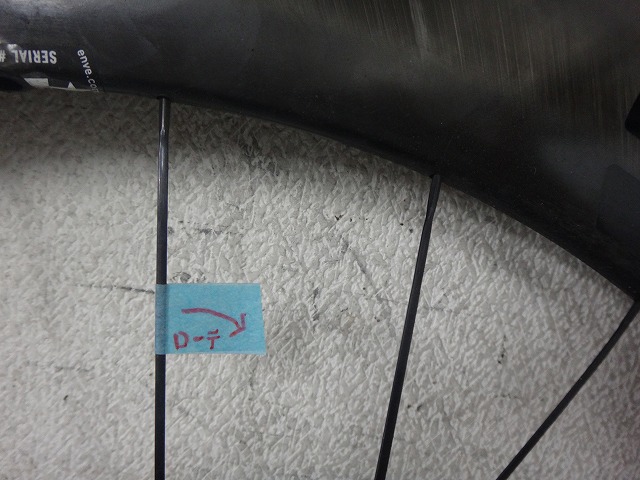
I put a marker tape on for a specific purpose,
but it turned out to be my mistake, so it's meaningless now.
SES rims are basically front 20H only and rear 24H only,
but until recently, the high-profile models
had a 18/20H spec front and rear.
Now, including this SES 7.8 and the SES 8.9 (not officially sold in Japan),
all rim brake road wheels are 20/24H front and rear.
I thought this rear wheel was 20H, so when changing
from an all-CX-RAY four-cross to a half-champion four-cross lacing,
I planned to reuse the non-drive side spokes and
to distinguish between inpokes and outpokes,
I decided not to pull the spokes from the flanges in the first place,
and because I'm changing from reverse Italian to Italian lacing,
I wanted to show where and how the outpoke next to the valve hole
on the non-drive side would end up after the rebuild.
In reality it's 24H, so the drive side has a gauge change and the non-drive side has a length change,
so both sides get all new spokes.
This CX-RAY is a custom product with the plain section on the rim side square-machined—
at one point a Japanese distributor accidentally got a shipment of
black 280mm standard spokes instead of this custom version.
The thing is, you can't trim these with a spoke cutter.
I carefully disassembled it, keeping only the 4 spokes next to the valve hole.
The drive side spoke ends were flush with the nipple end face,
while the non-drive side protruded by about 2 threads (image above).
If this rear wheel were 20H and half-champion laced,
we'd be tightening more than that, but since modification isn't possible,
it was going to get rebuilt with standard black CX-RAY.
Either way, these spokes needed replacing.

Built.
"Handmade in USA" side is on the right, and
24H, black half-Compé four-six Italian laced.
I'll do the truing later.
The hub and the gauge of the non-drive side spokes are the same as before rebuilding,
and even though the previous build was offsetting center (ha!) just to
keep tension on the non-drive side,
the non-drive side tension after this rebuild with proper center
is clearly higher.
Mind you, I haven't trued it yet, so this is spoke tension only.
Near the valve hole
Opposite side of valve hole
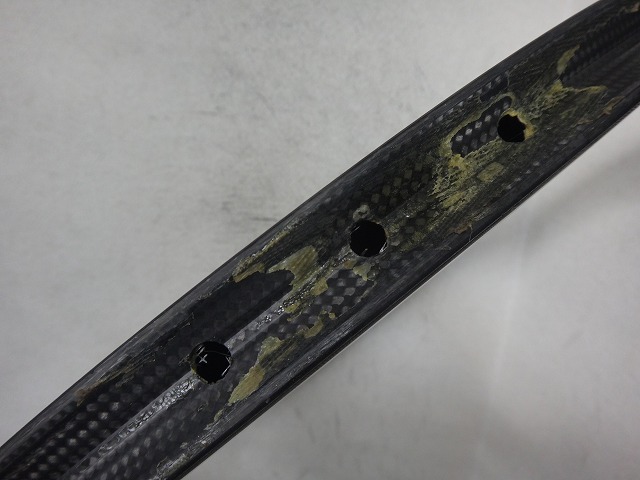
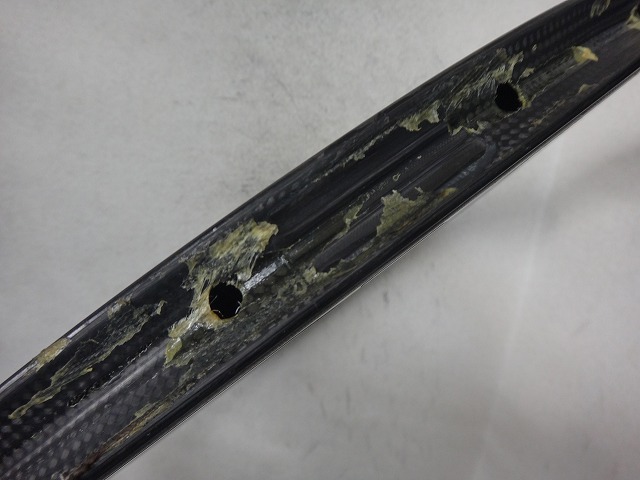
About that "incredibly tedious job request" I mentioned—
the customer wants to switch to rim tape and needs the rim cement removed.
M... my fingers are going to die.
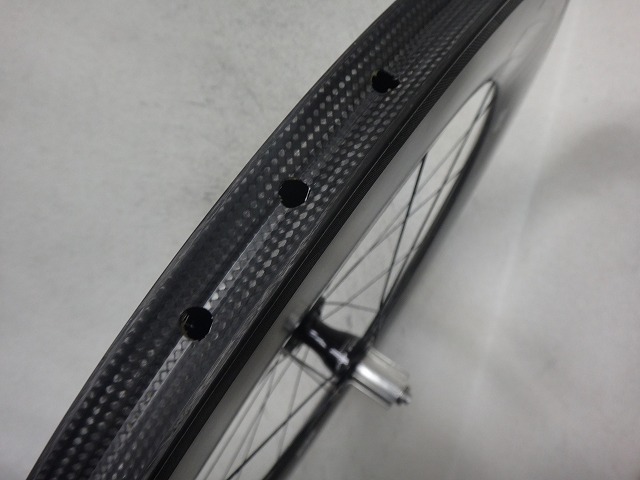
Near the valve hole
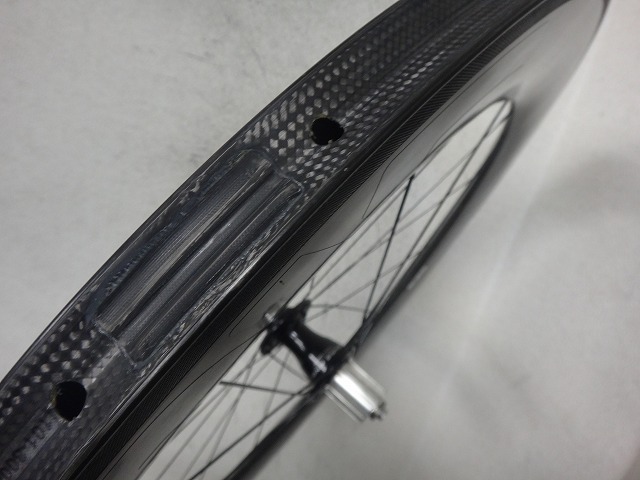
Opposite side of valve hole (marks where the bleed hole was plugged)
I did the rear wheel while the rim was disassembled.
I haven't done the front wheel yet. M... my fingers are going to die.