Another day with wheels (and so on).
Today I rebuilt a Mavic CXP22 wheel.
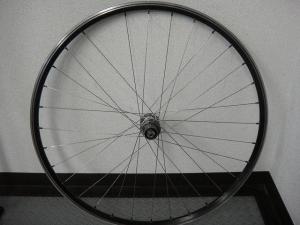
↑Before rebuild
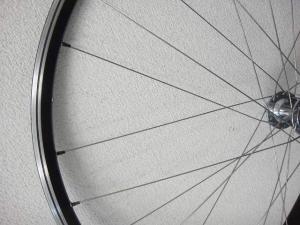
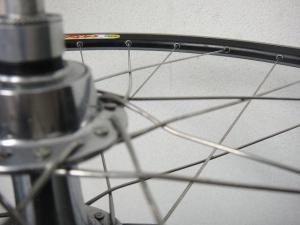
One spoke is missing.
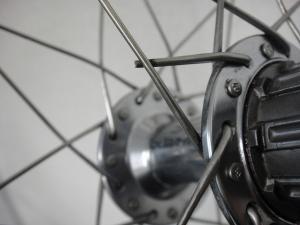
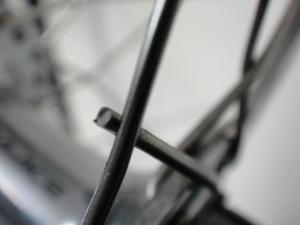
This is only the second time I've seen this ultra-rare case—
a spoke breaking midway along its length.
When I say it broke midway, I don't mean something was driven into it or it hit something,
but rather that it failed due to metal fatigue.
But the cause is clear.
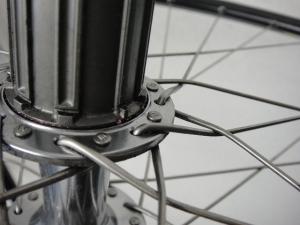
It was built with a double-cross pattern.
The spokes are Revolution, but right after they leave the hub they're 2.0mm,
so the bend in the spoke becomes very sharp.
What foolishness, getting caught up in technique!
Well, it was the old me who built it anyway.
I've written in past posts that double-cross patterns tend to throw spokes (→here),
but the fact that spokes are actually breaking midway shows just how severe it is.
On a tangent, I heard today from a customer who built their own 2:1 spoke count wheel
that the spokes on the non-drive side broke twice in a row.
With a 2:1 build using pinch-flat spokes, the spoke head on the non-drive side
experiences enormous stress, and
even though I understand that the difference in spoke tension between left and right becomes nearly zero,
I don't use such a design for wheels I'm selling.
These accumulated experiences become the basis for judging
what's "good for wheels" and "bad for wheels,"
and what I should and shouldn't sell.

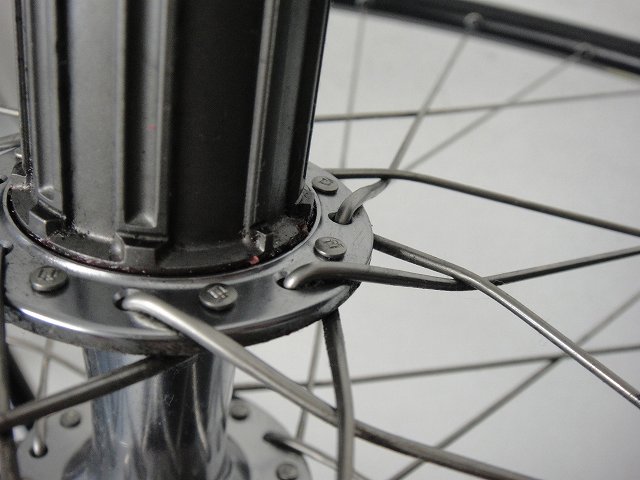
↑Stainless "sprout"
This is the kind of bend it has.
The point where this one broke is the same as the final bend point on the sprout.
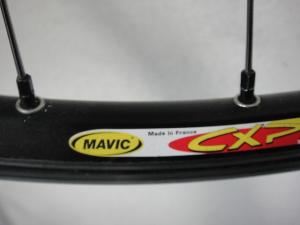
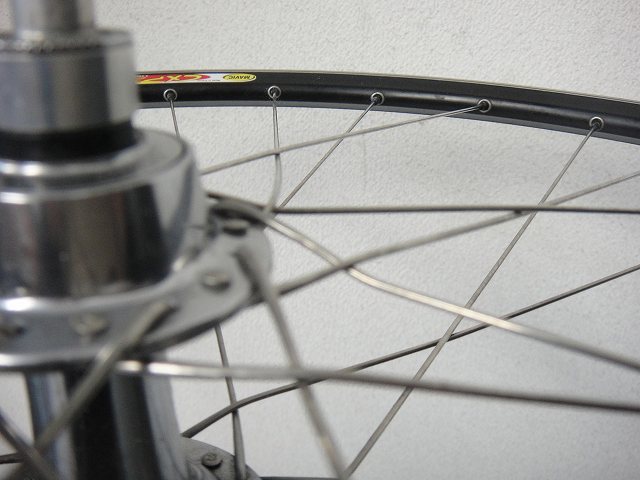
Getting sidetracked again. This CXP22 has eyelets, but
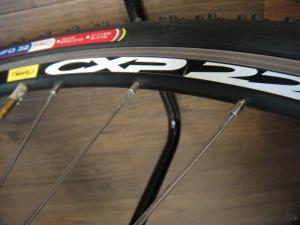
my cyclocross CXP22 doesn't have eyelets.
Is it because they're from different eras? They certainly are (the brake zone has no groove),
but that's not the reason.
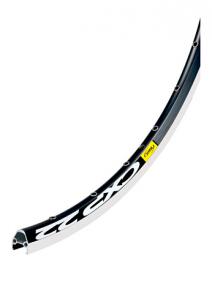
↑This is the same rim, but it has eyelets.
The CXP22 without eyelets is a special order for complete bike manufacturers.
It probably costs less since there's one less step in production.
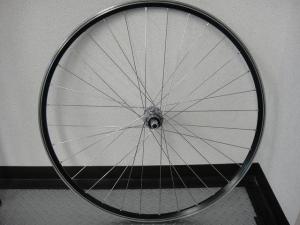
I rebuilt it.
This is a wheel for one of my racing teammates, and while he's fairly open to experimental approaches,
there's no need to use a clearly inferior build method, so
this time I went with a six-cross (the same as before the rebuild)—basically a standard six-spoke pattern.
I abandoned the double-cross and used brass nipples for a normal build.
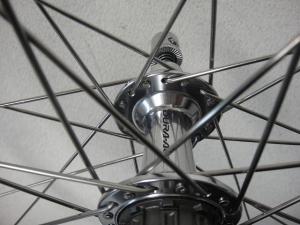
What I did try was a mixed-diameter build on the two sides.
Drive side: 2.0mm DT Champion,
Non-drive side: 2.0–1.8–2.0mm DT Competition.
I'm not lacing them in any special pattern.
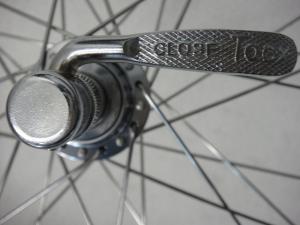
It came with a Tacx roller trainer quick-release.
Mavic rims have extremely high vertical accuracy,
so it's easy to build a wheel that doesn't have vertical run-out even on a trainer.
There's only a faint convexity visible at the rim seam in the vertical direction,
but when you chase the vertical run-out, everything else comes out cleanly.
This means there's no vertical run-out beyond that faint convexity anywhere around the rim.
You could file down the convexity, but I don't count it as run-out,
so I often leave it alone.
If you're building an Open Pro, chase the vertical run-out down to just where the gauge
barely contacts at the seam, and only at the seam, with just a faint "shush" feeling.
I think only people who've actually built an Open Pro will understand this (laugh).
Today I rebuilt a Mavic CXP22 wheel.

↑Before rebuild
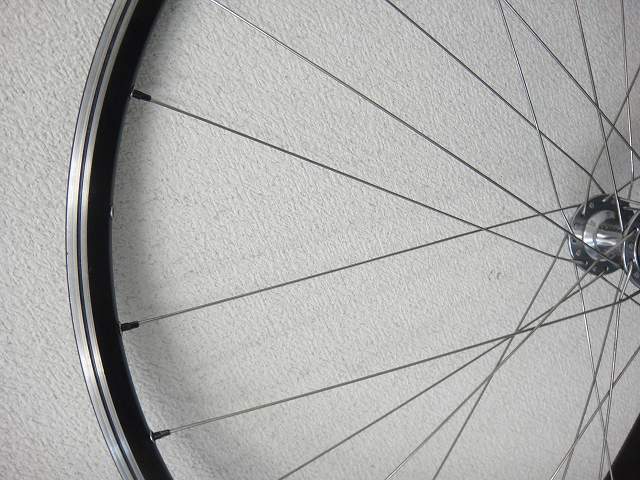
One spoke is missing.

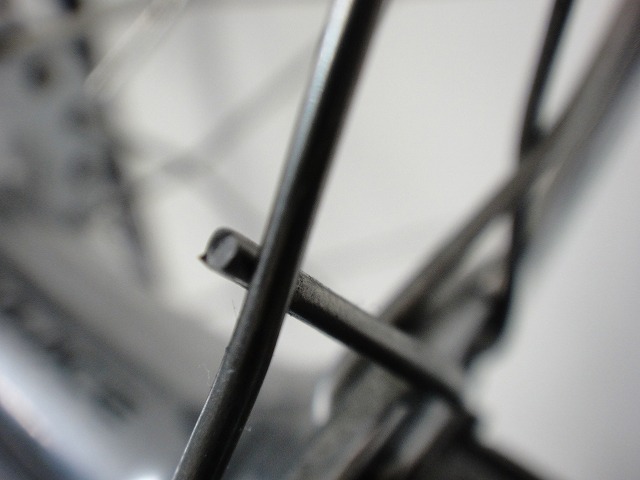
This is only the second time I've seen this ultra-rare case—
a spoke breaking midway along its length.
When I say it broke midway, I don't mean something was driven into it or it hit something,
but rather that it failed due to metal fatigue.
But the cause is clear.
It was built with a double-cross pattern.
The spokes are Revolution, but right after they leave the hub they're 2.0mm,
so the bend in the spoke becomes very sharp.
What foolishness, getting caught up in technique!
Well, it was the old me who built it anyway.
I've written in past posts that double-cross patterns tend to throw spokes (→here),
but the fact that spokes are actually breaking midway shows just how severe it is.
On a tangent, I heard today from a customer who built their own 2:1 spoke count wheel
that the spokes on the non-drive side broke twice in a row.
With a 2:1 build using pinch-flat spokes, the spoke head on the non-drive side
experiences enormous stress, and
even though I understand that the difference in spoke tension between left and right becomes nearly zero,
I don't use such a design for wheels I'm selling.
These accumulated experiences become the basis for judging
what's "good for wheels" and "bad for wheels,"
and what I should and shouldn't sell.
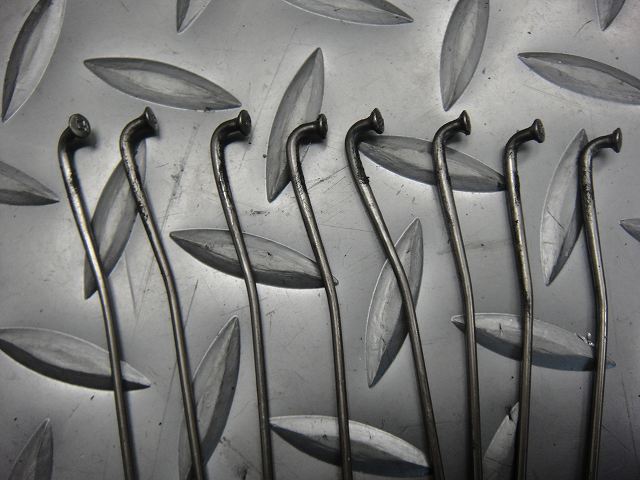
↑Stainless "sprout"
This is the kind of bend it has.
The point where this one broke is the same as the final bend point on the sprout.
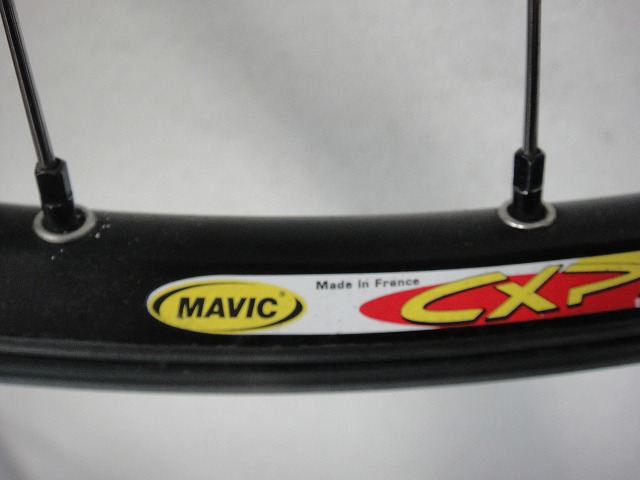
Getting sidetracked again. This CXP22 has eyelets, but
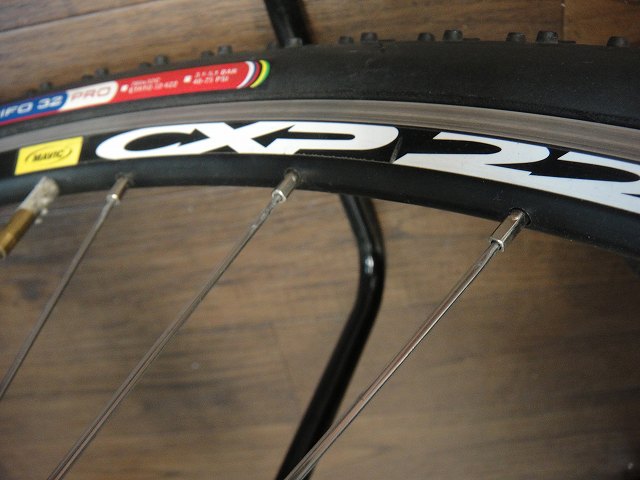
my cyclocross CXP22 doesn't have eyelets.
Is it because they're from different eras? They certainly are (the brake zone has no groove),
but that's not the reason.
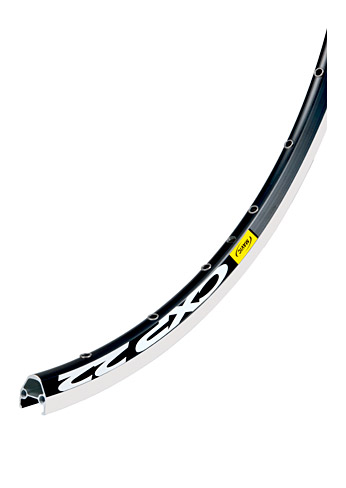
↑This is the same rim, but it has eyelets.
The CXP22 without eyelets is a special order for complete bike manufacturers.
It probably costs less since there's one less step in production.
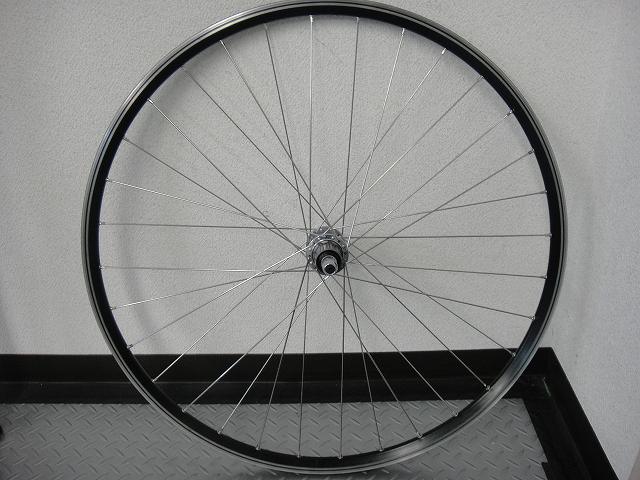
I rebuilt it.
This is a wheel for one of my racing teammates, and while he's fairly open to experimental approaches,
there's no need to use a clearly inferior build method, so
this time I went with a six-cross (the same as before the rebuild)—basically a standard six-spoke pattern.
I abandoned the double-cross and used brass nipples for a normal build.
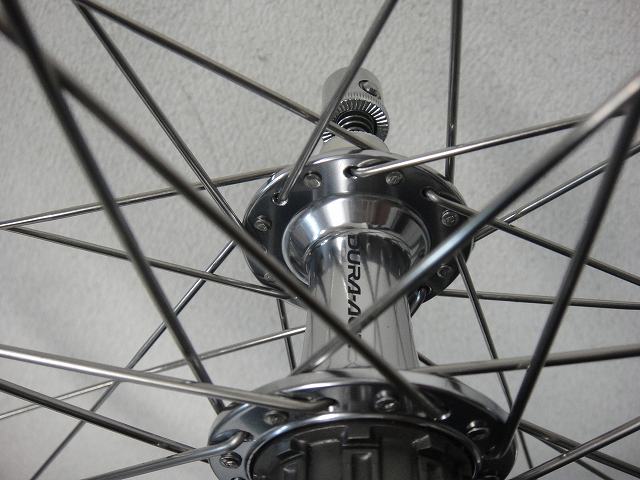
What I did try was a mixed-diameter build on the two sides.
Drive side: 2.0mm DT Champion,
Non-drive side: 2.0–1.8–2.0mm DT Competition.
I'm not lacing them in any special pattern.
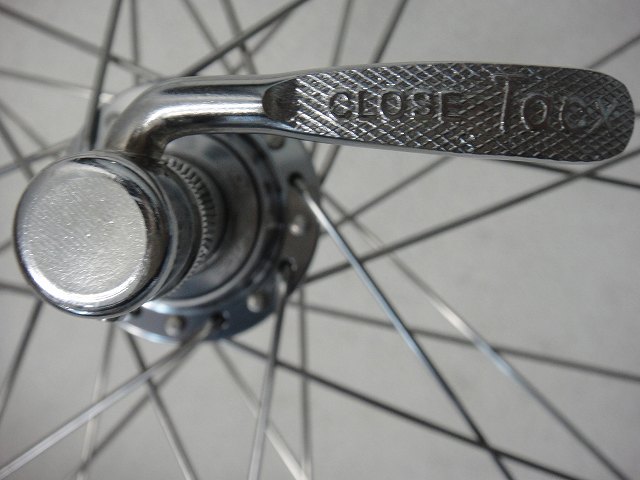
It came with a Tacx roller trainer quick-release.
Mavic rims have extremely high vertical accuracy,
so it's easy to build a wheel that doesn't have vertical run-out even on a trainer.
There's only a faint convexity visible at the rim seam in the vertical direction,
but when you chase the vertical run-out, everything else comes out cleanly.
This means there's no vertical run-out beyond that faint convexity anywhere around the rim.
You could file down the convexity, but I don't count it as run-out,
so I often leave it alone.
If you're building an Open Pro, chase the vertical run-out down to just where the gauge
barely contacts at the seam, and only at the seam, with just a faint "shush" feeling.
I think only people who've actually built an Open Pro will understand this (laugh).