Another day with wheels (and so on).
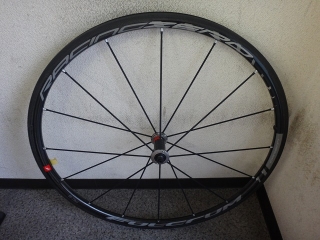
A customer brought me a front wheel from a Fulcrum Racing Zero Carbon.
There's a yellow tape marker at the 8 o'clock position like on a clock face, but
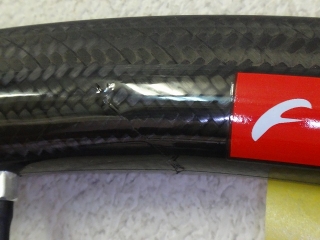
the rim is cracked.

Actually, this side is clearer to see.
Since the rim needed replacement, I sourced a replacement rim, but...
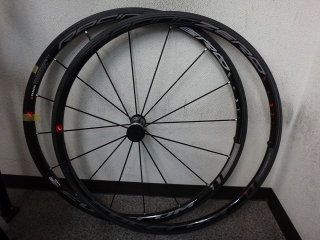
hmm?

This is...
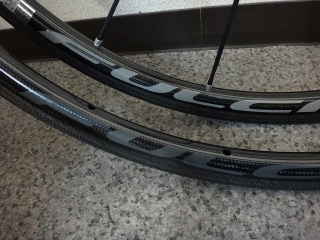
Could it be...?

Did I mix up the Dark Label and Bright Label?!
Ahhhhhhh nooooooo!
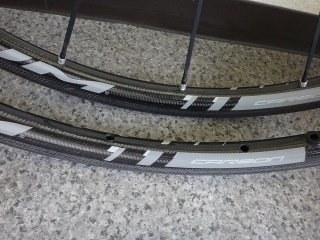
...that was just a dream.
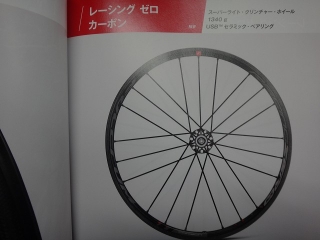
The Racing Zero Carbon got its current specs in 2018, but
the 2018 catalog shows only one rim design
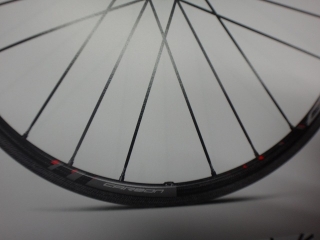
with red accent color only.
A second color option was added in the 2019 catalog,
and I'd assumed that "the one with the red accent is the Bright Label."
For example, the original Speed 40/55 works that way.

The 2019 catalog includes
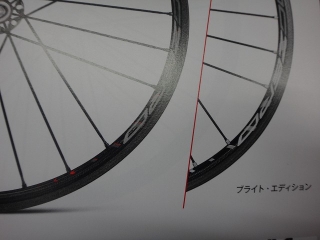
the Bright Label as well,
but the real distinction between Dark and Bright is based solely on text color.
Yeah, I really messed that up.
By the way, whether the Bright Label is technically a 2019 model or a late 2018 limited edition,
the 2018 spare parts catalog already lists
the part number for the Bright Label rim.
It's R0F (or R)-CRC31, but
with a DK suffix for the Dark Label variant.
However, the Dark Label actually comes first in the listing order.
It would make more chronological sense if the original standard (supposedly) spec was CRC31
and the later Bright Label was CRC31BR,
but Fulcrum already has an established naming convention where
Bright Label has no suffix and
Dark Label gets a DK suffix,
so they can't really deviate from that.
Alright, let's build it up.
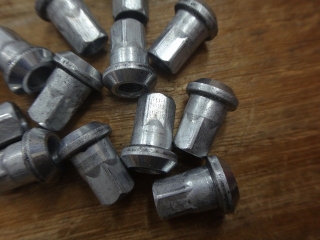
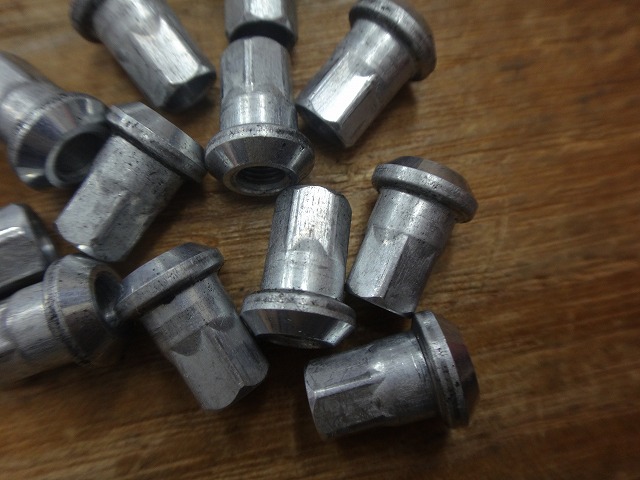
The aluminum nipples on the Racing Zero Carbon have
a truss-shaped design that pulls from the inside,
probably to distribute force over a larger contact area with the rim.
For some reason, even early-run versions of the first-generation Shamal Mille
used these same nipples,
and when I ordered spare spokes for the Shamal Mille (one spoke and one nipple per box),
the included nipples had inconsistent specs mixed in.
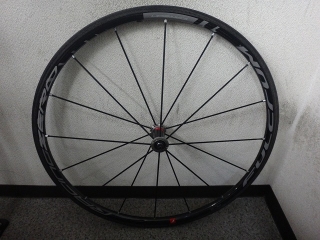
Built.
The 2015 catalog shows a tubular version of the Racing Zero Carbon
(clincher specs are on the same page, so it's not a typo).
But I've never actually seen one.
When I asked a distributor who's the most knowledgeable about Campagnolo in Japan,
they said it appeared in the catalog but was never actually sold.
Online retailers just grab images and specs from the manufacturer catalog
and post everything upfront, so
it appears that the model was once available even though it wasn't.
The Racing Zero aluminum rim model has
a taller rear rim and consequently heavier weight,
but whether that means "we lightened the front rim a bit"
or "we chickened out and made the rear heavier" is subjective.
The Racing Zero Carbon's front rim is only slightly lighter than the aluminum rim,
but the rear rim has the same height and nearly the same weight as the front,
so compared to the aluminum rim model,
it has the distinct advantage of a noticeably lighter outer circumference on the driving wheel.
The 2015 Racing Zero Carbon's claimed weight is
1358g for clincher and 1268g for tubular,
so the 90g difference from the rim alone
means roughly minus 45g per wheel.
The measured weight of Racing Zero Carbon rims is around 405g,
which puts the estimated tubular rim weight at roughly 360g.
That's not exactly ultra-light for a tubular rim, but
the added value of the hardness inherent to Racing Zero's aluminum spokes means
if it had been sold, it would have been a uniquely capable wheel.
Fulcrum's "call nipples with magnets because we won't drill holes on the outer rim edge"—
this admittedly unnatural and troublesome spec was probably originally
a way to avoid patent issues with Mavic's Zicral spokes,
but having "the holes on the inner rim edge as simple holes rather than threaded holes"
turned out to be structurally elegant and convenient
when designing wheels with aluminum spokes and carbon rims.
Another example of "it was in the catalog initially but never actually released"
is the Campagnolo Bullet Tubeless.
The Bullet uses an al-carbon rim—
no hump, but with what looks like a bead shelf depression,
an aluminum rim with no holes except the valve hole on the outer edge.
If you added the same hump as 2WAY-FIT, you could've made a tubeless version.
But for some reason, they didn't.
The included valve extender is fully threaded,
suggesting they were planning for a tubeless valve,
but...
You could theoretically use a tubeless valve and sealant
to maintain air for a practical amount of time,
but if you get a flat during a ride, it's extremely dangerous, so don't do it.
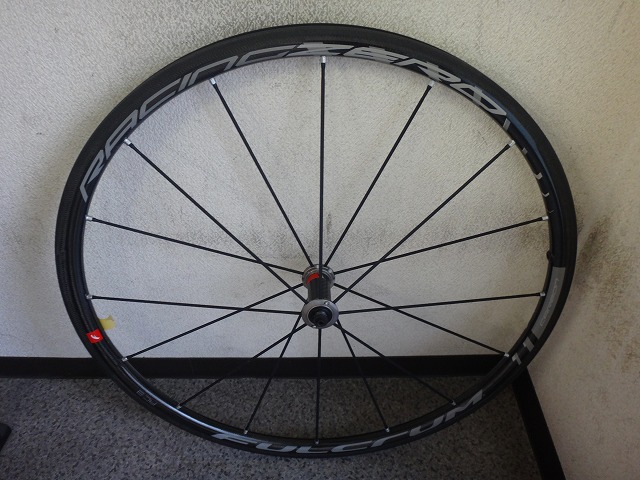
A customer brought me a front wheel from a Fulcrum Racing Zero Carbon.
There's a yellow tape marker at the 8 o'clock position like on a clock face, but
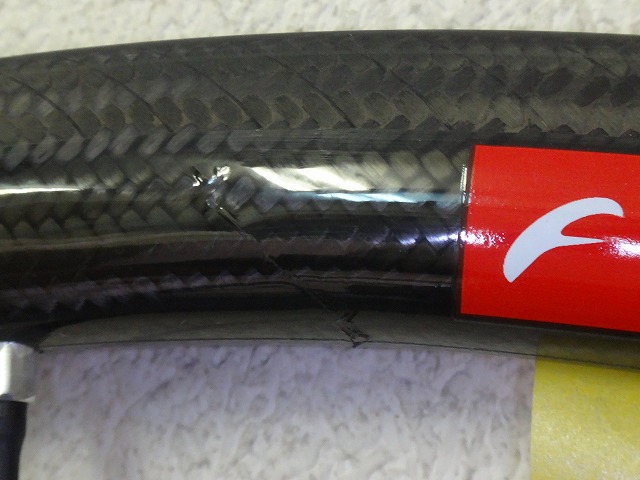
the rim is cracked.
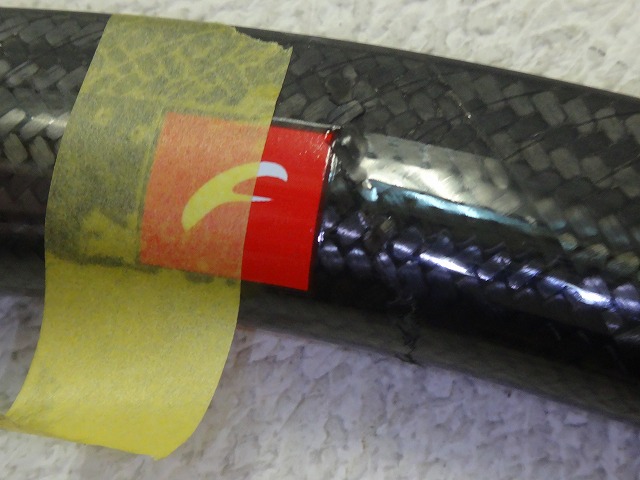
Actually, this side is clearer to see.
Since the rim needed replacement, I sourced a replacement rim, but...

hmm?
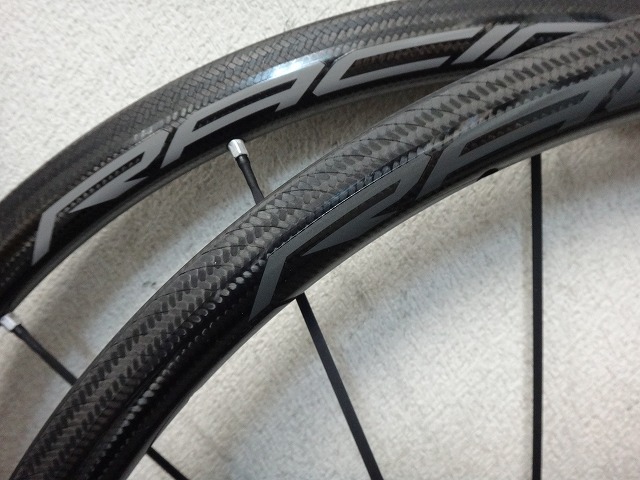
This is...
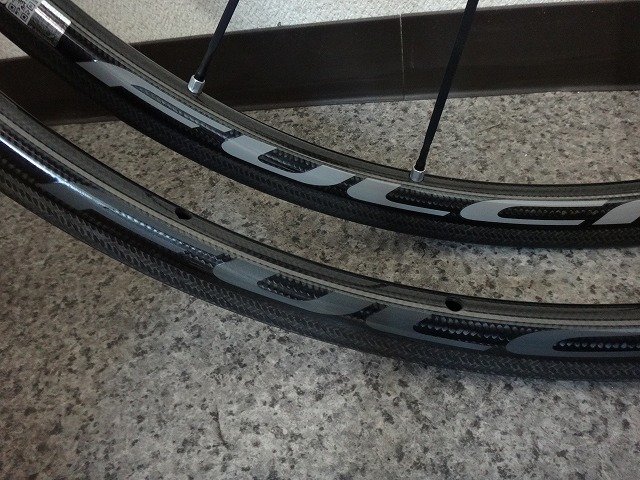
Could it be...?

Did I mix up the Dark Label and Bright Label?!
Ahhhhhhh nooooooo!
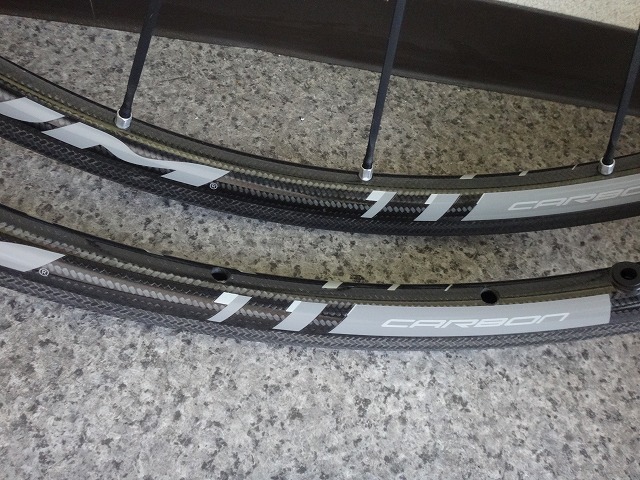
...that was just a dream.

The Racing Zero Carbon got its current specs in 2018, but
the 2018 catalog shows only one rim design
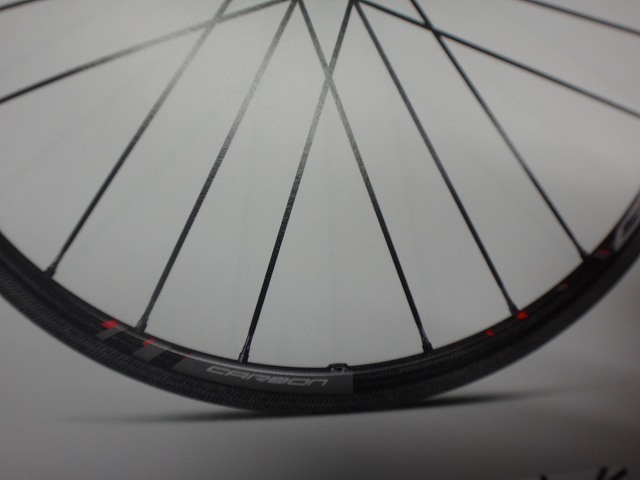
with red accent color only.
A second color option was added in the 2019 catalog,
and I'd assumed that "the one with the red accent is the Bright Label."
For example, the original Speed 40/55 works that way.
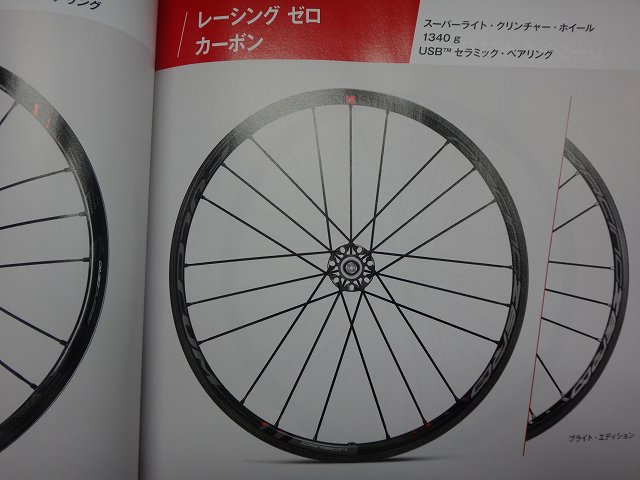
The 2019 catalog includes
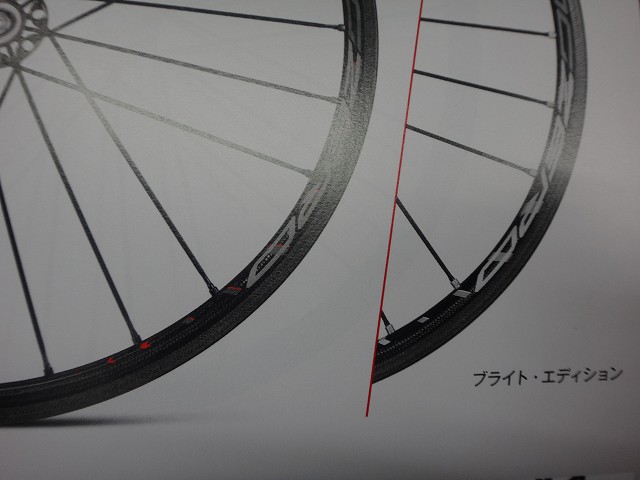
the Bright Label as well,
but the real distinction between Dark and Bright is based solely on text color.
Yeah, I really messed that up.
By the way, whether the Bright Label is technically a 2019 model or a late 2018 limited edition,
the 2018 spare parts catalog already lists
the part number for the Bright Label rim.
It's R0F (or R)-CRC31, but
with a DK suffix for the Dark Label variant.
However, the Dark Label actually comes first in the listing order.
It would make more chronological sense if the original standard (supposedly) spec was CRC31
and the later Bright Label was CRC31BR,
but Fulcrum already has an established naming convention where
Bright Label has no suffix and
Dark Label gets a DK suffix,
so they can't really deviate from that.
Alright, let's build it up.
The aluminum nipples on the Racing Zero Carbon have
a truss-shaped design that pulls from the inside,
probably to distribute force over a larger contact area with the rim.
For some reason, even early-run versions of the first-generation Shamal Mille
used these same nipples,
and when I ordered spare spokes for the Shamal Mille (one spoke and one nipple per box),
the included nipples had inconsistent specs mixed in.
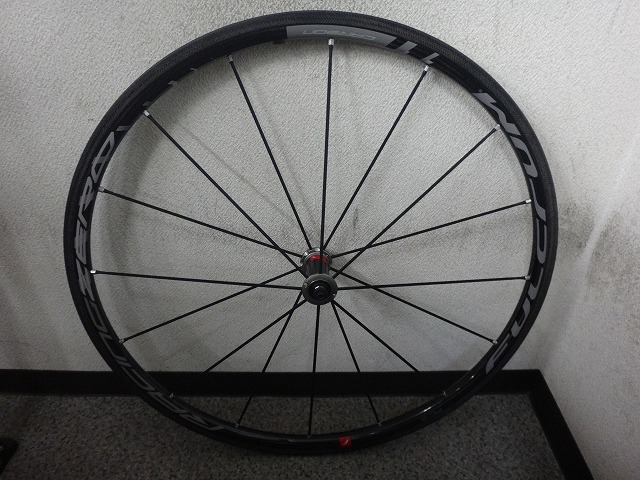
Built.
The 2015 catalog shows a tubular version of the Racing Zero Carbon
(clincher specs are on the same page, so it's not a typo).
But I've never actually seen one.
When I asked a distributor who's the most knowledgeable about Campagnolo in Japan,
they said it appeared in the catalog but was never actually sold.
Online retailers just grab images and specs from the manufacturer catalog
and post everything upfront, so
it appears that the model was once available even though it wasn't.
The Racing Zero aluminum rim model has
a taller rear rim and consequently heavier weight,
but whether that means "we lightened the front rim a bit"
or "we chickened out and made the rear heavier" is subjective.
The Racing Zero Carbon's front rim is only slightly lighter than the aluminum rim,
but the rear rim has the same height and nearly the same weight as the front,
so compared to the aluminum rim model,
it has the distinct advantage of a noticeably lighter outer circumference on the driving wheel.
The 2015 Racing Zero Carbon's claimed weight is
1358g for clincher and 1268g for tubular,
so the 90g difference from the rim alone
means roughly minus 45g per wheel.
The measured weight of Racing Zero Carbon rims is around 405g,
which puts the estimated tubular rim weight at roughly 360g.
That's not exactly ultra-light for a tubular rim, but
the added value of the hardness inherent to Racing Zero's aluminum spokes means
if it had been sold, it would have been a uniquely capable wheel.
Fulcrum's "call nipples with magnets because we won't drill holes on the outer rim edge"—
this admittedly unnatural and troublesome spec was probably originally
a way to avoid patent issues with Mavic's Zicral spokes,
but having "the holes on the inner rim edge as simple holes rather than threaded holes"
turned out to be structurally elegant and convenient
when designing wheels with aluminum spokes and carbon rims.
Another example of "it was in the catalog initially but never actually released"
is the Campagnolo Bullet Tubeless.
The Bullet uses an al-carbon rim—
no hump, but with what looks like a bead shelf depression,
an aluminum rim with no holes except the valve hole on the outer edge.
If you added the same hump as 2WAY-FIT, you could've made a tubeless version.
But for some reason, they didn't.
The included valve extender is fully threaded,
suggesting they were planning for a tubeless valve,
but...
You could theoretically use a tubeless valve and sealant
to maintain air for a practical amount of time,
but if you get a flat during a ride, it's extremely dangerous, so don't do it.