A customer dropped off a wheel-in-progress built with Mavic GP4 rims.
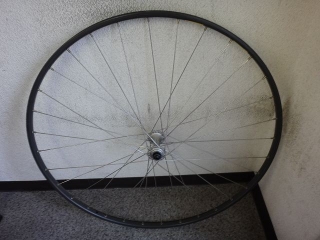
Starting with the front wheel.
They asked for both front and rear wheels to be "inspected,"
but the current state isn't really what you'd call a finished wheel—
the actual work turned out to be almost a complete rebuild.
The rim shows no traces of tire marks or brake wear, so it's new,
and the hub appears to be unused as well.
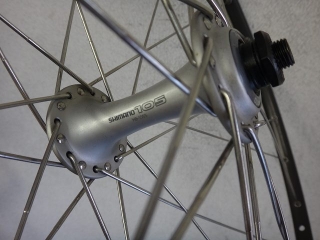
The front hub is an HB-1055, part of the 105 first-gen 1050 series.
The 105 1050 series is the original 105, but this hub is a later production model.
The earlier model was branded HB-1050-F,
with a silver hub body, not anodized in this khaki color like this one.
It's odd for a front hub to have "-F" (meaning front) at the end,
but that's because its matching rear hub is a boss hub rather than a freehub,
so it gets the model number HB-1050-R.
The same naming convention applies to Dura-Ace track hubs as well.

The spokes are 14-15 gauge round butted "Stainless" (that's the product name, not the generic term)
from Star,
and the ★-marked "Stainless" isn't counterfeit—it shows zero reaction to a magnet.
Depending on the era, there are counterfeit "Stainless" spokes with the ★ mark
that show a faint magnetic response (though nowhere near as much as Starbright),
so you need to watch out for those.
Though I say "counterfeit," those are also made by Star.
Whether the materials or processes changed, or they just stopped making the distinction,
I don't know—but regardless, they're completely different from the original "Stainless."
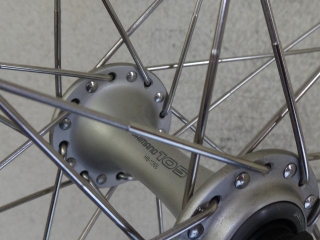
32H three-cross JIS laced
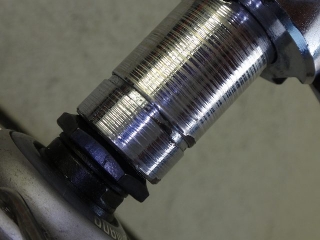
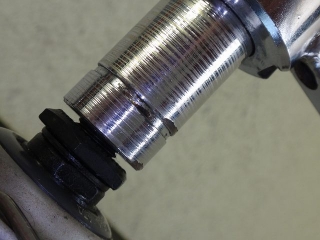
But with major centering issues.

The spoke length seemed a bit short at first,
but it actually turned out to be about right (more on that later).
The radial runout was supposedly severe, but
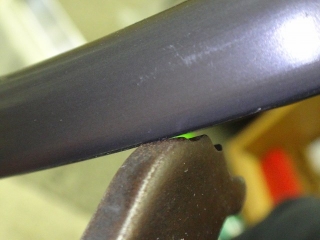
the outermost deflection point is here,
and when I keep the gauge at that exact position
and find where it deflects most inward:
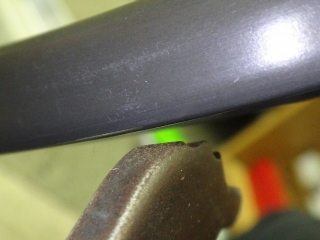
It looks like this.
This isn't really radial runout—it's just an partially-built wheel.
If you want to call it runout, then sure, you could slap a tire on it and try riding it.
Though brake pad setup would probably be impossible given how tight the braking zone is.
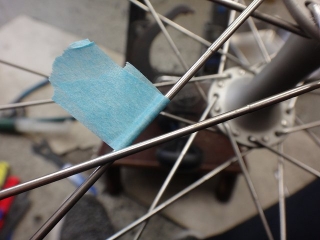
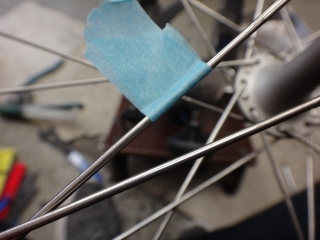
The spoke tension is all mushy.
Some people crank them too tight, so I guess this is better than that.
To repeat: this isn't an inspection—
it's essentially a wheel build.
Having it partially assembled doesn't necessarily get us closer to the finish line, either,
because factors like whether the proper lubricant is applied to the spoke threads,
whether the spoke length is actually correct,
whether the rim has had its drilling burrs removed
(not relevant here since this rim has eyelets)
and other details all affect the friction when turning the nipples
and the upper limit of final tension,
which means the finished result won't be the same.
But since it's supposedly just an "inspection," I'll do my best
with these materials and this assembly method as-is.
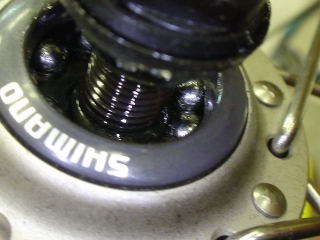
↑Front hub
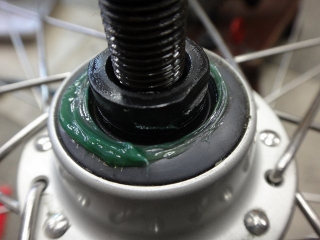
↑Rear hub (out of chronological order)
Per the customer's request, I greased the hubs before starting the work.
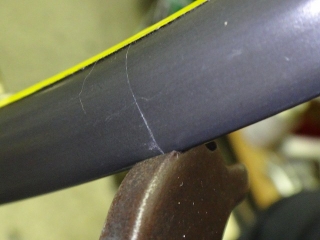
As for radial runout, the gauge barely touches at the rim seam,
but I've essentially eliminated it elsewhere.
There's no radial runout greater than the rim seam bulge
(this is on the outboard side, and I've also trued the inboard side).
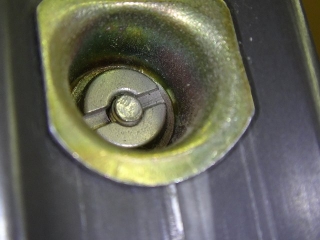
I adjusted the nipples with a significant tightening bias,
so the spoke length actually settled into about the right range.
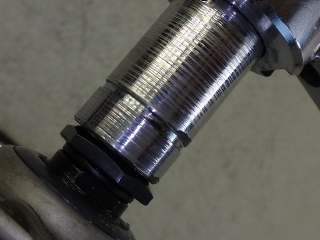
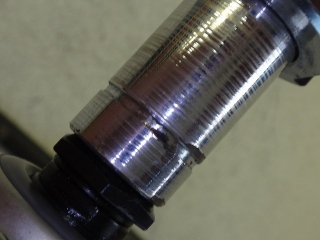
Centering is perfect.
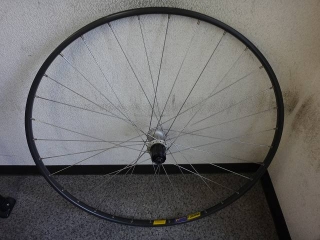
Now for the rear wheel.

It's an FH-1056, 32H, all-"Stainless" three-cross JIS laced.
As I mentioned earlier,
the original 105 boss rear hub is HB-1050-R,
and the first freehub was FH-1050-6 (6-speed, as the suffix indicates),
followed by FH-1051-6 or FH-1051-7,
where the suffix comes in two varieties—
the -7 is for a 7-speed freebody.
Next came FH-1055, with no numeric suffix, but 7-speed only,
and finally the FH-1056, also without a numeric suffix,
but this one's an 8-speed freebody.
So this hub can accept up to 10-speed sprockets.
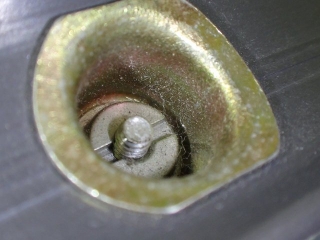
The spokes are too long.
If only the freewheel side was this long,
it'd usually mean someone lazily used the same length spokes on both sides,
but these ones show protruding threads or flush-fit inconsistently
regardless of which side—freewheel or non-freewheel.
I thought it was because of the severe runout,
but even after truing, some spokes still look randomly too long.
Whatever, I give up.
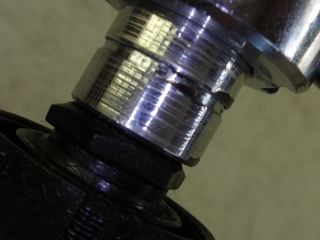
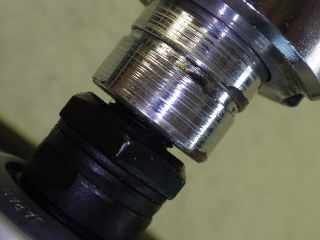
The rim is offset toward the left side (non-freewheel side).
With spokes and nipples, you're either protruding or flush,
with almost nothing less than flush.
So instead of tightening the freewheel side,
you have to loosen the non-freewheel side to adjust centering.
Fortunately, the tension isn't as loose as the front wheel,
so even loosening should preserve the wheel's integrity.
Replacing all the spokes would be easier from a labor standpoint,
but I'm treating it as an "inspection," so let's leave it.


The maximum radial runout difference measured the same way as the front is about this much.
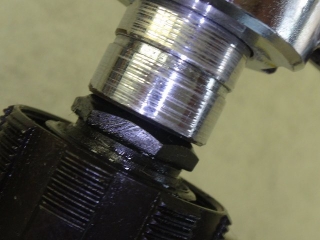
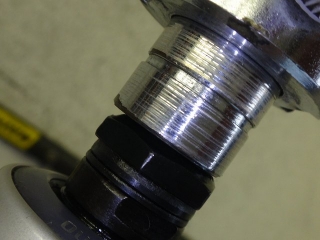
After truing the lateral and radial runout, I also dialed in the centering.
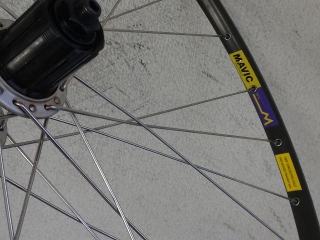
The rear rim is laced in reverse orientation, but don't mind that.
The hub body's phase as seen through the valve hole is also
in a position that suggests no particular intent, but don't mind that either.
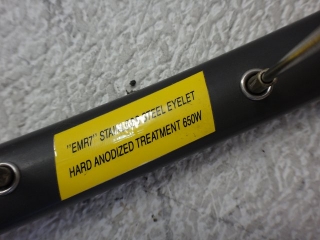
The anodizing specification on the rim's label reads "650W."
Though sometimes it's marked as "650V" instead (→see here).
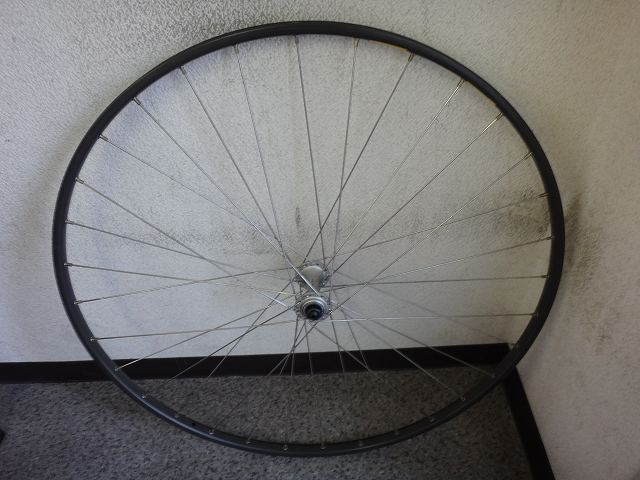
Starting with the front wheel.
They asked for both front and rear wheels to be "inspected,"
but the current state isn't really what you'd call a finished wheel—
the actual work turned out to be almost a complete rebuild.
The rim shows no traces of tire marks or brake wear, so it's new,
and the hub appears to be unused as well.
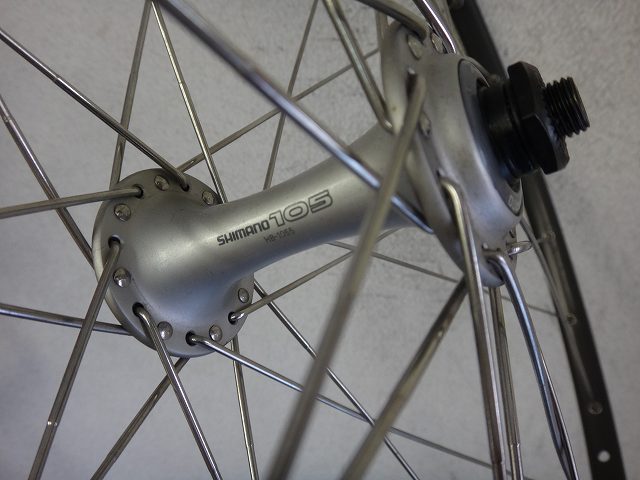
The front hub is an HB-1055, part of the 105 first-gen 1050 series.
The 105 1050 series is the original 105, but this hub is a later production model.
The earlier model was branded HB-1050-F,
with a silver hub body, not anodized in this khaki color like this one.
It's odd for a front hub to have "-F" (meaning front) at the end,
but that's because its matching rear hub is a boss hub rather than a freehub,
so it gets the model number HB-1050-R.
The same naming convention applies to Dura-Ace track hubs as well.
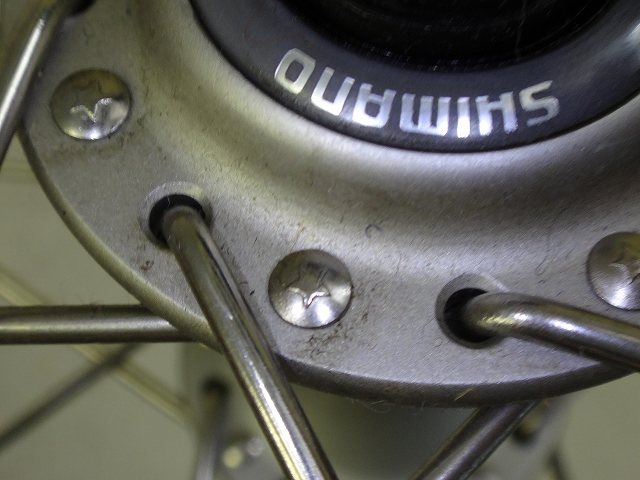
The spokes are 14-15 gauge round butted "Stainless" (that's the product name, not the generic term)
from Star,
and the ★-marked "Stainless" isn't counterfeit—it shows zero reaction to a magnet.
Depending on the era, there are counterfeit "Stainless" spokes with the ★ mark
that show a faint magnetic response (though nowhere near as much as Starbright),
so you need to watch out for those.
Though I say "counterfeit," those are also made by Star.
Whether the materials or processes changed, or they just stopped making the distinction,
I don't know—but regardless, they're completely different from the original "Stainless."

32H three-cross JIS laced
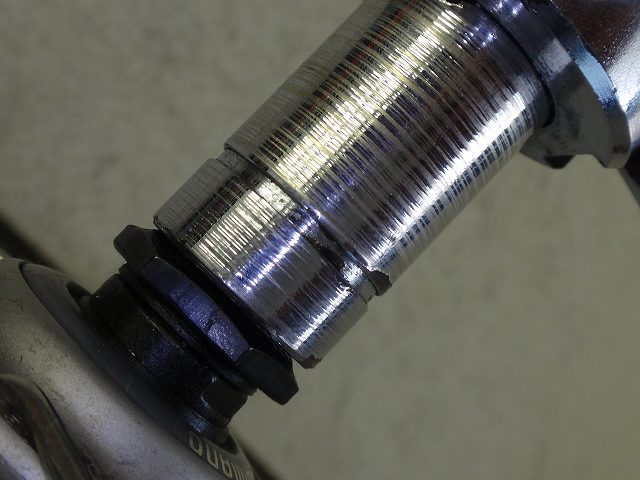
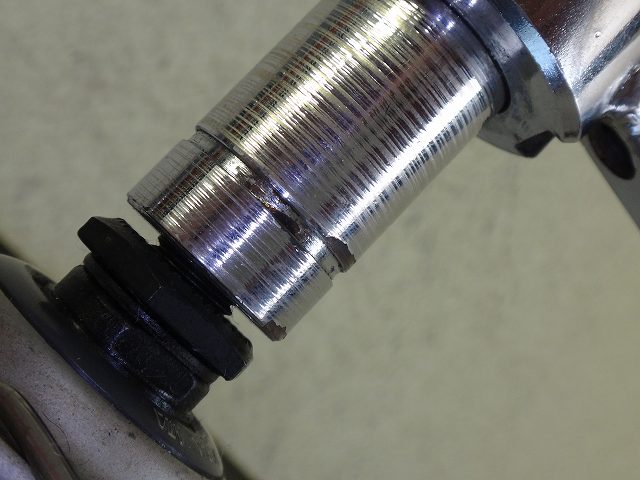
But with major centering issues.
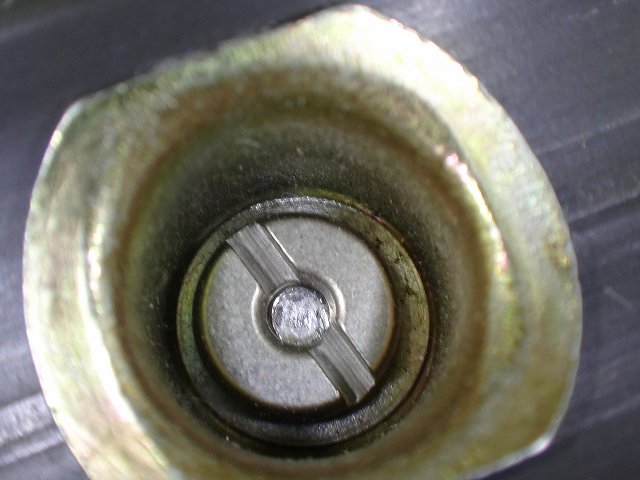
The spoke length seemed a bit short at first,
but it actually turned out to be about right (more on that later).
The radial runout was supposedly severe, but

the outermost deflection point is here,
and when I keep the gauge at that exact position
and find where it deflects most inward:
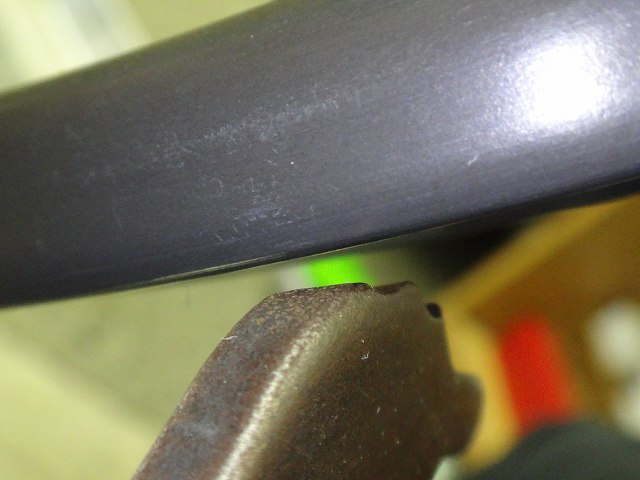
It looks like this.
This isn't really radial runout—it's just an partially-built wheel.
If you want to call it runout, then sure, you could slap a tire on it and try riding it.
Though brake pad setup would probably be impossible given how tight the braking zone is.
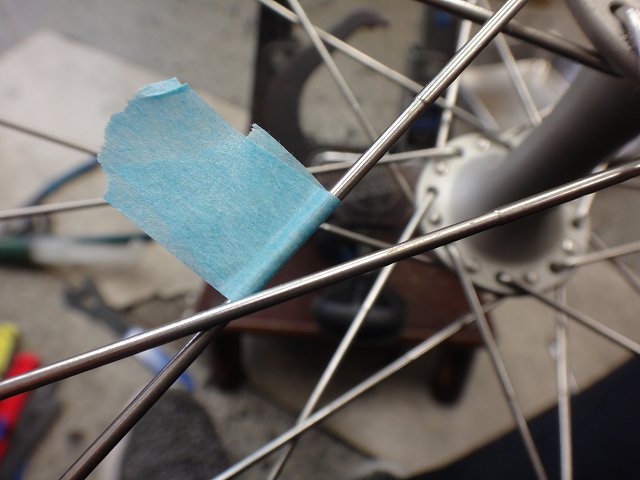
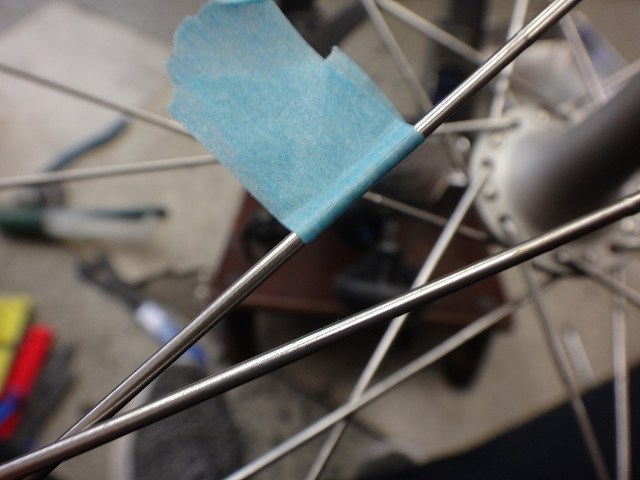
The spoke tension is all mushy.
Some people crank them too tight, so I guess this is better than that.
To repeat: this isn't an inspection—
it's essentially a wheel build.
Having it partially assembled doesn't necessarily get us closer to the finish line, either,
because factors like whether the proper lubricant is applied to the spoke threads,
whether the spoke length is actually correct,
whether the rim has had its drilling burrs removed
(not relevant here since this rim has eyelets)
and other details all affect the friction when turning the nipples
and the upper limit of final tension,
which means the finished result won't be the same.
But since it's supposedly just an "inspection," I'll do my best
with these materials and this assembly method as-is.
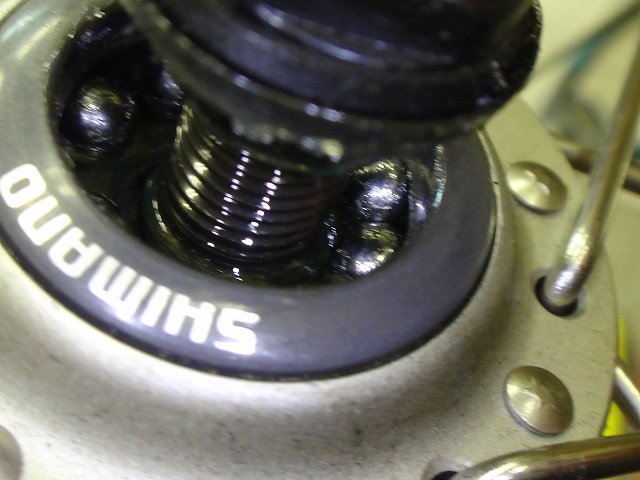
↑Front hub

↑Rear hub (out of chronological order)
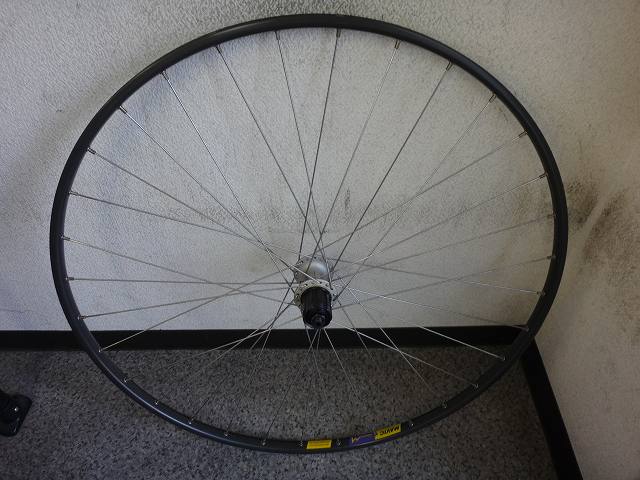
Per the customer's request, I greased the hubs before starting the work.
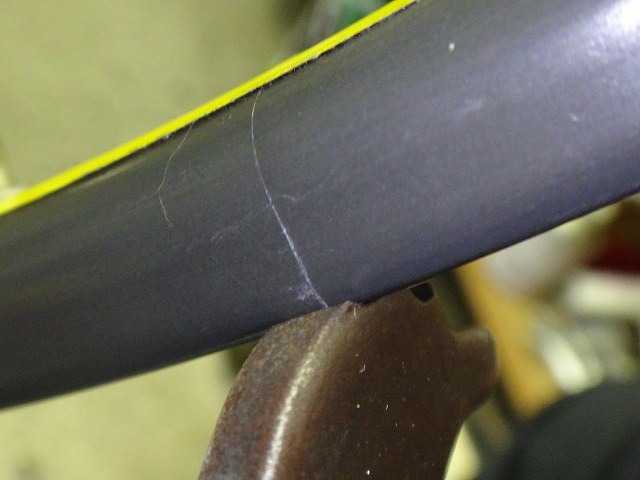
As for radial runout, the gauge barely touches at the rim seam,
but I've essentially eliminated it elsewhere.
There's no radial runout greater than the rim seam bulge
(this is on the outboard side, and I've also trued the inboard side).
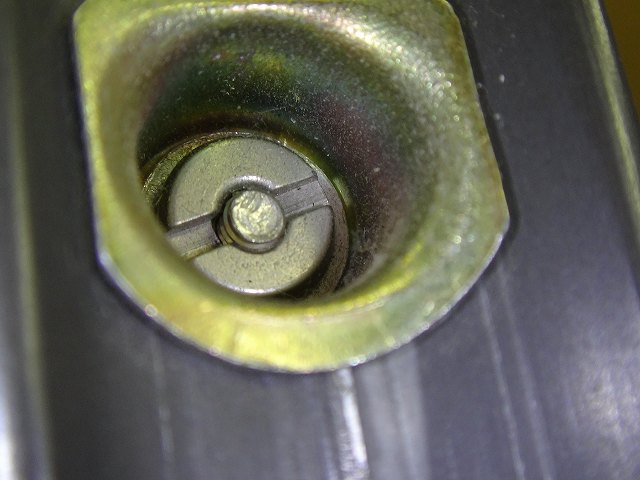
I adjusted the nipples with a significant tightening bias,
so the spoke length actually settled into about the right range.
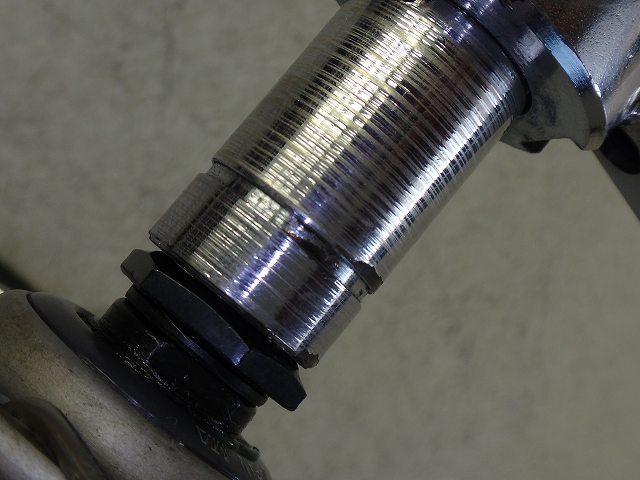
Centering is perfect.
Now for the rear wheel.

It's an FH-1056, 32H, all-"Stainless" three-cross JIS laced.
As I mentioned earlier,
the original 105 boss rear hub is HB-1050-R,
and the first freehub was FH-1050-6 (6-speed, as the suffix indicates),
followed by FH-1051-6 or FH-1051-7,
where the suffix comes in two varieties—
the -7 is for a 7-speed freebody.
Next came FH-1055, with no numeric suffix, but 7-speed only,
and finally the FH-1056, also without a numeric suffix,
but this one's an 8-speed freebody.
So this hub can accept up to 10-speed sprockets.
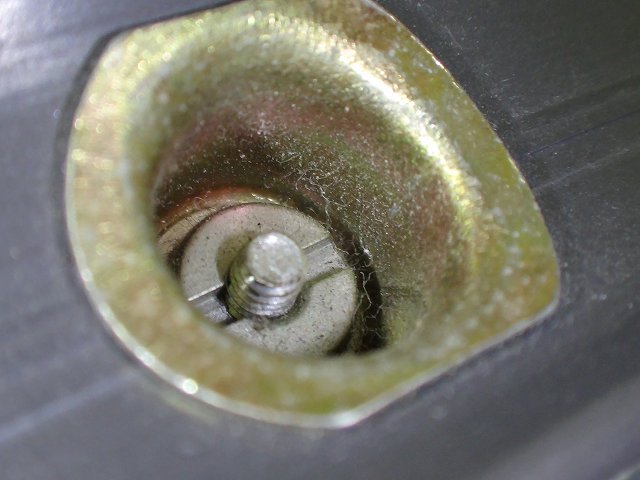
The spokes are too long.
If only the freewheel side was this long,
it'd usually mean someone lazily used the same length spokes on both sides,
but these ones show protruding threads or flush-fit inconsistently
regardless of which side—freewheel or non-freewheel.
I thought it was because of the severe runout,
but even after truing, some spokes still look randomly too long.
Whatever, I give up.
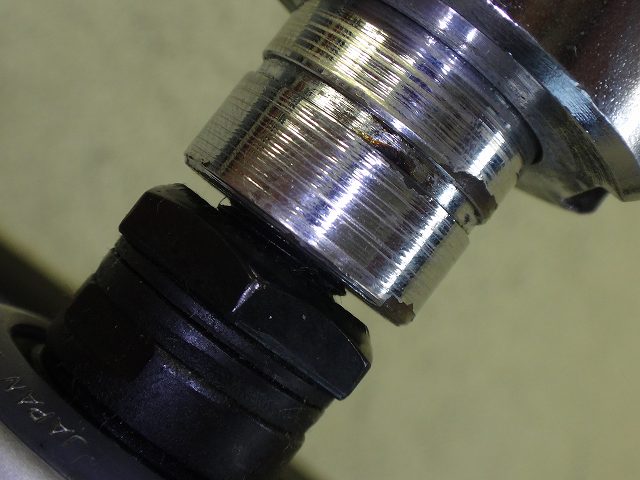
The rim is offset toward the left side (non-freewheel side).
With spokes and nipples, you're either protruding or flush,
with almost nothing less than flush.
So instead of tightening the freewheel side,
you have to loosen the non-freewheel side to adjust centering.
Fortunately, the tension isn't as loose as the front wheel,
so even loosening should preserve the wheel's integrity.
Replacing all the spokes would be easier from a labor standpoint,
but I'm treating it as an "inspection," so let's leave it.

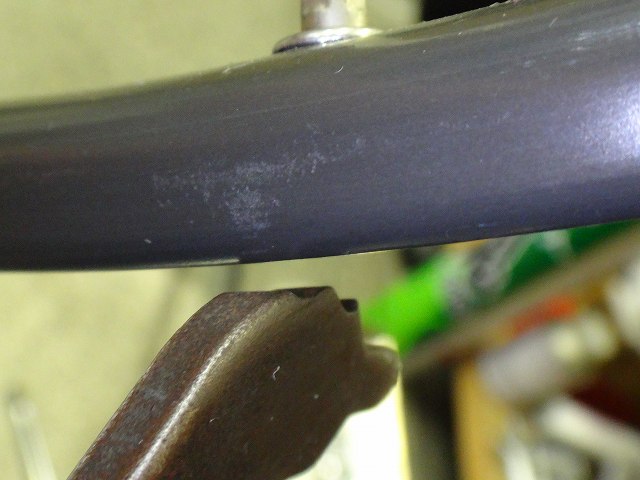
The maximum radial runout difference measured the same way as the front is about this much.
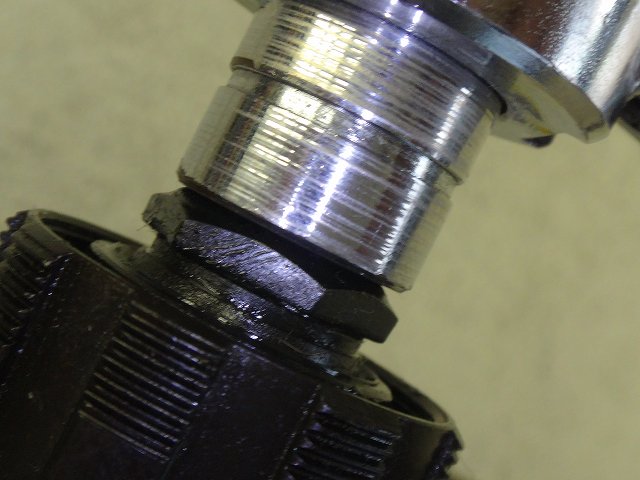
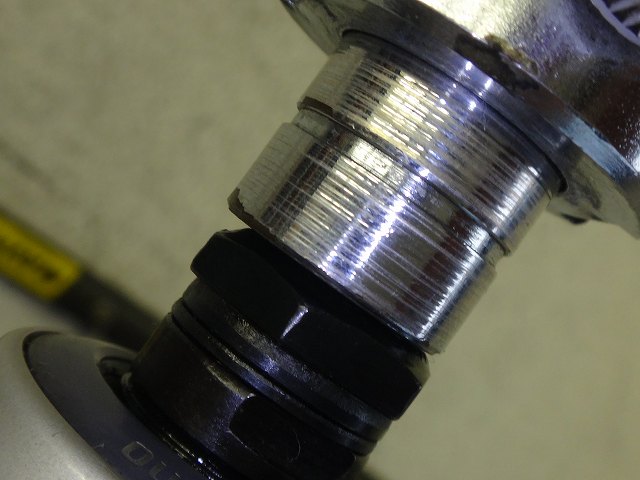
After truing the lateral and radial runout, I also dialed in the centering.
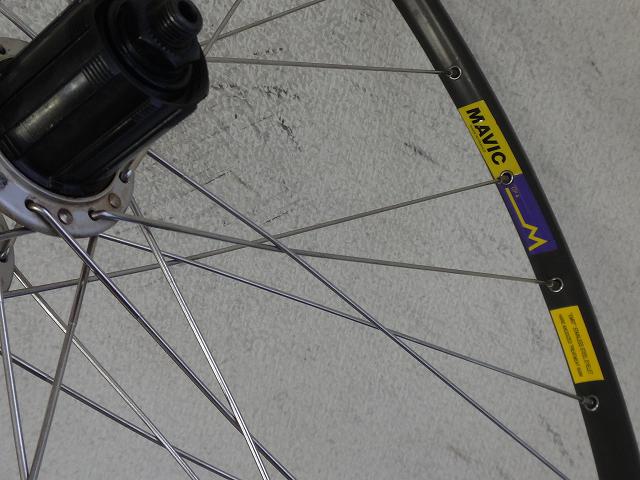
The rear rim is laced in reverse orientation, but don't mind that.
The hub body's phase as seen through the valve hole is also
in a position that suggests no particular intent, but don't mind that either.

The anodizing specification on the rim's label reads "650W."
Though sometimes it's marked as "650V" instead (→see here).