Another day of wheel work (et cetera).

A customer dropped off a rear wheel from a brand called ELITE
(apparently pronounced "elite").

It's got Pillar's square aerospokes in a 2:1 lacing pattern, 24H,
with a carbon tubeless-ready rim, but the bead hook
seems to deviate from ETRTO spec,
and the tire bead lift under pressure isn't great at all.

There seems to be an issue with either the ratchet pawls
or the freewheel body teeth—
the freewheel body slides forward,
so the customer consulted with the manufacturer and they sent a replacement hub.
They want the hub swapped out.

↑replacement hub


The hub shell shape is slightly different,
but the spoke length-related dimensions seem identical,
so reusing the spokes looks possible.
I thought maybe we could just swap the hub shaft
without rebuilding the wheel, but
the replacement hub has a larger ratchet pawl component diameter,
so it's not compatible with the freewheel body—replacing the hub is essential.
Even if it were compatible, if there's an issue with the original hub's ratchet pawl itself,
swapping hub shaft parts won't solve it.
So we're doing a full rebuild.
The straight spokes on both sides are through-spokes, not hooked.
What a pain.

The original hub's hub shell bearings were "15267" on both sides.
There's a standard bearing size called "6902" with similar dimensions—
15/28/7 (mm) for inner diameter/outer diameter/width.
15267 is literally just the metric dimensions laid out as
15/26/7 mm, so compared to the 6902
it's only 2 mm smaller in outer diameter.
I see this dimension combo on rear hubs fairly often lately.

On the rebuilt hub, the left side was 15267, but
the right side was an uncommon 18307.
With aluminum hub shafts at 15 mm outer diameter,
and through-axle hubs at 12 mm inner diameter—that's the current standard.
18307 means the bearing inner diameter and
that section of the hub shaft diameter are 18 mm.

The hub shaft bearing seat has a stepped diameter—
18 mm and 15 mm—and obviously
it gets inserted into the hub shell from the right side.

The left end has stepped threading,

with an inner bearing preload adjustment nut (not really nut-shaped)
and the left end attached on the outside.
The bearing preload nut can be adjusted by hand alone
enough to make the hub spin a bit stiff, but
when it arrived it was threaded on tight,
so I used a spanner wrench in the holes to loosen it.
There's probably a dedicated tool for this.
By the way, the inner threading is left-hand.
Easton's R4-series hubs and Chris King hubs also
adjust bearing preload by tightening/loosening the inner parts like this hub does,
but those hubs have two parts on the same thread
so the inner part obviously isn't left-hand.
Also, with this hub and Chris King, tightening the left end
locks the preload adjustment part in place, but
Easton's R4-series hubs have the preload part rotating even when the left end is tight,
so it keeps loosening.
With equal-spoke-count, anti-freewheel-side radial lacing straight-spoke hubs,
you can only build mediocre rear wheels, and
with the R4SL hub, the Enduro ceramic bearings
deteriorate immediately, so they have lower lifespan than steel bearings—
a rear hub with nothing going for it.

The freewheel body is a four-pawl pole-spring design.
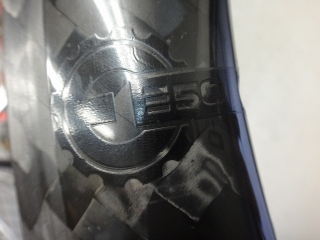
Apparently the model name is E50.
The rim height is 50 mm so that's probably where it comes from.

Built.

The rim label looks like this.

A customer dropped off a rear wheel from a brand called ELITE
(apparently pronounced "elite").

It's got Pillar's square aerospokes in a 2:1 lacing pattern, 24H,
with a carbon tubeless-ready rim, but the bead hook
seems to deviate from ETRTO spec,
and the tire bead lift under pressure isn't great at all.

There seems to be an issue with either the ratchet pawls
or the freewheel body teeth—
the freewheel body slides forward,
so the customer consulted with the manufacturer and they sent a replacement hub.
They want the hub swapped out.

↑replacement hub


The hub shell shape is slightly different,
but the spoke length-related dimensions seem identical,
so reusing the spokes looks possible.
I thought maybe we could just swap the hub shaft
without rebuilding the wheel, but
the replacement hub has a larger ratchet pawl component diameter,
so it's not compatible with the freewheel body—replacing the hub is essential.
Even if it were compatible, if there's an issue with the original hub's ratchet pawl itself,
swapping hub shaft parts won't solve it.
So we're doing a full rebuild.
The straight spokes on both sides are through-spokes, not hooked.
What a pain.

The original hub's hub shell bearings were "15267" on both sides.
There's a standard bearing size called "6902" with similar dimensions—
15/28/7 (mm) for inner diameter/outer diameter/width.
15267 is literally just the metric dimensions laid out as
15/26/7 mm, so compared to the 6902
it's only 2 mm smaller in outer diameter.
I see this dimension combo on rear hubs fairly often lately.

On the rebuilt hub, the left side was 15267, but
the right side was an uncommon 18307.
With aluminum hub shafts at 15 mm outer diameter,
and through-axle hubs at 12 mm inner diameter—that's the current standard.
18307 means the bearing inner diameter and
that section of the hub shaft diameter are 18 mm.

The hub shaft bearing seat has a stepped diameter—
18 mm and 15 mm—and obviously
it gets inserted into the hub shell from the right side.

The left end has stepped threading,

with an inner bearing preload adjustment nut (not really nut-shaped)
and the left end attached on the outside.
The bearing preload nut can be adjusted by hand alone
enough to make the hub spin a bit stiff, but
when it arrived it was threaded on tight,
so I used a spanner wrench in the holes to loosen it.
There's probably a dedicated tool for this.
By the way, the inner threading is left-hand.
Easton's R4-series hubs and Chris King hubs also
adjust bearing preload by tightening/loosening the inner parts like this hub does,
but those hubs have two parts on the same thread
so the inner part obviously isn't left-hand.
Also, with this hub and Chris King, tightening the left end
locks the preload adjustment part in place, but
Easton's R4-series hubs have the preload part rotating even when the left end is tight,
so it keeps loosening.
With equal-spoke-count, anti-freewheel-side radial lacing straight-spoke hubs,
you can only build mediocre rear wheels, and
with the R4SL hub, the Enduro ceramic bearings
deteriorate immediately, so they have lower lifespan than steel bearings—
a rear hub with nothing going for it.

The freewheel body is a four-pawl pole-spring design.
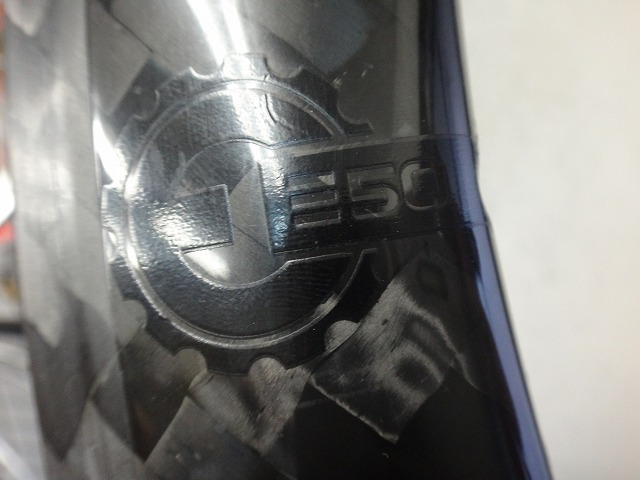
Apparently the model name is E50.
The rim height is 50 mm so that's probably where it comes from.

Built.

The rim label looks like this.