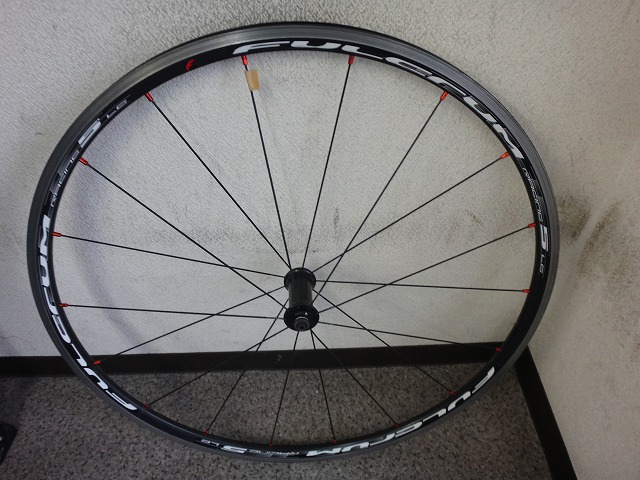
A customer brought in the front wheel from a Racing 5 LG for repair.
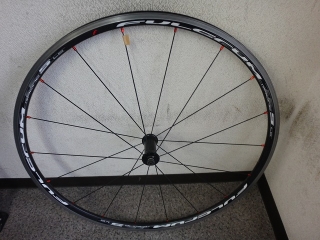
They had bent spokes near the hub during a crash.
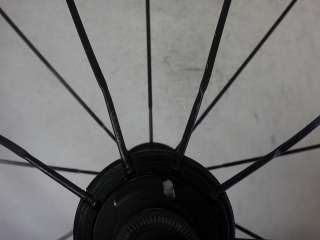
↑I thought it was just these 4 spots (or so I thought).
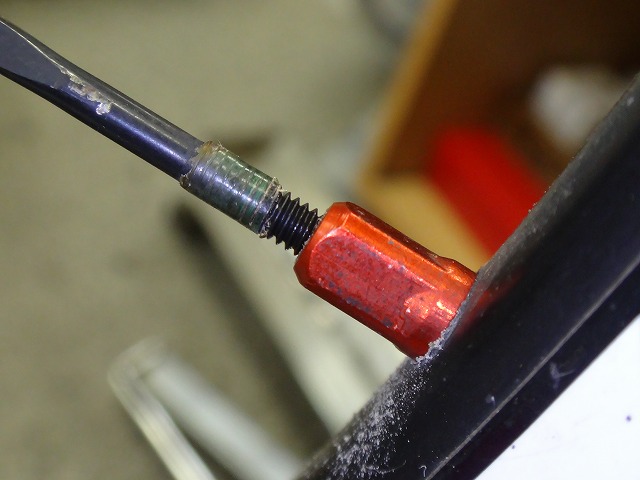
I had removed the dust cap for photography,
but I reinstall it after the work.
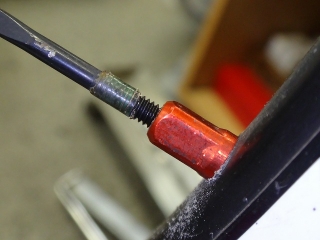
Crumbly threadlocker compounds don't just prevent initial loosening effectively—
they may also help prevent sand from getting into the thread pockets
and causing the nipples to seize up.

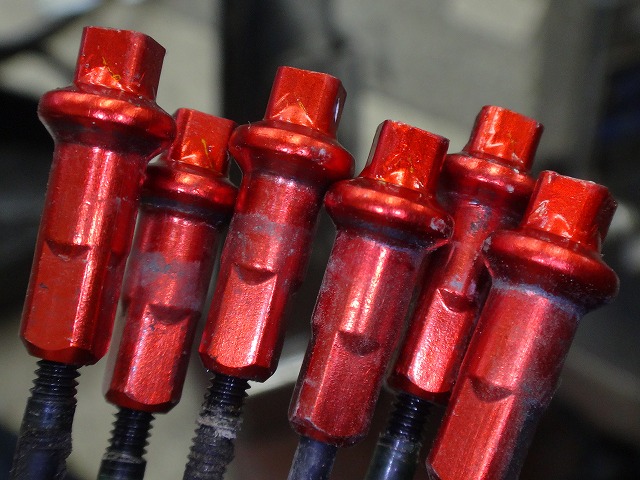
In the end, I determined that 6 spokes needed replacement.
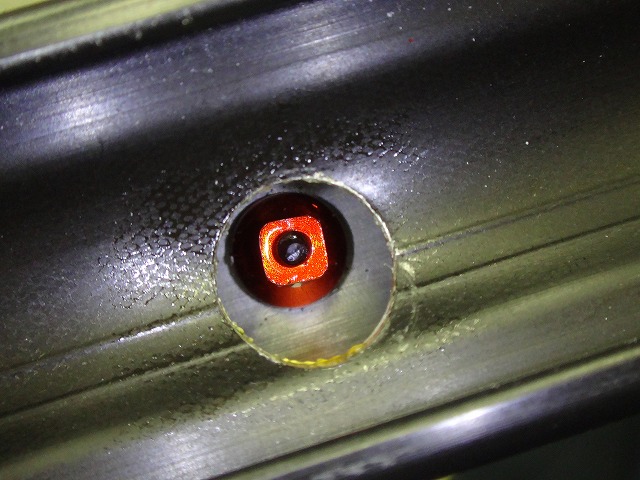
These are square nipples with a 4mm (3.95mm) hex socket,
but the outer gripping surface is also a 4mm square.
There's no tool in circulation for turning this outer surface.
I have no idea which side Fulcrum used when they built this wheel.
There's not a single scuff mark on either side.
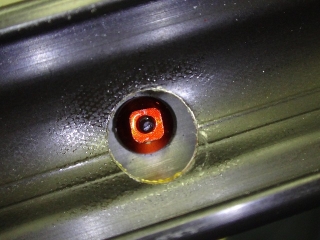
However, given that the rim holes alternate left and right on the outer edge,
it seems unlikely that the edges of those holes wouldn't interfere
with the head of a screwdriver-type (or T-shaped) tool,
so it's likely they grabbed the inner square.
Carbon rim models like Bora are also assembled with nipples of the same size,
but to achieve a design that doesn't require rim tape,
there are no holes on the outer side except for the valve hole,
so they attach a jig to the nipple and pull it to the rim hole with a magnet,
meaning they always grab the inner square to assemble.
For this reason, Bora and Bullet nipples don't have
a square shape on the outer side in the first place.
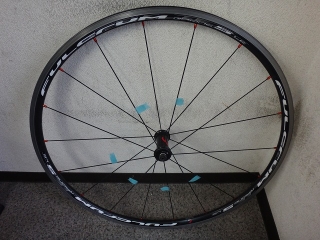
It's fixed.
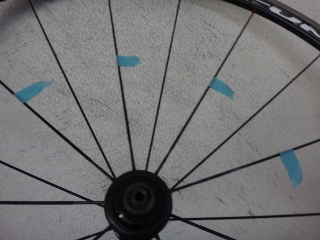
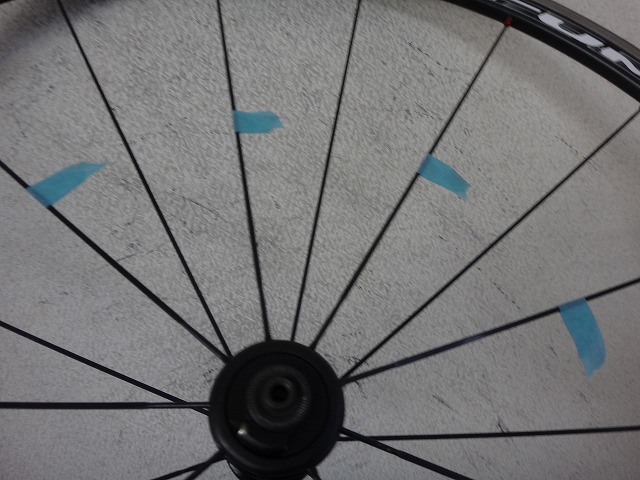
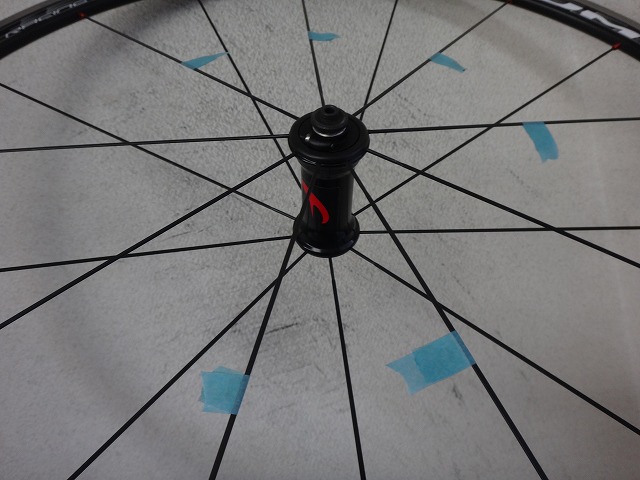
The spokes I replaced were the 4 consecutive ones
where the bending was obvious from the start, and

2 more consecutive ones slightly further along, for a total of 6—all on the same side.

↑The replaced spokes
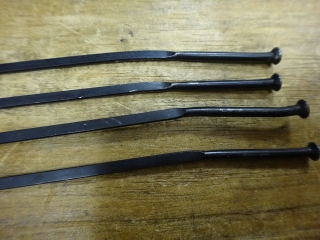
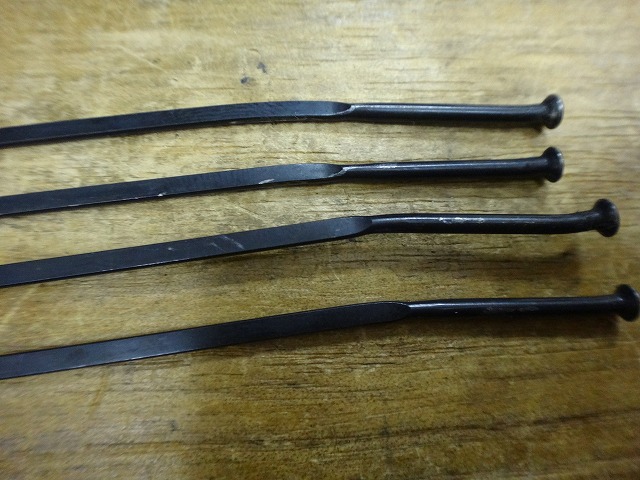
These (probably) are the 4 that were obvious from the start, and
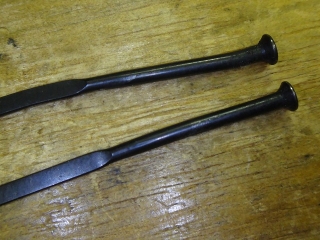
these are the remaining 2.
I hesitated about whether to replace the spoke at the bottom of the image,
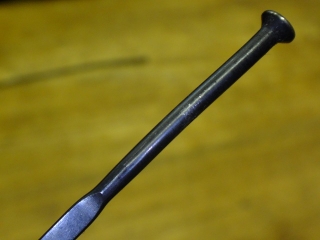
but it had a subtle bend, so I replaced it.
It's hard to see in the photo,
but when you rotate the spoke, you can see the spoke head is eccentric
relative to its axis.
They had bent spokes near the hub during a crash.

↑I thought it was just these 4 spots (or so I thought).
I had removed the dust cap for photography,
but I reinstall it after the work.
Crumbly threadlocker compounds don't just prevent initial loosening effectively—
they may also help prevent sand from getting into the thread pockets
and causing the nipples to seize up.
In the end, I determined that 6 spokes needed replacement.
These are square nipples with a 4mm (3.95mm) hex socket,
but the outer gripping surface is also a 4mm square.
There's no tool in circulation for turning this outer surface.
I have no idea which side Fulcrum used when they built this wheel.
There's not a single scuff mark on either side.
However, given that the rim holes alternate left and right on the outer edge,
it seems unlikely that the edges of those holes wouldn't interfere
with the head of a screwdriver-type (or T-shaped) tool,
so it's likely they grabbed the inner square.
Carbon rim models like Bora are also assembled with nipples of the same size,
but to achieve a design that doesn't require rim tape,
there are no holes on the outer side except for the valve hole,
so they attach a jig to the nipple and pull it to the rim hole with a magnet,
meaning they always grab the inner square to assemble.
For this reason, Bora and Bullet nipples don't have
a square shape on the outer side in the first place.

It's fixed.
The spokes I replaced were the 4 consecutive ones
where the bending was obvious from the start, and
2 more consecutive ones slightly further along, for a total of 6—all on the same side.

↑The replaced spokes
These (probably) are the 4 that were obvious from the start, and

these are the remaining 2.
I hesitated about whether to replace the spoke at the bottom of the image,
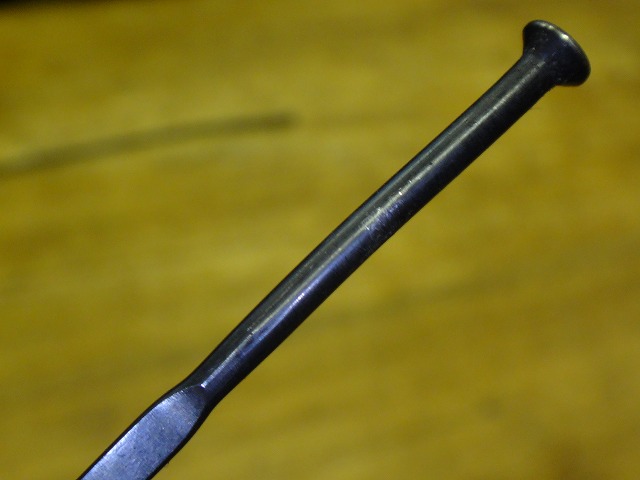
but it had a subtle bend, so I replaced it.
It's hard to see in the photo,
but when you rotate the spoke, you can see the spoke head is eccentric
relative to its axis.