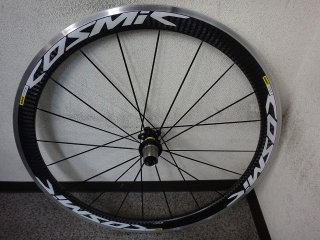
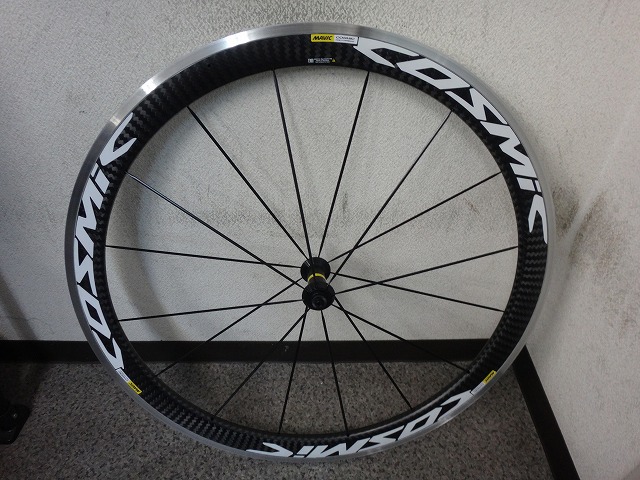
A customer dropped off a Cosmic wheel—a modernized version of the old Cosmic Carbon.

When the parts were assembled at a nearby shop, it should have been inspected at the same time,
but just to be safe, the customer is requesting a full inspection anyway.
It's unclear whether it's Mavic or the shop that's not trusted.
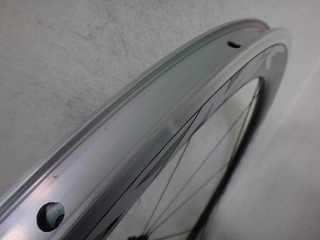
The rim has the same structure as the original Cosmic Carbon—an aluminum rim with a carbon hood—
but it's now a wide rim to match current trends.
Measuring the rim, the height comes to 46mm and the width to 23.5mm,
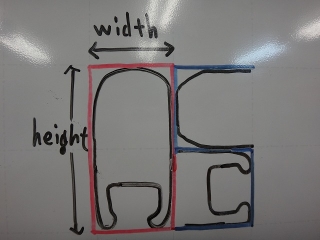
so roughly speaking the rim height is about twice the rim width.
The rim profile is also stocky like a Smart Envoy, and
in aspect ratio it matches what you'd get with an 80mm-tall rim paired with a 40mm width,
so it looks quite wide.
To get straight to the point: there's no question this wheel was not properly inspected.
It's not like narrow rims are okay to slack off on, but
with wide rims the adjustment range for brake shoe clearance left and right is already limited,
so centering is absolutely critical.
And if the person knew how to do proper adjustments,
there's no way they'd let this much center offset slip by.
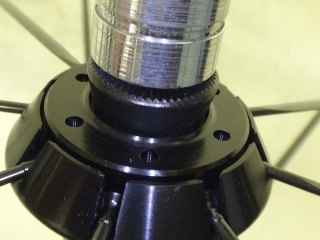
Also, the hub bearing play adjustment had some slop in it, so
the customer had tightened it themselves,
but they'd over-tightened it, so I loosened it a bit.
The ideal adjustment is at the point just loose enough to have no lateral play,
where rotation is smoothest—but at that point play develops easily,
so maintenance frequency goes up. From there you add just a tiny bit more tension.
The original state was tightened way beyond that.
To get technical: when you tighten the quick-release, the bearing play gets tighter,
but by using this mechanism's characteristic—that you can adjust even after the QR is closed—
the true lowest-resistance setting is "no play at the limit with the quick-release tightened."
When you open the quick-release and look at the wheel alone, lateral play appears.
This is extremely tedious to maintain, so
there's no need to obsess and dial it in that far.
Since the rear hub is an Instant Drive 360 with sluggish rotation,
if you adjust to "about the same as the rear hub,"
you might end up with a heavier adjustment than necessary.
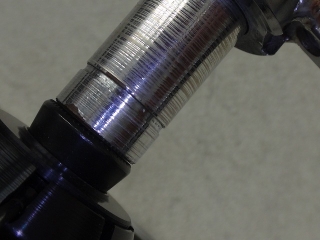
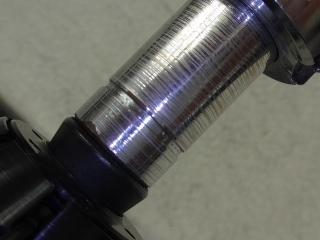
I centered the front wheel. It had virtually no runout to begin with.
Now for the rear wheel.
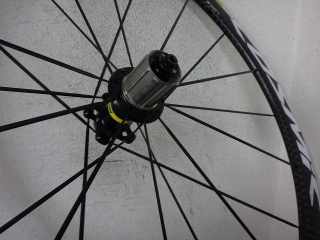
The original Cosmic Carbon uses radial lacing on the non-freewheel side, but
this rear wheel uses Isopulse lacing (radial on the freewheel side).
Cosmic Carbon existed about three years before the first Ksyrium SSC wheel
that first adopted Isopulse lacing came out,
so Cosmic Carbon never received freewheel-side radial lacing.
There exists a Mavic wheel built with Cosmic Carbon rims and a PowerTap hub,
and since PowerTap rear hubs prohibit radial lacing on both sides,
the instruction is that if you absolutely must, at least use tangential lacing on the non-freewheel side.
So with Cosmic Carbon PowerTap, the freewheel side is radially laced.
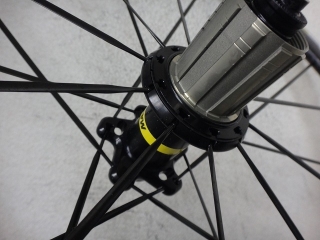
These are elliptical aero spokes—so thin and wide you could almost cut your finger on them—
and they're so thin that "aero" seems like a stretch,
but these are the same spokes adopted on current Ksyrium-branded models,
which means specs are shared with non-Cosmic models.
The hub is also the same as used on steel-spoke Ksyrium wheels,
the difference being that this rear wheel is 20H instead of 24H.
With 20H and 2-cross lacing, it becomes easier to pull the tangential-laced spokes
in the direction tangent to the hub flange.
In fact, this rear hub's left flange seems intentionally designed with
a larger diameter with exactly this in mind.
The two spokes coming from one flange almost form a single straight line.
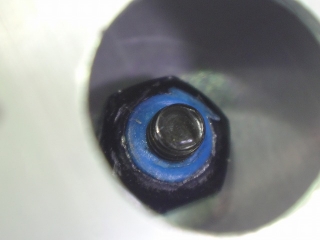
The spoke protrudes from the nipple, but
it's not that the spoke length is too long.
Either to maximize the thread contact pressure on the nipple side, or
to recover the spoke if it breaks at the nipple end
(which can happen at the boundary where the threads begin),
these are special-specification spokes with a longer threaded section
than standard spokes.
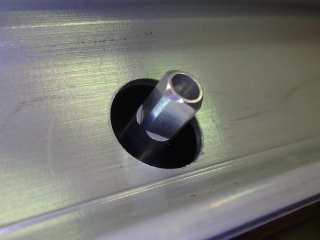
A standard #14 nipple threaded onto the protruding threads smoothly,
so these spokes are #14-base.
Actually, the old Cosmic Carbon spokes were #13-base with
#13 nipples designed for internal use—extremely specialized specs.
That 20H rear wheels with anti-freewheel-side radial lacing and
rims with effectively low-height specs, distributed in decent numbers,
rarely have complaints about sloppiness or brake rub,
is not unrelated to the spoke's high proportional weight.

The rear wheel also had center offset—the amount and direction typical of Mavic wheels.
They didn't inspect it at all.
If nearly every rear wheel is offset freewheel-side by within two sheets of paper,
it's possible that's intentional, and there are actually valid reasons
(I do offset my own rear wheels about one sheet of paper freewheel-side),
but in reality wheels are usually offset more than that (this one is too),
and even front wheels without ochos—where offset isn't needed—
often have decent offset (this one does too),
so I've come to the conclusion that "there's no deep reason; they're just sloppy and QC is lax."
I centered the rear wheel. It had slight runout.
When the parts were assembled at a nearby shop, it should have been inspected at the same time,
but just to be safe, the customer is requesting a full inspection anyway.
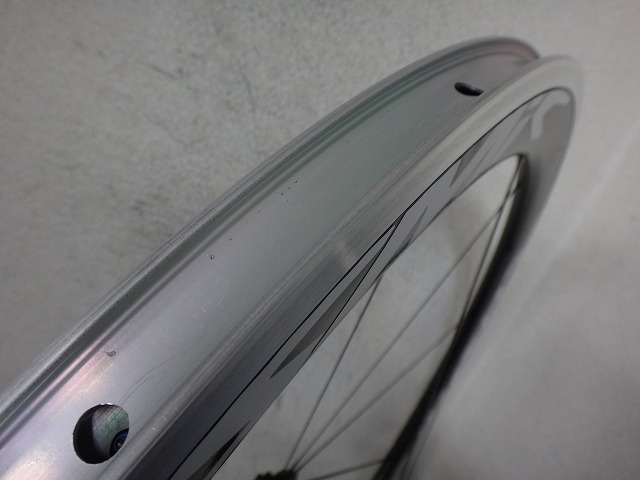
The rim has the same structure as the original Cosmic Carbon—an aluminum rim with a carbon hood—
but it's now a wide rim to match current trends.
Measuring the rim, the height comes to 46mm and the width to 23.5mm,
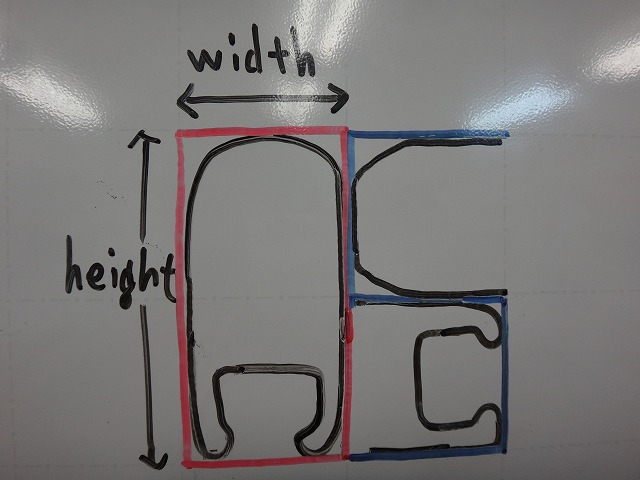
so roughly speaking the rim height is about twice the rim width.
The rim profile is also stocky like a Smart Envoy, and
in aspect ratio it matches what you'd get with an 80mm-tall rim paired with a 40mm width,
so it looks quite wide.
To get straight to the point: there's no question this wheel was not properly inspected.
It's not like narrow rims are okay to slack off on, but
with wide rims the adjustment range for brake shoe clearance left and right is already limited,
so centering is absolutely critical.
And if the person knew how to do proper adjustments,
there's no way they'd let this much center offset slip by.
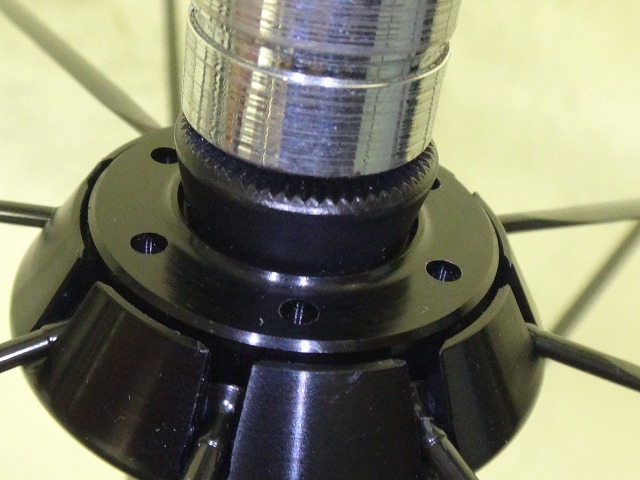
Also, the hub bearing play adjustment had some slop in it, so
the customer had tightened it themselves,
but they'd over-tightened it, so I loosened it a bit.
The ideal adjustment is at the point just loose enough to have no lateral play,
where rotation is smoothest—but at that point play develops easily,
so maintenance frequency goes up. From there you add just a tiny bit more tension.
The original state was tightened way beyond that.
To get technical: when you tighten the quick-release, the bearing play gets tighter,
but by using this mechanism's characteristic—that you can adjust even after the QR is closed—
the true lowest-resistance setting is "no play at the limit with the quick-release tightened."
When you open the quick-release and look at the wheel alone, lateral play appears.
This is extremely tedious to maintain, so
there's no need to obsess and dial it in that far.
Since the rear hub is an Instant Drive 360 with sluggish rotation,
if you adjust to "about the same as the rear hub,"
you might end up with a heavier adjustment than necessary.
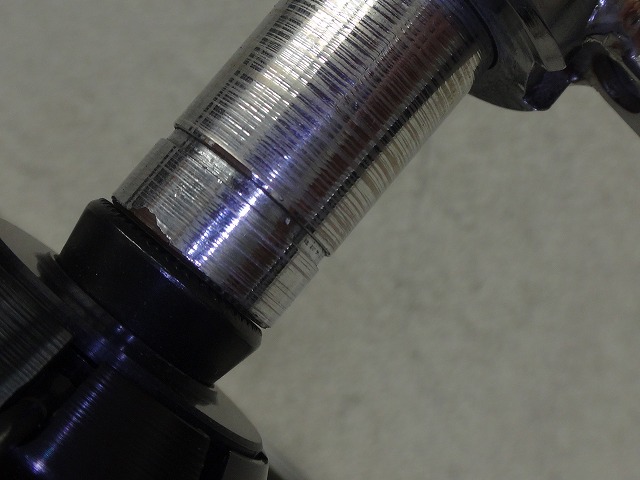
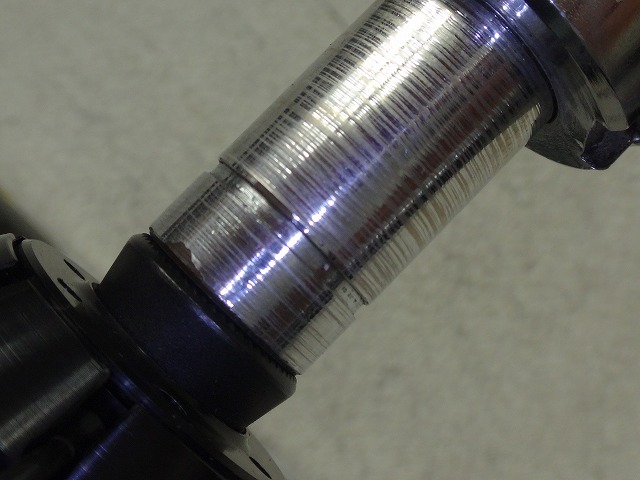
I centered the front wheel. It had virtually no runout to begin with.

Now for the rear wheel.
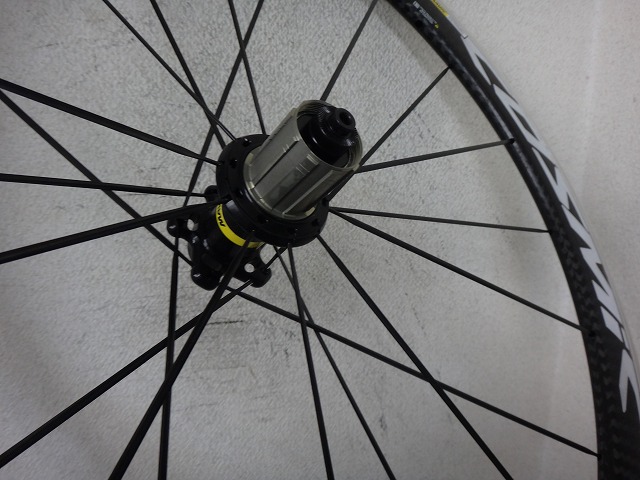
The original Cosmic Carbon uses radial lacing on the non-freewheel side, but
this rear wheel uses Isopulse lacing (radial on the freewheel side).
Cosmic Carbon existed about three years before the first Ksyrium SSC wheel
that first adopted Isopulse lacing came out,
so Cosmic Carbon never received freewheel-side radial lacing.
There exists a Mavic wheel built with Cosmic Carbon rims and a PowerTap hub,
and since PowerTap rear hubs prohibit radial lacing on both sides,
the instruction is that if you absolutely must, at least use tangential lacing on the non-freewheel side.
So with Cosmic Carbon PowerTap, the freewheel side is radially laced.
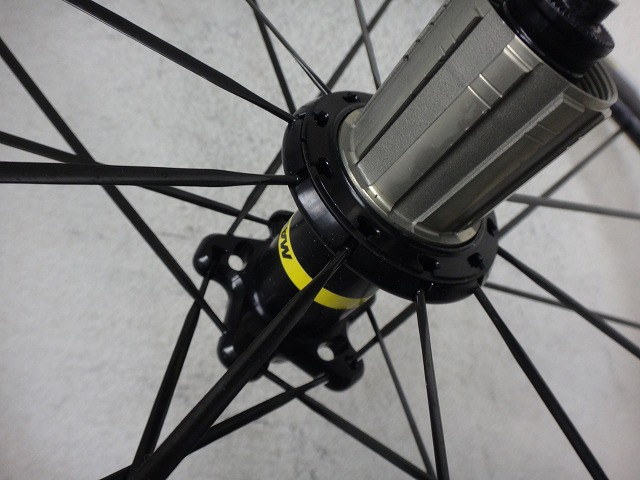
These are elliptical aero spokes—so thin and wide you could almost cut your finger on them—
and they're so thin that "aero" seems like a stretch,
but these are the same spokes adopted on current Ksyrium-branded models,
which means specs are shared with non-Cosmic models.
The hub is also the same as used on steel-spoke Ksyrium wheels,
the difference being that this rear wheel is 20H instead of 24H.
With 20H and 2-cross lacing, it becomes easier to pull the tangential-laced spokes
in the direction tangent to the hub flange.
In fact, this rear hub's left flange seems intentionally designed with
a larger diameter with exactly this in mind.
The two spokes coming from one flange almost form a single straight line.
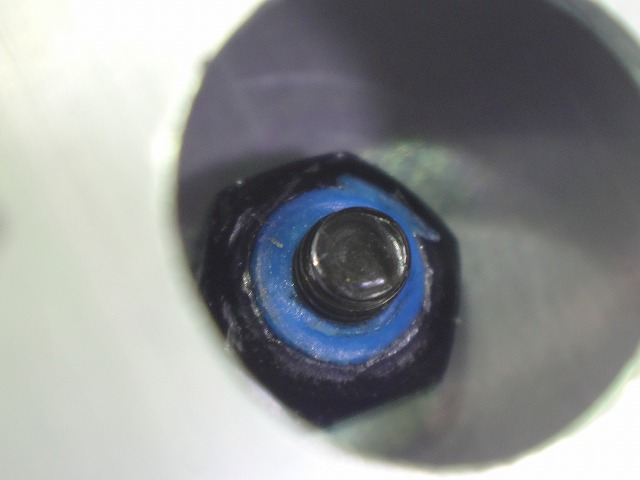
The spoke protrudes from the nipple, but
it's not that the spoke length is too long.
Either to maximize the thread contact pressure on the nipple side, or
to recover the spoke if it breaks at the nipple end
(which can happen at the boundary where the threads begin),
these are special-specification spokes with a longer threaded section
than standard spokes.

A standard #14 nipple threaded onto the protruding threads smoothly,
so these spokes are #14-base.
Actually, the old Cosmic Carbon spokes were #13-base with
#13 nipples designed for internal use—extremely specialized specs.
That 20H rear wheels with anti-freewheel-side radial lacing and
rims with effectively low-height specs, distributed in decent numbers,
rarely have complaints about sloppiness or brake rub,
is not unrelated to the spoke's high proportional weight.

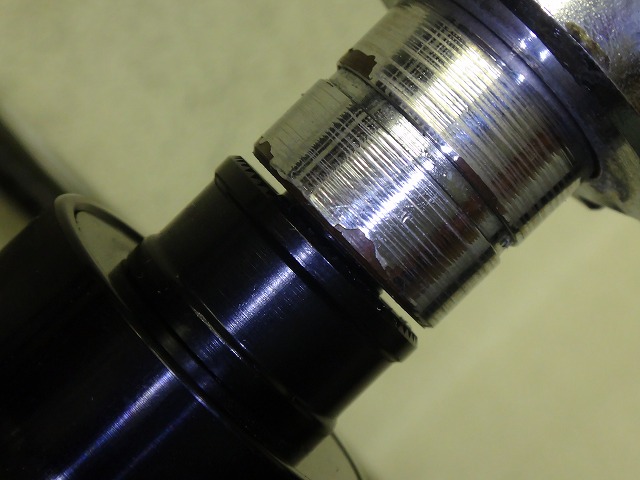
The rear wheel also had center offset—the amount and direction typical of Mavic wheels.
They didn't inspect it at all.
If nearly every rear wheel is offset freewheel-side by within two sheets of paper,
it's possible that's intentional, and there are actually valid reasons
(I do offset my own rear wheels about one sheet of paper freewheel-side),
but in reality wheels are usually offset more than that (this one is too),
and even front wheels without ochos—where offset isn't needed—
often have decent offset (this one does too),
so I've come to the conclusion that "there's no deep reason; they're just sloppy and QC is lax."

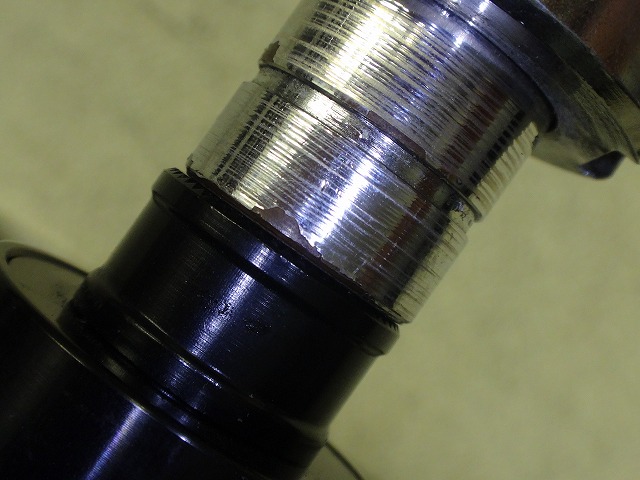
I centered the rear wheel. It had slight runout.