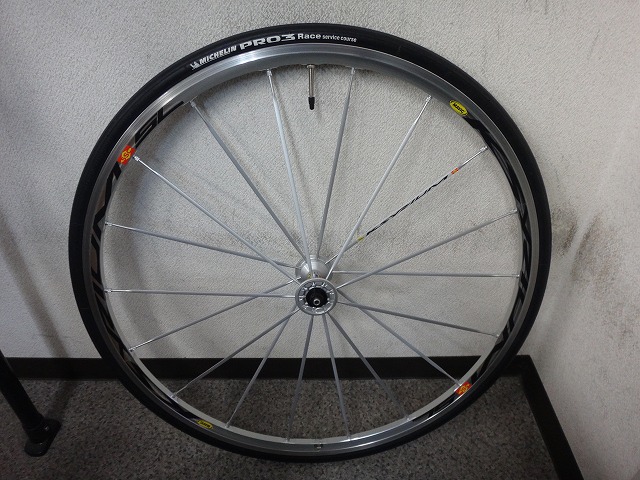
I received a silver Ksyrium SL from a customer.
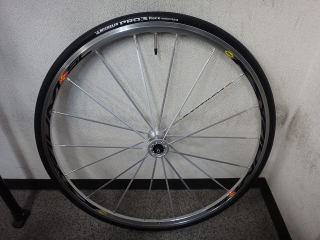
They're requesting inspection and repair of both wheels,
but especially the front hub is rotating abnormally heavy with strange noises.
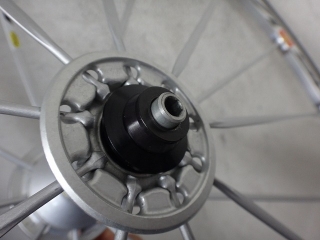
The hub axle can be rotated by hand... but it's quite gritty.
There are mainly three causes for this:
First, ceramic bearings or non-contact steel ball bearings were used
and water got in without effort, resulting in internal rust.
Second, it's simply age and use over time.
Since this wheel is just over 10 years old from manufacture, that's possible,
but the wheel I received is extremely clean (※) with minimal signs of use,
and the rear hub bearing is fine,
so it seems unlikely it was damaged from age.
※It appears to have been washed before being sent to our shop.
Foam fragments were caught on angled parts
like flanges and nipples.
Third, the bearing adjustment (ball cone adjustment) was overtightened during use.
Mavic uses 6901 bearings in this front hub,
which is actually quite a large size for a front hub.
Since they're inherently robust, it's extremely difficult to damage
properly-adjusted original bearings through normal use over time.
Oh, I just thought of a fourth cause.
High-pressure washer water blasted the grease
out of the bearing interior—I'll add that.
As it turned out later, the bearing interior was rusted.
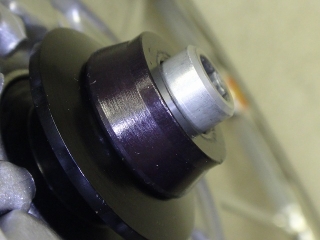
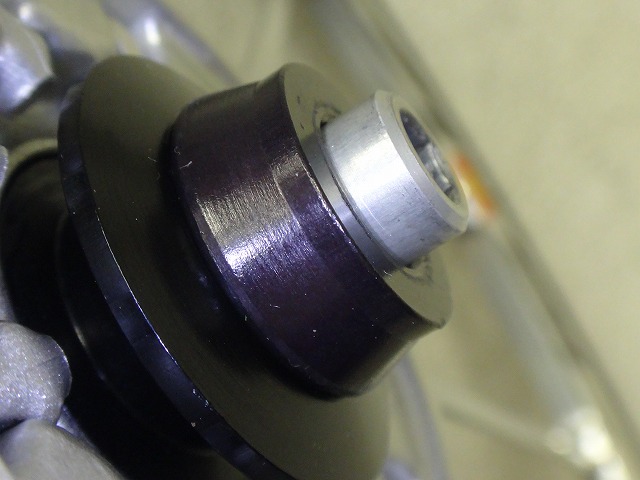
The quick-release end cap is installed in the wrong direction.
I'll correct this during the repair work.
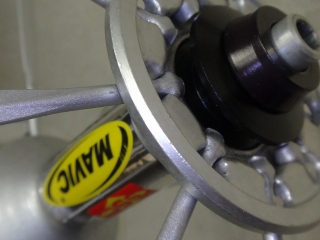
The lettering on the hub body and the axle insertion direction
are opposite to Mavic's factory state
(meaning the hub axle has definitely been removed at least once before).
I'll correct this too.
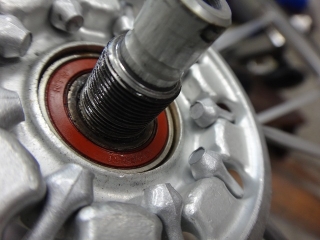
I removed the bearing adjustment components.
Indeed, it was overtightened, so that might be one of the causes.
The bearing is the original part.
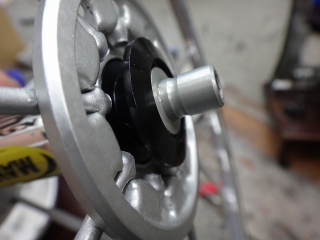
Next, the hub axle should come out easily with finger pressure,
but for some reason it feels stuck and won't come out.
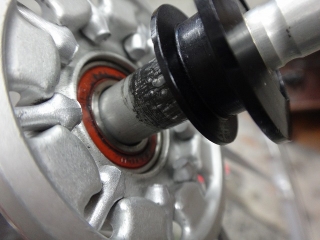
I drove it out with a plastic hammer.
Even though the axle direction relative to the hub body was opposite from factory,
I'll call this side right and the bearing adjustment side left.
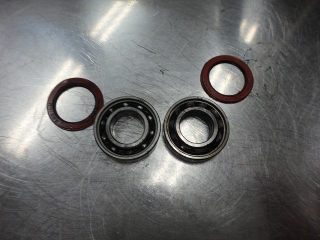
I also removed the bearings.
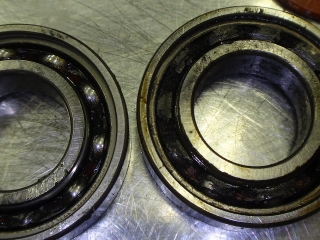
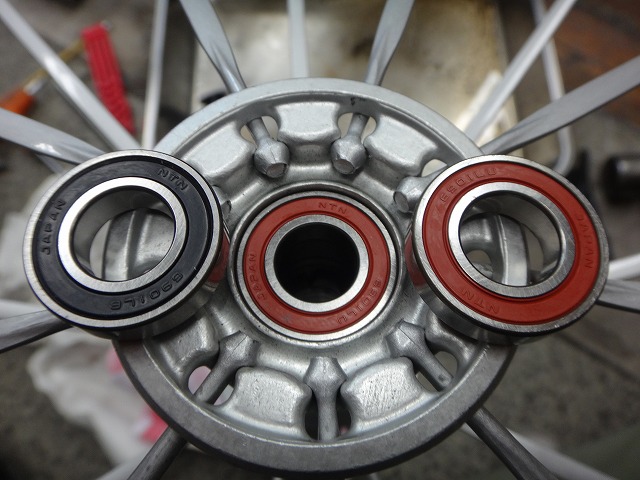
The interior of the right-side bearing (right in the image) is clearly rusted.
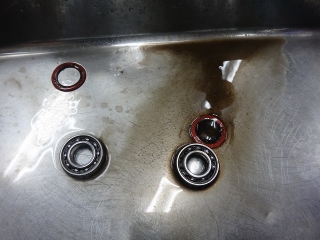
When I spray parts cleaner the same way,
rust liquid comes out only from the right-side bearing.
This is the main cause of the grinding.
(I confirmed this before removing the bearings,
and the left side didn't look pristine either,
so I've decided both need replacement).
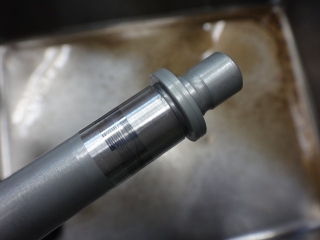
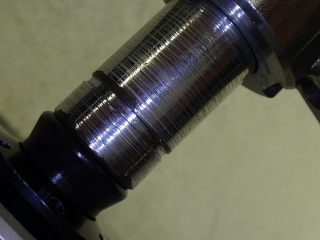
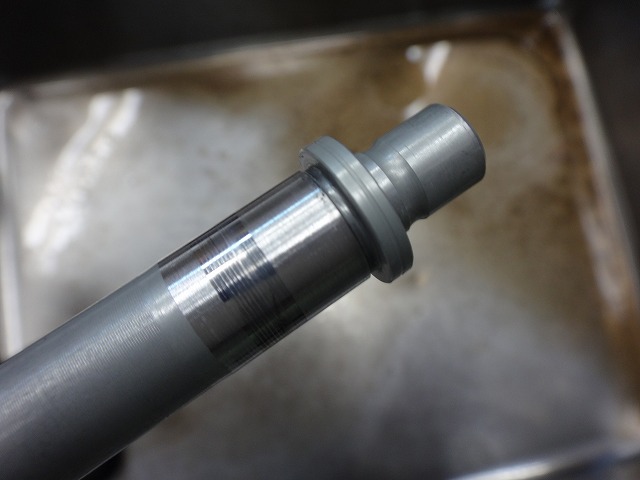
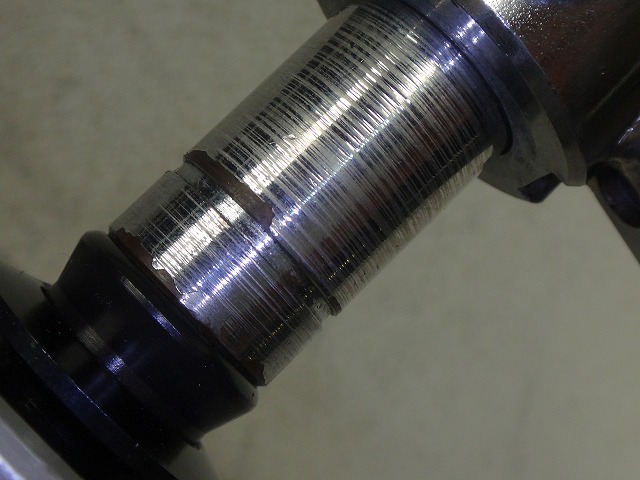
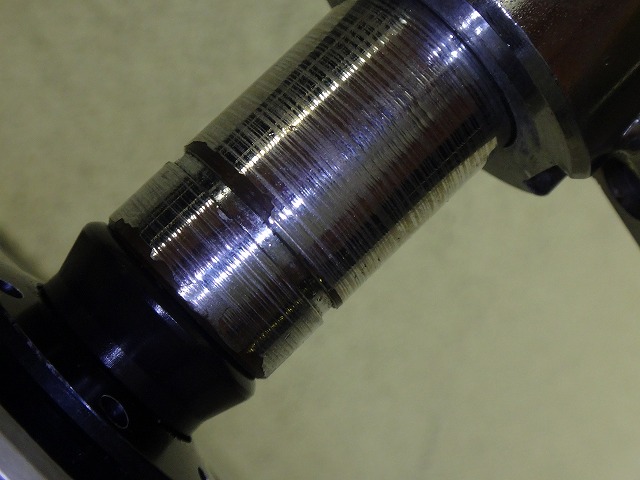
As for the hub axle, strangely there's
almost no secondary rust directly below the right bearing,
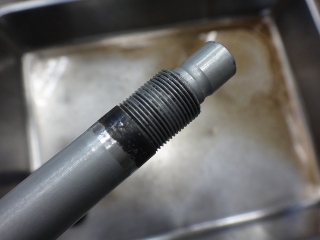
but there is some directly below the left bearing.
This seems to be the main cause of the axle feeling stuck.
Cases where there's no causal relationship between rust inside the bearing
and secondary rust below the bearing are occasionally seen
with Campagnolo/Fulcrum freewheel bearings.
I'll cover that in the next post.
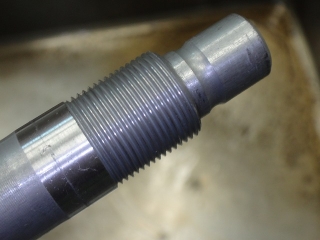
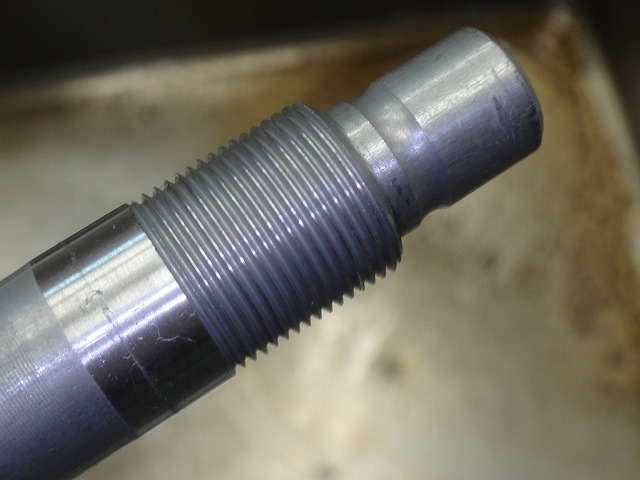
I cleaned it up as much as possible.
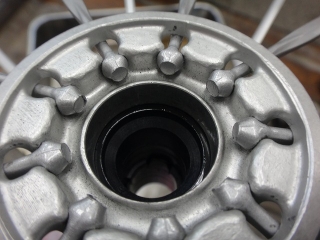
I pressed the bearing into...
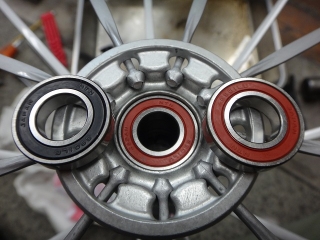
place.
By coincidence, it was the same manufacturer and same model
that Mavic uses as original equipment.
Although, even with the same brand and same wheel model,
the bearing manufacturer can change between production batches
(I have a feeling Swedish SKF Italian-made bearings are common).
I do have non-contact seal-type bearings in stock (the black-seal type in the image above),
but as I always write, don't use non-contact seal bearings on Mavic wheels—
if you do, understand the risks (or rather, the shop should explain them),
and unless the customer strongly requests it,
I won't switch to non-contact bearings.
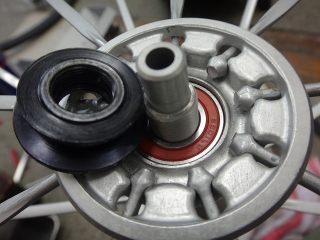

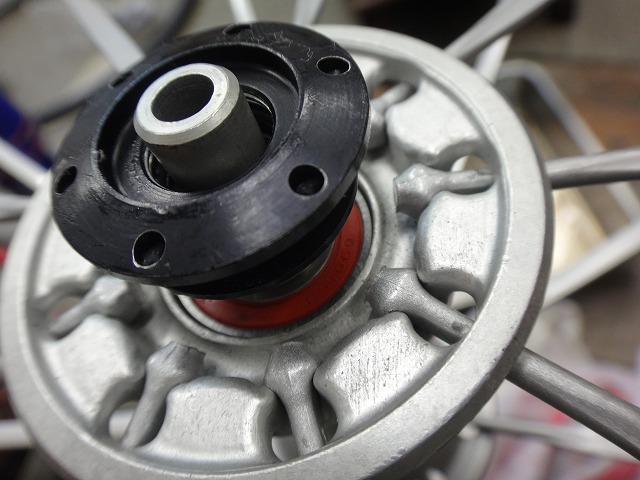
There's no seal on this end cap anywhere—
the bearing seal becomes the only last line of defense,
is the point.

I'm aligning the hub axle orientation and hub body relationship
to match Mavic's factory state.
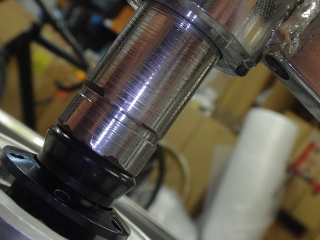
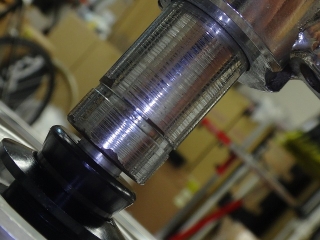
The center is dramatically off.
I can't definitively say this happened from truing attempts—
that's Mavic for you.
Well, I don't think they'd ship a front wheel like this though...
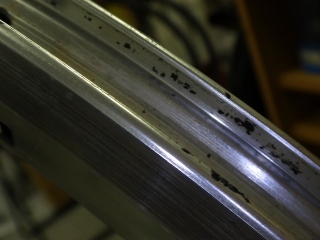
From the way tire rubber has caked onto the bead hook,
I can make an almost certain deduction that they were running Michelin tires
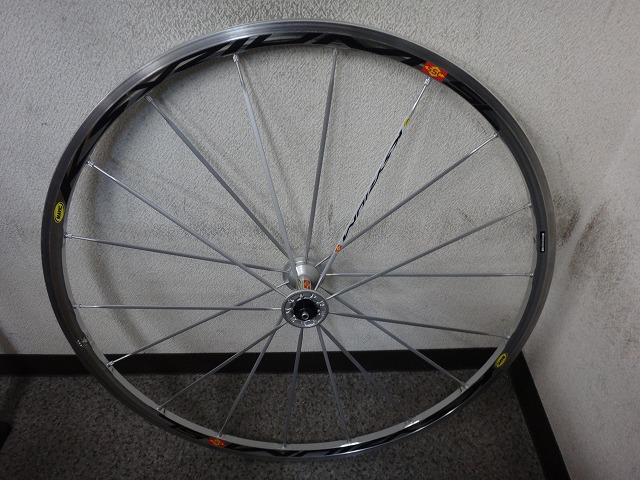
(or had been running them), but as you can see in the image at the start,
they have Pro3 Race on there, so my trick of
saying it worked out didn't work.
If I take it a step further from here, if this were red or blue residue
I'd sometimes say things like
"Your frame color is red (blue), right?"
and surprise the customer.
Blue in particular has high accuracy.
Carbon frames (black) often have red or yellow accent colors,
but blue is rare, and blue frames are usually either
carbon or metal with blue-dominant paint schemes,
so running blue-sidewall tires usually means matching them to that kind of frame.
Speaking of which, the other day I had Michelin red residue on a Racing Zero rim, so
I said "Your frame is red, right?" but the customer said they don't have a red frame
and have never run Michelin tires.
But logically, if all they've ever run is black tires,
there's no way red residue appears on the rim.
The answer turned out to be "the previous owner of that wheel
had a red frame and ran Michelin tires."
If they hadn't received the wheel from an acquaintance,
it would've remained a mystery.
Also, with a Ksyrium SLR, I once looked at just the wheel itself and said
"You ride a GIANT TCR or Propel,
and this wheel wasn't included with the complete bike."
Saying it wasn't a complete bike accessory was easy since
no complete bike with that spec exists,
but as for how I knew they were a GIANT rider?
I haven't explained that to the customer.
And I won't write it here either.
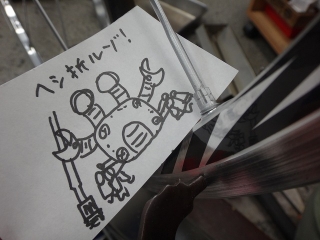
When centering, there were many nipples showing signs of seizing,
and there was one stuck nipple that just wouldn't turn no matter what.
After confirming that our shop happened to have a spare spoke for this,
I didn't hesitate and just turned it (in the loosening direction).
It should break near the butted section on the rim side with a crack sound,
but I'm writing this to claim that I knew it would happen beforehand
rather than having carelessly made a mistake—
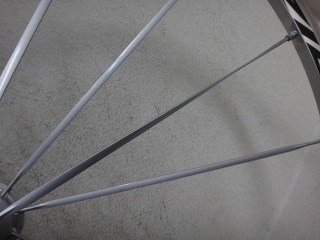
the spoke twisted through plastic deformation and the seizing released.
That was unexpected, but the point remains that a spoke-with-nipple needs replacement.
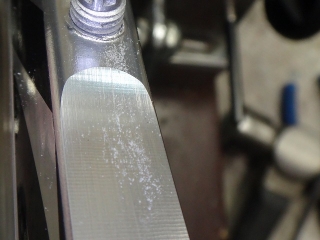
↑White rust flaking off
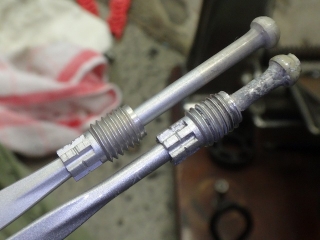
The spare spoke nipple
can move freely within range like an abacus bead,
but the former seized nipple won't move inboard no matter what.
It might work with some oiling and cleaning.

Fixed.
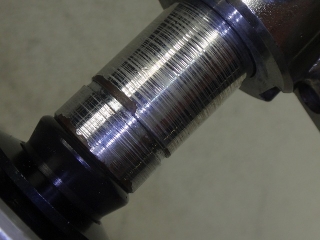
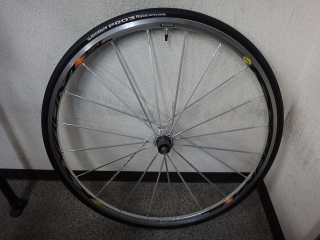
Center is spot-on.
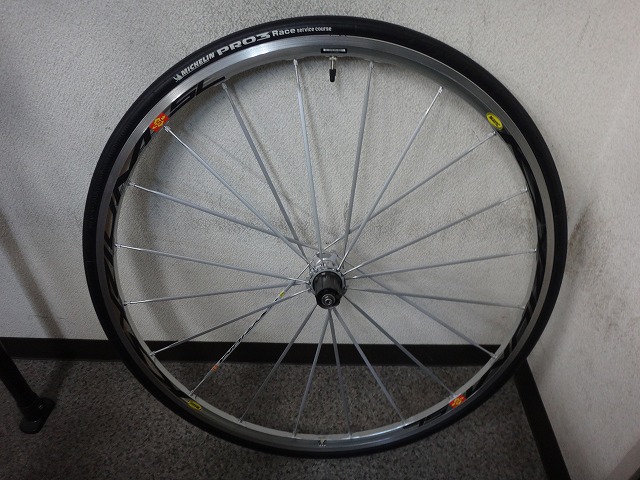
Now for the rear wheel.
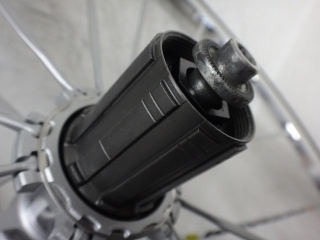
The hub bearing rotates smoothly so I'll leave it as is.
The bearing adjustment is also correct.
The freewheel coasting feels slightly heavy, so I'll clean and lubricate it.
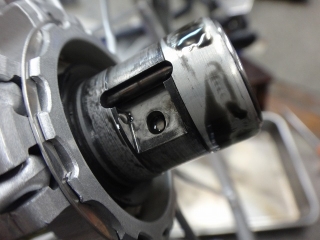
When the interior is damaged, a ring of marks and dirt forms
on the outside of the ratchet's two pawls,

but after just wiping, there's not a trace of such marks,
so there's no damage around the ratchet.
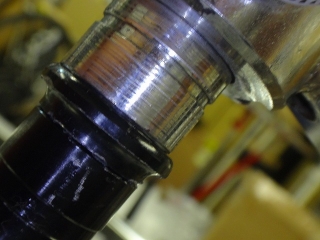
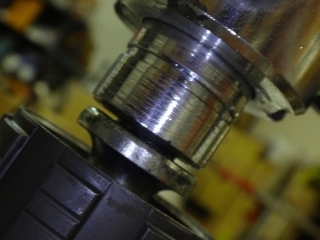
The rim is offset toward the freewheel side,
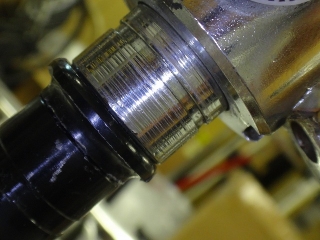
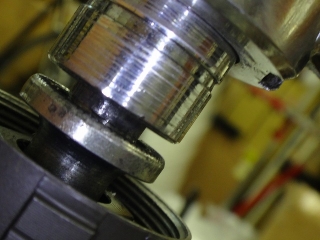
so I tightened the freewheel side tension, which was loose,
more than during truing.
At this point the center offset actually increased.
Then I centered it by tightening the non-freewheel side,
so there are no loose nipples.
They're requesting inspection and repair of both wheels,
but especially the front hub is rotating abnormally heavy with strange noises.

The hub axle can be rotated by hand... but it's quite gritty.
There are mainly three causes for this:
First, ceramic bearings or non-contact steel ball bearings were used
and water got in without effort, resulting in internal rust.
Second, it's simply age and use over time.
Since this wheel is just over 10 years old from manufacture, that's possible,
but the wheel I received is extremely clean (※) with minimal signs of use,
and the rear hub bearing is fine,
so it seems unlikely it was damaged from age.
※It appears to have been washed before being sent to our shop.
Foam fragments were caught on angled parts
like flanges and nipples.
Third, the bearing adjustment (ball cone adjustment) was overtightened during use.
Mavic uses 6901 bearings in this front hub,
which is actually quite a large size for a front hub.
Since they're inherently robust, it's extremely difficult to damage
properly-adjusted original bearings through normal use over time.
Oh, I just thought of a fourth cause.
High-pressure washer water blasted the grease
out of the bearing interior—I'll add that.
As it turned out later, the bearing interior was rusted.
The quick-release end cap is installed in the wrong direction.
I'll correct this during the repair work.

The lettering on the hub body and the axle insertion direction
are opposite to Mavic's factory state
(meaning the hub axle has definitely been removed at least once before).
I'll correct this too.
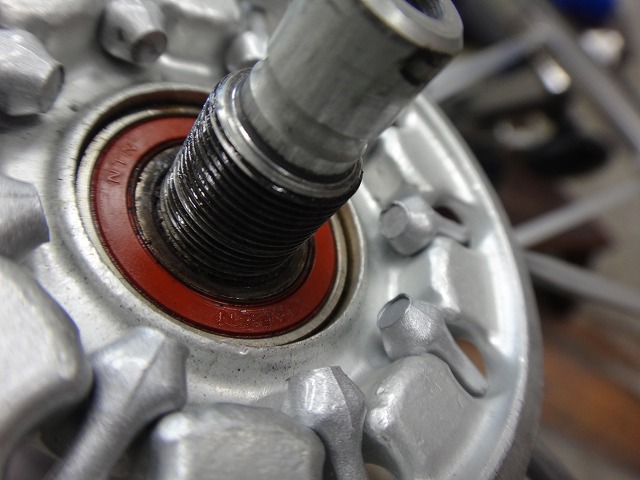
I removed the bearing adjustment components.
Indeed, it was overtightened, so that might be one of the causes.
The bearing is the original part.

Next, the hub axle should come out easily with finger pressure,
but for some reason it feels stuck and won't come out.
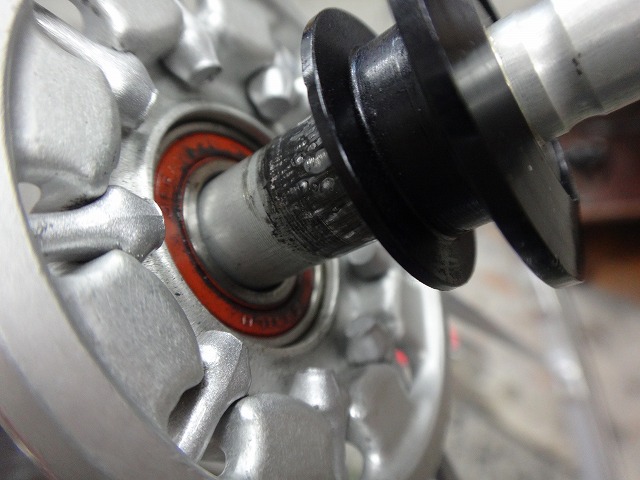
I drove it out with a plastic hammer.
Even though the axle direction relative to the hub body was opposite from factory,
I'll call this side right and the bearing adjustment side left.
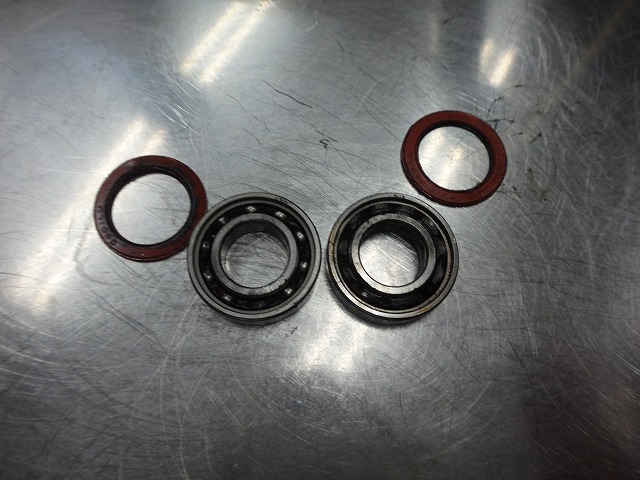
I also removed the bearings.
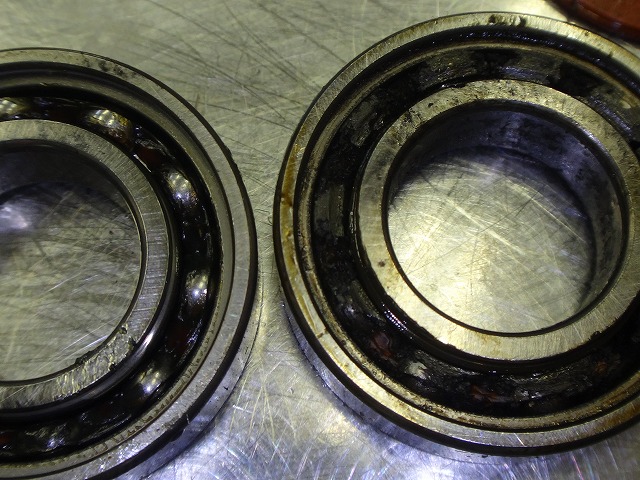
The interior of the right-side bearing (right in the image) is clearly rusted.

When I spray parts cleaner the same way,
rust liquid comes out only from the right-side bearing.
This is the main cause of the grinding.
(I confirmed this before removing the bearings,
and the left side didn't look pristine either,
so I've decided both need replacement).
As for the hub axle, strangely there's
almost no secondary rust directly below the right bearing,

but there is some directly below the left bearing.
This seems to be the main cause of the axle feeling stuck.
Cases where there's no causal relationship between rust inside the bearing
and secondary rust below the bearing are occasionally seen
with Campagnolo/Fulcrum freewheel bearings.
I'll cover that in the next post.
I cleaned it up as much as possible.

I pressed the bearing into...
place.
By coincidence, it was the same manufacturer and same model
that Mavic uses as original equipment.
Although, even with the same brand and same wheel model,
the bearing manufacturer can change between production batches
(I have a feeling Swedish SKF Italian-made bearings are common).
I do have non-contact seal-type bearings in stock (the black-seal type in the image above),
but as I always write, don't use non-contact seal bearings on Mavic wheels—
if you do, understand the risks (or rather, the shop should explain them),
and unless the customer strongly requests it,
I won't switch to non-contact bearings.

There's no seal on this end cap anywhere—
the bearing seal becomes the only last line of defense,
is the point.
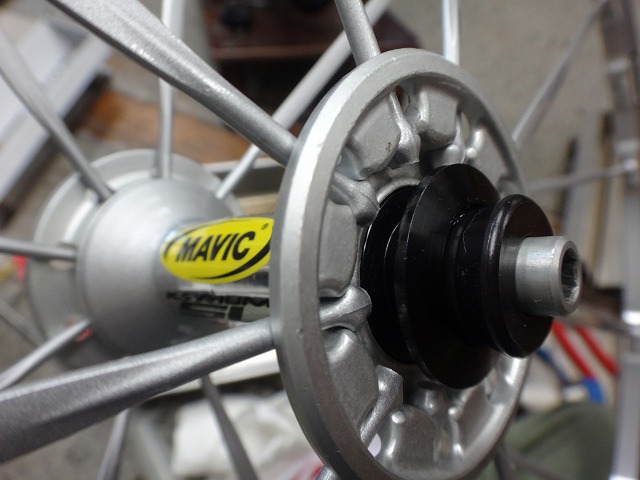
I'm aligning the hub axle orientation and hub body relationship
to match Mavic's factory state.
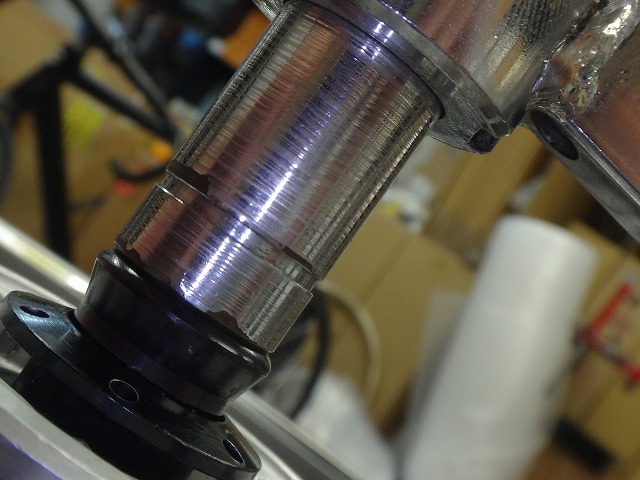
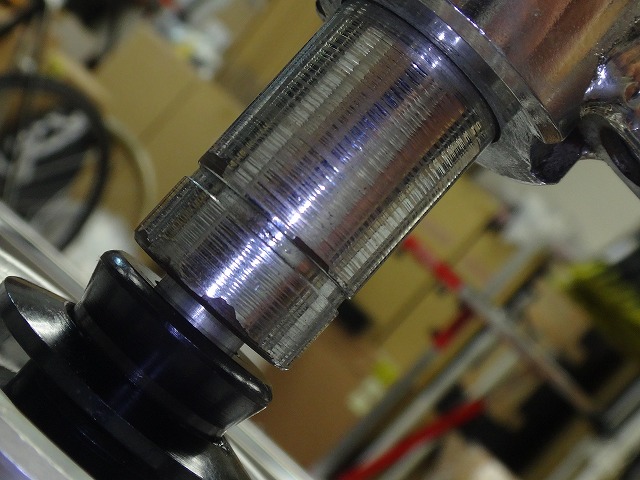
The center is dramatically off.
I can't definitively say this happened from truing attempts—
that's Mavic for you.
Well, I don't think they'd ship a front wheel like this though...
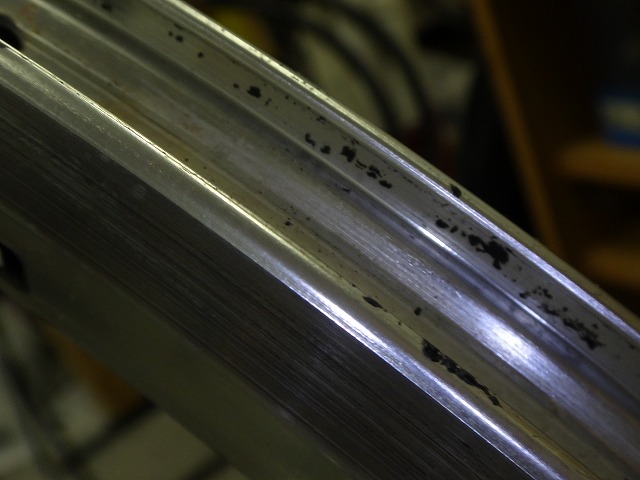
From the way tire rubber has caked onto the bead hook,
I can make an almost certain deduction that they were running Michelin tires
(or had been running them), but as you can see in the image at the start,
they have Pro3 Race on there, so my trick of
saying it worked out didn't work.
If I take it a step further from here, if this were red or blue residue
I'd sometimes say things like
"Your frame color is red (blue), right?"
and surprise the customer.
Blue in particular has high accuracy.
Carbon frames (black) often have red or yellow accent colors,
but blue is rare, and blue frames are usually either
carbon or metal with blue-dominant paint schemes,
so running blue-sidewall tires usually means matching them to that kind of frame.
Speaking of which, the other day I had Michelin red residue on a Racing Zero rim, so
I said "Your frame is red, right?" but the customer said they don't have a red frame
and have never run Michelin tires.
But logically, if all they've ever run is black tires,
there's no way red residue appears on the rim.
The answer turned out to be "the previous owner of that wheel
had a red frame and ran Michelin tires."
If they hadn't received the wheel from an acquaintance,
it would've remained a mystery.
Also, with a Ksyrium SLR, I once looked at just the wheel itself and said
"You ride a GIANT TCR or Propel,
and this wheel wasn't included with the complete bike."
Saying it wasn't a complete bike accessory was easy since
no complete bike with that spec exists,
but as for how I knew they were a GIANT rider?
I haven't explained that to the customer.
And I won't write it here either.
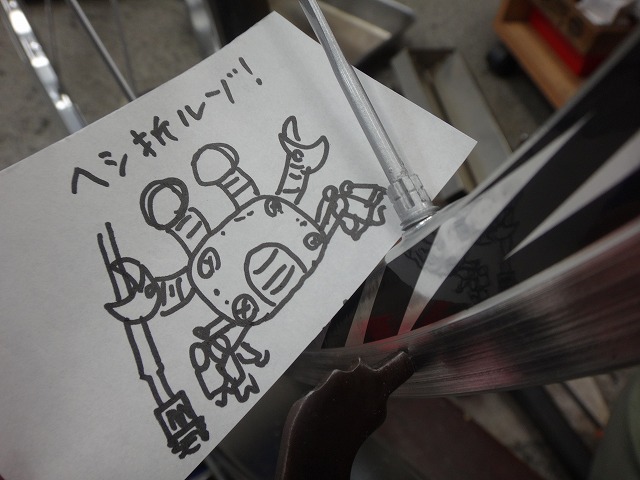
When centering, there were many nipples showing signs of seizing,
and there was one stuck nipple that just wouldn't turn no matter what.
After confirming that our shop happened to have a spare spoke for this,
I didn't hesitate and just turned it (in the loosening direction).
It should break near the butted section on the rim side with a crack sound,
but I'm writing this to claim that I knew it would happen beforehand
rather than having carelessly made a mistake—
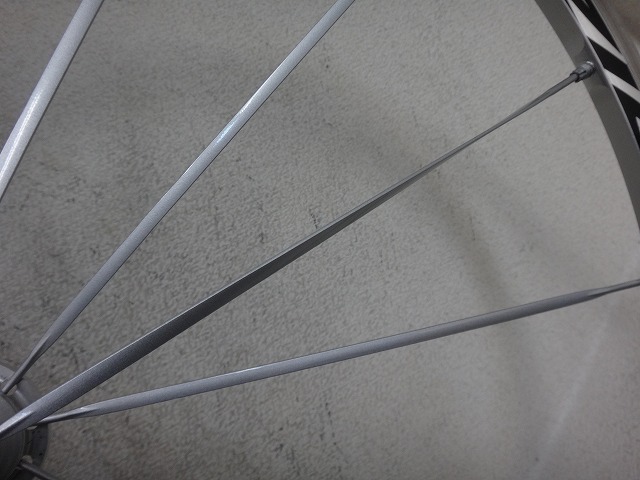
the spoke twisted through plastic deformation and the seizing released.
That was unexpected, but the point remains that a spoke-with-nipple needs replacement.
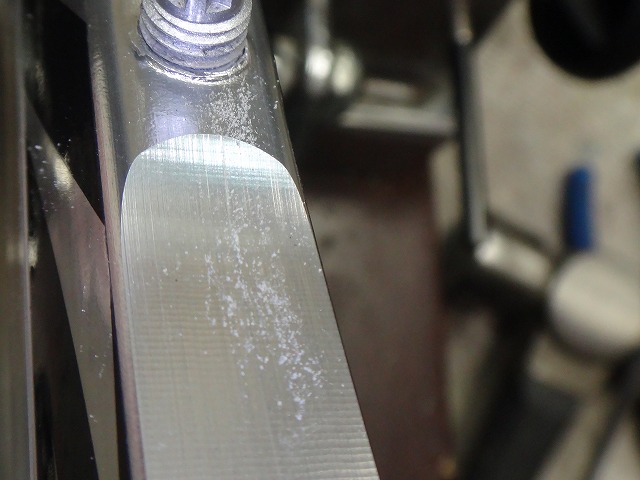
↑White rust flaking off
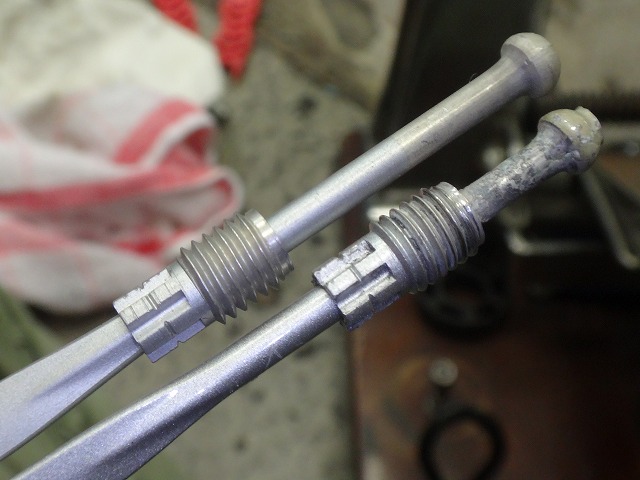
The spare spoke nipple
can move freely within range like an abacus bead,
but the former seized nipple won't move inboard no matter what.
It might work with some oiling and cleaning.
Fixed.
Center is spot-on.
Now for the rear wheel.
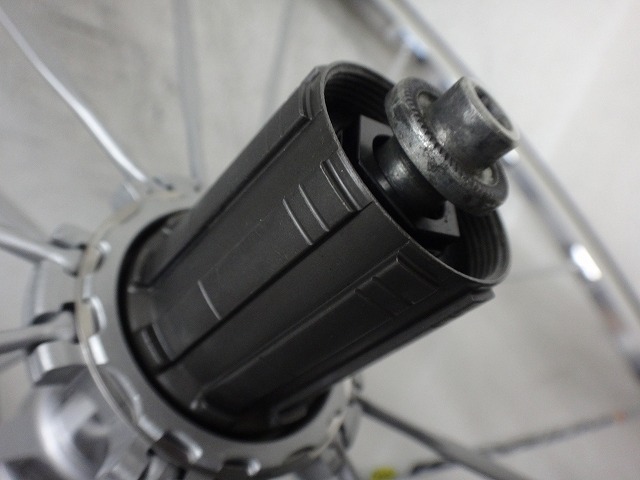
The hub bearing rotates smoothly so I'll leave it as is.
The bearing adjustment is also correct.
The freewheel coasting feels slightly heavy, so I'll clean and lubricate it.
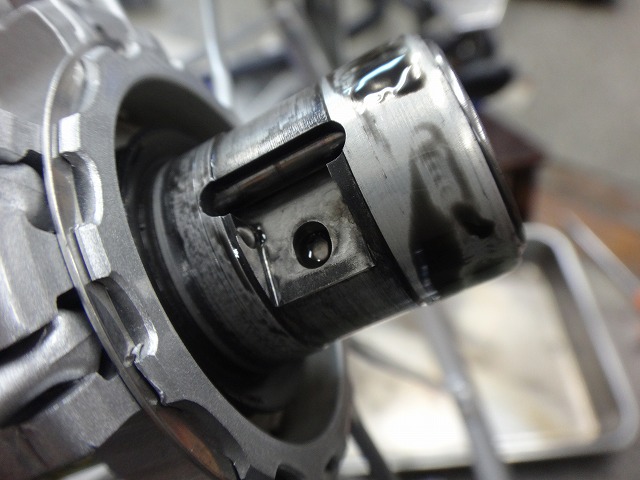
When the interior is damaged, a ring of marks and dirt forms
on the outside of the ratchet's two pawls,
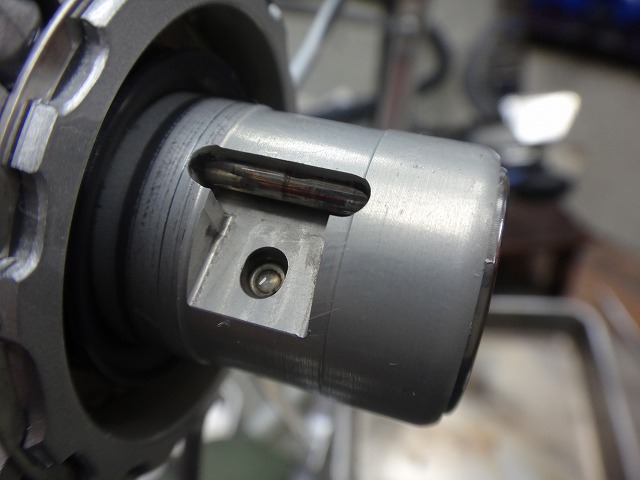
but after just wiping, there's not a trace of such marks,
so there's no damage around the ratchet.
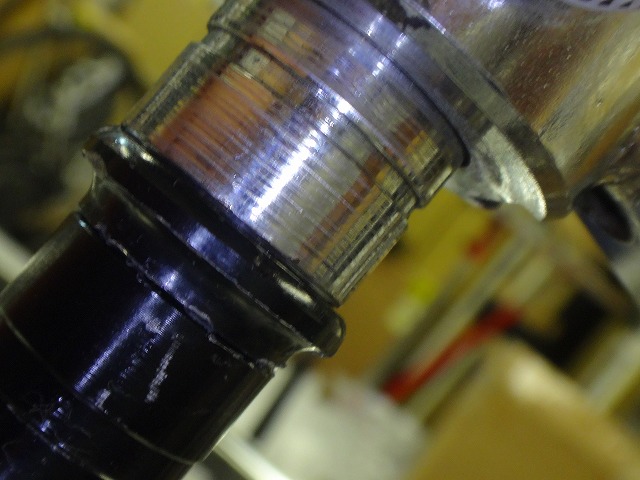
The rim is offset toward the freewheel side,
so I tightened the freewheel side tension, which was loose,
more than during truing.
At this point the center offset actually increased.
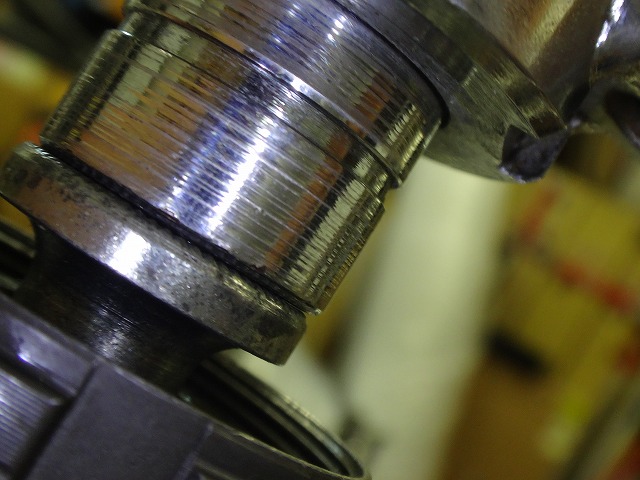
Then I centered it by tightening the non-freewheel side,
so there are no loose nipples.