There must be a reason they make different versions,
but with Shimano 7900 series wheels
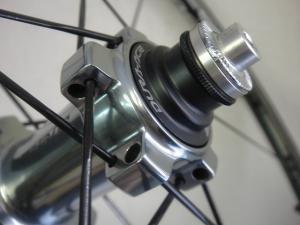
only the C24 uses a wide flange hub (image above).
The C35 and C50 inexplicably use narrow flanges instead.
With the 9000 series wheels, the C24 remains as before,
while the C35, C50, and C75 feature a 2:1 spoke count ratio with reverse Italian-style lacing on the freewheel side,
and are built using an "Optimal" configuration rather than high-low flanges.
I thought the C24 was a perfect wheel that didn't need to be converted to Optimal.
Why am I speaking in the past tense? Because
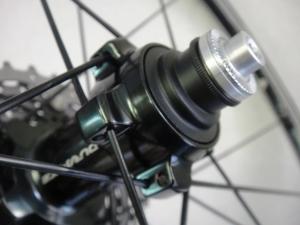
the 9000 series C24 is
mysteriously built with a hub equivalent to the 7900 series narrow flange.
I said earlier that the C24 remains as before, but that was a lie.
Well, I didn't know about it until just now either.
With the narrow flange conversion, spoke tension becomes more balanced left to right,
but lateral stiffness definitely decreases.
Is there some convincing reason this isn't a downgrade?
The 7900 series hub is outdated, abandoned because it doesn't support 11-speed,
so it can't be used indefinitely.
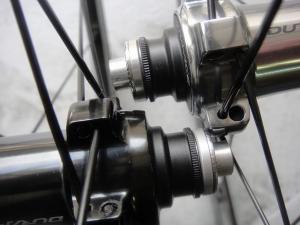
↑The loss of lateral stiffness from narrowing this flange width
can't possibly be recovered just by increasing spoke tension.

Shimano themselves describe narrow flanges negatively in their Optimal explanation,
so the WH-9000-C24 has lower stability and more lateral play
than the WH-7900-C24
—essentially admitting it themselves.
The new tubular wheelset is a C24 with Optimal lacing, so
if the C24 CL and TL versions follow suit and also become Optimal,
that would be the fourth instance of wide flange deception.
but with Shimano 7900 series wheels
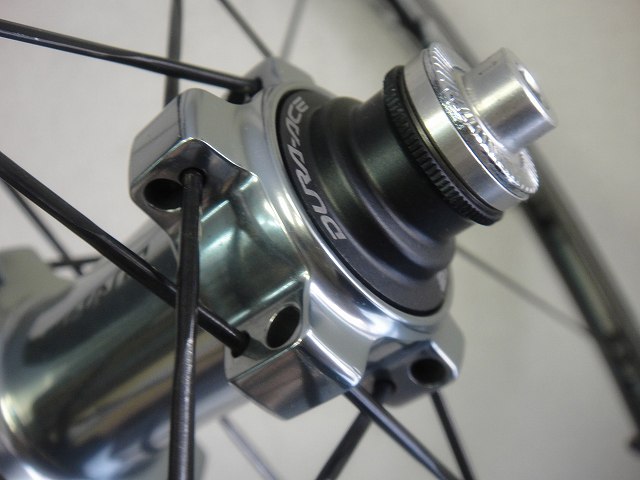
only the C24 uses a wide flange hub (image above).
The C35 and C50 inexplicably use narrow flanges instead.
With the 9000 series wheels, the C24 remains as before,
while the C35, C50, and C75 feature a 2:1 spoke count ratio with reverse Italian-style lacing on the freewheel side,
and are built using an "Optimal" configuration rather than high-low flanges.
I thought the C24 was a perfect wheel that didn't need to be converted to Optimal.
Why am I speaking in the past tense? Because
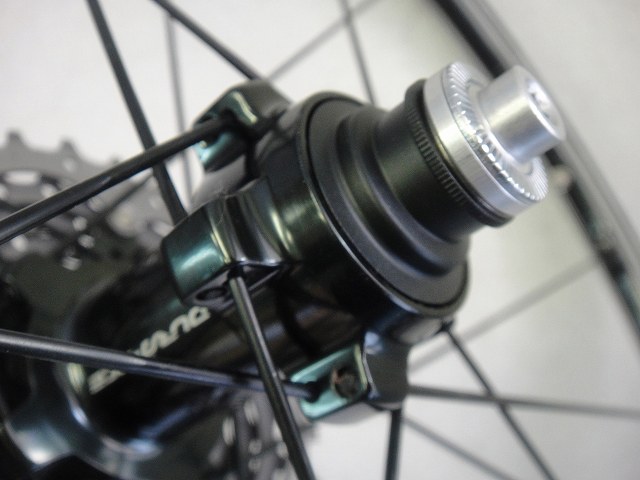
the 9000 series C24 is
mysteriously built with a hub equivalent to the 7900 series narrow flange.
I said earlier that the C24 remains as before, but that was a lie.
Well, I didn't know about it until just now either.
With the narrow flange conversion, spoke tension becomes more balanced left to right,
but lateral stiffness definitely decreases.
Is there some convincing reason this isn't a downgrade?
The 7900 series hub is outdated, abandoned because it doesn't support 11-speed,
so it can't be used indefinitely.
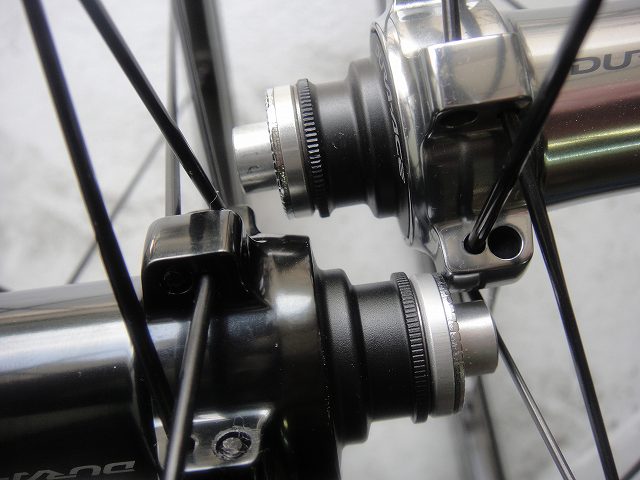
↑The loss of lateral stiffness from narrowing this flange width
can't possibly be recovered just by increasing spoke tension.
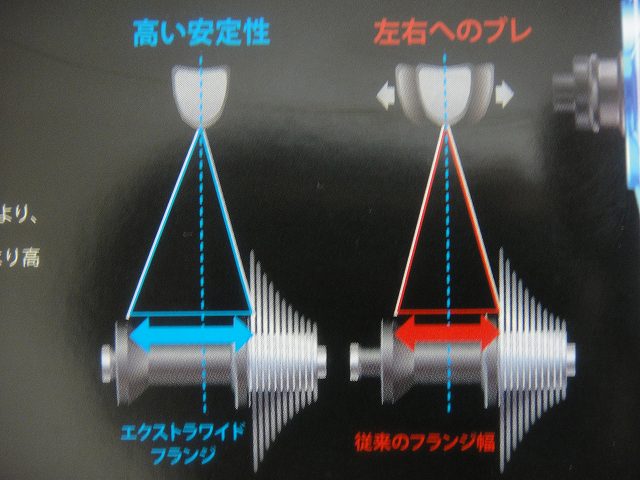
Shimano themselves describe narrow flanges negatively in their Optimal explanation,
so the WH-9000-C24 has lower stability and more lateral play
than the WH-7900-C24
—essentially admitting it themselves.
The new tubular wheelset is a C24 with Optimal lacing, so
if the C24 CL and TL versions follow suit and also become Optimal,
that would be the fourth instance of wide flange deception.