Another day, another wheel (and so on).
Today I rebuilt a wheel that had slack spoke tension.

Before rebuild
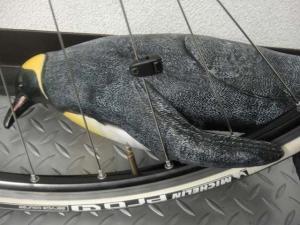
Discretion saves the day
We've been getting a lot of rebuilds from this shop lately.
Obviously I can't say which one.

The spokes before rebuild were DT Revolutions.
A "light-to-hold wheel" has the straightforward appeal of showing a small number on the scale.
In contrast, things like "responsive feel" or "it goes when you pedal" are hard to quantify.
If all you care about is being light-to-hold, Revolution is the ultimate spoke. But this spoke is picky about rim compatibility and lacing method.
I'll write more about this later, but when you build with Revolution spokes, most modern rims end up experiencing plastic deformation in the direction of spoke elongation.

I put marker tape at the crossing points of the spoke weave and gave it a feel-test.
As you can see, the tension is way too slack.
It's not like tighter is always better, but this is slack even accounting for that.
And for good reason—with an Open Pro, if you tighten it any more the spokes will stretch, so they've built it in the range where that doesn't happen.
I don't see the point of using Revolution for all that.
Yes, it'll add tens of grams, but a Competition spoke built properly tight would likely make for a better wheel.
(Though admittedly, "heavier" lacks general persuasive power.)
The customer left it with us asking "can you make it much tighter?" So they probably didn't ask for Revolution in the first place.
In the end, it's the builder's self-satisfaction.
Just wanting to build a light-to-hold wheel.
Because they're committed to Revolution, they haven't even considered the rider's weight or intended use.
This is the front wheel, but the rear is much worse.
(No time today, so I'll rebuild it tomorrow or later.)

Spoke selection and lacing method were left to my discretion, but I really agonized over it.
I built it with CX-RAY outpoke radial lacing,
but there are various other lacing methods that would've improved things beyond the original.

Vittoria's 15mm rim tape doesn't work with the Open Pro.
Even if you center it perfectly, it'll shift eventually.
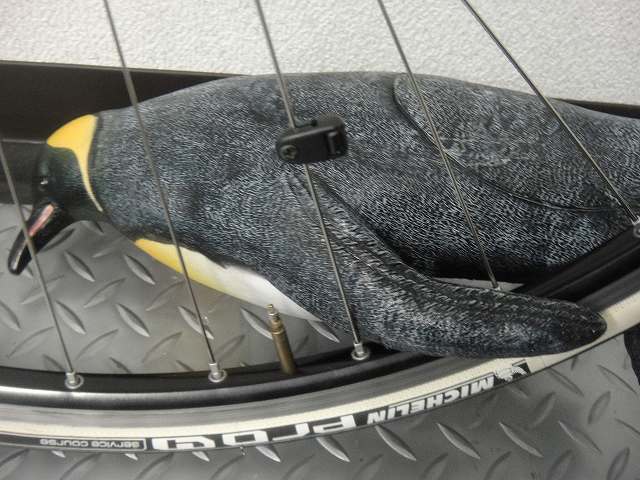
When I removed the tire it was in this state—we were one step away from constant pinch flats.
That was close.

So I switched it to 18mm width.
Addendum: I felt like I shouldn't put this off,
so here's my thoughts on DT Revolution spokes.
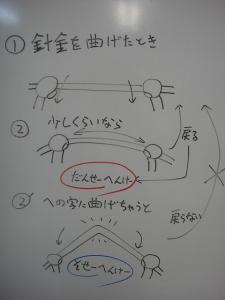
When you bend a wire (spoke), a small amount will spring back to its original shape.
This is called elastic deformation.
Bend it harder, though, and it stays bent—it doesn't return to form.
This permanent deformation is called plastic deformation.
It happens in the direction of spoke elongation, so it's hard to see, but excessive spoke tension causes spokes to experience elongation (plastic deformation).
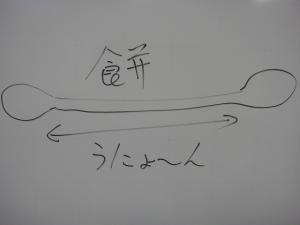
Or think of soft mochi.
Once mochi stretches out all "unyuuun," it doesn't shrink back to its original length.
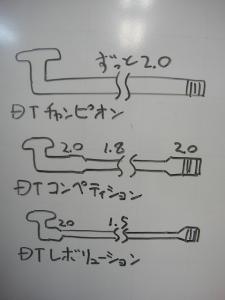
The dimensions of three representative DT round spoke models are shown above (in mm).
Revolution contributes to lightness not just through the fineness of the butted section, but also through the butted portion taking up a large proportion of the overall spoke length.
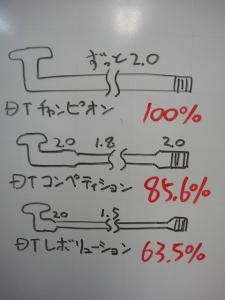
Taking 2.0mm plain Champion as 100%, the specific gravity for the same spoke length is shown above (measured in-house).
This is something I've said many times, but spoke length makes a huge difference in specific gravity.
At 50mm, Revolution has almost no 1.5mm section; at 1000mm, Revolution is almost entirely 1.5mm section.
But actual 700C wheel spoke lengths run roughly 240mm to 306mm.
In that range there's no difference significant enough to change the whole number.
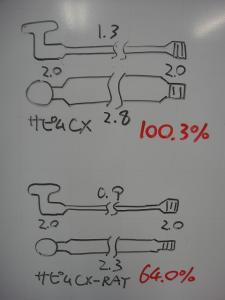
For Sapim CX and CX-RAY, the figures are as above.
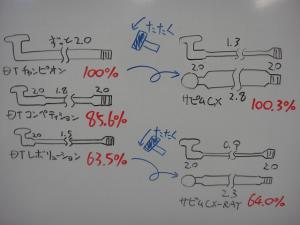
Different manufacturer, but nearly identical specific gravity, so
I'd say CX is Champion flattened out, and
CX-RAY is Revolution flattened out.
As an aside, among complete wheel straight spokes made by Sapim, there are custom aero spokes with something like Competition-class specific gravity.
I wish they'd make those in elbow spokes too…
Anyway, by "flattened" here I don't mean figuratively—I believe CX and CX-RAY are actually manufactured via press forming.
CX-RAY has greater tensile strength than other Sapim models, and magnets stick to it more strongly.
The magnetic adhesiveness isn't due to material difference but rather from changes in magnetism during work hardening.
Speaking of work hardening—

"Greater tensile strength" looks like the diagram above.
The spoke tension at which CX-RAY fails is higher.
Hardening through work hardening means becoming harder, which is
also a shift toward "harder = more brittle."
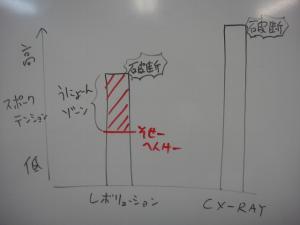
With Revolution, as you raise spoke tension,
the "unyuuun" I mentioned happens.
If you keep turning the nipple while the unyuuun is happening,
the spoke keeps pulling out from the nipple.
It can stretch several mm in the end.
Before the spoke actually snaps, you might strip out the spoke threads inside the nipple completely—
you won't get a clean break, but it can stretch that much.

With CX-RAY, by contrast, though the limit before breaking is high, it's brittle. So
as you raise spoke tension, you get almost no unyuuun—
it just goes "snap" cleanly.
The break point is near the junction of round and aero on the nipple side.
In the diagram above I drew the unyuuun zone with some width, but
I think in reality it's almost nonexistent.
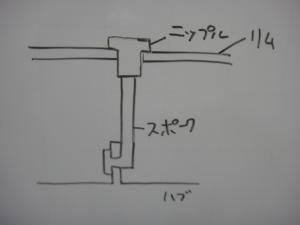
Imagine the hub as the floor, the rim as the ceiling,
a spoke hooked on the floor connected to the nipple on the ceiling.

As you tighten the nipple, the spoke length effectively shortens. But
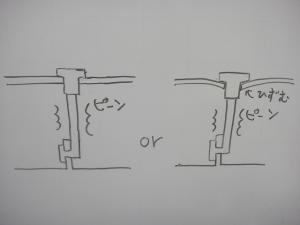
with a stiff rim, it's like the ceiling is completely rigid—the rim won't distort.
With a soft rim, it can't handle the spoke tension and
distorts downward, toward the floor.
This is my thinking: a soft rim (distorting ceiling) shares the spoke tension
between spoke and rim, while
a stiff rim (non-distorting ceiling) has the spoke
bearing all the spoke tension alone.
What I'm getting at is: using Revolution on a stiff rim probably causes
unyuuun more easily than on a soft rim.
From my experience, this seems to be true.
As for what counts as a "soft rim" here, I can't draw a hard line, but
for example, Mavic's GEL280 lightweight tubular rim falls into that category.
I think you can build a wheel with Revolution before unyuuun happens.
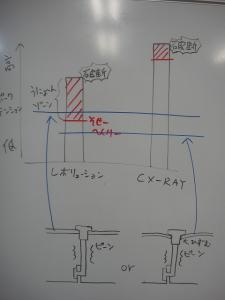
↑That's the idea.
Most modern aluminum rims, including the Open Pro,
fall on the "stiff" side I think. And with those rims, before you finish building the wheel you end up in Revolution's "unyuuun zone."
The front wheel at the start has low spoke tension probably
to stay below the unyuuun zone.
But nowadays, with CX-RAY having nearly identical specific gravity
and no unyuuun in almost all practical hand-built wheel ranges,
I don't understand the insistence on building with Revolution.

On another note, a colleague asked me indirectly the other day:
"I built an Ambrosio Formula Crono 20 with Revolution spokes,
and the spokes just kept stretching—I couldn't finish it."
The go-between is someone I owe a lot to professionally, so
I had to discuss things including some shop secrets.
The Crono 20, despite being light, I'd say falls into the "stiff rim" category.
The amount of rim distortion during initial seating is very small for its weight.
I wish they'd accept "rim and spoke combination isn't compatible" without explanation,
but if they could accept that they'd solve it themselves anyway.
So, those are my reasons for not using Revolution.
Would I use one if there were a work-hardened spoke at Competition's specific gravity? I probably would,
but Competition almost never unyuuuns so there's no real problem. (The story when it does—here)
I've written pretty much the same thing there.
That post lists Revolution's specific gravity as 64.2%, while this one says 63.5%, different numbers
because I measure this stuff repeatedly and it varies.
I think under 70% of 2.0mm plain—that's the line.
Below that, spokes without work hardening unyuuun easily (Sapim Laser too),
so I basically don't use them.
Saying "easily" sounds probabilistic, like "it might not happen sometimes."
That's not it—past a certain threshold it happens 100% of the time. That threshold is just lower.
I don't adopt CX-RAY for its aero properties.
Besides putting greater financial burden on customers (the price!), I don't think
CX-RAY is inferior to Revolution in any way.
Today I rebuilt a wheel that had slack spoke tension.
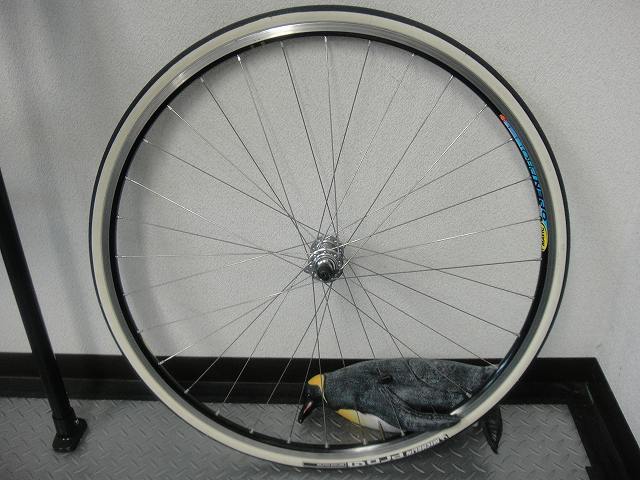
Before rebuild
Discretion saves the day
We've been getting a lot of rebuilds from this shop lately.
Obviously I can't say which one.

The spokes before rebuild were DT Revolutions.
A "light-to-hold wheel" has the straightforward appeal of showing a small number on the scale.
In contrast, things like "responsive feel" or "it goes when you pedal" are hard to quantify.
If all you care about is being light-to-hold, Revolution is the ultimate spoke. But this spoke is picky about rim compatibility and lacing method.
I'll write more about this later, but when you build with Revolution spokes, most modern rims end up experiencing plastic deformation in the direction of spoke elongation.

I put marker tape at the crossing points of the spoke weave and gave it a feel-test.
As you can see, the tension is way too slack.
It's not like tighter is always better, but this is slack even accounting for that.
And for good reason—with an Open Pro, if you tighten it any more the spokes will stretch, so they've built it in the range where that doesn't happen.
I don't see the point of using Revolution for all that.
Yes, it'll add tens of grams, but a Competition spoke built properly tight would likely make for a better wheel.
(Though admittedly, "heavier" lacks general persuasive power.)
The customer left it with us asking "can you make it much tighter?" So they probably didn't ask for Revolution in the first place.
In the end, it's the builder's self-satisfaction.
Just wanting to build a light-to-hold wheel.
Because they're committed to Revolution, they haven't even considered the rider's weight or intended use.
This is the front wheel, but the rear is much worse.
(No time today, so I'll rebuild it tomorrow or later.)
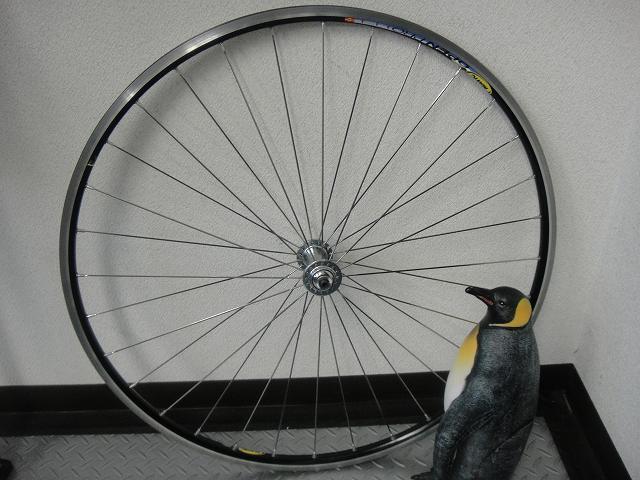
Spoke selection and lacing method were left to my discretion, but I really agonized over it.
I built it with CX-RAY outpoke radial lacing,
but there are various other lacing methods that would've improved things beyond the original.

Vittoria's 15mm rim tape doesn't work with the Open Pro.
Even if you center it perfectly, it'll shift eventually.
When I removed the tire it was in this state—we were one step away from constant pinch flats.
That was close.

So I switched it to 18mm width.
Addendum: I felt like I shouldn't put this off,
so here's my thoughts on DT Revolution spokes.
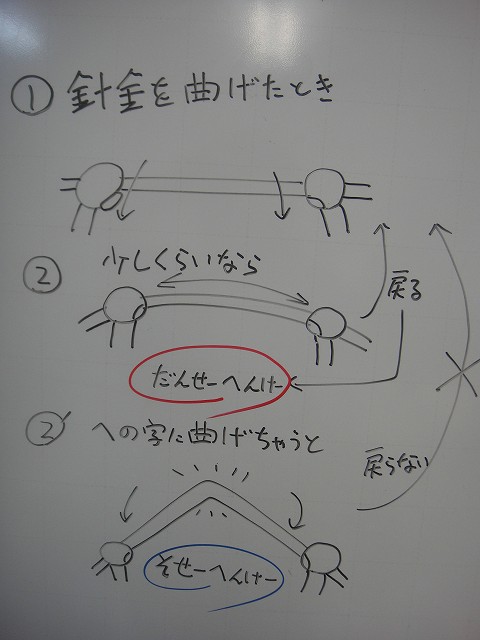
When you bend a wire (spoke), a small amount will spring back to its original shape.
This is called elastic deformation.
Bend it harder, though, and it stays bent—it doesn't return to form.
This permanent deformation is called plastic deformation.
It happens in the direction of spoke elongation, so it's hard to see, but excessive spoke tension causes spokes to experience elongation (plastic deformation).
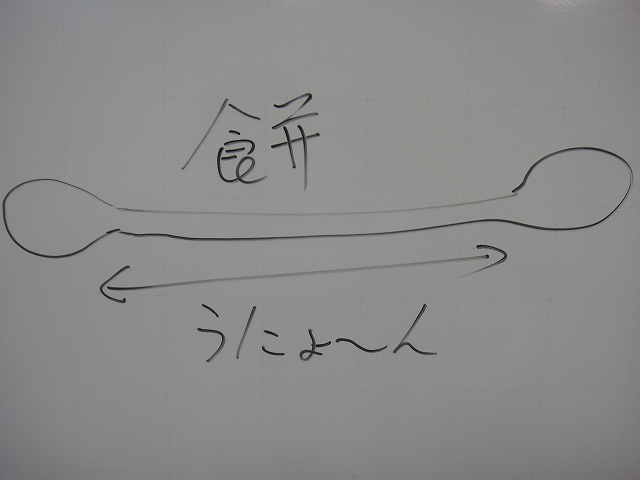
Or think of soft mochi.
Once mochi stretches out all "unyuuun," it doesn't shrink back to its original length.
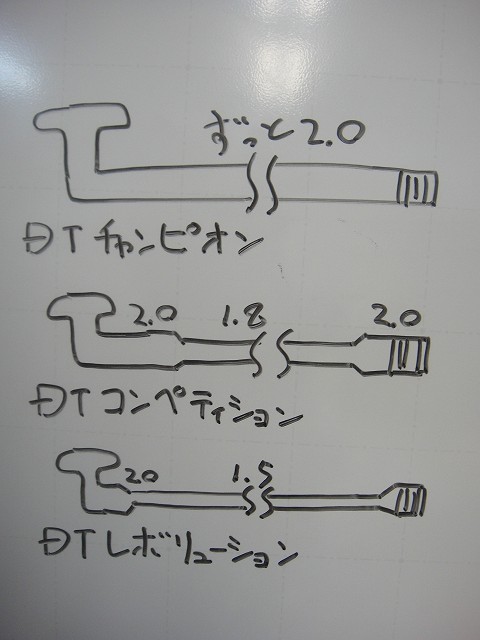
The dimensions of three representative DT round spoke models are shown above (in mm).
Revolution contributes to lightness not just through the fineness of the butted section, but also through the butted portion taking up a large proportion of the overall spoke length.
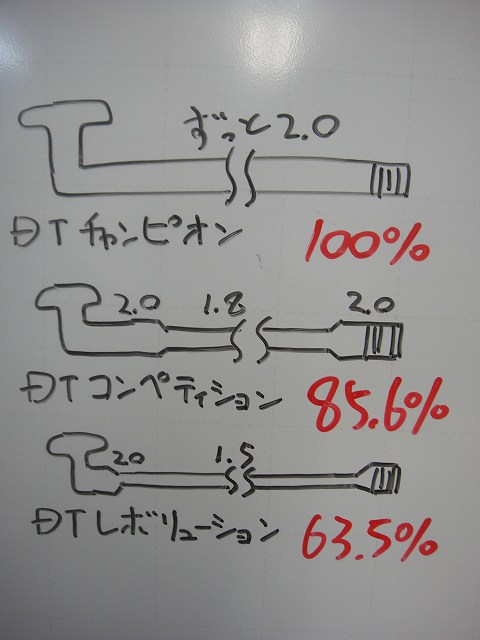
Taking 2.0mm plain Champion as 100%, the specific gravity for the same spoke length is shown above (measured in-house).
This is something I've said many times, but spoke length makes a huge difference in specific gravity.
At 50mm, Revolution has almost no 1.5mm section; at 1000mm, Revolution is almost entirely 1.5mm section.
But actual 700C wheel spoke lengths run roughly 240mm to 306mm.
In that range there's no difference significant enough to change the whole number.
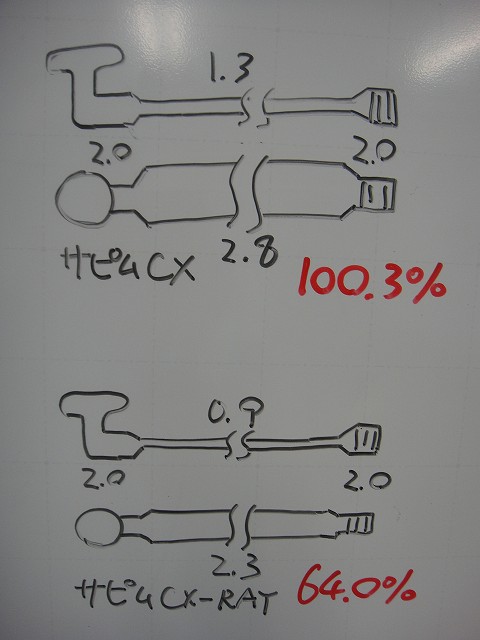
For Sapim CX and CX-RAY, the figures are as above.
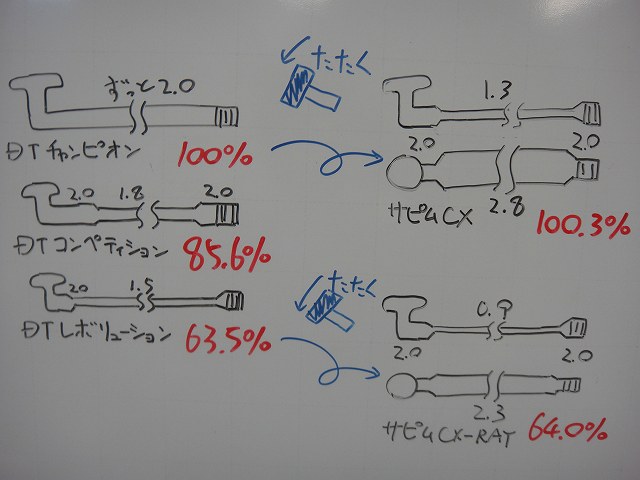
Different manufacturer, but nearly identical specific gravity, so
I'd say CX is Champion flattened out, and
CX-RAY is Revolution flattened out.
As an aside, among complete wheel straight spokes made by Sapim, there are custom aero spokes with something like Competition-class specific gravity.
I wish they'd make those in elbow spokes too…
Anyway, by "flattened" here I don't mean figuratively—I believe CX and CX-RAY are actually manufactured via press forming.
CX-RAY has greater tensile strength than other Sapim models, and magnets stick to it more strongly.
The magnetic adhesiveness isn't due to material difference but rather from changes in magnetism during work hardening.
Speaking of work hardening—
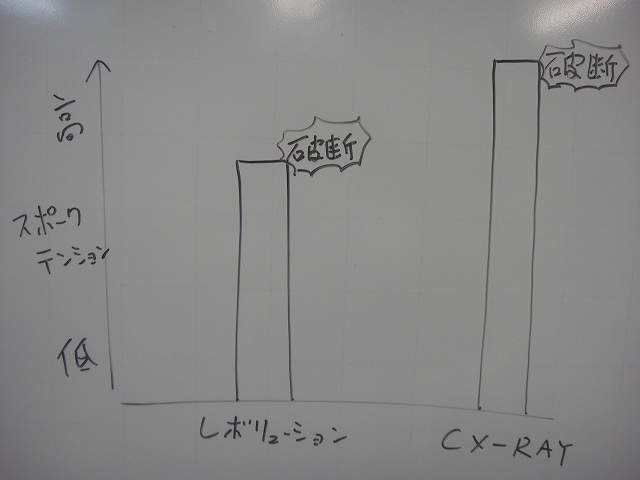
"Greater tensile strength" looks like the diagram above.
The spoke tension at which CX-RAY fails is higher.
Hardening through work hardening means becoming harder, which is
also a shift toward "harder = more brittle."
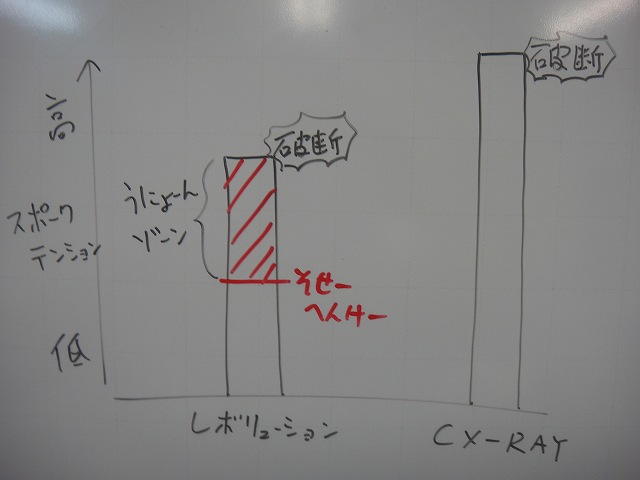
With Revolution, as you raise spoke tension,
the "unyuuun" I mentioned happens.
If you keep turning the nipple while the unyuuun is happening,
the spoke keeps pulling out from the nipple.
It can stretch several mm in the end.
Before the spoke actually snaps, you might strip out the spoke threads inside the nipple completely—
you won't get a clean break, but it can stretch that much.
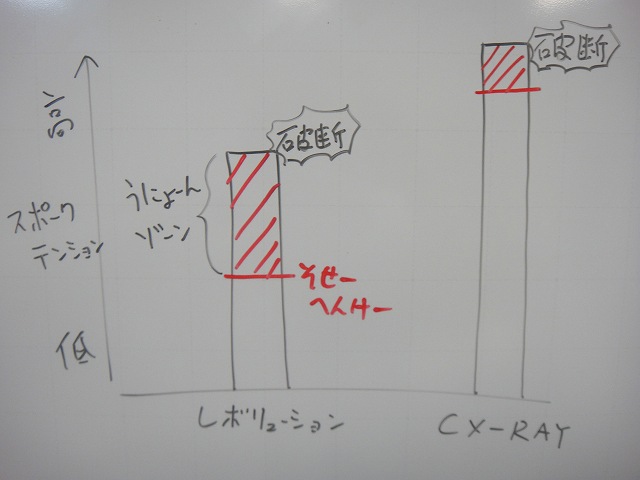
With CX-RAY, by contrast, though the limit before breaking is high, it's brittle. So
as you raise spoke tension, you get almost no unyuuun—
it just goes "snap" cleanly.
The break point is near the junction of round and aero on the nipple side.
In the diagram above I drew the unyuuun zone with some width, but
I think in reality it's almost nonexistent.
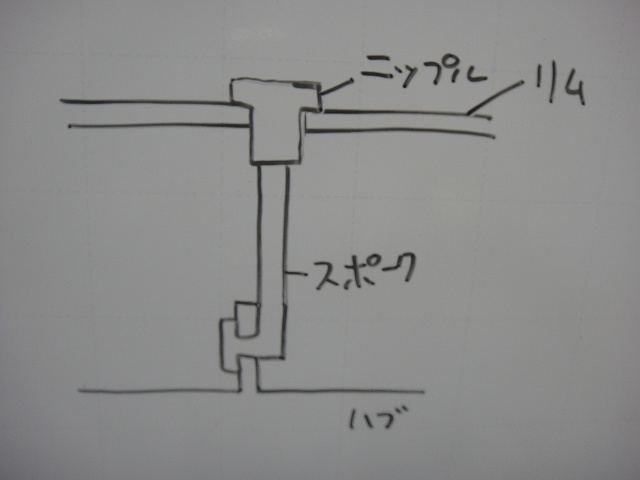
Imagine the hub as the floor, the rim as the ceiling,
a spoke hooked on the floor connected to the nipple on the ceiling.

As you tighten the nipple, the spoke length effectively shortens. But
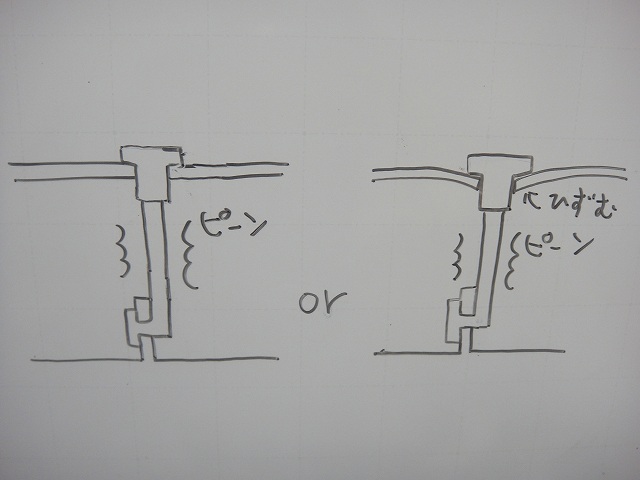
with a stiff rim, it's like the ceiling is completely rigid—the rim won't distort.
With a soft rim, it can't handle the spoke tension and
distorts downward, toward the floor.
This is my thinking: a soft rim (distorting ceiling) shares the spoke tension
between spoke and rim, while
a stiff rim (non-distorting ceiling) has the spoke
bearing all the spoke tension alone.
What I'm getting at is: using Revolution on a stiff rim probably causes
unyuuun more easily than on a soft rim.
From my experience, this seems to be true.
As for what counts as a "soft rim" here, I can't draw a hard line, but
for example, Mavic's GEL280 lightweight tubular rim falls into that category.
I think you can build a wheel with Revolution before unyuuun happens.
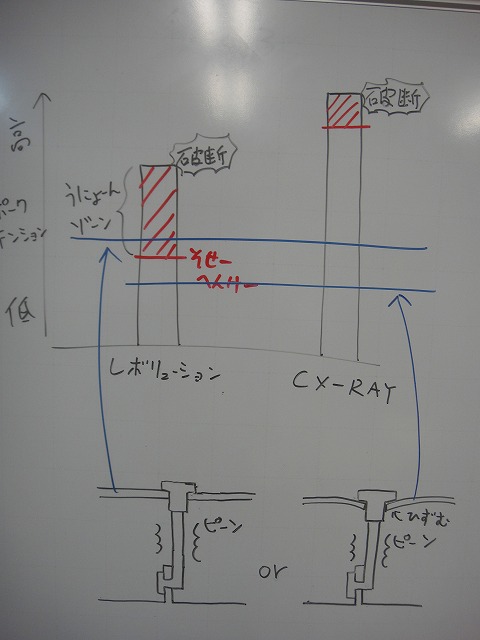
↑That's the idea.
Most modern aluminum rims, including the Open Pro,
fall on the "stiff" side I think. And with those rims, before you finish building the wheel you end up in Revolution's "unyuuun zone."
The front wheel at the start has low spoke tension probably
to stay below the unyuuun zone.
But nowadays, with CX-RAY having nearly identical specific gravity
and no unyuuun in almost all practical hand-built wheel ranges,
I don't understand the insistence on building with Revolution.
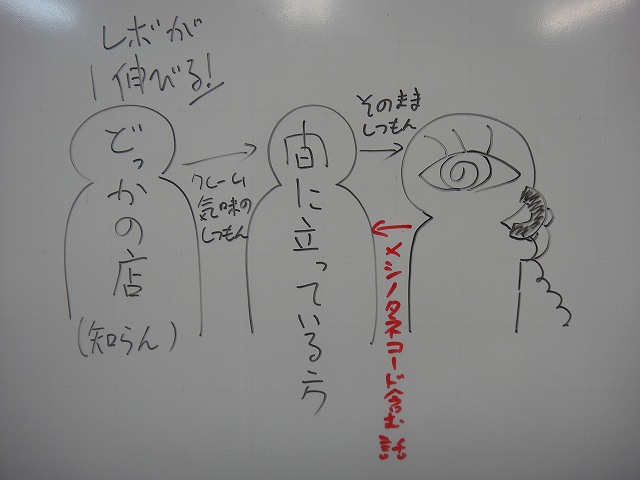
On another note, a colleague asked me indirectly the other day:
"I built an Ambrosio Formula Crono 20 with Revolution spokes,
and the spokes just kept stretching—I couldn't finish it."
The go-between is someone I owe a lot to professionally, so
I had to discuss things including some shop secrets.
The Crono 20, despite being light, I'd say falls into the "stiff rim" category.
The amount of rim distortion during initial seating is very small for its weight.
I wish they'd accept "rim and spoke combination isn't compatible" without explanation,
but if they could accept that they'd solve it themselves anyway.
So, those are my reasons for not using Revolution.
Would I use one if there were a work-hardened spoke at Competition's specific gravity? I probably would,
but Competition almost never unyuuuns so there's no real problem. (The story when it does—here)
I've written pretty much the same thing there.
That post lists Revolution's specific gravity as 64.2%, while this one says 63.5%, different numbers
because I measure this stuff repeatedly and it varies.
I think under 70% of 2.0mm plain—that's the line.
Below that, spokes without work hardening unyuuun easily (Sapim Laser too),
so I basically don't use them.
Saying "easily" sounds probabilistic, like "it might not happen sometimes."
That's not it—past a certain threshold it happens 100% of the time. That threshold is just lower.
I don't adopt CX-RAY for its aero properties.
Besides putting greater financial burden on customers (the price!), I don't think
CX-RAY is inferior to Revolution in any way.