Continuing from yesterday.
Today it's wheels again (and so on).
The rear wheel is the same as the front: 6700 hub, DT Revolution spokes, and Open Pro rim.
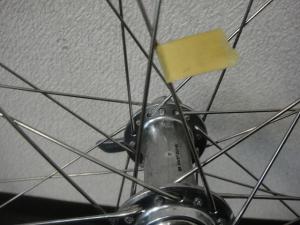
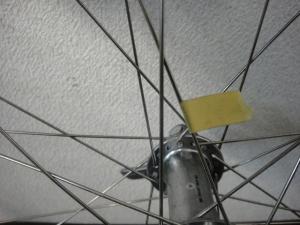
Squeezing the freewheel side

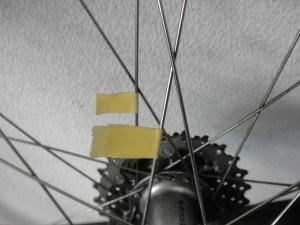
Squeezing the non-freewheel side
As expected, the spoke tension is extremely loose.
It doesn't feel like it's got much structural integrity.
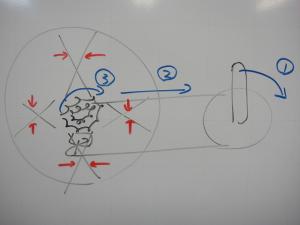
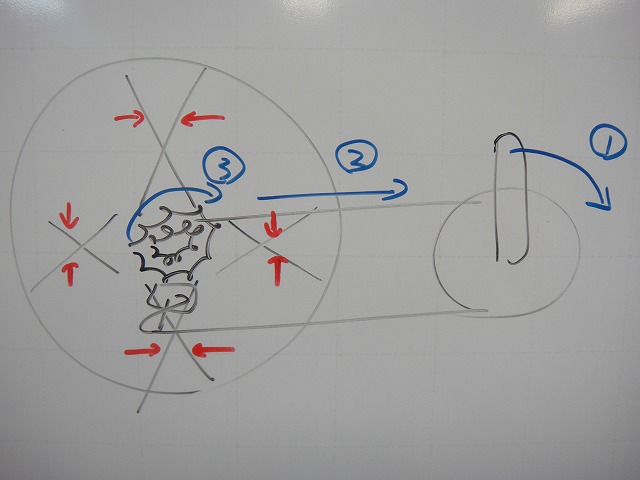
That said, squeezing spokes applies force in the way shown by the red arrow in the diagram above.
In actual riding, spokes don't experience this kind of force.
The load that occurs during actual riding is in the direction of the blue arrow.
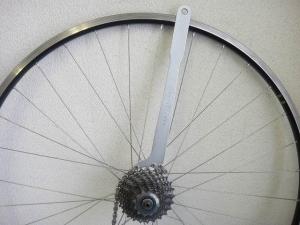
So I applied a load equivalent to the blue arrow #3 in the previous diagram.
Keeping the rim stationary (treating it as a rigid body) differs from real riding,
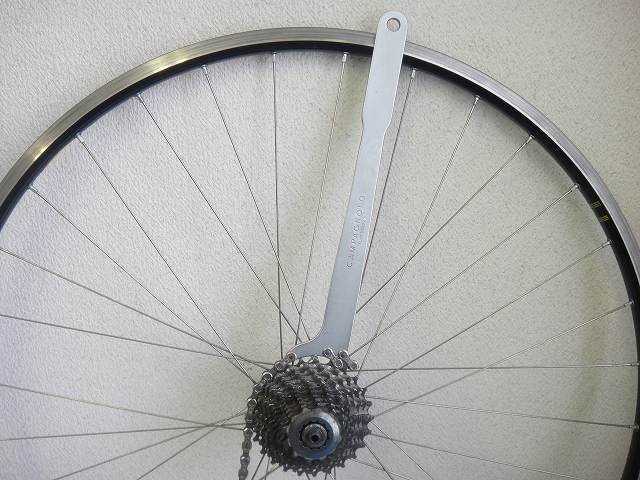
but while holding the wheel firmly in place, I rotated
a freewheel removal tool mounted on the sprocket in the direction of travel.
Then I could observe—faintly, but distinctly—
flexing at the spoke crossing points.
I tried the same test on several wheels we have in the shop, whether hand-built or factory-assembled,
but none showed spoke crossing deflection as clearly as this wheel.
I haven't tested every wheel in the shop, but
this is probably the worst-performing wheel we currently have.
This isn't because it's "built with Revolutions"—
it's because it's "built with Revolutions at low tension."
That said, if I tightened it further, at least the freewheel side would
venture into the "noodle zone."
I suspect the original builder knew this and deliberately didn't push it,
but (given that all these wheels are like this)
if that's the case, I don't understand why they're so committed to Revolution spokes in the first place.
The low spoke tension doesn't seem to be from loosening during years of use—
judging from the overall condition, it doesn't look like it's been used that much.
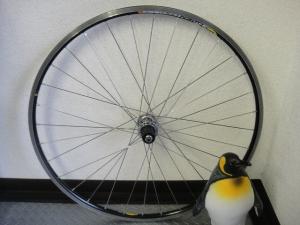
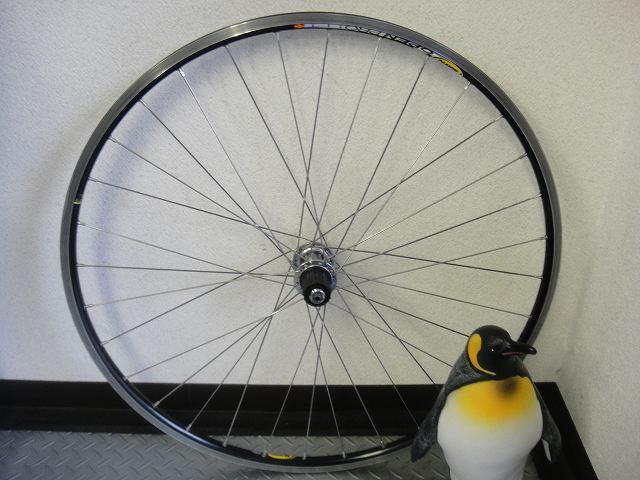
I rebuilt it.
Freewheel side: Campagnolo Comp; non-freewheel side: CX-RAY in a 48-spoke pattern.
The non-freewheel side was just barely long enough for a 48-spoke lacing pattern, which worked out.
I did solder the spokes, but even before that I confirmed that spoke deflection
was significantly reduced on both sides.
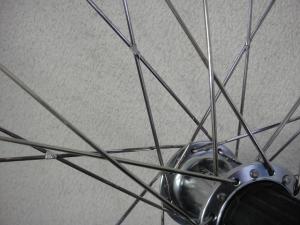
Let me note the downsides too.
Before rebuilding, it was a 36-spoke lacing pattern with Revolution spokes on both sides—
freewheel side and non-freewheel side—and the measured weight without rim tape or quick-release was 960g.
After rebuilding, with rim tape and quick-release removed, after soldering it's 989g.
I thought it would get heavier, but since heavier Comp spokes only account for 4 of them,
the fact that the spoke length was shorter helped.
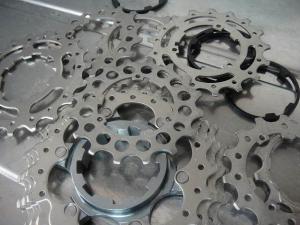
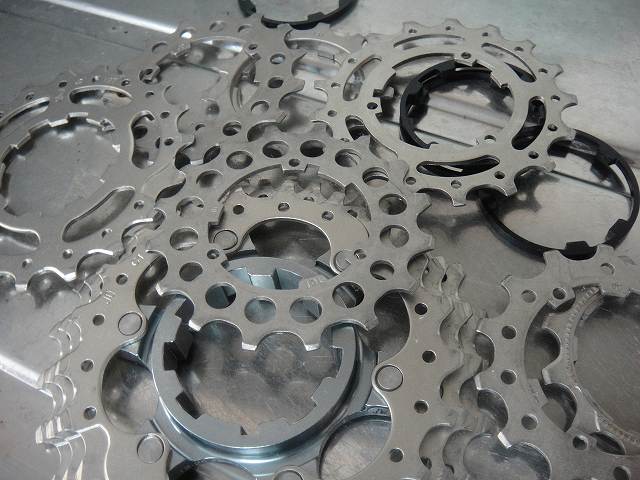
While I was at it, I cleaned the sprocket too.
Today it's wheels again (and so on).
The rear wheel is the same as the front: 6700 hub, DT Revolution spokes, and Open Pro rim.
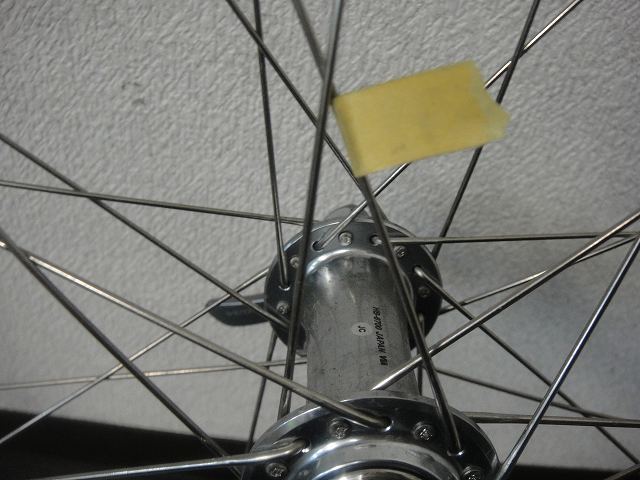
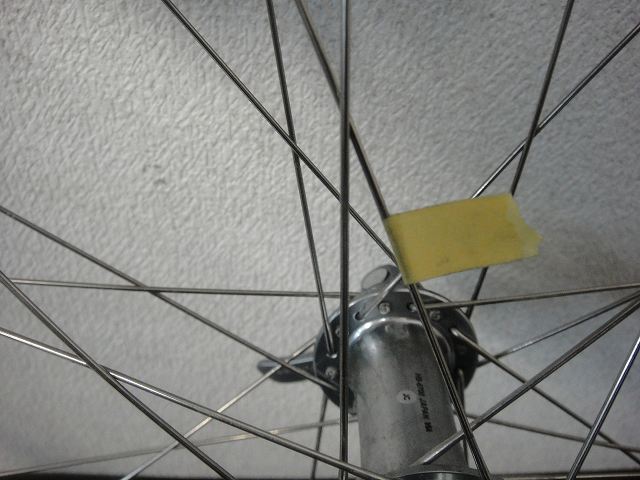
Squeezing the freewheel side
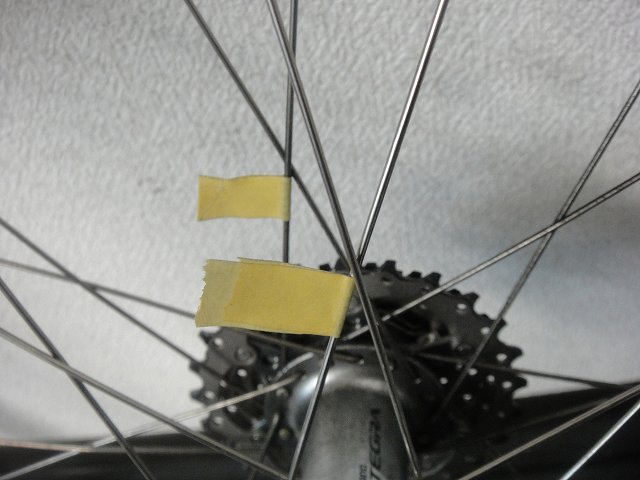
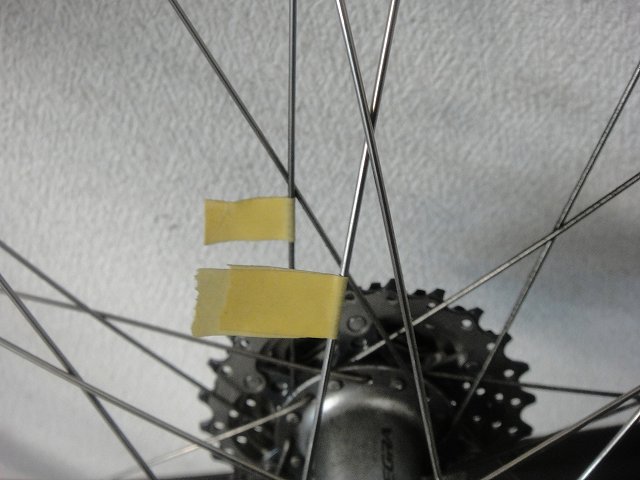
Squeezing the non-freewheel side
As expected, the spoke tension is extremely loose.
It doesn't feel like it's got much structural integrity.
That said, squeezing spokes applies force in the way shown by the red arrow in the diagram above.
In actual riding, spokes don't experience this kind of force.
The load that occurs during actual riding is in the direction of the blue arrow.
So I applied a load equivalent to the blue arrow #3 in the previous diagram.
Keeping the rim stationary (treating it as a rigid body) differs from real riding,
but while holding the wheel firmly in place, I rotated
a freewheel removal tool mounted on the sprocket in the direction of travel.
Then I could observe—faintly, but distinctly—
flexing at the spoke crossing points.
I tried the same test on several wheels we have in the shop, whether hand-built or factory-assembled,
but none showed spoke crossing deflection as clearly as this wheel.
I haven't tested every wheel in the shop, but
this is probably the worst-performing wheel we currently have.
This isn't because it's "built with Revolutions"—
it's because it's "built with Revolutions at low tension."
That said, if I tightened it further, at least the freewheel side would
venture into the "noodle zone."
I suspect the original builder knew this and deliberately didn't push it,
but (given that all these wheels are like this)
if that's the case, I don't understand why they're so committed to Revolution spokes in the first place.
The low spoke tension doesn't seem to be from loosening during years of use—
judging from the overall condition, it doesn't look like it's been used that much.
I rebuilt it.
Freewheel side: Campagnolo Comp; non-freewheel side: CX-RAY in a 48-spoke pattern.
The non-freewheel side was just barely long enough for a 48-spoke lacing pattern, which worked out.
I did solder the spokes, but even before that I confirmed that spoke deflection
was significantly reduced on both sides.

Let me note the downsides too.
Before rebuilding, it was a 36-spoke lacing pattern with Revolution spokes on both sides—
freewheel side and non-freewheel side—and the measured weight without rim tape or quick-release was 960g.
After rebuilding, with rim tape and quick-release removed, after soldering it's 989g.
I thought it would get heavier, but since heavier Comp spokes only account for 4 of them,
the fact that the spoke length was shorter helped.
While I was at it, I cleaned the sprocket too.