A customer had a question for me, but before that.
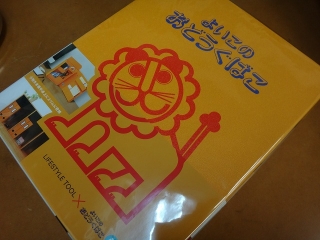
I've been keeping something like this from that customer,
and it's not a tool box

↑it unfolds like this

and when folded it fits on the shelf like a book—
it's a stationery organizer.
They wanted me to modify it with "don't lie" specs,

so I did it.

They also asked me to do the same with the tote bag, so I did.

I left the pouch that came with the tote bag for when it's folded as-is.
Now, about that question—it's regarding the Continental Grand Prix 4000 S II
tubular version (the WO model is discontinued, but the tubular is still in production)
where strange wrinkles appeared and the tire center wouldn't settle,
so they wanted me to remove it and re-glue it.
I didn't take photos, but I did see the actual tire.
The tire was glued on nicely
(viewed from the side, the base tape visibility was uniform all around and left-to-right),
so I didn't do any work on it.
Regarding those wrinkles—this is what we call a "design specification."
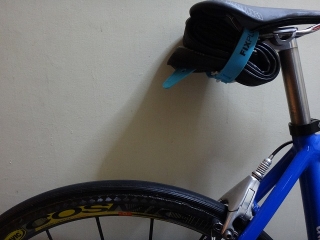
My race bike (everything except hill climbs) has a Grand Prix 4000 S II on the rear
and a spare tire under the saddle that's also a Grand Prix 4000 S II,
so I'll explain with those.
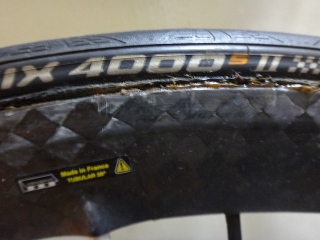
This tire has a completely different structure from other Continental tubular tires
and from other brands' tires in general—
the stitching, which normally sits directly under the base tape,
has been inverted to the tread side.
So while the reason is different from TUFO,
like TUFO tires, there's no bulge from the stitching on the base tape side.
Additionally, the tire sidewall height is short,
and on rims with tight curvature, the tire becomes so embedded in the rim
that the base tape is barely visible.

↑This tread pattern is the same as the WO model Grand Prix 4000 S II,
which is why the tubular version shares the same name,
but the compound feel is completely different, and the wear resistance
that's characteristic of the WO version isn't seen in the tubular version.
Vittoria's Corsa line and Veloflex call WO tires "open tubulars,"
and they're literally "just a tubular tire rim with a bead hook attached
before the tube is inserted and sewn."
So aside from "the deformation limit determined by whether the rim is closed or open,"
the tread performance is identical between tubular and WO versions.
Also, the amber-brown sidewall Corsa WO and similar look like tubulars at first glance.
The Grand Prix 4000 S II is different from that—
it's not a derivative where tubular characteristics are added to the WO tire properties,
with the same roots... it's a completely different tire altogether.
The tubular version has this distinct, sticky quality in a good way (personal opinion),
high cornering limits, yet light rolling feel,
whereas the WO version lacks this unique stickiness.
It's not present in competition tubulars either, so the stickiness
isn't a tubular characteristic but rather this tire's individual personality.
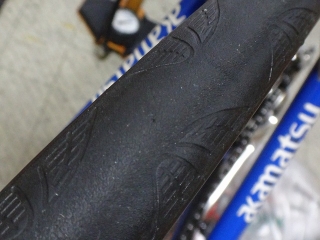
Anyway, looking slightly right of center from the tire center,
you can see a band of wrinkles—these lines.
For some reason, they appear.
There's no odd sensation when riding.
It seems related to the stitching being on the tread side
(not seen on Continental's other tires).
It almost looks like it could be
the previous center from when the tire was used in a misaligned state over time,
but it's impossible for the gluing to be so misaligned that this wrinkle becomes the center,
and there's no possibility it was previously misaligned.
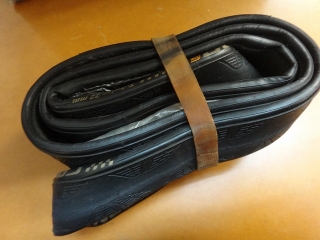
The spare tire is more worn,

making it more clearly visible.
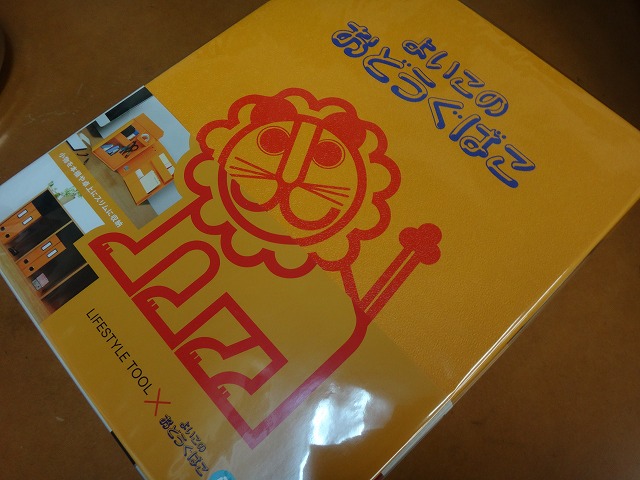
I've been keeping something like this from that customer,
and it's not a tool box

↑it unfolds like this

and when folded it fits on the shelf like a book—
it's a stationery organizer.
They wanted me to modify it with "don't lie" specs,
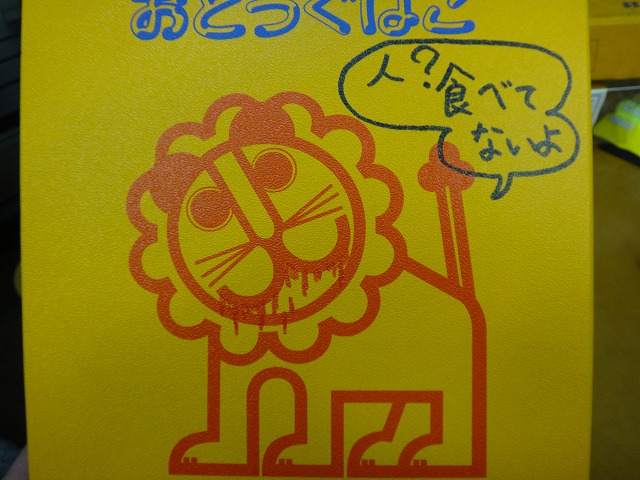
so I did it.

They also asked me to do the same with the tote bag, so I did.

I left the pouch that came with the tote bag for when it's folded as-is.
Now, about that question—it's regarding the Continental Grand Prix 4000 S II
tubular version (the WO model is discontinued, but the tubular is still in production)
where strange wrinkles appeared and the tire center wouldn't settle,
so they wanted me to remove it and re-glue it.
I didn't take photos, but I did see the actual tire.
The tire was glued on nicely
(viewed from the side, the base tape visibility was uniform all around and left-to-right),
so I didn't do any work on it.
Regarding those wrinkles—this is what we call a "design specification."
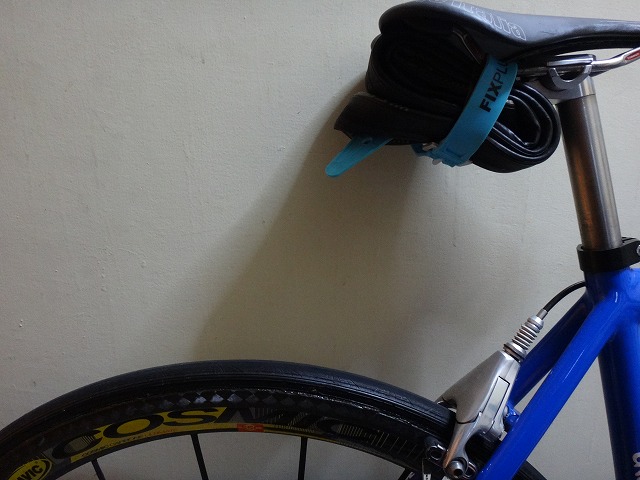
My race bike (everything except hill climbs) has a Grand Prix 4000 S II on the rear
and a spare tire under the saddle that's also a Grand Prix 4000 S II,
so I'll explain with those.
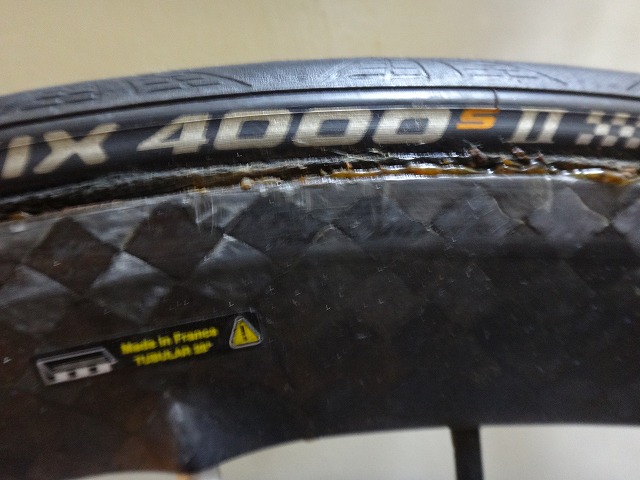
This tire has a completely different structure from other Continental tubular tires
and from other brands' tires in general—
the stitching, which normally sits directly under the base tape,
has been inverted to the tread side.
So while the reason is different from TUFO,
like TUFO tires, there's no bulge from the stitching on the base tape side.
Additionally, the tire sidewall height is short,
and on rims with tight curvature, the tire becomes so embedded in the rim
that the base tape is barely visible.

↑This tread pattern is the same as the WO model Grand Prix 4000 S II,
which is why the tubular version shares the same name,
but the compound feel is completely different, and the wear resistance
that's characteristic of the WO version isn't seen in the tubular version.
Vittoria's Corsa line and Veloflex call WO tires "open tubulars,"
and they're literally "just a tubular tire rim with a bead hook attached
before the tube is inserted and sewn."
So aside from "the deformation limit determined by whether the rim is closed or open,"
the tread performance is identical between tubular and WO versions.
Also, the amber-brown sidewall Corsa WO and similar look like tubulars at first glance.
The Grand Prix 4000 S II is different from that—
it's not a derivative where tubular characteristics are added to the WO tire properties,
with the same roots... it's a completely different tire altogether.
The tubular version has this distinct, sticky quality in a good way (personal opinion),
high cornering limits, yet light rolling feel,
whereas the WO version lacks this unique stickiness.
It's not present in competition tubulars either, so the stickiness
isn't a tubular characteristic but rather this tire's individual personality.
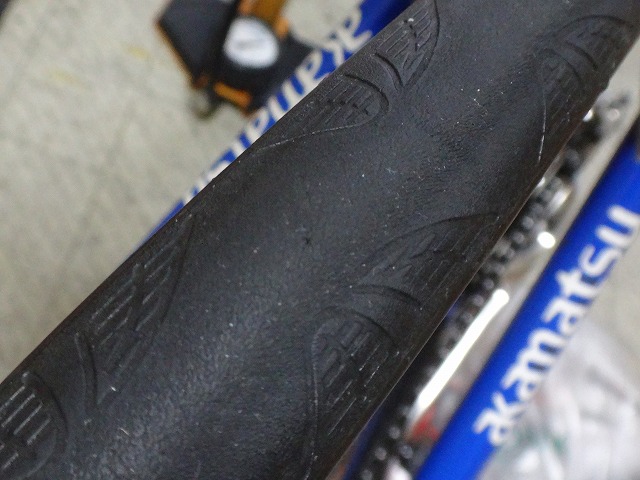
Anyway, looking slightly right of center from the tire center,
you can see a band of wrinkles—these lines.
For some reason, they appear.
There's no odd sensation when riding.
It seems related to the stitching being on the tread side
(not seen on Continental's other tires).
It almost looks like it could be
the previous center from when the tire was used in a misaligned state over time,
but it's impossible for the gluing to be so misaligned that this wrinkle becomes the center,
and there's no possibility it was previously misaligned.

The spare tire is more worn,
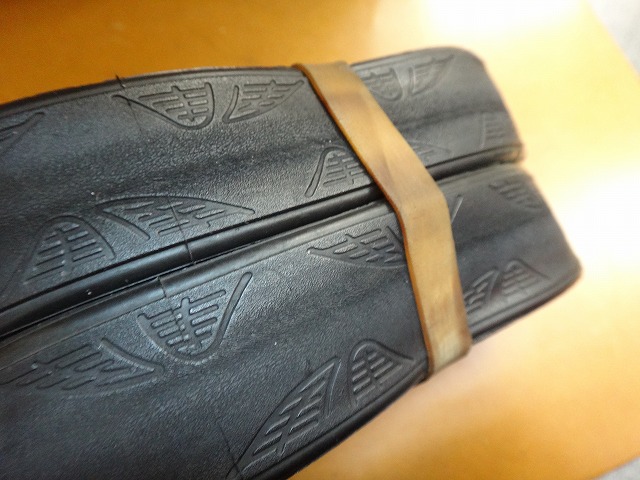
making it more clearly visible.