Another day, another wheel (and so on).
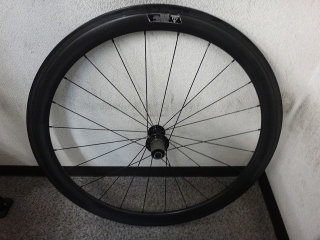
A customer dropped off a rear wheel with a carbon WO rim measuring 51mm high in actual measurement.
The part number label on the rim's outer edge showed rim height as 50, but when I measured it actually came to 51mm.
Like the 75mm high carbon WO rim from the other day,
it's a different brand, but from the same manufacturer source.
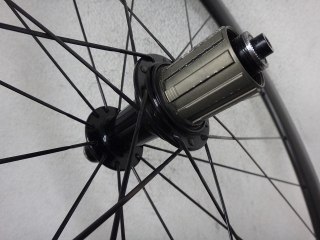
Sister hub to the Rief hub, 24H, all-black CX-RAY Yonzero lacing.
The customer said it felt sloppy and wanted it rebuilt.
The spoke length was correct,
and the wheel center was dead-on.
Given how worn the label on the rim looked,
it wouldn't be surprising if there was a paper-thin drift toward the right from years of use,
but it was dead-on.
Maybe it started out slightly drifted to the left,
or maybe it was always dead-on from the beginning.
In any case, when I looked at it, it was dead-on.
I kept the freewheel side tension sufficient
while leaving a hint of tightening room
(also because this is a rim that can handle tension)
and it was tensioned properly.
If I had to work with these same components and lacing pattern,
even I couldn't clearly build a wheel that surpasses this one.
The only thing wrong is the theory behind it.
If this wheel really did ride that well, then
manufacturers wouldn't need to make cleverly engineered complete wheelsets,
and I wouldn't be able to make a living rebuilding wheels.
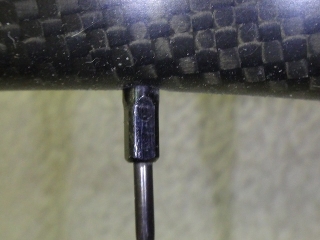
The nipples are Sapim 14mm length ones,
included with the black CX-RAY,
so normally you'd naturally use these,
but I don't use them so I'll swap them for DT 12mm ones.
The freewheel side spokes can't be reused since I'm changing spoke gauge ratios,
and the non-freewheel side spokes can't be reused either
because the lacing pattern is different, so the length changes dramatically.
For the rebuild, I'm only reusing the hub and rim.
As for nipples, unless it's a rebuild of an unused wheel
or special nipples that can be turned from the outer side or something,
I basically replace them as standard practice.
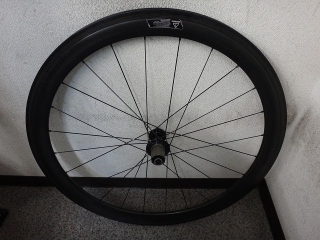
Built it.
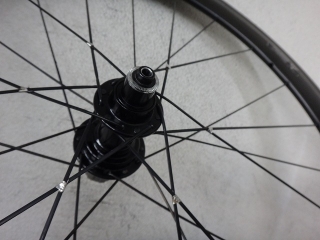
Black half-comp 46-hole lacing with radial spoking on one side.
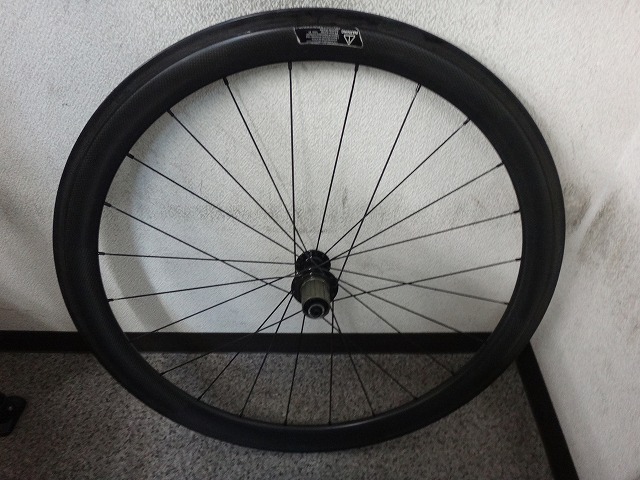
A customer dropped off a rear wheel with a carbon WO rim measuring 51mm high in actual measurement.
The part number label on the rim's outer edge showed rim height as 50, but when I measured it actually came to 51mm.
Like the 75mm high carbon WO rim from the other day,
it's a different brand, but from the same manufacturer source.
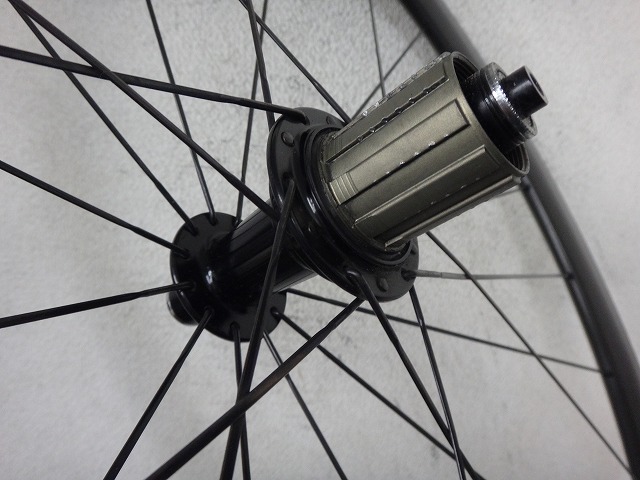
Sister hub to the Rief hub, 24H, all-black CX-RAY Yonzero lacing.
The customer said it felt sloppy and wanted it rebuilt.
The spoke length was correct,
and the wheel center was dead-on.
Given how worn the label on the rim looked,
it wouldn't be surprising if there was a paper-thin drift toward the right from years of use,
but it was dead-on.
Maybe it started out slightly drifted to the left,
or maybe it was always dead-on from the beginning.
In any case, when I looked at it, it was dead-on.
I kept the freewheel side tension sufficient
while leaving a hint of tightening room
(also because this is a rim that can handle tension)
and it was tensioned properly.
If I had to work with these same components and lacing pattern,
even I couldn't clearly build a wheel that surpasses this one.
The only thing wrong is the theory behind it.
If this wheel really did ride that well, then
manufacturers wouldn't need to make cleverly engineered complete wheelsets,
and I wouldn't be able to make a living rebuilding wheels.
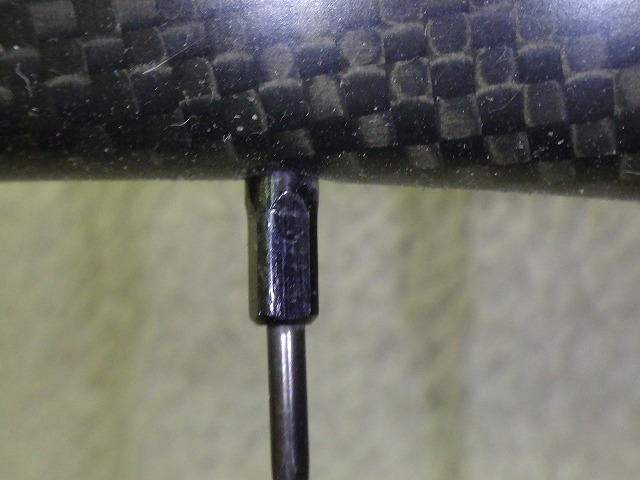
The nipples are Sapim 14mm length ones,
included with the black CX-RAY,
so normally you'd naturally use these,
but I don't use them so I'll swap them for DT 12mm ones.
The freewheel side spokes can't be reused since I'm changing spoke gauge ratios,
and the non-freewheel side spokes can't be reused either
because the lacing pattern is different, so the length changes dramatically.
For the rebuild, I'm only reusing the hub and rim.
As for nipples, unless it's a rebuild of an unused wheel
or special nipples that can be turned from the outer side or something,
I basically replace them as standard practice.
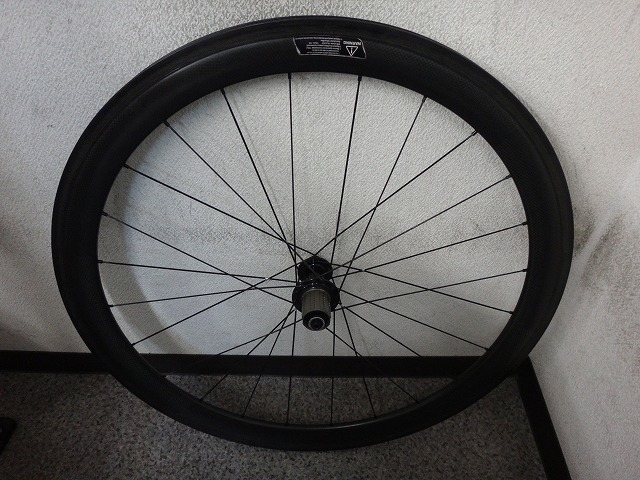
Built it.
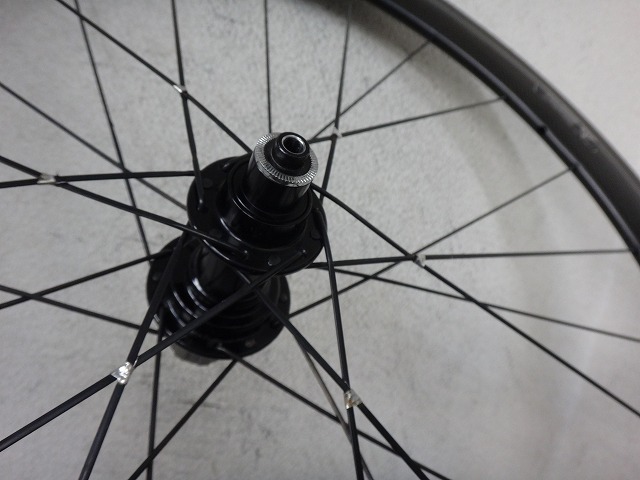
Black half-comp 46-hole lacing with radial spoking on one side.