Our shop for reasons unrelated to politics only stocks products that I personally want to carry,
so we don't have much inventory at all as a retail operation.
Anyone who visits in person has probably been shocked by how sparse it is.
Even other bike shop owners have told me, "It's weird that you can keep a shop going with this little stock."
I'm not opposed to expanding our product range, but
that's a different matter when it comes to items I actually want to handle.
So we've started carrying Continental tires.
Another reason is that the bicycles, wheels, and customer-supplied tires
that we work on in the shop
have an unusually high rate of being Continental.
Each customer must have tried different tire brands over the years,
and in the end they chose Continental (or more specifically, the Grand Prix 4000S),
which serves as proof that it has broad customer support.
So today I'll introduce you to
the Continental models that sell well at our shop.
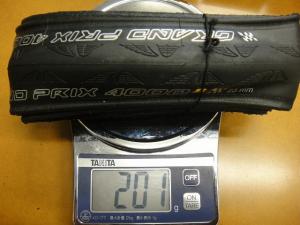
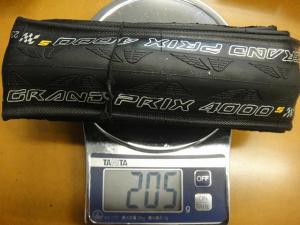

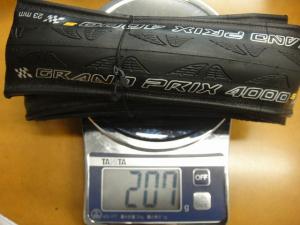
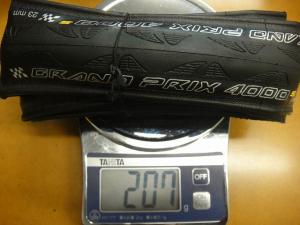
First, the Grand Prix 4000S.
There's also a tubular tire with the same name, but this one is clincher.
In terms of pure rolling efficiency in a straight line, I think Schwalbe's Aero seems to be the lightest,
but it has serious durability issues.
Severe UV degradation, rapid tread wear, weakness to sidewall cuts—
(the current model has improved quite a bit, but)
it's like getting struck by the Hokuto Shinken without knowing it—lots of problems.
The actual weight is around 195g.
The Grand Prix 4000S has decent rolling efficiency,
but as a race tire suitable for actual competition, it has incredibly high durability.
It's oddly resistant to punctures.
It's strong against wear and sidewall cuts, and even when you lean hard into corners,
you don't feel any anxiety. That's a major point.
Even if a tire rolls light, I don't want to use one that feels scary in corners or on descents.
Heavy rolling is a non-starter before we even get there.
It's not just a matter of tire weight—even measured-light tires can have a sticky, draggy quality.
It's exaggerating to say it feels like riding on fresh asphalt covered in sticky tar,
but many tires have a rolling feel close to that.
When brand new, this tire does pick up fine sand from a waxy surface coating, but
once that wears off, it doesn't.
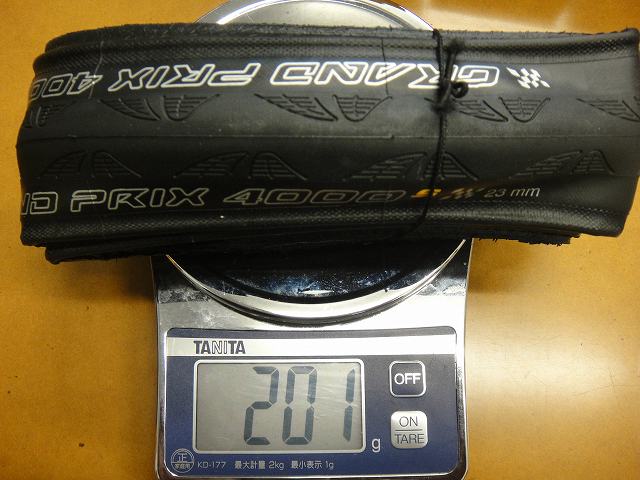
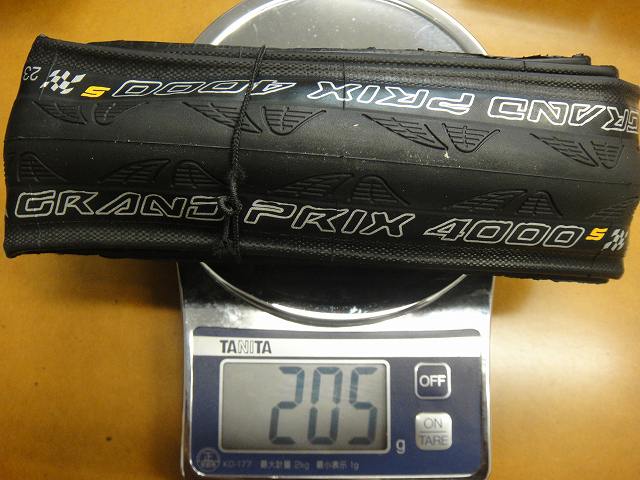
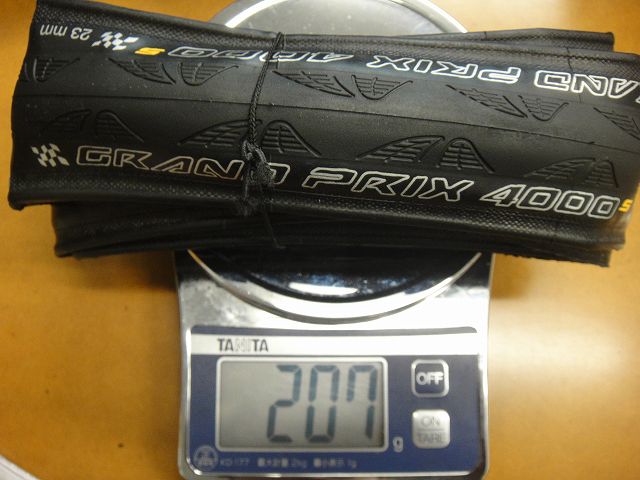
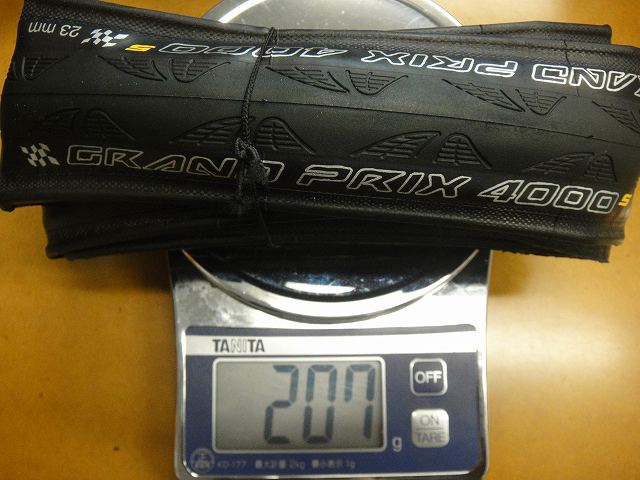
The image above shows actual measured weight. All 23C.
I removed the instruction sheet, which weighs about 10g.
This is just the tire and rubber strip weight, and the rubber strip doesn't even weigh 1g.
Honestly, I thought it would be a bit heavier.
The product might have changed.
There's variation in weight, but two years ago I measured some at 220g.
The ride feel doesn't seem to have changed, so it's fine anyway.

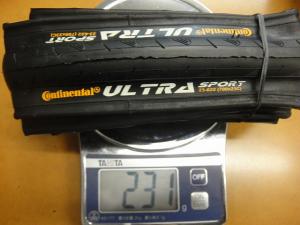
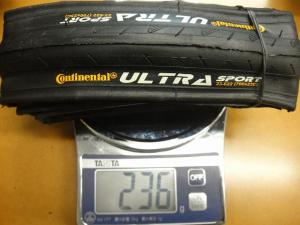
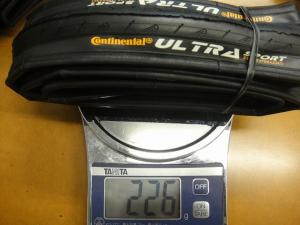
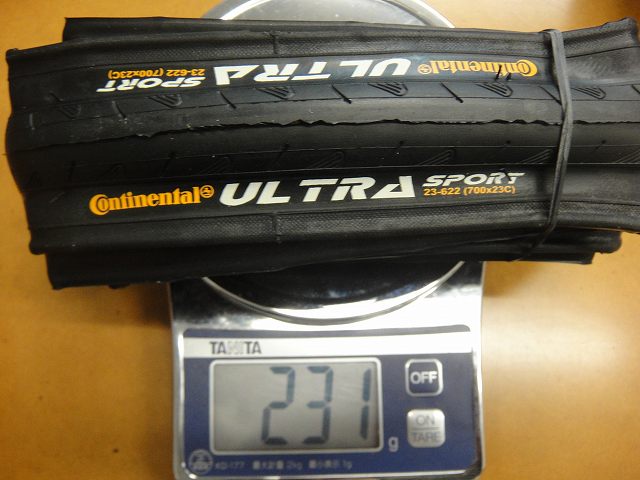
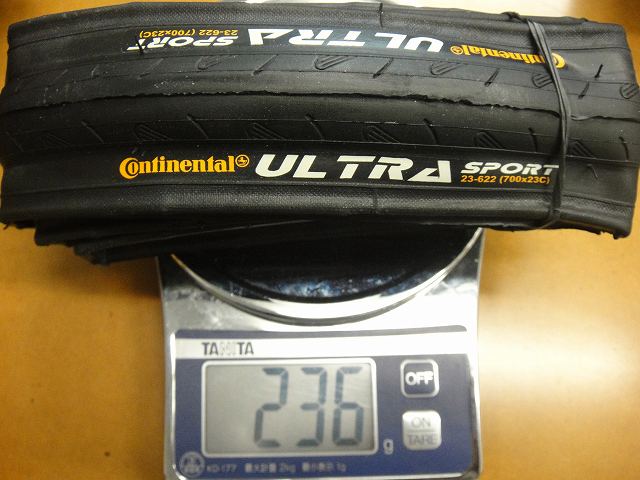
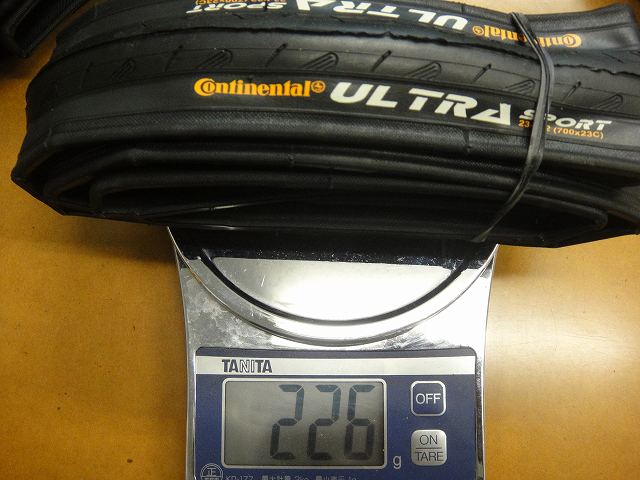
Next up is the Ultrasport. All 23C as well.
This one feels heavier to me.
When measuring 10 of each, the heaviest Grand Prix 4000S
and the lightest Ultrasport
weighed about the same.
The cornering confidence compared to the Grand Prix 4000S
doesn't even come close, but since I use it on the rear wheel, you barely notice it,
so my personal clincher wheels are set up with a 4000S up front and Ultrasport in the back for training.
Since the price is about half that of the 4000S,
I recommend using it regularly on the rear wheel, which wears faster.
The overall performance seems higher than other brands in the same price range,
so it's a shame to dismiss it simply as "cheap."

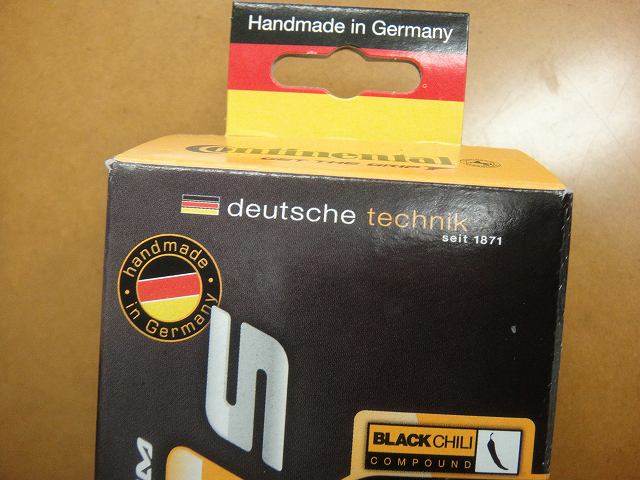
Most Continental tires make a big noise about
"Made in Germany!" on the packaging,

but the Ultrasport is more subdued. The blank space feels lonely...
It says Taiwan-made on the side of the box.
But it's not a bad tire by any means. I recommend it for everyday use.
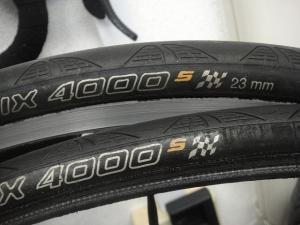
About the Grand Prix 4000S.
Recent models from about the past year (probably from 2013 onward)
have the tire width printed larger.

The fabric? at the bead comes loose and flaps,
or threads unravel, but there's no issue with actual use.
This is a Continental-specific "bad point,"
but among tires from other manufacturers,
many have tread worn down completely or sidewalls cut
in the time it takes for Continental to reach this state.
I think of it as a characteristic that results from having high durability and long tire life,
so please overlook it.
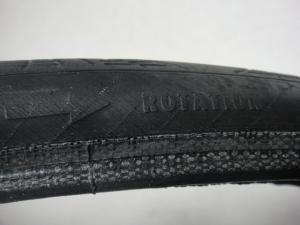
The direction indicator appears only on the right side relative to the direction of travel.
The 4000S does have front-to-back directionality, but it's extremely hard to see.
As a result, I've developed the habit of checking the direction whenever I see a 4000S (laughs).
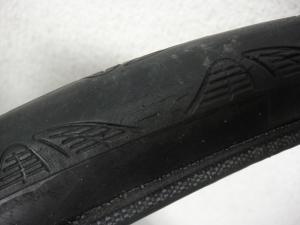
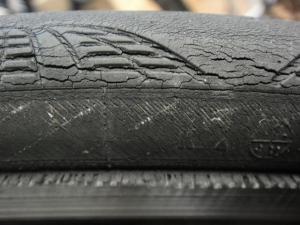
↑This is a 4000S used for just over a year and about 3000km.
The tread still looks like it has plenty of life, but cracks have appeared.
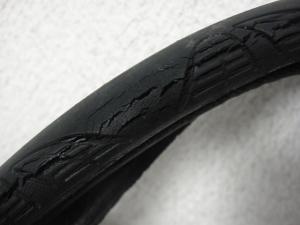
Same spot twisted up. Looks like this.
I've mentioned something similar before,
but there are tires that don't last a year from UV degradation alone, regardless of distance ridden
(especially race tires), so this is on the better side.
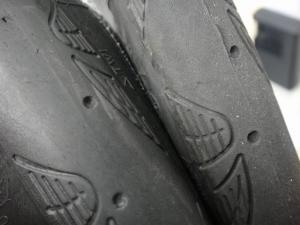
↑A 1-year 3000km tire (left in the image above) and
a 1-month 1000km tire currently on my wheels (right) placed side by side. The two round holes are wear indicators.
Supposedly that's when you're supposed to change the tire, but...
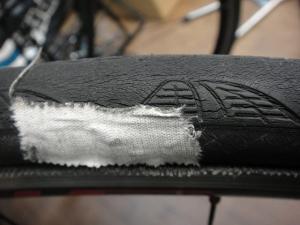
↑A 4000S with a patch on the sidewall.
Without front-to-rear rotation, it's been used for 21,000km
and is still in use.
I'll say it again, but with race tires from other manufacturers, it would be long gone by now (etc.).

↑This is the wear indicator.
The customer says "there's still some left,"
but I feel like the replacement point has long since passed.
Yet the sidewall is still intact.
Though thinned, it hasn't worn through (one spot has a patch, but still).
Whether you actually use it to this point is another matter, but it's definitely a high-durability, long-life tire.
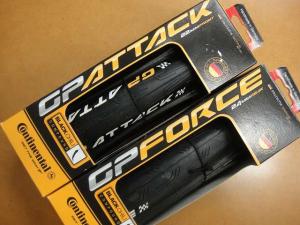
Next is the Attack & Force.
Attack is 22C and front-wheel only, Force is 24C and rear-wheel only positioning.
Bundle There are front-and-rear sets and individual sales, and
the set is a better deal than buying separately.
That said, tires on the rear wear faster, even if thicker.
The replacement timing differs, and eventually you'll need individual tires anyway.
Our shop only carries individual sales, but prices are set to match the front-and-rear set price.

↑Measured weight of the Force
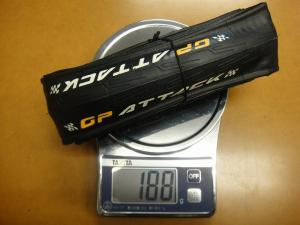
↑Measured weight of the Attack
Huh? The thinner one is heavier...
Given the variation we saw with the 4000S and Ultrasport earlier,
let's just say this particular unit happened to be that way due to individual variation.
The manufacturer spec is 190g for Attack and 210g for Force,
so this Force is just exceptionally light.
There's a customer who runs Attack front and Force rear for training, then swaps the rear for a 4000S for racing,
which is another reason we went with individual sales only.

Finally, the tubular Competition.
It's notorious for having an unusually small inner diameter, making it difficult to mount.
It comes in 19C and 22C, but even the 19C marking actually measures a bit over 20C,
and despite being thin, the cornering is not scary at all,
so our shop mainly recommends the 19C.
High-end tubular tires often use air-leaky latex tubes,
but this one uses an ultra-thin butyl tube.
Air loss is minimal—I cut open a punctured one to verify it.
For triathlons where you drop your bike the day before,
some tires with Vittoria's latex tube version lose air so much overnight
that you'd swear it's a slow leak.
That's not sabotage; it's just how latex is.
Butyl tubes are reliable in this respect.
Generally, latex tubes deform more flexibly inside the tire,
so cornering performance is said to be superior to butyl,
but Competition is an exception—it has cornering confidence that doesn't seem butyl at all.
For pure rolling efficiency and cornering feel, I'd recommend Veloflex,
but adding "puncture resistance," "strong sidewalls," and "slow air loss"
to those criteria makes this probably the best tubular available.
We try to keep other tubulars like Sprinter and Giro in stock regularly,
but those don't have unusually small inner diameters.
With clinchers it's the 4000S, with tubulars it's the Competition—
we see so many customer builds and specific requests for these
that we started carrying Continental. Highly recommended.
so we don't have much inventory at all as a retail operation.
Anyone who visits in person has probably been shocked by how sparse it is.
Even other bike shop owners have told me, "It's weird that you can keep a shop going with this little stock."
I'm not opposed to expanding our product range, but
that's a different matter when it comes to items I actually want to handle.
So we've started carrying Continental tires.
Another reason is that the bicycles, wheels, and customer-supplied tires
that we work on in the shop
have an unusually high rate of being Continental.
Each customer must have tried different tire brands over the years,
and in the end they chose Continental (or more specifically, the Grand Prix 4000S),
which serves as proof that it has broad customer support.
So today I'll introduce you to
the Continental models that sell well at our shop.

First, the Grand Prix 4000S.
There's also a tubular tire with the same name, but this one is clincher.
In terms of pure rolling efficiency in a straight line, I think Schwalbe's Aero seems to be the lightest,
but it has serious durability issues.
Severe UV degradation, rapid tread wear, weakness to sidewall cuts—
(the current model has improved quite a bit, but)
it's like getting struck by the Hokuto Shinken without knowing it—lots of problems.
The actual weight is around 195g.
The Grand Prix 4000S has decent rolling efficiency,
but as a race tire suitable for actual competition, it has incredibly high durability.
It's oddly resistant to punctures.
It's strong against wear and sidewall cuts, and even when you lean hard into corners,
you don't feel any anxiety. That's a major point.
Even if a tire rolls light, I don't want to use one that feels scary in corners or on descents.
Heavy rolling is a non-starter before we even get there.
It's not just a matter of tire weight—even measured-light tires can have a sticky, draggy quality.
It's exaggerating to say it feels like riding on fresh asphalt covered in sticky tar,
but many tires have a rolling feel close to that.
When brand new, this tire does pick up fine sand from a waxy surface coating, but
once that wears off, it doesn't.
The image above shows actual measured weight. All 23C.
I removed the instruction sheet, which weighs about 10g.
This is just the tire and rubber strip weight, and the rubber strip doesn't even weigh 1g.
Honestly, I thought it would be a bit heavier.
The product might have changed.
There's variation in weight, but two years ago I measured some at 220g.
The ride feel doesn't seem to have changed, so it's fine anyway.

Next up is the Ultrasport. All 23C as well.
This one feels heavier to me.
When measuring 10 of each, the heaviest Grand Prix 4000S
and the lightest Ultrasport
weighed about the same.
The cornering confidence compared to the Grand Prix 4000S
doesn't even come close, but since I use it on the rear wheel, you barely notice it,
so my personal clincher wheels are set up with a 4000S up front and Ultrasport in the back for training.
Since the price is about half that of the 4000S,
I recommend using it regularly on the rear wheel, which wears faster.
The overall performance seems higher than other brands in the same price range,
so it's a shame to dismiss it simply as "cheap."
Most Continental tires make a big noise about
"Made in Germany!" on the packaging,

but the Ultrasport is more subdued. The blank space feels lonely...
It says Taiwan-made on the side of the box.
But it's not a bad tire by any means. I recommend it for everyday use.
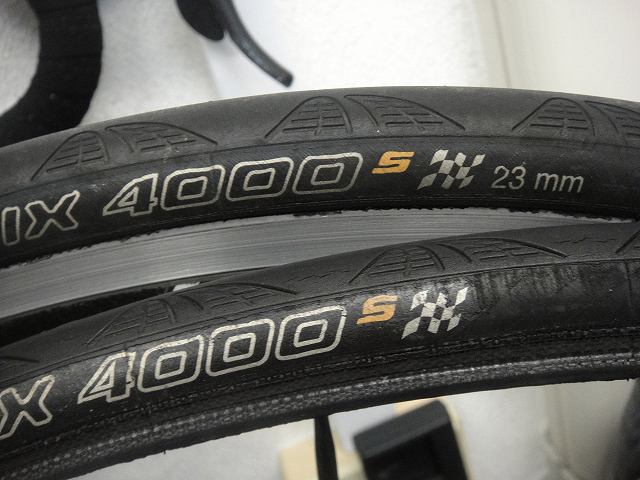
About the Grand Prix 4000S.
Recent models from about the past year (probably from 2013 onward)
have the tire width printed larger.
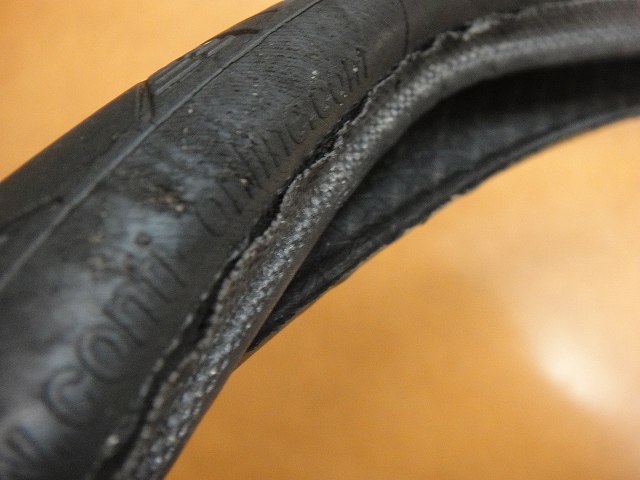
The fabric? at the bead comes loose and flaps,
or threads unravel, but there's no issue with actual use.
This is a Continental-specific "bad point,"
but among tires from other manufacturers,
many have tread worn down completely or sidewalls cut
in the time it takes for Continental to reach this state.
I think of it as a characteristic that results from having high durability and long tire life,
so please overlook it.
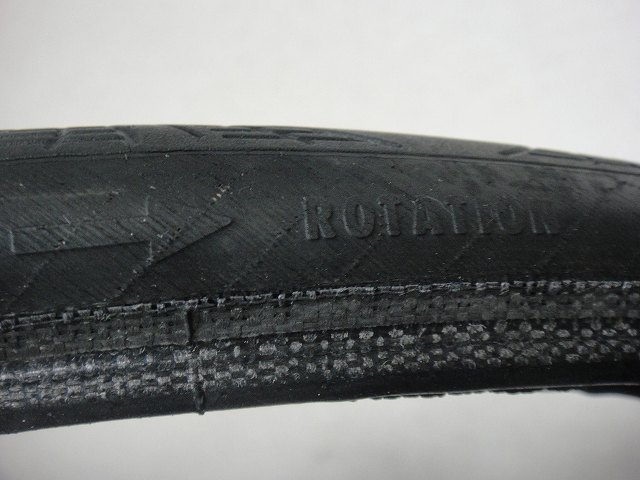
The direction indicator appears only on the right side relative to the direction of travel.
The 4000S does have front-to-back directionality, but it's extremely hard to see.
As a result, I've developed the habit of checking the direction whenever I see a 4000S (laughs).
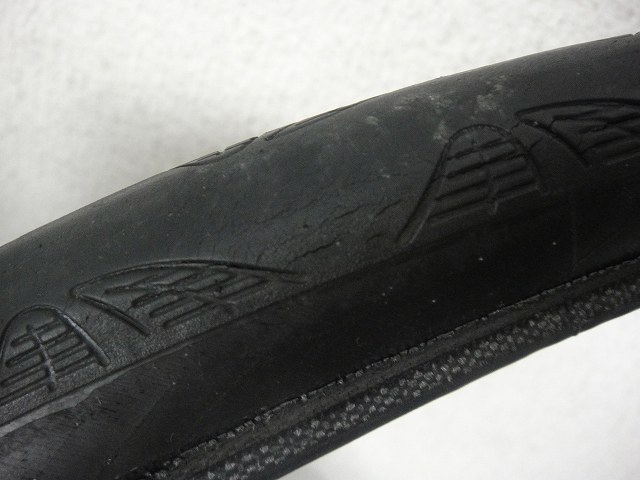
↑This is a 4000S used for just over a year and about 3000km.
The tread still looks like it has plenty of life, but cracks have appeared.

Same spot twisted up. Looks like this.
I've mentioned something similar before,
but there are tires that don't last a year from UV degradation alone, regardless of distance ridden
(especially race tires), so this is on the better side.

↑A 1-year 3000km tire (left in the image above) and
a 1-month 1000km tire currently on my wheels (right) placed side by side. The two round holes are wear indicators.
Supposedly that's when you're supposed to change the tire, but...

↑A 4000S with a patch on the sidewall.
Without front-to-rear rotation, it's been used for 21,000km
and is still in use.
I'll say it again, but with race tires from other manufacturers, it would be long gone by now (etc.).

↑This is the wear indicator.
The customer says "there's still some left,"
but I feel like the replacement point has long since passed.
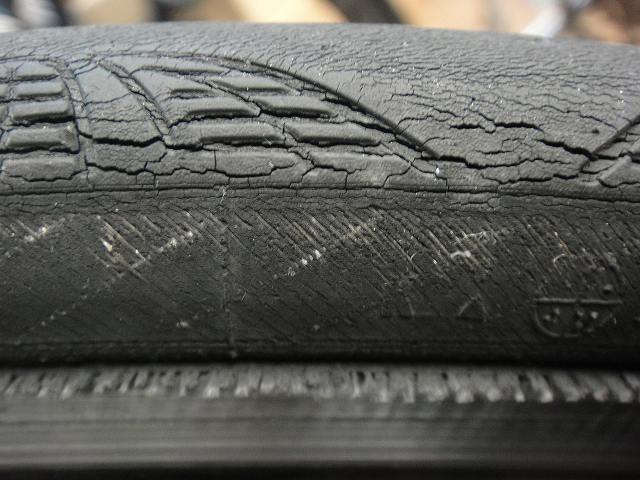
Yet the sidewall is still intact.
Though thinned, it hasn't worn through (one spot has a patch, but still).
Whether you actually use it to this point is another matter, but it's definitely a high-durability, long-life tire.
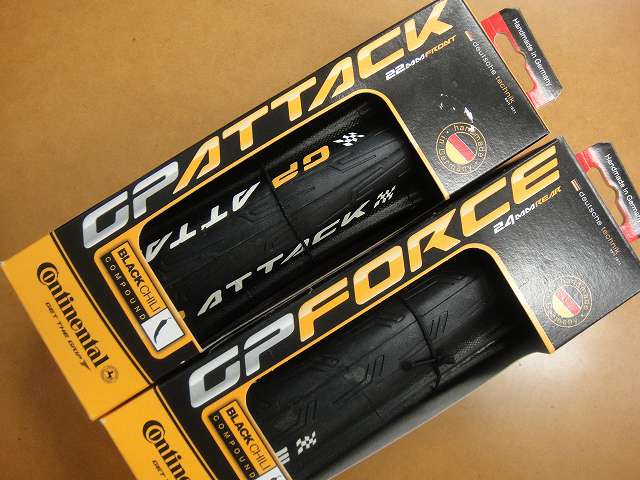
Next is the Attack & Force.
Attack is 22C and front-wheel only, Force is 24C and rear-wheel only positioning.
the set is a better deal than buying separately.
That said, tires on the rear wear faster, even if thicker.
The replacement timing differs, and eventually you'll need individual tires anyway.
Our shop only carries individual sales, but prices are set to match the front-and-rear set price.
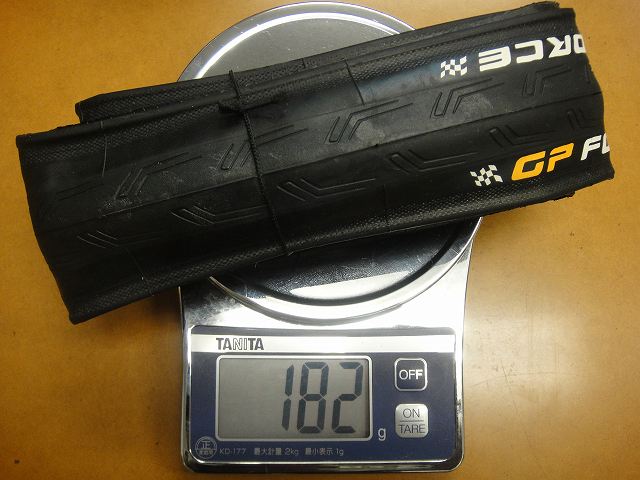
↑Measured weight of the Force
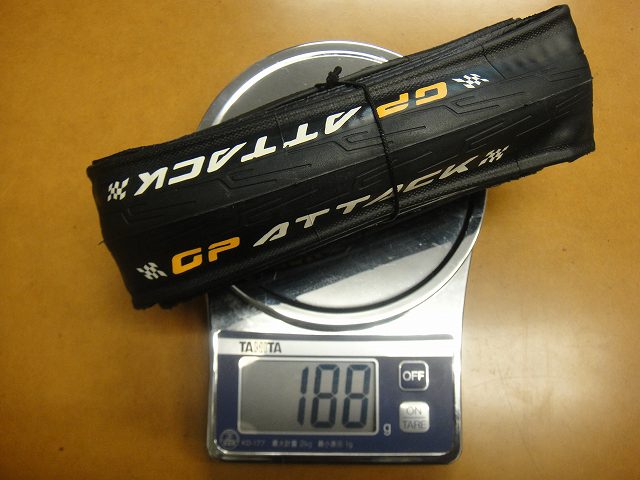
↑Measured weight of the Attack
Huh? The thinner one is heavier...
Given the variation we saw with the 4000S and Ultrasport earlier,
let's just say this particular unit happened to be that way due to individual variation.
The manufacturer spec is 190g for Attack and 210g for Force,
so this Force is just exceptionally light.
There's a customer who runs Attack front and Force rear for training, then swaps the rear for a 4000S for racing,
which is another reason we went with individual sales only.
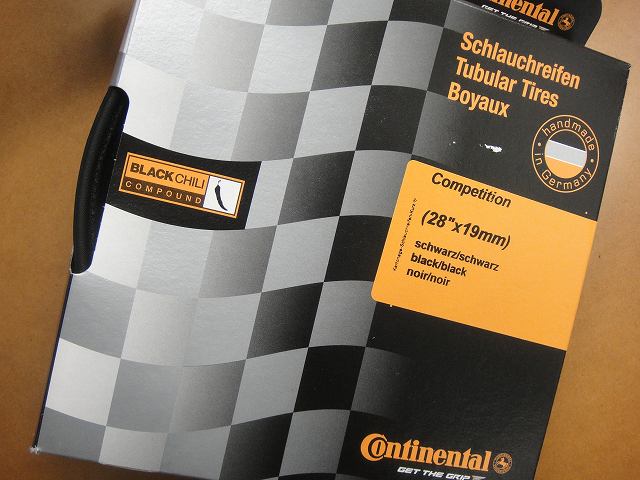
Finally, the tubular Competition.
It's notorious for having an unusually small inner diameter, making it difficult to mount.
It comes in 19C and 22C, but even the 19C marking actually measures a bit over 20C,
and despite being thin, the cornering is not scary at all,
so our shop mainly recommends the 19C.
High-end tubular tires often use air-leaky latex tubes,
but this one uses an ultra-thin butyl tube.
Air loss is minimal—I cut open a punctured one to verify it.
For triathlons where you drop your bike the day before,
some tires with Vittoria's latex tube version lose air so much overnight
that you'd swear it's a slow leak.
That's not sabotage; it's just how latex is.
Butyl tubes are reliable in this respect.
Generally, latex tubes deform more flexibly inside the tire,
so cornering performance is said to be superior to butyl,
but Competition is an exception—it has cornering confidence that doesn't seem butyl at all.
For pure rolling efficiency and cornering feel, I'd recommend Veloflex,
but adding "puncture resistance," "strong sidewalls," and "slow air loss"
to those criteria makes this probably the best tubular available.
We try to keep other tubulars like Sprinter and Giro in stock regularly,
but those don't have unusually small inner diameters.
With clinchers it's the 4000S, with tubulars it's the Competition—
we see so many customer builds and specific requests for these
that we started carrying Continental. Highly recommended.