I received a front wheel from a customer — a Fulcrum (フルクラム).
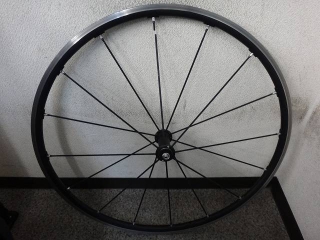
As you can see from the phase in the top view of the image

a spoke is broken.
The customer had tried truing and touched various things,
but as for the nipples, there wasn't a single one
that was stripped badly enough to need replacement.
When replacing a spoke, as I always write,
we can usually get back close to the "original state"
just by adjusting the nipple of the replacement spoke.
Whether the original state was in proper condition or not, I can't say.
However, with Racing Zero and wheels like this Fulcrum
front wheel with Campagnolo aluminum spokes in 16H,
when a single spoke breaks,
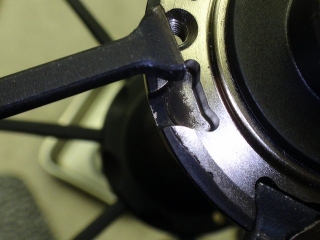
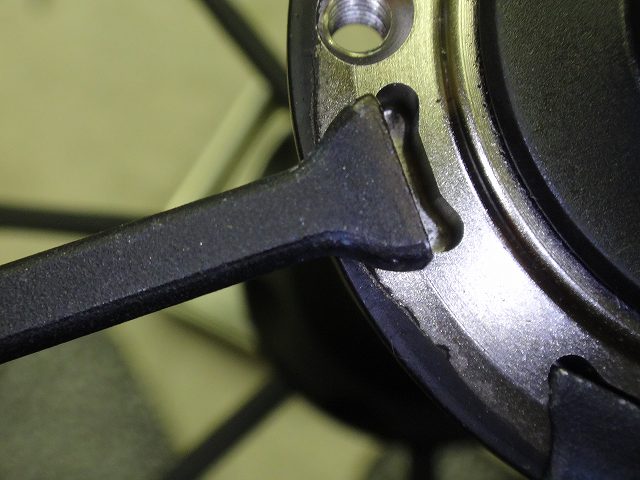
if you fit the spoke head into the hub first,
the spoke threads won't catch on the nipple,
and a spoke that's already had a turn or so threaded into the nipple
won't fit into the hub flange.
The latter is what's shown in the image above.
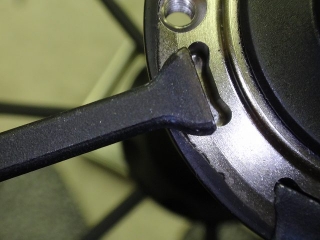
It doesn't reach.
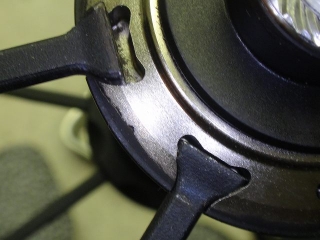
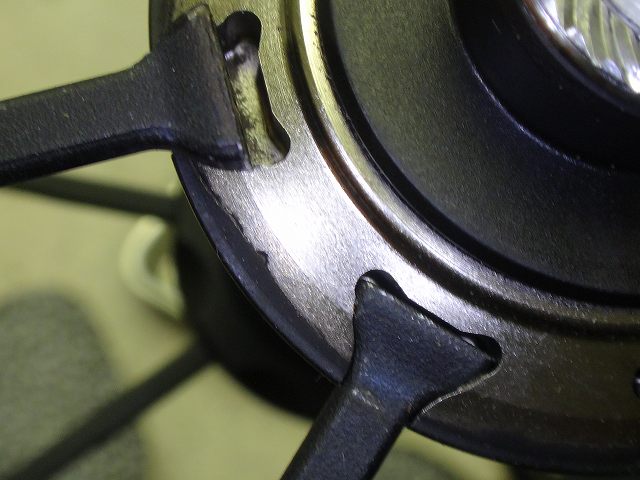
↑The next one looks like this
so to attach the spoke to the hub,
you need to loosen several other nipples.
This causes significant radial runout in places other than where the spoke is being replaced,
so any misalignment from the customer's tinkering
is minor in comparison.
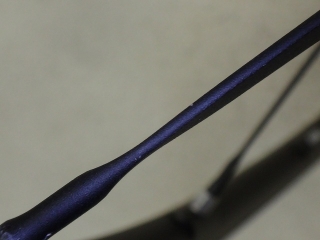
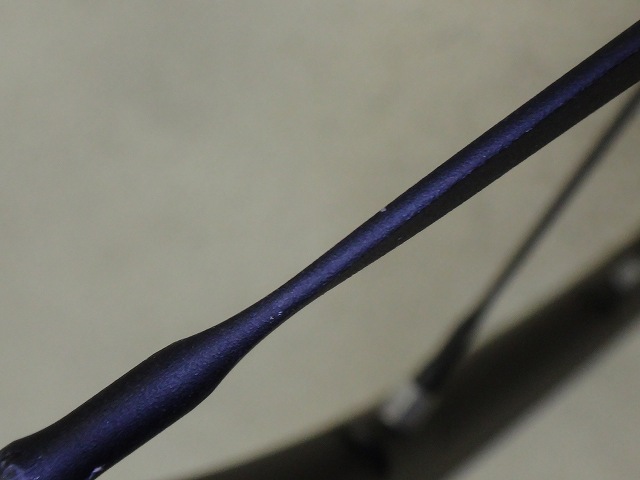
I noticed several spokes with slight twisting
near the nipple end of the butted section.

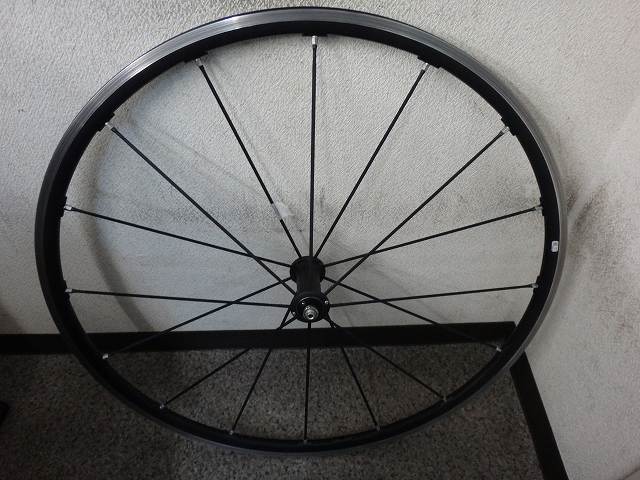
Fixed.
Since a spoke was broken, I don't know the original
wheel centering or radial runout before that,
but I'm confident that the current state
is more perfectly centered and has less radial runout
than the original condition or even when it was new off the shelf.
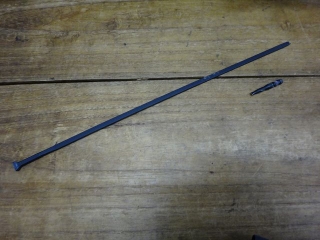
↑Replaced spoke

The customer only told me "I touched it myself"
so I don't know whether the spoke broke during riding
or during truing.
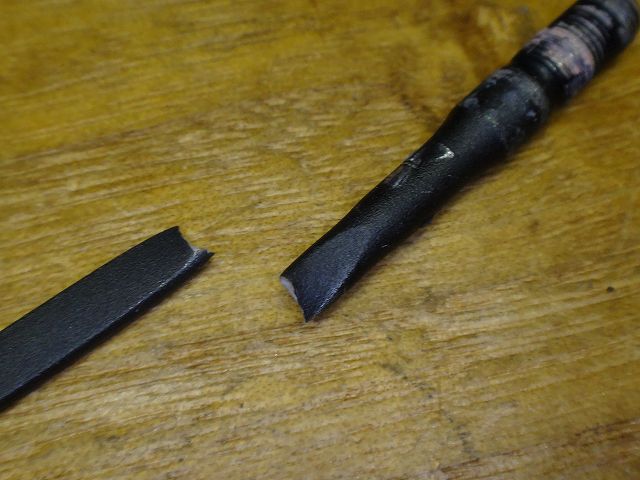
However, this broken spoke also shows twisting,
so it's possible it snapped during truing.
There were several spokes with slight twisting,
but to that degree, breaking during normal riding
would be unlikely. During future truing,
if you use the proper spoke holder tool and apply it correctly
(here, both the tool and method are subtle food-for-thought material)
adjustment is possible without progressing the twisting further.

As you can see from the phase in the top view of the image
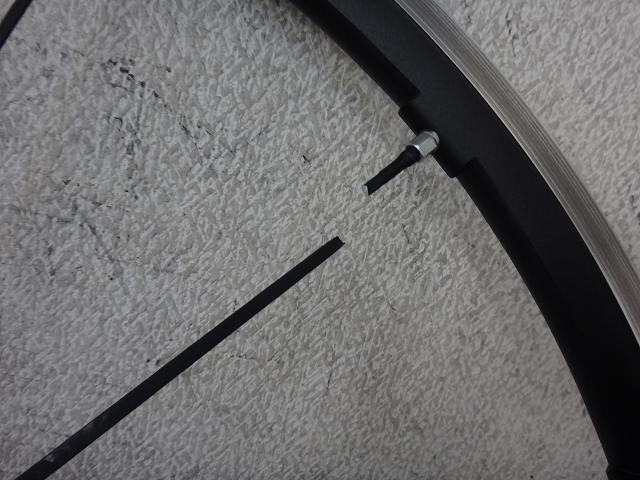
a spoke is broken.
The customer had tried truing and touched various things,
but as for the nipples, there wasn't a single one
that was stripped badly enough to need replacement.
When replacing a spoke, as I always write,
we can usually get back close to the "original state"
just by adjusting the nipple of the replacement spoke.
Whether the original state was in proper condition or not, I can't say.
However, with Racing Zero and wheels like this Fulcrum
front wheel with Campagnolo aluminum spokes in 16H,
when a single spoke breaks,
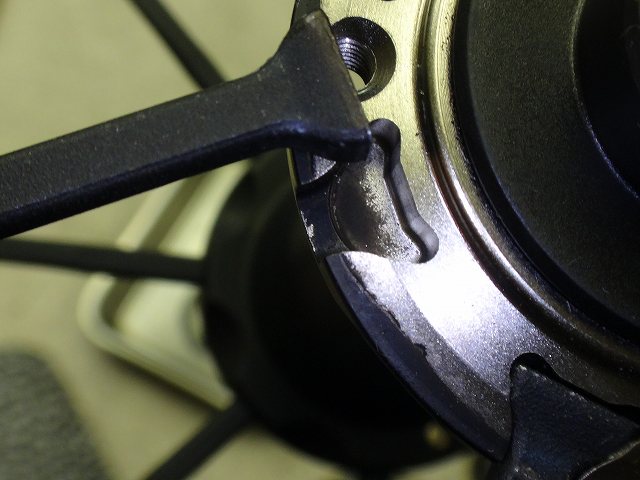
if you fit the spoke head into the hub first,
the spoke threads won't catch on the nipple,
and a spoke that's already had a turn or so threaded into the nipple
won't fit into the hub flange.
The latter is what's shown in the image above.
It doesn't reach.
↑The next one looks like this
so to attach the spoke to the hub,
you need to loosen several other nipples.
This causes significant radial runout in places other than where the spoke is being replaced,
so any misalignment from the customer's tinkering
is minor in comparison.
I noticed several spokes with slight twisting
near the nipple end of the butted section.
Fixed.
Since a spoke was broken, I don't know the original
wheel centering or radial runout before that,
but I'm confident that the current state
is more perfectly centered and has less radial runout
than the original condition or even when it was new off the shelf.
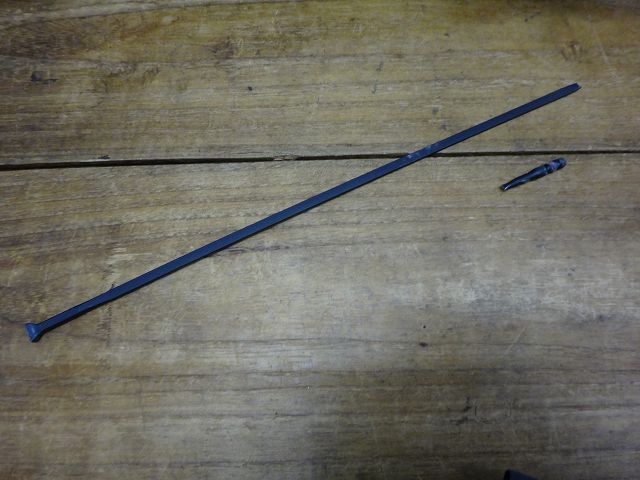
↑Replaced spoke
The customer only told me "I touched it myself"
so I don't know whether the spoke broke during riding
or during truing.
However, this broken spoke also shows twisting,
so it's possible it snapped during truing.
There were several spokes with slight twisting,
but to that degree, breaking during normal riding
would be unlikely. During future truing,
if you use the proper spoke holder tool and apply it correctly
adjustment is possible without progressing the twisting further.