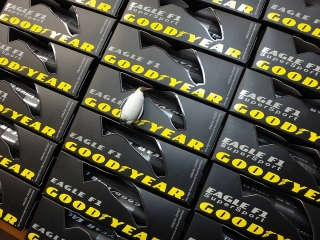
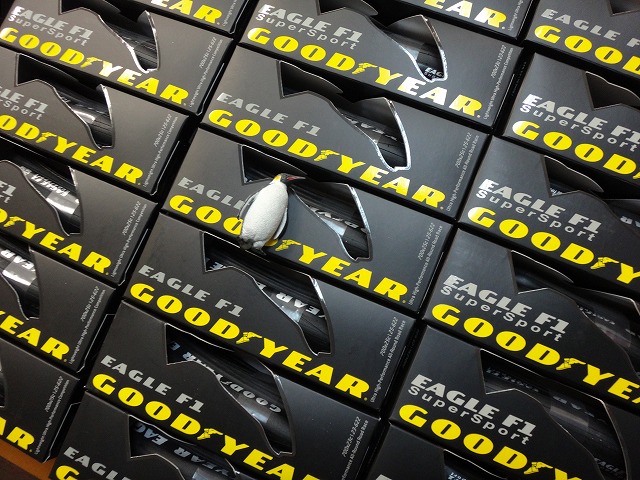
Goodyear tires have arrived in stock.
When it comes to European famous brands that handle
automobile and motorcycle tires
and manufacture bicycle tires in-house,
I'd say it's only about Continental
(if we drop the "European" condition, there's Maxxis and others),
Edit: I've received comments asking "What about Michelin and Pirelli?"
These two have clear OEM sources. I won't write about it here.
Though not a European brand, Bridgestone Cycle's Extenza
is also not manufactured in-house at Bridgestone Cycle,
and has a clear OEM source.
Bridgestone Cycle is a separate company from Bridgestone Tire,
but when they requested permission to use the Potenza brand name from Bridgestone Tire,
they were rejected, so it became Extenza.
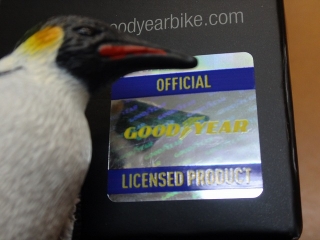
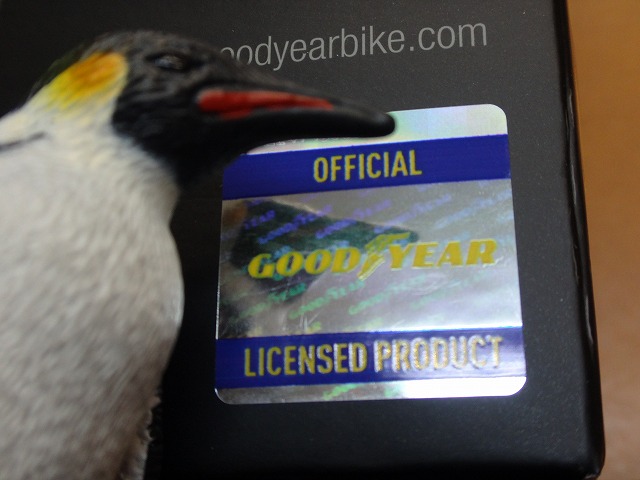
Goodyear tires are also licensed production.
It's nice that they state it openly.
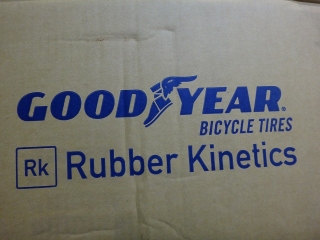
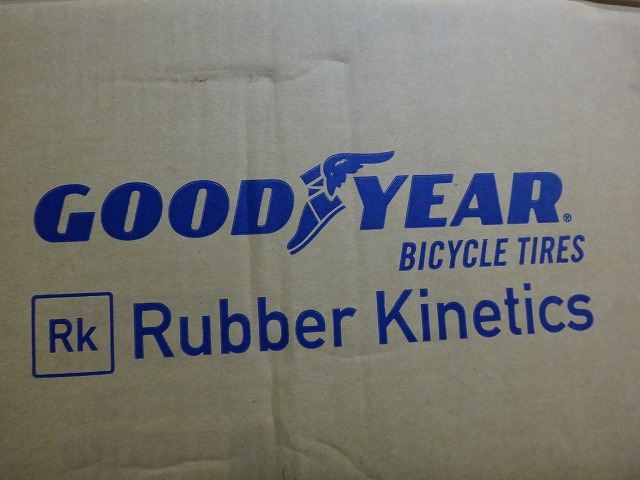
It says "Rubber Kinetics," and regarding this,
Rubber Kinetics LLC in Carson, California
obtained the license to manufacture Goodyear-brand bicycle tires,
as I found on a rubber industry website.
For those wanting more details,
search for "Licensee rolls out Goodyear-brand premium bicycle tire range".
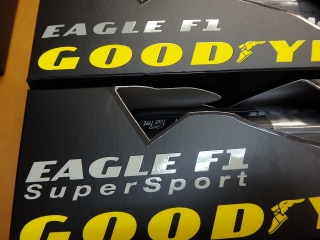
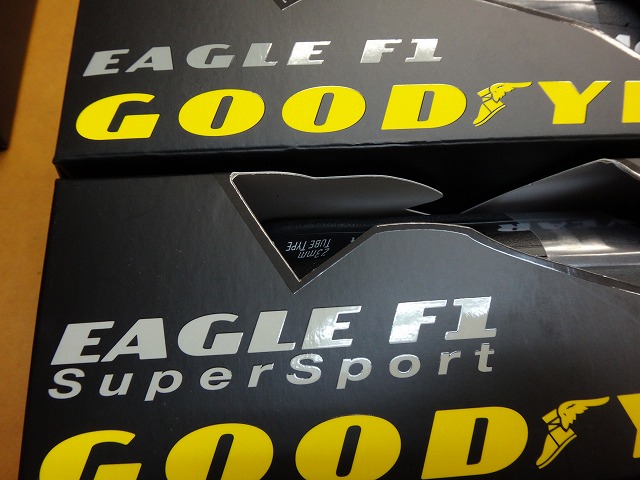
The models that arrived this time are all clincher tires,
and the model names are Eagle F1 and
Eagle F1 Super Sport (hereinafter SS).
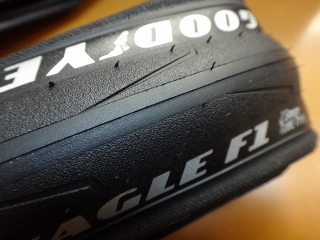
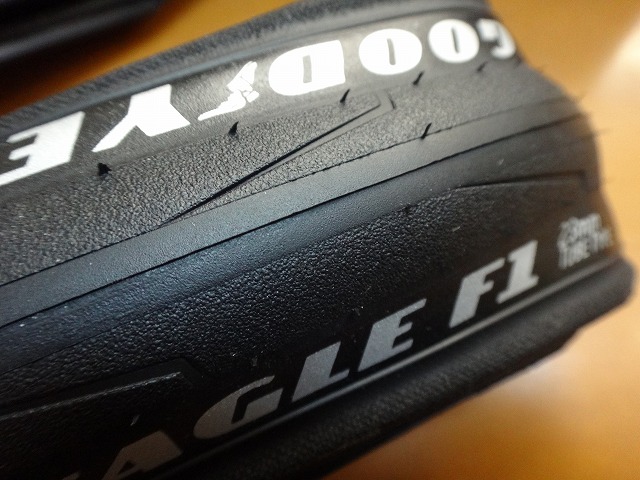
The Eagle F1 has a center slick with
rough tread on the sides, featuring
water-shedding grooves in the pattern,
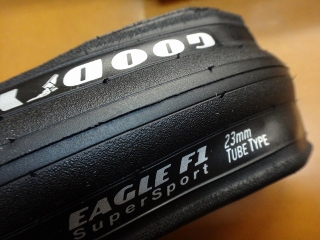
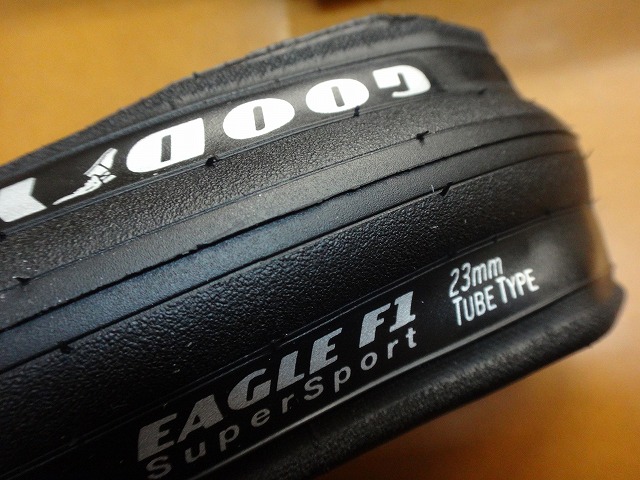
while the Eagle F1 SS has no water-shedding grooves
and features thinner tread and less weight compared to the F1.
The difference between the center slick and the rough side tread
is quite noticeable when you rub your thumb pad on them
(naturally the rough side has greater resistance).
Based on what I see on the manufacturer's website,
the SS doesn't appear to have the puncture protection belt removed
or differences in casing ply count,
so the only differences seem to be tread thickness and the presence or absence of grooves.
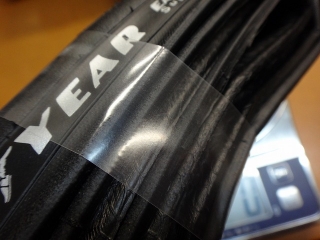
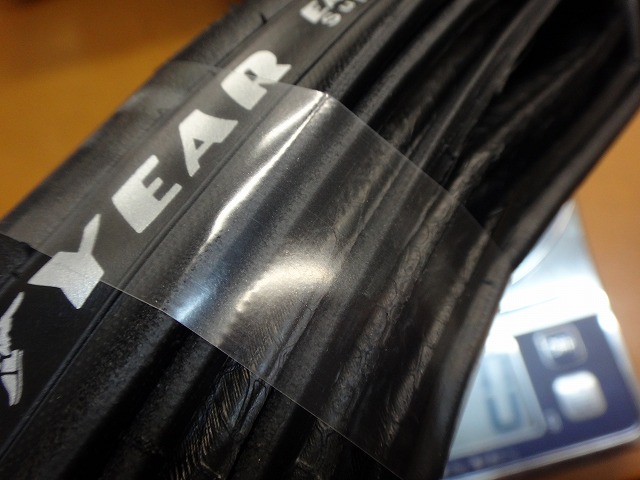
Both models (even without the SS) are characterized by their light weight,
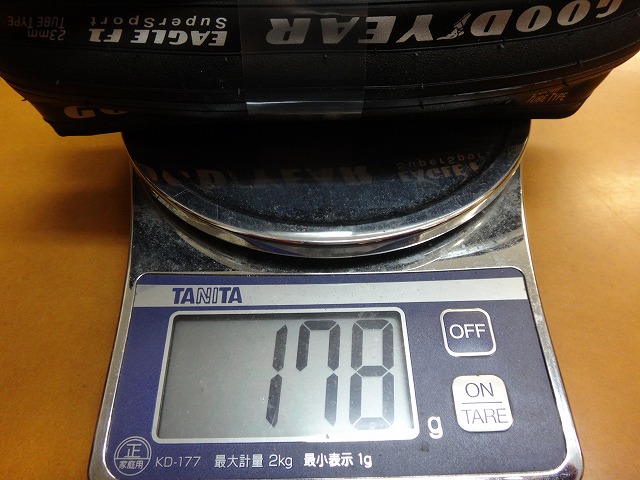
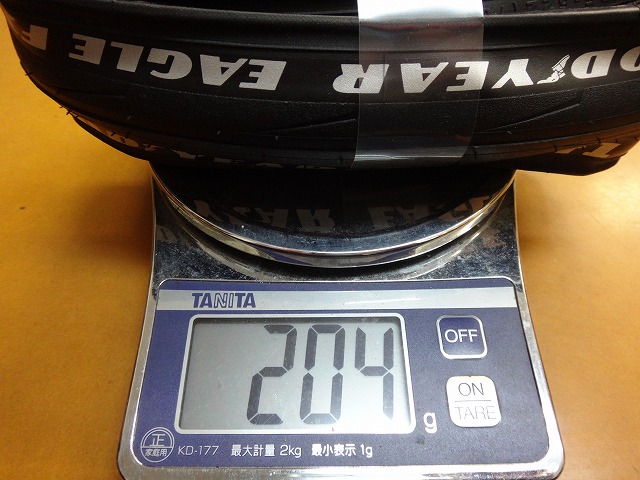
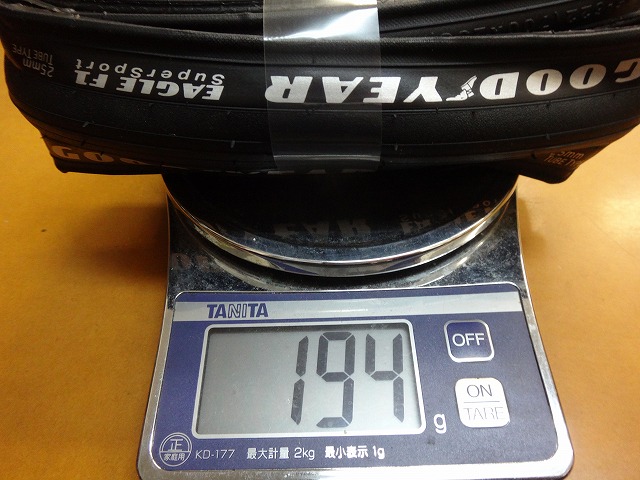
with measured weights in nylon tape:
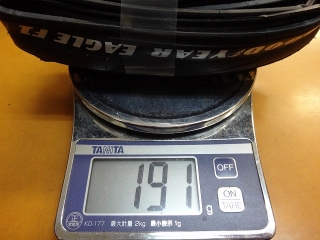
Eagle F1 23C (rated weight 195g)
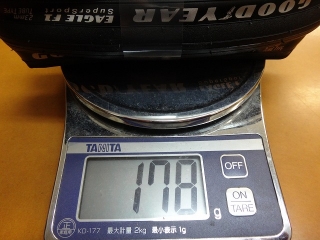
Eagle F1 SS 23C (rated weight 180g)
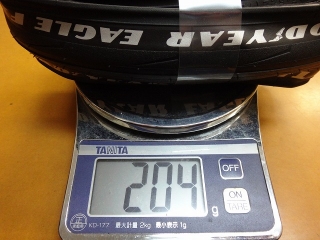
Eagle F1 25C (rated weight 210g)
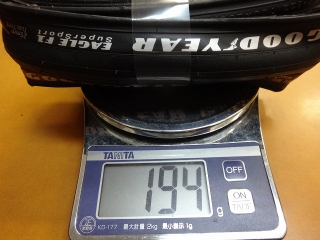
Eagle F1 SS 25C (rated weight 190g)
These are the figures. I haven't weighed every single one,
but it seems the rated weights tend to be slightly conservative so as not to mislead.
For the Eagle F1 SS 25C, if you look around you'd probably find specimens under the rated weight,
but I measured these from just one randomly selected sample from each.
There's no way the nylon tape weighs 4g or more.
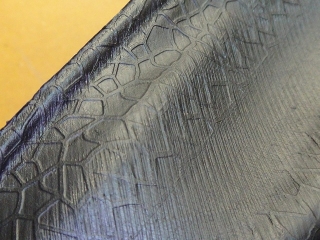
↑This is the inside of the Eagle F1.
It has a pattern that looks like melon ridges.
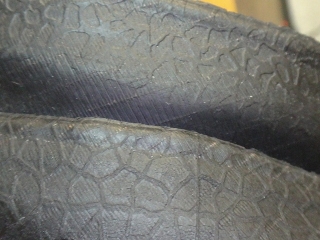
↑The top image is Continental's Grand Prix 4000 S II,
and the bottom is the Grand Prix 5000.
I'm not trying to say it's a copy or that they have the same manufacturer, just to be clear.
The manufacturer is definitely different.
This texturing is to prevent the tube from sticking to the tire.
Tube movement and friction inside the tire
is considered "not a good thing,"
and with Panaracer tires, after extended use,
the tire and tube become so adhesive they fuse together.
The idea seems to be that in this state the tire and tube become one unit,
creating a situation like a tubeless tire,
which is why it's intentionally made that way,
but when replacing the tire, peeling off the fused tube
is like peeling squid skin (though this is unrelated)
and the tube can stretch or, in the worst case, get pulled under the tire
and puncture.
Moreover, when this happens, it's usually with Panaracer's R Air tubes.
To prevent this, Panaracer even sells
a chemical product called tire powder.
Honestly, which is better—sticking or not sticking?
In my opinion, whether a tire and tube become fused is
far less significant than the performance differences in tire compounds themselves,
so I'd rather have a non-adhesive tire
that's less likely to damage the tube during replacement.
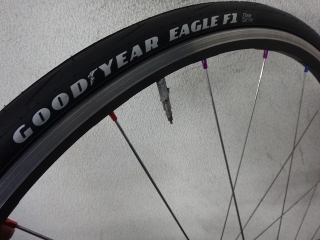
I fitted an Eagle F1 23C on the front wheel.
The wheel is a Neutron Ultra,
or more precisely, a front wheel built with a Neutron Ultra rim.
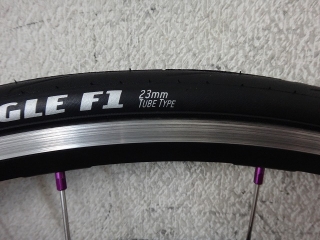
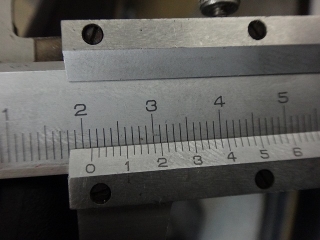
For a tire nominally rated at 23C, it's noticeably narrower and lower in height.
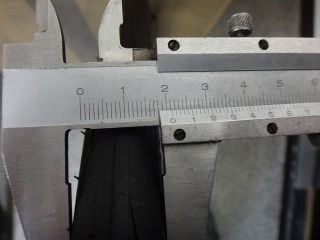
It may get slightly wider later, but
the new 23C with 7 bar measured 21.4mm in outer width.
If mounted on a wider rim it would become stretched
and the results might differ, but
if mounted on something like the Racing Zero from the C15 rim era,
you'd get the same result.
Edit: ↑Though I wrote that, later I fitted the F1 SS 23C on a C15 rim Racing 3
and inflated it to 7 bar, measuring around 22.5C.
Whether it's because the F1 SS is thinner so it expands more at the same pressure,
or whether the C15 Racing 3 is slightly wider than the Neutron Ultra,
I'm not sure. However, it's certain the tire runs narrower than its nominal rating.
Unlike the current trend, I really like narrow tires like this,
and I used to frequently use Vittoria's Diamante Pro Radial in 22C
which ran narrower than its stated width, but it's already discontinued.
Though I've only used it a little so far,
the rolling lightness is remarkable for a clincher tire.
Almost forgot to mention:
the Eagle F1 has a pre-tax list price of 7,000 yen,
and the Eagle F1 SS is 7,300 yen.
When it comes to European famous brands that handle
automobile and motorcycle tires
and manufacture bicycle tires in-house,
I'd say it's only about Continental
(if we drop the "European" condition, there's Maxxis and others),
Edit: I've received comments asking "What about Michelin and Pirelli?"
These two have clear OEM sources. I won't write about it here.
Though not a European brand, Bridgestone Cycle's Extenza
is also not manufactured in-house at Bridgestone Cycle,
and has a clear OEM source.
Bridgestone Cycle is a separate company from Bridgestone Tire,
but when they requested permission to use the Potenza brand name from Bridgestone Tire,
they were rejected, so it became Extenza.
Goodyear tires are also licensed production.
It's nice that they state it openly.
It says "Rubber Kinetics," and regarding this,
Rubber Kinetics LLC in Carson, California
obtained the license to manufacture Goodyear-brand bicycle tires,
as I found on a rubber industry website.
For those wanting more details,
search for "Licensee rolls out Goodyear-brand premium bicycle tire range".
The models that arrived this time are all clincher tires,
and the model names are Eagle F1 and
Eagle F1 Super Sport (hereinafter SS).
The Eagle F1 has a center slick with
rough tread on the sides, featuring
water-shedding grooves in the pattern,
while the Eagle F1 SS has no water-shedding grooves
and features thinner tread and less weight compared to the F1.
The difference between the center slick and the rough side tread
is quite noticeable when you rub your thumb pad on them
(naturally the rough side has greater resistance).
Based on what I see on the manufacturer's website,
the SS doesn't appear to have the puncture protection belt removed
or differences in casing ply count,
so the only differences seem to be tread thickness and the presence or absence of grooves.
Both models (even without the SS) are characterized by their light weight,
with measured weights in nylon tape:

Eagle F1 23C (rated weight 195g)
Eagle F1 SS 23C (rated weight 180g)
Eagle F1 25C (rated weight 210g)
Eagle F1 SS 25C (rated weight 190g)
These are the figures. I haven't weighed every single one,
but it seems the rated weights tend to be slightly conservative so as not to mislead.
For the Eagle F1 SS 25C, if you look around you'd probably find specimens under the rated weight,
but I measured these from just one randomly selected sample from each.
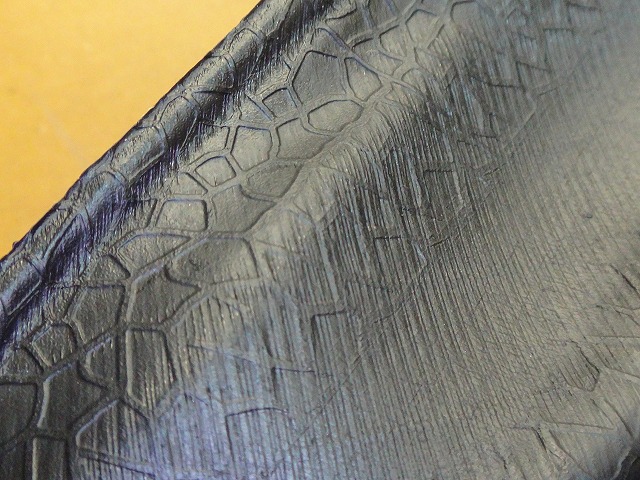
↑This is the inside of the Eagle F1.
It has a pattern that looks like melon ridges.
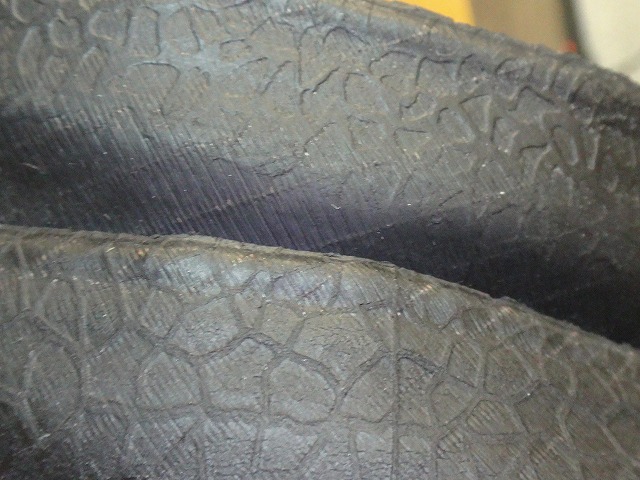
↑The top image is Continental's Grand Prix 4000 S II,
and the bottom is the Grand Prix 5000.
I'm not trying to say it's a copy or that they have the same manufacturer, just to be clear.
The manufacturer is definitely different.
This texturing is to prevent the tube from sticking to the tire.
Tube movement and friction inside the tire
is considered "not a good thing,"
and with Panaracer tires, after extended use,
the tire and tube become so adhesive they fuse together.
The idea seems to be that in this state the tire and tube become one unit,
creating a situation like a tubeless tire,
which is why it's intentionally made that way,
but when replacing the tire, peeling off the fused tube
is like peeling squid skin (though this is unrelated)
and the tube can stretch or, in the worst case, get pulled under the tire
and puncture.
Moreover, when this happens, it's usually with Panaracer's R Air tubes.
To prevent this, Panaracer even sells
a chemical product called tire powder.
Honestly, which is better—sticking or not sticking?
In my opinion, whether a tire and tube become fused is
far less significant than the performance differences in tire compounds themselves,
so I'd rather have a non-adhesive tire
that's less likely to damage the tube during replacement.
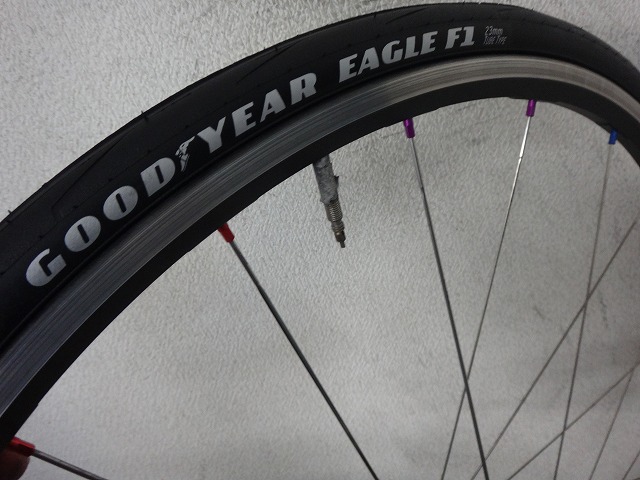
I fitted an Eagle F1 23C on the front wheel.
The wheel is a Neutron Ultra,
or more precisely, a front wheel built with a Neutron Ultra rim.
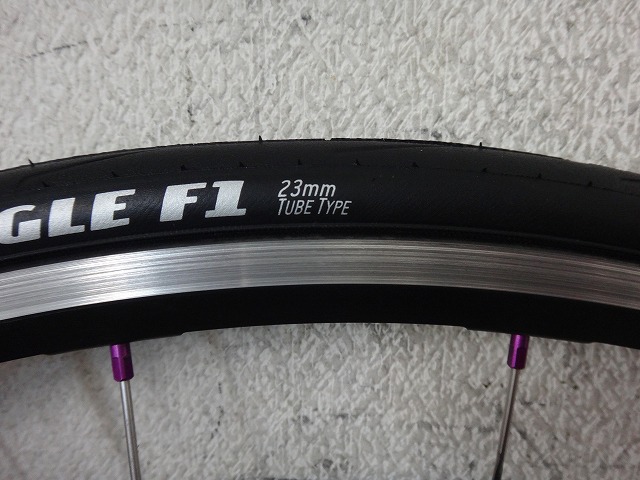
For a tire nominally rated at 23C, it's noticeably narrower and lower in height.
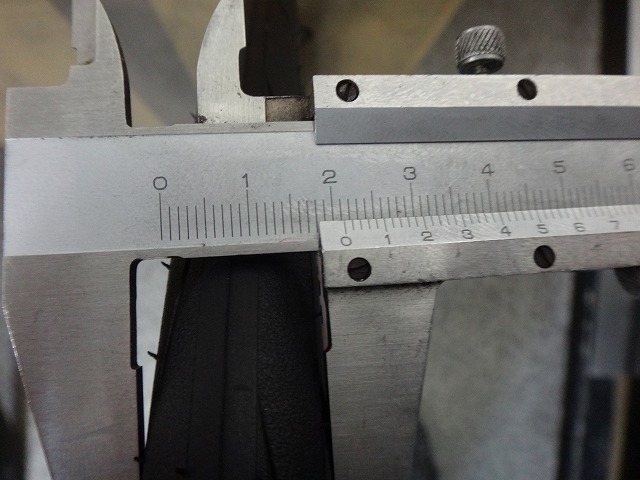
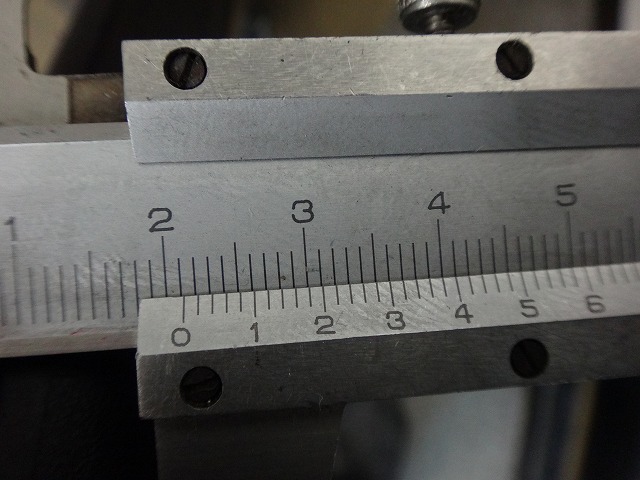
It may get slightly wider later, but
the new 23C with 7 bar measured 21.4mm in outer width.
If mounted on a wider rim it would become stretched
and the results might differ, but
if mounted on something like the Racing Zero from the C15 rim era,
you'd get the same result.
Edit: ↑Though I wrote that, later I fitted the F1 SS 23C on a C15 rim Racing 3
and inflated it to 7 bar, measuring around 22.5C.
Whether it's because the F1 SS is thinner so it expands more at the same pressure,
or whether the C15 Racing 3 is slightly wider than the Neutron Ultra,
I'm not sure. However, it's certain the tire runs narrower than its nominal rating.
Unlike the current trend, I really like narrow tires like this,
and I used to frequently use Vittoria's Diamante Pro Radial in 22C
which ran narrower than its stated width, but it's already discontinued.
Though I've only used it a little so far,
the rolling lightness is remarkable for a clincher tire.
Almost forgot to mention:
the Eagle F1 has a pre-tax list price of 7,000 yen,
and the Eagle F1 SS is 7,300 yen.