Another wheel day (and so on).

Continuing from the other day.
I'm replacing the rear hub on the Reflexx Rim
with a through-axle version.
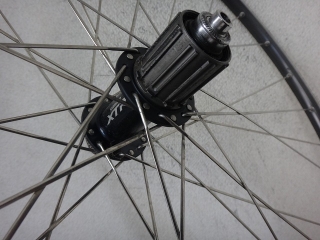
The original hub was an FH-M985 32H, all CX-RAY 6x6 JIS lacing.
By replacing the hub, it will now accommodate 11-speed road sprockets.
This hub has a disc mount, but
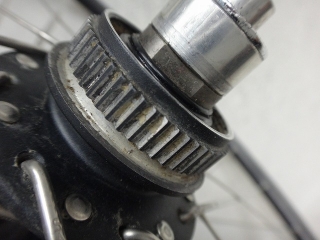
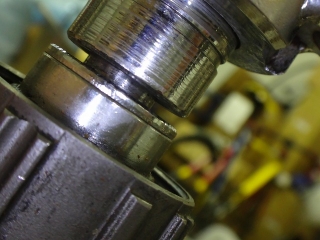
given the rim-side wear and the mud buildup on the disc mount splines,
it appears it was used mainly with rim brakes.
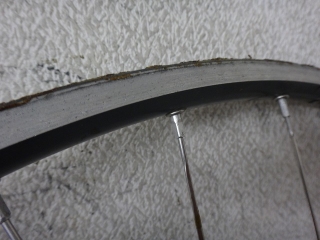
The rim-side does show slight warping in the brake zone from wear,
but realistically (unless there's ever an era of through-axle rim brakes),
it will be used with disc brakes only going forward, so there's no problem.
With clincher rims, tire air pressure constantly pushes the bead outward against the bead hook,
but tubulars don't have that, so even if the brake zone gets a bit thinner,
there's no risk of bursting.

↑The spokes really are on the short side (both sides).
They barely fall short of reaching the slot,
but I'll reuse the CX-RAY from the non-freewheel side.
This spoke length isn't quite in NG territory,
so the builder might have had specific preferences
and done this intentionally.
Whether to respect that depends on my assessment of the builder's skill,
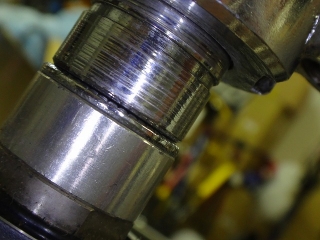
The centering is so off that I'd guess spoke length was probably
done pretty haphazardly too.
Center drift is the direction of aging wear,
but it wouldn't go this far from that alone.
Plus, with this much drift,
the cantilever brake setup wouldn't have worked when swapping to another proper wheel.
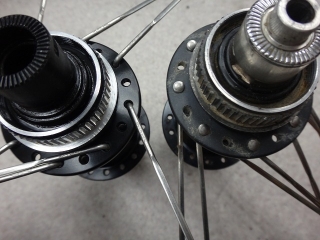
Extracting the inpokes from the old hub, cleaning them, and moving them to the new hub...
the process is the same as with the front wheel from the other day.
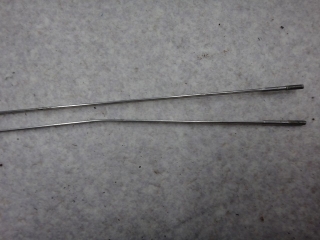
There was one spoke on the non-freewheel side that needed replacement.
It's the one in the lower part of the image—lateral force is acting on it.
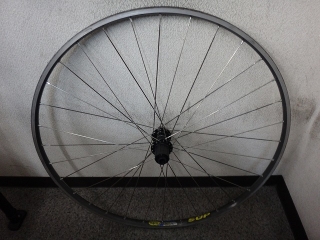
Built.
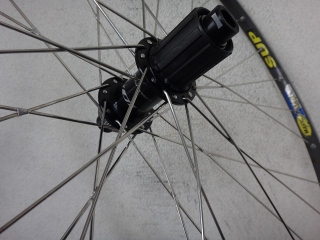
FH-R7070 32H semi-comp 4x6 JIS lacing with radial on one side.

Continuing from the other day.
I'm replacing the rear hub on the Reflexx Rim
with a through-axle version.
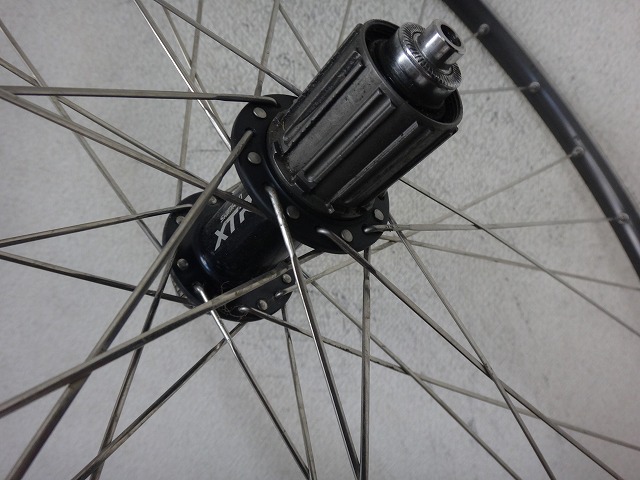
The original hub was an FH-M985 32H, all CX-RAY 6x6 JIS lacing.
By replacing the hub, it will now accommodate 11-speed road sprockets.
This hub has a disc mount, but
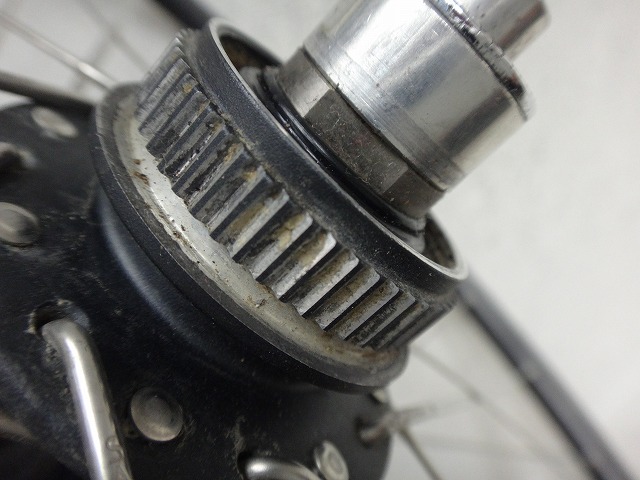
given the rim-side wear and the mud buildup on the disc mount splines,
it appears it was used mainly with rim brakes.
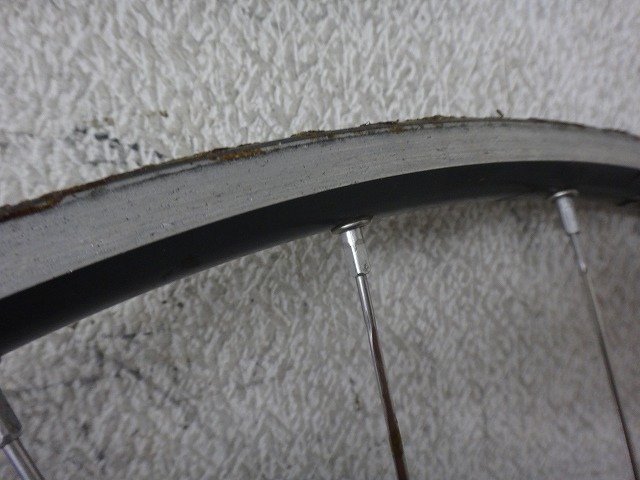
The rim-side does show slight warping in the brake zone from wear,
but realistically (unless there's ever an era of through-axle rim brakes),
it will be used with disc brakes only going forward, so there's no problem.
With clincher rims, tire air pressure constantly pushes the bead outward against the bead hook,
but tubulars don't have that, so even if the brake zone gets a bit thinner,
there's no risk of bursting.
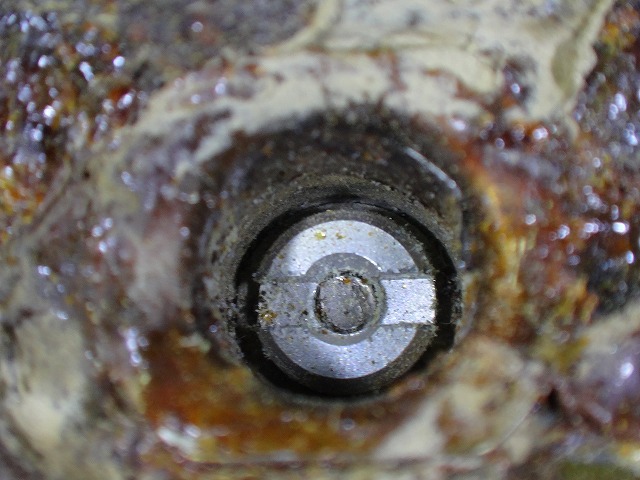
↑The spokes really are on the short side (both sides).
They barely fall short of reaching the slot,
but I'll reuse the CX-RAY from the non-freewheel side.
This spoke length isn't quite in NG territory,
so the builder might have had specific preferences
and done this intentionally.
Whether to respect that depends on my assessment of the builder's skill,


The centering is so off that I'd guess spoke length was probably
done pretty haphazardly too.
Center drift is the direction of aging wear,
but it wouldn't go this far from that alone.
Plus, with this much drift,
the cantilever brake setup wouldn't have worked when swapping to another proper wheel.
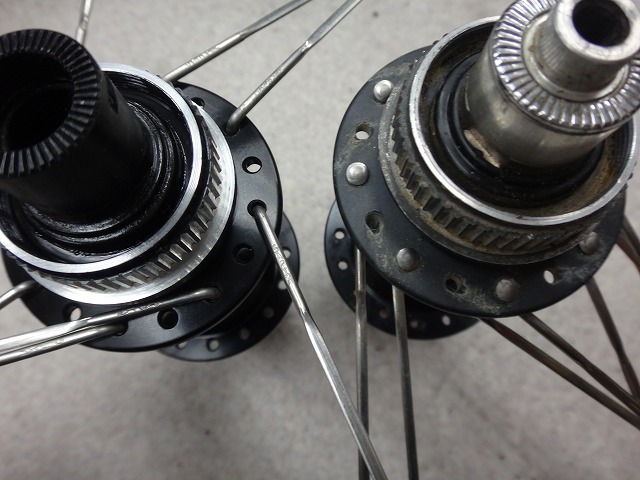
Extracting the inpokes from the old hub, cleaning them, and moving them to the new hub...
the process is the same as with the front wheel from the other day.
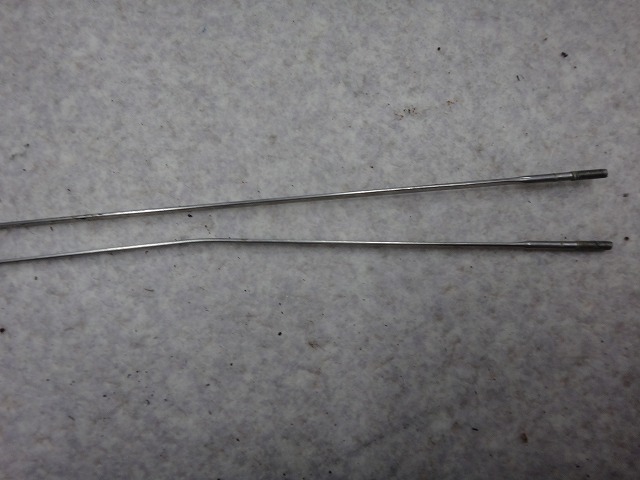
There was one spoke on the non-freewheel side that needed replacement.
It's the one in the lower part of the image—lateral force is acting on it.

Built.
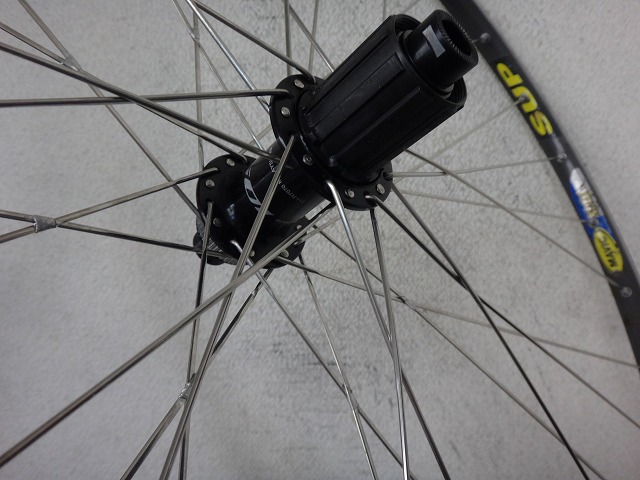
FH-R7070 32H semi-comp 4x6 JIS lacing with radial on one side.