When you really think deeply about competition bicycle equipment,
and bring together the most advanced materials, manufacturing methods, and theories of that time,
I believe the ultimate form is the time trial bike.
If you place restrictions on the "ultimate," it ceases to be ultimate, right?
So at the very least, I've always thought—couldn't they at least free up time trial bikes
from UCI regulations to allow things like front and rear different-sized wheels (funny bikes) and
non-diamond frames?
The other day I was talking with a customer (rank: major).
Many people think Pinarello's time trial bike, the Espada, is a full carbon bike,
but strictly speaking, it's not actually a carbon bike—that's what I said.
But since I didn't have a source on hand, I said I'd write about it here later.
So today is that post.
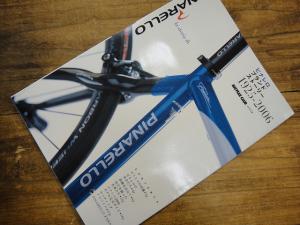
So this is my source(?). It's a small booklet called "Pinarello Brand History,"
which came as an appendix to Bicycle Club, March 2006 issue.
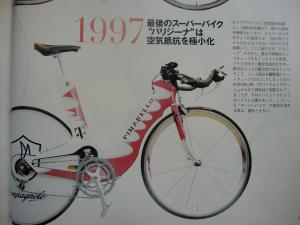
First, the Parisina, which was the successor model to the Espada.
Since it has a toptubeless frame, it wouldn't pass today's regulations.
This has brakes and a derailleur, so it's a road time trial model.
This is probably made using carbon monocoque construction.
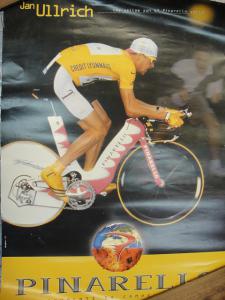
The image of Ulrich riding it is really strong.
Even on a Pinarello poster I have, Ulrich is the one riding it.
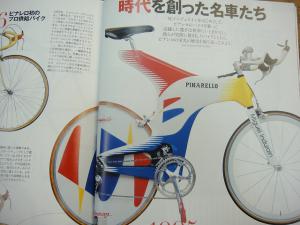
Now, the problematic Espada.
This also has brakes and a derailleur attached,
so it's a road time trial model.
The front wheel looking smaller isn't an illusion—
it's a funny bike with a 26-inch front and 27-inch rear.
(According to Italians, 700C tubulars become 28 inches.
Vittoria tubulars are labeled as 28 inches.
700C = 700mm, 1 inch = 25.4mm, so
700C is approximately 27.55 inches, but it's just a matter of
interpretation whether you round up or down.)
There's a straight fork with "Miguel Indurain" written on it,
but I'll touch on that later.
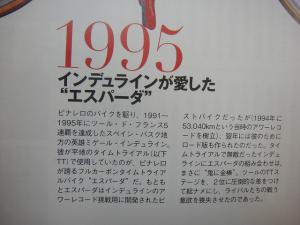
↑The caption clearly says "full carbon bike."
Huh?
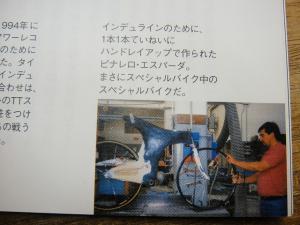
↑Even looking at it mid-production, it looks like a carbon bike.
Huh?
Maybe the Espada really is a carbon bike after all (getting weak-kneed).
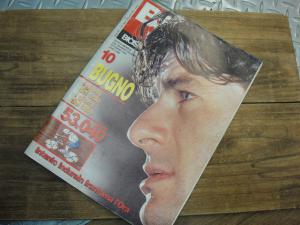
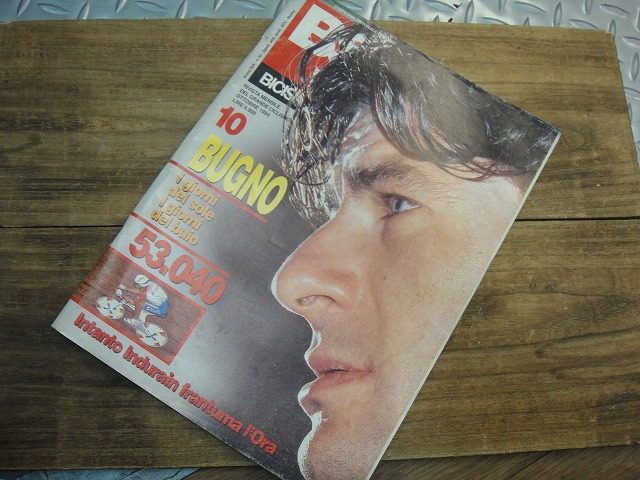
So here comes source #2. An Italian cycling specialist magazine "Bicisport"
October 1994 issue. Gianni Bugno looks awesome!
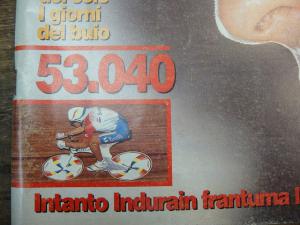
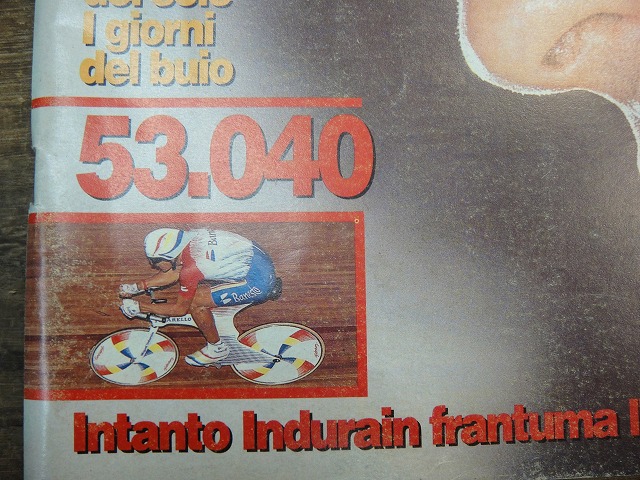
This issue covers Miguel Indurain's hour record of 53.040km in detail.
But first.
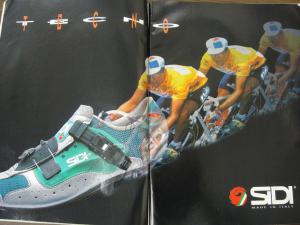
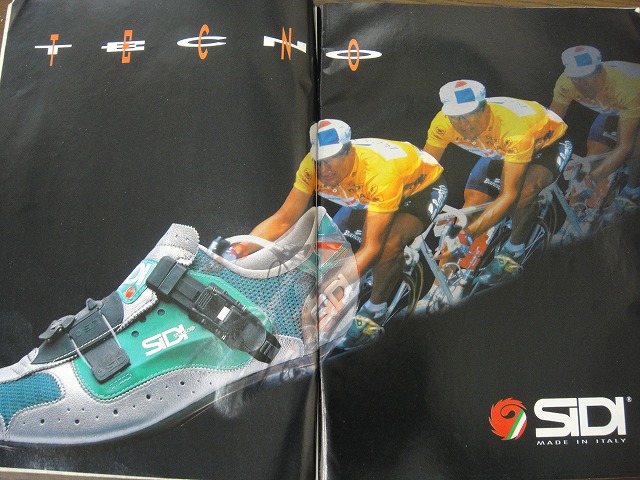
A Sidi ad.
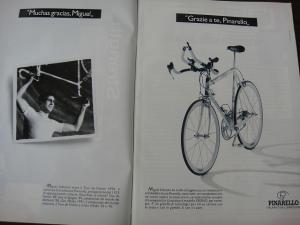
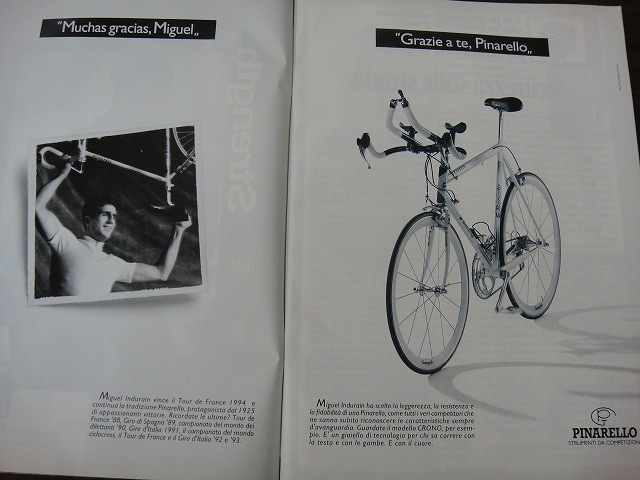
A Pinarello ad.
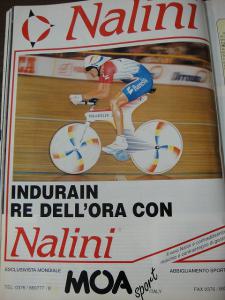
A Naarini ad.
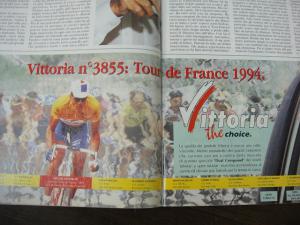
A Vittoria ad.
The other issues aren't mixed in.
The sheer number of pages Indurain appears on is just amazing.
Now for the article.
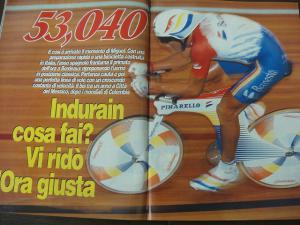
It's a special feature on the hour record.

At the bottom right is a comparison table
of past hour record holders (since Merckx)
showing the time taken for various distances.
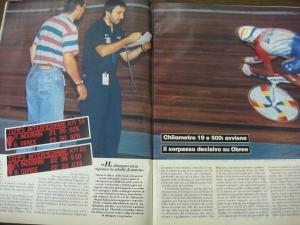
The digital display in the middle left of the left page is a comparison with Graeme Obree.
Up to the 19km mark, Indurain is slower,
but by the 20km mark, he's overtaken him.
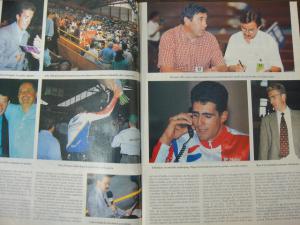
The person in the red shirt at the top of the right page is Eddy Merckx.
Below, Indurain is on the phone.
Not because he'd made a promise to a boy sick with a disease who refused surgery—
that if he achieved the hour record, the boy would find courage to have surgery too.
No, he's checking his doping control results.
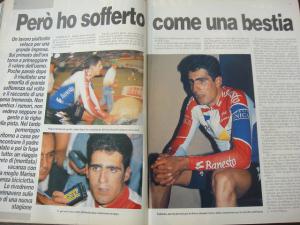
The page on the right is also waiting for doping test results.
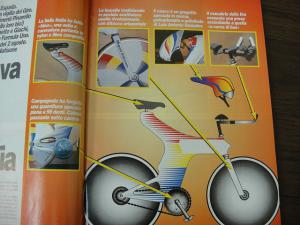
An explanation of Indurain's bike secrets!
From left: "59T big chainring!"
"Fiber composite saddle, Selle Italia Idea!"
"Straight fork!"
"Aero helmet!"
"ITM delta bar!" and so on.
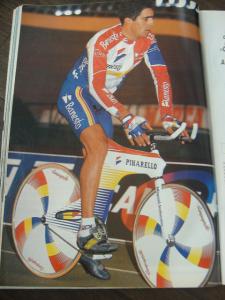
Being a pista (fixed-gear) model Espada, it has fewer parts
and is ultimately very simple.
Since different-sized front and rear wheels and non-diamond frames can't be used under today's regulations,
compared to a 2013-era time trial bike,
this one has many more elements that make logical sense.
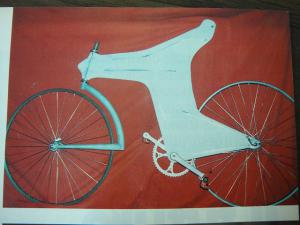
The main topic. How the Espada was made.
This is an earlier stage than the state shown in that Bicycle Club booklet earlier.
You can faintly see what looks like a skeletal framework under the carbon(?).
It has Look pedals, but Indurain favored Time pedals.
At the prototype stage, it doesn't really matter anyway.
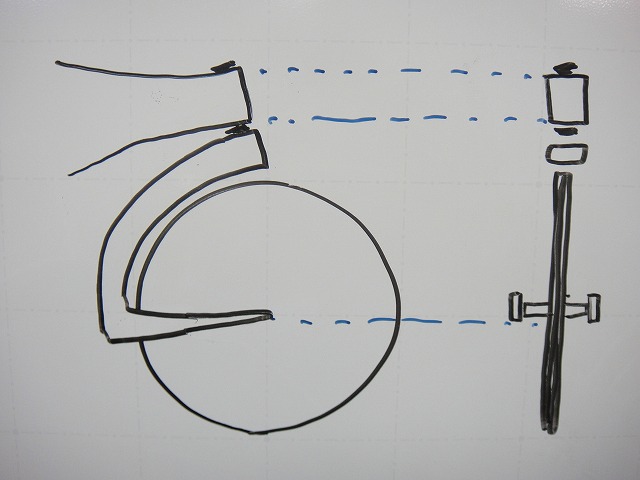
The most amazing thing in this image is the front fork.
It has a strange shape, but that's because it's shaped to minimize
the front-facing projection area of the fork blades.
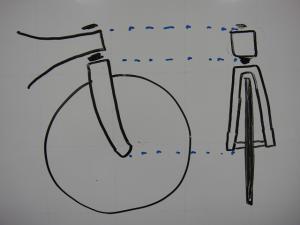
↑A normal front fork looks like this, but
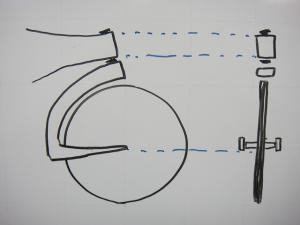
↑in the case of a fork where the crown extends all the way back behind the front wheel, it looks like this.
In the finished Espada, for some reason it has a normal fork.
I suspect it was either a rigidity issue or a rules violation, but which one?
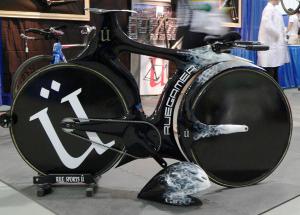
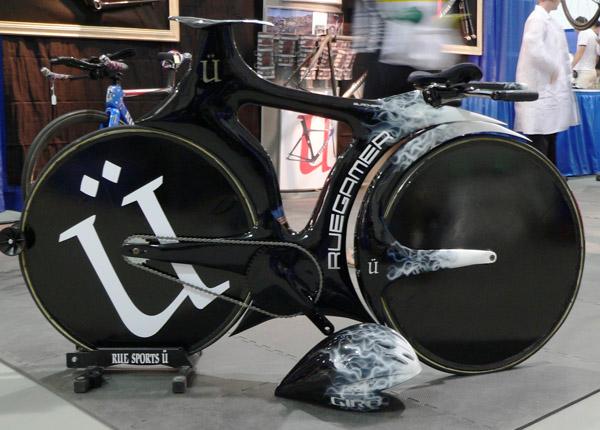
↑As a side note, a brand called Ruegamer (however you pronounce that)
has a concept bike with a similar fork idea.
They didn't copy the Espada—it's just that smart people's ideas naturally converge,
I think.

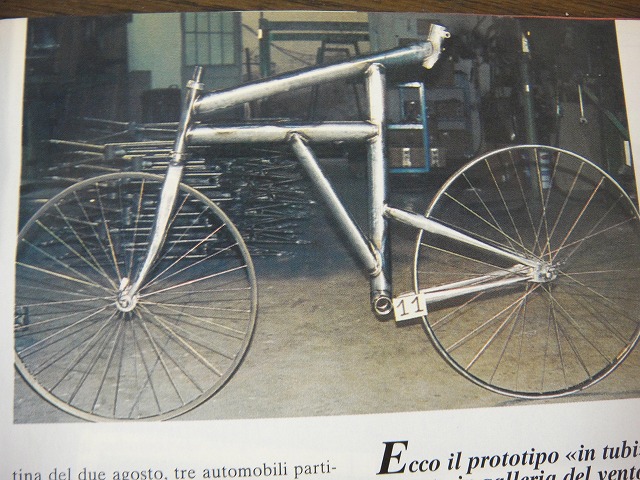
Going back even further in time.
Here's the skeleton. In the case of the Espada, the carbon material isn't there for rigidity—
it's merely a wind shield. It's like a Cosmic Carbon wheel.
This is why I say the Espada isn't a full carbon frame.
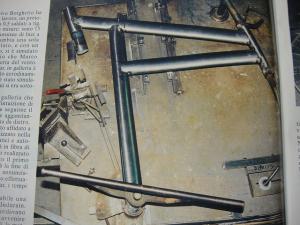
But conversely, they took it from here to that indescribable organic design,
and moreover, they actually set the hour record with it...
The Espada is a time trial bike that remains in history.
It definitely influenced the design of time trial bikes in later eras.
This kind of sleekness is something you don't see much on modern frames.
I'll say it once more: I wish they'd at least make time trial bikes
"anything goes" with no restrictions.
and bring together the most advanced materials, manufacturing methods, and theories of that time,
I believe the ultimate form is the time trial bike.
If you place restrictions on the "ultimate," it ceases to be ultimate, right?
So at the very least, I've always thought—couldn't they at least free up time trial bikes
from UCI regulations to allow things like front and rear different-sized wheels (funny bikes) and
non-diamond frames?
The other day I was talking with a customer (rank: major).
Many people think Pinarello's time trial bike, the Espada, is a full carbon bike,
but strictly speaking, it's not actually a carbon bike—that's what I said.
But since I didn't have a source on hand, I said I'd write about it here later.
So today is that post.
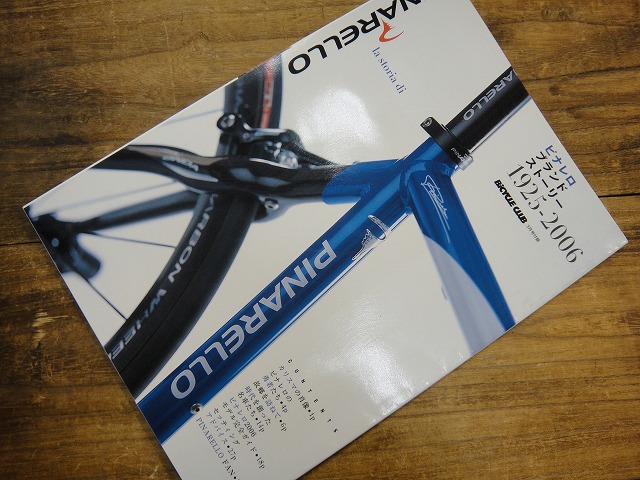
So this is my source(?). It's a small booklet called "Pinarello Brand History,"
which came as an appendix to Bicycle Club, March 2006 issue.
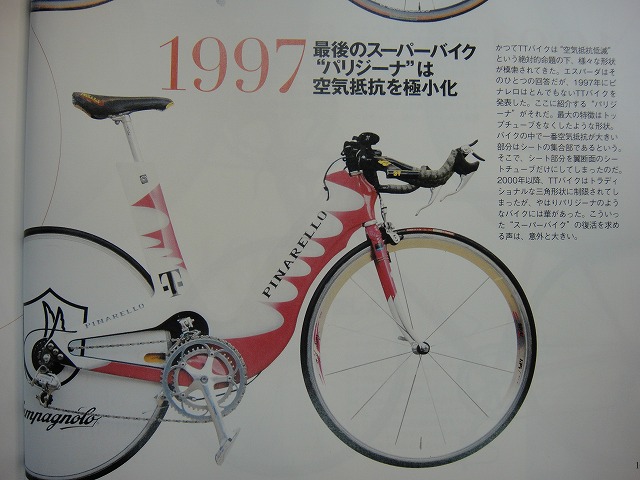
First, the Parisina, which was the successor model to the Espada.
Since it has a toptubeless frame, it wouldn't pass today's regulations.
This has brakes and a derailleur, so it's a road time trial model.
This is probably made using carbon monocoque construction.

The image of Ulrich riding it is really strong.
Even on a Pinarello poster I have, Ulrich is the one riding it.
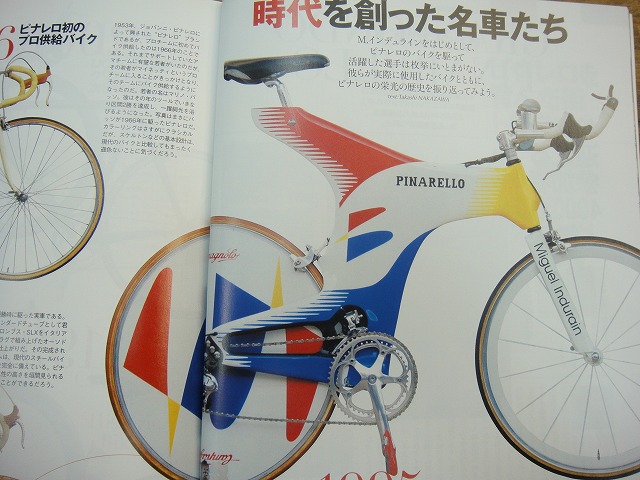
Now, the problematic Espada.
This also has brakes and a derailleur attached,
so it's a road time trial model.
The front wheel looking smaller isn't an illusion—
it's a funny bike with a 26-inch front and 27-inch rear.
(According to Italians, 700C tubulars become 28 inches.
Vittoria tubulars are labeled as 28 inches.
700C = 700mm, 1 inch = 25.4mm, so
700C is approximately 27.55 inches, but it's just a matter of
interpretation whether you round up or down.)
There's a straight fork with "Miguel Indurain" written on it,
but I'll touch on that later.
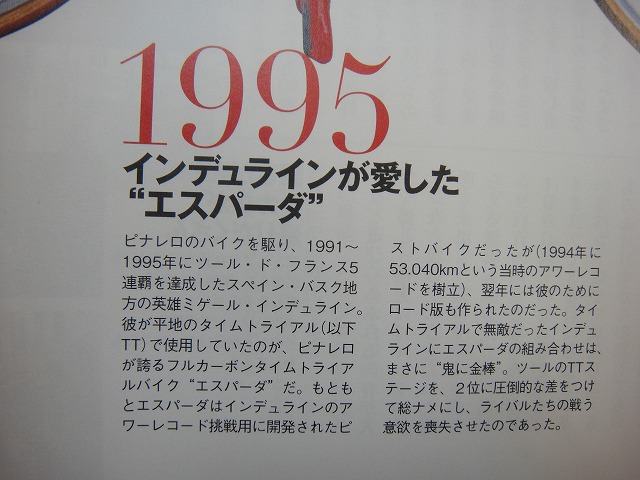
↑The caption clearly says "full carbon bike."
Huh?
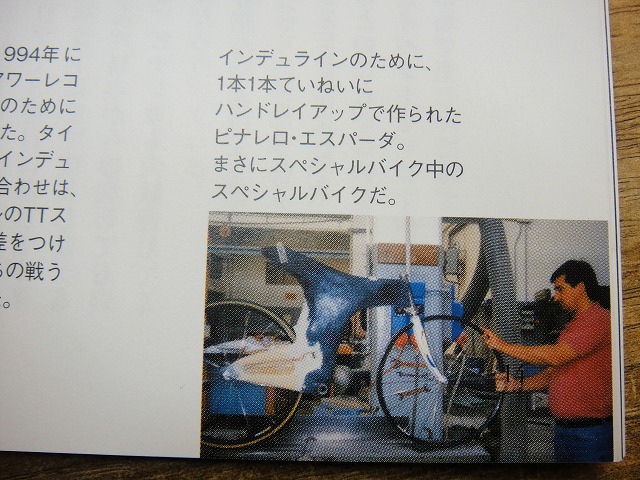
↑Even looking at it mid-production, it looks like a carbon bike.
Huh?
Maybe the Espada really is a carbon bike after all (getting weak-kneed).
So here comes source #2. An Italian cycling specialist magazine "Bicisport"
October 1994 issue. Gianni Bugno looks awesome!
This issue covers Miguel Indurain's hour record of 53.040km in detail.
But first.
A Sidi ad.
A Pinarello ad.
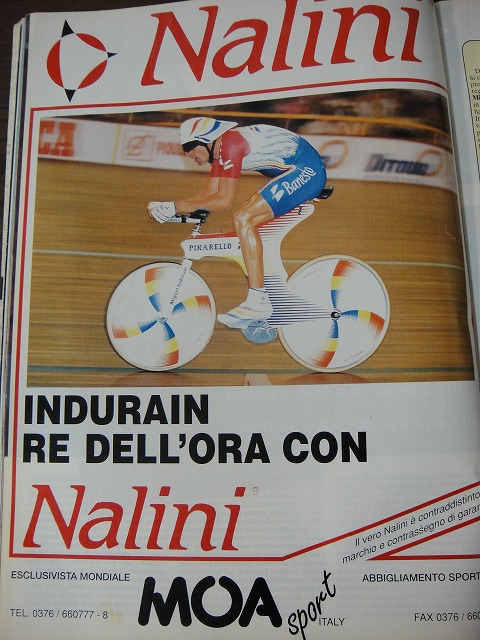
A Naarini ad.
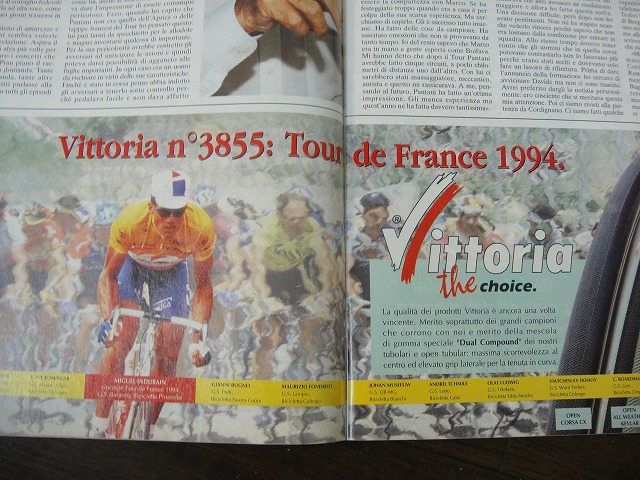
A Vittoria ad.
The other issues aren't mixed in.
The sheer number of pages Indurain appears on is just amazing.
Now for the article.
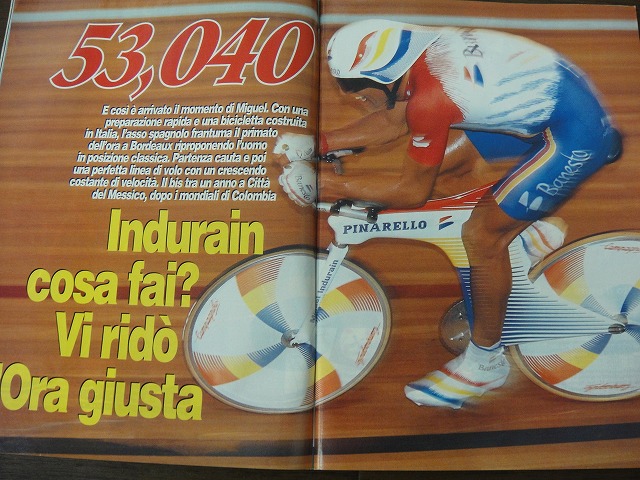
It's a special feature on the hour record.

At the bottom right is a comparison table
of past hour record holders (since Merckx)
showing the time taken for various distances.
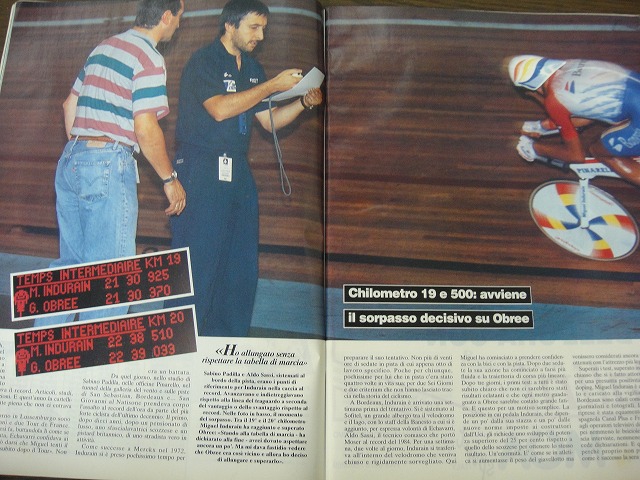
The digital display in the middle left of the left page is a comparison with Graeme Obree.
Up to the 19km mark, Indurain is slower,
but by the 20km mark, he's overtaken him.
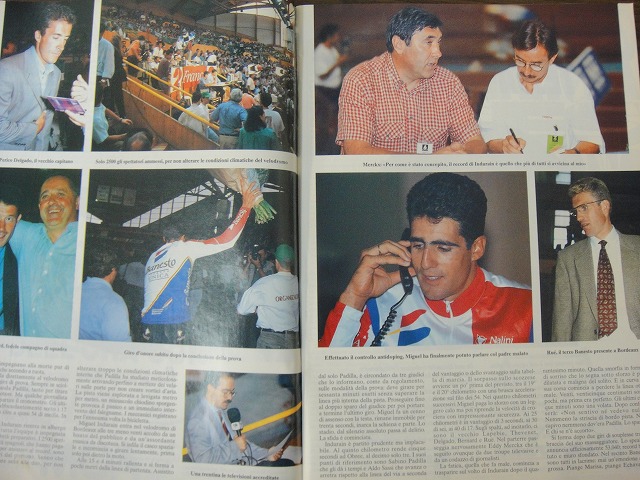
The person in the red shirt at the top of the right page is Eddy Merckx.
Below, Indurain is on the phone.
Not because he'd made a promise to a boy sick with a disease who refused surgery—
that if he achieved the hour record, the boy would find courage to have surgery too.
No, he's checking his doping control results.

The page on the right is also waiting for doping test results.
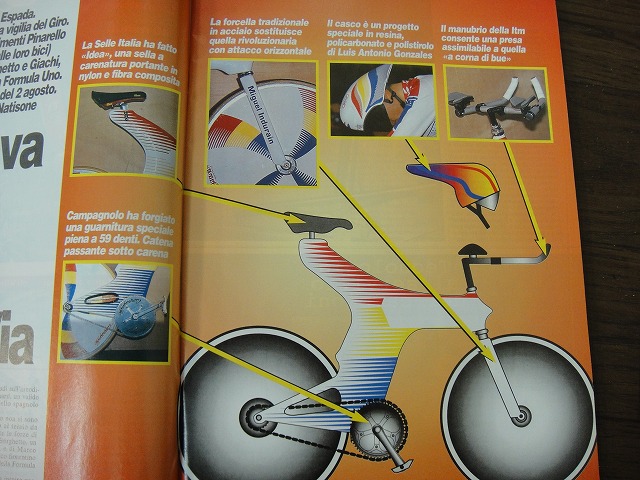
An explanation of Indurain's bike secrets!
From left: "59T big chainring!"
"Fiber composite saddle, Selle Italia Idea!"
"Straight fork!"
"Aero helmet!"
"ITM delta bar!" and so on.

Being a pista (fixed-gear) model Espada, it has fewer parts
and is ultimately very simple.
Since different-sized front and rear wheels and non-diamond frames can't be used under today's regulations,
compared to a 2013-era time trial bike,
this one has many more elements that make logical sense.
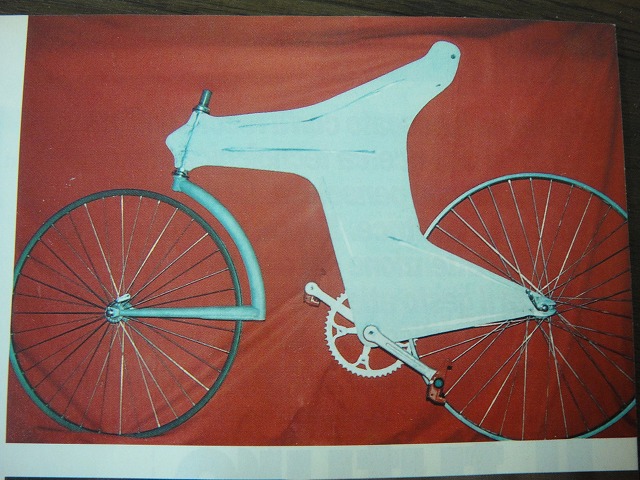
The main topic. How the Espada was made.
This is an earlier stage than the state shown in that Bicycle Club booklet earlier.
You can faintly see what looks like a skeletal framework under the carbon(?).
It has Look pedals, but Indurain favored Time pedals.
At the prototype stage, it doesn't really matter anyway.
The most amazing thing in this image is the front fork.
It has a strange shape, but that's because it's shaped to minimize
the front-facing projection area of the fork blades.
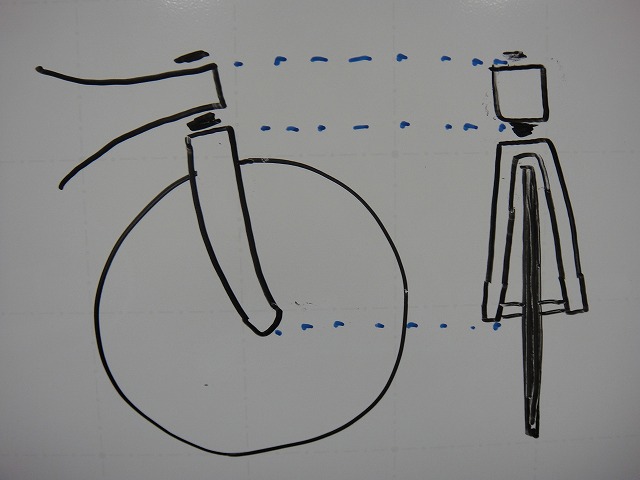
↑A normal front fork looks like this, but
↑in the case of a fork where the crown extends all the way back behind the front wheel, it looks like this.
In the finished Espada, for some reason it has a normal fork.
I suspect it was either a rigidity issue or a rules violation, but which one?
↑As a side note, a brand called Ruegamer (however you pronounce that)
has a concept bike with a similar fork idea.
They didn't copy the Espada—it's just that smart people's ideas naturally converge,
I think.
Going back even further in time.
Here's the skeleton. In the case of the Espada, the carbon material isn't there for rigidity—
it's merely a wind shield. It's like a Cosmic Carbon wheel.
This is why I say the Espada isn't a full carbon frame.

But conversely, they took it from here to that indescribable organic design,
and moreover, they actually set the hour record with it...
The Espada is a time trial bike that remains in history.
It definitely influenced the design of time trial bikes in later eras.
This kind of sleekness is something you don't see much on modern frames.
I'll say it once more: I wish they'd at least make time trial bikes
"anything goes" with no restrictions.