A customer brought me a first-generation Campagnolo Bora to work on.
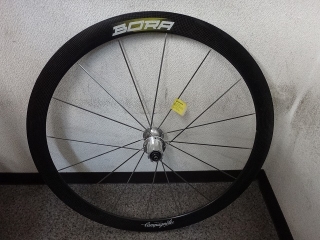
This is the photo after the work was completed.
The rim size is 26 inches and it's a tubular, but
if only the front wheel were in question, it might be for a funny bike (a TT bike with different front and rear wheel sizes)
but the fact that a rear wheel exists means
it was designed for a bike with both front and rear wheels being 26 inches.
As for the rim, we're using the original Colima rim from that era.
Colima was a manufacturer that never discontinued their 26-inch rim lineup
right up until they switched to wide rims.
By the way, the customer also has the matching front wheel, but
since they came from different sources, the front wheel still had rim cement applied
and showed signs of use on the hub as well.
The rear wheel is unused, as you can tell from the fact that the spoke labels are still present.
Just like how "the baseball cap look is wearing a cap without peeling off the bill sticker,"
there's no such thing as a trend of keeping spoke labels on as-is,
so it's definitely an unused wheel.
The original was set up with an 8-speed freewheel body,
but the customer wanted it converted to 9-speed.
The Shamal from around the same period, with both wheels being 12H, also originally came as 8-speed,
and then components quickly became 9-speed, so
a conversion kit was released at the time as a rescue measure
for people who had bought 8-speed Shamals.
This is different from the response of a certain manufacturer that didn't offer an 11-speed conversion for the WH-7900.
Of course, there's no current manufacturer stock for it,
but when I told the customer the part number and separately
what a 9-speed hub with the same internal structure as an 8-speed hub looks like,
he managed to find the necessary parts for the conversion.
A Record 9-speed hub corresponding to the latter.
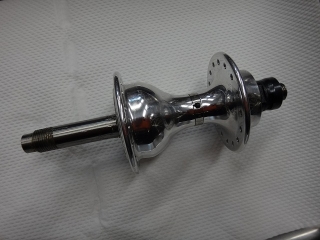
However, it turned out to be a titanium shaft version Record hub.
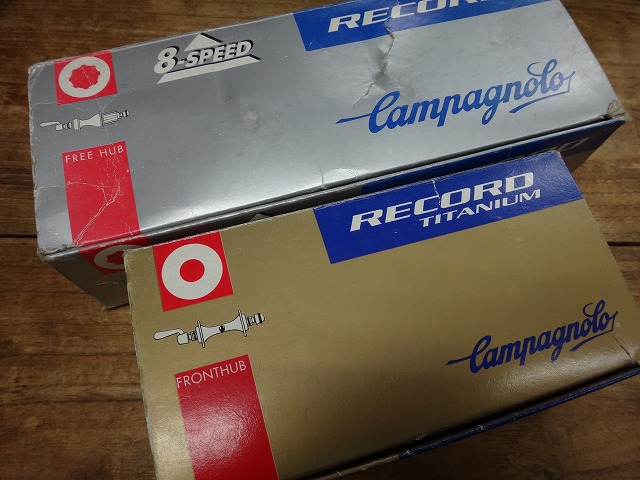
This hub came in a gold box that seemed to indicate a special specification,
in contrast to the silver box that housed the component set at that time.
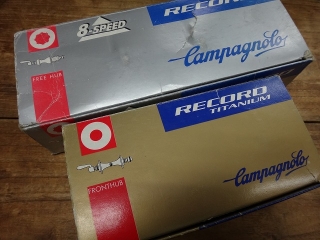
↑These are my personal items: a standard 8-speed rear hub box and
a titanium shaft version front hub box.

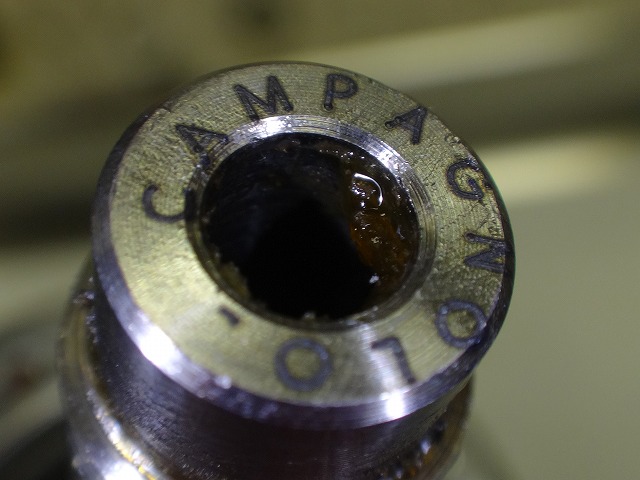
With a titanium shaft, there's a CAMPAGNOLO laser engraving on the end face on the right end side.

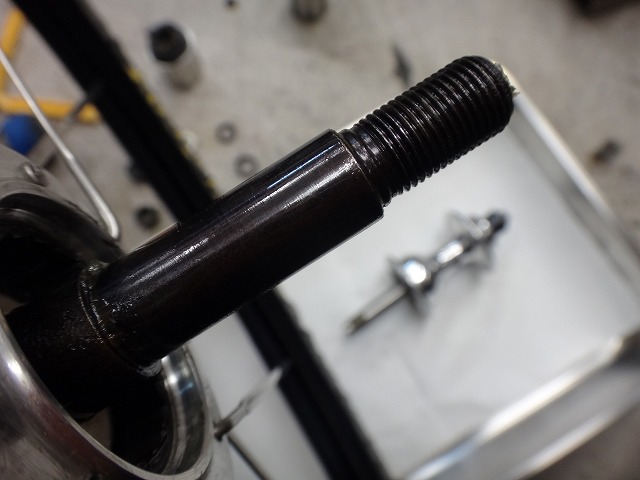
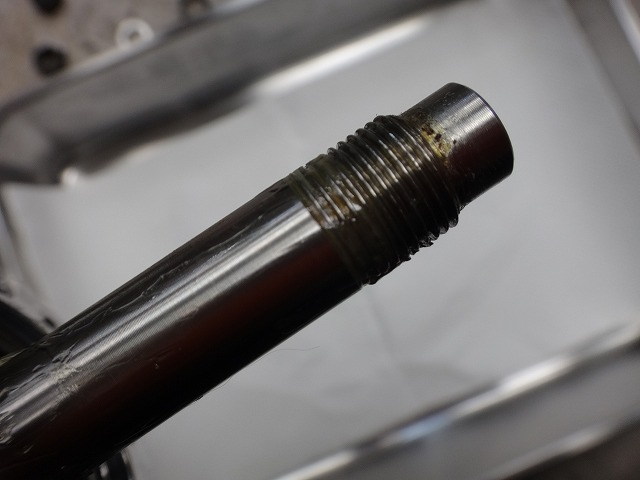
The thread diameter of the right end nut is the same nominal size as the part that sits on the frame
in the case of a steel shaft, but

with a titanium shaft, it's the same nominal size as the hub shaft itself, so
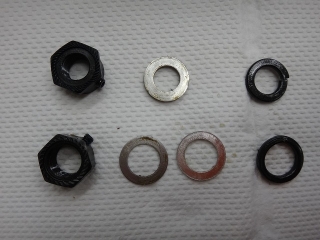
the inner diameter of the right end parts differs.
On Shimano freehubs, the right bearing cup is inside the freewheel body,
but on this hub the right bearing cup is inside the hub shell,
and ball bearing adjustment and fixing with a cone nut only happens on the left side.
The right end nut uses a spring washer being crushed as a loosening preventative,
but that apparently wasn't enough,
so it's built with a set screw driven into the hub shaft.
On current hubs, they aim for a loosening preventative by using reverse threads here,
but with few threads and shallow engagement, I often see these coming loose.
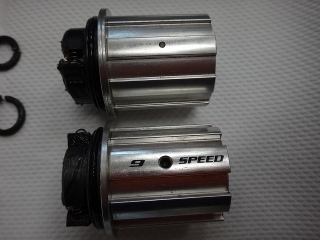
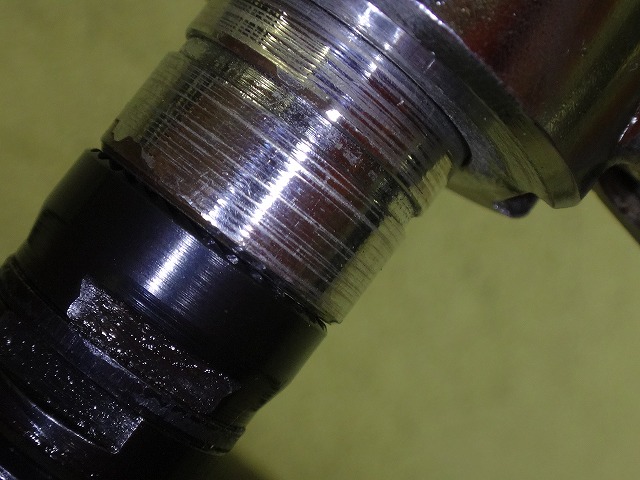
The spline on the freewheel body differs not only in length
but also in shape.
With an 8-speed freewheel body, the spline shape is the same everywhere, so
you need to adjust it while consulting the manual so that the shift point becomes optimal (or close to it)
for the next cog size (→here).
The 9-speed freewheel body ended up being a 9-to-12 speed compatible freewheel body.
However, with 12-speed, even though the sprockets themselves will fit,
on wheels from an era before that was anticipated,
the sprocket and rear derailleur in low gear can contact the spokes and hub.
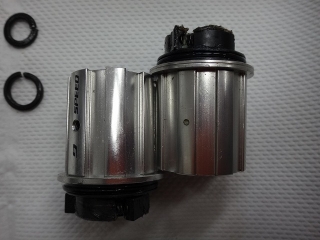
When you place a 9-speed freewheel body against the shoulder of an 8-speed freewheel body,
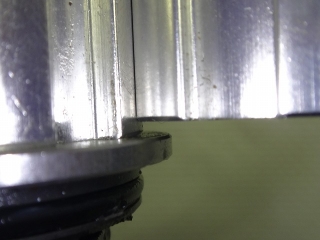
there's about this much difference.
Campagnolo's freewheel body has generous dimensions beyond the spline for multi-speed increases to 9-speed and beyond,
but because of this the right flange is narrow and quite dished.
However, recent 11-speed Shimano hubs have right flange widths not much different from this.
In a way, they were ahead of their time (← not really).
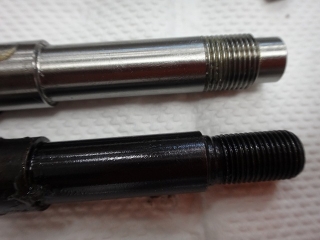
The dimensions on the right side of the hub shaft are the same except around the end nut.
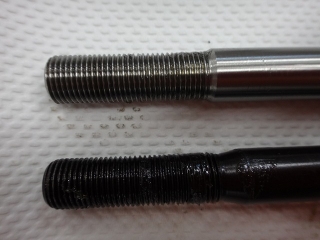
On the left side, both the thread diameter and the parts around the end nut are the same,
but because the Bora has a larger distance between the left and right bearing cups than the Record hub,
on the Record hub the number of spacers between the cone nuts became two (the same black spacer as the Bora plus a silver spacer unique to Record).
So we're using the original Bora parts around the left end.
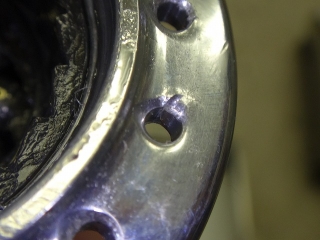
This Record hub had good internal condition but
it was a used item with assembly marks.
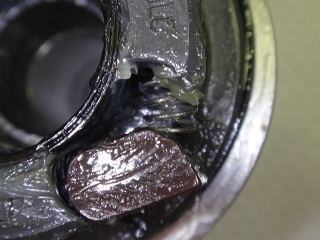
The pawls on the freewheel body from this era use a coil spring to lift them,
but the indentation on the pawl side that receives the spring is shallow, making it
extremely difficult to keep all three properly seated
while setting it into the hub.
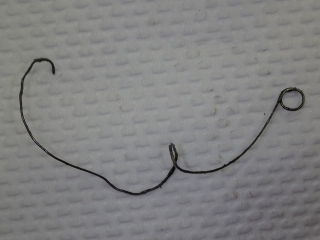
When I removed the freewheel body, spring fragments were tangled up inside.
It's amazing that the ratchet was still working even in this condition.
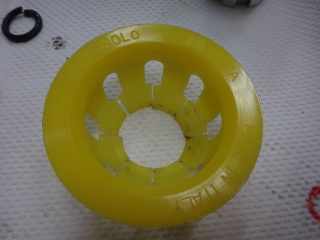
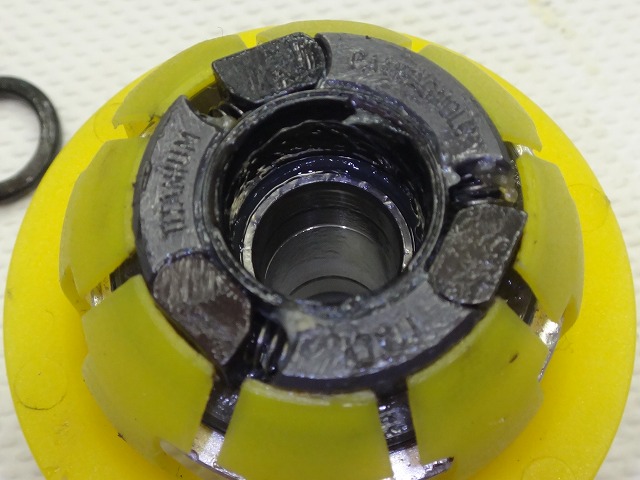
A discontinued Campagnolo tool
for seating the freewheel pawls while inserting the freewheel body into the hub.
It allows you to set the freewheel body in smoothly and reliably.
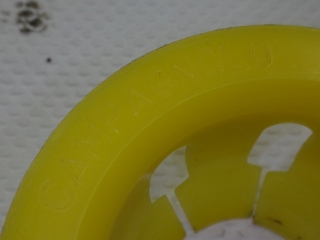
↑It says CAMPAGNOLO on it

↑When seated, it looks like this
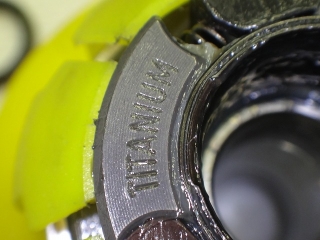
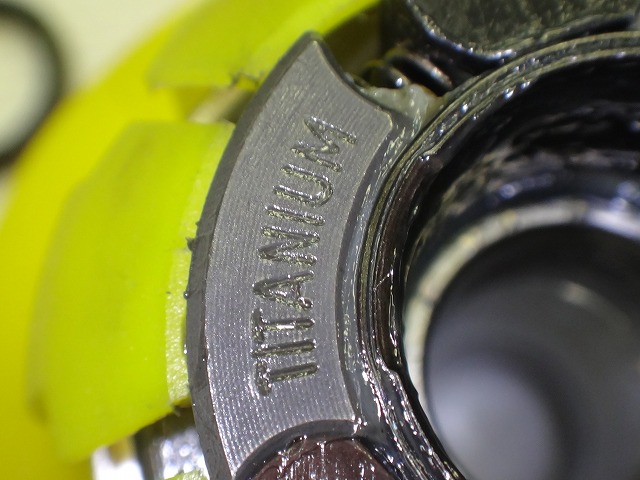
It says "Titanium" on the freewheel body, but
the various dimensions on the freewheel body itself are
no different from those for the steel shaft version, so there should be compatibility.
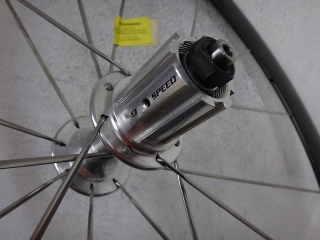
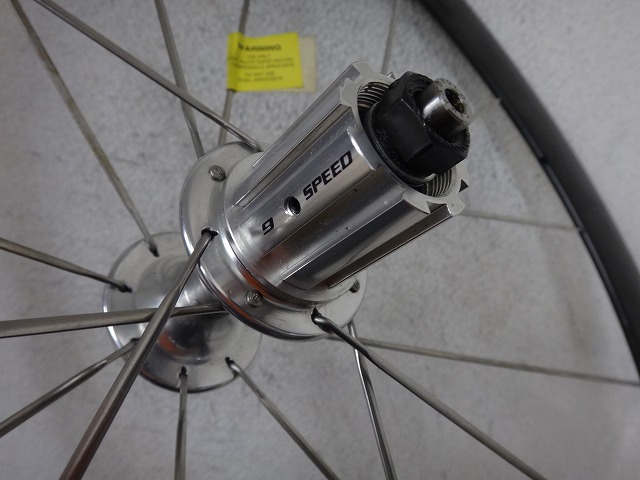
I successfully converted the 8-speed Bora to 9-speed.
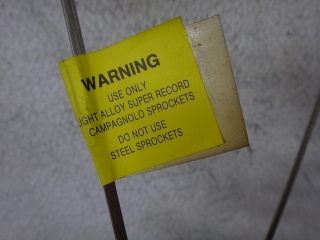
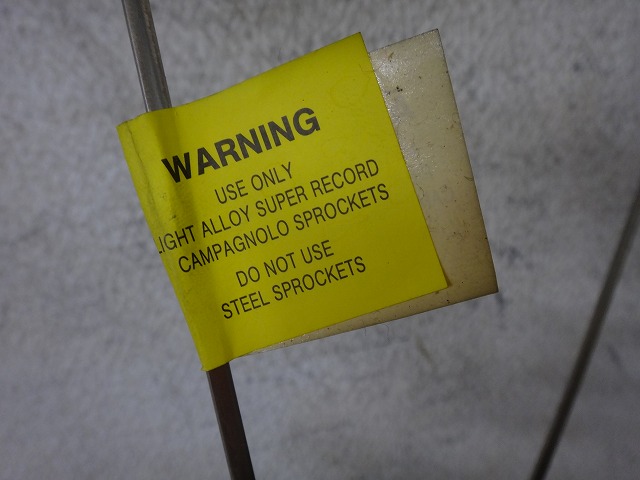
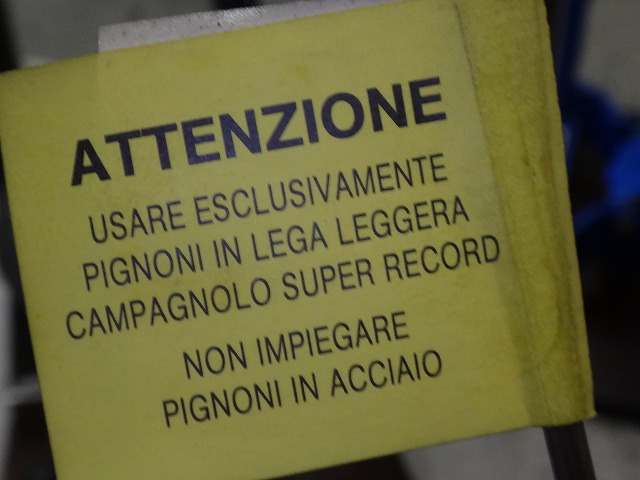
What the sticker is saying, in essence, is that because aluminum sprockets will dig into the spline,
you should use the aluminum sprockets that were available at the time on the Super Record grade.
A similar example is the Mavic Instant Drive freewheel body, which has a sticker warning
"only use sprockets with a spider arm on the low side."
However, as with Suntour's Microlight boss freewheel gear,
the aluminum, or "light alloy" as it was called then, sprockets of that era
wore at abnormally fast rates due to the lack of forging technology.
I thought "does anything like that still exist?" and looked it up,
and found a 13-23T available on an overseas site for $349.
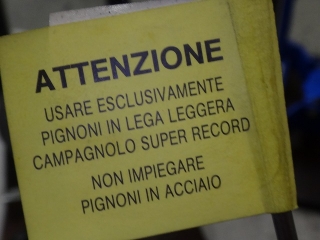
↑The back side has the same content in Italian.
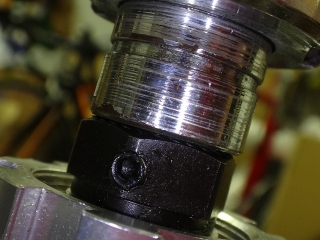
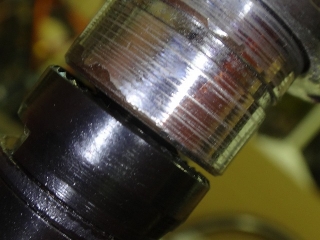
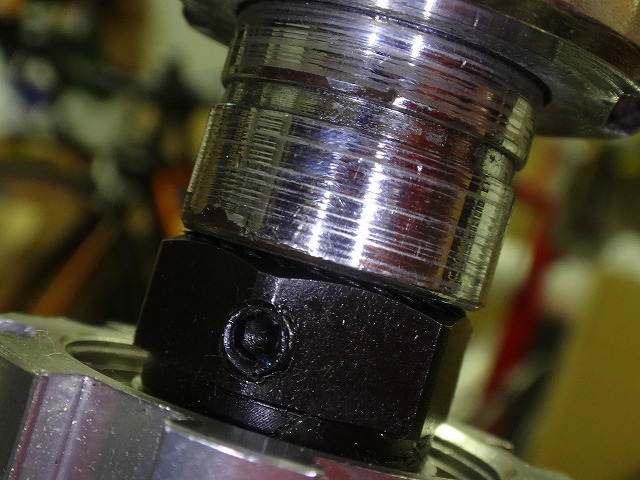
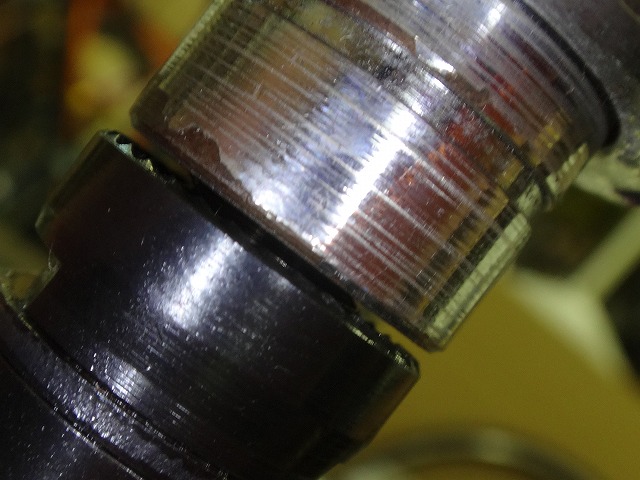
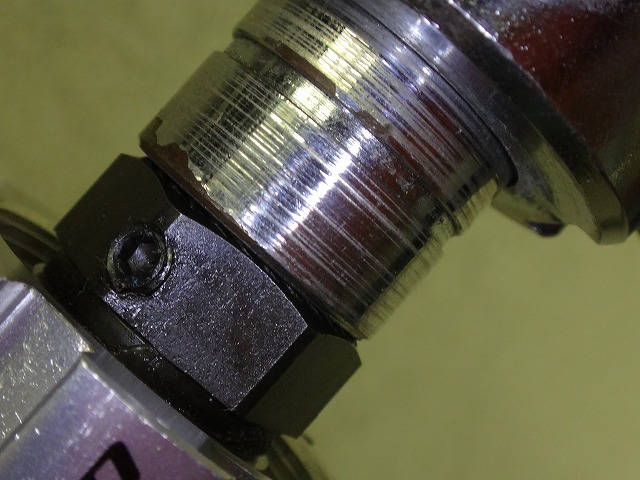
There was some centering off, which is fine,
but the supposedly unused wheel had quite a bit of runout.
It's like a stringed instrument that hasn't been tuned in at least 25 years,
so it's natural that it would develop some issues.
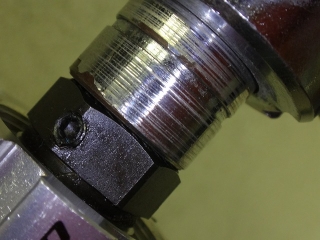
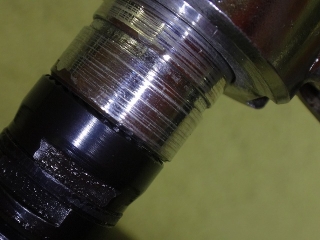
I corrected the runout and centered it.
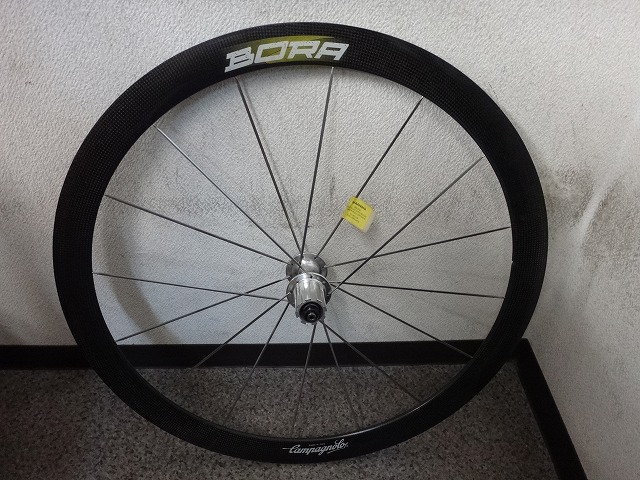
This is the photo after the work was completed.
The rim size is 26 inches and it's a tubular, but
if only the front wheel were in question, it might be for a funny bike (a TT bike with different front and rear wheel sizes)
but the fact that a rear wheel exists means
it was designed for a bike with both front and rear wheels being 26 inches.
As for the rim, we're using the original Colima rim from that era.
Colima was a manufacturer that never discontinued their 26-inch rim lineup
right up until they switched to wide rims.
By the way, the customer also has the matching front wheel, but
since they came from different sources, the front wheel still had rim cement applied
and showed signs of use on the hub as well.
The rear wheel is unused, as you can tell from the fact that the spoke labels are still present.
Just like how "the baseball cap look is wearing a cap without peeling off the bill sticker,"
there's no such thing as a trend of keeping spoke labels on as-is,
so it's definitely an unused wheel.
The original was set up with an 8-speed freewheel body,
but the customer wanted it converted to 9-speed.
The Shamal from around the same period, with both wheels being 12H, also originally came as 8-speed,
and then components quickly became 9-speed, so
a conversion kit was released at the time as a rescue measure
for people who had bought 8-speed Shamals.
Of course, there's no current manufacturer stock for it,
but when I told the customer the part number and separately
what a 9-speed hub with the same internal structure as an 8-speed hub looks like,
he managed to find the necessary parts for the conversion.
A Record 9-speed hub corresponding to the latter.
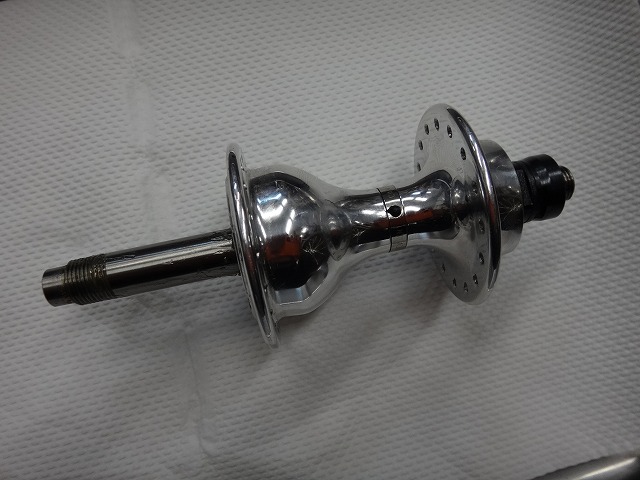
However, it turned out to be a titanium shaft version Record hub.
This hub came in a gold box that seemed to indicate a special specification,
in contrast to the silver box that housed the component set at that time.
↑These are my personal items: a standard 8-speed rear hub box and
a titanium shaft version front hub box.
With a titanium shaft, there's a CAMPAGNOLO laser engraving on the end face on the right end side.
The thread diameter of the right end nut is the same nominal size as the part that sits on the frame
in the case of a steel shaft, but
with a titanium shaft, it's the same nominal size as the hub shaft itself, so

the inner diameter of the right end parts differs.
On Shimano freehubs, the right bearing cup is inside the freewheel body,
but on this hub the right bearing cup is inside the hub shell,
and ball bearing adjustment and fixing with a cone nut only happens on the left side.
The right end nut uses a spring washer being crushed as a loosening preventative,
but that apparently wasn't enough,
so it's built with a set screw driven into the hub shaft.
On current hubs, they aim for a loosening preventative by using reverse threads here,
but with few threads and shallow engagement, I often see these coming loose.

The spline on the freewheel body differs not only in length
but also in shape.
With an 8-speed freewheel body, the spline shape is the same everywhere, so
you need to adjust it while consulting the manual so that the shift point becomes optimal (or close to it)
for the next cog size (→here).
The 9-speed freewheel body ended up being a 9-to-12 speed compatible freewheel body.
However, with 12-speed, even though the sprockets themselves will fit,
on wheels from an era before that was anticipated,
the sprocket and rear derailleur in low gear can contact the spokes and hub.
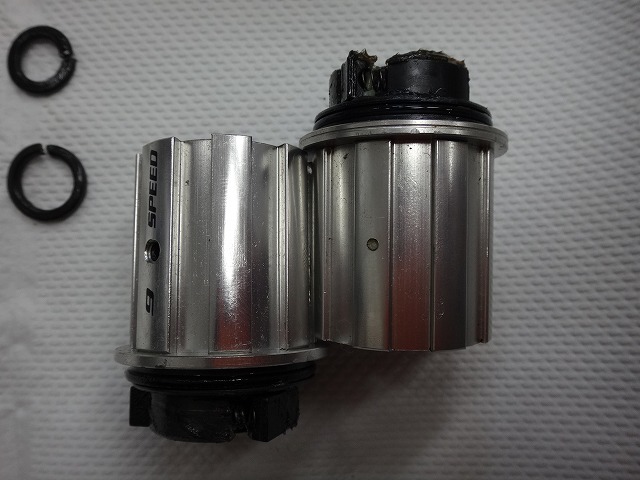
When you place a 9-speed freewheel body against the shoulder of an 8-speed freewheel body,
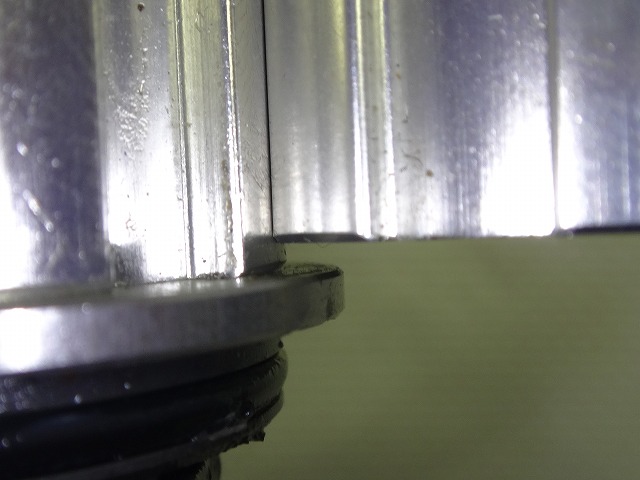
there's about this much difference.
Campagnolo's freewheel body has generous dimensions beyond the spline for multi-speed increases to 9-speed and beyond,
but because of this the right flange is narrow and quite dished.
However, recent 11-speed Shimano hubs have right flange widths not much different from this.
In a way, they were ahead of their time (← not really).

The dimensions on the right side of the hub shaft are the same except around the end nut.
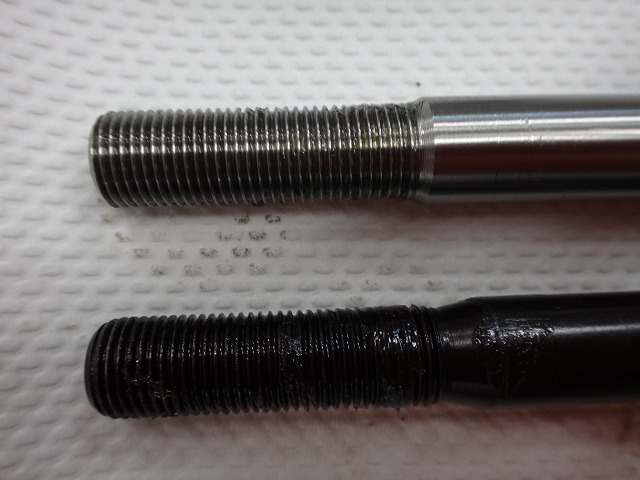
On the left side, both the thread diameter and the parts around the end nut are the same,
but because the Bora has a larger distance between the left and right bearing cups than the Record hub,
on the Record hub the number of spacers between the cone nuts became two (the same black spacer as the Bora plus a silver spacer unique to Record).
So we're using the original Bora parts around the left end.
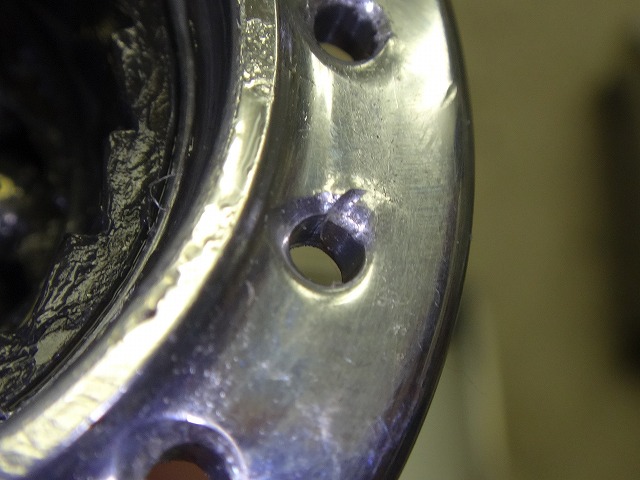
This Record hub had good internal condition but
it was a used item with assembly marks.
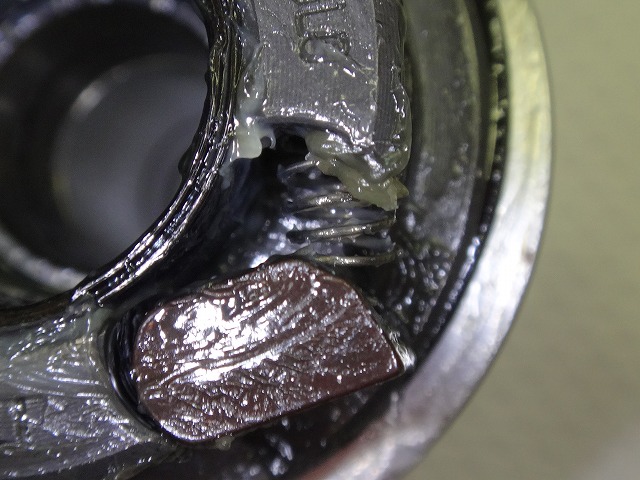
The pawls on the freewheel body from this era use a coil spring to lift them,
but the indentation on the pawl side that receives the spring is shallow, making it
extremely difficult to keep all three properly seated
while setting it into the hub.
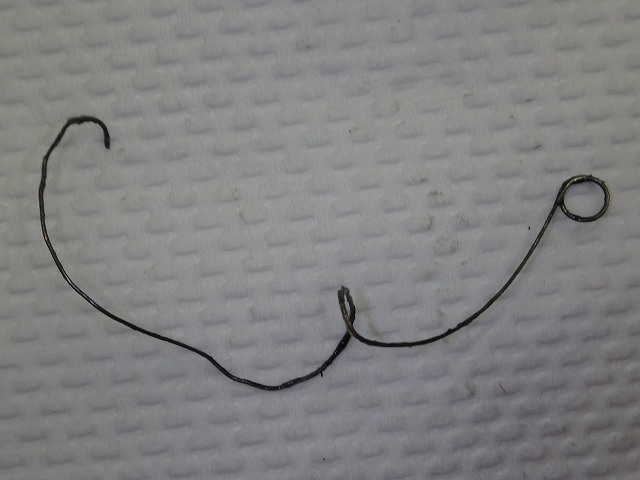
When I removed the freewheel body, spring fragments were tangled up inside.
It's amazing that the ratchet was still working even in this condition.
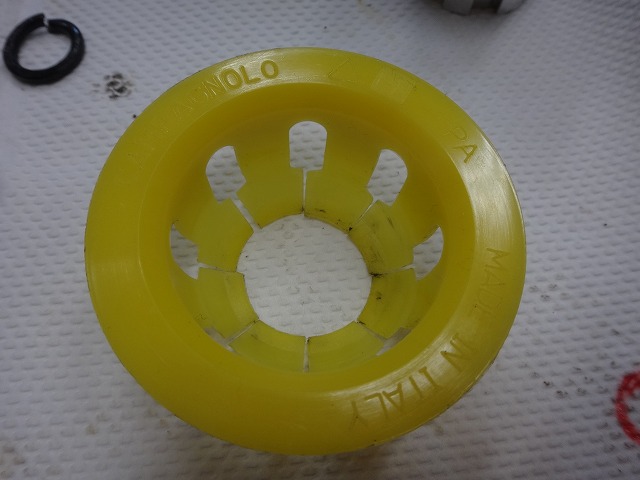
A discontinued Campagnolo tool
for seating the freewheel pawls while inserting the freewheel body into the hub.
It allows you to set the freewheel body in smoothly and reliably.
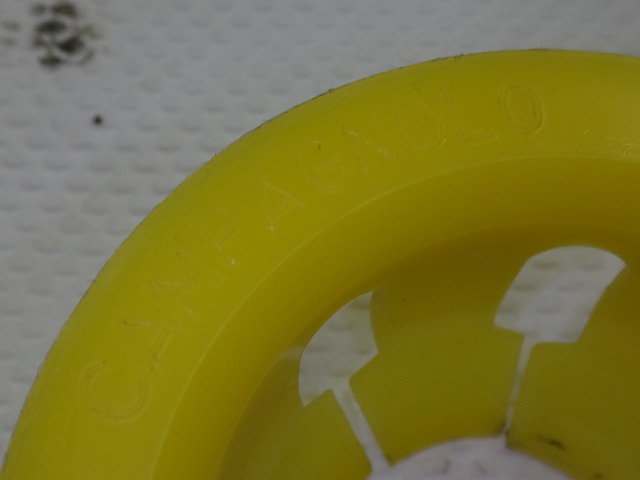
↑It says CAMPAGNOLO on it
↑When seated, it looks like this
It says "Titanium" on the freewheel body, but
the various dimensions on the freewheel body itself are
no different from those for the steel shaft version, so there should be compatibility.
I successfully converted the 8-speed Bora to 9-speed.
What the sticker is saying, in essence, is that because aluminum sprockets will dig into the spline,
you should use the aluminum sprockets that were available at the time on the Super Record grade.
A similar example is the Mavic Instant Drive freewheel body, which has a sticker warning
"only use sprockets with a spider arm on the low side."
However, as with Suntour's Microlight boss freewheel gear,
the aluminum, or "light alloy" as it was called then, sprockets of that era
wore at abnormally fast rates due to the lack of forging technology.
I thought "does anything like that still exist?" and looked it up,
and found a 13-23T available on an overseas site for $349.
↑The back side has the same content in Italian.
There was some centering off, which is fine,
but the supposedly unused wheel had quite a bit of runout.
It's like a stringed instrument that hasn't been tuned in at least 25 years,
so it's natural that it would develop some issues.
I corrected the runout and centered it.