A customer brought in the front wheel of a Roval (the distributor and general trade name is Roval)
CLX32 Disc for me to work on.
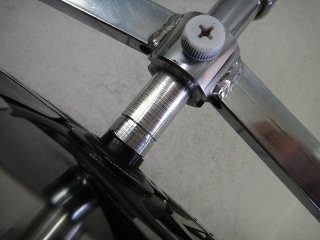
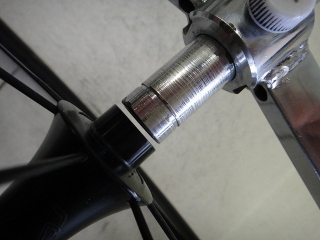
I forgot to take a full shot of the wheel.
Also, I was using a different camera than usual,
but it's weak at macro photography — if I get any closer, it won't focus.
The centering is seriously off,
but of course this isn't how it left the factory.
Either an amateur or a shop employee messed with it,
playing at truing and mangling it in the process.
The radial runout was also terrible — the deformation was so bad
that even if you randomly decided which nipple to turn,
you couldn't get it this messed up.
It took about as much work time as building
a Nomu Lab wheel #1 or #5 front wheel from scratch.
They also asked me to check the rear wheel,
but I had other work waiting on me, so I passed on that for today.
This is the kind of thing that delays wheel delivery times.

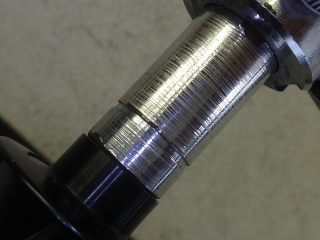
Center is now dead-on, and I've removed all radial and lateral runout.
I've switched back to my regular camera too.
I haven't stated this clearly before, but among mass-produced complete wheels
out there in significant numbers,
if you ask me which ones are not good,
it used to be Shimano a while back, but now it's Roval.
Some of you might say "That's not true! Roval wheels roll great!"
and I respect that — you're welcome to keep thinking that way.
At least when I apply the Nomu Lab wheel philosophy to them,
Roval wheels aren't built with all that much logic behind them.
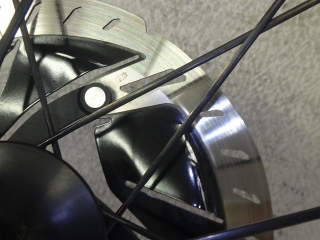
For example, one thing I'll point out:
in 2:1 lacing, the spoke angle on the 2-spoke side is too steep.
The same goes for Vittoria wheels.
And if you're going to use that angle, you don't need a
large flange hub like this one is using.
This CLX32 Disc uses reverse-butted asymmetric lacing as a counter to the left-right asymmetric lacing,
with Aero Lite spokes on the 2-spoke side and Aero Comp on the 1-spoke side,
making the 1-spoke side carry more spoke mass.
However, the CLX60 Disc uses all Aero Lite.
I've written several times before about Corima's 12:8H rear wheels with 20H spokes
also using reverse-butted asymmetric lacing,
but actually that's not adopted on their higher-rim-height models.
Campagnolo's first road disc wheel was
the Zonda DB in 2017,
and the Zonda DB front wheel uses reverse-butted asymmetric lacing.
The next year Bora One 50 DB came out,
and its front wheel had symmetrical spoke diameters.
Whether to use reverse-butted asymmetric lacing on a disc brake front wheel
with asymmetric spoke counts might depend on rim height,
but I'm not sure. And if it does, whether Corima and
Campagnolo (including Fulcrum) and Roval use the same criteria
is unclear.
In Roval's case, since the 2-spoke side angle is poorly conceived,
I think using reverse-butted asymmetric lacing would be better even with high-rim wheels.
In fact, as a simple test, if you squeeze the left and right spokes
on a Roval rear wheel or disc front wheel,
the 2-spoke side deforms more (feels softer),
and on disc front wheels in particular,
even accounting for the small dish, the 2-spoke side is definitely softer.
In the past, I've been told many times that because Roval is soft
(the rim brake version would rub the brake blocks),
to raise the spoke tension.
But the 1-spoke side tension is maxed out with the center already in,
so it's impossible — I can only do a modest re-tensioning with the truing,
no more than that, and I've never been able to do better than that.
But recently, a thought has occurred to me:
maybe I could break through this limitation.
I already have several wheels from multiple customers
that would be convenient for testing this theory.
Look, it's not like I'm being so presumptuous as to think
that all Roval users need to believe what I say.
But I do think I can show results
to the people who entrust me with their wheels.
If it comes down to a wheel rebuild, I'll disassemble it carefully
so it can be restored to its original state if they change their mind.
In this article, "Roval" and "Roval" appear mixed together,
but I'm using them distinctly on purpose, just so you know.
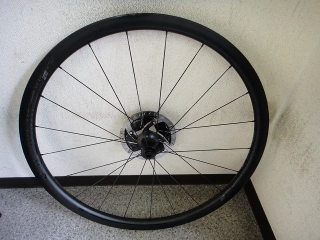
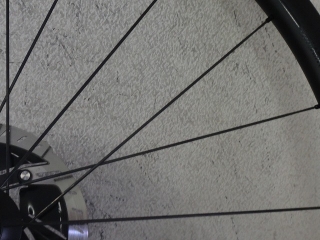
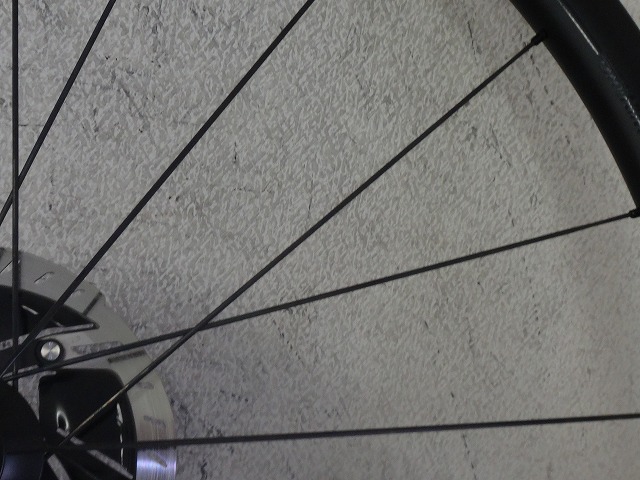
Update: I thought I forgot to take a full wheel shot,
but I actually did, so here it is.
CLX32 Disc for me to work on.
I forgot to take a full shot of the wheel.
Also, I was using a different camera than usual,
but it's weak at macro photography — if I get any closer, it won't focus.
The centering is seriously off,
but of course this isn't how it left the factory.
Either an amateur or a shop employee messed with it,
playing at truing and mangling it in the process.
The radial runout was also terrible — the deformation was so bad
that even if you randomly decided which nipple to turn,
you couldn't get it this messed up.
It took about as much work time as building
a Nomu Lab wheel #1 or #5 front wheel from scratch.
They also asked me to check the rear wheel,
but I had other work waiting on me, so I passed on that for today.
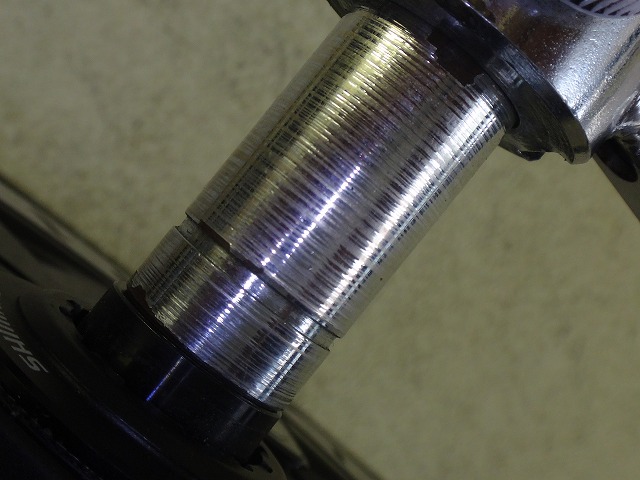
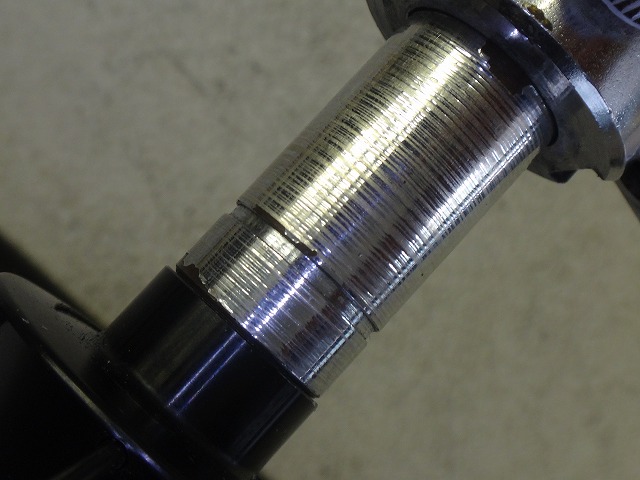
Center is now dead-on, and I've removed all radial and lateral runout.
I've switched back to my regular camera too.
I haven't stated this clearly before, but among mass-produced complete wheels
out there in significant numbers,
if you ask me which ones are not good,
it used to be Shimano a while back, but now it's Roval.
Some of you might say "That's not true! Roval wheels roll great!"
and I respect that — you're welcome to keep thinking that way.
At least when I apply the Nomu Lab wheel philosophy to them,
Roval wheels aren't built with all that much logic behind them.
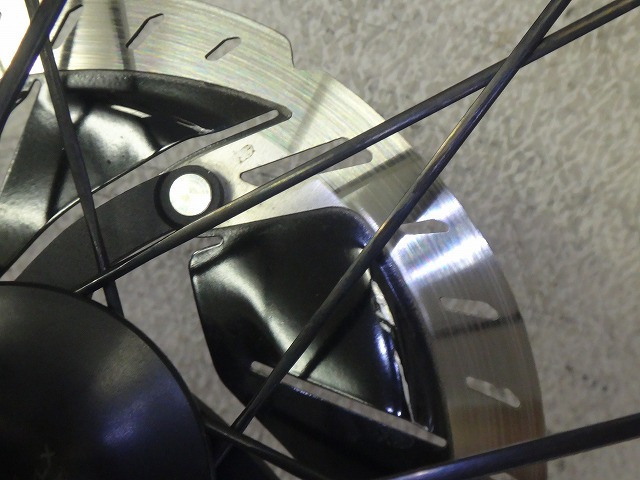
For example, one thing I'll point out:
in 2:1 lacing, the spoke angle on the 2-spoke side is too steep.
The same goes for Vittoria wheels.
And if you're going to use that angle, you don't need a
large flange hub like this one is using.
This CLX32 Disc uses reverse-butted asymmetric lacing as a counter to the left-right asymmetric lacing,
with Aero Lite spokes on the 2-spoke side and Aero Comp on the 1-spoke side,
making the 1-spoke side carry more spoke mass.
However, the CLX60 Disc uses all Aero Lite.
I've written several times before about Corima's 12:8H rear wheels with 20H spokes
also using reverse-butted asymmetric lacing,
but actually that's not adopted on their higher-rim-height models.
Campagnolo's first road disc wheel was
the Zonda DB in 2017,
and the Zonda DB front wheel uses reverse-butted asymmetric lacing.
The next year Bora One 50 DB came out,
and its front wheel had symmetrical spoke diameters.
Whether to use reverse-butted asymmetric lacing on a disc brake front wheel
with asymmetric spoke counts might depend on rim height,
but I'm not sure. And if it does, whether Corima and
Campagnolo (including Fulcrum) and Roval use the same criteria
is unclear.
In Roval's case, since the 2-spoke side angle is poorly conceived,
I think using reverse-butted asymmetric lacing would be better even with high-rim wheels.
In fact, as a simple test, if you squeeze the left and right spokes
on a Roval rear wheel or disc front wheel,
the 2-spoke side deforms more (feels softer),
and on disc front wheels in particular,
even accounting for the small dish, the 2-spoke side is definitely softer.
In the past, I've been told many times that because Roval is soft
(the rim brake version would rub the brake blocks),
to raise the spoke tension.
But the 1-spoke side tension is maxed out with the center already in,
so it's impossible — I can only do a modest re-tensioning with the truing,
no more than that, and I've never been able to do better than that.
But recently, a thought has occurred to me:
maybe I could break through this limitation.
I already have several wheels from multiple customers
that would be convenient for testing this theory.
Look, it's not like I'm being so presumptuous as to think
that all Roval users need to believe what I say.
But I do think I can show results
to the people who entrust me with their wheels.
If it comes down to a wheel rebuild, I'll disassemble it carefully
so it can be restored to its original state if they change their mind.
In this article, "Roval" and "Roval" appear mixed together,
but I'm using them distinctly on purpose, just so you know.
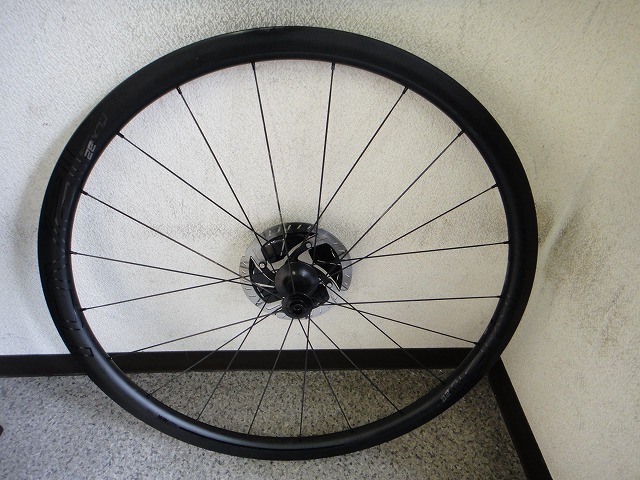
Update: I thought I forgot to take a full wheel shot,
but I actually did, so here it is.