The other day, I sourced disc rotors for a wheel I built with a BOOST-standard XTR hub
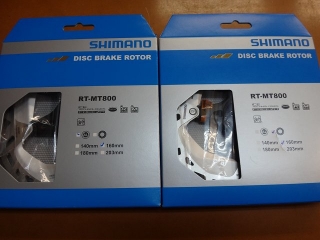
.
A customer mentioned that XTR seemed unnecessarily expensive
so I went with the latest XT M8100-series RT-MT800
Both are 160mm diameter rotors.
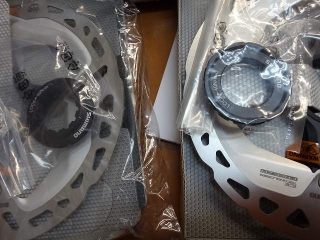
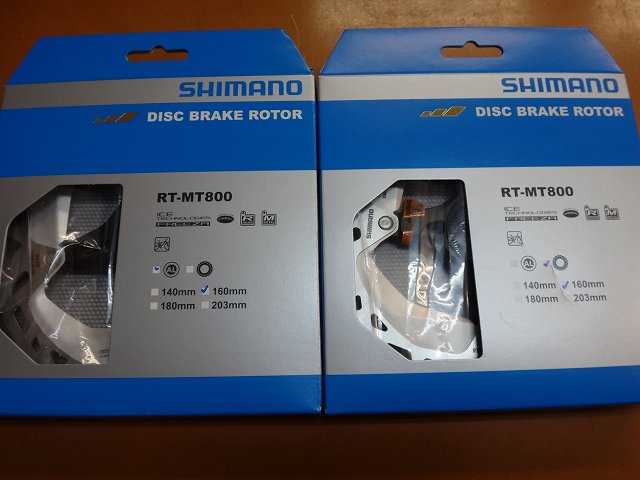
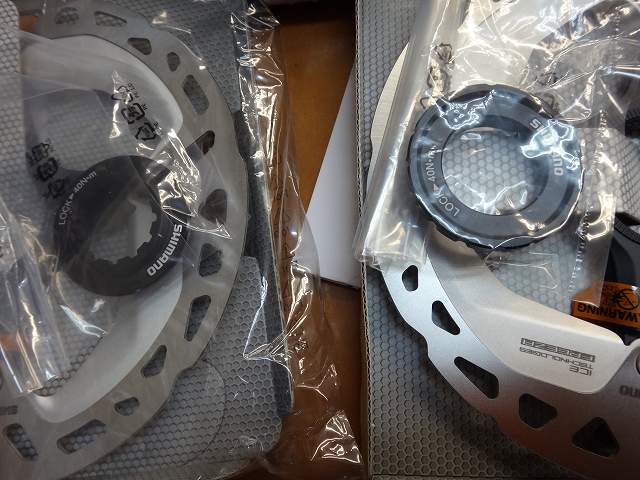
These two rotors have the same part number and same rotor diameter but
they are not the same thing.
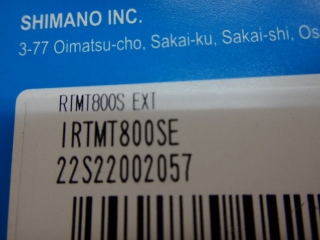
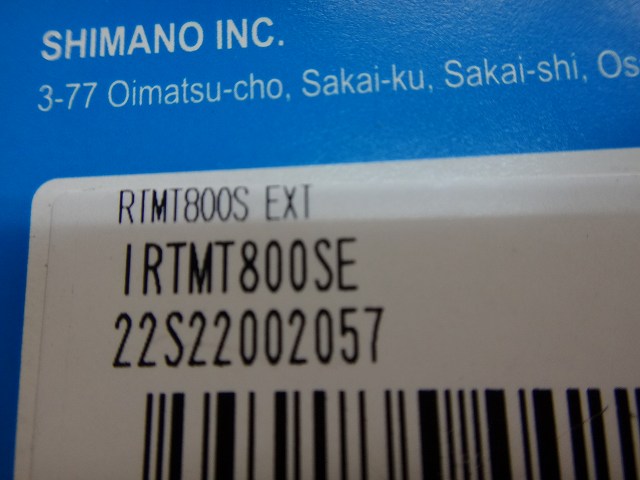
It says RTMT800S, and the S at the end refers to the rotor size.
L is 203mm, M is 180mm, S is 160mm, and SS is 140mm.
The EXT that follows means External,
meaning the included lock ring is an external-type.
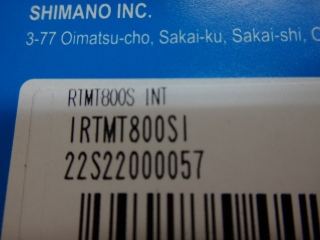
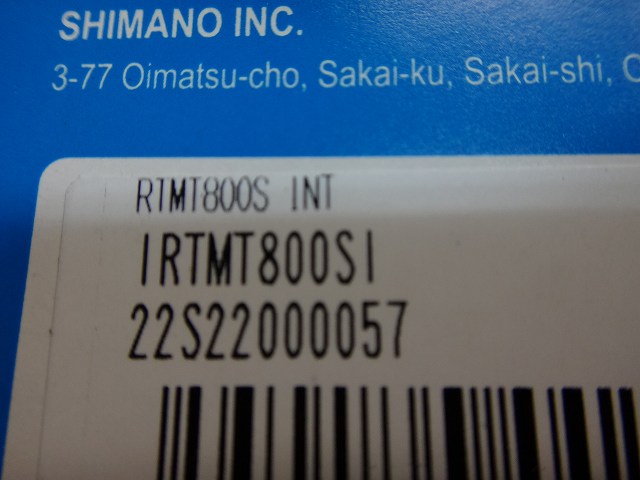
This one is INT for Internal, so
the included lock ring is an internal-type.
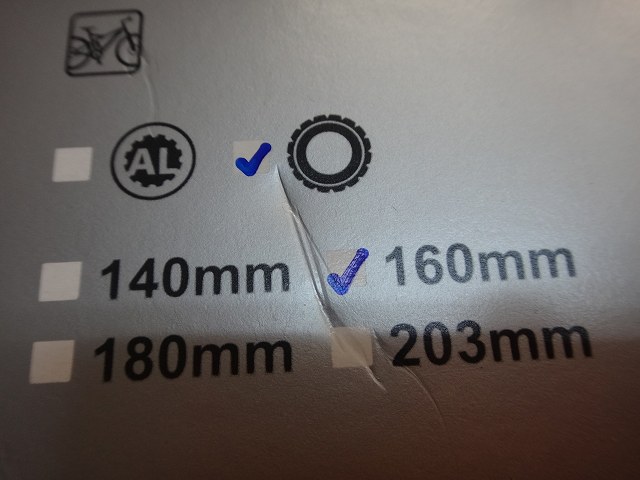
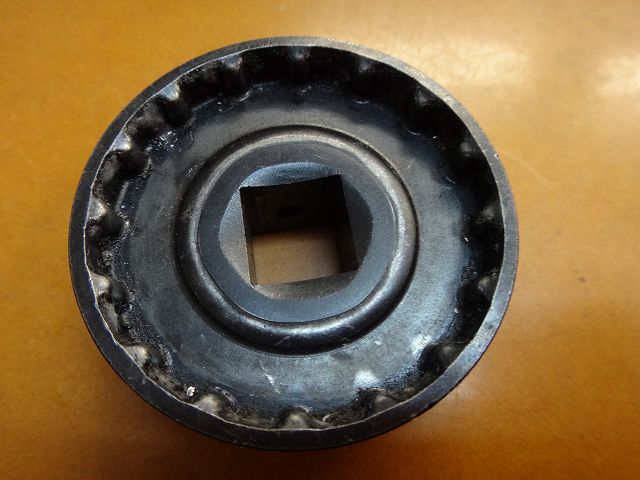
The external type uses the tool for turning the cup of an early-generation Hollowtech II BB,
and

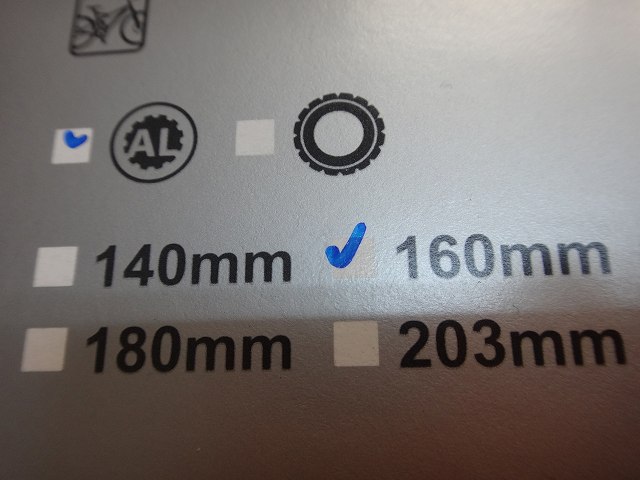
the internal type uses a cassette sprocket lock ring tool.
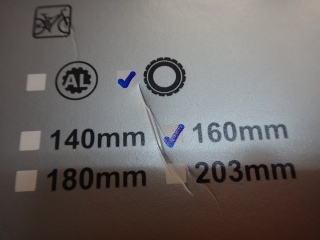
The AL marking on the internal-type image indicates it's aluminum for lighter weight,
but higher-end external-type versions are also aluminum (more on this later).

I'm writing this article to reduce the unfortunate incidents of "I accidentally bought the wrong type of rotor lock ring."
This isn't limited to this, but
whether the packaging is a blister pack or a box/bag,
if there's even a 1% chance of return or resale,
you shouldn't rip it open carelessly.
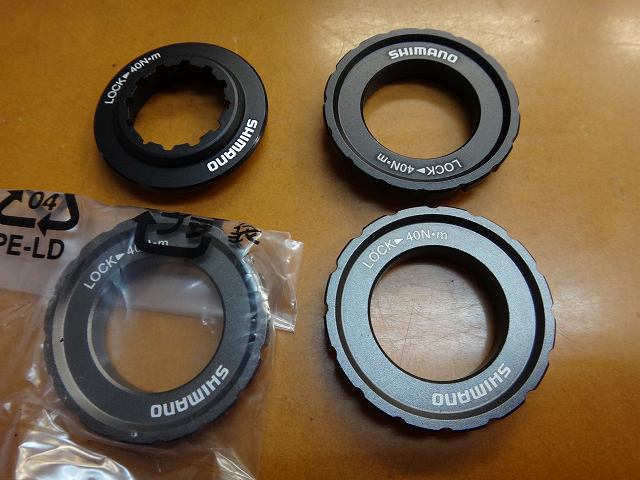
I removed the included lock rings from each rotor.
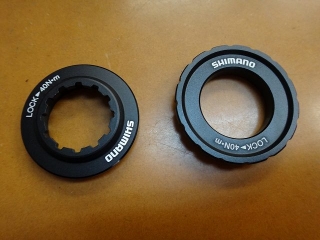
↑The internal-type ring is on the left, the external-type ring on the right.
Since XT is a higher grade, the external ring is also aluminum.
MTB front hubs have a 15mm through-axle diameter whether they're BOOST-standard or not
(there are 20mm ones too, but I'll ignore those for now).
Disc road bikes front and rear, and MTB rear, have 12mm.
The general rule is "external rings work with both"
and "internal rings work with 12mm only."
I'll cover exceptions later.
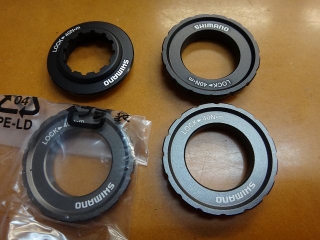
Shimano normally includes an external ring only with MTB front hubs.
Rear hubs don't come with a lock ring.
Since the rear can be secured with an internal ring,
maybe this is a safety measure in case someone mistakenly buys both front and rear rotors with internal rings.
On a tangent, back in the 9-speed Campagnolo era, rear hubs or rear wheels
came with lock rings for cogs with 12T or smaller sprockets.
In exchange, sprockets normally didn't come with lock rings,
and you'd reuse the one from the hub.
However, when you bought a 11T-top sprocket,
it came with an 11T-top lock ring.
So if you kept replacing with 11T-top sprockets,
you'd accumulate 11T-top lock rings.
Looking at the image above, the XTR front hub came with
an external ring in the box as expected,
but surprisingly, the rear hub also came with an external ring (despite being 12mm diameter).
I'd understand the reason for this later.
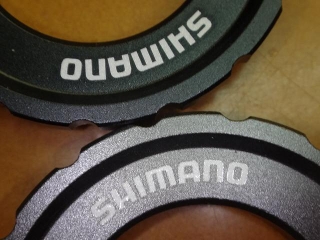
The external ring that comes with the XT rotor and
the external ring that came with the XTR hub are the same thing, but
the anodize color matched each grade respectively.
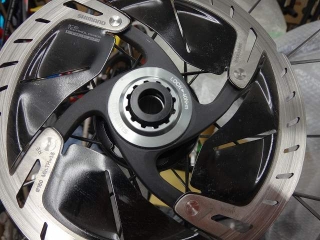
Another tangent:
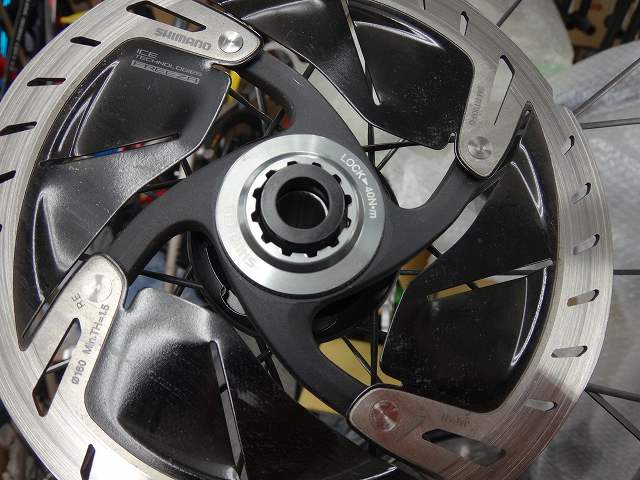
This is a Dura-Ace R9100-series rotor, SM-RT900,
mounted on a disc road 12mm through-axle front hub.
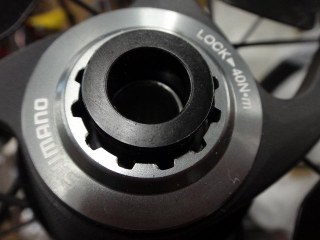
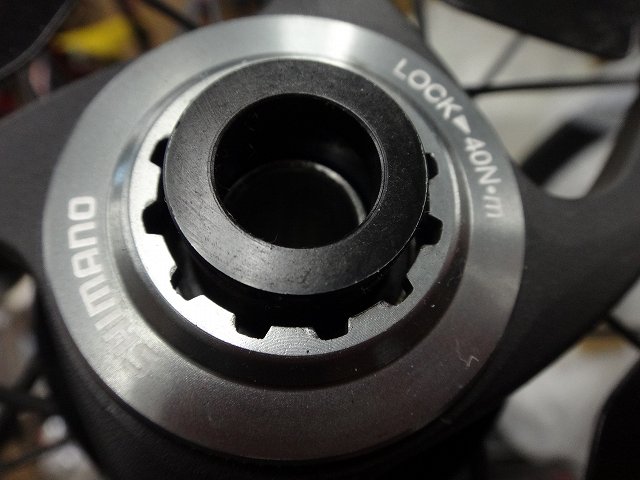
With a 12mm hub, when you mount an internal ring,
there's enough space between the hub end and ring to fit the tool.
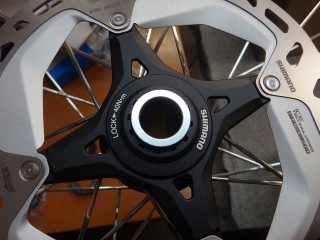
But with a 15mm hub, when you put in an internal ring,
the threads themselves engage and you can turn it, but
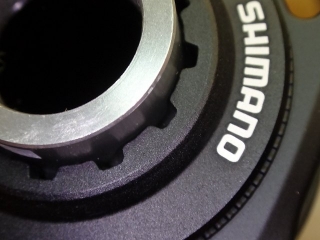
there's no space to fit the tool, so you can't secure it properly.
This is why internal rings don't fit 15mm hubs.
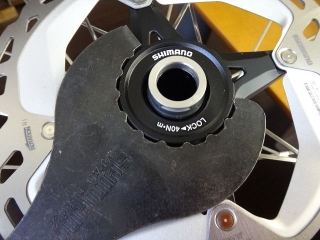
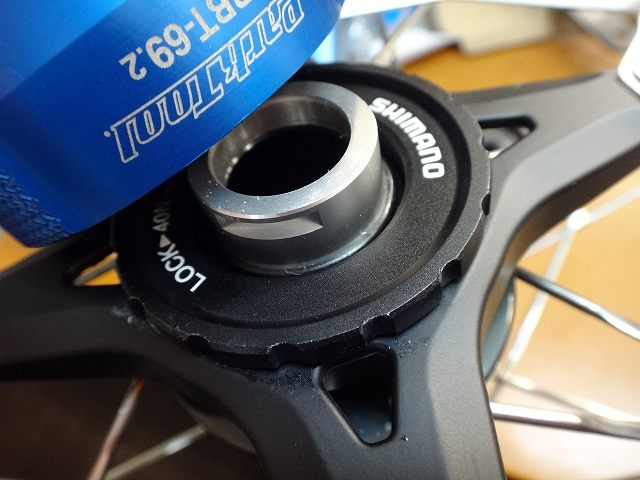
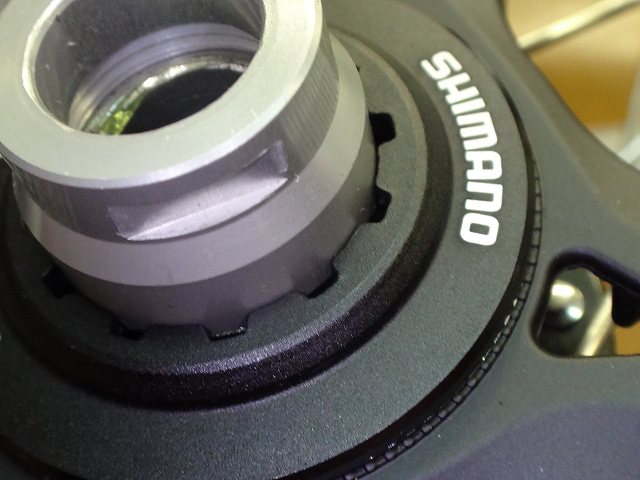
External rings are turned with a BB tool,
and the scary part is that the spline engagement is shallow, so
if your hand slips (and besides, amateurs slipping splines is what it is),
you need to be especially careful not to hurt your fingers on the rotor.
With MTB, only the rear can use an internal ring plus sprocket tool,
but some people might prefer having the same tool for front and rear.
Also, most MTB complete bikes seem to come with external rings on both wheels.
By the way, that tool in the image above,
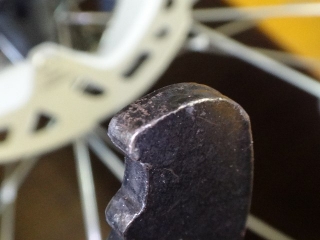
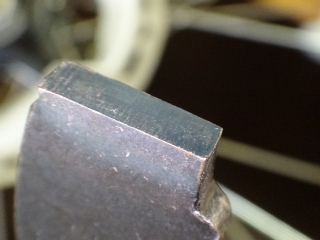
one side is cut away
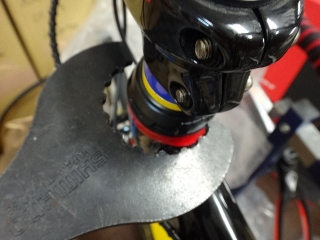
for adjusting the ball seat of proprietary headset parts like LOOK's 586 or 595
(using a Hollowtech II tool), which normally requires removing the stem to fit the tool. With this modification,
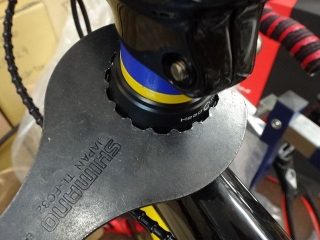
you can fit it without removing the stem.
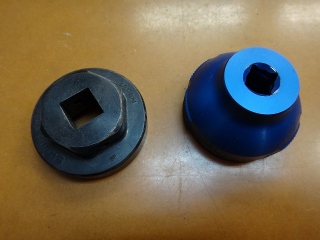
For external rings, in practice most people use socket-type tools rather than wrench-type tools.
It significantly reduces the risk of your hand slipping and stripping the splines.
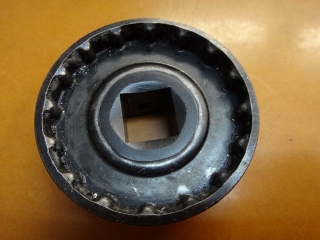
↑This is Shimano's genuine tool, but
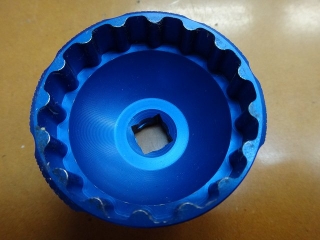
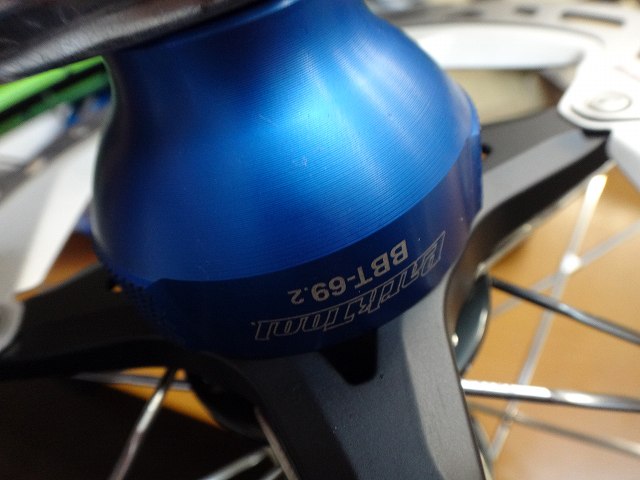
Park Tool now has a blue-anodized aluminum socket,
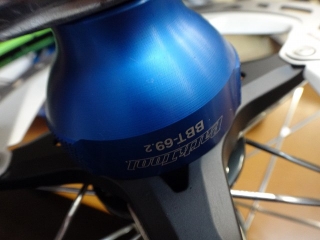
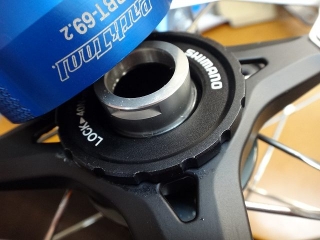
and when "the other side is aluminum" and "you're tightening,"
it's less likely to leave tool marks on the parts, so I recommend it.
Look how obvious I'm showing the part number! Ha!
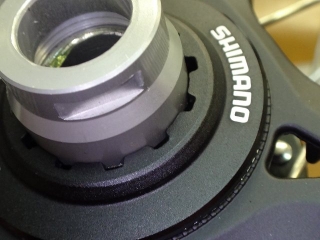
Now I understand why the XTR rear hub came with an external ring.
Although it's a 12mm hub,
the end piece is for some reason out-batted,
making internal rings unusable.
XTR from the same generation or current XT hubs don't do this.
The fact that the current XT rotor I sourced has an internal-ring version makes this clear.
So since I used the included external ring on the rear,
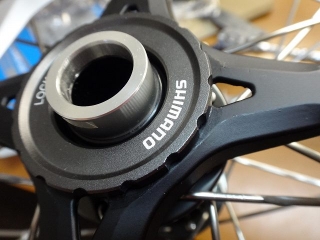
I swapped out the front rotor's included ring
for the hub's included ring.
The color doesn't match the rotor, but it matches front to rear.
Some of you might be thinking "This is MTB stuff—doesn't this have nothing to do with disc road rotors?"
But current Dura-Ace and Ultegra, XTR and XT have grade-specific recommended rotors,
while current R7000 105 and M7100 SLX
both recommend the "SM-RT70" rotor,
shared between road and MTB.
So if you buy without being conscious of external versus internal lock rings,
you might accidentally buy an external-ring version for a disc road bike,
or buy internal rings for an MTB front.
Also, for some reason 180mm and 203mm rotors also come in internal-ring versions.
Unless it's the first rotor you're buying,
if you buy wrong you can just reuse your current lock ring anyway.
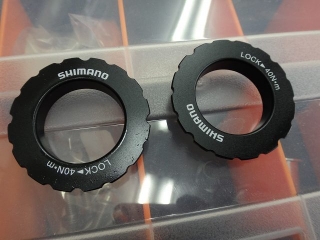
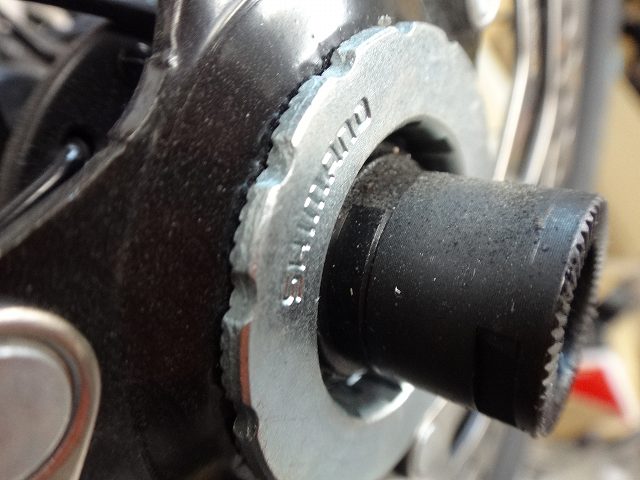
↑This is a non-aluminum external ring from a mid-range grade.
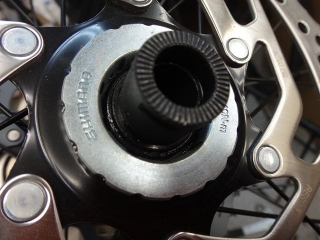
↑This is an even more budget external ring.
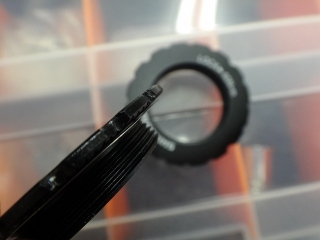

These are thinner, so
when installing or removing them (especially removing),
the tool tends to slip, so watch out.
Because road bikes now have disc brakes,
Shimano's rotor part number system is currently in transition.
Shimano rotor part numbers have consistently been
"SM-RT○○".
The previous M9000-series XTR recommended rotor was SM-RT99,
and the previous M8000-series XT recommended rotor was SM-RT86.
Similarly,
the current R9100-series Dura-Ace recommended rotor is SM-RT900,
and the R8000-series Ultegra recommended rotor is SM-RT800.
But the latest MTB uses "RT-MT○○" for rotor part numbers,
so the current M9100-series XTR recommended rotor is RT-MT900,
and the M8100-series XT recommended rotor is the RT-MT800 mentioned in this article.
With just the text, you might mix up SM-RT800 and RT-MT800,
though images would make it harder to mistake them.
So with current 105, as I mentioned earlier,
SM-RT70 is shared with SLX. Confusing.
Finally.
I should mention the exception: disc road 12mm rear hubs that need external rings.

The Cris King R45D hub in center-lock version—
the front can use internal rings.
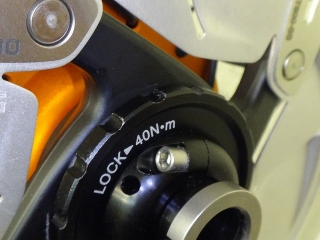
But the rear hub works like this: "First remove the ball-seat adjustment nut,
then secure the rotor with an external ring,
then install the ball-seat adjustment nut
(and of course adjust the ball seat)."
If you use an internal ring, it interferes with the adjustment nut and
the hub can't be assembled.
The rotors in the image are SM-RT800 front and rear,
but SM-RT800 doesn't come in an external-ring version,
and the Cris King hub doesn't come with a lock ring either, so
I had to source an external ring separately.
Addendum: More exceptions
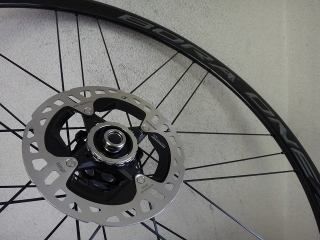
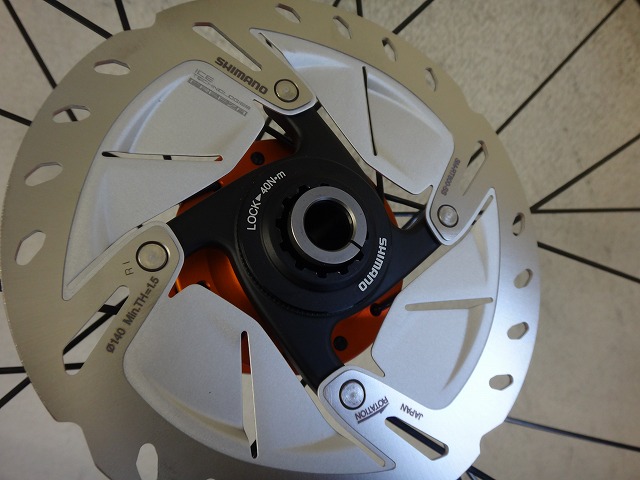
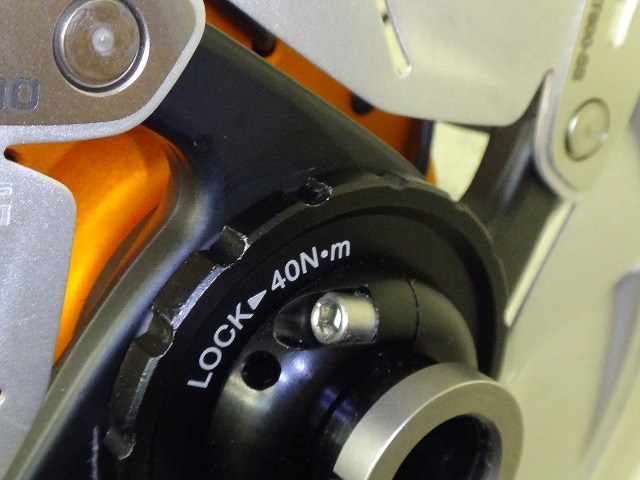
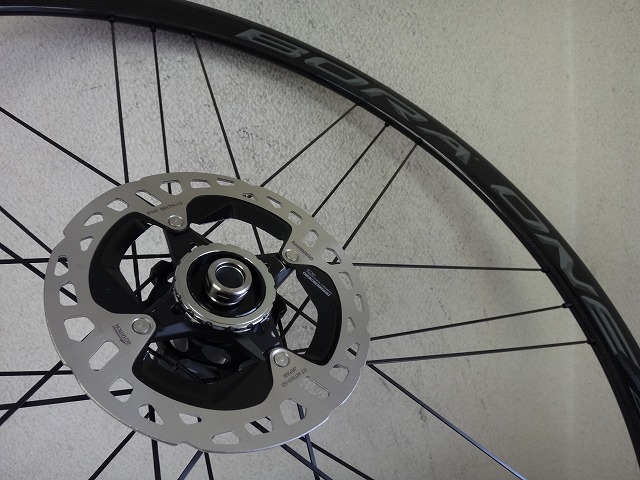
↑This is a Campagnolo Bora One DB,
and the rotor is M9100-series XTR's RT-MT900.
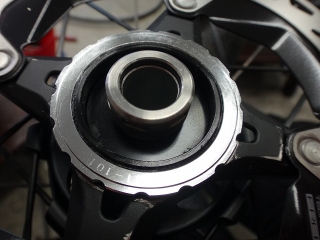
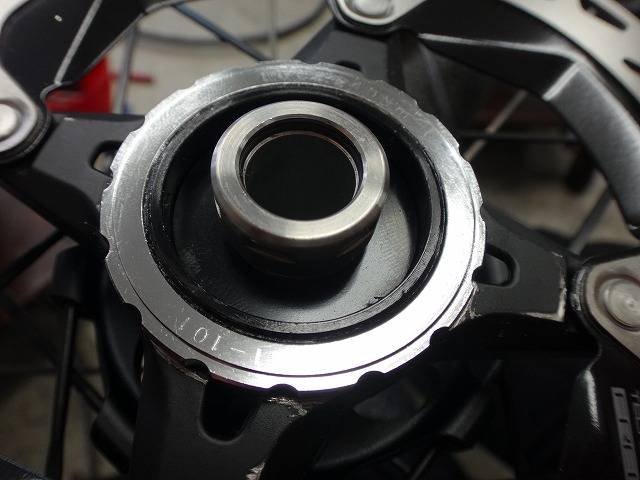
It uses the same tool as the external ring,
but this is a proprietary part for this hub
and differs in form from the external ring.

With Shimano's genuine lock rings,
whether external or internal, the thread dimensions are the same,
with the lock ring being a (hollow) bolt and the hub being a nut.
But on this hub, there are no internal threads,
so the lock ring is a nut and the hub is a bolt—the opposite.
However, in cases like this, a proprietary lock ring comes with the wheel,
so you won't have trouble installing it.
You can't convert to internal-ring spec, and you'll have leftover lock rings regardless of which rotor version you buy.
Yet another addendum:
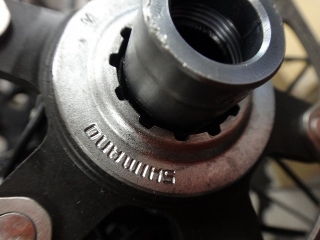
Internal rings also come in a non-aluminum budget version.
.
so I went with the latest XT M8100-series RT-MT800
Both are 160mm diameter rotors.
These two rotors have the same part number and same rotor diameter but
they are not the same thing.
It says RTMT800S, and the S at the end refers to the rotor size.
L is 203mm, M is 180mm, S is 160mm, and SS is 140mm.
The EXT that follows means External,
meaning the included lock ring is an external-type.
This one is INT for Internal, so
the included lock ring is an internal-type.
The external type uses the tool for turning the cup of an early-generation Hollowtech II BB,
and
the internal type uses a cassette sprocket lock ring tool.
The AL marking on the internal-type image indicates it's aluminum for lighter weight,
but higher-end external-type versions are also aluminum (more on this later).

I'm writing this article to reduce the unfortunate incidents of "I accidentally bought the wrong type of rotor lock ring."
This isn't limited to this, but
whether the packaging is a blister pack or a box/bag,
if there's even a 1% chance of return or resale,
you shouldn't rip it open carelessly.
I removed the included lock rings from each rotor.

↑The internal-type ring is on the left, the external-type ring on the right.
Since XT is a higher grade, the external ring is also aluminum.
MTB front hubs have a 15mm through-axle diameter whether they're BOOST-standard or not
(there are 20mm ones too, but I'll ignore those for now).
Disc road bikes front and rear, and MTB rear, have 12mm.
The general rule is "external rings work with both"
and "internal rings work with 12mm only."
I'll cover exceptions later.
Shimano normally includes an external ring only with MTB front hubs.
Rear hubs don't come with a lock ring.
Since the rear can be secured with an internal ring,
maybe this is a safety measure in case someone mistakenly buys both front and rear rotors with internal rings.
On a tangent, back in the 9-speed Campagnolo era, rear hubs or rear wheels
came with lock rings for cogs with 12T or smaller sprockets.
In exchange, sprockets normally didn't come with lock rings,
and you'd reuse the one from the hub.
However, when you bought a 11T-top sprocket,
it came with an 11T-top lock ring.
So if you kept replacing with 11T-top sprockets,
you'd accumulate 11T-top lock rings.
Looking at the image above, the XTR front hub came with
an external ring in the box as expected,
but surprisingly, the rear hub also came with an external ring (despite being 12mm diameter).
I'd understand the reason for this later.

The external ring that comes with the XT rotor and
the external ring that came with the XTR hub are the same thing, but
the anodize color matched each grade respectively.
Another tangent:
This is a Dura-Ace R9100-series rotor, SM-RT900,
mounted on a disc road 12mm through-axle front hub.
With a 12mm hub, when you mount an internal ring,
there's enough space between the hub end and ring to fit the tool.
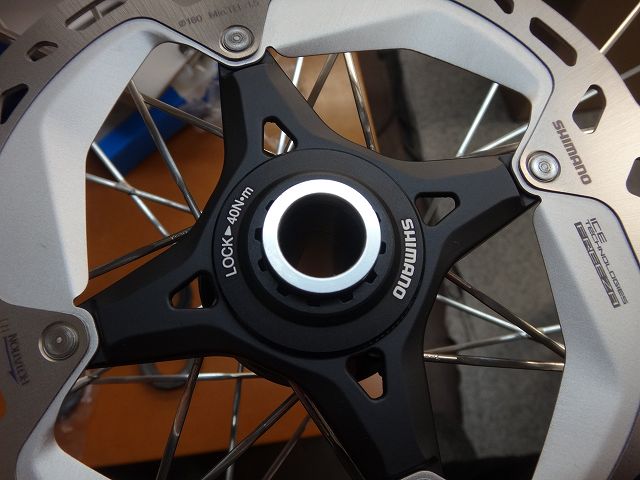
But with a 15mm hub, when you put in an internal ring,
the threads themselves engage and you can turn it, but
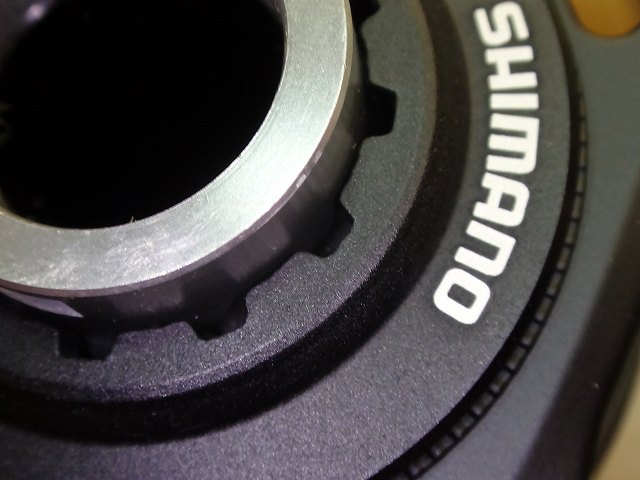
there's no space to fit the tool, so you can't secure it properly.
This is why internal rings don't fit 15mm hubs.
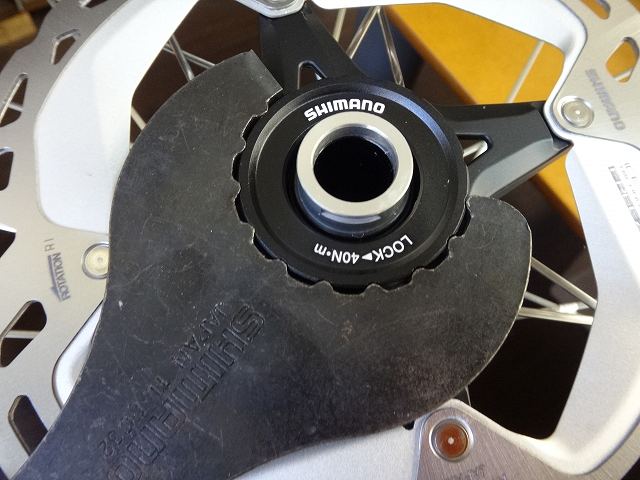
External rings are turned with a BB tool,
and the scary part is that the spline engagement is shallow, so
if your hand slips (and besides, amateurs slipping splines is what it is),
you need to be especially careful not to hurt your fingers on the rotor.
With MTB, only the rear can use an internal ring plus sprocket tool,
but some people might prefer having the same tool for front and rear.
Also, most MTB complete bikes seem to come with external rings on both wheels.
By the way, that tool in the image above,
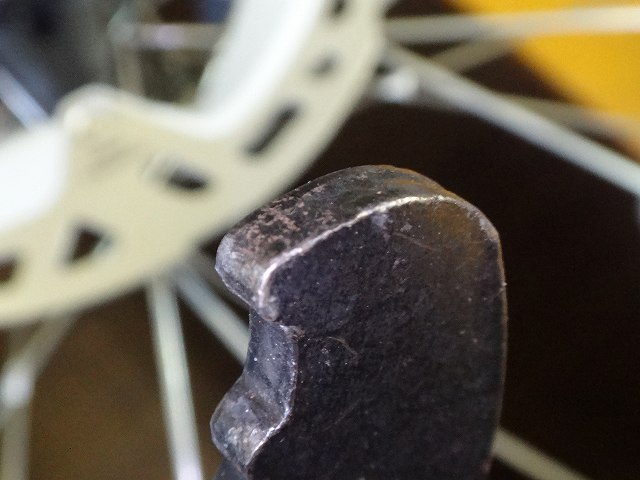
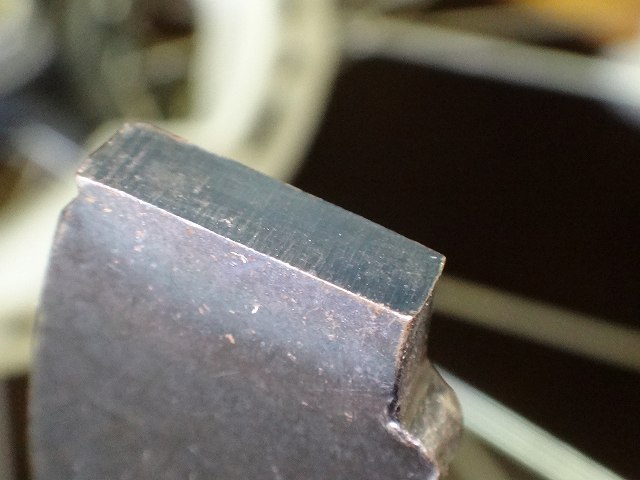
one side is cut away
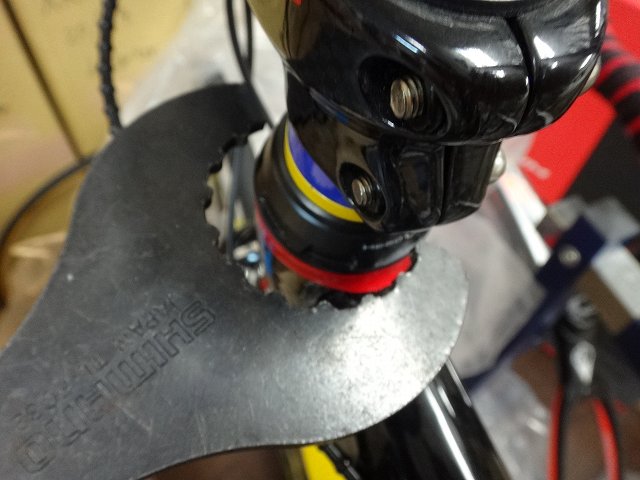
for adjusting the ball seat of proprietary headset parts like LOOK's 586 or 595
(using a Hollowtech II tool), which normally requires removing the stem to fit the tool. With this modification,

you can fit it without removing the stem.
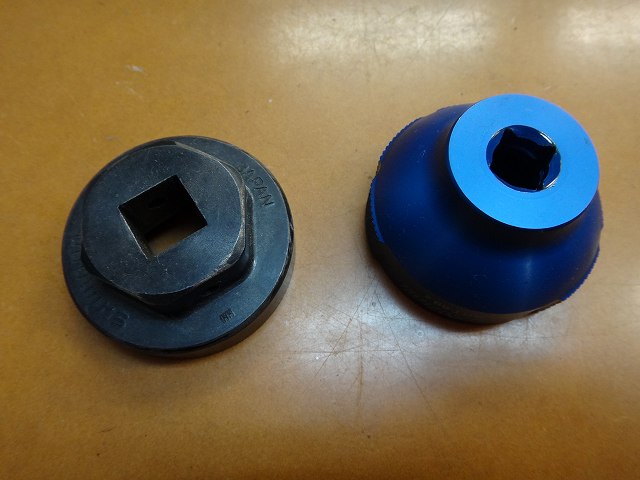
For external rings, in practice most people use socket-type tools rather than wrench-type tools.
It significantly reduces the risk of your hand slipping and stripping the splines.
↑This is Shimano's genuine tool, but

Park Tool now has a blue-anodized aluminum socket,
and when "the other side is aluminum" and "you're tightening,"
it's less likely to leave tool marks on the parts, so I recommend it.
Now I understand why the XTR rear hub came with an external ring.
Although it's a 12mm hub,
the end piece is for some reason out-batted,
making internal rings unusable.
XTR from the same generation or current XT hubs don't do this.
The fact that the current XT rotor I sourced has an internal-ring version makes this clear.
So since I used the included external ring on the rear,

I swapped out the front rotor's included ring
for the hub's included ring.
The color doesn't match the rotor, but it matches front to rear.
Some of you might be thinking "This is MTB stuff—doesn't this have nothing to do with disc road rotors?"
But current Dura-Ace and Ultegra, XTR and XT have grade-specific recommended rotors,
while current R7000 105 and M7100 SLX
both recommend the "SM-RT70" rotor,
shared between road and MTB.
So if you buy without being conscious of external versus internal lock rings,
you might accidentally buy an external-ring version for a disc road bike,
or buy internal rings for an MTB front.
Also, for some reason 180mm and 203mm rotors also come in internal-ring versions.
Unless it's the first rotor you're buying,
if you buy wrong you can just reuse your current lock ring anyway.

↑This is a non-aluminum external ring from a mid-range grade.

↑This is an even more budget external ring.

These are thinner, so
when installing or removing them (especially removing),
the tool tends to slip, so watch out.
Because road bikes now have disc brakes,
Shimano's rotor part number system is currently in transition.
Shimano rotor part numbers have consistently been
"SM-RT○○".
The previous M9000-series XTR recommended rotor was SM-RT99,
and the previous M8000-series XT recommended rotor was SM-RT86.
Similarly,
the current R9100-series Dura-Ace recommended rotor is SM-RT900,
and the R8000-series Ultegra recommended rotor is SM-RT800.
But the latest MTB uses "RT-MT○○" for rotor part numbers,
so the current M9100-series XTR recommended rotor is RT-MT900,
and the M8100-series XT recommended rotor is the RT-MT800 mentioned in this article.
With just the text, you might mix up SM-RT800 and RT-MT800,
though images would make it harder to mistake them.
So with current 105, as I mentioned earlier,
SM-RT70 is shared with SLX. Confusing.
Finally.
I should mention the exception: disc road 12mm rear hubs that need external rings.
The Cris King R45D hub in center-lock version—
the front can use internal rings.
But the rear hub works like this: "First remove the ball-seat adjustment nut,
then secure the rotor with an external ring,
then install the ball-seat adjustment nut
(and of course adjust the ball seat)."
If you use an internal ring, it interferes with the adjustment nut and
the hub can't be assembled.
The rotors in the image are SM-RT800 front and rear,
but SM-RT800 doesn't come in an external-ring version,
and the Cris King hub doesn't come with a lock ring either, so
I had to source an external ring separately.
Addendum: More exceptions
↑This is a Campagnolo Bora One DB,
and the rotor is M9100-series XTR's RT-MT900.
It uses the same tool as the external ring,
but this is a proprietary part for this hub
and differs in form from the external ring.

With Shimano's genuine lock rings,
whether external or internal, the thread dimensions are the same,
with the lock ring being a (hollow) bolt and the hub being a nut.
But on this hub, there are no internal threads,
so the lock ring is a nut and the hub is a bolt—the opposite.
However, in cases like this, a proprietary lock ring comes with the wheel,
so you won't have trouble installing it.
You can't convert to internal-ring spec, and you'll have leftover lock rings regardless of which rotor version you buy.
Yet another addendum:

Internal rings also come in a non-aluminum budget version.