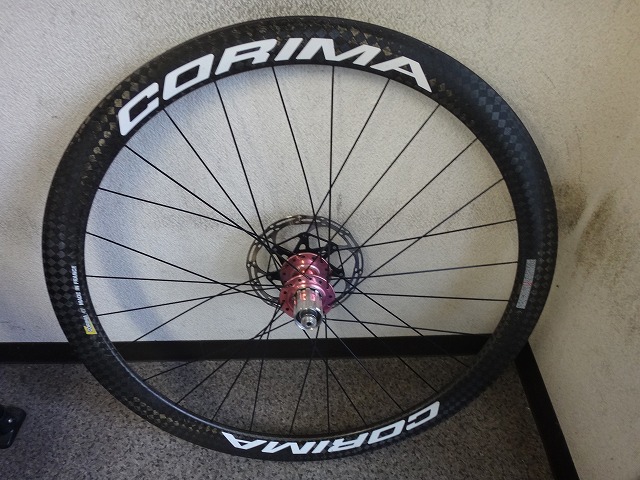
A customer brought in a rear wheel built with a Colima WO rim and Chris King disc hub.
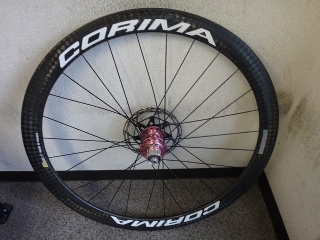
The tension on the non-drive side has gone completely slack,
so the customer is requesting truing and re-tensioning.
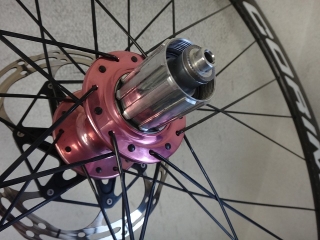
You probably can guess, but this is the wheel from the customer with the ENVE AD35 rim from the other day.
The anodize color on the hub has faded slightly from years of use.
Even compared to a brand new hub, the color in areas under the rotor seat that don't get direct sunlight is slightly darker,
so it wasn't an especially light color to begin with.
24-hole all-black CX-RAY 4-cross lacing pattern.
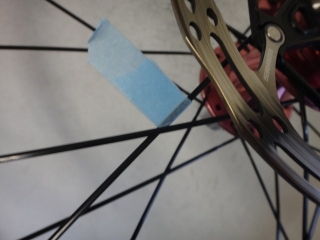

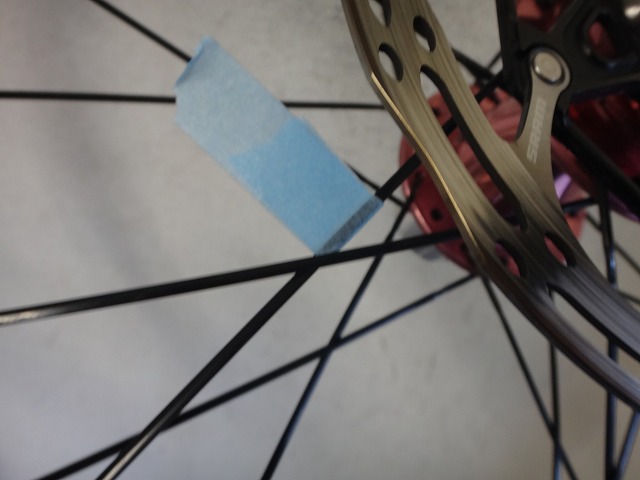
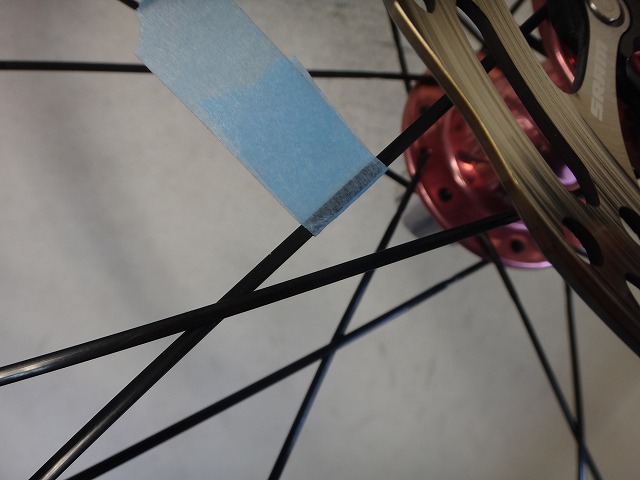
Of the six final crossing points on the non-drive side,
two are abnormally loose, and the rest are similarly slack.
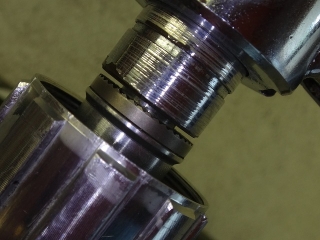
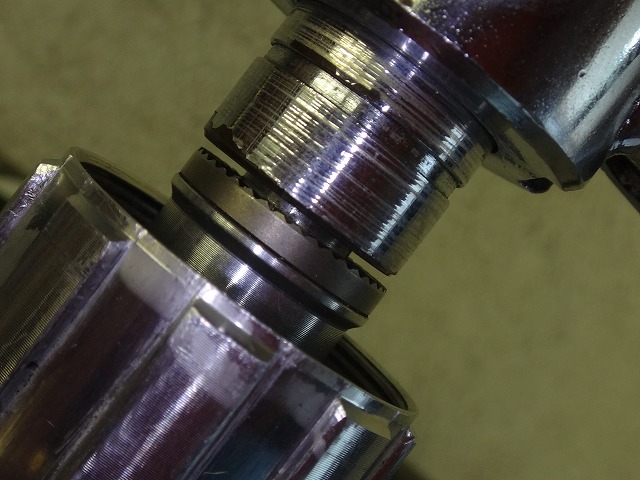
The rim had apparently shifted toward the drive side over years of use.
When a wheel is built with initially low tension,
the tension loss on the non-drive side (which already starts lower) accelerates.
To maintain initial performance longer, while there are limits,
the basic principle is that higher tension is better.
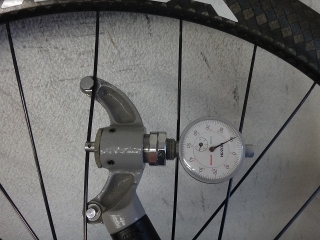
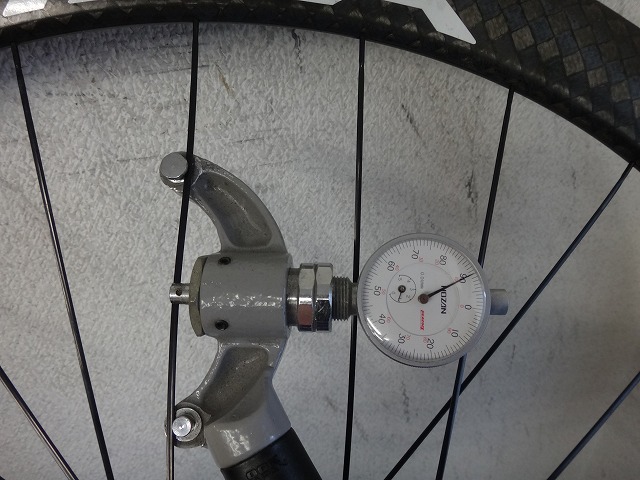
The H1ST (first spoke tension) reading on a Hozan tension meter
for the most tensioned spoke on the drive side
was 90.
With this rim, I can tension it up to around 130–140.
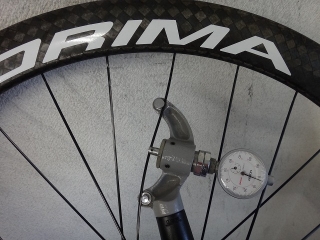
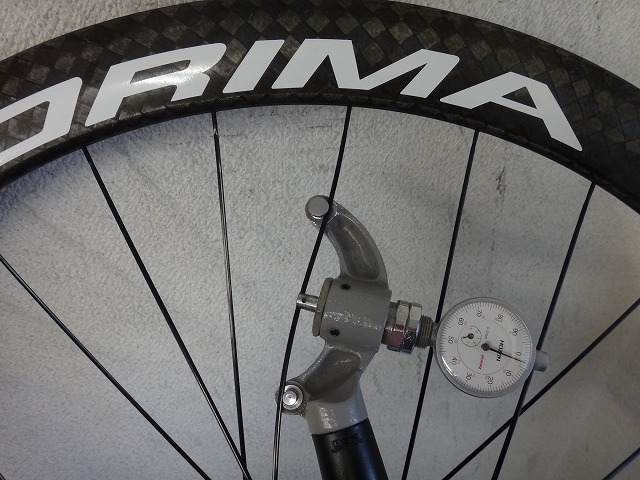
↑The spokes are quite droopy, but
the H1ST for the slackest spoke on the non-drive side was
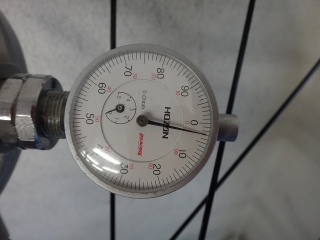
only 3.
This doesn't mean the difference between the two sides is a 30-times ratio—
it's that the meter needle barely moves for completely slack spokes.
From here, to get the drive side tension right up to the limit,
I started by tightening the drive-side nipples exactly two full turns.
Even though years of use had loosened things, on a properly built wheel
tightening the drive side two full turns afterward would normally be impossible.
The initial build must have been incredibly slack—
frankly, it was more like "wheel-building play" than real wheel building.
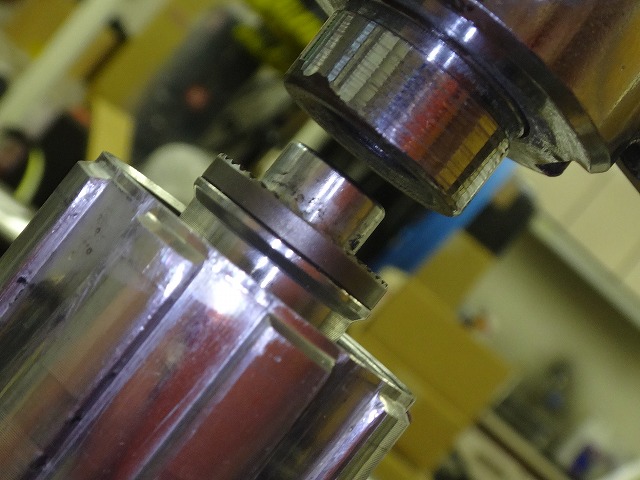
After those two turns, I dialed in lateral trueness using only the drive-side nipples,
so the final state was roughly 2.5–3 turns tighter than when it arrived.
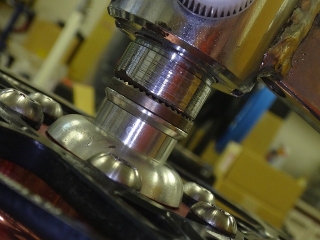

↑That's where we were at.
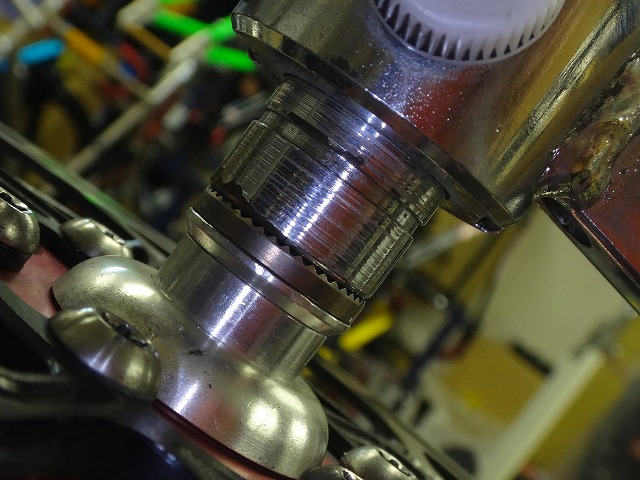
From there, I tightened the non-drive side exactly two turns.

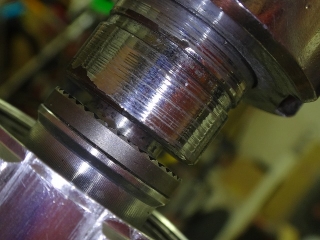
↑This is what happened.
From here until the wheel centers, I can tighten the non-drive side unidirectionally.
Since there was some radial runout, I did need to do some
drive-side loosening and tightening to address that.
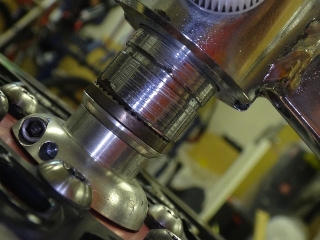
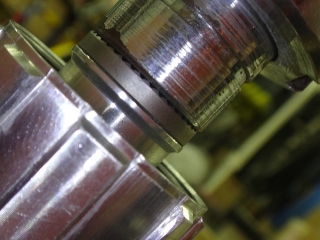
Centered the wheel and dialed in radial and lateral runout as much as possible, tensioning to the max.
When doing asymmetrical lacing, especially with offset rims,
it's easy to fall into a trap: when the drive side gets really tight,
you do what's called "buzz relief" and actually loosen the drive side back off.
(Just to be clear, neither the AD35 from the other day nor this Colima are offset rims).
Recently I did some buzz relief on the front wheel of the AD35's half-CX sprint build.
I don't just build wheels with absolute max tension for its own sake.
I don't exceed the threshold beyond which increased tension makes practically no perceptible difference.
I understand that balance pretty well.
So among the high-tension sides of the ENVE AD35 front and rear from the other day
and this Colima's high-tension side (of course the drive side), that's three wheels,
and this Colima's final state is the most tense in terms of second-spoke tension.
But even so, the low-tension side is clearly slack on this Colima.
At that point I hadn't done the cable routing on the AD35 yet,
but I would have liked the customer to grip the final crossing sections
on all three wheels side-by-side to feel the difference themselves.
I didn't tension the AD35's high-tension side right up to the limit.
Like I mentioned, I even did buzz relief on the front wheel.
With the Colima, the left-right difference was bothering me so much
that I tensioned the drive side right up to the limit.
That's the limit for all-CX-RAY 4-cross lacing.
Even so, I'm confident that compared to Colima's original build (which I never saw),
this is much better tensioned, and future tension loss will be less likely to occur.
Writing too much about this might prompt a request like
"Can you rebuild the Colima too?"
so I'll stop here.
The tension on the non-drive side has gone completely slack,
so the customer is requesting truing and re-tensioning.

You probably can guess, but this is the wheel from the customer with the ENVE AD35 rim from the other day.
The anodize color on the hub has faded slightly from years of use.
Even compared to a brand new hub, the color in areas under the rotor seat that don't get direct sunlight is slightly darker,
so it wasn't an especially light color to begin with.
24-hole all-black CX-RAY 4-cross lacing pattern.
Of the six final crossing points on the non-drive side,
two are abnormally loose, and the rest are similarly slack.

The rim had apparently shifted toward the drive side over years of use.
When a wheel is built with initially low tension,
the tension loss on the non-drive side (which already starts lower) accelerates.
To maintain initial performance longer, while there are limits,
the basic principle is that higher tension is better.
The H1ST (first spoke tension) reading on a Hozan tension meter
for the most tensioned spoke on the drive side
was 90.
With this rim, I can tension it up to around 130–140.
↑The spokes are quite droopy, but
the H1ST for the slackest spoke on the non-drive side was

only 3.
This doesn't mean the difference between the two sides is a 30-times ratio—
it's that the meter needle barely moves for completely slack spokes.
From here, to get the drive side tension right up to the limit,
I started by tightening the drive-side nipples exactly two full turns.
Even though years of use had loosened things, on a properly built wheel
tightening the drive side two full turns afterward would normally be impossible.
The initial build must have been incredibly slack—
frankly, it was more like "wheel-building play" than real wheel building.
After those two turns, I dialed in lateral trueness using only the drive-side nipples,
so the final state was roughly 2.5–3 turns tighter than when it arrived.

↑That's where we were at.
From there, I tightened the non-drive side exactly two turns.
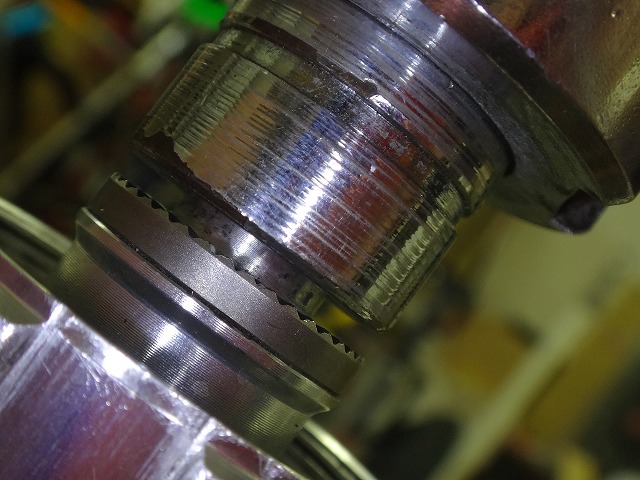
↑This is what happened.
From here until the wheel centers, I can tighten the non-drive side unidirectionally.
Since there was some radial runout, I did need to do some
drive-side loosening and tightening to address that.
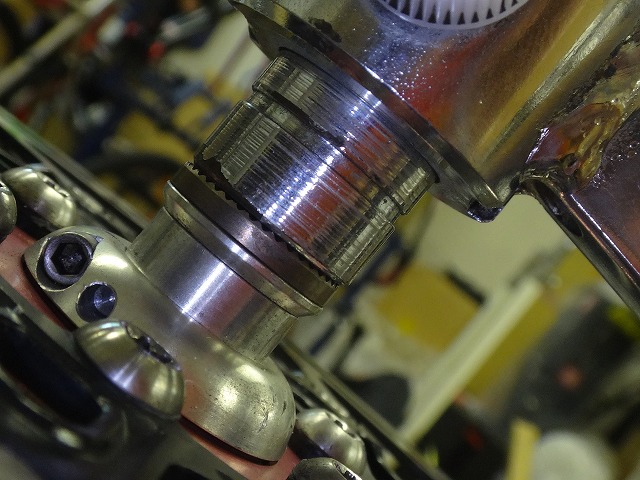
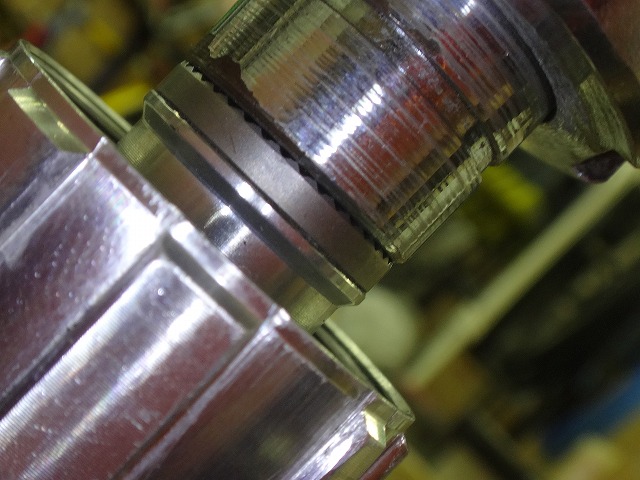
Centered the wheel and dialed in radial and lateral runout as much as possible, tensioning to the max.
When doing asymmetrical lacing, especially with offset rims,
it's easy to fall into a trap: when the drive side gets really tight,
you do what's called "buzz relief" and actually loosen the drive side back off.
(Just to be clear, neither the AD35 from the other day nor this Colima are offset rims).
Recently I did some buzz relief on the front wheel of the AD35's half-CX sprint build.
I don't just build wheels with absolute max tension for its own sake.
I don't exceed the threshold beyond which increased tension makes practically no perceptible difference.
I understand that balance pretty well.
So among the high-tension sides of the ENVE AD35 front and rear from the other day
and this Colima's high-tension side (of course the drive side), that's three wheels,
and this Colima's final state is the most tense in terms of second-spoke tension.
But even so, the low-tension side is clearly slack on this Colima.
At that point I hadn't done the cable routing on the AD35 yet,
but I would have liked the customer to grip the final crossing sections
on all three wheels side-by-side to feel the difference themselves.
I didn't tension the AD35's high-tension side right up to the limit.
Like I mentioned, I even did buzz relief on the front wheel.
With the Colima, the left-right difference was bothering me so much
that I tensioned the drive side right up to the limit.
That's the limit for all-CX-RAY 4-cross lacing.
Even so, I'm confident that compared to Colima's original build (which I never saw),
this is much better tensioned, and future tension loss will be less likely to occur.
Writing too much about this might prompt a request like
"Can you rebuild the Colima too?"
so I'll stop here.