A customer dropped off a Roval CLX64 with me.
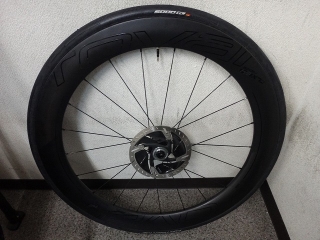
This is a wheel that came on an S-Works Tarmac worth around 1.4 million yen.
I received both front and rear wheels,
and at first glance I figured the rear wheel was the problem,
but it turned out the front wheel is actually the bad one.
When descending at around 60 kph,
the rim starts vibrating and shaking left and right violently,
so it's scary and unusable.
It's not some low-level handling mistake like
"the thru-axle isn't tight enough,"
or like that computer troubleshooting where the power cord was unplugged from the outlet.
That kind of thing obviously isn't the issue.
Since the front wheel I built (← though maybe that preamble isn't necessary)
on a Specialized Smartweld 4.5 Disc doesn't exhibit those symptoms,
and there's no play in the headset or anything like that,
the problem seems to be isolated to this front wheel.
I'd like to say "don't go 60 kph downhill," but
the customer is a professional continental racer,
so those situations naturally occur during racing,
so we need to fix it somehow.
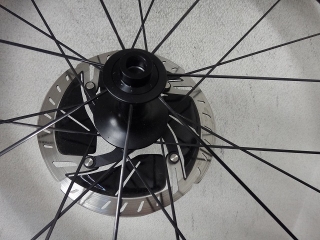
It's a 2:1 lacing pattern with 21 holes, and the spokes are
all-black aero light straight spokes (with head squashing).
If it were 24 holes, there would be no rim drilling holes,
so I could swap the hub and rebuild it as a symmetric 12-spoke-per-side pattern,
but with 21 holes, I can't do that.
As a recently established approach to dealing with Roval rebuilds,
we're going to try the "increase spoke proportion on the radial side
and tie the tangential side at the final cross" method on this front wheel too,
and I have the customer's consent regarding the irreversible modifications involved.
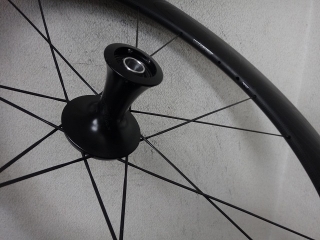
I pulled the spokes from the radial lacing side.
It would improve workability to loosen the tangential side spokes somewhat too,
but from here, once I replace the radial side spokes with new ones
and shift the rim over to the radial side, whether the asymmetric lacing effect
is proven or not I'll set aside—but after centering, since we need
to tighten up the entire tangential side, I can say with certainty
it's definitely more tensioned than the original state.
So this is the result. If I wanted to back up what I just wrote,
I should have taken a photo when the rim was shifted to the radial side,
but I forgot.

All laced.
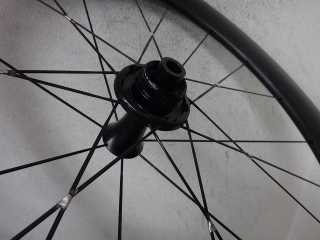
I built the radial side in reverse asymmetric lacing with black CX spokes
and tied the tangential side.
For verification purposes on the tangential side,
I had to leave the nipples completely untouched up to a certain point,
so the wheel isn't completely disassembled to where the rim and hub separate.
Therefore I can't measure rim weight, and this is a non-issue for anyone but me, but
this situation doesn't meet the criteria for today's [wheel post] (and so forth...).
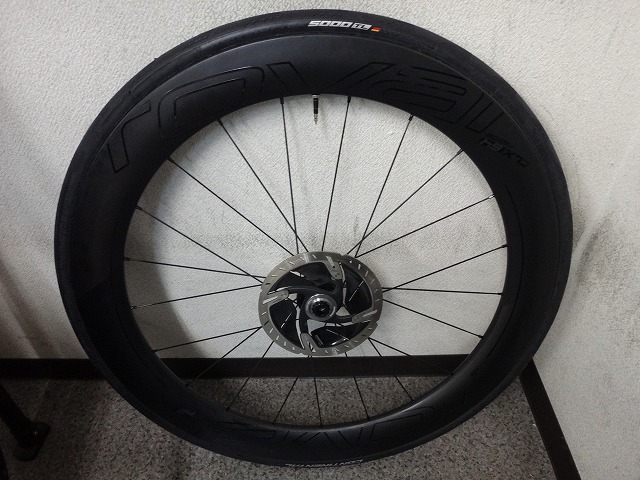
This is a wheel that came on an S-Works Tarmac worth around 1.4 million yen.
I received both front and rear wheels,
and at first glance I figured the rear wheel was the problem,
but it turned out the front wheel is actually the bad one.
When descending at around 60 kph,
the rim starts vibrating and shaking left and right violently,
so it's scary and unusable.
It's not some low-level handling mistake like
"the thru-axle isn't tight enough,"
or like that computer troubleshooting where the power cord was unplugged from the outlet.
That kind of thing obviously isn't the issue.
Since the front wheel I built (← though maybe that preamble isn't necessary)
on a Specialized Smartweld 4.5 Disc doesn't exhibit those symptoms,
and there's no play in the headset or anything like that,
the problem seems to be isolated to this front wheel.
I'd like to say "don't go 60 kph downhill," but
the customer is a professional continental racer,
so those situations naturally occur during racing,
so we need to fix it somehow.
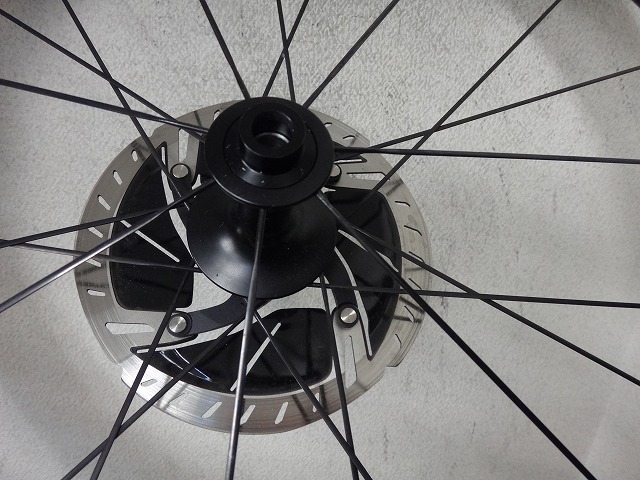
It's a 2:1 lacing pattern with 21 holes, and the spokes are
all-black aero light straight spokes (with head squashing).
If it were 24 holes, there would be no rim drilling holes,
so I could swap the hub and rebuild it as a symmetric 12-spoke-per-side pattern,
but with 21 holes, I can't do that.
As a recently established approach to dealing with Roval rebuilds,
we're going to try the "increase spoke proportion on the radial side
and tie the tangential side at the final cross" method on this front wheel too,
and I have the customer's consent regarding the irreversible modifications involved.
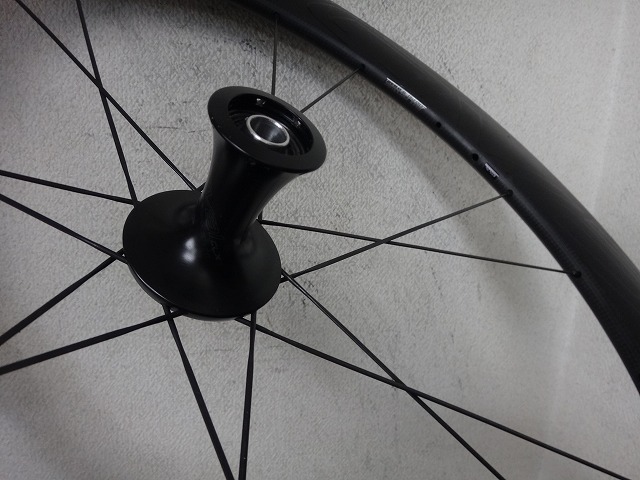
I pulled the spokes from the radial lacing side.
It would improve workability to loosen the tangential side spokes somewhat too,
but from here, once I replace the radial side spokes with new ones
and shift the rim over to the radial side, whether the asymmetric lacing effect
is proven or not I'll set aside—but after centering, since we need
to tighten up the entire tangential side, I can say with certainty
it's definitely more tensioned than the original state.
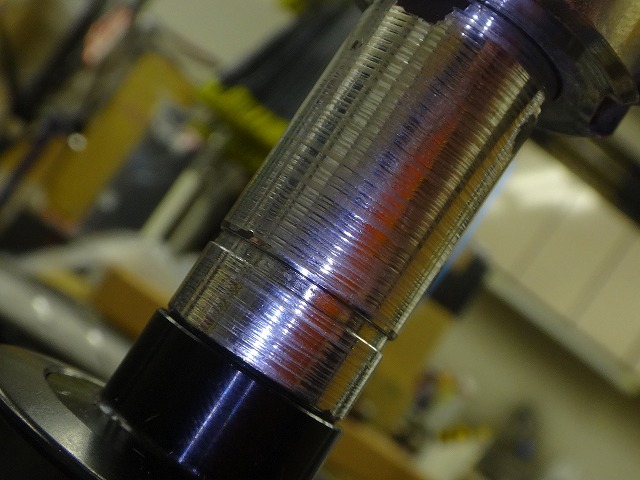
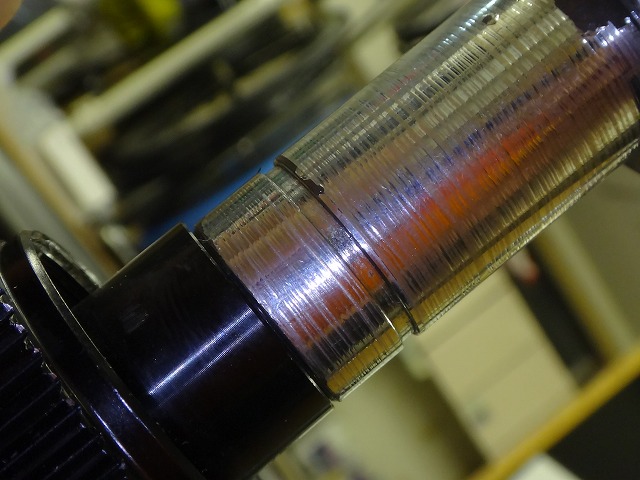
So this is the result. If I wanted to back up what I just wrote,
I should have taken a photo when the rim was shifted to the radial side,
but I forgot.
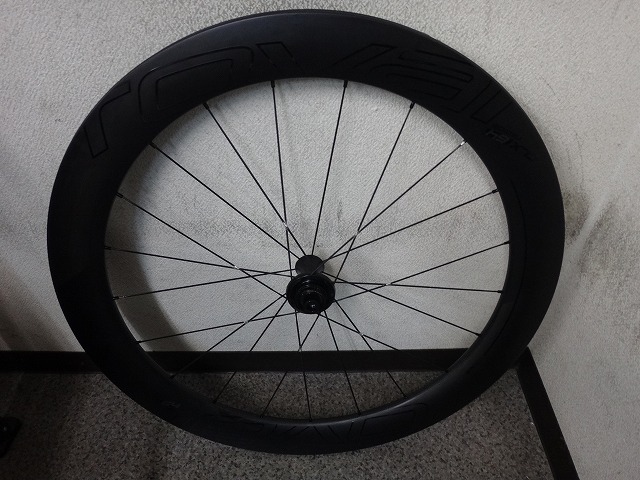
All laced.
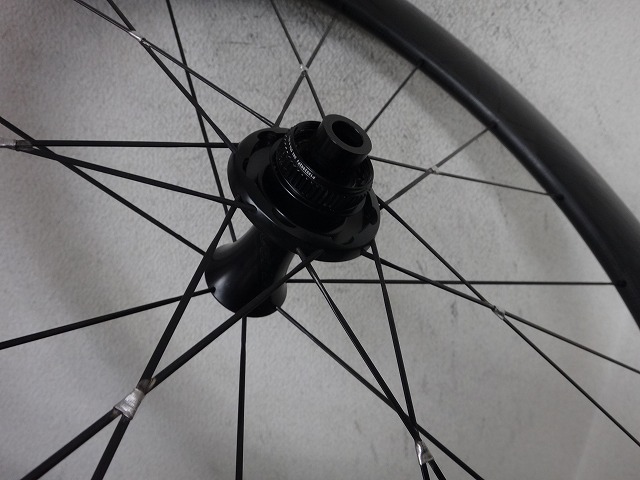
I built the radial side in reverse asymmetric lacing with black CX spokes
and tied the tangential side.
For verification purposes on the tangential side,
I had to leave the nipples completely untouched up to a certain point,
so the wheel isn't completely disassembled to where the rim and hub separate.
Therefore I can't measure rim weight, and this is a non-issue for anyone but me, but
this situation doesn't meet the criteria for today's [wheel post] (and so forth...).