Another wheel day (and so on).
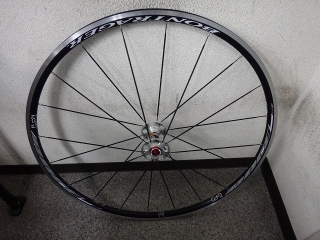
I took a Bontrager front wheel in from a customer.

The rim is a WO narrow aluminum rim,
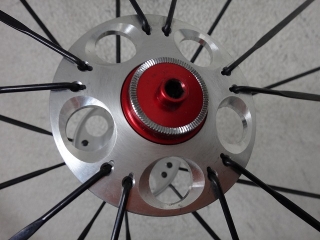
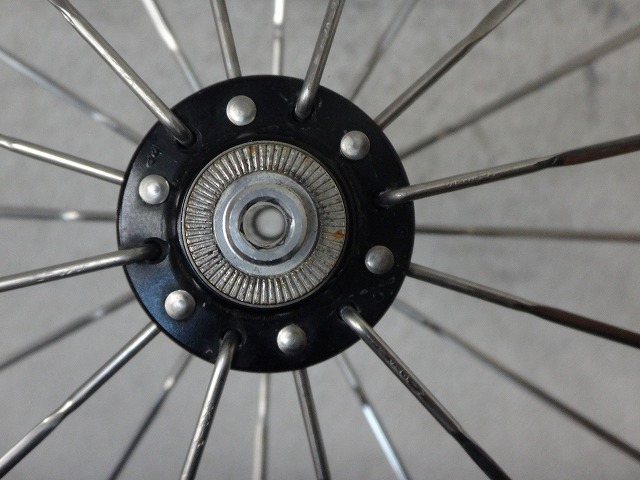
and the hub is 20H large flange with phase-pinch flanges laced as 0-cross inpoke,
with DT black aero spokes featuring a slotted reinforcement section.
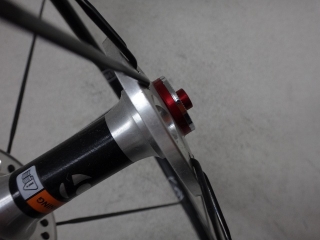
The flange width on the hub is quite broad.
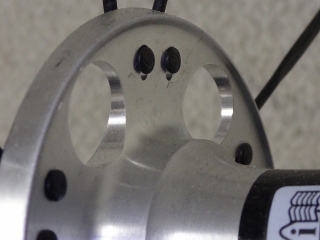
It's laced as 0-cross inpoke,
but the flange shape wouldn't allow lacing as outpoke throughout.
When you radial-lace a front hub with an extremely small flange diameter using inpoke,
you can sometimes get axial play in the hub shaft.
With hubs like Dura-Ace or Chris King's R45-class diameter,
this rarely happens, and even if it does, play can be taken out with bearing cup adjustment.
In the case of Toni Evo hubs, even if play did occur, there was a way to fix it.
But with Evolite hubs, since the ends are simple press-fit style
and the bearing diameter is so small, if play develops there's no way to correct it.
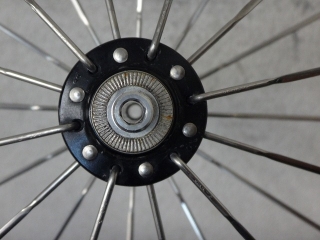
On a friend's front wheel, I once tried what we called "half-inpoke" radial lacing
to neutralize the flange deformation direction,
but that creates its own separate issues, so we haven't adopted it for Nomu Lab wheels.
By the way, this is an Evo hub, not an Evolite.
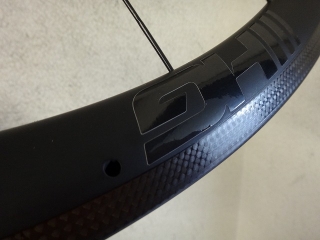
↑This is a wheel that comes on a Cannondale complete bike,
with a carbon tubeless-ready rim,
and the "HG" is a hologram in the model name.
The large holes in the rim sidewalls aren't so much for drainage
as they serve to prevent explosion in case
the tubeless air pressure escapes into the rim cavity.

This wheel's front hub, unlike the one on today's wheel,
has a shape that's limited to outpoke radial lacing only.
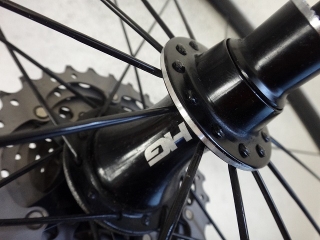
The rear hub has equal spokes on both sides laced as outpoke radial on the non-freewheel side—
very 20th-century lacing—but
since it doesn't have a shape that's exclusively outpoke-radial,
rebuilding it into a better rear wheel won't be hindered by the hub itself.
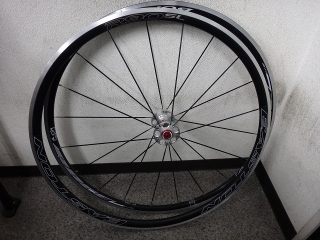
Back to the main topic.
The customer also brought me
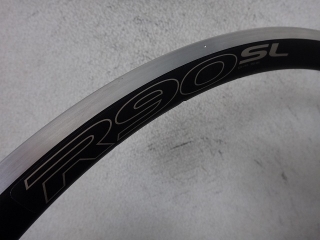
an Easton R90SL
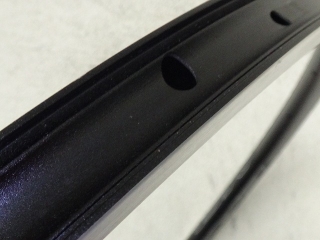
wide tubeless-ready rim, and
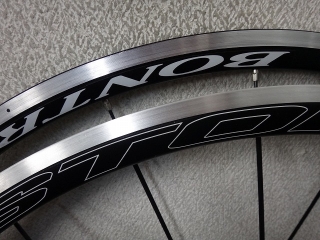
wanted a rim swap.
The Easton rim is slightly taller (= smaller inner diameter),
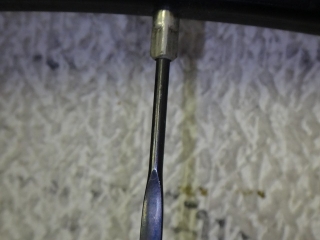
and the original wheel's spokes have a long plain section at the rim end,
so by trimming them slightly—irreversibly—
I can make the swap to Easton a certainty.
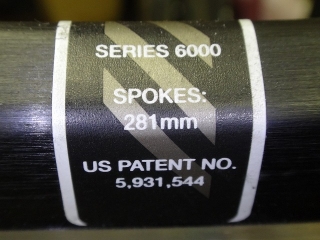
The Bontrager rim has the spoke length written on it for the wheel it came with. Nice touch.
Yeah right, who believes that garbage.
With like a 25mm-tall generic nipple rim and
radial lacing on an ultra-small-flange Evolite front hub
you're looking at around 280mm total,
so there's no way this big-flange hub could be 281mm.
What probably happened is they had another hub model that already used 281mm spokes,
and they reused the rim from that.
The actual length of the original spokes was 275mm.
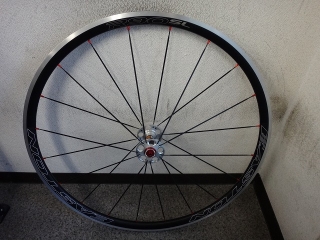
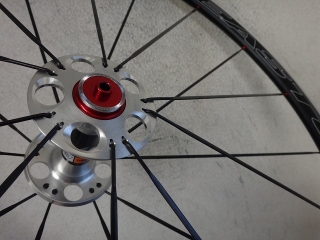
Built.

At the customer's request, I went with red aluminum nipples.
The customer asked me to weigh the rim and wheel both before and after work.
The rim weight difference came to 53g,
but the wheel weight difference ended up being 77g.
The trimmed spoke length was only a minor factor—
the original brass nipples had a large hex head accessible from the outer diameter
and were heavy not just in material but in overall volume too, which accounts for the difference.
As for the actual weights themselves, I have no intention of sharing them.
↑wow, what a jerk

Sorry for the wait! Please look at these images!

bontrager rim (no rim tape)!
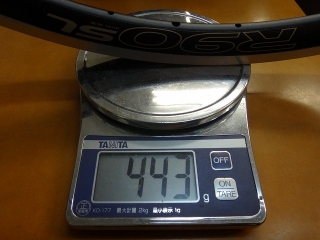
easton rim!
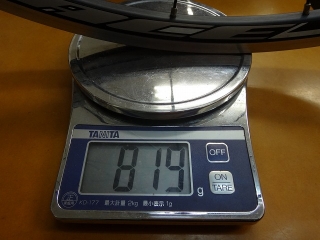
pre-work wheel (with rim tape)!
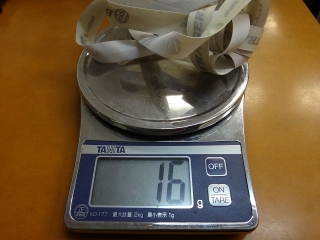
rim tape alone!
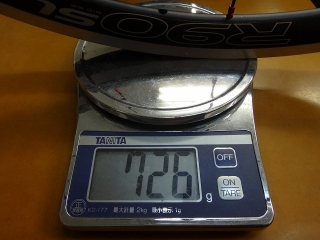
post-work wheel!
↑oh come on, stop it!

I took a Bontrager front wheel in from a customer.

The rim is a WO narrow aluminum rim,

and the hub is 20H large flange with phase-pinch flanges laced as 0-cross inpoke,
with DT black aero spokes featuring a slotted reinforcement section.

The flange width on the hub is quite broad.

It's laced as 0-cross inpoke,
but the flange shape wouldn't allow lacing as outpoke throughout.
When you radial-lace a front hub with an extremely small flange diameter using inpoke,
you can sometimes get axial play in the hub shaft.
With hubs like Dura-Ace or Chris King's R45-class diameter,
this rarely happens, and even if it does, play can be taken out with bearing cup adjustment.
In the case of Toni Evo hubs, even if play did occur, there was a way to fix it.
But with Evolite hubs, since the ends are simple press-fit style
and the bearing diameter is so small, if play develops there's no way to correct it.
On a friend's front wheel, I once tried what we called "half-inpoke" radial lacing
to neutralize the flange deformation direction,
but that creates its own separate issues, so we haven't adopted it for Nomu Lab wheels.
By the way, this is an Evo hub, not an Evolite.

↑This is a wheel that comes on a Cannondale complete bike,
with a carbon tubeless-ready rim,
and the "HG" is a hologram in the model name.
The large holes in the rim sidewalls aren't so much for drainage
as they serve to prevent explosion in case
the tubeless air pressure escapes into the rim cavity.

This wheel's front hub, unlike the one on today's wheel,
has a shape that's limited to outpoke radial lacing only.

The rear hub has equal spokes on both sides laced as outpoke radial on the non-freewheel side—
very 20th-century lacing—but
since it doesn't have a shape that's exclusively outpoke-radial,
rebuilding it into a better rear wheel won't be hindered by the hub itself.

Back to the main topic.
The customer also brought me

an Easton R90SL

wide tubeless-ready rim, and

wanted a rim swap.
The Easton rim is slightly taller (= smaller inner diameter),

and the original wheel's spokes have a long plain section at the rim end,
so by trimming them slightly—irreversibly—
I can make the swap to Easton a certainty.

The Bontrager rim has the spoke length written on it for the wheel it came with. Nice touch.
Yeah right, who believes that garbage.
With like a 25mm-tall generic nipple rim and
radial lacing on an ultra-small-flange Evolite front hub
you're looking at around 280mm total,
so there's no way this big-flange hub could be 281mm.
What probably happened is they had another hub model that already used 281mm spokes,
and they reused the rim from that.
The actual length of the original spokes was 275mm.


Built.

At the customer's request, I went with red aluminum nipples.
The customer asked me to weigh the rim and wheel both before and after work.
The rim weight difference came to 53g,
but the wheel weight difference ended up being 77g.
The trimmed spoke length was only a minor factor—
the original brass nipples had a large hex head accessible from the outer diameter
and were heavy not just in material but in overall volume too, which accounts for the difference.
As for the actual weights themselves, I have no intention of sharing them.
↑wow, what a jerk

Sorry for the wait! Please look at these images!

bontrager rim (no rim tape)!

easton rim!

pre-work wheel (with rim tape)!

rim tape alone!

post-work wheel!
↑oh come on, stop it!