Wheels again today (and so on).
Continuing from yesterday.
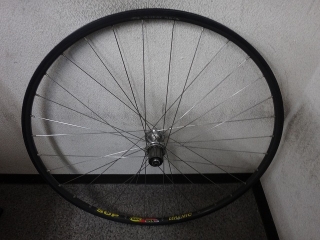
I'm rebuilding the rear wheel with the Open Pro CD ceramic rim.
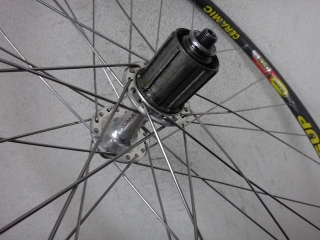
FH-7700, 32H, #15 plain True Starbright spokes (they stick to magnets like crazy!)
It's a 6×6 Italian lacing.
The nipples are brass stars with 3.4mm flats.
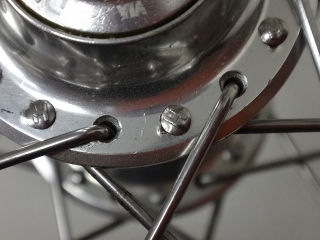
Same as the front hub from yesterday—
the outpoke holes show pull marks from inpoke spokes.
Reading this tells me the previous lacing on this hub was also Italian style.
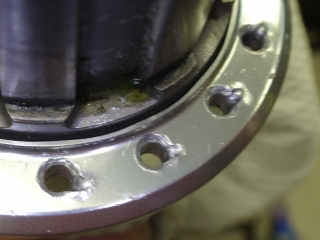
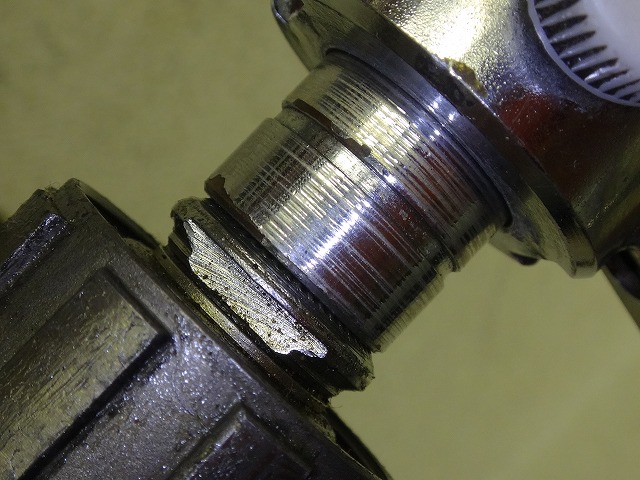
Jumping ahead in the timeline a bit, here's the hub flange after disassembly.
Because the inpoke hole phase is offset by one position,
all flange holes show inpoke marks.
Whether this was intentional—to place the spoke neck on a fresh flange hole—
is unclear.
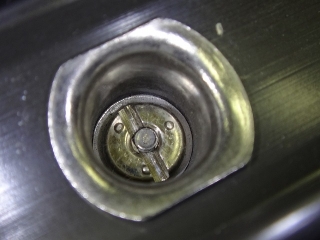
The spoke lengths matched on both sides.
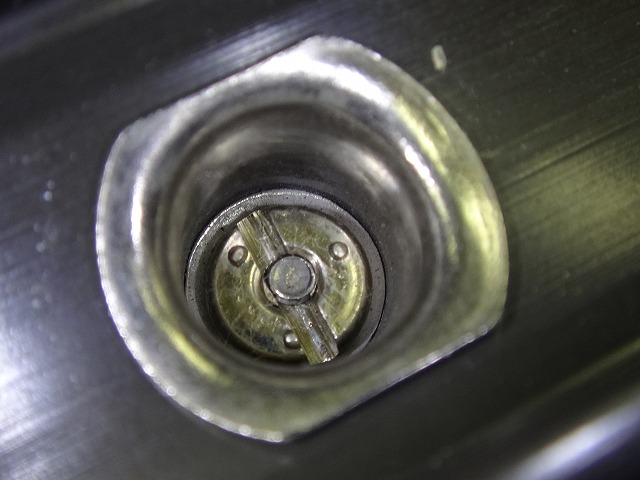
The three little protrusions (or two if aligned with the slot) are
the identifying mark for #15 nipples.
※ These are like the locating and retention lugs on the back of a watch dial.
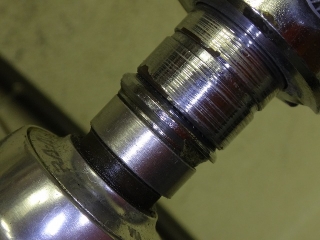
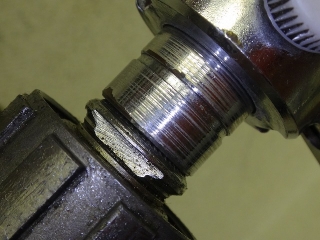
Like the front wheel, it was dead centered with virtually no runout.
The non-freewheel side felt a bit loose,
but that's because both sides use the same diameter and number of spokes, and they're thin round ones at that—
the freewheel side is actually quite tight.
In other words, it's built to nearly the highest standard possible given the constraints.
I keep thinking maybe this doesn't even need me to rebuild it,
though it's true that changing spoke gauge and lacing pattern would make it even stiffer.
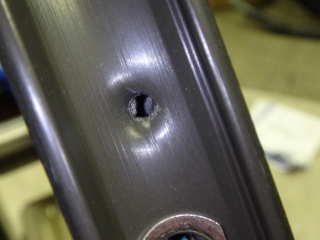
There was a hole on the outer edge like a nail puncture,
but it doesn't affect the rim width at that position, hasn't broken through to the inside,
and there's no dimple-like protrusion, so no real problem.
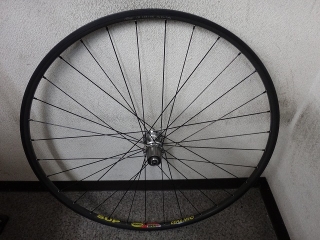
Built.
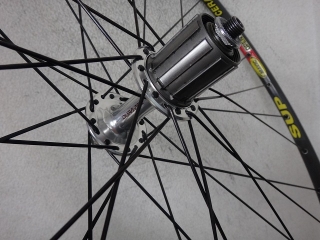
Black half-Comp 4×6 lacing.
I'll do the nipple twisting later.
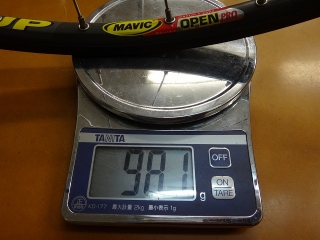
before
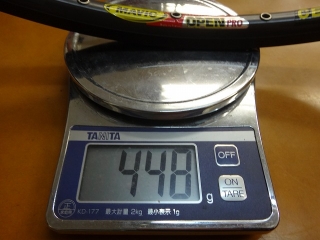
work in progress
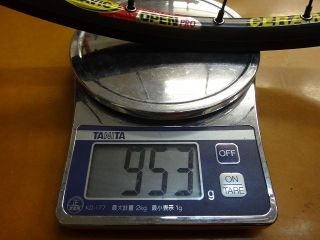
after
The freewheel side spokes actually got heavier with the rebuild.
The non-freewheel side is slightly lighter even accounting for the longer spokes,
but the combined left-right tension is about the same, so
the main weight difference before and after is the nipple material change.
Once I do the nipple twisting, it'll add another few grams.
If the customer had wanted silver spokes and
the True Starbright had been #14 instead of #15,
I would've cut them down from 6-spoke length to 4-spoke length.
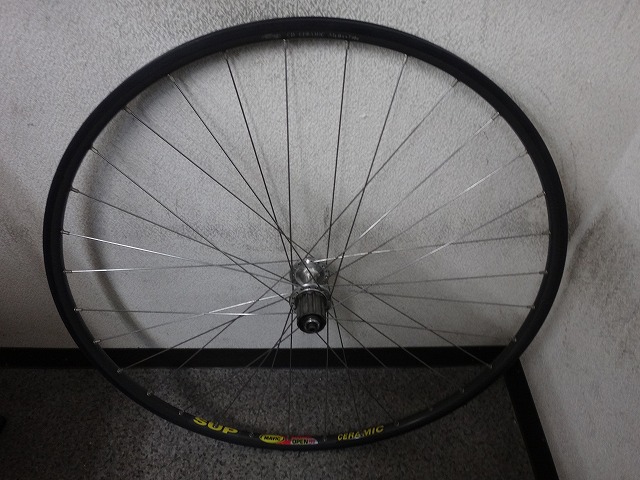
Continuing from yesterday.
I'm rebuilding the rear wheel with the Open Pro CD ceramic rim.
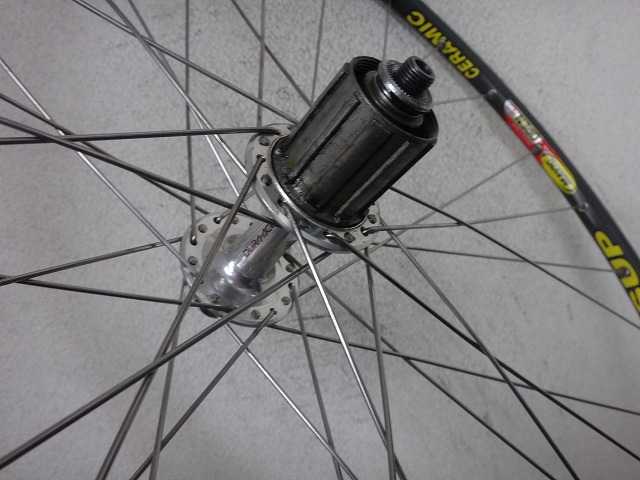
FH-7700, 32H, #15 plain True Starbright spokes (they stick to magnets like crazy!)
It's a 6×6 Italian lacing.
The nipples are brass stars with 3.4mm flats.

Same as the front hub from yesterday—
the outpoke holes show pull marks from inpoke spokes.
Reading this tells me the previous lacing on this hub was also Italian style.
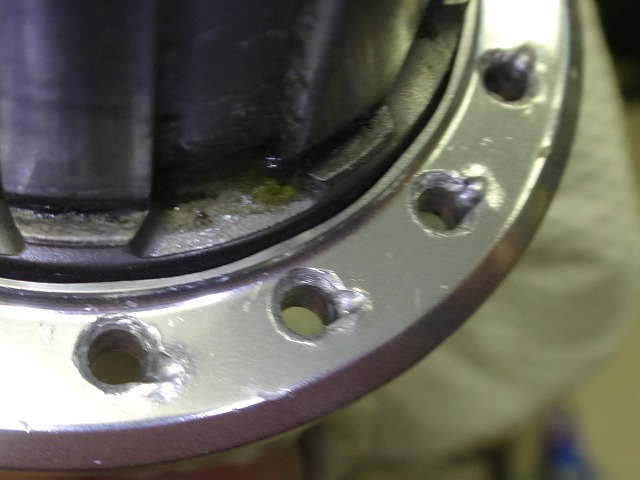
Jumping ahead in the timeline a bit, here's the hub flange after disassembly.
Because the inpoke hole phase is offset by one position,
all flange holes show inpoke marks.
Whether this was intentional—to place the spoke neck on a fresh flange hole—
is unclear.
The spoke lengths matched on both sides.
The three little protrusions (or two if aligned with the slot) are
the identifying mark for #15 nipples.
※ These are like the locating and retention lugs on the back of a watch dial.

Like the front wheel, it was dead centered with virtually no runout.
The non-freewheel side felt a bit loose,
but that's because both sides use the same diameter and number of spokes, and they're thin round ones at that—
the freewheel side is actually quite tight.
In other words, it's built to nearly the highest standard possible given the constraints.
I keep thinking maybe this doesn't even need me to rebuild it,
though it's true that changing spoke gauge and lacing pattern would make it even stiffer.
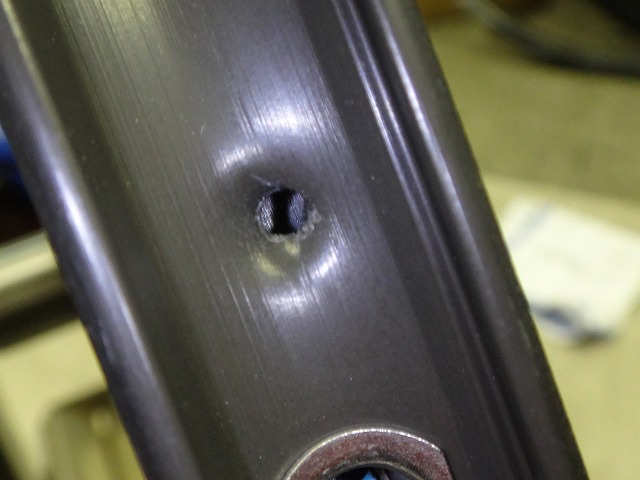
There was a hole on the outer edge like a nail puncture,
but it doesn't affect the rim width at that position, hasn't broken through to the inside,
and there's no dimple-like protrusion, so no real problem.
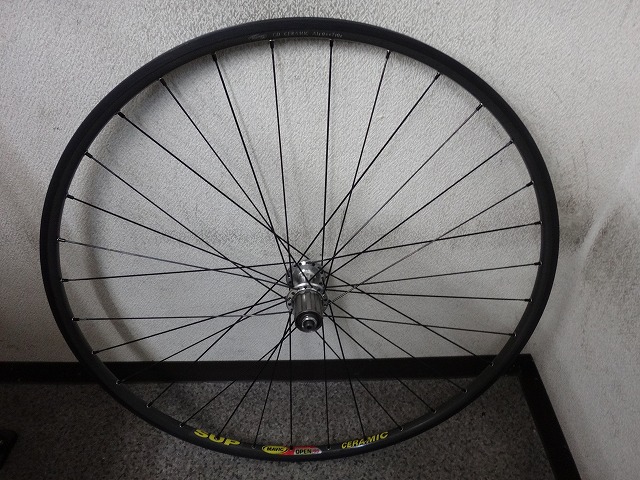
Built.
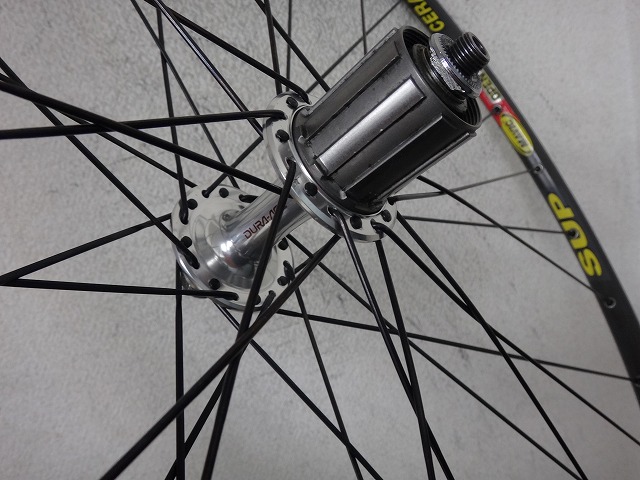
Black half-Comp 4×6 lacing.
I'll do the nipple twisting later.
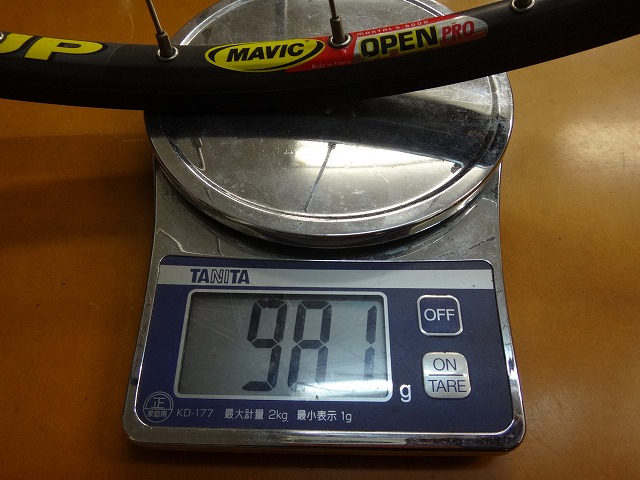
before
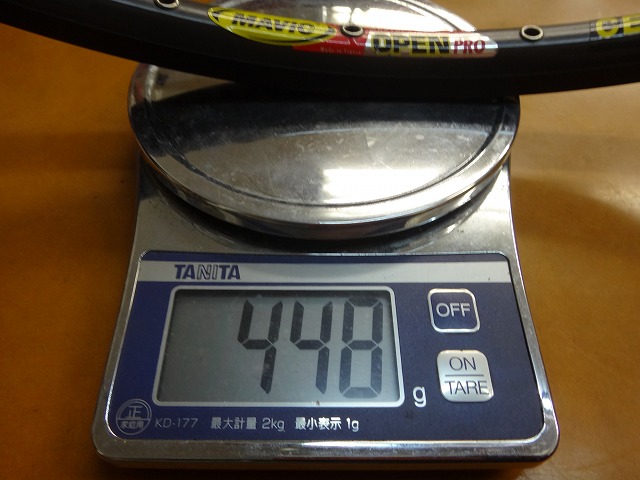
work in progress
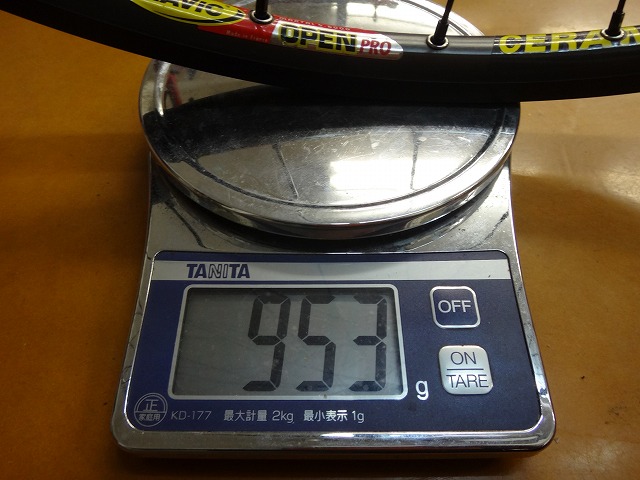
after
The freewheel side spokes actually got heavier with the rebuild.
The non-freewheel side is slightly lighter even accounting for the longer spokes,
but the combined left-right tension is about the same, so
the main weight difference before and after is the nipple material change.
Once I do the nipple twisting, it'll add another few grams.
If the customer had wanted silver spokes and
the True Starbright had been #14 instead of #15,
I would've cut them down from 6-spoke length to 4-spoke length.