Another day with wheels (and so on).
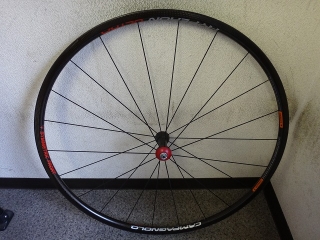
I took in an original Hyperion Ultra from a customer.
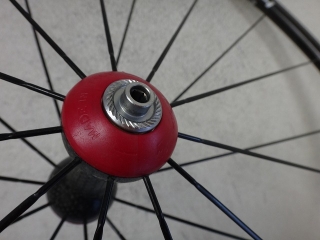
It was Campagnolo's first model to adopt ceramic bearings,
but it was just putting ceramic balls into the old black ball races designed for steel balls—
essentially what we'd now call a USB-spec setup.
However, because the hardness of the ceramic balls and the hardness of the ball races didn't mesh properly,
they'd immediately develop spalling. It was a failed design.
This was only produced for two years, 2004 and 2005,
and from 2006 the ceramic bearing spec was "never made,"
with CULT (the spalling-resistant solution) first appearing in 2009.
The detailed history is written here.
In that post I noted that the ceramic bearings in this hub
and those in the current CULT and USB models are different,
but in terms of specific part numbers,
this hub's retainer bearings are HB-HY023,
while the current CULT and USB retainer bearings are HB-HY123.
To be precise, the latter comes as a 4-piece set,
so the part number is 4-HB-HY-123.

The rim tape is Michelin's hard type—
the same as generic products, and it's the official accessory too.
Back then it was also the standard rim tape for Mavic wheels.
The color was yellow and didn't say Michelin on it,
but with Campagnolo it's sometimes gray.
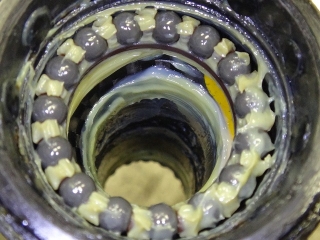
I pulled out the hub axle.
Since it's not CULT, there's grease in it.
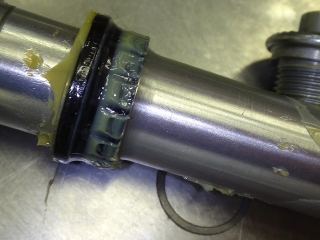
The ball races are also black, the old steel ball/USB type.
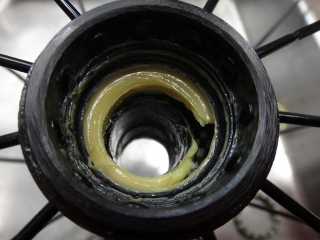
Both Neucrion and Hyperion hubs have grease packed into the drum-shaped ends of the hub body.
With Neucrion, if you inject grease through the grease port in the center of the hub body using a grease gun, you get this result,
but Hyperion has a carbon hub body with no grease port,
and packing grease here doesn't mean it'll be distributed to the bearings periodically or anything like that—
it's basically pointless.
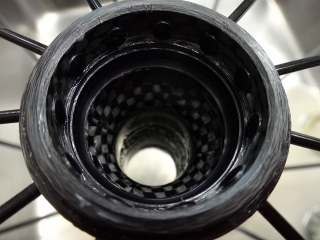
I cleaned everything.
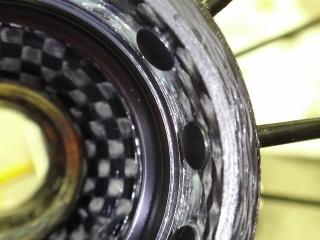
To convert to CULT, I need to replace the cone pressed into the hub,
but on this hub the spoke heads aren't countersunk,
so they get in the way when trying to remove and reinstall the cone.
This means converting to CULT requires completely disassembling and rebuilding the wheel—
a real pain.
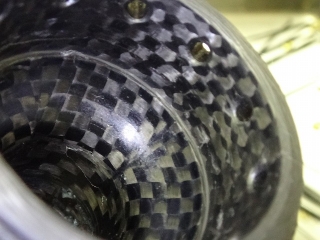
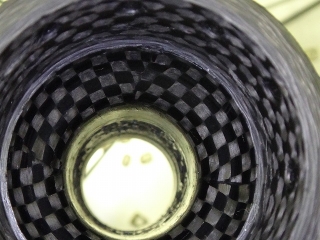
I disassembled the wheel and pulled out the cone.
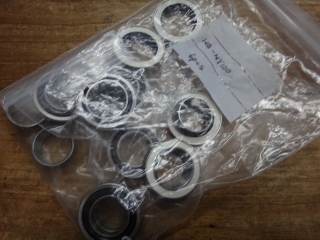

As for CULT bearings,
when ordering from a distributor that knows Campagnolo better than anyone in Japan,
sometimes they arrive in this form rather than in a fancy box
(maybe just at our shop).
It's hard to imagine end users doing CULT bearing replacement work themselves,
and they basically never sell them retail boxed.
When the distributor doesn't have stock in the normal boxed version
and only has this simplified packaging version that they use when converting wheels from shops to CULT,
if you really need it urgently they send you the simplified version—
this isn't laziness, it's them doing us a favor.
However, the current ball races for steel balls/USB are now silver instead of black,
and they're almost indistinguishable from CULT ones,
so you have to manage them very carefully to keep them from getting mixed up.
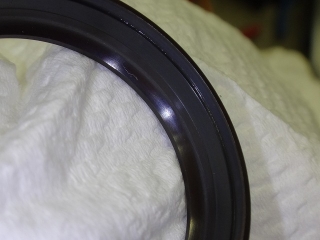
The black cone I pulled from the hub showed no wear marks from the ceramic balls.
With this type of bearing, if actually used, it would get wear marks right away and develop spalling almost immediately,
so it's certain this thing was barely used.
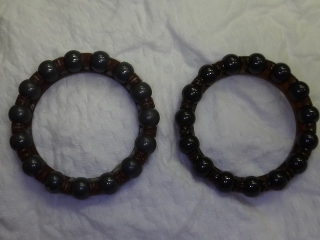
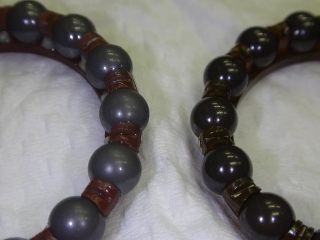
↑In both images, the left is HB-HY023, the right is HB-HY123.
The original ceramic balls have a whiter appearance.
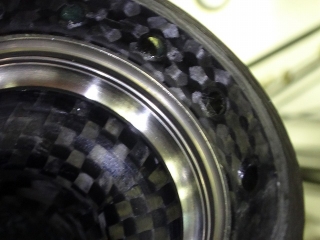
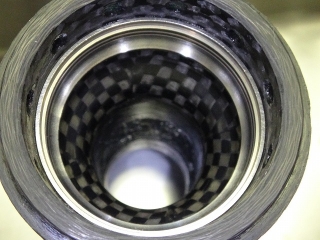
I pressed in the CULT cone and
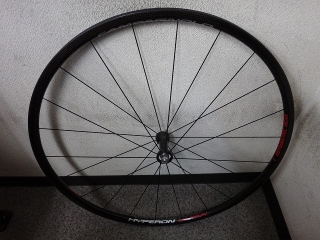
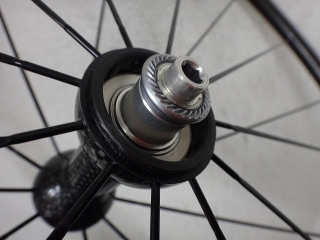

built the wheel back up.
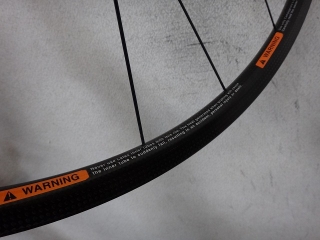
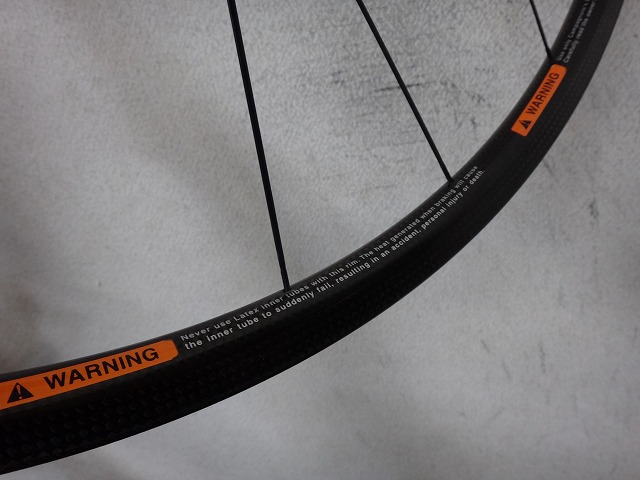
The fact that there are two WARNING stickers on the rim isn't a mistake of putting the same one twice—
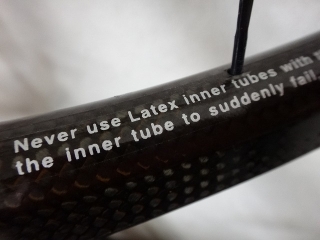
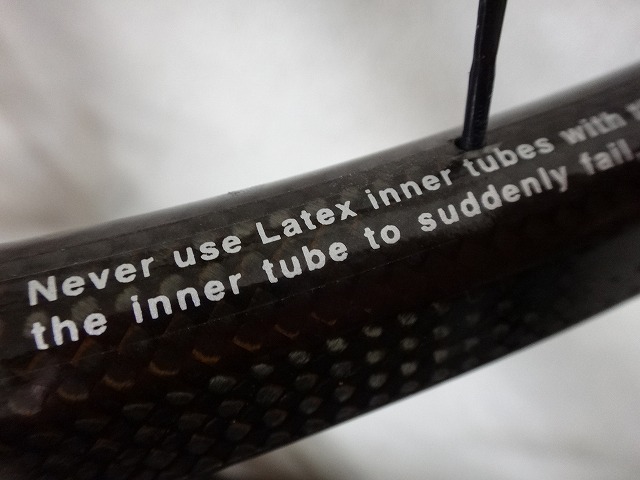
one is the WO model-specific warning against using latex tubes, and

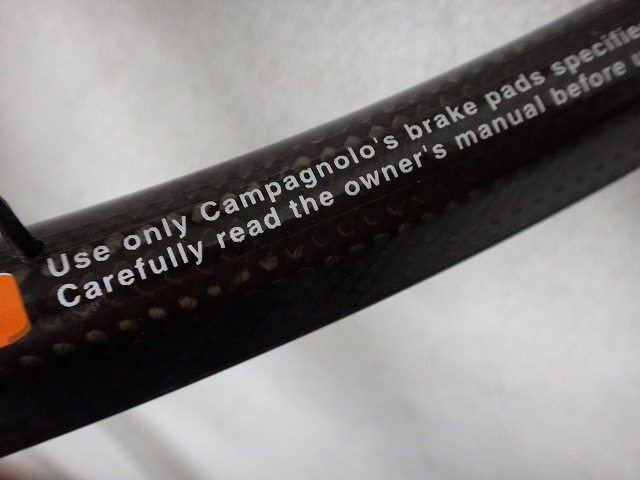
the other is the general warning on all carbon rims to use dedicated brake shoes.
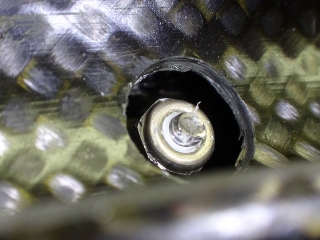
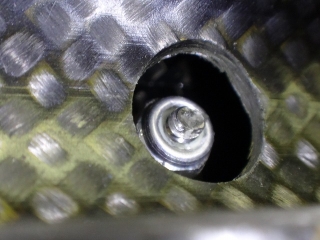
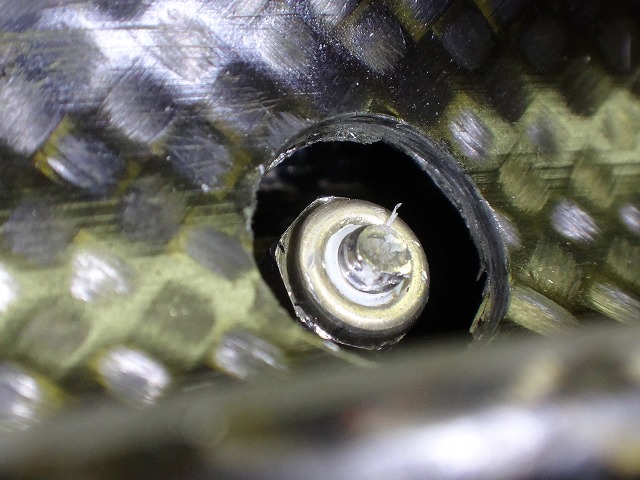
This is from before I disassembled the wheel,
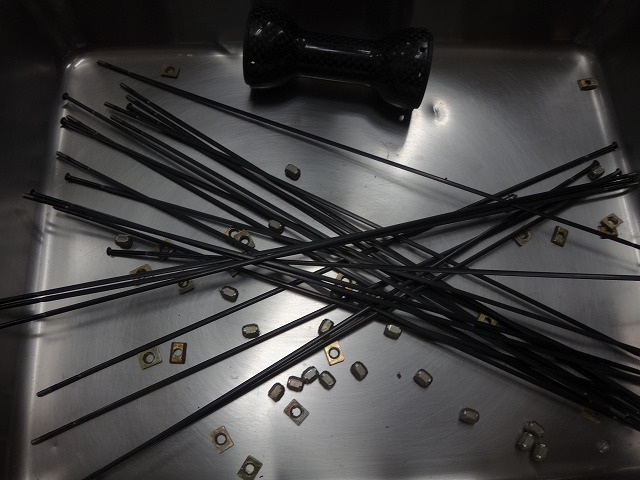
but Neucrion-series wheels have relatively long spokes.
For gripping reclaimed nipples from broken spokes...?
Actually, no (when spokes break, we don't reuse the nipples anyway—
we keep plenty of replacement nipples and their dedicated washers in stock).
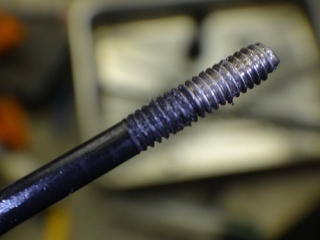
The threaded portion of the spoke is about the same length as generic spokes,
so there isn't much room for retensioning.
The tension had just gone slack over time, I think,
but this wheel was a bit loose, so I trimmed the spoke length slightly with a spoke cutter
to give myself more room for tensioning (the image above is before cutting).
These are Sapim spokes, and in terms of specific gravity they're equivalent to CX-RAY,
but like CX-RAY they have length variation within less than 1mm,
so cutting with a spoke cutter eliminates individual length differences.
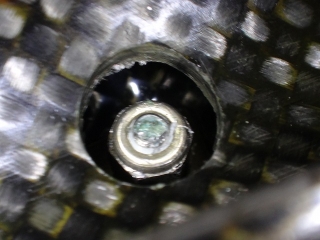
↑This is after rebuild, and compared to the original state
I tightened it about one full nipple turn/one spoke thread turn.
If I hadn't trimmed the spokes slightly,
I'd have basically used up all the length adjustment room.
I'll continue with the rear wheel CULT conversion next,
but the Hyperion rear rim is an offset rim,
so it should be heavier than the front rim.
Also, with the rear hub, the cone on the right side of the hub body
can be replaced without removing spokes,
so unlike the front wheel there's no need for complete disassembly.
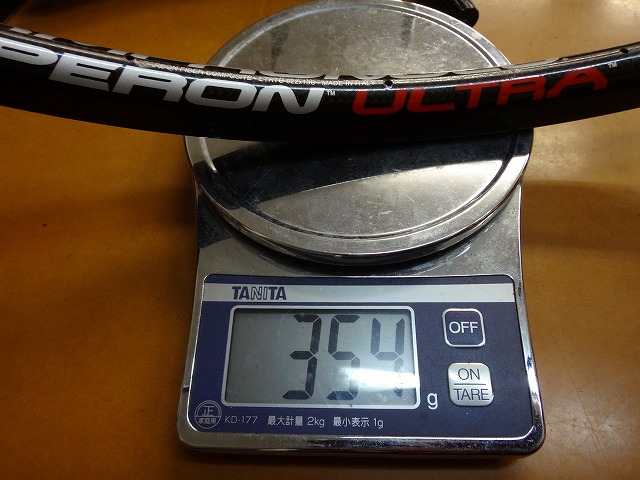
This means the front wheel is the only time I get to definitively measure the rim weight.
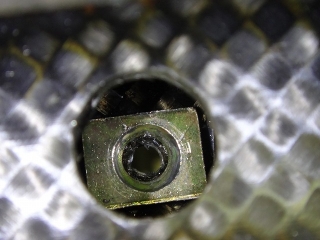
Neucrion-series wheels have a washer between the internal nipple and the rim.
It's attached with thin double-sided tape,
so even when you remove the nipple and spokes it usually won't peel off the rim—
unless you're swinging the rim around violently or something.
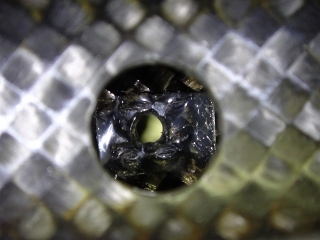
If you want to know the exact weight of the rim alone
you need to remove these washers.
You can peel them off with a thin flathead screwdriver just enough to break the tape seal,
and since they're ferrous they're easy to recover securely with a magnet
(not saying it's not work, though).
You need to do a trial assembly without getting the orientation wrong
when you reinstall them, and that work is pretty tedious too.

After all that work to find out the weight, you think I'm just gonna tell you?
What are you thinking?
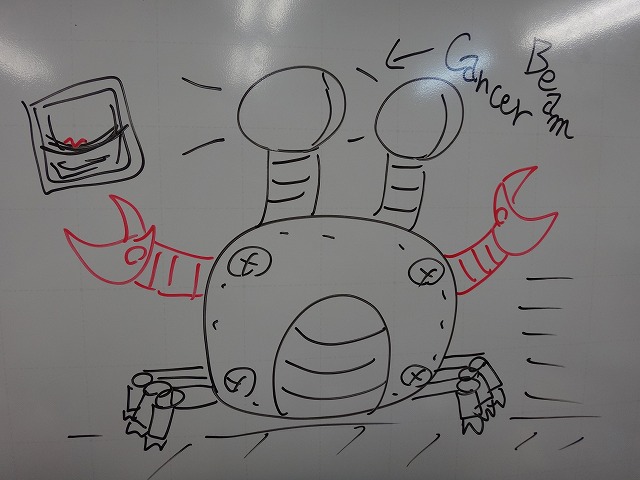
↑Ugh, what a jerk.

Sorry for the wait!

Please take a look at this image!
↑Stop it!
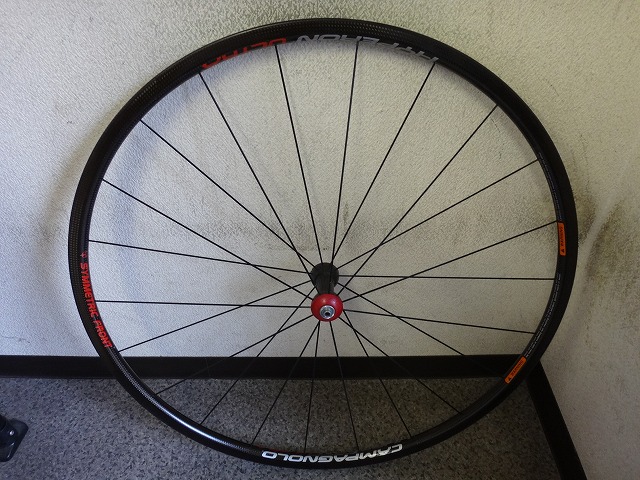
I took in an original Hyperion Ultra from a customer.
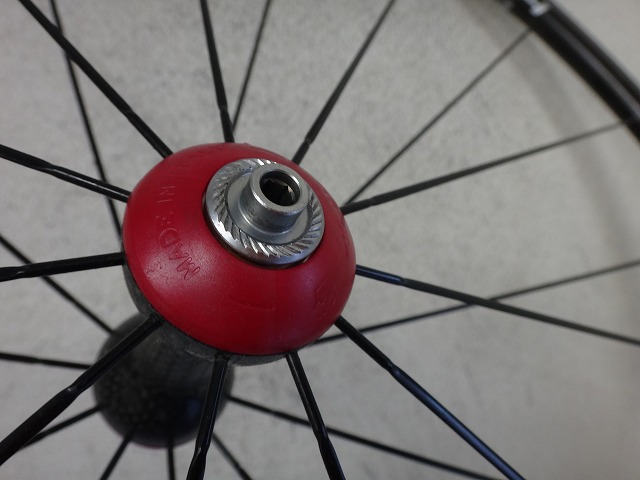
It was Campagnolo's first model to adopt ceramic bearings,
but it was just putting ceramic balls into the old black ball races designed for steel balls—
essentially what we'd now call a USB-spec setup.
However, because the hardness of the ceramic balls and the hardness of the ball races didn't mesh properly,
they'd immediately develop spalling. It was a failed design.
This was only produced for two years, 2004 and 2005,
and from 2006 the ceramic bearing spec was "never made,"
with CULT (the spalling-resistant solution) first appearing in 2009.
The detailed history is written here.
In that post I noted that the ceramic bearings in this hub
and those in the current CULT and USB models are different,
but in terms of specific part numbers,
this hub's retainer bearings are HB-HY023,
while the current CULT and USB retainer bearings are HB-HY123.
To be precise, the latter comes as a 4-piece set,
so the part number is 4-HB-HY-123.
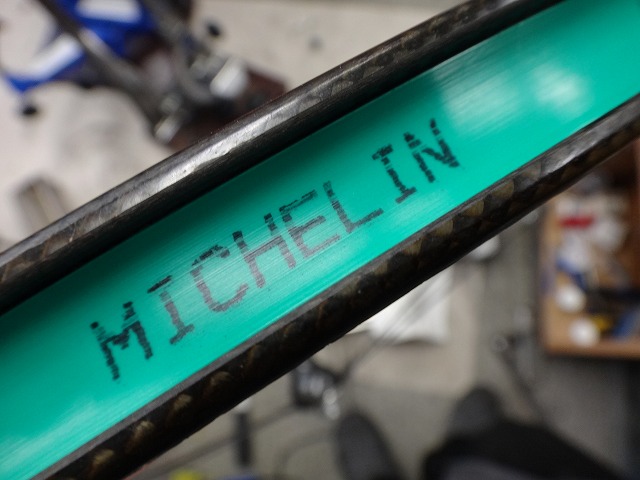
The rim tape is Michelin's hard type—
the same as generic products, and it's the official accessory too.
Back then it was also the standard rim tape for Mavic wheels.
The color was yellow and didn't say Michelin on it,
but with Campagnolo it's sometimes gray.

I pulled out the hub axle.
Since it's not CULT, there's grease in it.

The ball races are also black, the old steel ball/USB type.
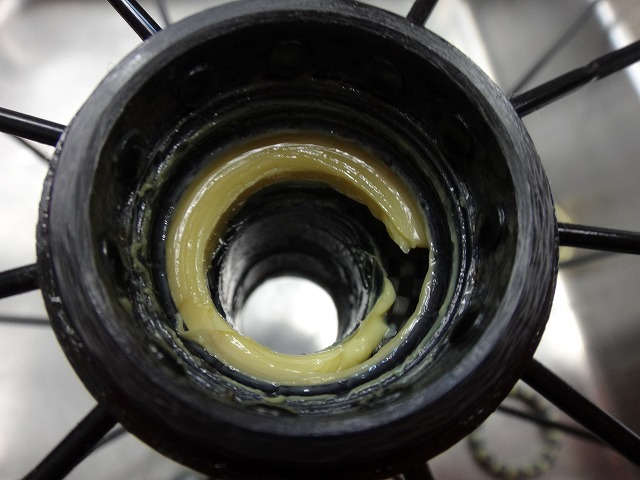
Both Neucrion and Hyperion hubs have grease packed into the drum-shaped ends of the hub body.
With Neucrion, if you inject grease through the grease port in the center of the hub body using a grease gun, you get this result,
but Hyperion has a carbon hub body with no grease port,
and packing grease here doesn't mean it'll be distributed to the bearings periodically or anything like that—
it's basically pointless.
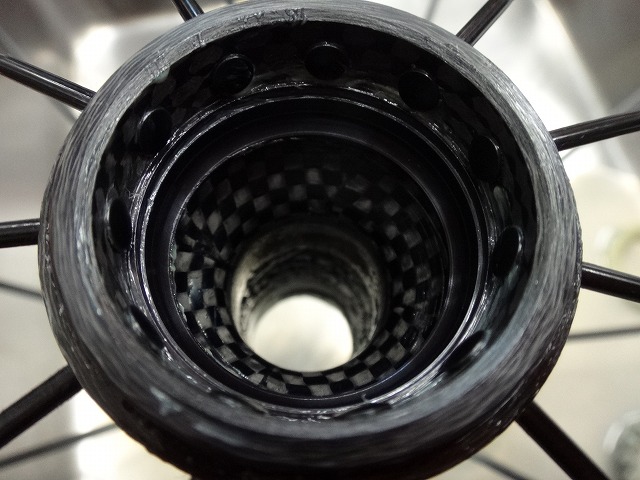
I cleaned everything.
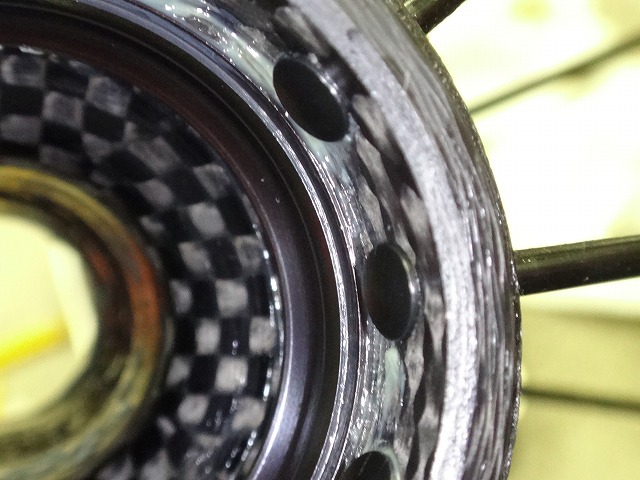
To convert to CULT, I need to replace the cone pressed into the hub,
but on this hub the spoke heads aren't countersunk,
so they get in the way when trying to remove and reinstall the cone.
This means converting to CULT requires completely disassembling and rebuilding the wheel—
a real pain.
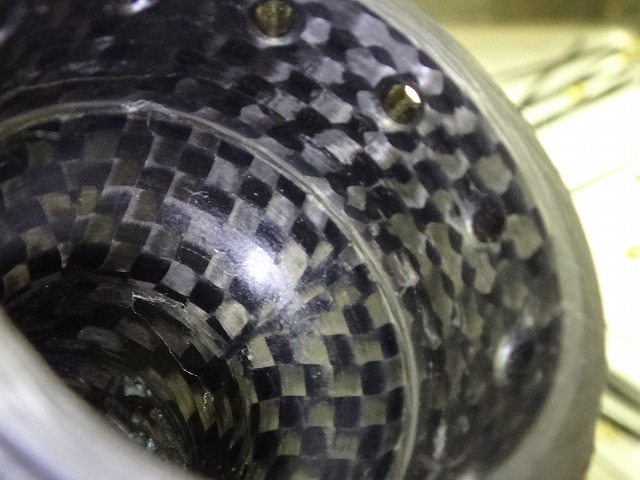
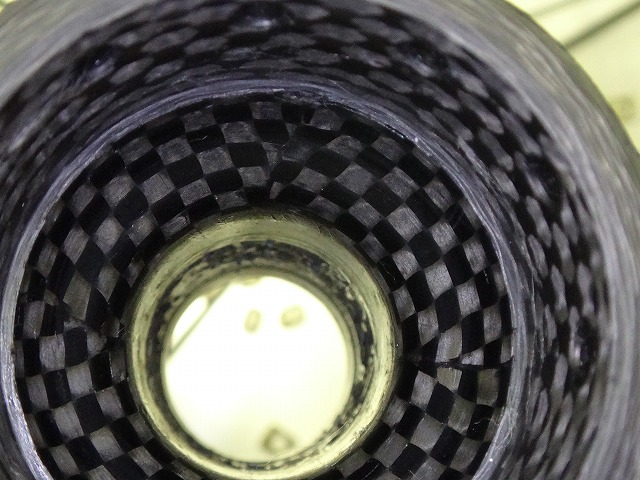
I disassembled the wheel and pulled out the cone.
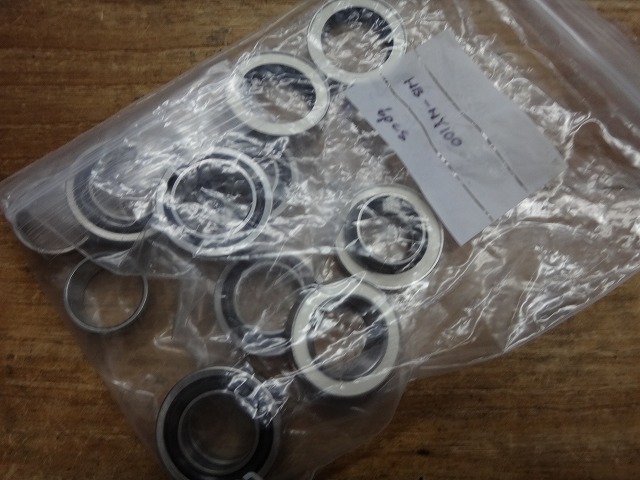

As for CULT bearings,
when ordering from a distributor that knows Campagnolo better than anyone in Japan,
sometimes they arrive in this form rather than in a fancy box
It's hard to imagine end users doing CULT bearing replacement work themselves,
and they basically never sell them retail boxed.
When the distributor doesn't have stock in the normal boxed version
and only has this simplified packaging version that they use when converting wheels from shops to CULT,
if you really need it urgently they send you the simplified version—
this isn't laziness, it's them doing us a favor.
However, the current ball races for steel balls/USB are now silver instead of black,
and they're almost indistinguishable from CULT ones,
so you have to manage them very carefully to keep them from getting mixed up.

The black cone I pulled from the hub showed no wear marks from the ceramic balls.
With this type of bearing, if actually used, it would get wear marks right away and develop spalling almost immediately,
so it's certain this thing was barely used.
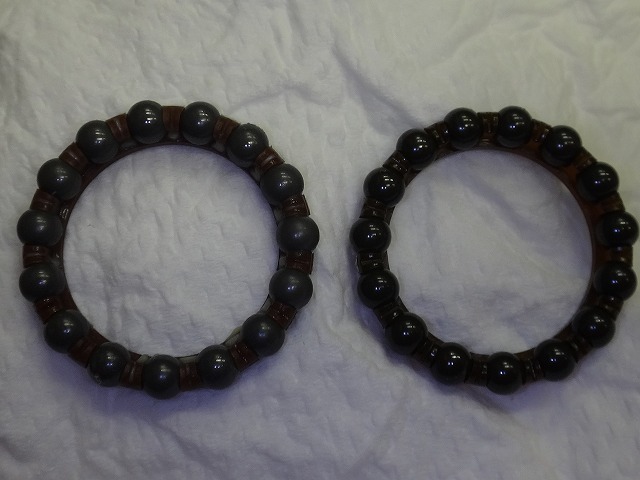

↑In both images, the left is HB-HY023, the right is HB-HY123.
The original ceramic balls have a whiter appearance.
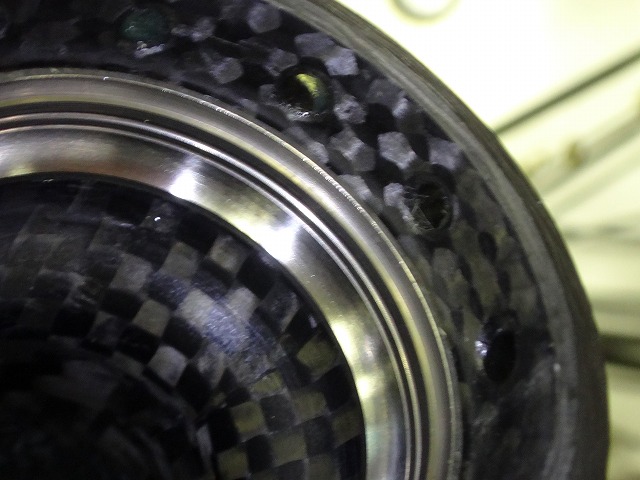
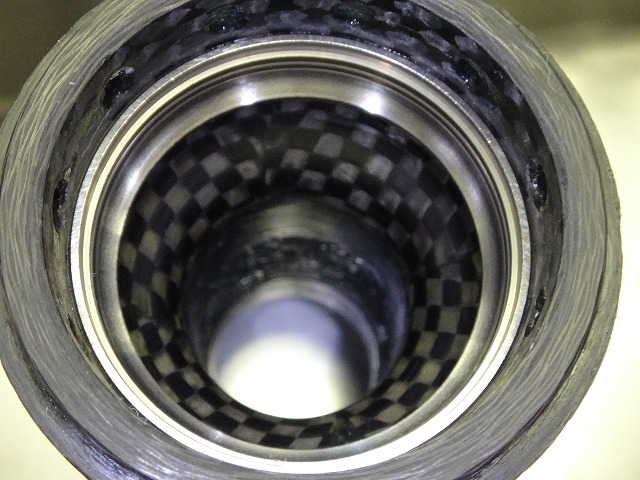
I pressed in the CULT cone and
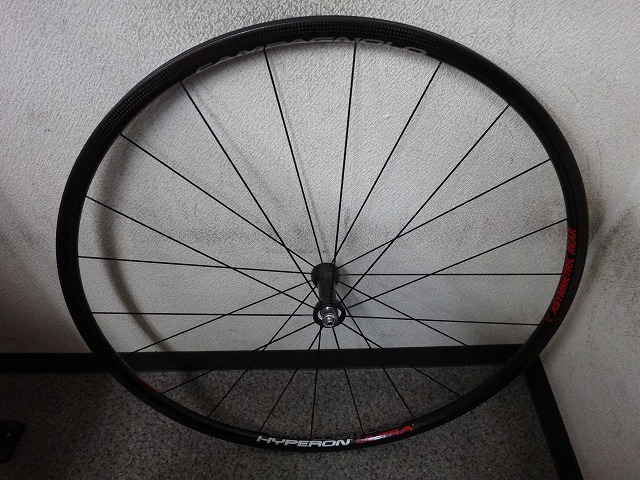
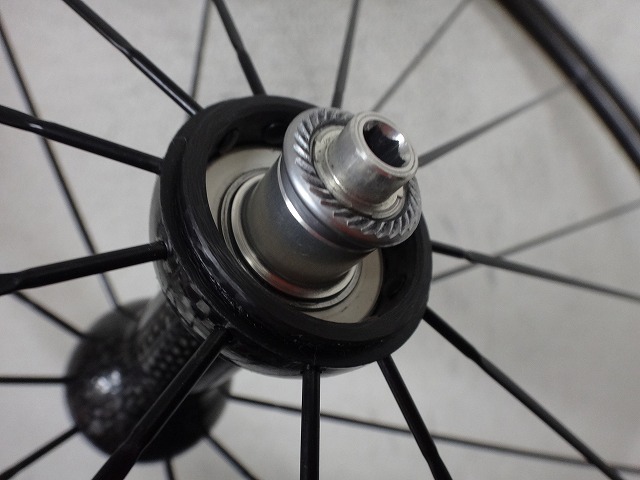
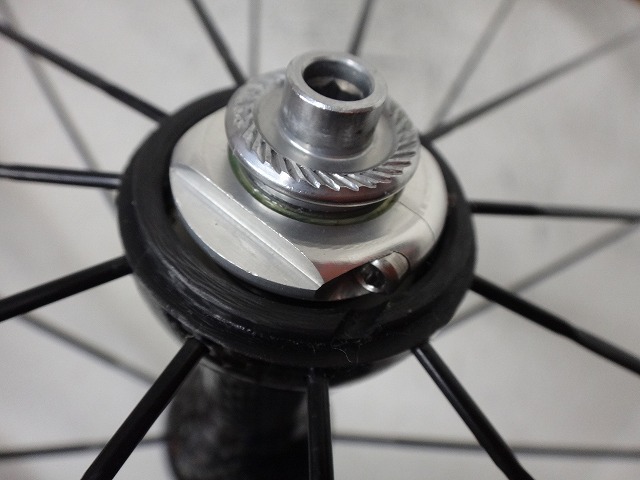
built the wheel back up.
The fact that there are two WARNING stickers on the rim isn't a mistake of putting the same one twice—
one is the WO model-specific warning against using latex tubes, and
the other is the general warning on all carbon rims to use dedicated brake shoes.
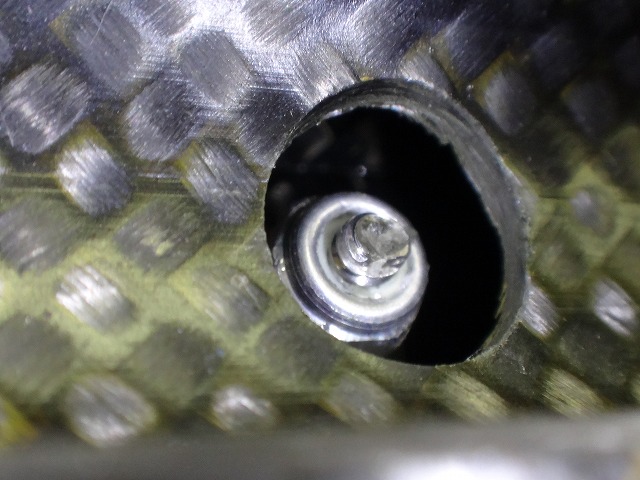
This is from before I disassembled the wheel,
but Neucrion-series wheels have relatively long spokes.
For gripping reclaimed nipples from broken spokes...?
Actually, no (when spokes break, we don't reuse the nipples anyway—
we keep plenty of replacement nipples and their dedicated washers in stock).
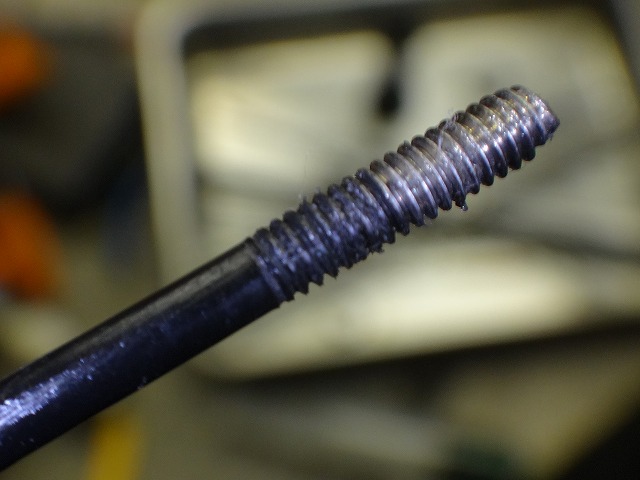
The threaded portion of the spoke is about the same length as generic spokes,
so there isn't much room for retensioning.
The tension had just gone slack over time, I think,
but this wheel was a bit loose, so I trimmed the spoke length slightly with a spoke cutter
to give myself more room for tensioning (the image above is before cutting).
These are Sapim spokes, and in terms of specific gravity they're equivalent to CX-RAY,
but like CX-RAY they have length variation within less than 1mm,
so cutting with a spoke cutter eliminates individual length differences.
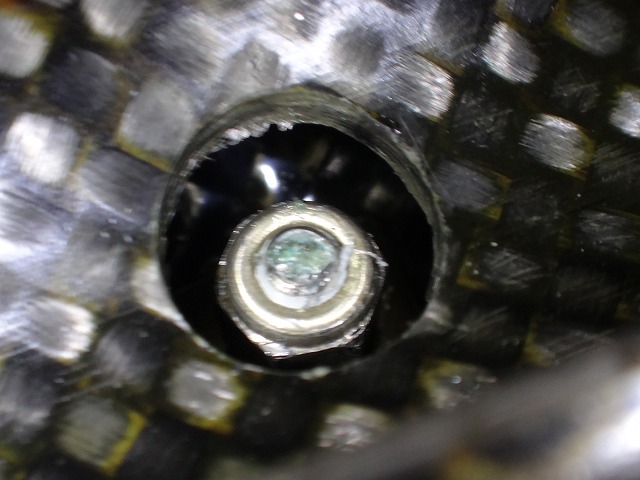
↑This is after rebuild, and compared to the original state
I tightened it about one full nipple turn/one spoke thread turn.
If I hadn't trimmed the spokes slightly,
I'd have basically used up all the length adjustment room.
I'll continue with the rear wheel CULT conversion next,
but the Hyperion rear rim is an offset rim,
so it should be heavier than the front rim.
Also, with the rear hub, the cone on the right side of the hub body
can be replaced without removing spokes,
so unlike the front wheel there's no need for complete disassembly.
This means the front wheel is the only time I get to definitively measure the rim weight.
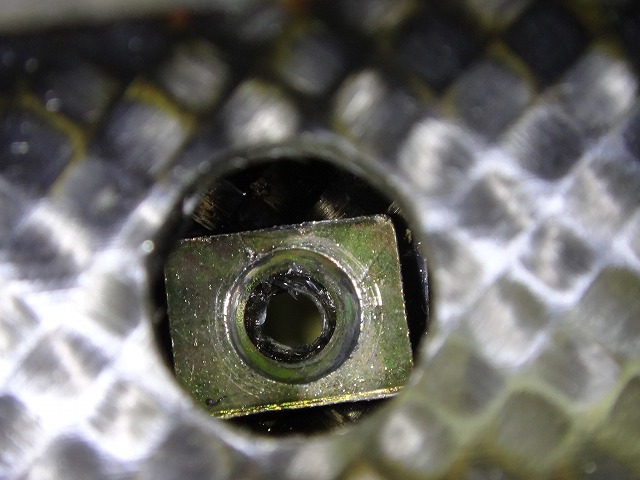
Neucrion-series wheels have a washer between the internal nipple and the rim.
It's attached with thin double-sided tape,
so even when you remove the nipple and spokes it usually won't peel off the rim—
unless you're swinging the rim around violently or something.
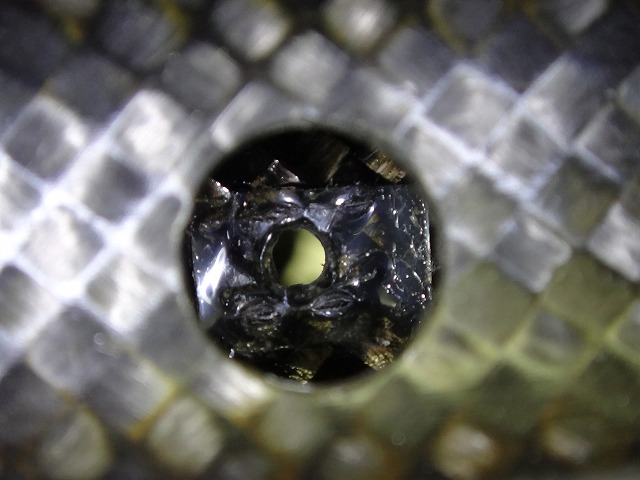
If you want to know the exact weight of the rim alone
you need to remove these washers.
You can peel them off with a thin flathead screwdriver just enough to break the tape seal,
and since they're ferrous they're easy to recover securely with a magnet
(not saying it's not work, though).
You need to do a trial assembly without getting the orientation wrong
when you reinstall them, and that work is pretty tedious too.
After all that work to find out the weight, you think I'm just gonna tell you?
What are you thinking?
↑Ugh, what a jerk.
Sorry for the wait!
Please take a look at this image!
↑Stop it!