I installed IRC tires on Grail CB7 rims
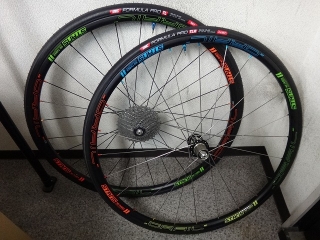
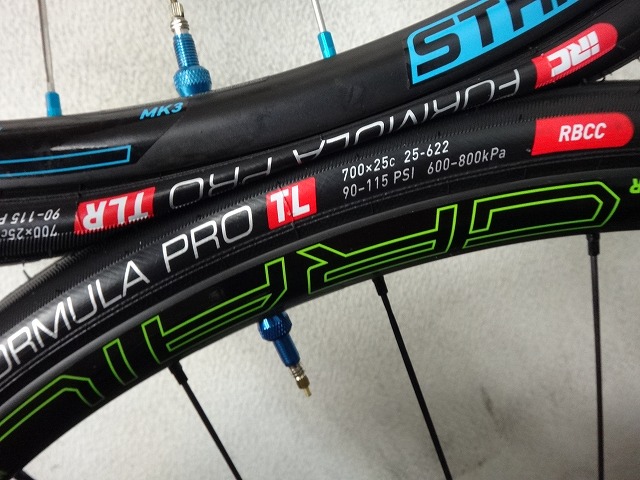
In the photo above, the front is mine, and the back is a customer's wheel I built the other day.
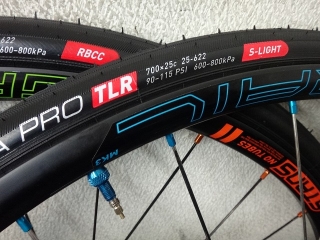
Mine is Formula Pro S-Lite, and as the tire marking shows, it's TLR (Tubeless Ready) spec.
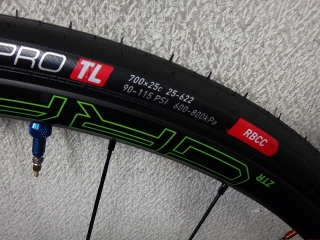
The customer's is Formula Pro regular model RBCC, and this one along with the high puncture-resistant X Guard are TL (Tubeless) spec.
With TL spec, when installed on a tubeless (not ready) rim, even without sealant you get so little air loss that it stays usable for at least a full day or more—it actually holds air better than a Vittoria latex tube in some cases.
This Grail CB7 rim uses their proprietary BST (Bead Socket Technology) hookless rim design, and there's no clear hump on the rim tape surface, but with IRC's current Formula Pro lineup, both TLR and TL make a really loud "CRACK!" sound when the bead pops up onto the rim. The TLR is noticeably easier to mount onto the rim (since I'm putting both 25C tires on the same rim at the same time), and the TLR, whether it's a good fit with the rim dimensions or just worn in from use, can actually be mounted and removed without tire levers.
The Grail CB7's minimum tire width spec is 25C. DT's XR331 is the same, but the XR331 is a hooked rim, and with hooked rims the inner width measurement point is at the hook tips, so they have a smaller inner width number than hookless rims. Even factoring that in, the XR331 has a narrower inner width than the Grail CB7 rim, so when I use IRC Formula Pro, I use 23C at my own risk.
The current Formula Pro with the red label in the photos above is probably the fifth generation, but in the current lineup, 23C is only available in S-Lite. Hmm, that's a problem.
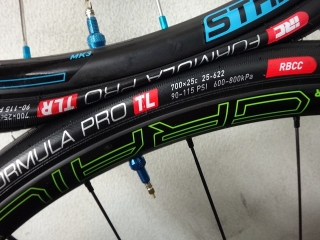
The Grail CB7 rim's maximum allowed pressure with a 25C tire is 6 bar, so first I pumped both up to 6 bar without sealant. If the bead doesn't pop up by 6 bar, you'd need to pump a bit more, but both beads popped up by 6 bar.
After leaving them for about 18 hours, only the TLR lost air noticeably—it was soft enough to dent with my finger. The higher the pressure, the faster air leaks out. The TLR had dropped to around 2.5 bar, but it probably won't drop much further.
I think the factor of "it's an IRC tire" is bigger than rim compatibility, but IRC tubeless tires don't drop their bead even when pressure gets low.
The TL tire was around 5 bar. The rim is tubeless-ready spec with rim tape, but it's retaining air almost as well as a rim that doesn't need tape.
After that, both got Imaje microfiber-infused sealant, and the TL got about 35ml (a bit less than usual for Imaje), while the TLR got a little over 50ml.
Twelve hours later, the TL had barely any air loss, but the TLR still had air loss that shouldn't happen if the sealant was working. In cases like this, instead of adding more sealant, you add air, ride a bit or spin the wheel, then let it sit—the sealant will settle in and stabilize. With Stans sealant, even their weaker "Tire Sealant" works better than Imaje's fiber-infused, so you rarely need this "settling" process.
Twelve hours later, the TLR stabilized with almost no air loss.

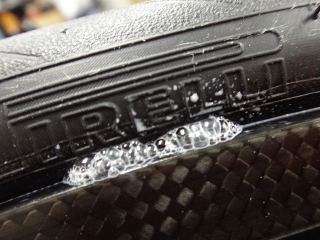
↑This is a Pirelli tubeless-ready tire on a Prime wheel with a hooked rim that I rebuilt the other day, and even after the bead pops up, sealant is bubbling out in several places like little crabs blowing bubbles. The sealant here is Stans Tire Sealant. When I position the bubbling area straight down and shake the wheel side to side or spin it, the air leak at the bead stops, and it stays stable with almost no air loss even after 12 hours. That's a surprising result. The IRC S-Lite TLR didn't have any bubbling at the bead, yet it had air loss.
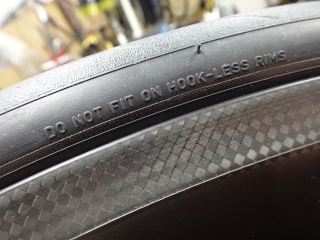
Also, this tire had a marking saying not to use it on hookless rims.
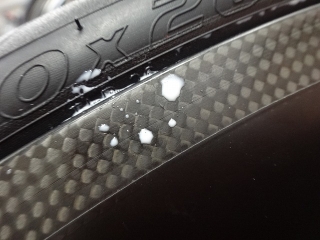
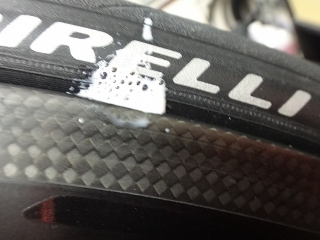
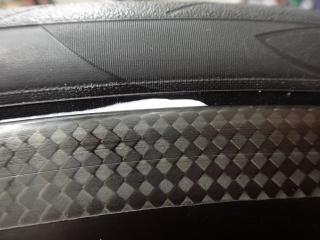
I needed to deflate it for shipping reasons, so I loosened the valve core and pressed—the bead dropped slightly in places around the rim and sealant came leaking out. Ugh.
This happening is more about the tire itself. With a Prime rim and IRC tires, this probably wouldn't occur. I wondered if this could happen if left for months, but with Stans sealant it would have mostly hardened by then anyway.
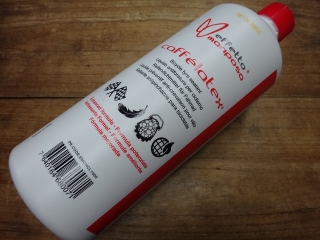
The Effetto Mariposa Café Latex sealant came in a newly redesigned 1000ml container. Darn, I already threw away the old one.
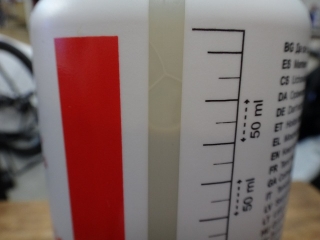
The slit on the side of the container lets you see the remaining volume, same as before, but now it has 50ml graduation marks.

The biggest difference is the shape of the opening after removing the cap,

and when you attach the included tube

↑you can apparently inject directly from the valve. I say "apparently" because I don't use this method myself, so I didn't want to state it as fact.
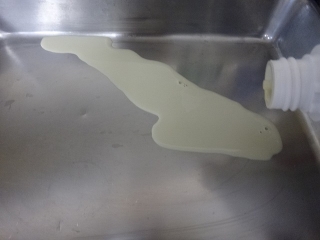
About Café Latex—I recently noticed a property that probably even the manufacturer hasn't caught. It shows more clearly after it's hardened, so I'm leaving a sample in a tray. I'll write about it later.
Continued
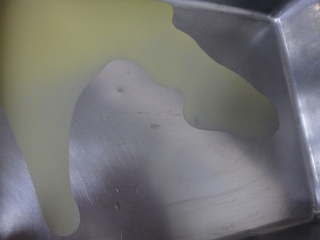
It's hardened.
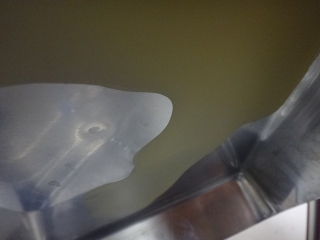
It doesn't fall off even when I flip the tray upside down. And what I noticed was
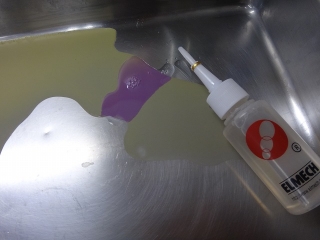
"It turns purple when you apply hydrochloric acid"
I noticed this when I threw out some Café Latex into a bowl I use for catching flux during wire soldering and it changed color.
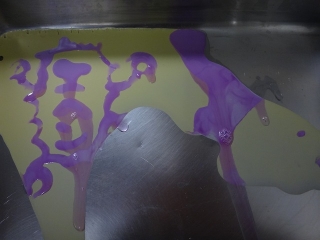
Humanity's first (probably) "drawing on hardened sealant with hydrochloric acid" is a Caterpillar.
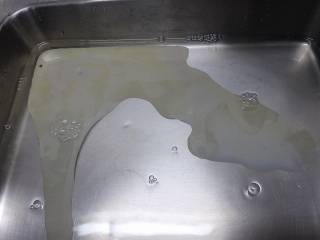
It disappears when you soak it in tap water. Actually, the parts that turned purple become whiter.
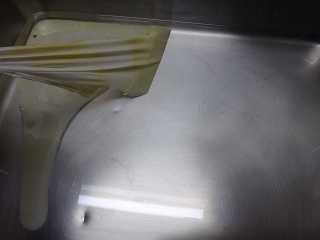
Since I didn't shake and foam it like it would in a tire, and the tray isn't a material with good adhesion, it peels off cleanly.

It looks like yuba.
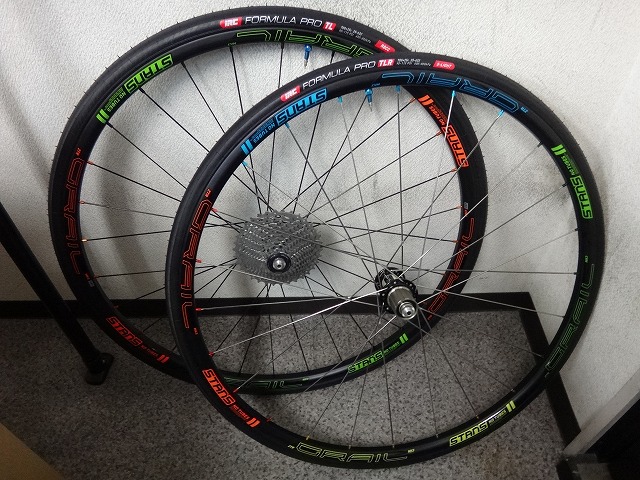
In the photo above, the front is mine, and the back is a customer's wheel I built the other day.
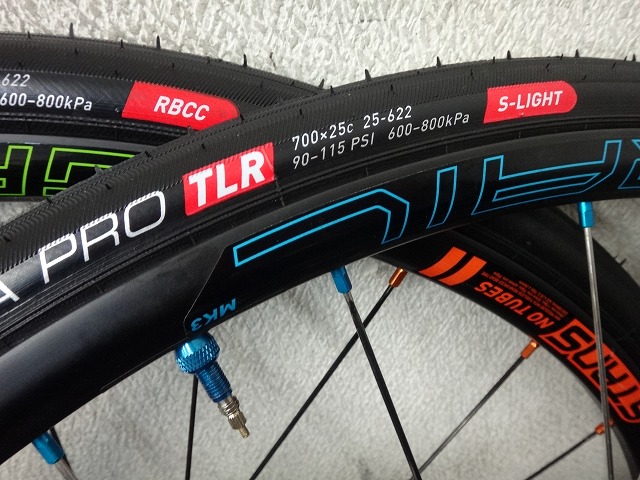
Mine is Formula Pro S-Lite, and as the tire marking shows, it's TLR (Tubeless Ready) spec.
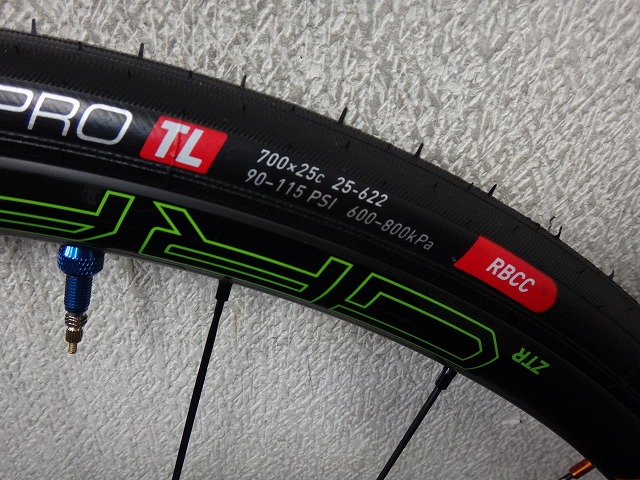
The customer's is Formula Pro regular model RBCC, and this one along with the high puncture-resistant X Guard are TL (Tubeless) spec.
With TL spec, when installed on a tubeless (not ready) rim, even without sealant you get so little air loss that it stays usable for at least a full day or more—it actually holds air better than a Vittoria latex tube in some cases.
This Grail CB7 rim uses their proprietary BST (Bead Socket Technology) hookless rim design, and there's no clear hump on the rim tape surface, but with IRC's current Formula Pro lineup, both TLR and TL make a really loud "CRACK!" sound when the bead pops up onto the rim. The TLR is noticeably easier to mount onto the rim (since I'm putting both 25C tires on the same rim at the same time), and the TLR, whether it's a good fit with the rim dimensions or just worn in from use, can actually be mounted and removed without tire levers.
The Grail CB7's minimum tire width spec is 25C. DT's XR331 is the same, but the XR331 is a hooked rim, and with hooked rims the inner width measurement point is at the hook tips, so they have a smaller inner width number than hookless rims. Even factoring that in, the XR331 has a narrower inner width than the Grail CB7 rim, so when I use IRC Formula Pro, I use 23C at my own risk.
The current Formula Pro with the red label in the photos above is probably the fifth generation, but in the current lineup, 23C is only available in S-Lite. Hmm, that's a problem.
The Grail CB7 rim's maximum allowed pressure with a 25C tire is 6 bar, so first I pumped both up to 6 bar without sealant. If the bead doesn't pop up by 6 bar, you'd need to pump a bit more, but both beads popped up by 6 bar.
After leaving them for about 18 hours, only the TLR lost air noticeably—it was soft enough to dent with my finger. The higher the pressure, the faster air leaks out. The TLR had dropped to around 2.5 bar, but it probably won't drop much further.
I think the factor of "it's an IRC tire" is bigger than rim compatibility, but IRC tubeless tires don't drop their bead even when pressure gets low.
The TL tire was around 5 bar. The rim is tubeless-ready spec with rim tape, but it's retaining air almost as well as a rim that doesn't need tape.
After that, both got Imaje microfiber-infused sealant, and the TL got about 35ml (a bit less than usual for Imaje), while the TLR got a little over 50ml.
Twelve hours later, the TL had barely any air loss, but the TLR still had air loss that shouldn't happen if the sealant was working. In cases like this, instead of adding more sealant, you add air, ride a bit or spin the wheel, then let it sit—the sealant will settle in and stabilize. With Stans sealant, even their weaker "Tire Sealant" works better than Imaje's fiber-infused, so you rarely need this "settling" process.
Twelve hours later, the TLR stabilized with almost no air loss.
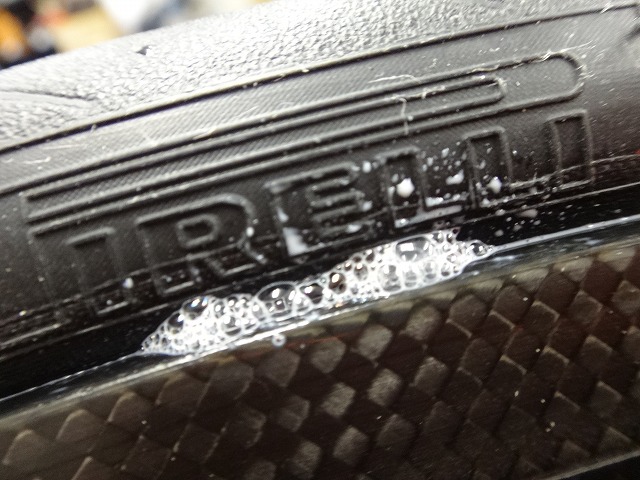
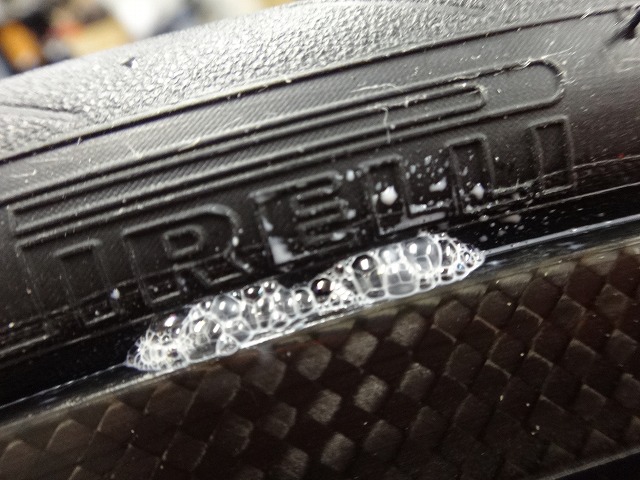
↑This is a Pirelli tubeless-ready tire on a Prime wheel with a hooked rim that I rebuilt the other day, and even after the bead pops up, sealant is bubbling out in several places like little crabs blowing bubbles. The sealant here is Stans Tire Sealant. When I position the bubbling area straight down and shake the wheel side to side or spin it, the air leak at the bead stops, and it stays stable with almost no air loss even after 12 hours. That's a surprising result. The IRC S-Lite TLR didn't have any bubbling at the bead, yet it had air loss.

Also, this tire had a marking saying not to use it on hookless rims.

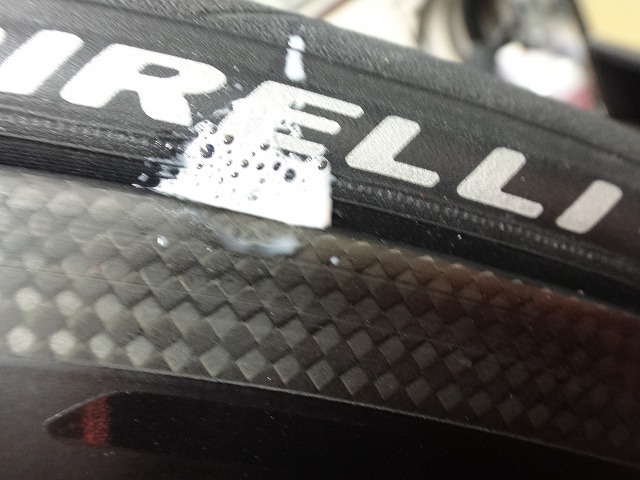
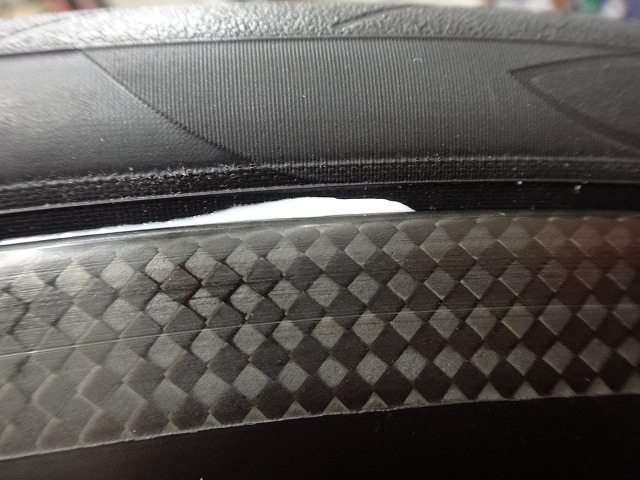
I needed to deflate it for shipping reasons, so I loosened the valve core and pressed—the bead dropped slightly in places around the rim and sealant came leaking out. Ugh.
This happening is more about the tire itself. With a Prime rim and IRC tires, this probably wouldn't occur. I wondered if this could happen if left for months, but with Stans sealant it would have mostly hardened by then anyway.

The Effetto Mariposa Café Latex sealant came in a newly redesigned 1000ml container. Darn, I already threw away the old one.
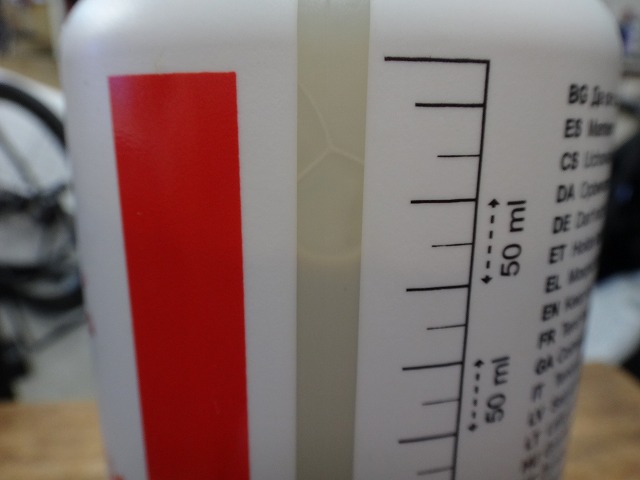
The slit on the side of the container lets you see the remaining volume, same as before, but now it has 50ml graduation marks.
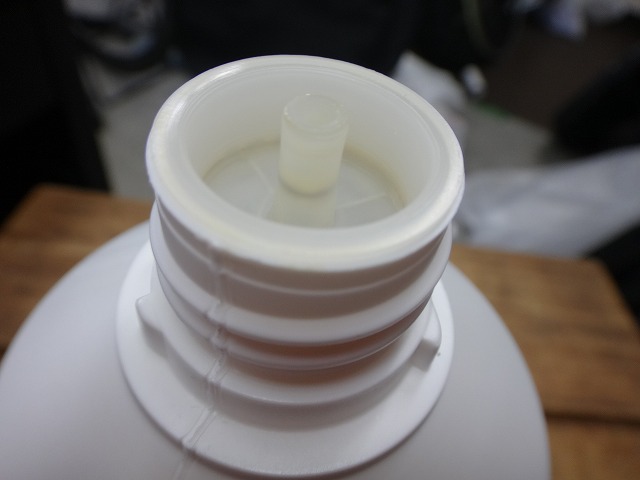
The biggest difference is the shape of the opening after removing the cap,
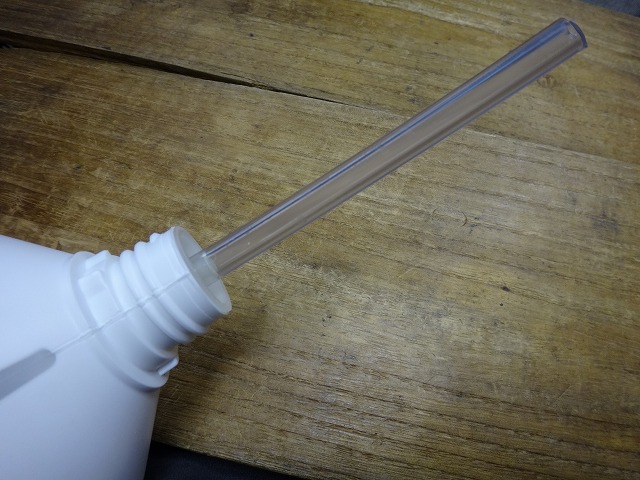
and when you attach the included tube

↑you can apparently inject directly from the valve. I say "apparently" because I don't use this method myself, so I didn't want to state it as fact.
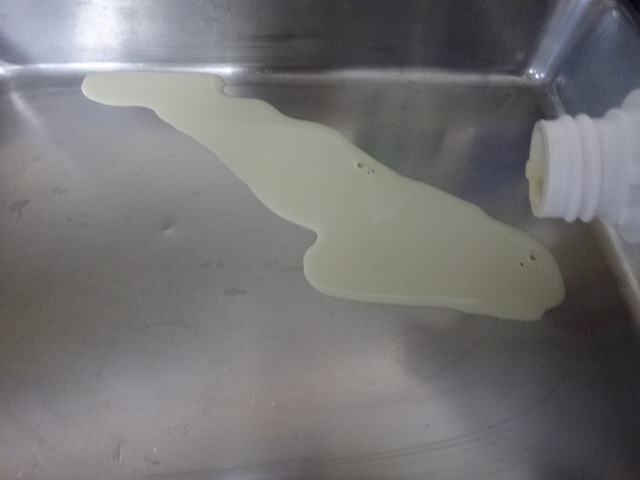
About Café Latex—I recently noticed a property that probably even the manufacturer hasn't caught. It shows more clearly after it's hardened, so I'm leaving a sample in a tray. I'll write about it later.
Continued
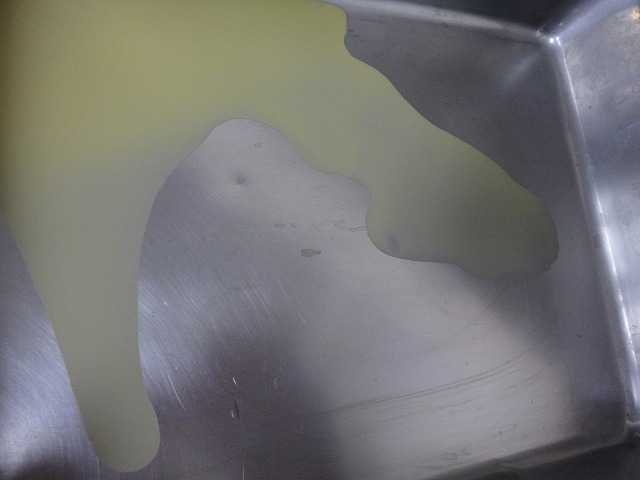
It's hardened.
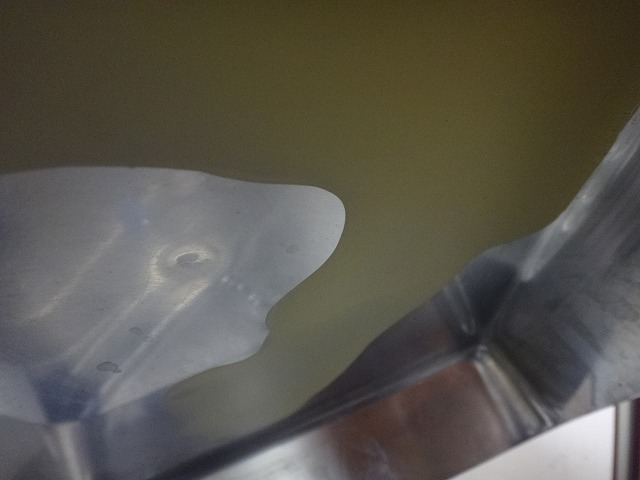
It doesn't fall off even when I flip the tray upside down. And what I noticed was

"It turns purple when you apply hydrochloric acid"
I noticed this when I threw out some Café Latex into a bowl I use for catching flux during wire soldering and it changed color.
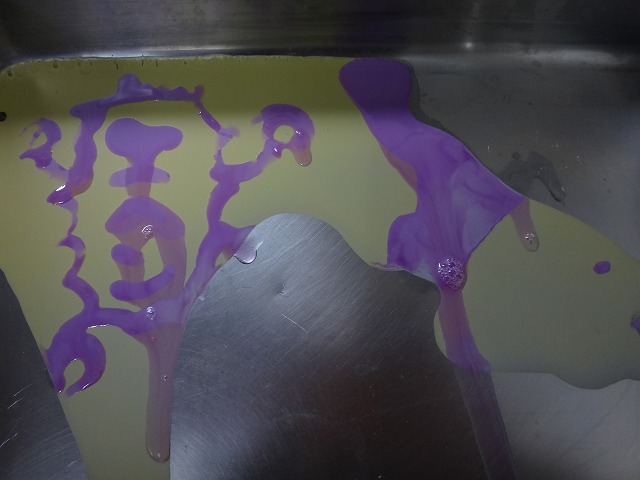
Humanity's first (probably) "drawing on hardened sealant with hydrochloric acid" is a Caterpillar.
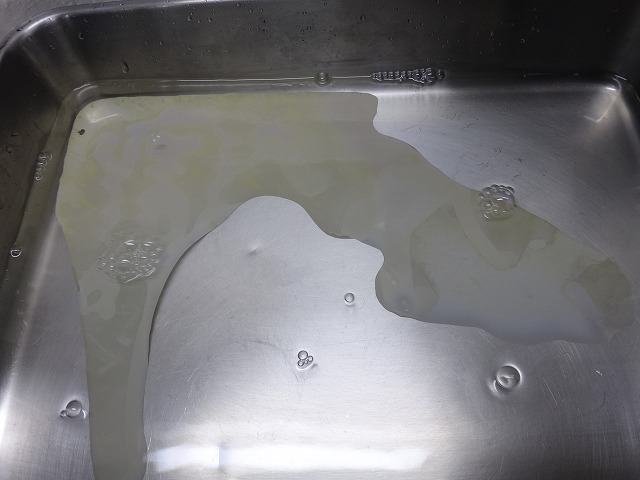
It disappears when you soak it in tap water. Actually, the parts that turned purple become whiter.
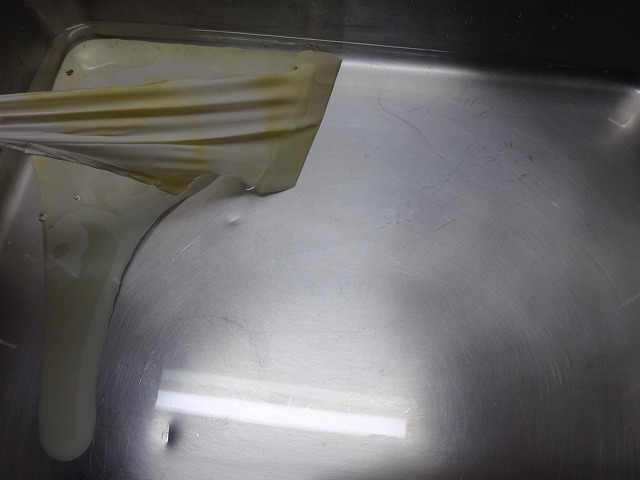
Since I didn't shake and foam it like it would in a tire, and the tray isn't a material with good adhesion, it peels off cleanly.

It looks like yuba.