I decided against making the title "Bora Ultra 35 Bright Label Clincher" because
I thought it would be hard to find this article later.
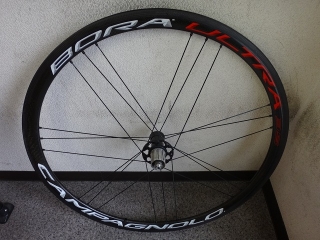
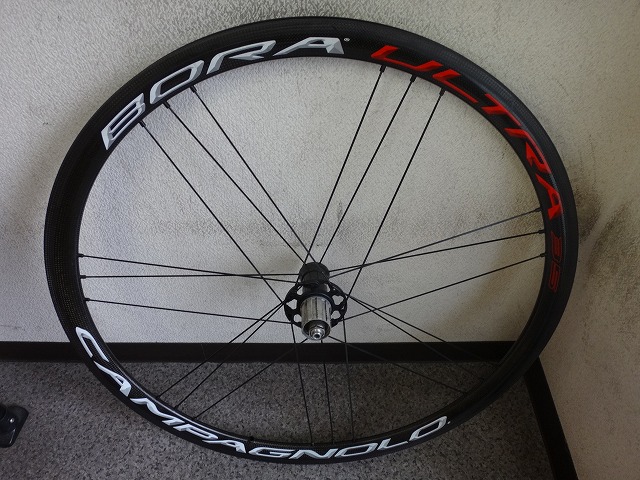
I received a Bora Ultra from a customer.
The rear wheel had centering issues—it was already slightly off-center to the right originally,
and age-related use had added a bit more drift,
while the front wheel was essentially fine.
But that's not really the value of this article.
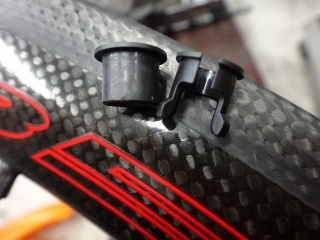
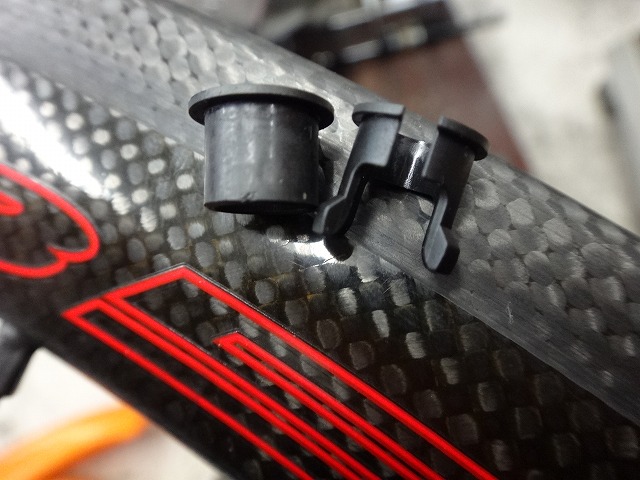
↑The valve bushing on the left in the image is second-generation, and the right is third-generation.
For more details (→see here).
The valve bushings on both wheel rims when the customer brought it in
were second-generation, but from experience I know
that these have a slight minus tolerance in the bore diameter,
making valves without threads difficult to fit through.
The tube in this wheel was a Tubolito one, and
the plastic valve wouldn't come out easily from the valve bushing.
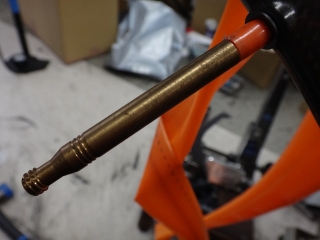
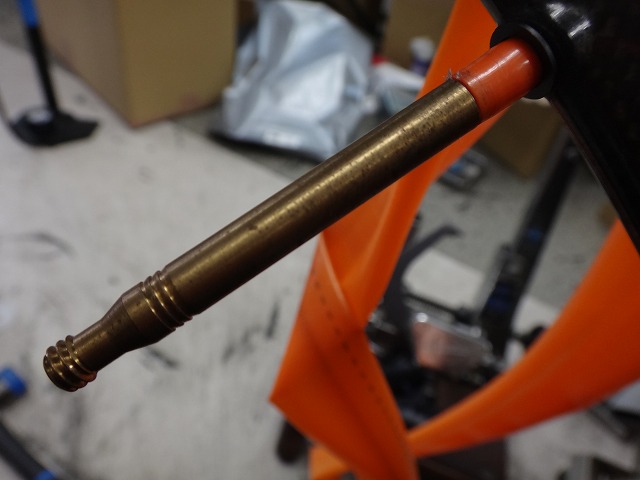
I fitted a cap-type extender and
tapped it out with a hammer.
Removing it by hand is pretty much impossible,
and if you try to forcibly pull it out from the outside
(grabbing and pulling like extracting carrot leaves)
there's a good chance the valve will snap off at the base.
In other words, if you discover this problem after getting a puncture somewhere remote,
you could end up stranded.

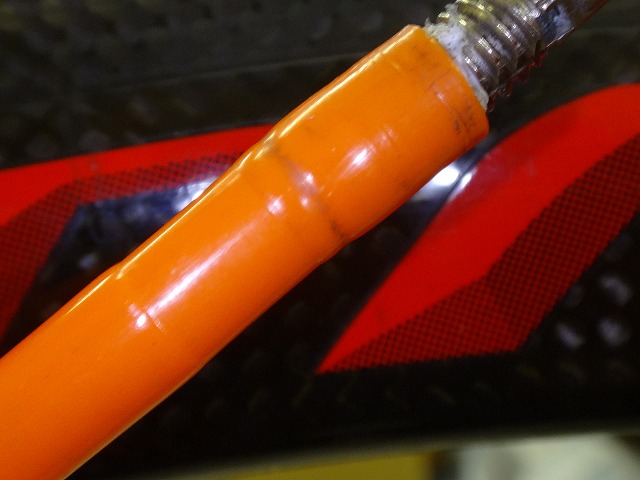
Looking at the valve after being tapped out, it was deformed with a battered, dented appearance,
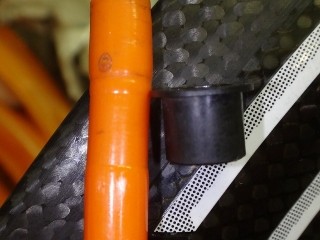
and its position and length matched up with the second-generation valve bushing.
When I replaced it with a third-generation valve bushing,
the third-generation has the largest dimensional clearance of all generations,
so inserting and removing the Tubolito valve became very smooth.
This might be a rare case, but
if you're using Campagnolo Bora or Fulcrum Speedy wheels
and running Tubolito tubes, it might be worth
checking what generation your valve bushing is from.
I thought it would be hard to find this article later.
I received a Bora Ultra from a customer.
The rear wheel had centering issues—it was already slightly off-center to the right originally,
and age-related use had added a bit more drift,
while the front wheel was essentially fine.
But that's not really the value of this article.
↑The valve bushing on the left in the image is second-generation, and the right is third-generation.
For more details (→see here).
The valve bushings on both wheel rims when the customer brought it in
were second-generation, but from experience I know
that these have a slight minus tolerance in the bore diameter,
making valves without threads difficult to fit through.
The tube in this wheel was a Tubolito one, and
the plastic valve wouldn't come out easily from the valve bushing.
I fitted a cap-type extender and
tapped it out with a hammer.
Removing it by hand is pretty much impossible,
and if you try to forcibly pull it out from the outside
(grabbing and pulling like extracting carrot leaves)
there's a good chance the valve will snap off at the base.
In other words, if you discover this problem after getting a puncture somewhere remote,
you could end up stranded.
Looking at the valve after being tapped out, it was deformed with a battered, dented appearance,
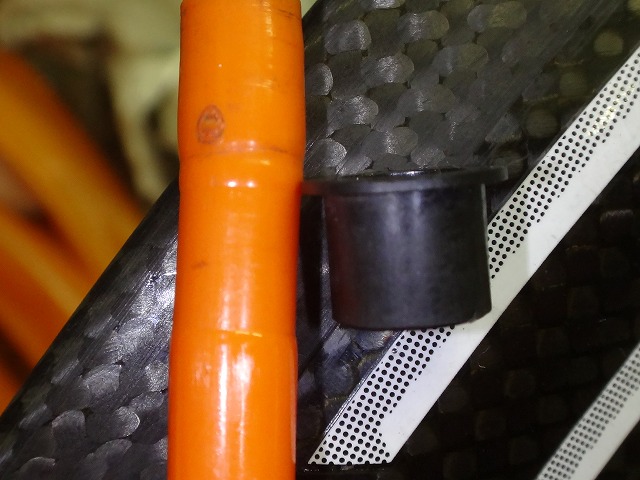
and its position and length matched up with the second-generation valve bushing.
When I replaced it with a third-generation valve bushing,
the third-generation has the largest dimensional clearance of all generations,
so inserting and removing the Tubolito valve became very smooth.
This might be a rare case, but
if you're using Campagnolo Bora or Fulcrum Speedy wheels
and running Tubolito tubes, it might be worth
checking what generation your valve bushing is from.