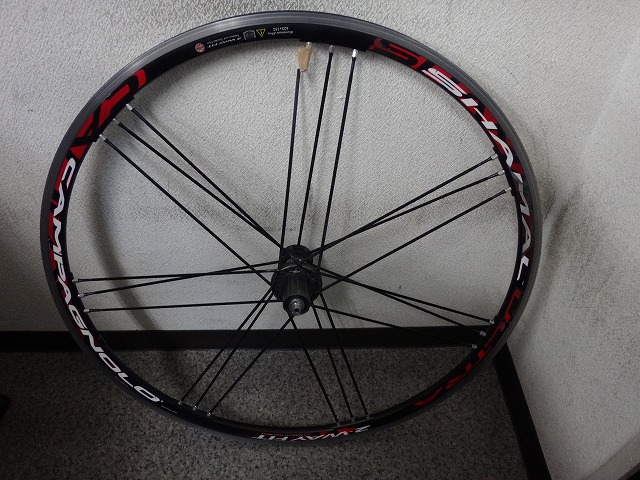
A customer left me with the rear wheel of a Shamal Ultra.
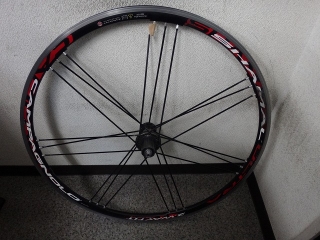
They attempted to true it themselves
and twisted a spoke clean off.
They mentioned there might be a lot of corroded nipples too...
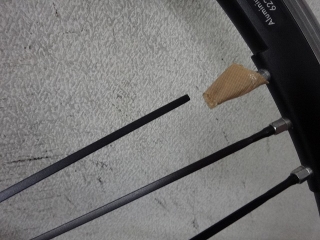
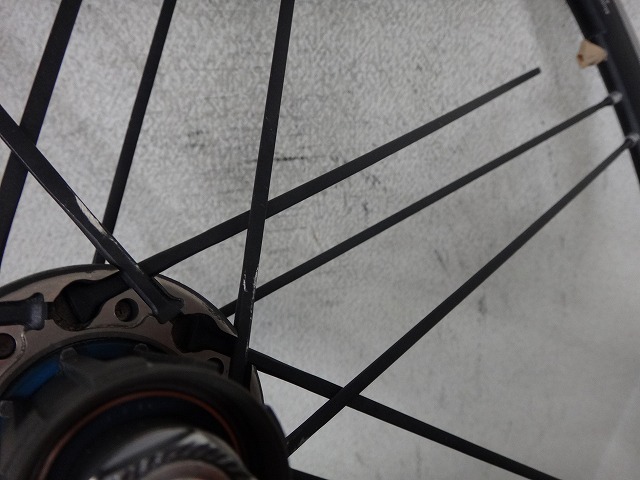
↑This one
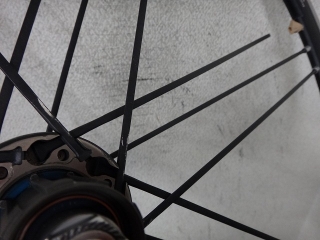
The right hub flange on the Mega G3
threads spokes from outside the flange on one side,
and from inside the flange on the other side,
but this rear hub is an earlier G3
so both sets of spokes run through from outside the flange,
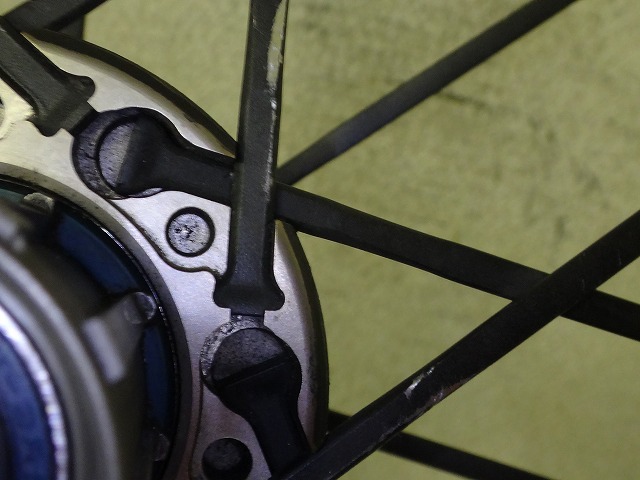
and to replace a spoke on the inpoke side like this,
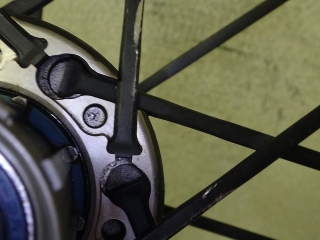
you need to temporarily remove
the outpoke spokes that are overlapping on top.
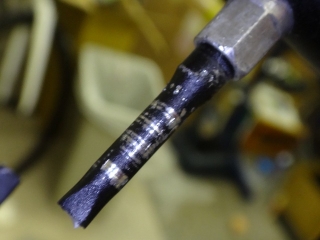
The broken spoke shows marks where it was grabbed with something like pliers,
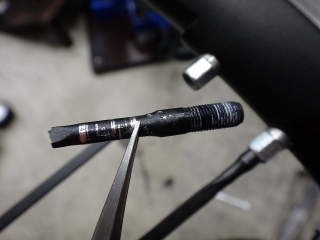
but even in this area, the nipple rotation isn't particularly tight.
While there are some nipples with fairly strong threadlocker compound applied,
there were no corroded or near-corroded nipples at all. I should mention upfront that I significantly tightened all the non-drive-side nipples
and adjusted most of the drive-side nipples while working.
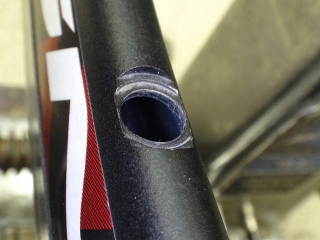
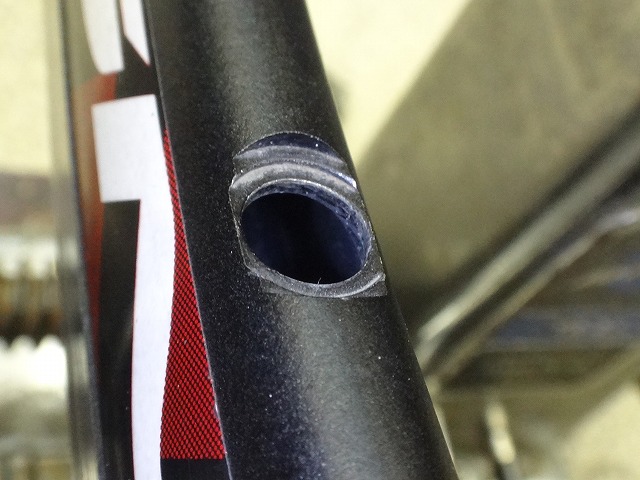
The valve bush was missing.
As I've written before, standard clincher rims
have nipples inserted from outside the rim,
but if you do that on the tubeless-compatible 2WAY-FIT,
the hole is too large for mounting a tubeless valve,
so on 2WAY-FIT rims, nipples are inserted from inside the rim instead,
and the valve bush fills the dimensional gap with the valve.
This valve bush isn't just "nice to have"—
it's a functional component necessary to avoid trouble when you're out riding.
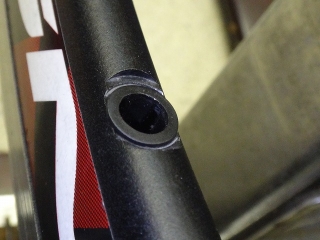
I installed the valve bush.
It won't come off when the valve is threaded in,
so you won't lose it unless you ping it off when threading the valve on.
You only need to be careful during tire and tube changes.
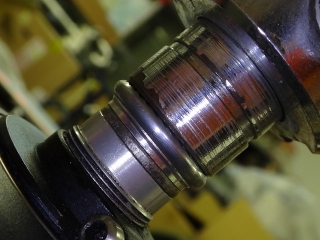
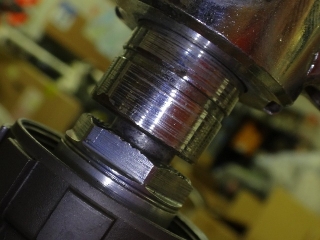
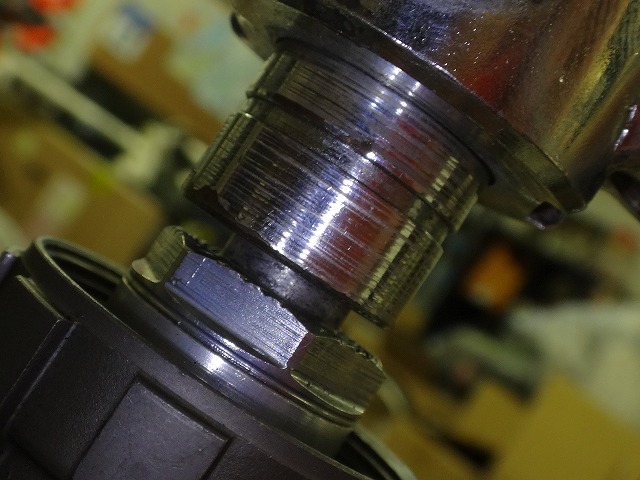
After replacing the spoke and doing a quick true, which only took about five minutes,
the center deviation at that point is shown in the image above.
This is an amount you'd never see on an off-the-shelf Campagnolo wheel,
and it's in the direction rims drift over time—but they never drift this much.
While I try not to lecture customers too much,
this is definitely the result of heavy-handed fiddling. Correcting this took many times longer than the normal work.
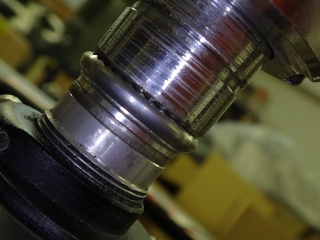
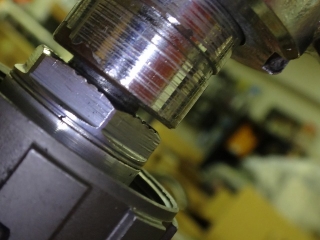
First round of non-drive-side tightening
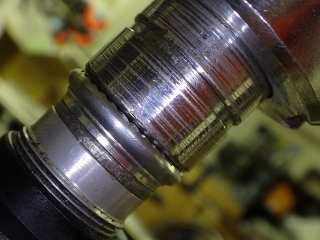
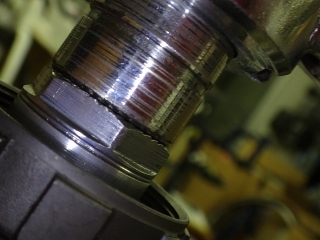
Second round of non-drive-side tightening
Center is now true.
Could the rim being offset to the drive side be due to drive-side tightening? No, that's not possible. It would be virtually impossible to pull a Shamal Ultra that far off-center through drive-side tightening,
and if you could do that, the drive side would be as tight as a drum,
but it wasn't—and if you had the skill to do that,
you wouldn't twist spokes off in the first place.
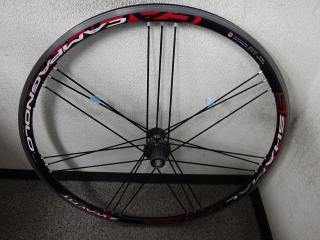
Fixed.
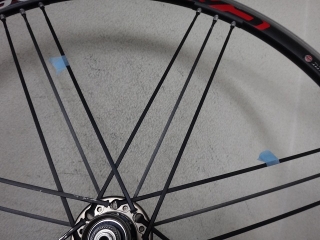
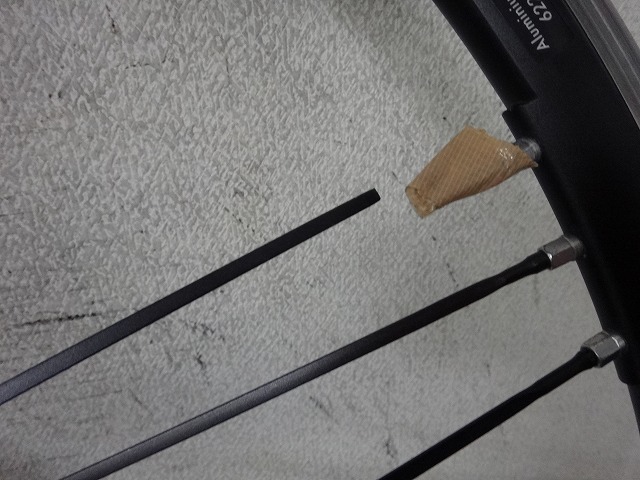
There are two spokes marked with tape,
which marks the spokes I temporarily removed,
while the replaced spoke is
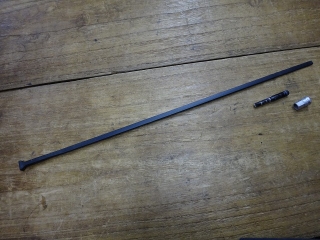
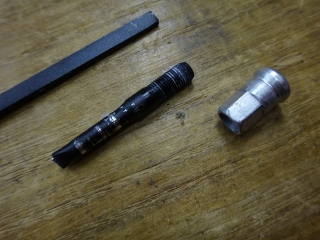
↑just this one.
They attempted to true it themselves
and twisted a spoke clean off.
They mentioned there might be a lot of corroded nipples too...
↑This one
The right hub flange on the Mega G3
threads spokes from outside the flange on one side,
and from inside the flange on the other side,
but this rear hub is an earlier G3
so both sets of spokes run through from outside the flange,
and to replace a spoke on the inpoke side like this,
you need to temporarily remove
the outpoke spokes that are overlapping on top.

The broken spoke shows marks where it was grabbed with something like pliers,

but even in this area, the nipple rotation isn't particularly tight.
While there are some nipples with fairly strong threadlocker compound applied,
there were no corroded or near-corroded nipples at all. I should mention upfront that I significantly tightened all the non-drive-side nipples
and adjusted most of the drive-side nipples while working.
The valve bush was missing.
As I've written before, standard clincher rims
have nipples inserted from outside the rim,
but if you do that on the tubeless-compatible 2WAY-FIT,
the hole is too large for mounting a tubeless valve,
so on 2WAY-FIT rims, nipples are inserted from inside the rim instead,
and the valve bush fills the dimensional gap with the valve.
This valve bush isn't just "nice to have"—
it's a functional component necessary to avoid trouble when you're out riding.

I installed the valve bush.
It won't come off when the valve is threaded in,
so you won't lose it unless you ping it off when threading the valve on.
You only need to be careful during tire and tube changes.

After replacing the spoke and doing a quick true, which only took about five minutes,
the center deviation at that point is shown in the image above.
This is an amount you'd never see on an off-the-shelf Campagnolo wheel,
and it's in the direction rims drift over time—but they never drift this much.
While I try not to lecture customers too much,
this is definitely the result of heavy-handed fiddling. Correcting this took many times longer than the normal work.
First round of non-drive-side tightening
Second round of non-drive-side tightening
Center is now true.
Could the rim being offset to the drive side be due to drive-side tightening? No, that's not possible. It would be virtually impossible to pull a Shamal Ultra that far off-center through drive-side tightening,
and if you could do that, the drive side would be as tight as a drum,
but it wasn't—and if you had the skill to do that,
you wouldn't twist spokes off in the first place.
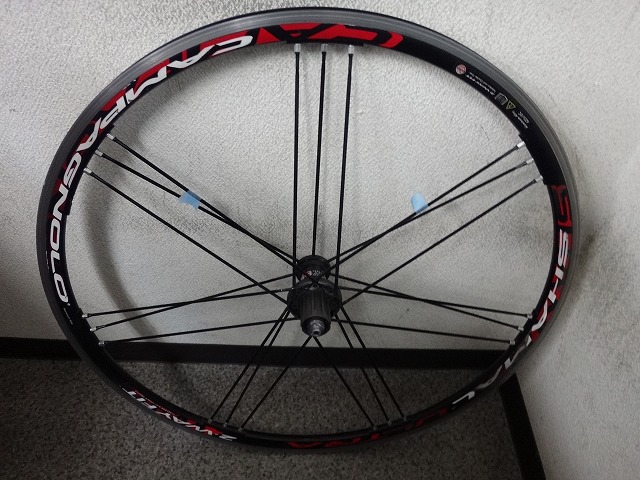
Fixed.
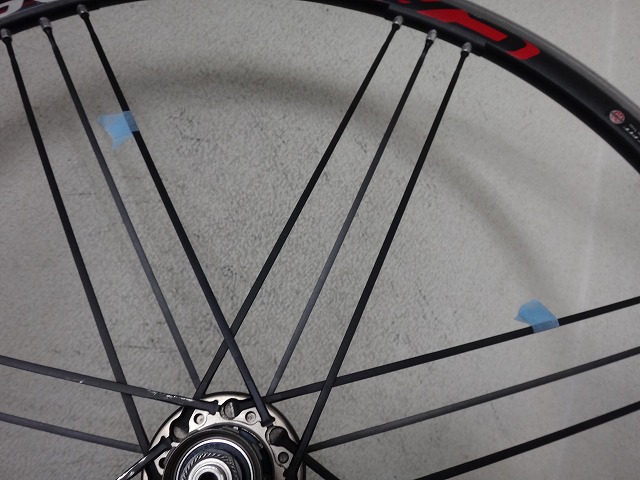
There are two spokes marked with tape,
which marks the spokes I temporarily removed,
while the replaced spoke is
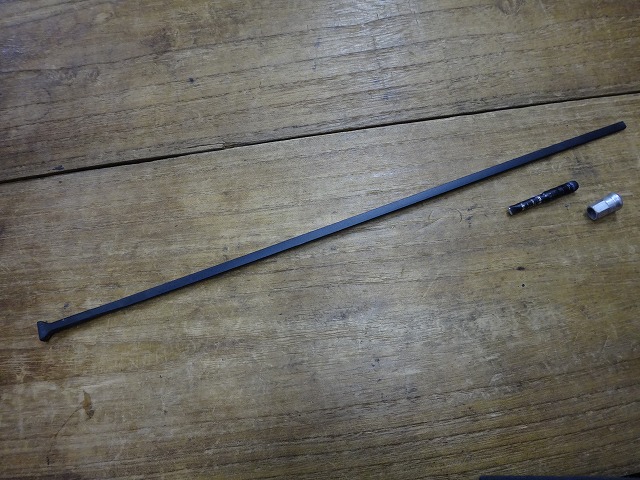
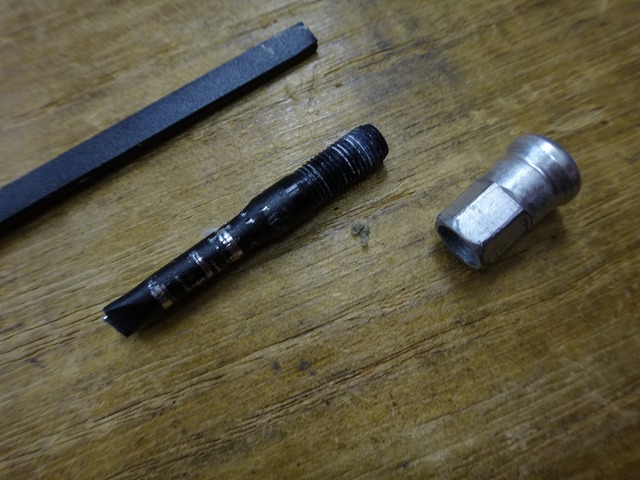
↑just this one.