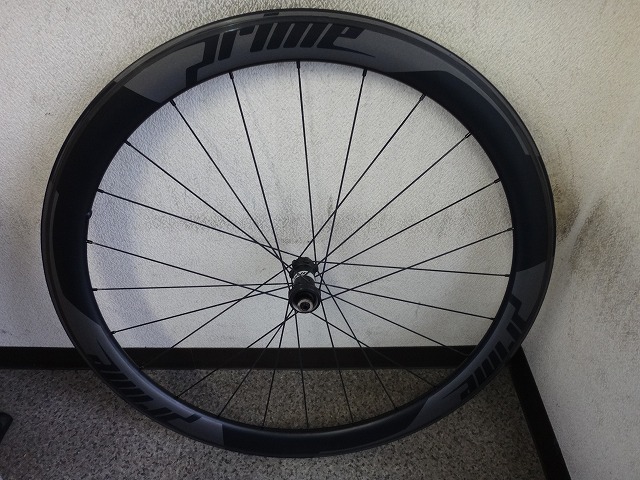
This is the front wheel, counterpart to the rear wheel I rebuilt the other day.

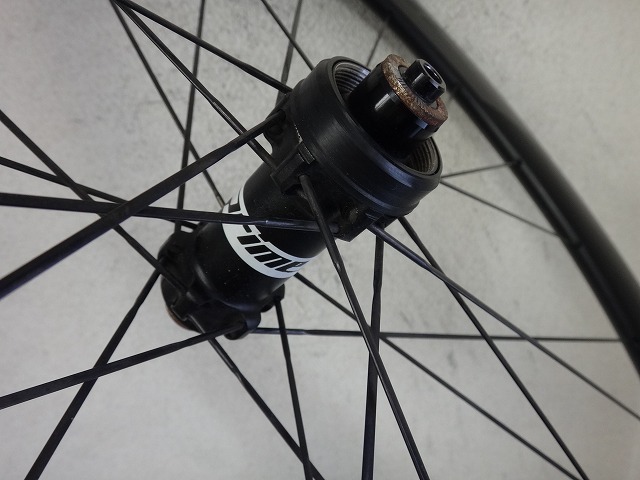
It's built with a disc brake hub
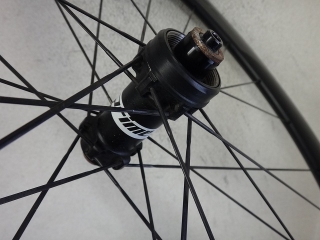
There's a cover on the centerlock mount,
but this isn't a dual-use model for rim brakes.
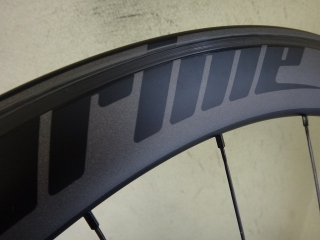
However, it appears it was used with rim brakes for cyclocross,
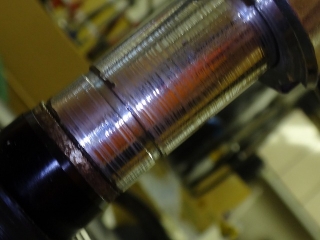
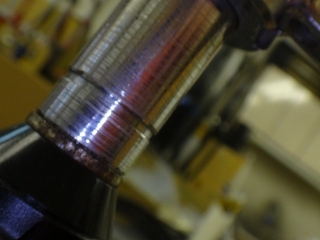
and like the rear wheel, it has brake marks.
Since the logo extends all the way to the outer edge with no brake zone,
it's definitely not designed for rim brakes.
I determined it was cyclocross because
the rear hub was set up with a 135mm quick-release width.
The front hub has simple dropouts on the left and right
with a 100mm quick-release, but the customer says
the bearing rotation feels rough and needs to be replaced.
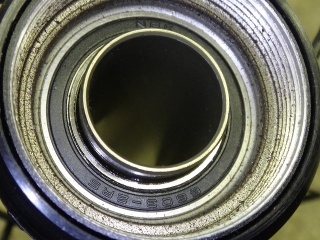
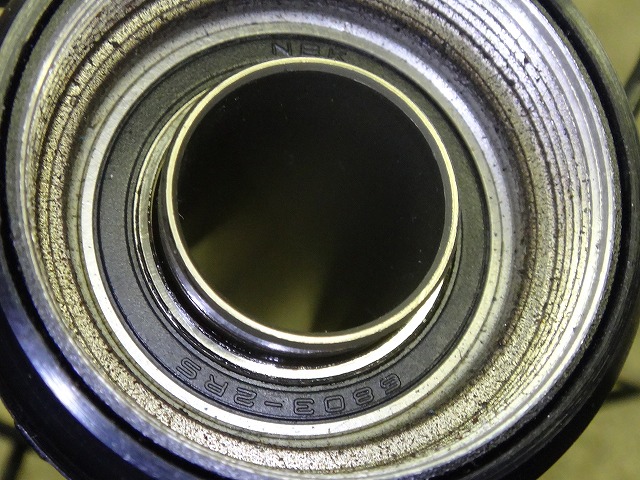
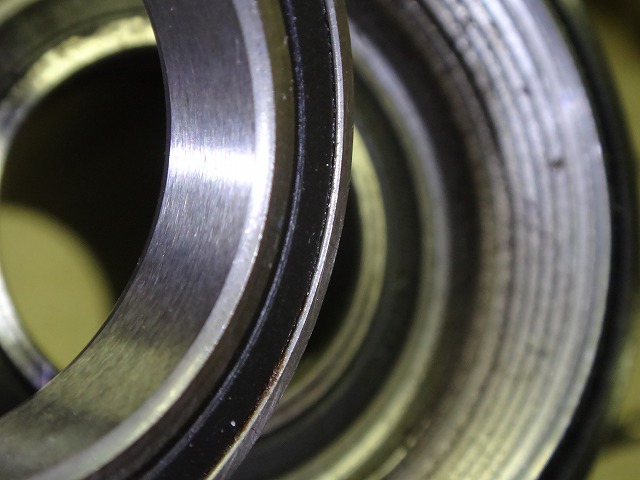
↑Rotor mount side (left)
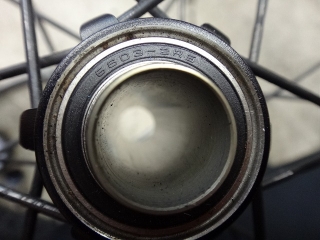
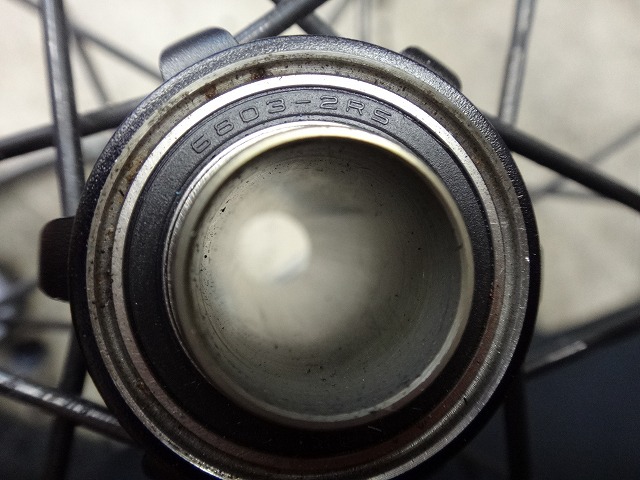
↑Non-rotor mount side (right)
Both sides use 6803 standard bearings.
The larger inner diameter is to accommodate through-axles
after modifying the simple dropouts.
Due to lockring thread depth and other considerations,
the depth to which the bearings are pressed differs between left and right.
While they could be the same, if we interpret the non-rotor side
as having somehow been widened even if only slightly,
it might be better than adjusting both to match the narrower side.
Even for rim brake wheels, models like the Cosmic Carbon Ultimate
have different bearing press depths left and right
due to ball bearing adjustment mechanism thickness (→here).
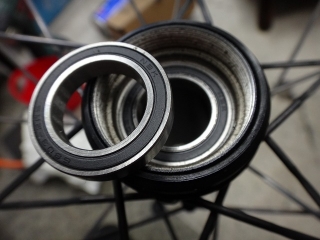
Even if one bearing were extremely damaged, you can't tell which side
by hand-rotating the hub shaft.
From experience, the outer bearing tends to be more damaged,
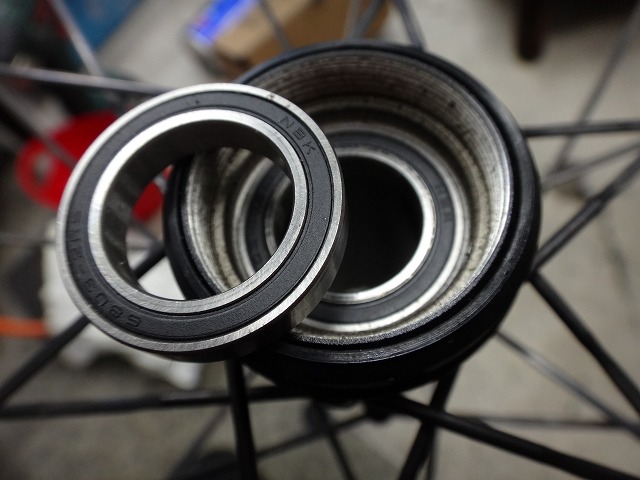
so I drove out that one first,
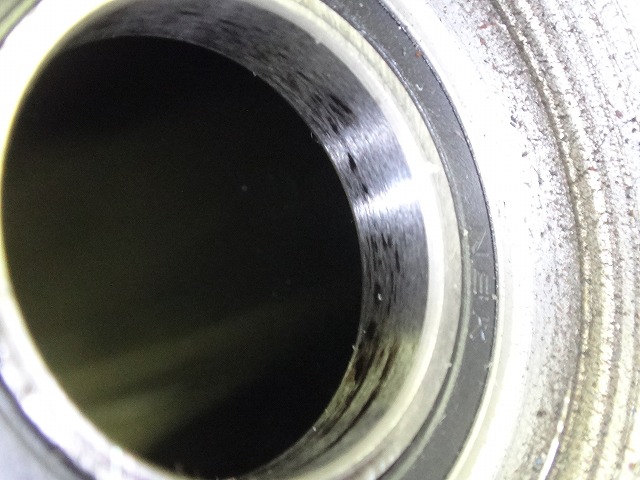
but the bearing that was clearly grinding was actually
the rotor mount side remaining in the hub.
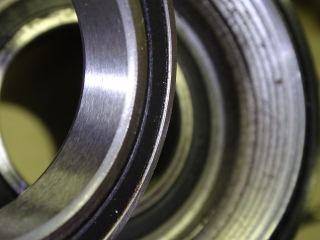
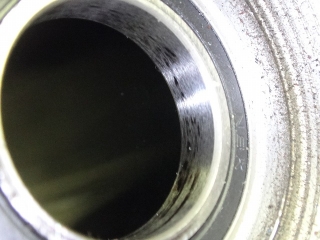
↑I wiped both, but the dirt inside the inner race
of the bearing remaining in the hub wouldn't come out.
The bearing press wasn't extremely tight, and using a properly-sized drift tool,
even though I drove it out, the bearing didn't take major damage.
I replaced the rotor mount side bearing and reinstalled the non-rotor side,
but while it improved somewhat, there was still a grinding sensation,
only slightly better than the rotor mount side.
It was damaged enough to warrant replacement, so in the end
I replaced both bearings with new ones.
Naturally, the rotation became smooth.
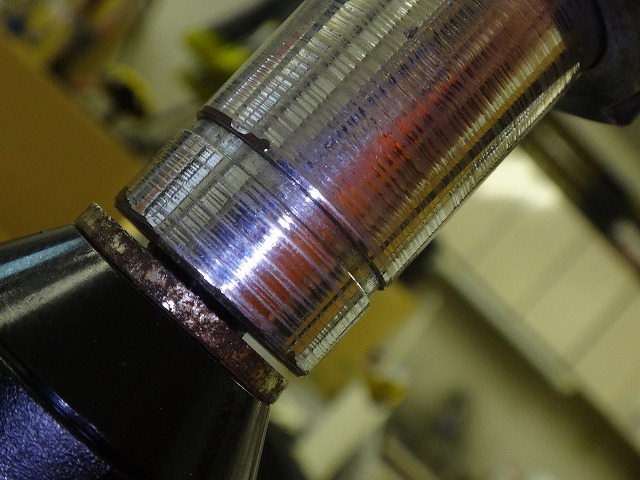
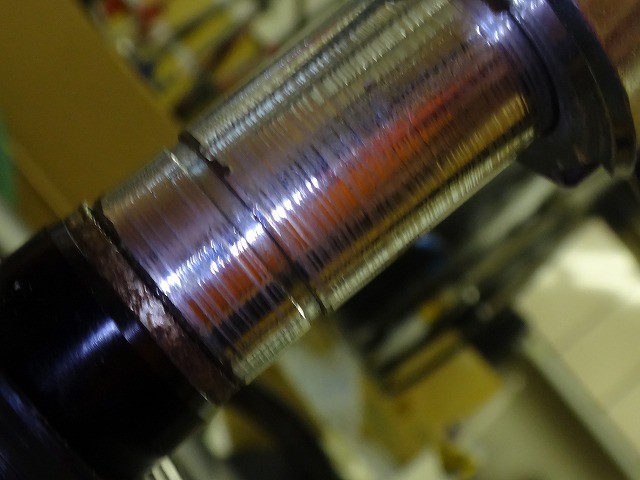
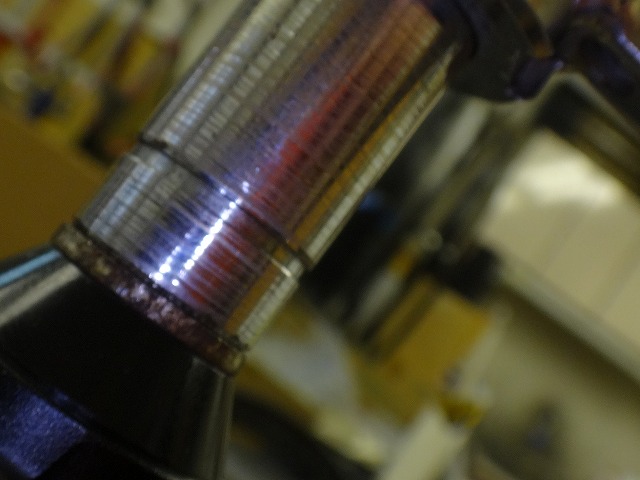
While pressed into the hub body, the bad rotor mount side bearing
was clearly grinding, but oddly enough,
when I removed the bearing alone from the hub,
the grinding sensation largely disappeared.
This happens all the time.
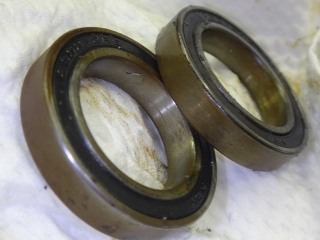
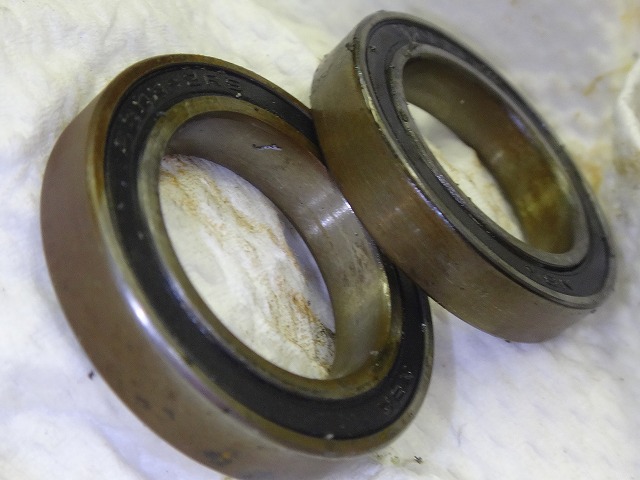
As a side note,
I tossed this bearing into an enamel bowl that doubles as a tray for spoke cutter trimmings
and where I drip flux (muriatic acid) during spoke lacing solder work,
and it rusted this much in half a day.
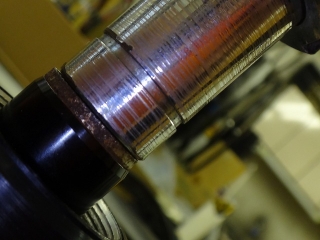
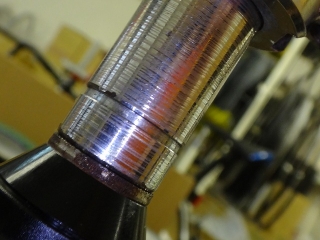
The temporary center was spot-on, so I first corrected fine runout.
At the customer's request, keeping the current configuration,
they wanted it tensioned as much as possible.
After correcting runout, I confirmed the center was still perfect,
then tightened all nipples as accurately as possible by half a turn (180°)
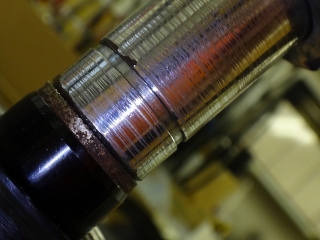
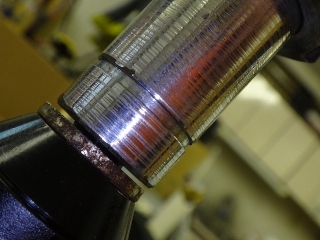
On wheels with dish, the side where spoke angle is shallower
has greater rim movement per nipple rotation,
so the rim shifted slightly toward the non-rotor side.
This wheel is two-cross equivalent tangential lacing,
but if the non-rotor side were radial laced,
the shift would be much larger.
I wanted to preserve room for fine runout correction tensioning adjustments,
and besides, the tension wasn't that loose to begin with,
so I judged it impossible to achieve center with further tightening
on the rotor mount side.
So I loosened the non-rotor side to achieve center.
The result was approximately 180° tension increase on the rotor mount side
and about 120° on the non-rotor side.
Even so, it was tensioned enough that anyone could easily feel
the tighter tension on the rotor mount side.
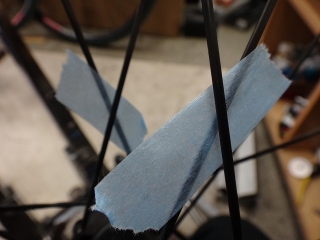
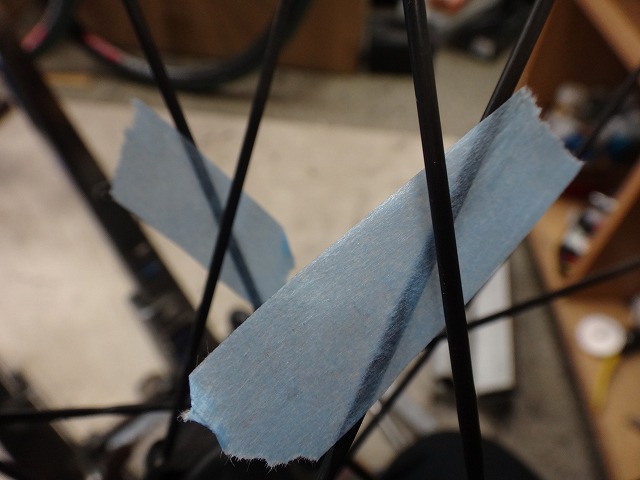
On this front wheel, the final cross wasn't interlaced on either side.
Not even on the rotor mount side.
The rear wheel had the freewheel side interlaced only.
It's built with a disc brake hub
There's a cover on the centerlock mount,
but this isn't a dual-use model for rim brakes.

However, it appears it was used with rim brakes for cyclocross,
and like the rear wheel, it has brake marks.
Since the logo extends all the way to the outer edge with no brake zone,
it's definitely not designed for rim brakes.
I determined it was cyclocross because
the rear hub was set up with a 135mm quick-release width.
The front hub has simple dropouts on the left and right
with a 100mm quick-release, but the customer says
the bearing rotation feels rough and needs to be replaced.
↑Rotor mount side (left)
↑Non-rotor mount side (right)
Both sides use 6803 standard bearings.
The larger inner diameter is to accommodate through-axles
after modifying the simple dropouts.
Due to lockring thread depth and other considerations,
the depth to which the bearings are pressed differs between left and right.
While they could be the same, if we interpret the non-rotor side
as having somehow been widened even if only slightly,
it might be better than adjusting both to match the narrower side.
Even for rim brake wheels, models like the Cosmic Carbon Ultimate
have different bearing press depths left and right
due to ball bearing adjustment mechanism thickness (→here).
Even if one bearing were extremely damaged, you can't tell which side
by hand-rotating the hub shaft.
From experience, the outer bearing tends to be more damaged,
so I drove out that one first,
but the bearing that was clearly grinding was actually
the rotor mount side remaining in the hub.
↑I wiped both, but the dirt inside the inner race
of the bearing remaining in the hub wouldn't come out.
The bearing press wasn't extremely tight, and using a properly-sized drift tool,
even though I drove it out, the bearing didn't take major damage.
I replaced the rotor mount side bearing and reinstalled the non-rotor side,
but while it improved somewhat, there was still a grinding sensation,
only slightly better than the rotor mount side.
It was damaged enough to warrant replacement, so in the end
I replaced both bearings with new ones.
Naturally, the rotation became smooth.
While pressed into the hub body, the bad rotor mount side bearing
was clearly grinding, but oddly enough,
when I removed the bearing alone from the hub,
the grinding sensation largely disappeared.
This happens all the time.
As a side note,
I tossed this bearing into an enamel bowl that doubles as a tray for spoke cutter trimmings
and where I drip flux (muriatic acid) during spoke lacing solder work,
and it rusted this much in half a day.

The temporary center was spot-on, so I first corrected fine runout.
At the customer's request, keeping the current configuration,
they wanted it tensioned as much as possible.
After correcting runout, I confirmed the center was still perfect,
then tightened all nipples as accurately as possible by half a turn (180°)

On wheels with dish, the side where spoke angle is shallower
has greater rim movement per nipple rotation,
so the rim shifted slightly toward the non-rotor side.
This wheel is two-cross equivalent tangential lacing,
but if the non-rotor side were radial laced,
the shift would be much larger.
I wanted to preserve room for fine runout correction tensioning adjustments,
and besides, the tension wasn't that loose to begin with,
so I judged it impossible to achieve center with further tightening
on the rotor mount side.
So I loosened the non-rotor side to achieve center.
The result was approximately 180° tension increase on the rotor mount side
and about 120° on the non-rotor side.
Even so, it was tensioned enough that anyone could easily feel
the tighter tension on the rotor mount side.
On this front wheel, the final cross wasn't interlaced on either side.
Not even on the rotor mount side.
The rear wheel had the freewheel side interlaced only.