Another day, another wheel build (and so on).
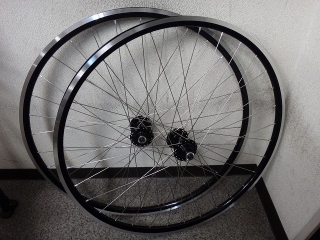
I built the rear wheel using a Surly fixed/freewheel dual-sided single-speed hub
and an AL22W rim.
Continuing from yesterday, the wheel visible in the back of the photo is the front wheel I built yesterday.
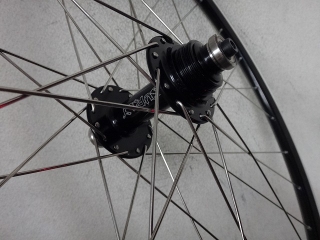
32H, fully crossed Italian (interlaced) lacing with no wire cross.
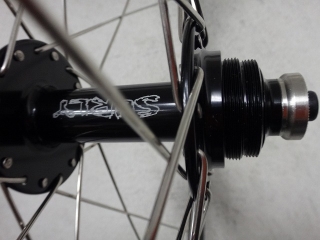
One side has a fixed-cog mounting surface,
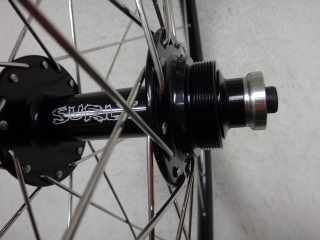
and the other side has a freewheel mounting surface.
Since the customer plans to use fixed-cog exclusively,
I built it Italian-style with the fixed-cog mounting on the right side.
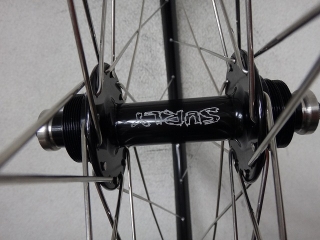
When done this way, the lettering on the hub shell ends up facing backwards.
I'd noticed this issue before building the front wheel,
but I built the front wheel with the hub lettering facing the correct direction.
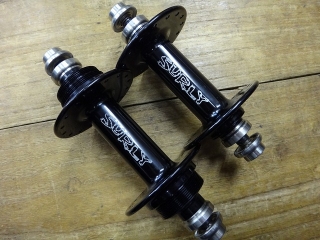
Going back in the timeline, this front and rear hub set
has identical flange width and flange hole center-to-center spacing.
It's common for front and rear hubs of the same model to share the same hole spacing,
but usually the front hub has wider flanges.
This hub set, however, has them the same.
Based on the dimensions, the front wheel's lateral stiffness won't be severely compromised,
so perhaps the designers thought having matching spoke lengths would be an advantage
when the rim, hole count, and lacing pattern are identical.
For this front and rear wheel build, all four spoke positions—front and rear, left and right—use the same spoke length.
To be precise, the rear hub actually has a very slight dish
(I don't know the manufacturer's specs, but my measurements show there is some dish),
and the center of the flange width doesn't perfectly align with the center of the over-locknut dimension.
However, this difference is small enough not to affect spoke length, so I used identical length spokes for the build.

I built the rear wheel using a Surly fixed/freewheel dual-sided single-speed hub
and an AL22W rim.
Continuing from yesterday, the wheel visible in the back of the photo is the front wheel I built yesterday.
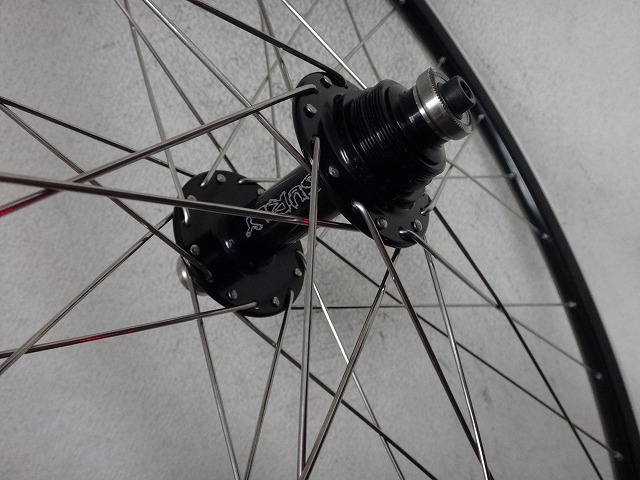
32H, fully crossed Italian (interlaced) lacing with no wire cross.
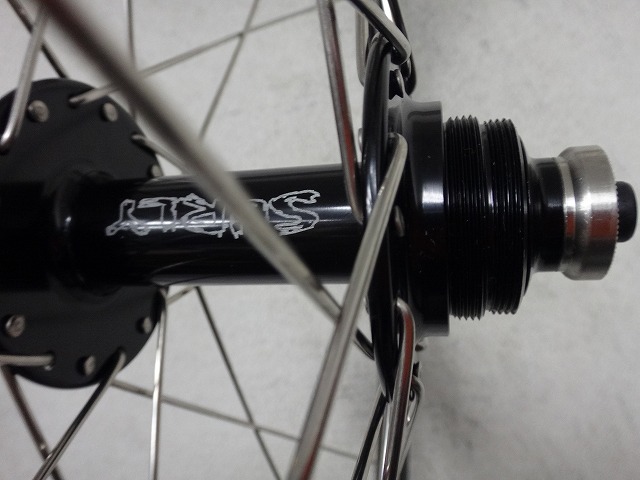
One side has a fixed-cog mounting surface,
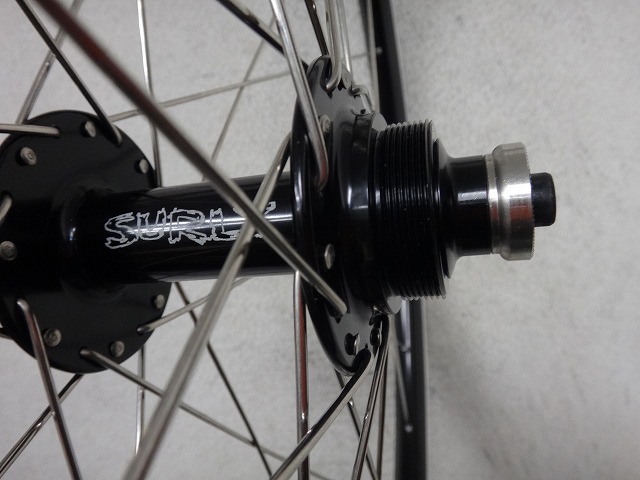
and the other side has a freewheel mounting surface.
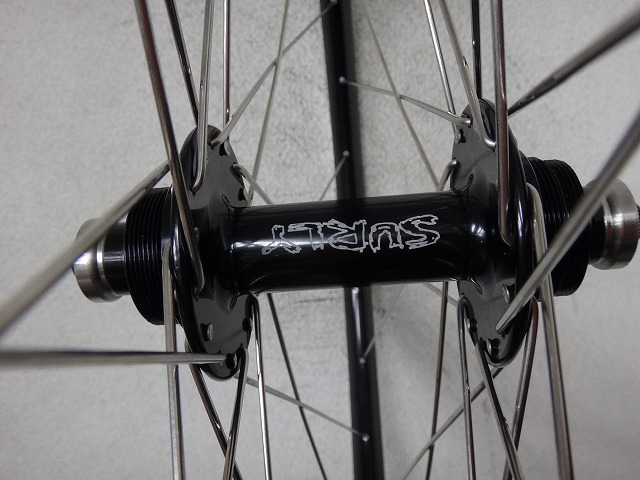
Since the customer plans to use fixed-cog exclusively,
I built it Italian-style with the fixed-cog mounting on the right side.
When done this way, the lettering on the hub shell ends up facing backwards.
I'd noticed this issue before building the front wheel,
but I built the front wheel with the hub lettering facing the correct direction.
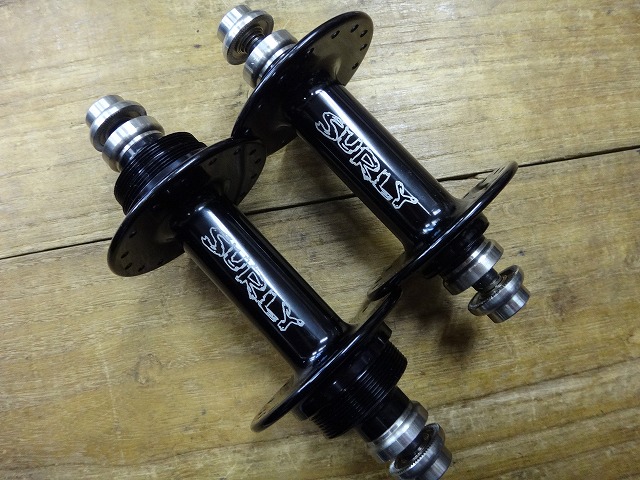
Going back in the timeline, this front and rear hub set
has identical flange width and flange hole center-to-center spacing.
It's common for front and rear hubs of the same model to share the same hole spacing,
but usually the front hub has wider flanges.
This hub set, however, has them the same.
Based on the dimensions, the front wheel's lateral stiffness won't be severely compromised,
so perhaps the designers thought having matching spoke lengths would be an advantage
when the rim, hole count, and lacing pattern are identical.
For this front and rear wheel build, all four spoke positions—front and rear, left and right—use the same spoke length.
To be precise, the rear hub actually has a very slight dish
(I don't know the manufacturer's specs, but my measurements show there is some dish),
and the center of the flange width doesn't perfectly align with the center of the over-locknut dimension.
However, this difference is small enough not to affect spoke length, so I used identical length spokes for the build.