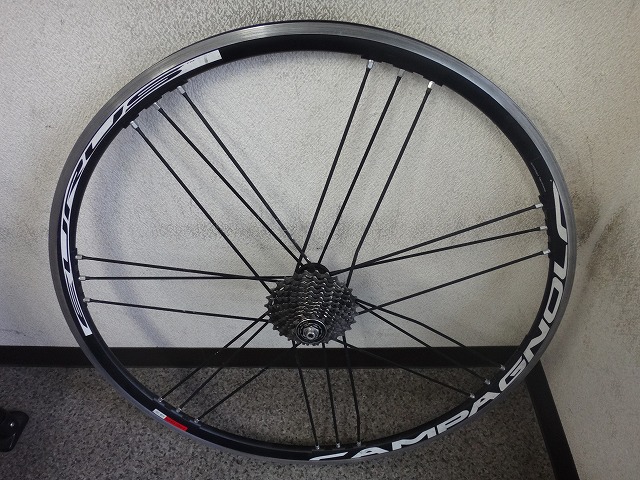
A customer dropped off a Eureus (Japanese bicycle brand) rear wheel for repair.
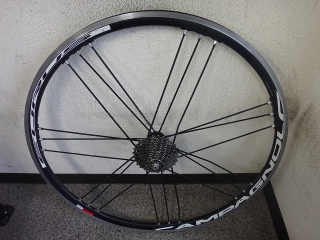
The rear derailleur got caught and deformed some spokes, but apparently there was also a prior spoke bend, and the customer wants both issues fixed at once.
I didn't capture an image of the temporary center position, but the rim had shifted toward the non-freewheel side.
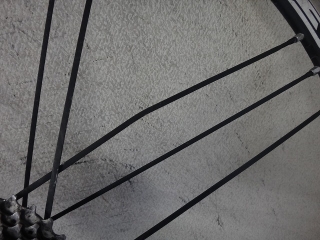
↑After identifying the deformed spokes and releasing tension,
the deformation becomes much more apparent.
I'll call the spoke in the image above "B".

↑I'll call this one "C".
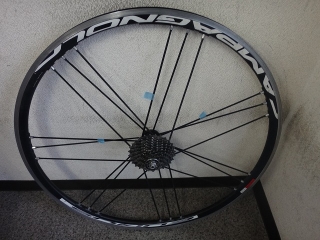
All fixed.
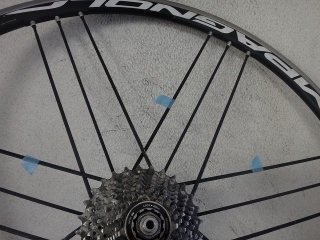
↑I'll call the replaced spokes A, B, and C from right to left in the image.
A and B are definitely the first and second impacts from the derailleur catch,
but C appears to be deformed from a separate cause, as the customer mentioned.
What really surprised me is that aside from spokes A, B, and C, I only touched one other spoke nipple—and only once at that.
↑The customer saw this too.
When I first applied the truing gauge after the work,
it was perfectly centered, so
A, B, and the state just before C failed must have also been perfectly centered with almost no runout.
Come to think of it, the previous job would've worked out almost the same way if there hadn't been all that extra fiddling...
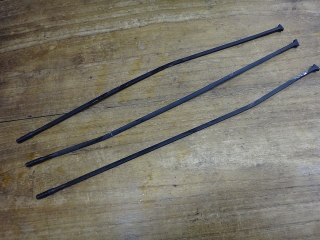
↑Replaced spokes
A, B, C from top to bottom in the image.
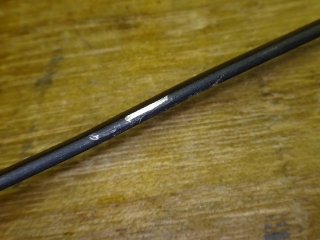
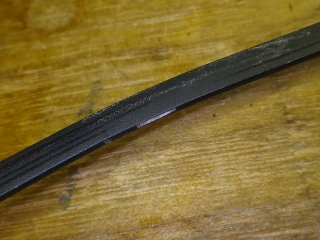
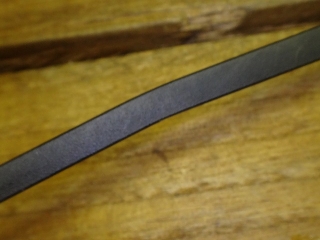
↑Spoke A
Has an impact mark that's the center of deformation, clearly bent in the front-to-back direction but with almost no lateral bending.
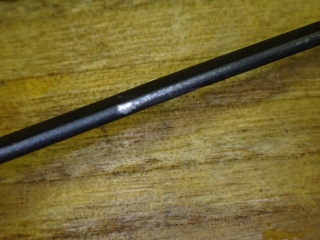
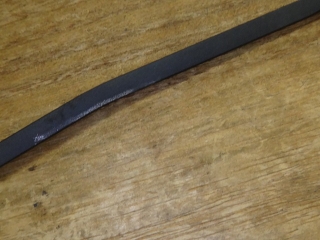
↑Spoke B
Has an impact mark that's the center of deformation, clearly bent in the front-to-back direction but with almost no lateral bending (←copy-paste of spoke A description)
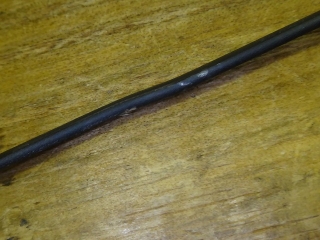
↑Spoke C
This one's deformation is located quite close to the hub, and it's also bent laterally—a distinctly different character from A and B.
The rear derailleur got caught and deformed some spokes, but apparently there was also a prior spoke bend, and the customer wants both issues fixed at once.
I didn't capture an image of the temporary center position, but the rim had shifted toward the non-freewheel side.

↑After identifying the deformed spokes and releasing tension,
the deformation becomes much more apparent.
I'll call the spoke in the image above "B".
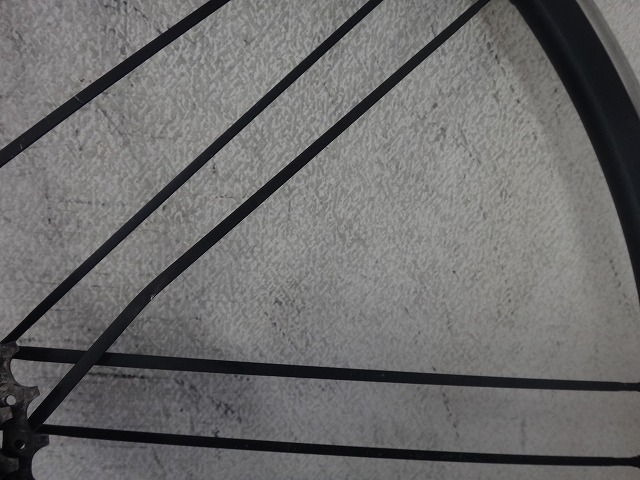
↑I'll call this one "C".
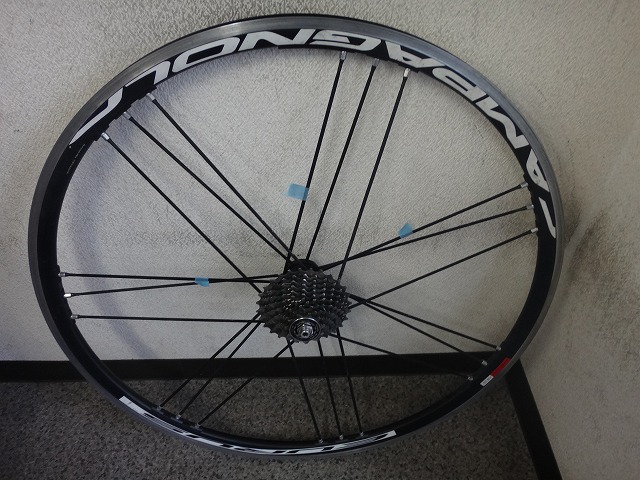
All fixed.
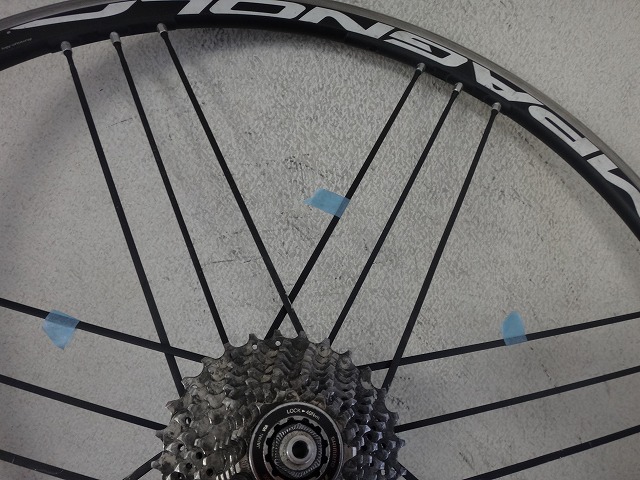
↑I'll call the replaced spokes A, B, and C from right to left in the image.
A and B are definitely the first and second impacts from the derailleur catch,
but C appears to be deformed from a separate cause, as the customer mentioned.
What really surprised me is that aside from spokes A, B, and C, I only touched one other spoke nipple—and only once at that.
↑The customer saw this too.
When I first applied the truing gauge after the work,
it was perfectly centered, so
A, B, and the state just before C failed must have also been perfectly centered with almost no runout.
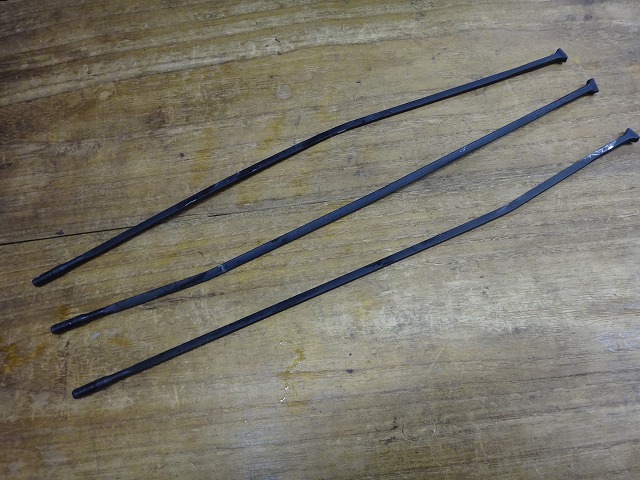
↑Replaced spokes
A, B, C from top to bottom in the image.
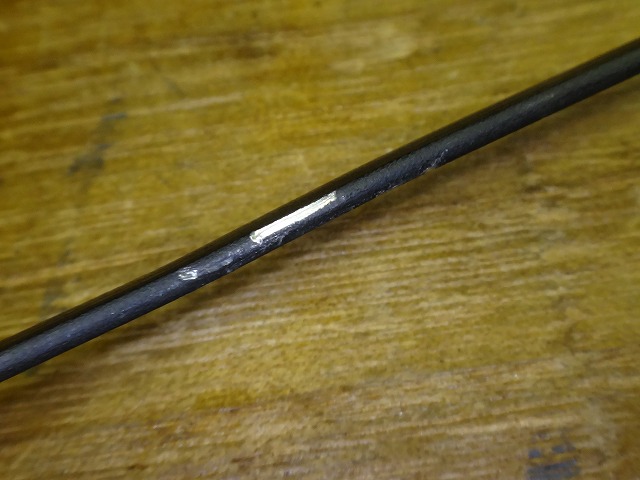
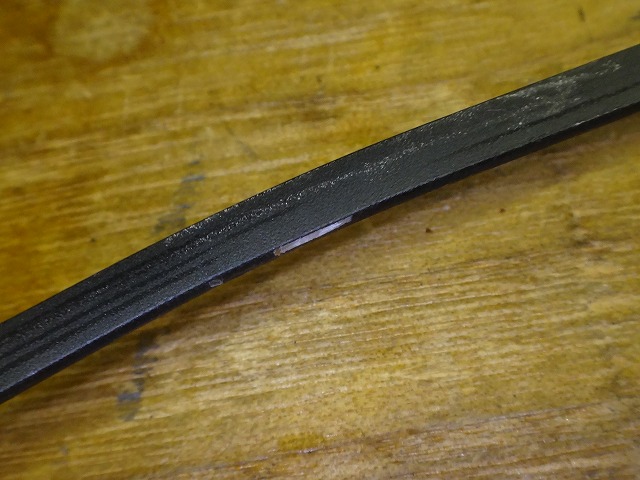
↑Spoke A
Has an impact mark that's the center of deformation, clearly bent in the front-to-back direction but with almost no lateral bending.
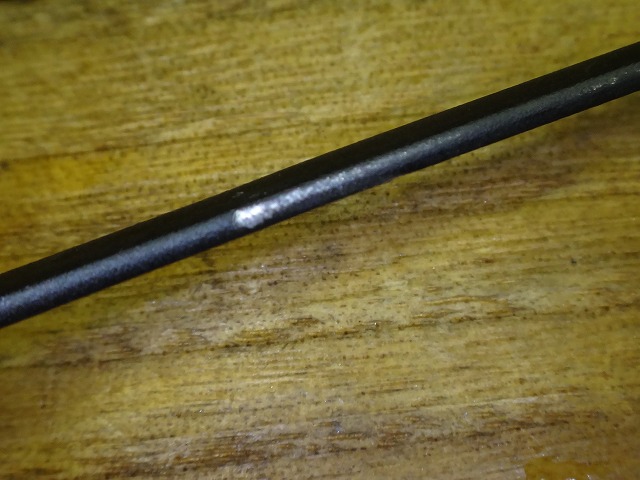
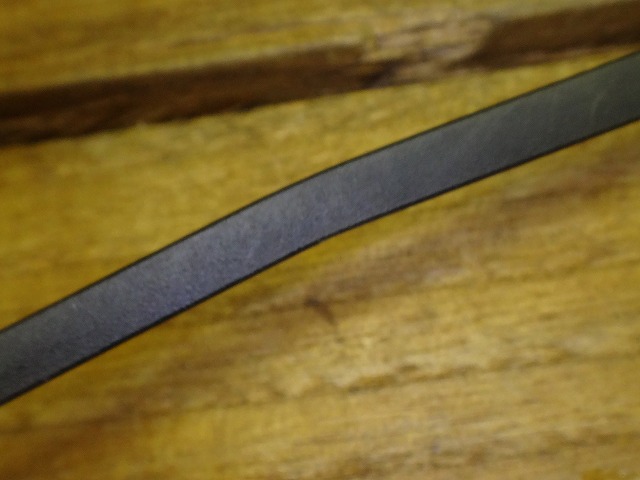
↑Spoke B
Has an impact mark that's the center of deformation, clearly bent in the front-to-back direction but with almost no lateral bending (←copy-paste of spoke A description)
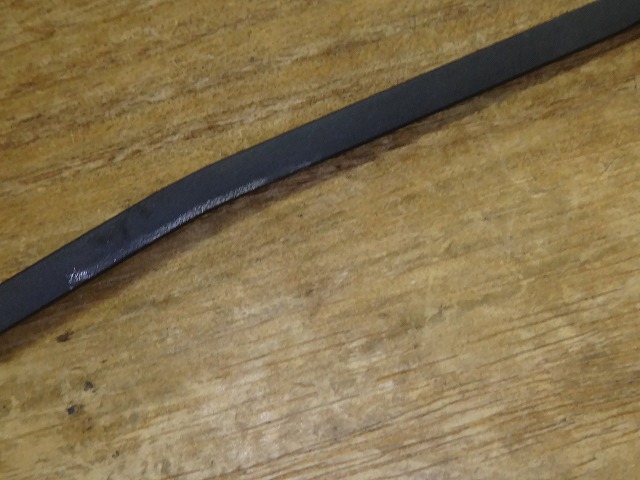
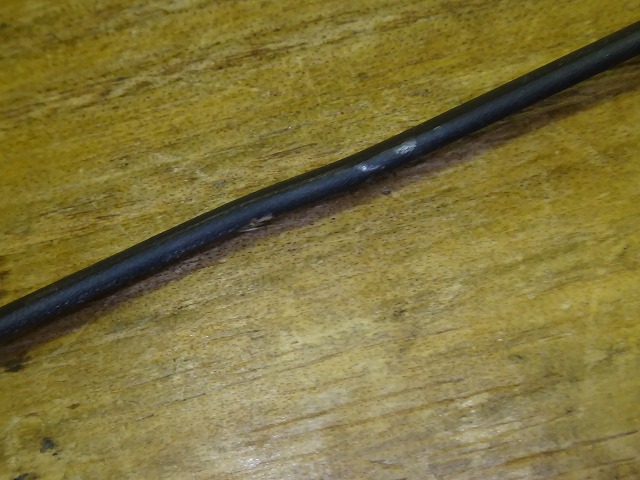
↑Spoke C
This one's deformation is located quite close to the hub, and it's also bent laterally—a distinctly different character from A and B.