Another day, another wheel (and so on).
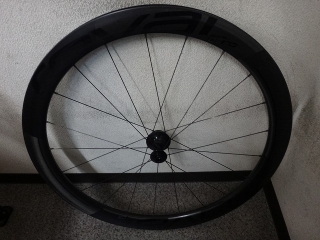
A customer brought in a Roval CL50 for repair.
Today I only worked on the front wheel, though.
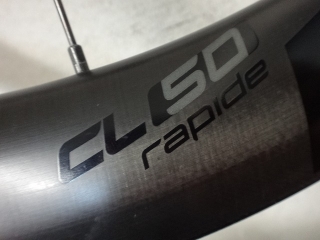
This is a CL50, different from the CLX50 I worked on the other day.
It's a model where they cut costs on parts to make Roval wheels more affordable,
but the way they've detuned it is so poorly done that it's turned into a terrible wheel.
Though to be fair, the CLX50 itself isn't much of a wheel to begin with.
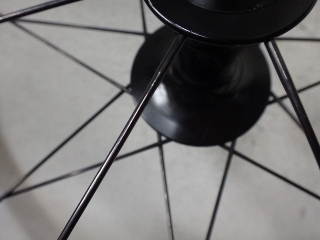
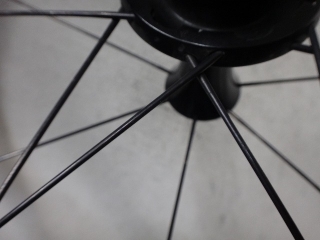
Unlike the CLX50, this one's built with straight-gauge spokes.
It's symmetrical lacing on both sides, but the spokes aren't
Competition (2.0–1.8–2.0mm)
but rather Competition Race (2.0–1.6–2.0mm).
Finding these Competition Race spokes, especially straight-gauge ones,
is extremely difficult to source.
So I think Specialized should keep these as stock repair spares,
and Specialized dealers ought to be able to repair wheels
to at least the precision level they come in from the factory, if not better.
But I think that's going to be a challenge.
I can't think of a single shop that could handle it.
I really hate wheels that can't be repaired
(and I'm not fond of manufacturers with poor spare spoke availability either),
but with CLX wheels, you can use spokes with the same gauge ratio
and we can handle repairs immediately.
For repairs of 4–5 spokes or so, rather than a full rebuild,
we usually do it on the spot without taking it in.
My head isn't creative enough to come up with reverse-asymmetric lacing
as a counterpoint to asymmetric lacing in a lifetime,
so I can only do symmetrical lacing.
Since this hub has straight-gauge spokes, the lacing pattern is fixed.
Given those two constraints, if we're cutting costs below the CLX,
then considering the expected use case,
I think going with 14-gauge plain spokes would actually make it a wheel that "performs,"
rather than what we have now.
The reason the customer brought the wheel in was that
while the frame isn't Specialized, they bought a Roval wheel,
and initially didn't think much about it,
but after using the RR411db rim wheel that I built,
they realized this Roval wheel was sluggish and didn't perform at all, apparently.
For the rebuild, unlike the CLX50 from the other day,
I'm not reusing the tangent-laced spokes—they're being completely replaced.
So I got permission to fully release spoke tension
before cutting them and discarding them.
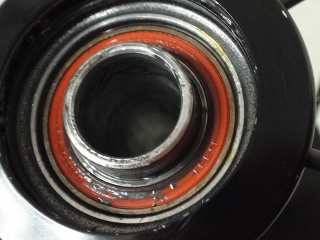
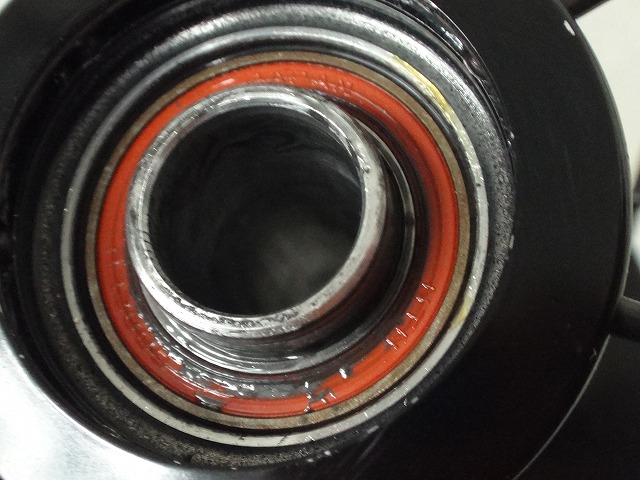
I removed the quick-release axle end to access the radial-laced spokes.
The bearings aren't Ceramic Speed—they're steel-ball bearings with contact-type seals.
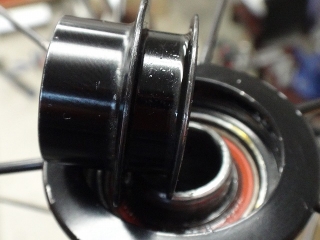
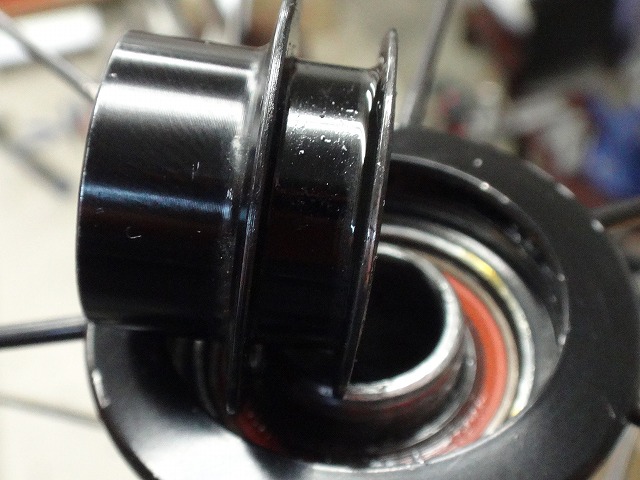
The hub is made by DT, and the quick-release end has no water-sealing measures
like O-rings.
DT hubs often use contact-type bearings too,
so this isn't a problem.
Regarding bearings, considering long-term use from factory condition,
I can't say outright that CLX is better overall than CL in every respect.
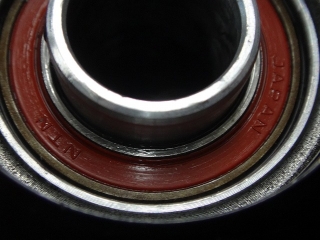
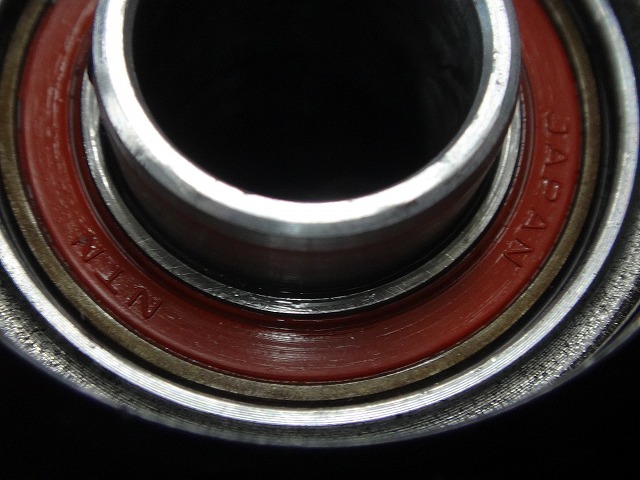
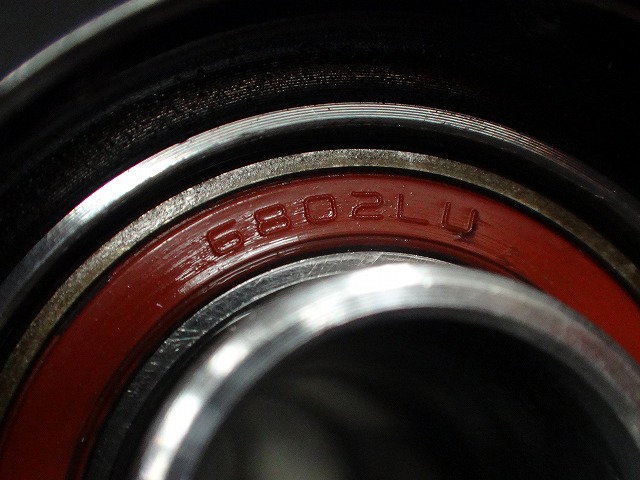
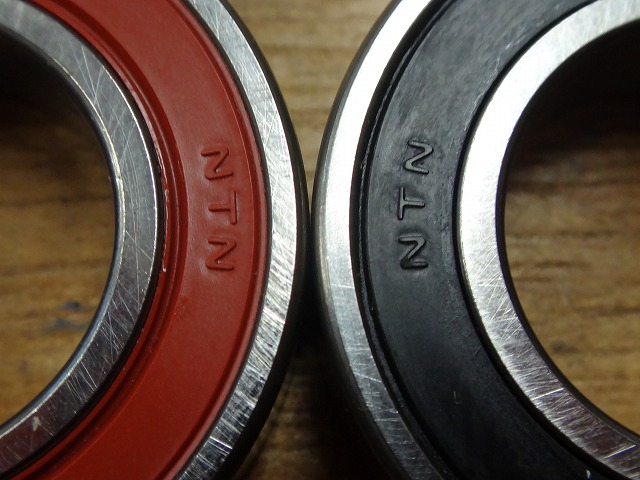
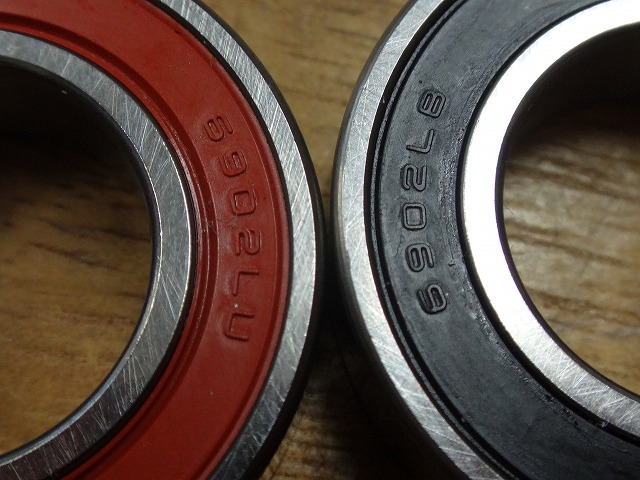
The bearings are from Japan's NTN,
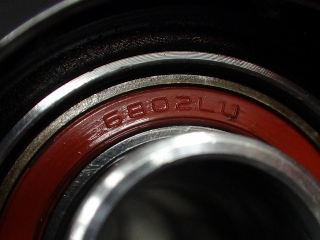
size 6802, and the seal type is LU.
If it's LU or LLU, that's contact-type sealing,
and LB or LLB is non-contact, and
while not absolute, black seals are usually non-contact,
while orange or brown seals are usually contact-type.
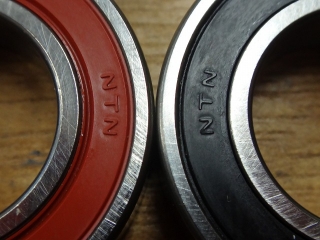
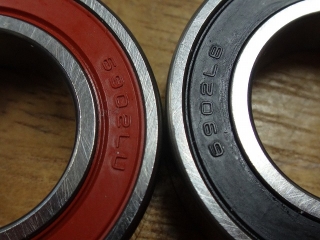
↑This is from our shop's repair stock—it's a 6902, not 6802, but it's also an NTN bearing.
If you put your finger through the inner race and spin the outer race, the seal text spins too.
If you pinch the outer race to hold it and spin only the inner race, the seal text doesn't move.
With both bearings, the seal clicks snugly into the groove of the outer race,
so that's the same for both. The difference is that contact-type seals have ridges between
the inner race and seal that are constantly rubbing,
while non-contact seals have a slight gap with light rotation but are weaker
against water and fine debris.
For a front hub like this, contact-type is the safer choice.
The Ceramic Speed in the CLX50 from the other day had great initial performance,
but now the rotation is gritty, so even though you can feel some seal resistance,
contact-type with smooth rotation is actually in a far healthier state overall.
If someone really understood hub design and absolutely insisted
on ceramic bearings anyway,
they could special-order contact-type ceramic bearings—though I've never seen that done—
or cut grooves in the quick-release end to install an O-ring for protection.
But that level of thinking doesn't seem to be part of Roval's "approach."
Campagnolo's Ultra-Torque crankset bottom brackets are split into
"CULT-specific" and "everything else" versions (Ekar is different again),
and apart from cosmetics like anodize color,
the performance difference includes the presence or absence of an inner seal.
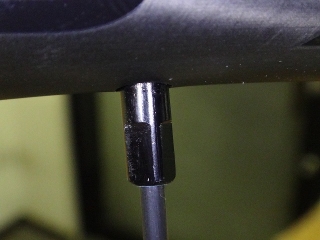
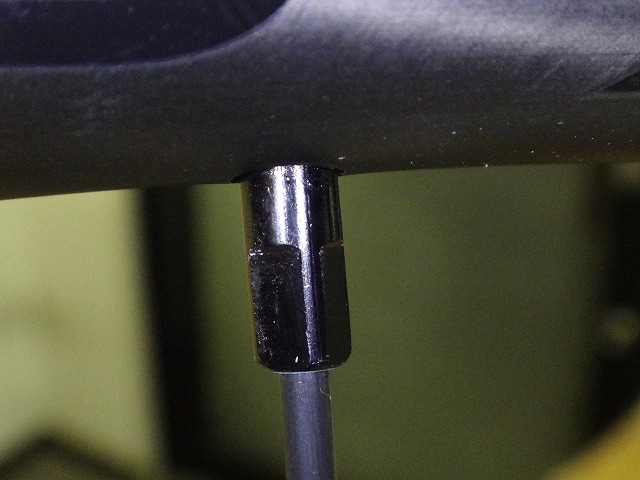
↑This is a CLX nipple—aluminum.
The anodize color is close to the black paint on the spokes,
a deep black.
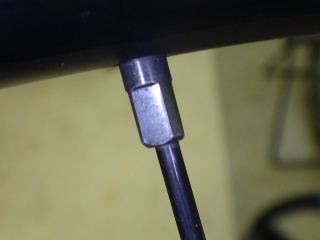
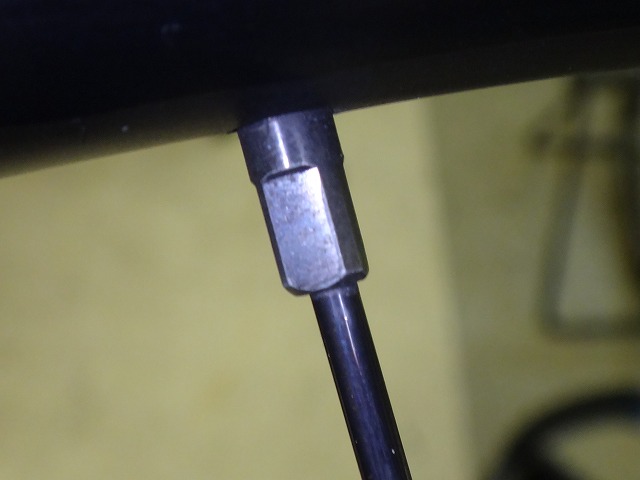
↑On the CL, they're brass instead.
A slightly lighter color.
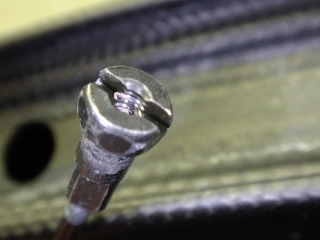

However, unlike generic parts, these CL brass nipples are special nipples
with a hexagonal grip surface on the outer edge, just like the CLX aluminum ones.
With the CLX from the other day, I reused the special aluminum nipples,
but on this CL rebuild, I'm using standard black aluminum nipples.
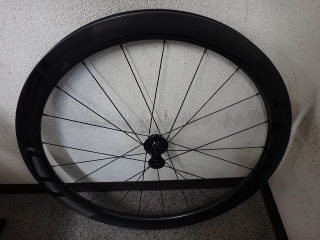
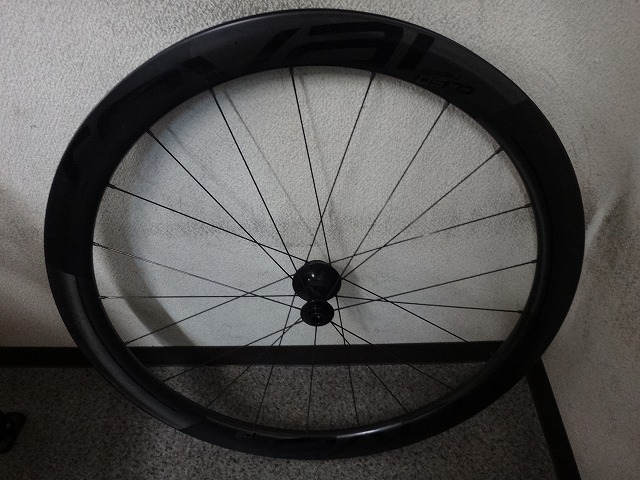
Built.
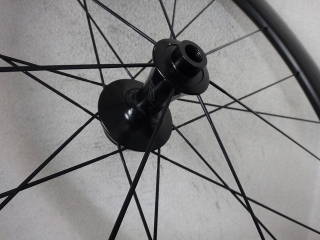
2:1 lacing, 21-hole, half-black CX Sprint zero-four equivalent pattern.
I'll do the spoke twisting on the tangent side later.
A customer brought in a Roval CL50 for repair.
Today I only worked on the front wheel, though.

This is a CL50, different from the CLX50 I worked on the other day.
It's a model where they cut costs on parts to make Roval wheels more affordable,
but the way they've detuned it is so poorly done that it's turned into a terrible wheel.
Though to be fair, the CLX50 itself isn't much of a wheel to begin with.


Unlike the CLX50, this one's built with straight-gauge spokes.
It's symmetrical lacing on both sides, but the spokes aren't
Competition (2.0–1.8–2.0mm)
but rather Competition Race (2.0–1.6–2.0mm).
Finding these Competition Race spokes, especially straight-gauge ones,
is extremely difficult to source.
So I think Specialized should keep these as stock repair spares,
and Specialized dealers ought to be able to repair wheels
to at least the precision level they come in from the factory, if not better.
But I think that's going to be a challenge.
I can't think of a single shop that could handle it.
I really hate wheels that can't be repaired
(and I'm not fond of manufacturers with poor spare spoke availability either),
but with CLX wheels, you can use spokes with the same gauge ratio
and we can handle repairs immediately.
For repairs of 4–5 spokes or so, rather than a full rebuild,
we usually do it on the spot without taking it in.
My head isn't creative enough to come up with reverse-asymmetric lacing
as a counterpoint to asymmetric lacing in a lifetime,
so I can only do symmetrical lacing.
Since this hub has straight-gauge spokes, the lacing pattern is fixed.
Given those two constraints, if we're cutting costs below the CLX,
then considering the expected use case,
I think going with 14-gauge plain spokes would actually make it a wheel that "performs,"
rather than what we have now.
The reason the customer brought the wheel in was that
while the frame isn't Specialized, they bought a Roval wheel,
and initially didn't think much about it,
but after using the RR411db rim wheel that I built,
they realized this Roval wheel was sluggish and didn't perform at all, apparently.
For the rebuild, unlike the CLX50 from the other day,
I'm not reusing the tangent-laced spokes—they're being completely replaced.
So I got permission to fully release spoke tension
before cutting them and discarding them.
I removed the quick-release axle end to access the radial-laced spokes.
The bearings aren't Ceramic Speed—they're steel-ball bearings with contact-type seals.
The hub is made by DT, and the quick-release end has no water-sealing measures
like O-rings.
DT hubs often use contact-type bearings too,
so this isn't a problem.
Regarding bearings, considering long-term use from factory condition,
I can't say outright that CLX is better overall than CL in every respect.
The bearings are from Japan's NTN,
size 6802, and the seal type is LU.
If it's LU or LLU, that's contact-type sealing,
and LB or LLB is non-contact, and
while not absolute, black seals are usually non-contact,
while orange or brown seals are usually contact-type.
↑This is from our shop's repair stock—it's a 6902, not 6802, but it's also an NTN bearing.
If you put your finger through the inner race and spin the outer race, the seal text spins too.
If you pinch the outer race to hold it and spin only the inner race, the seal text doesn't move.
With both bearings, the seal clicks snugly into the groove of the outer race,
so that's the same for both. The difference is that contact-type seals have ridges between
the inner race and seal that are constantly rubbing,
while non-contact seals have a slight gap with light rotation but are weaker
against water and fine debris.
For a front hub like this, contact-type is the safer choice.
The Ceramic Speed in the CLX50 from the other day had great initial performance,
but now the rotation is gritty, so even though you can feel some seal resistance,
contact-type with smooth rotation is actually in a far healthier state overall.
If someone really understood hub design and absolutely insisted
on ceramic bearings anyway,
they could special-order contact-type ceramic bearings—though I've never seen that done—
or cut grooves in the quick-release end to install an O-ring for protection.
But that level of thinking doesn't seem to be part of Roval's "approach."
Campagnolo's Ultra-Torque crankset bottom brackets are split into
"CULT-specific" and "everything else" versions (Ekar is different again),
and apart from cosmetics like anodize color,
the performance difference includes the presence or absence of an inner seal.
↑This is a CLX nipple—aluminum.
The anodize color is close to the black paint on the spokes,
a deep black.
↑On the CL, they're brass instead.
A slightly lighter color.
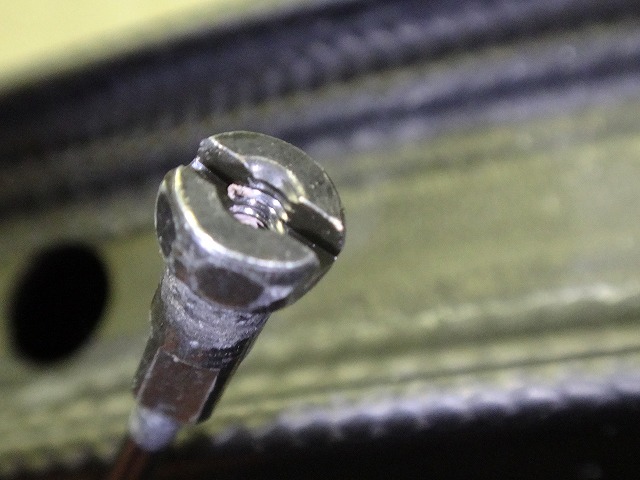
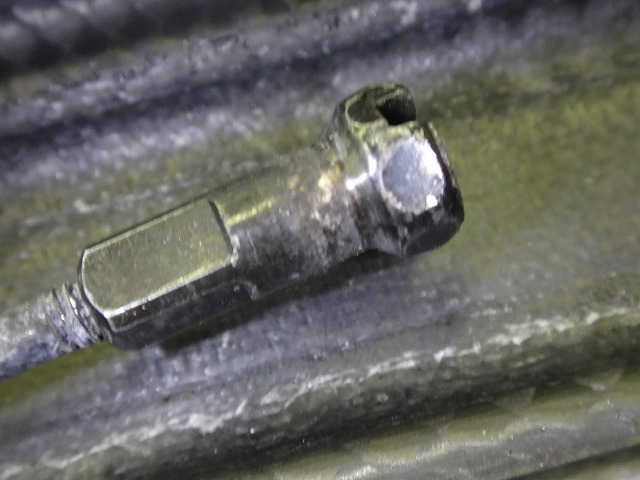
However, unlike generic parts, these CL brass nipples are special nipples
with a hexagonal grip surface on the outer edge, just like the CLX aluminum ones.
With the CLX from the other day, I reused the special aluminum nipples,
but on this CL rebuild, I'm using standard black aluminum nipples.
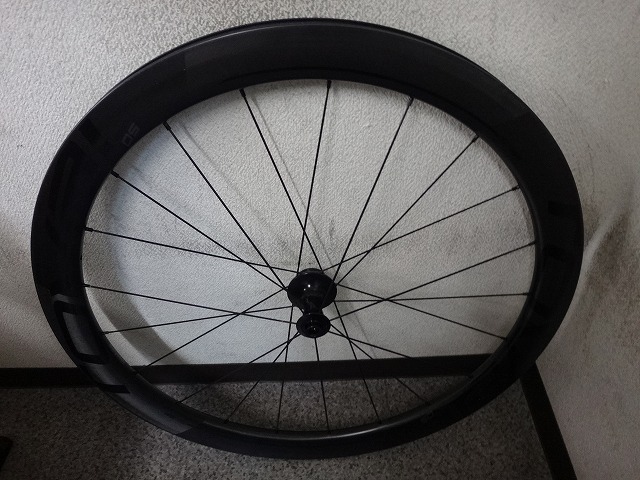
Built.
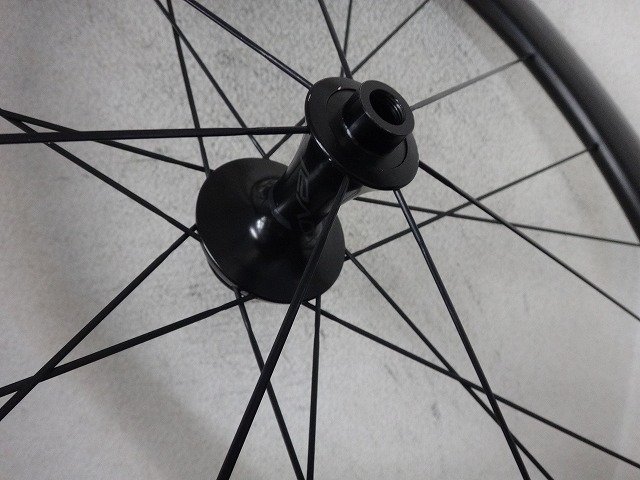
2:1 lacing, 21-hole, half-black CX Sprint zero-four equivalent pattern.
I'll do the spoke twisting on the tangent side later.