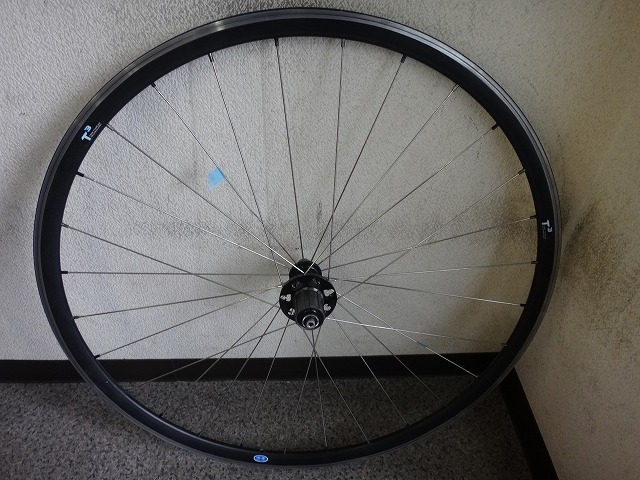
A customer brought in a Velomax rear hub wheel for me to work on.
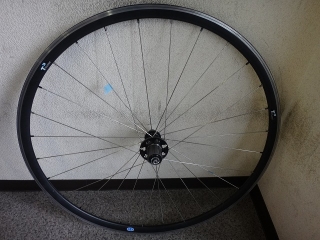
Since the customer isn't the original owner of this wheel,
there's no sticker on the rim, so they weren't sure of the exact model name.
But based on the specs, it's definitely a "Circuit" from after Velomax was acquired by Easton.
If it were an Ascent or Orion, the hub shell would have bronze-colored anodizing,
but this one has black anodizing.
The Orion uses an offset rim, but this is a non-offset rim.
Even if it were a Circuit from the Velomax era,
the brake zone on the rim wouldn't have indicator grooves,
but this one does—so it's definitely confirmed as an Easton Circuit.
Anyway,
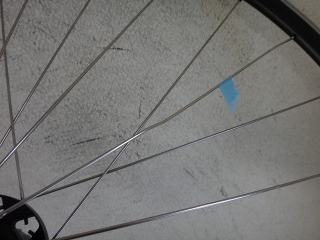
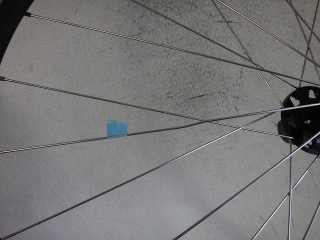
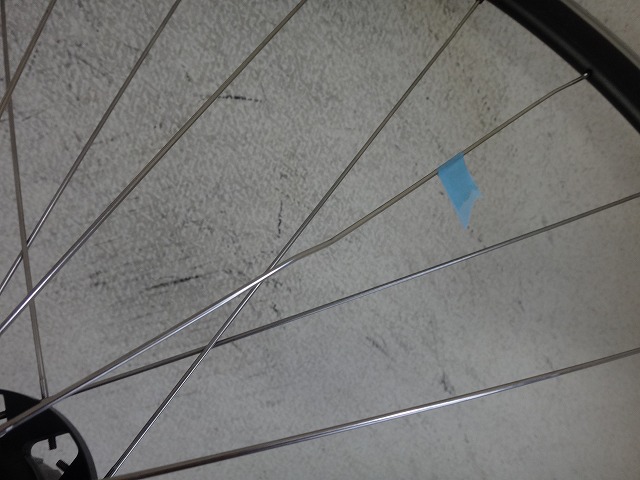
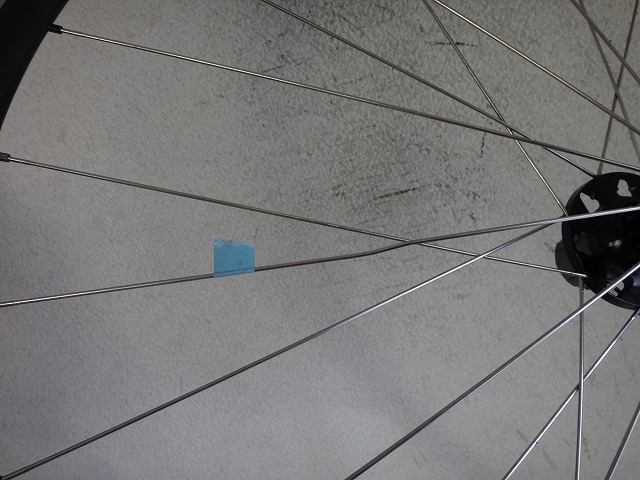
On the drive-side opposite 180°, there are two spokes that are one phase offset,
and they both have strange deformations. This is causing lateral runout too.
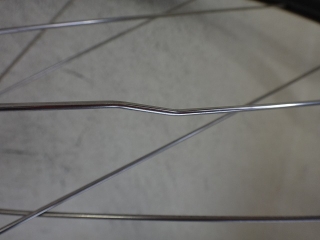
↑Like this
The cause is unclear, but it doesn't look like it came from a crash.
It appears to be non-malicious human-caused damage.
I'd guess that while the rear wheel was lying on its side inside a wheel bag,
something like a chair leg or ladder step was placed on top of it,
loading it with someone's body weight—that kind of thing.
I'm replacing the spokes, but since the hub is Velomax,
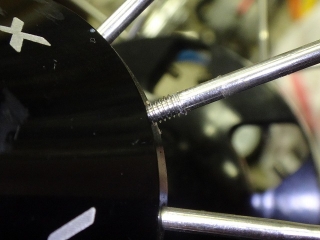
it uses double-threaded spoke specs.
I had spokes made in the same gauge.
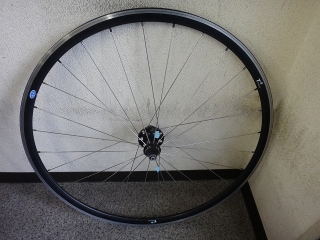
Fixed.
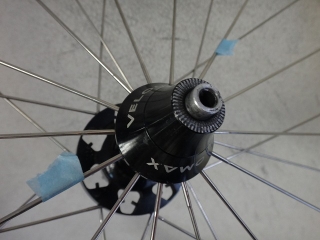
When the previous owner handed this wheel over to the current customer,
apparently they mentioned they'd tried to fix some runout out of good intentions.
But there was quite a bit of radial runout, so it turned into double work.
Like solving a Rubik's Cube backward, I can pretty much figure out what they did.
The spoke truing on the two replaced spokes took less time than
fixing the radial runout afterward.
The Velomax rear wheel has silver spokes
and the nipples alternate between silver and black.
The silver on the drive-side is brass, and the black on the non-drive-side is aluminum.
The manual says you should only true using the non-drive-side nipples for routine adjustments.
In extreme cases, you might have to touch the drive-side nipples,
but today I only touched them to undo what was already done.
Plus, the tension was so high that they probably loosened instead of tightening
while attempting topretend to true it.
Since an amateur did this, I won't be too harsh about it.
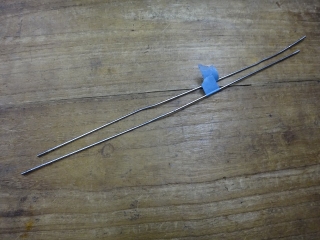
↑Replaced spokes
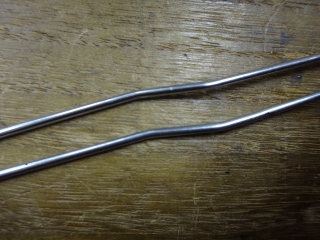
When you align the deformed section rather than the spoke ends,
it looks like this.
I checked the front wheel too—it was centered dead-on with no radial runout right away.
For lateral truing, I just barely tweaked two nipples,
and when I checked with the centering gauge afterward, it stayed dead-on.
So it wasn't running out much to begin with.
This wheel's customer comes from even further west than Himeji,
but from their perspective, the nearest shop capable of truing this wheel
turned out to be our shop in Osaka.
If there's anyone in the trade who wants to say,
"That's not true—we're between Himeji and Osaka,
and we can true that wheel on the spot when it's brought in,
and we can do it as well as you or better!"
please let me know, and I'll give you a shout-out here.
Since the customer isn't the original owner of this wheel,
there's no sticker on the rim, so they weren't sure of the exact model name.
But based on the specs, it's definitely a "Circuit" from after Velomax was acquired by Easton.
If it were an Ascent or Orion, the hub shell would have bronze-colored anodizing,
but this one has black anodizing.
The Orion uses an offset rim, but this is a non-offset rim.
Even if it were a Circuit from the Velomax era,
the brake zone on the rim wouldn't have indicator grooves,
but this one does—so it's definitely confirmed as an Easton Circuit.
Anyway,
On the drive-side opposite 180°, there are two spokes that are one phase offset,
and they both have strange deformations. This is causing lateral runout too.
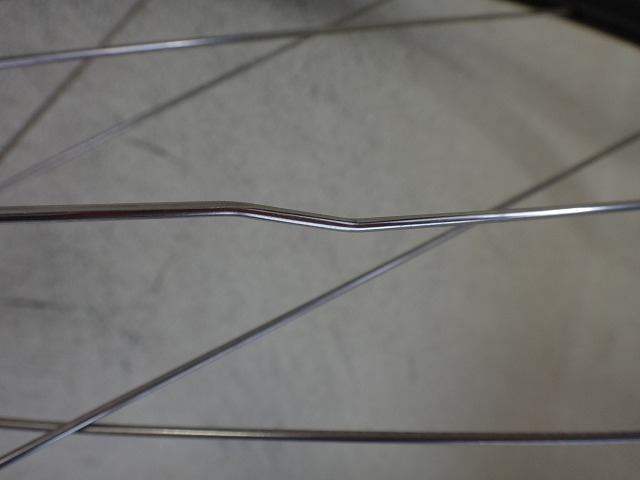
↑Like this
The cause is unclear, but it doesn't look like it came from a crash.
It appears to be non-malicious human-caused damage.
I'd guess that while the rear wheel was lying on its side inside a wheel bag,
something like a chair leg or ladder step was placed on top of it,
loading it with someone's body weight—that kind of thing.
I'm replacing the spokes, but since the hub is Velomax,
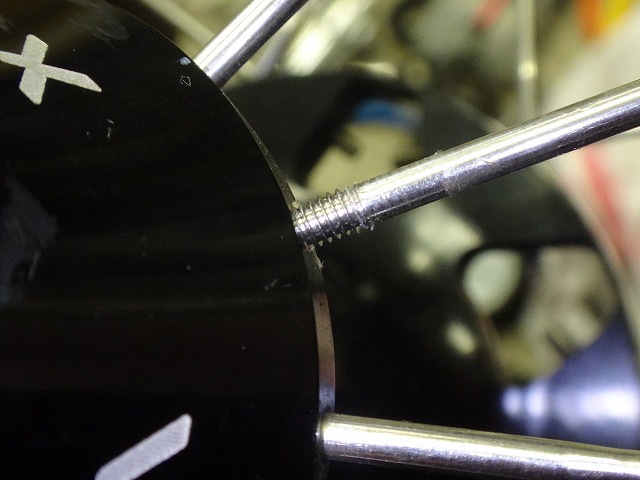
it uses double-threaded spoke specs.
I had spokes made in the same gauge.
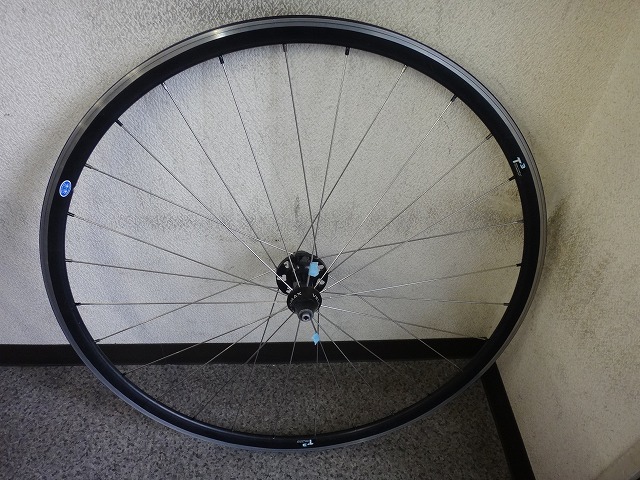
Fixed.

When the previous owner handed this wheel over to the current customer,
apparently they mentioned they'd tried to fix some runout out of good intentions.
But there was quite a bit of radial runout, so it turned into double work.
Like solving a Rubik's Cube backward, I can pretty much figure out what they did.
The spoke truing on the two replaced spokes took less time than
fixing the radial runout afterward.
The Velomax rear wheel has silver spokes
and the nipples alternate between silver and black.
The silver on the drive-side is brass, and the black on the non-drive-side is aluminum.
The manual says you should only true using the non-drive-side nipples for routine adjustments.
In extreme cases, you might have to touch the drive-side nipples,
but today I only touched them to undo what was already done.
Plus, the tension was so high that they probably loosened instead of tightening
while attempting to
Since an amateur did this, I won't be too harsh about it.
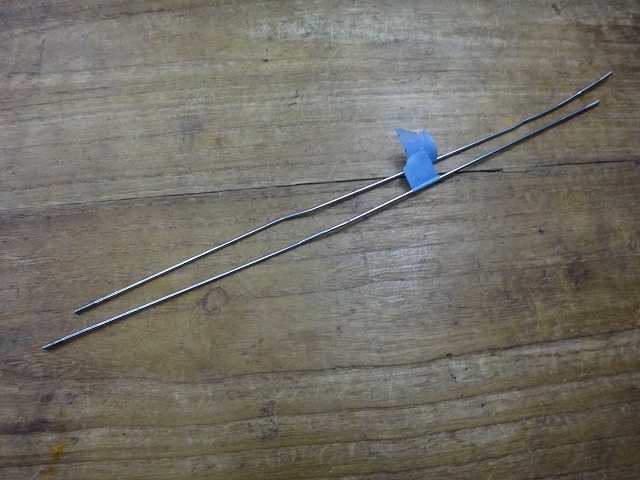
↑Replaced spokes
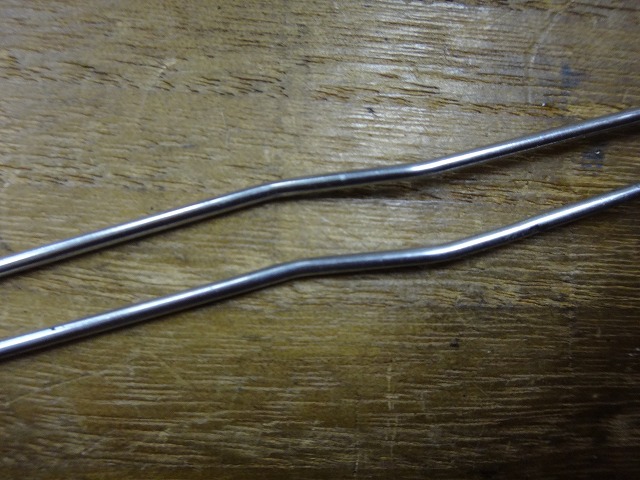
When you align the deformed section rather than the spoke ends,
it looks like this.
I checked the front wheel too—it was centered dead-on with no radial runout right away.
For lateral truing, I just barely tweaked two nipples,
and when I checked with the centering gauge afterward, it stayed dead-on.
So it wasn't running out much to begin with.
This wheel's customer comes from even further west than Himeji,
but from their perspective, the nearest shop capable of truing this wheel
turned out to be our shop in Osaka.
If there's anyone in the trade who wants to say,
"That's not true—we're between Himeji and Osaka,
and we can true that wheel on the spot when it's brought in,
and we can do it as well as you or better!"
please let me know, and I'll give you a shout-out here.